‘No silver bullets’ to improve margins, OSF CFO says

Peoria, Ill.-based OSF HealthCare has seen drastic improvements to its financial performance over the last two years, a performance that has allowed the health system to see revenue growth and expand its M&A footprint.

OSF was able to turn around a $43.2 million operating loss (-4.5% margin) in the first quarter ended Dec. 31, 2022, to a $0.9 million gain over the same period in 2023.

But the health system didn’t stop there and, in the first six months ended March 31, 2023, transformed a $60.9 million operating loss to an $8.9 million gain for the same period in 2024.

OSF HealthCare CFO Michael Allen connected with Becker’s to discuss the strategies that helped OSF get to a more steady financial place and some of their plans for the future. 

Question: What strategies has OSF HealthCare implemented to help it turn the corner financially? 

Michael Allen: OSF Healthcare has improved operating results by more than $70 million compared to FY2023, after seeing an even larger improvement from FY2022 to FY2023. After a very difficult FY2022, from a financial perspective, the organization launched a series of initiatives to return to positive margins. 

There has been a focus on reducing the reliance on contract labor, nursing and other key clinical positions, with better recruiting and retaining initiatives. The organization is actively implementing automation for repeatable tasks in hard-to-recruit administrative functions and is actively managing supply and pharmaceutical costs against inflationary pressures.

OSF has also seen revenue growth from patient demand, expanding markets, capacity management and improved payment levels from government and commercial payers.

Q: KSB Hospital and OSF HealthCare recently entered into merger negotiations. How do you expect hospital consolidation to evolve in your market as many small, independent providers continue to face financial challenges and struggle to improve their bottom lines?

MA: The economics of the healthcare delivery system model is challenging in most markets, but particularly difficult for small and independent hospitals and clinics. Given the structure of the payment system and the rising operating costs, I don’t see this pressure easing any time soon.  

OSF is looking forward to our opportunity to extend our healthcare ministry to KSB and the greater Dixon area and continue their great legacy of patient care.

Q: What advice would you have for other health system financial leaders looking to get their margins up this year?

MA: There are no silver bullets to improving margins. It’s the daily work of using our costs wisely and executing on important strategies that will win the day. Automation, elimination of non-value-added costs and continuously looking for opportunities to get the best care, patient engagement and workforce engagement is where OSF and other health systems will continue to focus.

Q: An increasing number of hospitals and health systems across the U.S. are dropping some or all of their commercial Medicare Advantage contracts. Where do you see the biggest challenges and opportunities for health systems navigating MA?

MA: As more and more patients and payers are entering Medicare Advantage, we continue to watch our metrics on payment levels to ensure we are being paid fairly and within contract terms for our payer partners. 

There does appear to be a trend of increasing denials that often aren’t justified or are not within our contract terms, and we will continuously work to rectify those issues with our payers to ensure our patients receive the appropriate care and OSF is paid fairly for services provided. 
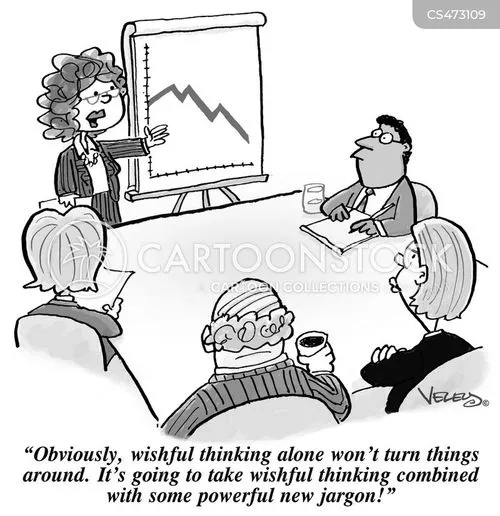
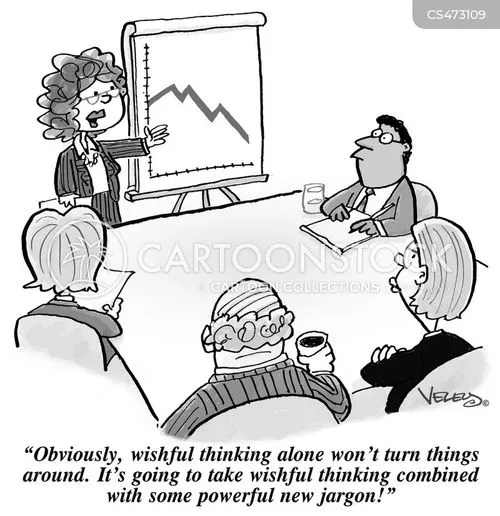
Cartoon – Wishful Thinking + Powerful New Jargon

Tower Health rejects 4th purchase offer; ‘I’m not sure what they’re thinking,’ StoneBridge CEO says

West Reading, Pa.-based Tower Health has turned down a $706 million offer from StoneBridge Healthcare, a hospital turnaround firm, making this the fourth purchase offer rejected by the system since 2021. 

StoneBridge received an email from Andrew Turnbull, a managing director at Houlihan Lokey, an investment bank that works with Tower Health, saying that there had been a board meeting and the firm’s offer had been rejected, Joshua Nemzoff, CEO of StoneBridge Healthcare, told Becker’s.

“I’m not sure what they’re thinking. We have requested multiple board meetings, but we’ve never had a chance to meet with the board. We’ve just gotten emails back saying they’re rejecting the offer,” Mr. Nemzoff said.

WoodBridge, a nonprofit sister organization to StoneBridge, initially shared a nonbinding agreement in principle with Tower Health, which included the intent to purchase the system’s assets.

“We’ve given them a number of other offers. I think the last one was more than a year ago. They’ve lost $400 million in operations in the last two years, and they’re $1.8 billion in revenue and $1.5 billion in debt, and 30 days of cash,” Mr. Nemzoff told Becker’s

Tower Health initially turned down a $675 million offer from StoneBridge in November 2022. In partnership with Allentown, Pa.-based Lehigh Valley Health Network, the firm also made two conditional offers to acquire the system’s assets for $600 million in 2021, which were also rejected. 

“Given their cash position and given their extraordinary amount of debt, I think our plan is just to frankly to wait for them to go bankrupt and show up in court for the auction. I think that’s going to happen next year,” Mr. Nemzoff said. 

StoneBridge was formed in 2020. The firm currently does not own or operate any hospitals. Like StoneBridge, WoodBridge has also not completed any hospital deals, Mr. Nemzoff told Becker’s

StoneBridge Healthcare, nonprofit offer $706M for Tower Health

StoneBridge Healthcare, a hospital turnaround firm, is looking to enter a management contract with Delaware-based WoodBridge, a nonprofit organization, to acquire West Reading, Pa.-based Tower Health for $706 million, the Philadelphia Business Journal reported Dec.12.

WoodBridge, a sister organization to StoneBridge, was expected to share a nonbinding agreement in principle with Tower Health on Dec. 12, which includes the intent to purchase the system’s assets, the publication reported.

An initial cash payment of $550 million, including the assumption of finance leases with liabilities of $156 million, and a commitment of hiring nearly all the system’s 11,000 employees are featured in the proposed deal.

Tower Health operates Reading Hospital, Pottstown Hospital and Phoenixville Hospital. St. Christopher’s Hospital for Children in Philadelphia is also under the system in partnership with Drexel University. 

If all goes well, the plan would involve StoneBridge negotiating a management agreement with WoodBridge, Joshua Nemzoff, founder and CEO of StoneBridge, told the Journal. However, Mr. Nemzoff said WoodBridge is only interested in acquiring the Reading, Pottstown and Phoenixville hospitals.

This is not the first time that StoneBridge has attempted to acquire the system. Last November, the firm offered Tower Health $675 million, which was turned down. StoneBridge, in partnership with Allentown, Pa.-based Lehigh Valley Health Network, also made two conditional offers in 2021 to acquire the system’s assets for $600 million, which were also declined. 

Formed in 2020, StoneBridge’s mission is to purchase and turn around acute care hospitals that are in significant economic distress. The firm currently does not own or operate any hospitals. Like StoneBridge, WoodBridge also hasn’t completed hospital deals, and will have its own separate board of directors, the publication reported.

Becker’s has reached out to StoneBridge Healthcare and Tower Health for comments on the potential acquisition.

Tower turnaround continues as operating margin hits -4.2%

West Reading, Pa.-based Tower Health continues to make progress on its performance improvement plan as its operating margin for the three months ended Sept. 30 rose to -4.2% from -8% during the same period in 2022. Its operating cash flow margin also increased from -0.9% to 2.3%. 

During the first quarter of fiscal 2024, the three months ending Sept. 30, revenue decreased 2.9% year over year to $457.4 million. Expenses decreased 6.4% to $476.5 million. 

Tower’s operating loss for the period was $19.1 million, compared with a loss of $37.6 million for the prior-year period. 

As of Sept. 30, total balance sheet unrestricted cash and board-designated investment funds for capital improvements totalled $154 million — a decrease of $54 million from June 30, 2023. The main factors for the decrease were $15 million of debt service payments, physician incentive compensation payments of $9 million, capital expenditures of $6 million, negative changes in working capital of $32 million, partially offset by EBITDA of $10 million.

Total days of cash on hand for the system was 30 on Sept. 30.

After including the performance of its investment portfolio and other nonoperating items, the health system ended the three-month period with a net loss of $20.9 million, compared with a net loss of $37.6 million for the same period in 2022. 

America’s Hospitals Need a Makeover

A couple of months ago, I got a call from a CEO of a regional health system—a long-time client and one of the smartest and most committed executives I know. This health system lost tens of millions of dollars in fiscal year 2022 and the CEO told me that he had come to the conclusion that he could not solve a problem of this magnitude with the usual and traditional solutions. Pushing the pre-Covid managerial buttons was just not getting the job done.

This organization is fiercely independent. It has been very successful in almost every respect for many years. It has had an effective and stable board and management team over the past 30 to 40 years.

But when the CEO looked at the current situation—economic, social, financial, operational, clinical—he saw that everything has changed and he knew that his healthcare organization needed to change as well. The system would not be able to return to profitability just by doing the same things it would have done five years or 10 years ago. Instead of looking at a small number of factors and making incremental improvements, he wanted to look across the total enterprise all at once. And to look at all aspects of the enterprise with an eye toward organizational renovation.

I said, “So, you want a makeover.”

The CEO is right. In an environment unlike anything any of us have experienced, and in an industry of complex interdependencies, the only way to get back to financial equilibrium is to take a comprehensive, holistic view of our organizations and environments, and to be open to an outcome in which we do things very differently.

In other words, a makeover.

Consider just a few areas that the hospital makeover could and should address:

There’s the REVENUE SIDE: Getting paid for what you are doing and the severity of the patient you are treating—which requires a focus on clinical documentation improvement and core revenue cycle delivery—and looking for any material revenue diversification opportunities.

There is the relationship with payers: Involving a mix of growth, disruption, and optimization strategies to increase payments, grow share of wallet, or develop new revenue streams.

There’s the EXPENSE SIDE: Optimizing workforce performance, focusing on care management and patient throughput, rethinking the shared services infrastructure, and realizing opportunities for savings in administrative services, purchased services, and the supply chain. While these have been historic areas of focus, organizations must move from an episodic to a constant, ongoing approach.

There’s the BALANCE SHEET: Establishing a parallel balance sheet strategy that will create the bridge across the operational makeover by reconfiguring invested assets and capital structure, repositioning the real estate portfolio, and optimizing liquidity management and treasury operations.

There is NETWORK REDESIGN: Ensuring that the services offered across the network are delivered efficiently and that each market and asset is optimized; reducing redundancy, increasing quality, and improving financial performance.

There is a whole concept around PORTFOLIO OPTIMIZATION: Developing a deep understanding of how the various components of your business perform, and how to optimize, scale back, or partner to drive further value and operational performance.

Incrementalism is a long-held business approach in healthcare, and for good reason. Any prominent change has the potential to affect the health of communities and those changes must be considered carefully to ensure that any outcome of those changes is a positive one. Any ill-considered action could have unintended consequences for any of a hospital’s many constituencies.

But today, incrementalism is both unrealistic and insufficient.

Just for starters, healthcare executive teams must recognize that back-office expenses are having a significant and negative impact on the ability of hospitals to make a sufficient operating margin. And also, healthcare executive teams must further realize that the old concept of “all things to all people” is literally bringing parts of the hospital industry toward bankruptcy.

As I described in a previous blog post, healthcare comprises some of the most wicked problems in our society—problems that are complex, that have no clear solution, and for which a solution intended to fix one aspect of a problem may well make other aspects worse.

The very nature of wicked problems argues for the kind of comprehensive approach that the CEO of this organization is taking—not tackling one issue at a time in linear fashion but making a sophisticated assessment of multiple solutions and studying their potential interdependencies, interactions, and intertwined effects.

My colleague Eric Jordahl has noted that “reverting to a 2019 world is not going to happen, which means that restructuring is the only option. . . . Where we are is not sustainable and waiting for a reversion is a rapidly decaying option.”

The very nature of the socioeconomic environment makes doing nothing or taking an incremental approach untenable. It is clearly beyond time for the hospital industry makeover.

CHS’ turnaround efforts stall

Pandemic pressures and a high debt load are among the factors stalling Franklin, Tenn.-based Community Health Systems’ financial turnaround, Bloomberg Law report June 8. 

CHS, an 83-hospital system, is facing many of the same challenges as other health systems across the U.S., including a surge in labor expenses in the first quarter of this year. The higher expenses and a COVID-19 surge that negatively impacted operating revenues dragged down the company’s earnings in the first quarter of this year. CHS ended the first three months of 2022 with a net loss of $1 million.

CHS leaders expect some of the pressures to continue through the second quarter. 

“Moving through the second quarter and the remainder of the year, we anticipate contract labor rates to remain elevated, however, we expect our operational momentum to continue, as we anticipate capturing deferred healthcare demand, benefitting from recent strategic investments, and continuing the execution of the company’s margin improvement program,” Tim Hingtgen, CEO of CHS, said in an April 27 earnings release

The company cut its earnings forecast in April when it released results for the first quarter, and it has seen its bonds and stock slide since March, according to Bloomberg Law

Shares of CHS closed June 8 at $5.16, down from $5.25 the day before.

Tower, Drexel need help covering children’s hospital’s expenses

Due to financial struggles, West Reading, Pa.-based Tower Health is looking for other health systems to take over St. Christopher’s Hospital for Children, which it co-owns with Drexel University, rather than renew its $85 million line of credit to the hospital, The Philadelphia Inquirer reported April 8.

Tower Health’s credit line was set to expire March 31, but Drexel University renewed its line of credit to the Philadelphia hospital for the next four years. 

Philadelphia-based St. Chris has been struggling financially, but has recently improved. Its projected loss was $23.6 million for the year ended June 30, compared to $97.6 million in fiscal year 2021, Drexel University President John Fry told the Inquirer.

“We will stand behind this hospital and we will find a solution. We just need more help than the help that Drexel and Tower can provide,” Mr. Fry told the paper.

The hospital was part of the American Academic Health System bankruptcy in 2019. It was previously owned by Dallas-based Tenet Healthcare.

Tower Health has also been dealing with financial problems, with operating losses of more than $900 million in the last four and a half fiscal years, according to the paper.

Temple University Health System confirmed to the Inquirer that it is in discussions to help support the hospital.

Read more here.