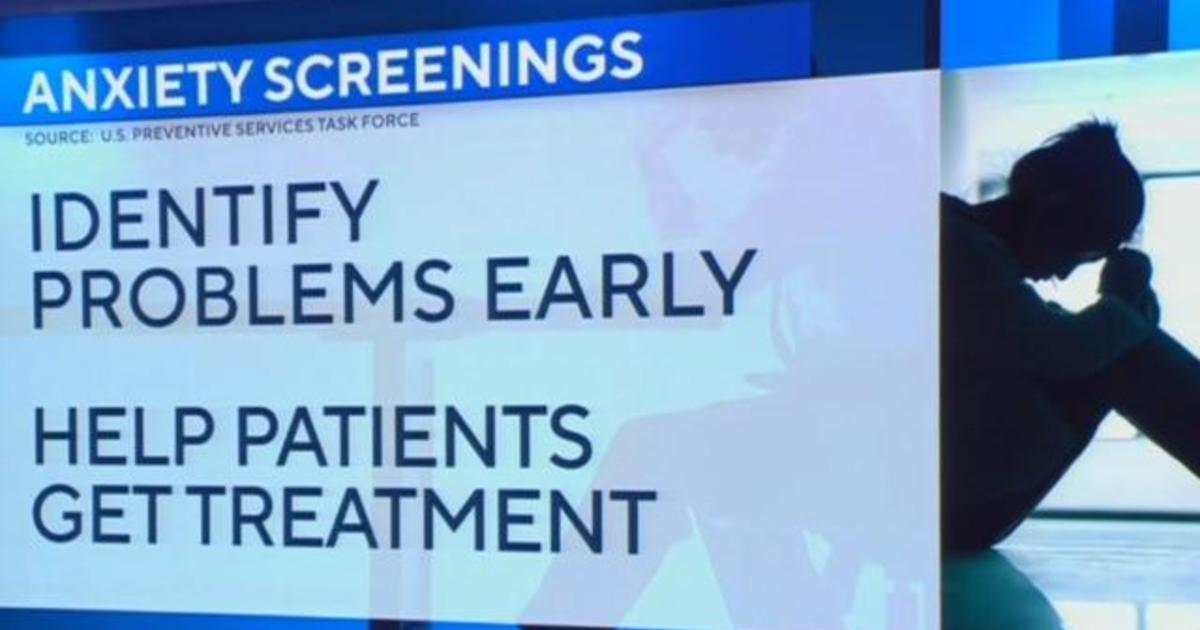
The US Preventative Services Task Force, which is appointed by an arm of the Department of Health and Human Services, issued draft guidance this week recommending that all adults under age 65 be screened for symptoms of anxiety disorders.
The panel made a similar recommendation for children and teenagers earlier this year. COVID accelerated an already widespread mental health crisis, with the prevalence of anxiety and depression increasing by 25 percent globally during the first year of the pandemic. The panel’s recommendations are not mandatory, but carry strong influence over primary care physician practices. Draft guidance will be finalized in the coming months after a review of public comments.
The Gist: Policymakers and providers are right to respond to the population-wide increase in anxiety and depression brought on by COVID, and regular screenings will surely help quantify the scope of a problem we’re now facing.
However, given our nation’s undersupply of behavioral health practitioners, widespread screenings are likely to unleash a flood of demand that traditional providers will struggle to meet. Given virtual care’s staying power in the behavioral health space, we hope that the inevitable wave of mental health diagnoses will be matched with innovative care models designed to treat this growing issue at scale.
On Monday, a federal judge denied the Department of Justice (DOJ)’s attempt to block UHG’s $13B purchase of Change Healthcare, a technology firm specializing in claims processing and data analytics.
The DOJ sought to block the purchase on antitrust grounds, arguing that UHG would have access to technologies that its rivals use to compete, but the judge, writing in a sealed ruling, found the DOJ’s case inadequate. It is unclear at this point whether the DOJ will appeal.
Change will now join UHG’s OptumInsight division, though in response to anticompetitive concerns, the ruling ordered UHG to sell part of Change’s claims payment and editing business, as it had already planned to do.
The Gist: Antitrust regulators have had much greater success at challenging horizontal healthcare mergers but have struggled to find solid footing to fight vertical deals.
The UHG-Change case was closely watched in part because of the precedent it would have set in terms of holding “platform” aggregators in check. As UHG and other healthcare titans continue to acquire assets up and down the value chain (physician practices, ambulatory surgery centers, clinics, telehealth capabilities, risk products), it’s increasingly clear that the government will face an uphill climb to question the competitive effects of these vertical M&A activities.
Healthcare costs are expected to jump 6.0% next year. CFOs must prepare accordingly, advises WTW’s Tim Stawicki.
CFOs need to be prepared for a “higher tail” of medical inflation — even if general inflation eases in the near future, Tim Stawicki, chief actuary, North America health & benefits of Willis Towers Watson (WTW) told CFO Dive.
“CFOS need to be prepared for the case that if general inflation eases, there may be two or three more years where they need to think about how they are managing the costs of health care plans,” he said in an interview.
Inflation, which can more immediately impact consumer prices, works somewhat differently when it comes to costs of medical care. “Employers are paying healthcare costs based on contracts that their insurer has with providers, which are multiple years in length. So if a deal with the hospital or contract does not come up until 2023, then that provider has the opportunity to renegotiate higher prices for three years,” said Stawicki.
The recent Best Practices in Healthcare Survey by WTW consisting of 455 U.S. employers found that employers project their healthcare costs will jump 6.0% next year compared with an average 5.0% increase expected by the end of this year.
Further, employers see little relief in sight — seven in 10 (71%) expect moderate to significant increases in costs over the next three years. Additionally, over half of respondents (54%) expect their costs will be over budget this year.
Balancing talent retention and healthcare costs
Talent retention has also remained an entrenched challenge for CFOs over recent months and continues to be top of mind.
Given inflationary pressures and a potential looming recession, employers are having trouble finding the workers they need to run their businesses. A rise in healthcare benefit costs will make this all the more challenging, said Stawicki. “Employers are looking around and saying ‘I need to find talent to help me run my business and I can’t do that if I have an ineffective program in healthcare benefits,’” he said.
There is a direct link between business outcomes and in particular employee productivity and employees’ ability to manage their health and financial environment, according to WTW’s Global Benefits Attitude Survey. “Losing the ability to offer programs and benefits that meet employee needs is impacting business,” said Stawicki.
It comes down to finding the balance between cost management in an environment where talent is hard to come by, he said. In order for CFOs to be successful in financing benefit programs they need to look at finding ways to partner with their counterparts in human resources, said Stawicki.
Sixty-seven percent of employers said that managing company costs was a top priority in the company’s August Best Practices in Healthcare Survey, versus the 42% who said that achieving affordability for employees was a top priority. In the near future, CFOs need to establish a relationship with HR counterparts that can facilitate “ways to manage company costs without shifting it to employees,” said Stawicki.
Ultimately, company costs remain paramount for employers but running a successful business will also require keeping employee affordability top of mind.
CFOs looking to attract and retain the right kind of talent amidst inflationary pressures, rising interest rates and other economic tensions need to “double down on recognition and meaningful work for employees,” said Jessica Bier, managing director of Deloitte Consulting, in an interview.
In order to attract and retain viable talent to keep business afloat, 71% of CFOs indicated that a flexible workplace environment was their approach, 63% said clarity around career development and growth opportunities and 62% pointed to increased salaries, per the second wave of data in the Q3 CFO Signals report.
The report also revealed that CFOs who took steps to alter, reduce or streamline the type of work their finance organizations performed saw several benefits throughout the enterprise — 78% said one benefit was more time spent on higher-value activities and 71% indicated greater use of technology was another. Contrastingly, only 20% saw talent retention as a benefit, and even less (10%) saw higher quality talent as one.
Dive Insight:
The managers and workforce of financial departments are looking for five main things, said Bier, per the report — those being work environment flexibility, career growth and development, salaries, meaningful work and recognition, she said.
“As we think about the workforce experience, every CFO is also the chief talent officer,” Bier said. “Your HR business partner can support you but at the end of the day the way your managers work and the way you connect people to the work that they’re doing — that’s the CFO’s job to set that tone.”
One misconception, Bier said, is that a recession means workers will be happy just to have a job. “The people in the workforce who are the ones you want to keep, are the ones who are always going to have options,” she said.
Talent retention continues to be a multifaceted challenge for CFOs and remains top of mind. Over half of CFOs (54%) cited hiring and retaining staff as the most difficult task over the next 12 months, according to a July Gartner study.
Interim CFOs can cut through politics to help navigate companies through murky waters, experts say.
As they face financial difficulties, leadership crises or other inter-company developments, many firms have ceded their financial reins to interim executives over recent months.
Retailer Bed, Bath & Beyond quickly named their chief accounting officer as interim CFO following the death of their previous financial head earlier in September, for example, while real estate investment trust (REIT) Tanger’s chief accounting officer also recently served a stint as their interim financial head after the REIT ousted their previous CFO, a 28-year company veteran.
One of the reasons to tap an interim CFO is simply to provide peace of mind for the company and its shareholders while the search to find a more permanent candidate is ongoing, said Shawn Cole, president of boutique executive search firm Cowen Partners in a recent interview.
While some searches are as short as 38 days, the majority of executive searches can take between four to six months, a period where remaining without financial leadership is untenable. Firms seeking interims must still consider several key factors when choosing such an executive, however, Cole said.
Companies seeking external candidates, for example — which can be due to inter-company turmoil or, as is often the case, because the company may lack the bench strength to pull forward an internal candidate, Cole noted — should take care to consider “professional interims” for the position as opposed to an unattached CFO, he advised.
“I would just be very cautious that you are not just hiring an unemployed CFO,” Cole said. “There’s plenty of wonderful professional interim CFOs out there that are excellent at consulting. You don’t necessarily want to get yourself into a position where you are engaging just an unemployed CFO, that needs a job.”
Getting a fresh perspective
Bringing in an external interim can also grant companies benefits they may not see with internal candidates, for that matter, explained Mike Harris, CEO of Patina Solutions. Patina, which focuses primarily on placing interim executvies, was acquired by fellow executive search company Korn Ferry this past April.
It can help other executives, notably the CEO, to get “fresh perspectives and viewpoints,” he said.
“If someone is coming in for six months they can tell it like it is, they can come in and make a quick assessment,” he said. “Candidly, it does take out the politics if you’re in there on a limited basis.”
Similar to Cole, Harris pointed to a growing population of what Harris terms as “career interims,” who are working in that capacity because they enjoy the flexibility of movement — they get to go in and get critical projects done for the company, he said.
Turning to an external interim can also help companies execute on particular goals such as a restructuring, said Harris, nothing that what companies need from someone taking on the position for six months could be “very different” than what firms may be looking for out of a permanent CFO. Their short tenure means interims can be “very objective” and have a “big impact” at a company in a short period of time, he said.
“The reason [interims are] usually coming in there is because they have something in their background that’s going to be very helpful for the situation that company is facing,” he said.
Companies may also take advantage of an interim CFOs’ skills as a sort of mentorship for their existing CFO — the executive in the permanent seat may lack M&A or other key experience, for example, that an interim may be able to provide during their short-term tenure.
Tapping insider knowledge
Pulling forward internal candidates to fill the CFO gap can also have benefits for firms if possible, as such candidates have intimate knowledge of the companies’ status and needs that outside executives may lack.
This may be the case for struggling payment processor PayPal, another example of a firm who recently appointed an interim CFO — moving Gabrielle Rabinovitch, their SVP of capital markets into the seat for a second time after the newly-minted CFO departed for medical leave.
In PayPal’s case, the company needs “stability” in its financial chair, which has been lacking since the departure of its previous CFO John Rainey to retailer Walmart, said Josh Crist, managing director for Crist|Kolder Associates.
“It may be time to think about a young internal player as an interim,” Crist wrote in an email regarding PayPal’s CFO woes. “Institutional knowledge should be key given strategic issues the company faces.”
Such a candidate may prove to be a permanent fit at the company, for that matter, he said.
“I believe the current interim might actually be correct for the full time gig! I believe they need an internal player who has seen the nuts and bolts/knows the operating and strategic plan and can help execute,” Crist wrote in an email. “I don’t believe they need a high-level strategist.”
The future of the CFO seat
While companies must carefully consider what it is they are seeking out of an interim — or even a permanent — CFO candidate, qualified executives also have their pick of potential options as the market for executive talent grows more competitive.
CFOs who would have potentially retired or left their current roles years earlier, but were stymied by the pandemic, have now begun to do so, contributing to a narrowing of the potential talent pool. For that matter, the list of responsibilities handed to modern CFOs has grown over recent years, but companies may not have fully adjusted their leadership structure accordingly, Cole said.
“The CFO is no longer the chief accounting officer,” Cole said. “They really effectively should be the right hand to the CEO. While many companies have increased demands of the CFO, they haven’t necessarily brought the CFO into that light. And so I think companies that can show a CFO candidate that they will have a position of significance of their organization, be that strategic business partner to the CEO, I think that goes a long way.”








 HENRY KOTULA