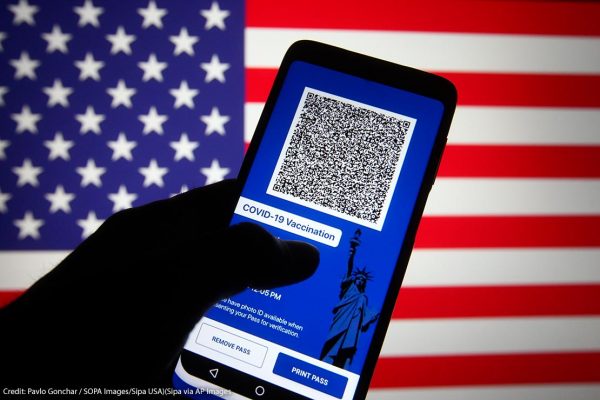
Declaring that “our patience is wearing thin” with Americans who refuse to be vaccinated against COVID-19, President Biden announced sweeping new plans to implement vaccine mandates on Thursday.
Businesses that employ more than 100 people must require their employees to get vaccinated or face weekly COVID testing, federal workers and contractors must be vaccinated or face disciplinary measures, and all healthcare organizations that receive Medicare or Medicaid funds must ensure 100 percent employee vaccination as a condition of continued participation in those federal payment programs. The healthcare component of the mandate will impact about 17 million workers, including those at hospitals, surgery centers, dialysis facilities, and home health agencies. The Centers for Medicare & Medicaid Services (CMS) already requires nursing home workers to be vaccinated, and yesterday announced plans to release a new regulation by October 1st, implementing the expanded mandate. According to Fierce Healthcare, at least 172 hospital systems have already announced some form of vaccine mandate, but others have expressed concerns that forcing workers to get vaccinated might exacerbate labor shortages and result in employees seeking work elsewhere.
Responding to President Biden’s announcement, the American Hospital Association (AHA) echoed those concerns, citing “the critical challenges that we are facing in maintaining the resiliency of our workforce.” In our view, that concern pales in comparison to the imperative to protect patients by reducing the potential for exposure by unvaccinated caregivers. If anything, the national healthcare mandate should provide cover for those hospitals and care providers that have shied away from mandates, letting other organizations take the lead. Once universal healthcare mandates are implemented, vaccine resistant workers will find few employment alternatives left, significantly dampening the risk of widespread resignations. If you don’t want to take the necessary precautions to keep patients safe, you shouldn’t be working in healthcare in the first place. Yesterday’s mandate announcement, while aggressive, is overdue.
Health spending in the United States is highest in the world, driven in part by administrative complexity. To date, studies examining the administrative costs of American health care have primarily focused on clinicians and organizations—rarely on patients.
A new study in Health Services Research finds administrative complexity in the U.S. health care system has consequences for access to care that are on par with those of financial barriers like copays and deductibles. In other words, we pay for health care in two ways: in money and in the hassle of dealing with a complex, confusing, and error-riddled system. Both are barriers to access. The study was led by Michael Anne Kyle, and coauthor, Austin Frakt.
Main Findings
Nearly three-quarters (73%) of people surveyed reported doing at least one health care-related administrative task in the past 12 months. Such administrative tasks include: appointment scheduling; obtaining information from an insurer or provider; obtaining prior authorizations; resolving insurance or provider billing issues; and resolving premium problems.
Administrative tasks often impose barriers to care: Nearly one-quarter (24.4%) of survey respondents reported delaying or foregoing needed care due to administrative tasks.
This estimate of administrative barriers to access to care is similar to those of financial barriers to access: a 2019 Kaiser Family Foundation survey, found that 26% of insured adults 18-64 said that they or a family member had postponed or put off needed care in the past 12 months due to cost.
Administrative burden has consequential implications for equity. The study finds administrative burden falls disproportionately on people with high medical needs (disability) and that existing racial and socioeconomic inequities are associated with greater administrative burden.
Methods
To measure the size and consequences of patients’ administrative roles, we used data from the nationally representative March 2019 Health Reform Monitoring Survey of insured, nonelderly adults (18-64) to assess the annual prevalence of five common types of administrative tasks patients perform: (1) appointment scheduling; (2) obtaining information from an insurer or provider; (3) obtaining prior authorizations; (4) resolving insurance or provider billing issues; (5) and resolving insurance premium problems. The study examined the association of these tasks with two important measures of their burden: delayed and forgone care.
Conclusions
High administrative complexity is a central feature of the U.S. health care system. Largely overlooked, patients frequently do administrative work that can create burdens resulting in delayed or foregone care. The prevalence of delayed or foregone care due to administrative tasks is comparable to similar estimates of cost-related barriers to care. Administrative complexity is endemic to all post-industrial health systems, but there may be opportunity to design administrative tools with greater care to avoid exacerbating or reinforcing inequities.
An EMT directs an ambulance outside the emergency room of the East Los Angeles Doctors Hospital.
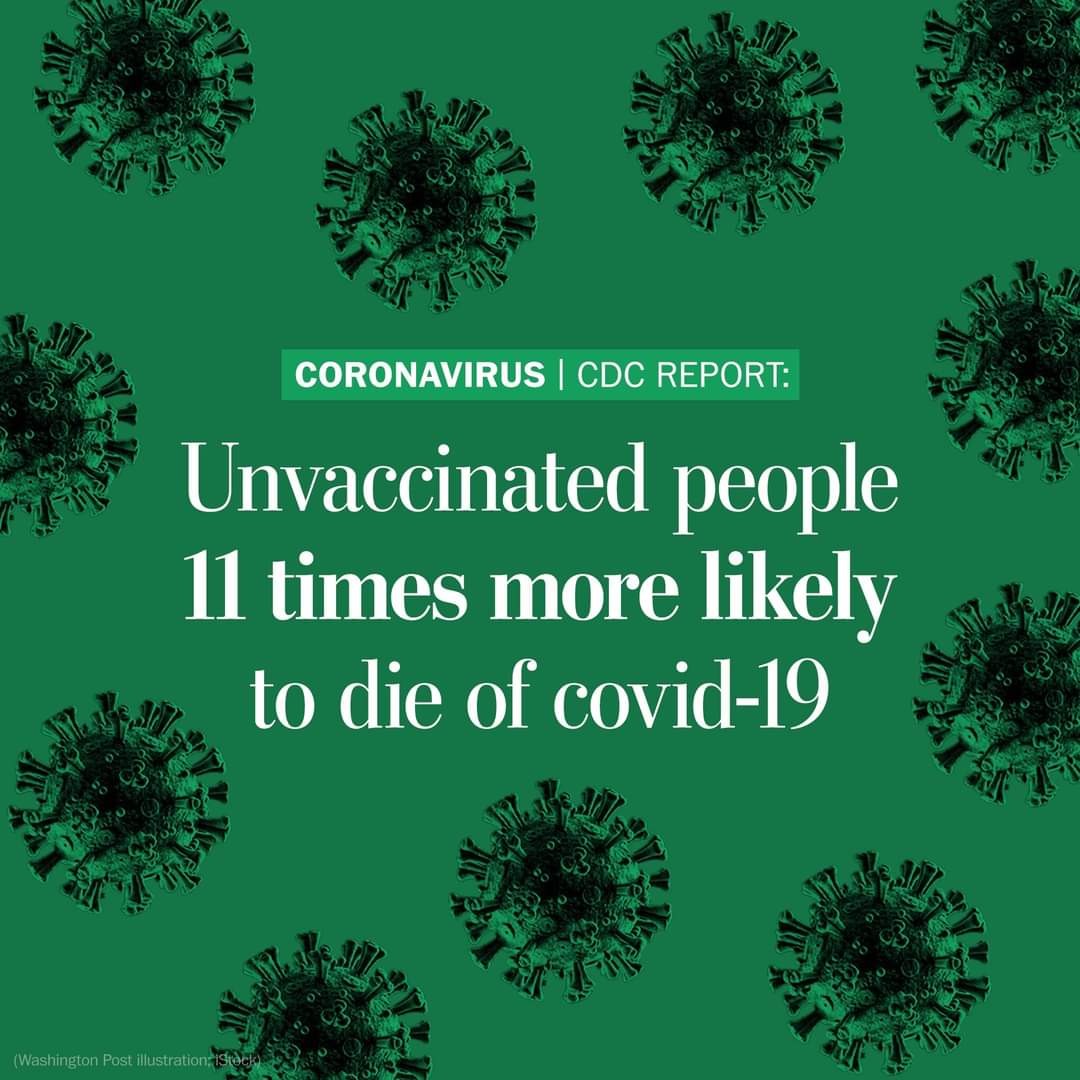
Not a typo:Unvaccinated people are 11 times more likely to die of COVID than those who’ve gotten the shot, the CDC found.
By the numbers: Of 37,948 hospitalizations in 13 jurisdictions studied between April and July, 2,976 patients— or about 8% — were vaccinated, Axios’ Noah Garfinkel reports.
Of 6,748 deaths, 616 — or about 9% — were people who were fully vaccinated.
The three vaccines “showed continued robust protection for all adults — greater than 82 percent — for hospitalization, emergency room and urgent care trips,” The Washington Post reports.
Another study found the Moderna vaccine most effective against Delta. But Pfizer and J&J also worked.
David and Bill wrote that we should do this because it would save many lives. Perhaps this is all that needs to be said. We also argued that the U.S. stood to benefit if we could substantially reduce the number of global covid cases. This would reduce U.S. coronavirus exposure and slow the rate of evolution of new coronavirus variants. The economic cost to the U.S. of a more severe pandemic could easily be greater than the cost of making and distributing the vaccine. If so, the global vaccination effort would pay for itself.
There is, however, another moral argument for global vaccination, this one tied to 9/11 and the ensuing global war on terror. Since 9/11, the U.S. has engaged in 20 years of warfare in countries across the world.
At least 801,000 people have been killed by direct war violence in Iraq, Afghanistan, Syria, Yemen, and Pakistan… The U.S. post-9/11 wars have forcibly displaced at least 38 million people in and from Afghanistan, Iraq, Pakistan, Yemen, Somalia, the Philippines, Libya, and Syria. This number exceeds the total displaced by every war since 1900, except World War II.
Of course, much of that violence was committed by al-Qaeda, ISIS, or the Syrian government. Some of the civil wars that have followed 9/11 might have happened anyway. Nevertheless, Americans failed to limit their 9/11 response to the specific individuals who carried out the attacks. This was a principal cause of the ensuing death and displacements.
So now, the U.S. is known not only for baseball and democracy but also for drone strikes and torture. If we led an effort to vaccinate the world, it would be one of the largest humanitarian actions in history. We should do this to set an example and balance the effects of the global war on terror.
The typical media coverage of the healthcare workforce crisis often focuses on the acute shortage of hospital-based nurses. For instance, the hospital forced to close a unit as nurses, burned out after 18 months of extra shifts taking care of COVID patients, leave for lower-stress, more predictable jobs in outpatient facilities or doctors’ offices.
But we’re hearing about a reverse trend in recent conversations with health system leaders. Instead of outpatient settings benefiting from an influx of nursing talent, ambulatory leaders report that nurses are now leaving for hospital or travel nursing positions that offer higher salaries and large sign-on bonuses. That’s forcing non-hospital settings to reduce operating room and endoscopy capacity.
Nor are shortages just in the nursing workforce. One system executive lamented that they had to cancel several non-emergent cardiac surgeries, not due to nurse staffing challenges; rather, they were short on surgical technicians. “Surgical techs aren’t leaving because of COVID,” the executive shared, “they’re leaving because the labor market is so strong, and they can make the same money doing something entirely different.”
For lower-wage workers in particular, the old value proposition of working for a health system, centered around good benefits, continuing education, and a long-term career path, isn’t providing the boost it used to. Workers are willing to trade those for improved work-life balance, predictability, and the perception of a “safer” workplace.
Stabilizing the healthcare workforce will ultimately require providers to rethink job design, the allocation of talent across settings of care, and the integration of technology in workflow. And it will require re-anchoring the work in the mission of serving the community.
But in the short term, many health systems will find themselves having to pay more to retain key workers, including but not limited to hospital nurses, to maintain patient access to care.
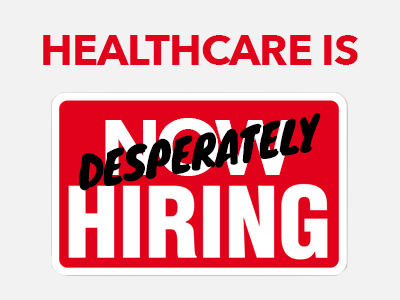
As the pandemic rages on, hospitals across the country are experiencing significant labor shortages for critical clinical roles. In the graphic above, we highlight the shortage of nursing talent, perhaps the most sought-after role for which health systems are struggling to hire.
Even before the current COVID surge, many nurses reported feeling dissatisfied or feeling burned out. In a May 2021 survey, more thanone in five nurses said they were considering leaving their current jobs, citing insufficient staffing, workload, and the emotional toll of the work. Many health systems are offering lucrative incentives, such as five-figure signing bonuses, to fill immediate critical care needs, and to address the growing backlog of patients returning for delayed care.
As more nurses quit or retire from their permanent positions, health systems are being forced to fill workforce gaps by luring temporary talent at much higher costs (now cresting $8K a week to fund a single travel nurse in some parts of the country). Travel nurse demand reached an all-time high in August, up almost 40 percent from the previous peak in December 2020. As they struggle to fill essential openings, hospital leaders must also focus on keeping the current nursing staff engaged—a challenge that only gets harder as staff nurses compare their salaries to those paid to the temporary colleagues working alongside them.
The Centers for Disease Control and Prevention (CDC) announced results from a study Friday that found unvaccinated individuals were 11 times more likely to die from COVID-19 than fully vaccinated people.
The research, spanning more than 600,000 people in 13 jurisdictions, also determined that unvaccinated populations were over 10 times more likely to be hospitalized — figures that underscore COVID-19 vaccines protect recipients from deaths and hospitalizations.
The study also showed that unvaccinated people were 4 1/2 times more likely to contract COVID-19 than the fully vaccinated.
The studies come just one day after President Biden announced a new rule that would require private companies with 100 employees or more to mandate vaccinations or frequent coronavirus testing.
The Biden administration as a whole has pushed for the use of vaccines as the best way to combat the pandemic.
CDC Director Rochelle Walensky on Friday made the case for vaccines yet again, citing the study along with two others and stating that COVID-19 shots still work to protect recipients from the worst of the disease amid the rampant spread of the delta variant.
“As we have shown study after study, vaccination works,” Walensky said during the briefing. “CDC will continue to do all we can do to increase vaccination rates across the country by working with local communities and trusted messengers and providing vaccine confidence consults to make sure that people have the information they need to make an informed decision.”
“The bottom line is this: We have the scientific tools we need to turn the corner on this pandemic,” Walensky said. “Vaccination works and will protect us from the severe complications of COVID-19. It will protect our children and allow them to stay in school for safe in-person learning.”
The agency and Biden administration are promoting the data behind the vaccine effectiveness in their bolstered push to get the unvaccinated shots.
The U.S. has made progress with vaccinations, reaching 75 percent of adults who have had at least one dose earlier this week.
But the portion of unvaccinated people continues to affect the U.S.’s trajectory in the pandemic, with the unvaccinated making up almost all of the growing hospitalizations and deaths.
The other two studies in the CDC’s Morbidity and Mortality Weekly Report (MMWR) released Friday focused on the vaccine’s effectiveness against hospitalization.
One involving five Veterans Affairs Medical Centers found the mRNA vaccines’ overall effectiveness against hospitalization reached 86.8 percent.
Another similarly calculated that effectiveness at 86 percent among patients in emergency departments, urgent cares and hospitals across nine states.
However, the studies also provided some evidence that the effectiveness of the vaccines are starting to wane among the older population, prompting the researchers to call for further investigation.
For the patients in emergency departments, urgent cares and hospitals across nine states, the effectiveness among those aged 75 and older was 76 percent, while among those aged 18 to 74, effectiveness reached 89 percent.
But researchers urged caution, with the report saying “this moderate decline should be interpreted with caution and might be related to changes in SARS-CoV-2, waning of vaccine-induced immunity with increased time since vaccination, or a combination of factors.”
The study involving Veterans Affairs facilities determined that the mRNA vaccine effectiveness among those aged 65 and older was 79.8 percent, compared to 95.1 percent among those aged 18 to 64.
More than 82 percent of those aged 65 and older are considered fully vaccinated, according to CDC data.
Surgeon General Vivek Murthy said Friday the administration is aiming to get “as close to 100 percent as possible” through expanded outreach.
“We know that every senior matters in terms of getting them vaccinated as a potential life saved,” he said, adding that booster vaccinations “will likely be helpful” for the older population.
The Biden administration had announced it planned to start administering additional shots to recipients on Sept. 20 beginning eight months after their second shot.
But the plan led to criticism from some experts who said the administration was getting ahead of the review process at the Food and Drug Administration (FDA), although officials say the strategy depends on FDA approval.