7 health systems with strong finances

https://www.beckershospitalreview.com/finance/7-health-systems-with-strong-finances-01072020.html

Here are seven health systems with strong operational metrics and solid financial positions, according to reports from Fitch Ratings, Moody’s Investors Service and S&P Global Ratings.

1. Durham, N.C.-based Duke University Health System has an “Aa2” rating and stable outlook with Moody’s. The three-hospital system benefits from its role as the academic medical center of Duke University’s School of Medicine and is a nationally recognized and leading provider of tertiary and quaternary services, according to Moody’s. The credit rating agency expects the health system to maintain operating cash flow margins in the double-digit range.

2. Edison, N.J.-based Hackensack Meridian Health has an “AA-” rating and stable outlook with S&P and Fitch. The health system has a solid financial profile and a strong presence in a large and demographically favorable market, according to Fitch. S&P expects the health system’s depth of clinical services and operations to contribute to its stable financial performance.

3. Fountain Valley, Calif.-based MemorialCare has an “AA-” rating and stable outlook with Fitch and S&P. The health system has a strong balance sheet and financial profile, according to Fitch. The credit rating agency expects MemorialCare’s cash flow to improve due to its market strategy, which focuses on revenue diversification.

4. Portland-based Oregon Health & Science University has an “Aa3” rating and stable outlook with Moody’s and an “AA-” rating and stable outlook with S&P. OHSU, which is the only academic medical center in Oregon, has favorable operating performance, strong philanthropy and its clinical offerings draw patients from across Oregon and neighboring states, according to Moody’s. The credit rating agency expects OHSU’s revenue to continue to grow.

5. Boston-based Partners HealthCare, which is changing its name to Mass General Brigham, has an “Aa3” rating and stable outlook with Moody’s. The health system has an excellent reputation in clinical care and research, a seasoned management team, large size and diversity of revenue sources across several locations and lines of business, according to Moody’s. The credit rating agency expects Partners to achieve an operating surplus in fiscal 2020.

6. Norfolk, Va.-based Sentara Healthcare has an “Aa2” rating and stable outlook with Moody’s. The health system has a leading market position in its core service area, strong patient demand, and solid margins, according to Moody’s. The credit rating agency expects Sentara’s liquidity and debt metrics to remain at recent levels.

7. Livonia, Mich.-based Trinity Health has an “AA-” rating and stable outlook with Fitch and S&P. The health system has a significant market presence in several states and a strong financial profile, according to Fitch. The credit rating agency expects the health system’s operating margins to continue to improve.


Every American family basically pays an $8,000 ‘poll tax’ under the U.S. health system, top economists say

https://www.washingtonpost.com/business/2020/01/07/every-american-family-basically-pays-an-poll-tax-under-us-health-system-top-economists-say/?utm_campaign=post_most&utm_medium=Email&utm_source=Newsletter&wpisrc=nl_most&wpmm=1

Princeton economist Anne Case speaks about “deaths of despair” in the United States at the American Economic Association's annual meeting in San Diego this past weekend. (Heather Long/The Washington Post)

America’s sky-high health-care costs are so far above what people pay in other countries that they are the equivalent of a hefty tax, Princeton University economists Anne Case and Angus Deaton say. They are surprised Americans aren’t revolting against these taxes.

“A few people are getting very rich at the expense of the rest of us,” Case said at conference in San Diego on Saturday. The U.S. health-care system is “like a tribute to a foreign power, but we’re doing it to ourselves.”

The U.S. health-care system is the most expensive in the world, costing about $1 trillion more per year than the next-most-expensive system — Switzerland’s. That means U.S. households pay an extra $8,000 per year, compared with what Swiss families pay. Case and Deaton view this extra cost as a “poll tax,” meaning it is levied on every individual regardless of their ability to pay. (Most Americans think of a poll tax as money people once had to pay to register to vote, but “polle” was an archaic German word for “head.” The idea behind a poll tax is that it falls on every head.)

Despite paying $8,000 more a year than anyone else, American families do not have better health outcomes, the economists argue. Life expectancy in the United States is lower than in Europe.

“We can brag we have the most expensive health care. We can also now brag that it delivers the worst health of any rich country,” Case said.

Case and Deaton, a Nobel Prize winner in economics, made the critical remarks about U.S. health care during a talk at the American Economic Association’s annual meeting, where thousands of economists gather to discuss the health of the U.S. economy and their latest research on what’s working and what’s not.

The two economists have risen to prominence in recent years for their work on America’s “deaths of despair.” They discovered Americans between the ages of 25 and 64 have been committing suicide, overdosing on opioids or dying from alcohol-related problems like liver disease at skyrocketing rates since 2000. These “deaths of despair” have been especially large among white Americans without college degrees as job options have rapidly declined for them.

Their forthcoming book, “Deaths of Despair and the Future of Capitalism,” includes a scathing chapter examining how the U.S. health-care system has played a key role in these deaths. The authors call out pharmaceutical companies, hospitals, device manufacturers and doctors for their roles in driving up costs and creating the opioid epidemic.

In the research looking at the taxing nature of the U.S. health-care system compared with others, Deaton is especially critical of U.S. doctors, pointing out that 16 percent of people in the top 1 percent of income earners are physicians, according to research by Williams College professor Jon Bakija and others.

“We have half as many physicians per head as most European countries, yet they get paid two times as much, on average,” Deaton said in an interview on the sidelines of the AEA conference. “Physicians are a giant rent-seeking conspiracy that’s taking money away from the rest of us, and yet everybody loves physicians. You can’t touch them.”

As calls grow among the 2020 presidential candidates to overhaul America’s health-care system, Case and Deaton have been careful not to endorse a particular policy.

“It’s the waste that we would really like to see disappear,” Deaton said.

After looking at other health systems around the world that deliver better health outcomes, the academics say it’s clear that two things need to happen in the United States: Everyone needs to be in the health system (via insurance or a government-run system like Medicare-for-all), and there must be cost controls, including price caps on drugs and government decisions not to cover some procedures.

The economists say they understand it will be difficult to alter the health-care system, with so many powerful interests lobbying to keep it intact. They pointed to the practice of “surprise billing,” where someone is taken to a hospital — even an “in network” hospital covered by their insurance — but they end up getting a large bill because a doctor or specialist who sees them at the hospital might be considered out of network.

Surprise billing has been widely criticized by people across the political spectrum, yet a bipartisan push in Congress to curb it was killed at the end of last year after lobbying pressure.

“We believe in capitalism, and we think it needs to be put back on the rails,” Case said.


Medicare for All’s missing mental health discussion

https://www.axios.com/newsletters/axios-vitals-852bf32f-c3b0-4a2c-9d1f-271843830128.html?utm_source=newsletter&utm_medium=email&utm_campaign=newsletter_axiosvitals&stream=top

Illustration of a health plus on a therapist couch.

America’s mental health care system is in dire need of an overhaul, but the real specifics are largely missing from the 2020 debate about health care.

Why it matters: Suicide and drug overdose rates continue to rise, and the U.S. faces a shortage of mental health providers and a lack of access to treatment.

The big picture: Private insurance is plagued with holes in mental health coverage. Even even though insurers are legally required to cover behavioral health the same way as physical health, they don’t.

Yes, but: “Medicare to All” may not solve the problem, Mental Health America president and CEO Paul Gionfriddo told me.

  • “Medicare would need to be redesigned significantly,” he said.
  • Medicare has its own coverage flaws. It would also be crucial to design a system that encourages preventive and early identification services rather than just post-crisis care.

There’s also a shortage of mental-health providers. Paying mental health providers more could help address this, but care delivery would also need to be redesigned, Gionfriddo said.

  • Rural areas, for example, would likely still struggle to attract and support these providers because of their remoteness and population size.
  • “The big wild card is how many mental health providers would participate in a Medicare for all program or opt out of insurance entirely,” said the Kaiser Family Foundation’s Larry Levitt.

For Democrats who support Medicare for All, highlighting how it could help mental health care could have a political upside.

  • “Talking about mental health care needs humanizes the candidates, indicts the shortcomings of private insurance and provides rationale for the need for significant reforms around the current system,” Democratic health consultant Chris Jennings said.


The U.S. Spends $2,500 Per Person on Health Care Administrative Costs. Canada Spends $550. Here’s Why

https://time.com/5759972/health-care-administrative-costs/

Image result for The U.S. Spends $2,500 Per Person on Health Care Administrative Costs. Canada Spends $550. Here's Why

Whether it’s interpreting medical bills, struggling to get hospital records, or fighting with an insurance provider, Americans are accustomed to battling bureaucracy to access their health care. But patients’ time and effort are not the only price of this complexity. Administrative costs now make up about 34% of total health care expenditures in the United States—twice the percentage Canada spends, according to a new study published Monday in Annals of Internal Medicine.

These costs have increased over the last two decades, mostly due to the growth of private insurers’ overhead. The researchers examined 2017 costs and found that if the U.S. were to cut its administrative spending to match Canadian levels, the country could have saved more than $600 billion in just that one year.

“The difference [in administrative costs] between Canada and the U.S. is enough to not only cover all the uninsured but also to eliminate all the copayments and deductibles, and to amp up home care for the elderly and disabled,” says Dr. David Himmelstein, a professor at the CUNY School of Public Health at Hunter College and co-author of the study. “And frankly to have money left over.”

Closing the Health Care Gap : Ashley Judd, Dr. Raj Panjabi (moderated by Haley Sweetland Edwards)
Share

Play Video

Research has long shown that the U.S., which uses a disparate system of private providers and insurers, has higher administrative costs than other developed countries that use single-payer systems. But the Annals study puts a finer point on it: as the first major effort to calculate administrative costs across the U.S. health system in nearly two decades, the researchers found that the gap between the U.S. and Canada has widened significantly.

The U.S. now spends nearly five times more per person on health care administration than Canada does. The U.S. administrative costs came out to $812 billion in 2017, or $2,497 per person in the U.S. compared with $551 per person in Canada, according to the Annals study.

Along with Himmelstein, co-authors Steffie Woolhandler and Terry Campbell examined administrative costs for insurance companies and government agencies that administer healthcare, as well as costs in four settings: hospitals, nursing homes, home care agencies and hospices and physician practices. For each category, the researchers determined which costs were administrative and conducted analyses to adjust comparisons between relative costs in the U.S. and Canada.

Insurers’ overhead, the largest category, totaled $275.4 billion in the U.S. in 2017, or 7.9% of all national health expenditures, compared with $5.36 billion in Canada, or 2.8% of national health expenditures. The American number included $45 billion in government spending to administer health care programs and $229.5 billion in private insurers’ overhead and profits, which covers employer plans and managed care plans funded by Medicare and Medicaid.

This insurance overhead accounted for most of the total increase in administrative spending in the U.S. since 1999, according to the study. While the share of Americans covered by commercial insurance plans has not changed much, private insurers have expanded their role as subcontractors handling what are known as “managed care” plans for Medicaid and Medicare. The study notes that most Medicaid recipients are now on private managed care plans and about one third of Medicare enrollees now have Medicare Advantage plans. Both of these types of plans have higher overhead costs than the publicly administered alternatives.

“We were struck, and frankly hadn’t expected it until we delved into the data, by the huge increase in insurance overhead,” Himmelstein told TIME.

Other reports, including one by the Center for American Progress published last April, have identified ways to reduce administrative costs without moving the U.S. to a single-payer health care system. But Himmelstein says his study shows that a public option that preserves private insurance wouldn’t provide the same savings as a traditional single-payer system. “We could streamline the bureaucracy to some extent with other approaches, but you can’t get nearly the magnitude of savings that we could get with a single payer,” Himmelstein says, adding, “If the Medicare public option includes the Medicare Advantage plans, it’s actually conceivable that the public option would increase the bureaucratic costs.”

Most of the public option plans proposed by Democratic presidential candidates are not detailed enough to determine exact costs, Himmelstein says. But overall, he believes they won’t result in significant cost savings.

In addition to their research, Himmelstein and Woolhandler have been longtime advocates for single-payer health care. They co-founded the group Physicians for a National Health Program, which advocates for a single-payer system. They also conducted the initial health administrative costs study on 1999 data and have published other studies comparing hospital administrative costs in the U.S. and other countries.

Himmelstein says his team’s estimates of total U.S. administrative costs in the Annals study are likely conservative. When estimating physicians’ administrative costs, the researchers relied on a 2011 study of time spent by physicians and their staffs interacting with insurers. And he notes that while 2017 data was often the latest available when they were conducting this study, 2018 health spending numbers have since come out showing further increases in insurance overhead.

“We can afford universal coverage with a single payer plan, not just universal coverage but first dollar coverage for everybody in our country if we adopted a single-payer Medicare for all approach,” Himmelstein says. “If you’re going to cover everybody without getting those savings you’re going to have to spend more or you’re going to have to have big co-payments and deductibles that deter people from getting the care that they actually need.”


Verity to close Los Angeles hospital

https://www.beckershospitalreview.com/finance/verity-to-close-los-angeles-hospital.html?utm_medium=email

Image result for Verity to close Los Angeles hospital

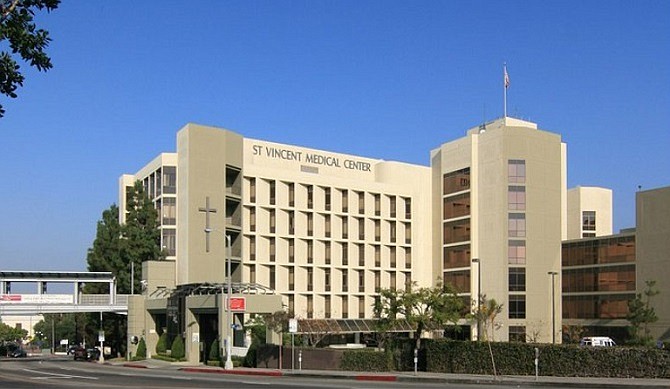
Verity Health System announced Jan. 6 that it plans to close St. Vincent Medical Center, a 366-bed hospital in Los Angeles.

El Segundo, Calif.-based Verity entered Chapter 11 bankruptcy in August 2018 and is seeking bankruptcy court approval to close St. Vincent Medical Center. The nonprofit health system is shutting down St. Vincent after a deal to sell four of its hospitals fell through.

Corona, Calif.-based KPC Group bid $610 million in January 2019 to acquire four hospitals from Verity, and the bankruptcy court approved the asset purchase agreement three months later. In early December, KPC’s Strategic Global Management missed the court-appointed deadline to purchase the hospitals.

In December, SGM appealed the court’s order setting the closing deadline. About one month later, Verity filed a lawsuit against KPC Group and its affiliates, alleging “intentional and misleading conduct” and breach of the asset purchase agreement, according to the Los Angeles Times.

The bankruptcy court will consider Verity’s request to close St. Vincent later this week. The health system said arrangements have already been made to transfer patients and specialty services to nearby facilities.

“We are deeply saddened to announce the planned closure of St. Vincent Medical Center,” Verity Health CEO Rich Adcock said in a news release. “This decision has not been taken lightly and comes only after exhausting every option to keep this hospital open.”

The closure of St. Vincent will not affect Verity’s other three hospitals in California: St. Francis Medical Center in Lynwood, Seton Medical Center in Daly City, and Seton Coastside in Moss Beach.