Indiana system to pay $345M in case tied to physician pay

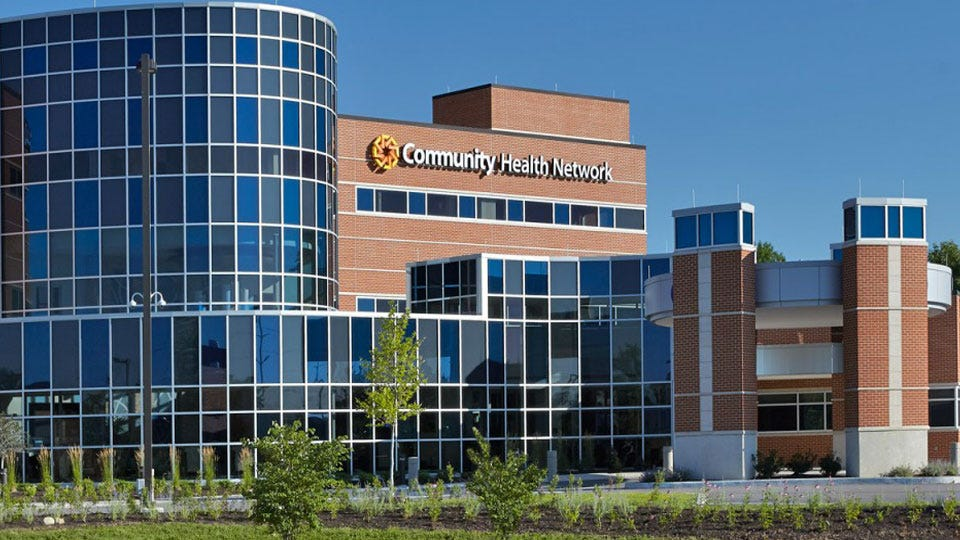
Indianapolis-based Community Health Network has agreed to a $345 million settlement to resolve allegations that, dating back to 2008, it violated the False Claims Act and Stark law.

The settlement, announced Dec. 19, stems from a whistleblower complaint filed in 2014 by the nonprofit health system’s former CFO and COO under the qui tam provisions of the False Claims Act. 

The United States filed suit against CHN in 2020, alleging that the system violated the False Claims Act by knowingly submitting claims to Medicare for services that were referred in violation of the Stark law, which requires that the compensation of employed physicians be fair market value and cannot account for the volume of referrals. 

The U.S. complaint alleged that, starting in 2008, CHN’s senior management engaged in a scheme to recruit physicians for employment with outsized pay in an effort to secure profitable referrals. The salaries offered to cardiologists, cardiothoracic surgeons, vascular surgeons, neurosurgeons and breast surgeons for CHN employment were sometimes up to double what physicians earned in private practices, the complaint alleged. 

The government alleged that CHN provided false compensation information to a valuation firm, ignored the consultants’ warnings about legal risks of overcompensation and awarded bonuses to physicians based on their referrals to providers within the CHN network. 

CHN said the $345 million settlement will be paid from its reserves, which reported operating revenue of $3.1 billion in 2022. The nonprofit system has more than 200 sites of care and affiliates throughout Central Indiana, including 10 hospitals. 

“This is completely unrelated to the quality and appropriateness of the care Community provided to patients,” CHN Spokesperson Kris Kirschner said in a statement shared with Becker’s. “This settlement, like those involving other health systems and hospitals, relates to the complex, highly regulated area of physician compensation. Community has consistently prioritized the highest regulatory and ethical standards in all our business processes.” 

The system said it “has always sought to compensate employed physicians based on evolving industry best practices with the advice of independent third parties” and “has always sought to provide complete and accurate information to our third-party consultants.” 

“When doctors refer patients for CT scans, mammograms or any other medical service, those patients should know the doctor is putting their medical interests first and not their profit margins,” Zachary Myers, U.S. attorney for the Southern District of Indiana, said in the Justice Department news release. 

“Community Health Network overpaid its doctors. It also paid doctors bonuses based on the amount of extra money the hospital was able to bill Medicare through doctor referrals,” Mr. Myers said. “Such compensation arrangements erode patient trust and incentivize unnecessary medical services that waste taxpayer dollars.”  

Under the settlement, CHN will enter into a five-year corporate integrity agreement with HHS in addition to its $345 million payment to the U.S.


Jefferson, Lehigh Valley Health plan to merge into 30-hospital system

Pennsylvania health systems Jefferson and Lehigh Valley Health Network have signed a non-binding letter of intent to combine.

Philadelphia-based Jefferson and Allentown, Pa.-based LVHN announced the letter Dec. 19 in a news release, with expectations to close the transaction in 2024. Combined, Jefferson and LVHN would form a system with 30 hospitals, more than 700 sites of care and more than 62,000 employees. 

Jefferson CEO Joseph Cacchione, MD, will serve as CEO of the expanded system — dubbed for now as Jefferson Enterprise — and LVHN President and CEO Brian Nester, DO, will serve as its executive vice president and COO. Dr. Nester will also serve as president of the legacy LVHN, reporting directly to Dr. Cacchione. An integrated board of trustees and leadership team will be made up of members from both systems, specifics of which are expected in the definitive agreement.

“The healthcare landscape and our communities’ needs are changing; it is critical leading systems evolve and make investments in the future of care and wellness — growing and protecting access to enhanced, affordable, high-quality and innovative care, particularly for historically underserved patients,” Dr. Cacchione said in the release. 

The merger is another development out of Jefferson, which has seen a year of change. Dr. Cacchione assumed the CEO post in September 2022, and the system has since welcomed a new president, CFO, and dean of its medical school and physicians group. Earlier this year, Jefferson rolled out a reorganization plan to operate as three divisions instead of five, which involved layoffs affecting executives and a later workforce reduction of about 400 positions.  

Cost-cutting has been in effect at LVHN, too. The 13-hospital system, which includes nearly 3,000 physicians and advanced practice clinicians, eliminated approximately 240 positions as part of restructuring this fall. 

“In Jefferson, we have found an ideal partner that shares our culture and commitment to excellence in clinical care and a learning environment, and that has done a fabulous job in establishing a highly successful health plan with a sharp focus on the well-being of Medicaid and Medicare beneficiaries,” Dr. Nester said. “The expertise derived from these operations is becoming a crucial competency for health systems to deliver on their mission, and Jefferson Health Plans will help drive improvements in health outcomes, especially in vulnerable populations. We are also very excited about the opportunity to expand academic and talent development programs that will further bolster our provider pipeline and enhance our ability to attract and retain top talent to the benefit of the communities we both serve.”

FDA approves landmark sickle cell gene therapy treatment

https://mailchi.mp/79ecc69aca80/the-weekly-gist-december-15-2023?e=d1e747d2d8

Last week, the Food and Drug Administration (FDA) approved two gene therapy treatments for sickle cell disease, Casgevy and Lyfgenia.

Casgevy, jointly developed by Boston, MA-based Vertex Pharmaceuticals and Switzerland-based CRISPR Therapeutics, is the first approved treatment of any kind available to US patients that uses CRISPR’s gene-editing capabilities.

Lyfgenia, made by Somerville, MA-based Bluebird Bio, uses a more common retrovirus technique for genetic modification. The FDA estimates that about 20K Americans with sickle cell disease will be eligible for the therapies, limited to those patients 12 and older who have had episodes of debilitating pain.

Both treatments will only be available at a small number of facilities nationwide, priced between $2-3M, and require a patient to endure months of hospitalization as well as intensive chemotherapy. Around 100K mostly Black Americans suffer from sickle cell disease, which causes intense pain, organ damage, and reduced life expectancy. Previously, the only curative treatment was a bone marrow transplant.

The Gist: The approval of these drugs represents a milestone moment for those suffering from sickle cell disease, while Casgevy also fulfills the revolutionary promise scientists have seen in CRISPR since it first received broad attention in 2005.

However, now that gene-editing therapies have graduated from the domain of scientific possibility into the realities of our healthcare delivery system, the new challenge becomes ensuring accessibility and equity, as many Americans who most stand to benefit from it also experience barriers in access to care and insurance coverage. (We’d expect insurer pushback similar to that seen when the first highly effective, but extremely costly, hepatitis C treatments like Solvaldi hit the market a decade ago this month.)

While the clinical trial patients who received Casgevy report having “a new lease on life”, skyhigh costs, questions of insurance coverage, and the arduous, time-intensive nature of the procedure stand in the way of a population-wide cure for sickle cell disease.

Sweeping health reform takes a back seat for this election cycle

https://mailchi.mp/79ecc69aca80/the-weekly-gist-december-15-2023?e=d1e747d2d8

After a presentation this week, a senior physician from the audience of our member health systems reached out to discuss a well-trod topic, the future of health reform legislation. But his question led to a more forward-looking concern: 

“You talked very little about politics, even though we have an election coming up next year. Are you anticipating that Medicare for All will come up again? And what would the impact be on doctors?” 

As we’ve discussed before, we think it’s unlikely that sweeping health reform legislation like Medicare for All (M4A) would make its way through Congress, even if Democrats sweep the 2024 elections—and it’s far too early for health systems to dedicate energy to a M4A strategy.

Healthcare is not shaping up to be a campaign priority for either party, and given the levels of partisan division and expectations that slim majorities will continue, passing significant reform would be highly unlikely. 

Although there is bipartisan consensus around a limited set of issues like increasing transparency and limiting the power of PBMs, greater impact in the near term will come from regulatory, rather than legislative, action. 

For instance, health systems are much more exposed by the push toward site-neutral payments. How large is the potential hit? One mid-sized regional health system we work with estimated they stand to lose nearly $80M of annual revenue if site-neutral payments are fully implemented—catastrophic to their already slim system margins.

Preparing for this inevitable payment change or the long-term possibility of M4A both require the same strategy: serious and relentless focus on cost reduction.

This still leaves a giant elephant in the room: the long-term impact on the physician enterprise. 

As referral-based economics continue to erode, health systems will find it increasingly difficult to maintain current physician salaries, further driving the need to move beyond fee-for-service toward a health system economic model based on total cost of care and consumer value, while building physician compensation around those shared goals.