


Cartoon – Patriotic Duty


Washington State Hospital Association reported a $929 million net loss due to an increase in operating expenses and nonoperating investment losses, The News Tribune reported July 21.
The review reflected January through March 2022 and showed operating revenue increased by 5 percent; however, operating expenses increased by 11 percent.
“This combined with non-operating investment losses, resulted in a total margin of negative 13 percent,” WSHA said in a briefing of the review July 21.
The losses were mainly seen in urban Washington hospitals, though rural hospitals were also affected.
“All 52 urban hospitals/health systems reported negative margins and account for 86 percent of the losses statewide,” WSHA said. “Of the independent rural hospitals responding, 18 out of 32 had negative margins.”
WSHA said lower Medicaid reimbursements were part of the problem. In the first quarter, Medicaid reimbursements covered 42 percent of the cost of care delivery.
Pandemic pressures also had a negative effect, according to WSHA. It said federal COVID-19 relief funds have been depleted.
Additionally, WSHA said labor costs have continued to rise because of a need to retain staff and a reliance on travel nurses with high wages.
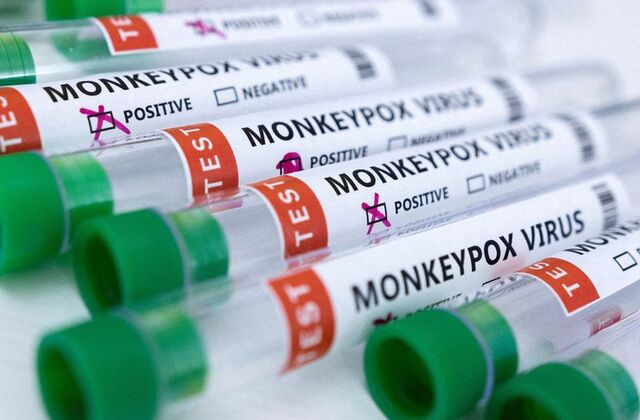
The World Health Organization (WHO) has declared the monkeypox outbreak a global health emergency after the virus reached more than 70 countries around the world.
WHO Director General Tedros Adhanom Ghebreyesus said at a press conference on Saturday that he decided the outbreak represents a “public health emergency of international concern.”
“WHO’s assessment is that the risk of monkeypox is moderate globally and in all regions, except in the European region where we assess the risk as high,” he said.
Tedros said the WHO’s International Health Regulations Emergency Committee came to a consensus at a meeting a month ago that monkeypox did not represent an international public health emergency, but the situation has changed.
He said the WHO had received reports of just more than 3,000 cases from 47 countries at the time, but more than 16,000 cases have now been reported from 75 countries and territories. He said there have been five deaths.
Tedros said the committee was unable to reach a consensus on whether the outbreak should be considered a public health emergency of international concern, but he considered five factors in declaring it an emergency.
He said the first factor is information countries have shared with the WHO, and that data from countries around the world shows that the virus has spread rapidly to many countries that have not seen it before.
He added that the second factor is the definition of a public health emergency and that the three criteria for declaring such an emergency have been met.
A public health emergency of international concern is considered a situation that is serious, sudden, unusual or unexpected, carries implications for public health beyond a country’s borders and may require immediate international action, according to the WHO.
Tedros said the third factor is the advice of the committee, which was divided, and the fourth factor is scientific principles and evidence, which is currently “insufficient” and leaves “many unknowns.”
He said the fifth factor is the risk to human health, international spread and the potential for interfering with international traffic.
He said there is a “clear risk” for international spread, but the risk of interfering with international traffic is currently low.
“So in short, we have an outbreak that has spread around the world rapidly, through new modes of transmission, about which we understand too little and which meets the criteria in the International Health Regulations,” Tedros said.
The Hill has reached out to the WHO for comment.
Monkeypox has spread quickly in the United States since cases were first detected in the country in May. The virus appears to be spreading primarily among men who have sex with men and spreads through extended physical contact.
The virus can cause symptoms like lesions, a rash and swelling of lymph nodes.
Ghebreyesus said he is making recommendations for four categories of countries in managing monkeypox.
For countries that have not seen any cases or not reported a case in 21 days, they should take measures like activating health mechanisms to prepare to respond to monkeypox and raise awareness about transmission, according to a WHO statement.
Countries with recently imported cases of monkeypox and that are experiencing human-to-human transmission — which includes the United States — should implement a coordinated response, work to engage and protect their communities and implement public health measures like isolating cases and using vaccines.
The Biden administration announced earlier this month that it would distribute an additional 144,000 doses of the Jynneos vaccine to address monkeypox after having distributed about 40,000 doses previously.
The third group of countries are those with the “known or suspected” transmission of the virus from animals to humans. They should establish or activate mechanisms for understanding and monitoring the animal-to-human and human-to-animal transmission risk and study transmission patterns.
The fourth group are countries with the manufacturing capacity to create vaccines and other medical countermeasures. The WHO statement calls on these countries to increase production and availability of these measures and work with WHO to ensure necessary supplies are made available based on public health needs at “reasonable cost” to countries that need support the most.
Ghebreyesus said the outbreak is concentrated among men who have sex with men and especially those with multiple sexual partners.
“That means that this is an outbreak that can be stopped with the right strategies in the right groups,” he said.
He added that countries should work with communities of men with male sexual partners to inform them and offer support and to adopt measures that protect the “health, human rights and dignity of affected communities.”
Ghebreyesus said civil society organizations, especially those with experience working with people who are HIV-positive, should work with WHO to fight stigma and discrimination.
The spread of HIV and AIDS in the 1980s led to increased stigma for those who identify as gay as the virus was initially reported to be spreading among gay men.
https://mailchi.mp/efa24453feeb/the-weekly-gist-july-22-2022?e=d1e747d2d8

Centivo, a Buffalo, New York-based health plan administrator for self-funded employers, has clients in 13 states. Founded in 2019, the company works with national and mid-market employers and health system partners to deliver a consumer-forward, access-driven model, creating customized provider networks that include free primary care and an unlimited virtual care option.
The company aims to reduce consumer out-of-pocket exposure and overall employee healthcare costs by identifying and partnering with high-performing providers in each market it serves. Using this model, Centivo is able to lower costs for self-insured employers by at least 15 percent compared to traditional insurers, through narrow networks with low-cost, high-quality providers.
Morgan Health, which has styled itself as a private sector version of Medicare’s innovation center, has invested $85M in companies that look to transform employer-sponsored healthcare—taking stakes in Seattle-based primary-care company Vera Whole Health and Nashville-based Embold Health, in addition to Centivo.
The Gist: We’ve had the opportunity to work directly with the Centivo team since its early days, as outside advisors. We’ve been continually impressed by the company’s success in navigating the complicated landscape of self-funded employers, broker relationships, and incumbent health systems.
The “ground war” of piecing together these bespoke offerings for employers stands in stark contrast to the approach of traditional payers, who simply aggregate scale and rely on brute-force pricing leverage to manage employer cost trend.
It’s also an interesting juxtaposition to Amazon and other “disruptors”, who bring a relatively naïve, Silicon Valley view to healthcare, and often find themselves frustrated by just how hard it is to drive change amid overwhelming complexity.
https://mailchi.mp/efa24453feeb/the-weekly-gist-july-22-2022?e=d1e747d2d8

We’ve been noticing a disconnect recently in our conversations with health system executives. When we share national data that shows that emergency department visits are still down substantially from pre-COVID levels, the reaction is often one of surprise.
As one CEO recently put it to us, “We’re seeing exactly the opposite. Our ED feels busier than ever.” It appears that, upon further examination, what’s going on is a shift in the mix of patients who are visiting the ED. The lower-acuity, urgent-care level cases do seem to have shifted away from traditional hospital settings toward virtual visits and urgent care centers. That’s good news from an overall cost of care perspective, but it means that hospital EDs are increasingly filled with sicker, more acute patients.
One sure sign the mix has shifted: many systems are now telling us that the percentage of ED visitors who end up getting admitted is rising. But staffing-driven capacity constraints mean that it’s taking longer to find an inpatient bed for those patients, or to discharge them from the ED to other settings (or back home)—so the average length of stay in the ED is going up.
On top of that, many EDs are now seeing an increase in psych patients, who stay longer and require greater staff attention. All of that, along with staff who are completely exhausted and demoralized after the pandemic, has combined to make many EDs feel swamped these days—despite what the national data are showing.
https://mailchi.mp/efa24453feeb/the-weekly-gist-july-22-2022?e=d1e747d2d8

A recent piece in the Harvard Business Review demonstrates how SCAN Health Plan, a not-for-profit, California-based Medicare Advantage plan with over 270,000 members, was able to increase medication adherence among Black and Hispanic beneficiaries. Dr. Sachin Jain, CEO of SCAN, and his colleagues describe how identifying the specific causes of disparities in medication adherence, establishing clear financial incentives for senior leaders, and targeting investments enabled the insurer to reduce disparities by 35 percent within eighteen months.
The Gist: Addressing complex and longstanding racial health disparities is an incredibly difficult but vital task. While there’s been plenty of discussion about the problem, there’s been a lack of effective solutions for healthcare organizations to deploy.
SCAN’s progress demonstrates how narrowing the focus down to a more specific issue can yield faster results. Jain and his colleagues write that SCAN’s next areas of focus are reducing disparities in diabetes control and flu vaccinations. We’re looking forward to learning about other innovative ways healthcare organizations are tackling long overdue gaps in care.
https://mailchi.mp/efa24453feeb/the-weekly-gist-july-22-2022?e=d1e747d2d8

After a few years of relatively unchanged monthly premiums, a Kaiser Family Foundation analysis of 72 rate filings for 2023 finds a median 10 percent increase. Insurers say the biggest driver is rising medical costs, driven by higher rates for provider services and pharmaceuticals, as well as a return to pre-pandemic utilization levels. Insurers aren’t expecting COVID-19 or federal policy changes—including a potential extension of enhanced subsidies—to have much of an impact on rates.
The Gist: High inflation and the growing wage-price spiral have left providers with much higher costs, which is sure to drive up the overall cost of healthcare. Where provider systems have the leverage to demand higher rates from insurers, this will inevitably drive up premiums—an effect that is already starting to show up in the individual insurance market.
If Congressional Democrats are able to extend ACA subsidies, most ACA enrollees won’t actually feel these premium increases, but as contracts in the group market come up for renewal, we’d expect inflation in employer-sponsored premiums as well. Given the cost-sharing now built into most benefit plans, individual consumers will likely see healthcare join gas, food, and housing as household costs that are experiencing unsustainable inflationary increases.
https://mailchi.mp/efa24453feeb/the-weekly-gist-july-22-2022?e=d1e747d2d8

While Amazon has been amassing a range of healthcare assets in recent years, including an online pharmacy, virtual and in-home care capabilities, and even diagnostics, this marks the e-commerce giant’s first significant push into bricks-and-mortar healthcare delivery.
One Medical, which went public in 2020, operates 182 medical offices in 25 markets, and acquired Medicare-focused primary care provider Iora Health last year. It offers an access-forward, concierge-lite model to employer clients and individual consumers, and more recently has pursued a partnership strategy with anchor health systems in the markets where it operates.
The Gist: Amazon’s pricey purchase of One Medical, for which it will pay a 77 percent premium over market value, is sure to set the healthcare punditocracy afire—even more than its earlier, ill-fated arrangement with JPMorgan Chase and Berkshire Hathaway.
Clearly, Amazon is shifting from a build-and-tinker to a buy-and-scale approach to its Amazon Care business, which has been slow off the mark since the company first started selling its own employee clinic services to other employers. With One Medical, Amazon gets thousands more employer relationships, a much larger physical footprint, and a buzzy brand in primary care.
But the deal is less “disruptive” than it might first appear. There is still a missing piece—namely, a risk model that lets Amazon profit from managing patients in the primary care setting. One Medical’s model is expensive—it has yet to turn a profit—and despite the acquisition of Iora’s population health platform, it has doubled down on creating linkages with high-cost health systems rather than truly investing in care management.
Primary care on its own is not an attractive growth business, even in a hybrid virtual/in-person model, even at Amazon’s scale. To truly disrupt healthcare, Amazon will need to wade into the risk business, either by partnering with a health plan or creating its own risk arrangements with employer clients.
That’s going to be hard, for all the same reasons that Haven was hard—entrenched payer relationships, slow-moving benefits managers, and a murky and conflicted broker channel. We’d love to be proven wrong, but this deal feels less like true innovation and more like a frothy story for slide decks and conference panels.

HCA Healthcare and Tenet Healthcare, two of the largest for-profit hospital operators in the U.S., reported lower net income in the second quarter of this year than in the same period of 2021.
HCA Healthcare
1. Nashville, Tenn.-based HCA Healthcare, a 182-hospital system, reported revenues of $14.82 billion in the second quarter of this year, up from $14.44 billion in the same period last year.
2. HCA’s net income totaled $1.16 billion in the second quarter of 2022, down from $1.45 billion in the same period a year ago. The second quarter of this year included $32 million in losses on the sales of facilities and and losses on retirement of debt of $78 million.
3. HCA said same-facility admissions declined 1.2 percent year over year in the second quarter of this year. Emergency room visits were up 7.3 percent year over year.
4. “Many aspects of our business were positive considering the challenges we faced with the labor market and other inflationary pressures on costs,” Sam Hazen, CEO of HCA, said in a July 22 earnings release. “Our teams executed well as they have in the past through other difficult environments. Again, I want to thank them for their dedication and excellent work.”
5. For the six months ended June 30, HCA reported net income of $2.43 billion on revenues of $29.77 billion. In the same period a year earlier, the company posted net income of $2.87 billion on revenues of $28.41 billion.
Tenet Healthcare
1. Dallas-based Tenet Healthcare reported revenues of $4.64 billion in the second quarter of this year, down from $4.95 billion in the same period a year earlier. The decrease was primarily attributed to the sale of the company’s Miami-area hospitals in the third quarter of 2021 and the impact of a cybersecurity incident.
2. The 60-hospital system ended the second quarter of this year with net income of $38 million, down from $119 million in the same quarter last year.
3. Same-hospital admissions adjusted for outpatient activity were down 5.3 percent year over year in the second quarter of this year. Tenet said a cybersecurity incident in April that temporarily disrupted some acute care operations contributed to the decline.
4. “We demonstrated resilience in the face of a disruptive cyber attack and discipline through challenging market conditions,” Saum Sutaria, MD, CEO of Tenet, said in a July 21 earnings release. “The ongoing diversification of Tenet driven by our capital efficient ambulatory expansion is a key differentiator that presents compelling opportunities for growth in earnings and free cash flows.”
5. Looking at the six months ended June 30, Tenet reported net income of $178 million on revenues of $9.38 billion. In the same period of 2021, the company reported net income of $216 million on revenues of $9.74 billion.
 HENRY KOTULA