

Thought of the Day: On Accomplishment


Editor’s Note: This story has been updated with the DOJ’s statement regarding its civil fraud complaint. This story was originally filed June 3.
Updated: July 13, 3:30 p.m.
The federal government filed a civil complaint Tuesday in federal court in Brooklyn against the country’s largest dialysis provider alleging that the company performed unnecessary procedures on dialysis patients.
The Department of Justice has formally intervened and joined the False Claims Act whistleblower lawsuit filed against dialysis giant Fresenius Medical Care, according to court documents filed in U.S. District Court in Brooklyn.
The DOJ’s False Claims Act complaint alleges Fresenius Vascular Care, a business unit of Fresenius Medical Care performed these unnecessary procedures at nine centers across New York City, Long Island and Westchester, and billed the procedures to Medicare, Medicaid, the Federal Health Benefits Program and TRICARE. The complaint seeks damages and penalties under the False Claims Act.
The whistleblower complaint alleges that from about January 1, 2012 through June 30, 2018, Fresenius routinely performed certain procedures on patients with end stage renal disease (ESRD) who were receiving dialysis, without sufficient clinical indication that the patients needed the procedures. Fresenius knowingly subjected ESRD patients—who included elderly, disadvantaged minority, and low-income individuals—to these procedures to increase its revenues, the DOJ complaint states.
A Fresenius spokesperson said the company disputes the allegations contained in both the relators’ complaint and the U.S. government’s complaint and “intends to vigorously defend the litigation.”
“Our network of vascular centers is leading efforts to reduce total healthcare costs and improve patient outcomes by expanding access to innovative and less-invasive procedures. Our policies are intended to result in a high standard of care and compliance with government regulations,” the Fresenius spokesperson said in a statement.
Breon Peace, United States Attorney for the Eastern District of New York, called the company’s alleged conduct “egregious,” claiming that Fresenius “not only defrauded federal healthcare programs but also subjected particularly vulnerable people to medically unnecessary procedures.”
“This Office will hold medical providers accountable for practices that needlessly expose patients to harm for financial gain at taxpayer expense,” Peace said in a statement.
Two doctors allege in a lawsuit that the country’s largest dialysis provider performed potentially thousands of unnecessary, invasive vascular procedures on late-stage kidney disease patients and fraudulently charged Medicare and Medicaid for these procedures.
The lawsuit, originally filed in 2014 in New York, claims Fresenius Medical Care and its business unit, Azura Vascular Care, violated the federal False Claims Act. The case remained under seal until the court lifted the seal May 9. The federal government has 60 days to file its complaint.
Nineteen states also are included in the lawsuit and potentially could join the case.
The U.S. attorney in the Eastern District of New York will be taking over with respect to federal False Claims Act fraud claims against Fresenius, according to law firm Cohen Milstein Sellers & Toll, which is representing the plaintiffs in the case.
The U.S. attorney’s office declined to comment at the time.
The plaintiffs, two practicing nephrologists, charge in the complaint that Fresenius performed thousands of end-stage renal disease-related treatments that were “not medically reasonable and necessary” and that “exposed patients to undue and unnecessary risks.”
In a statement provided by a spokesperson, Fresenius declined to comment on the lawsuit.
Fresenius Medical Care North America is the largest dialysis provider in the U.S., operating over 2,600 dialysis units nationwide and treating over 205,000 patients annually. Its business unit, Azura Vascular Care, operates more than 90 vascular care facilities across the country.
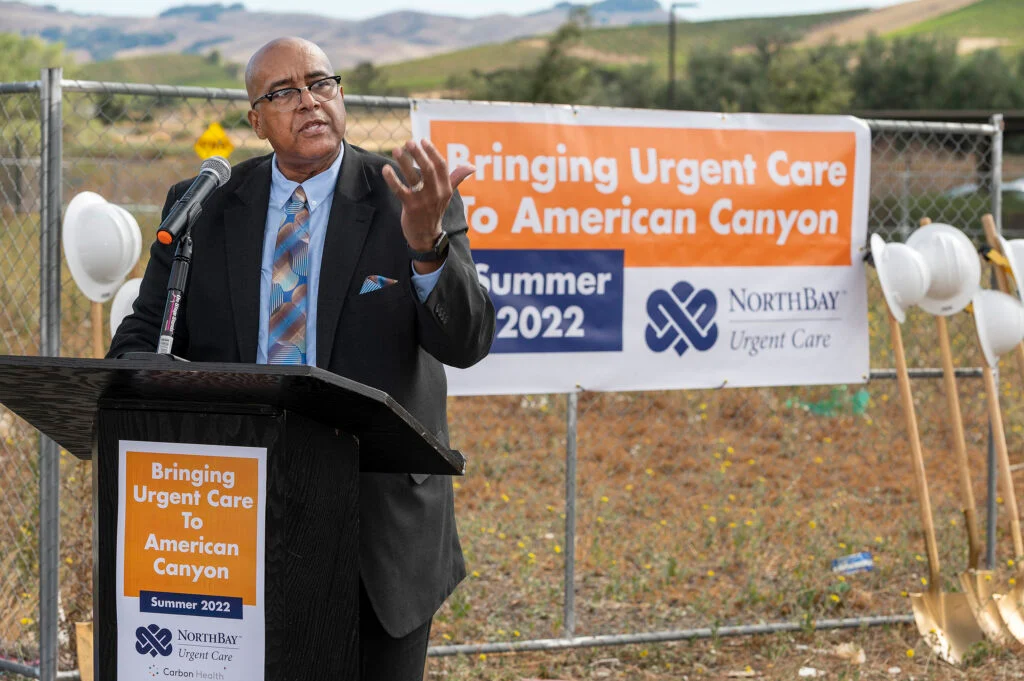
Fairfield, Calif.-based NorthBay Health announced July 11 that it will cut 7 percent of its workforce following continued financial strains, the Daily Republic reported July 12.
“The harsh reality is a number of factors contributed to NorthBay’s economic headwinds, including reduced volumes; skyrocketing prices for supplies, drugs and medical devices; the continuing need to rely on expensive temporary workers; and the rising number of Medicare and Medi-Cal patients whose care is not fully covered by government payments,” B. Konard Jones, president and CEO of NorthBay Health, said in a press release shared with the Daily Republic.
This 7 percent encompasses full-time positions or multiple part-time positions that equate to full-time hours. NorthBay Health said that 190 full-time positions will be cut in total.
Mr. Jones added that the healthcare system has a plan in place to get its budget back on track, but details of that plan have not been revealed at this time.
So far, NorthBay Health has already cut senior management positions by 20 percent. It is likely more positions will be cut in the future, according to the Daily Republic.
NorthBay Health is an independent, nonprofit healthcare system with a medical center in Fairfield, Calif., a hospital in Vacaville, Calif., and multiple specialty care clinics throughout Solano County. It was formerly known as NorthBay Healthcare.

California hospitals have launched a campaign to roll back Los Angeles’ newly enacted $25 per hour minimum wage for many private sector healthcare workers.
The Healthcare Workers Minimum Wage Ordinance was signed Friday by Los Angeles Mayor Eric Garcetti after the city received a petition for the pay increase organized by the labor group SEIU-United Healthcare Workers West (SEIU-UHW) and signed by more than 145,000 people. Los Angeles’ current minimum wage is $16.04.
The pay bump is set to take effect 31 days after being published by the city clerk, will be adjusted annually for cost of living starting in 2024 and will raise wages for roughly 20,000 healthcare workers across the city, according to the mayor’s office. Those impacted include non-clinical staff, such as food service workers, groundskeepers and maintenance workers, according to the ordinance.
“Working long, grueling hours and absorbing insurmountable stress, the burnout being felt from the pressures of COVID-19 has been prevalent, causing an alarming number of healthcare workers to leave the profession altogether,” Los Angeles Councilmember Curren Price said in a statement. “The approval to raise their wages demonstrates to the countless workers that they are valued, seen, heard and above all, their lives matter.”
The ordinance was opposed by hospitals under the banner of the No on the Unequal Pay Measure Coalition, a campaign sponsored by the California Association of Hospitals and Health Systems.
The group is now seeking enough signatures to put the wage hike in front of Los Angeles voters, which would block the increase from going into effect until a 2024 election yields a verdict. The hospitals-backed push would require nearly 41,000 signatures to be submitted within 30 days.
The coalition paints the Healthcare Workers Minimum Wage Ordinance as an “inequitable, arbitrary and discriminatory” move that would ultimately harm patients and workers.
Because it applies only to certain workers at private hospitals, hospital-based facilities and dialysis clinics, the “vast majority” of Los Angeles healthcare workers are excluded from the measure’s pay increase, the coalition said.
As such, the ordinance will drive a flight of talent from public hospitals and other non-covered facilities such as community health clinics, Planned Parenthood clinics and nursing homes, the group said.
Workforce shortages at these facilities would disproportionately harm the disadvantaged, underserved and uninsured communities whom these facilities more often serve, the coalition said. Service cuts would also be in the cards as provider organizations contend with tens of millions of dollars in increased annual costs, they said.
“We all agree healthcare workers are heroes, but this Unequal Pay Ordinance is deeply flawed, inequitable and will hurt workers and patients,” the coalition said.
The city and proponents of the measure viewed much of the opposition as a push for profits.
In the ordinance’s text, the city highlighted “huge profits in the billions of dollars” and “increasing profit margins” health systems have seen during the pandemic. The city government wrote that “the healthcare industry needs to use some of its profits to fairly compensate workers who are sacrificing every day to care for patients.”
In a release celebrating the ordinance’s signing, SEIU-UHW said healthcare employers “have failed to compensate us for our dedication and sacrifices” and “have more than enough to raise wages.”
The group noted similar wage increase efforts ongoing in eight other California cities as well as a push to bring the $25 minimum to all of the state’s healthcare workers.
In a statement to the Los Angeles Times, SEIU-UHW spokesperson Renée Saldaña said the hospitals “are out of step with local voters if they think the solution is to slash wages for the caregivers who got us through the pandemic. … The problem that needs to be addressed is bloated executive compensation that is driving up healthcare costs for Angelenos.”
George Greene, president and CEO of the Hospital Association of Southern California, told the paper that many of the region’s hospitals are “reeling” financially due to the pandemic. He also said the city passed the ordinance without conducting any type of analysis regarding the impact it would have on the area’s hospitals.

COVID-19 led to a large increase in U.S. deaths. However, even before the pandemic, the U.S. had higher death rates than other wealthy nations. How many deaths could be avoided if the U.S. had the same mortality rates as its peers?
In a new study, we quantify the annual number of U.S. deaths that would have been averted over nearly a century if the U.S. had age-specific mortality rates equal to the average of 18 similarly wealthy nations. We refer to these excess U.S. deaths as “missing Americans.”
The annual number of “missing Americans” increased steadily beginning in the late 1970s, reaching 626,353 in 2019 (Figure). Excess U.S. deaths jumped sharply to 991,868 in 2020 and 1,092,293 in 2021 during the COVID-19 pandemic.
In 2021, nearly 1 out of every 3 U.S. deaths would have been averted if U.S. mortality rates had equaled those of its peer nations. Half of these excess deaths were among U.S. residents under 65 years. We estimate that the 1.1M excess deaths in 2021 were associated with 25M years of life lost, accounting for the number of years the deceased would otherwise be expected to live.
We also compared mortality rates of U.S. racial and ethnic groups with the international benchmark. Black and Native Americans accounted for a disproportionate share of the “missing Americans.” However, the majority of “missing Americans” were White non-Hispanic persons.
Our findings are consistent with recent reports that the life expectancy gap between the U.S. and peer nations widened during the pandemic, with U.S. life expectancy falling from 78.9 to 76.6 years. Life expectancy is widely reported, but it is a complex measure and may be misinterpreted as reflecting small differences in mortality at advanced ages.
In fact, the greatest relative differences in mortality between the U.S. and peer countries occur before age 65. In 2021, half of all deaths to U.S. residents under 65 years – and 90% of the increase in under-65 mortality since 2019 – would have been avoided if the U.S. had the mortality rates of other wealthy nations. In addition to the loss of life, these early deaths often leave behind child (and elder) dependents without key social and economic support.
Our calculations were based on recently released mortality data, obtained from the U.S. Centers for Disease Control and Prevention WONDER Database and the Human Mortality Database. The international comparison group included all available countries with relatively complete mortality data starting in 1960 or earlier, after excluding former communist countries. Our paper builds on prior analyses of excess deaths by our study team and by others.
We find a very large increase in excess U.S. deaths during the COVID-19 pandemic. However, this spike occurred on top of a growing trend that reached 600,000 excess deaths in 2019. Future COVID-19 deaths could be reduced with broader vaccine uptake, worker protections, and masking during surges. Even if COVID-19 mortality were eliminated, however, the U.S. would likely suffer hundreds of thousands of excess deaths each year, with many linked to firearms, opioids, and obesity.
Addressing excess deaths in the U.S. will require public health and social policies that target the root causes of U.S. health malaise, including fading economic opportunities and rising financial insecurity, structural racism, and failures of institutions at all levels of government to invest adequately in population health.

As employers plan for 2023, attracting and retaining talent is top of mind amid a competitive U.S. labor market. That’s led to over two-thirds of companies planning to enhance employee health and benefit offerings next year, according to survey results from Mercer published July 6.
The survey was conducted April 26 to May 13. In total, 708 organizations participated, from all industries and of all sizes ranging from fewer than 500 employees to more than 5,000.
Nine things to know:

With the impending summer dip in donors, blood centers across the U.S. face a tall hurdle during a national blood shortage.
Six months ago, the organization that supplies nearly half of the nation’s blood supply, Red Cross, declared the first-ever national crisis. Summer has always slowed donors, a trend often attributed to closed schools and people busy on vacations, but with COVID-19 already hurting blood donation numbers, blood banks face an unsteady season.
“It’s a very challenging time, and it does put a lot of stress on the organization because we take saving lives very seriously,” the executive director of the Arkansas Blood Institute, Mario Sedlock, told radio station KUAR. “We just want to make sure that our hospitals have what they need to take care of the patients and that’s essentially what we’re all about.”
An Ohio blood center issued an emergency plea in mid-June for O-negative donors because of a “dangerously low” supply, and some blood centers are offering free movie tickets and baseball tickets to entice donors.


