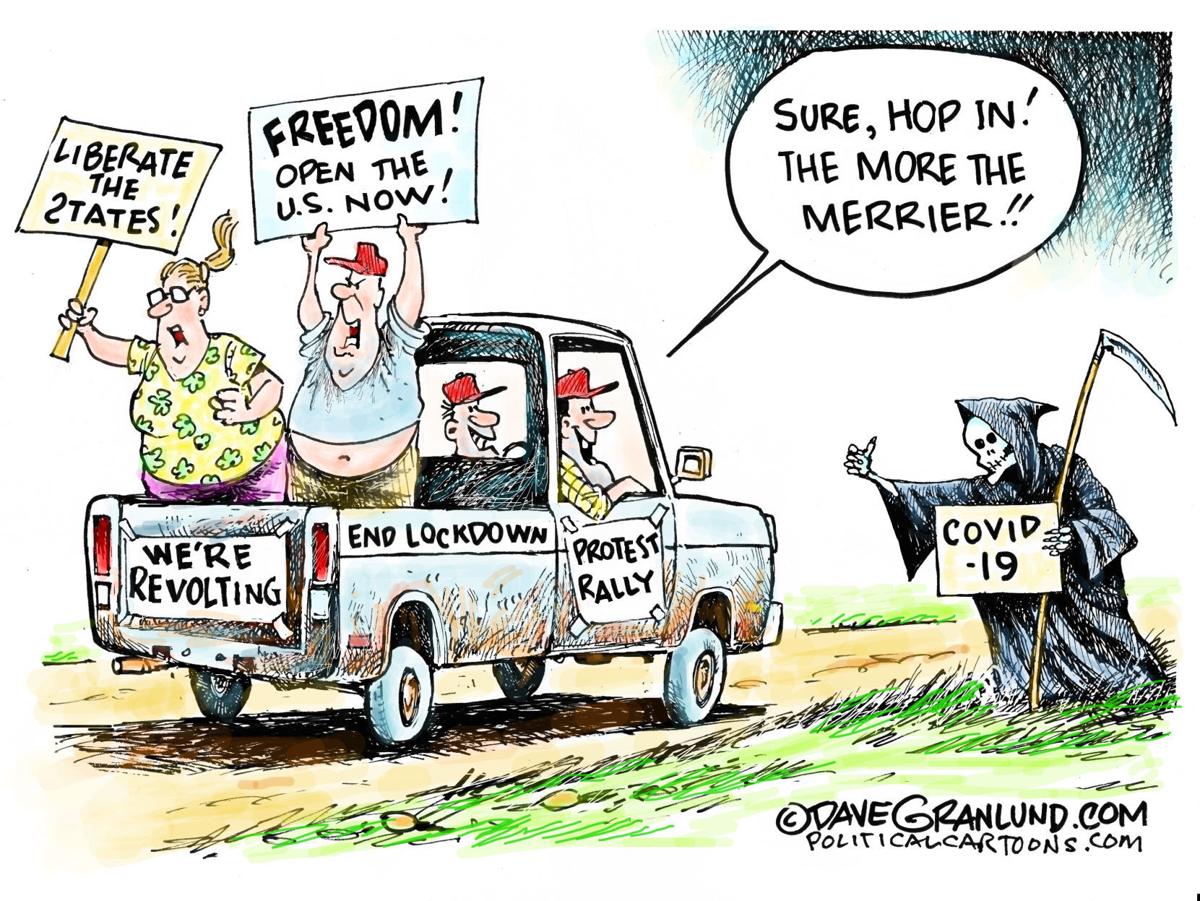
All the things that could prolong the COVID-19 pandemic — that could make this virus a part of our lives longer than anyone wants — are playing out right in front of our eyes.
Driving the news: The British variant is driving another surge in cases in Michigan, and Gov. Gretchen Whitmer has resisted reimposing any of the lockdown measures she embraced earlier in the pandemic.
Variants are beginning to infect more kids — “a brand new ball game,” as University of Minnesota epidemiologist Michael Osterholm recently put it.
New research confirms that our existing vaccines don’t work as well against the South African variant.
And some experts fear the pace of vaccinations in the U.S. is about to slow down.
Between the lines:The concern isn’t necessarily that the facts on the ground right now could end up being disastrous, but rather that we’re getting a preview of the longer, darker coronavirus future the U.S. may face without sufficient vaccinations.
If we don’t control the virus well enough, then even years into the future, we could be living through more new variants — some of which might be more deadly, some of which might be more resistant to vaccines, some of which might be more dangerous for certain specific populations.
That would translate into an ongoing risk of illness or potentially death for unvaccinated people and new races to reformulate vaccines as new variants keep emerging.
And it would lead to a world in which today’s vaccine-eager population would have to stay on top of those emerging risks, get booster shots when they’re available, and perhaps revive some of the pandemic’s social-distancing measures, in order to stay safe.
I got my first Pfizer vaccine in January. Is it too late to get the second injection now, more than two months later? What should I do?
The second dose of Pfizer-BioNTech’s vaccine should ideally be given three weeks after the first. (Moderna’s second dose is meant to be given four weeks after the first, while the Johnson & Johnson/Janssen shot is delivered in a single dose.) But, well, sometimes life gets in the way. So what happens if you don’t make it to that second appointment?
Schedule another one as soon as you can, says Dr. Adam Ratner, a pediatric infectious disease doctor at NYU Langone Health and a vaccine researcher.
While a three- or four-week gap between shots is ideal, the U.S. Centers for Disease Control and Prevention (CDC) saysyou can get your second shot within 42 days of the first one and still mount a full immune response. “Beyond that, we start to operate in an area where there’s simply less data,” Ratner says.
That doesn’t mean your second shot will be ineffective if it’s given more than six weeks after the first. It only means that studies have not specifically measured how much protection the two-dose vaccines offer when the shots are given more than 42 days apart. Still, the CDC says you don’t have to start over if you can’t get a second vaccine within 42 days. Countries including the U.K. are even purposely delaying second shots so they can get first doses out to more people, and some experts in the U.S. advocate for the same policy.
Ratner says if he were in your shoes, he wouldn’t worry too much. “I would say get the second dose now and consider yourself fully vaccinated,” he says. Just make sure you get a second dose of the same vaccine, since the CDC does not recommend mixing and matching with different shots.
It may be tempting to just stick with the one dose you’ve got—after all, one recent study showed that a single dose of the vaccine was about 80% effective at preventing COVID-19 infections, compared to 90% protection after two doses. But “it is somewhat of a tenuous 80%,” National Institute of Allergy and Infectious Diseases Director Dr. Anthony Fauci said at a recent press briefing. “When you leave it at one dose, the question is, ‘How long does it last?’”
To get the vaccine’s full benefits, and to make sure they last as long as possible, you’ll need a second shot.
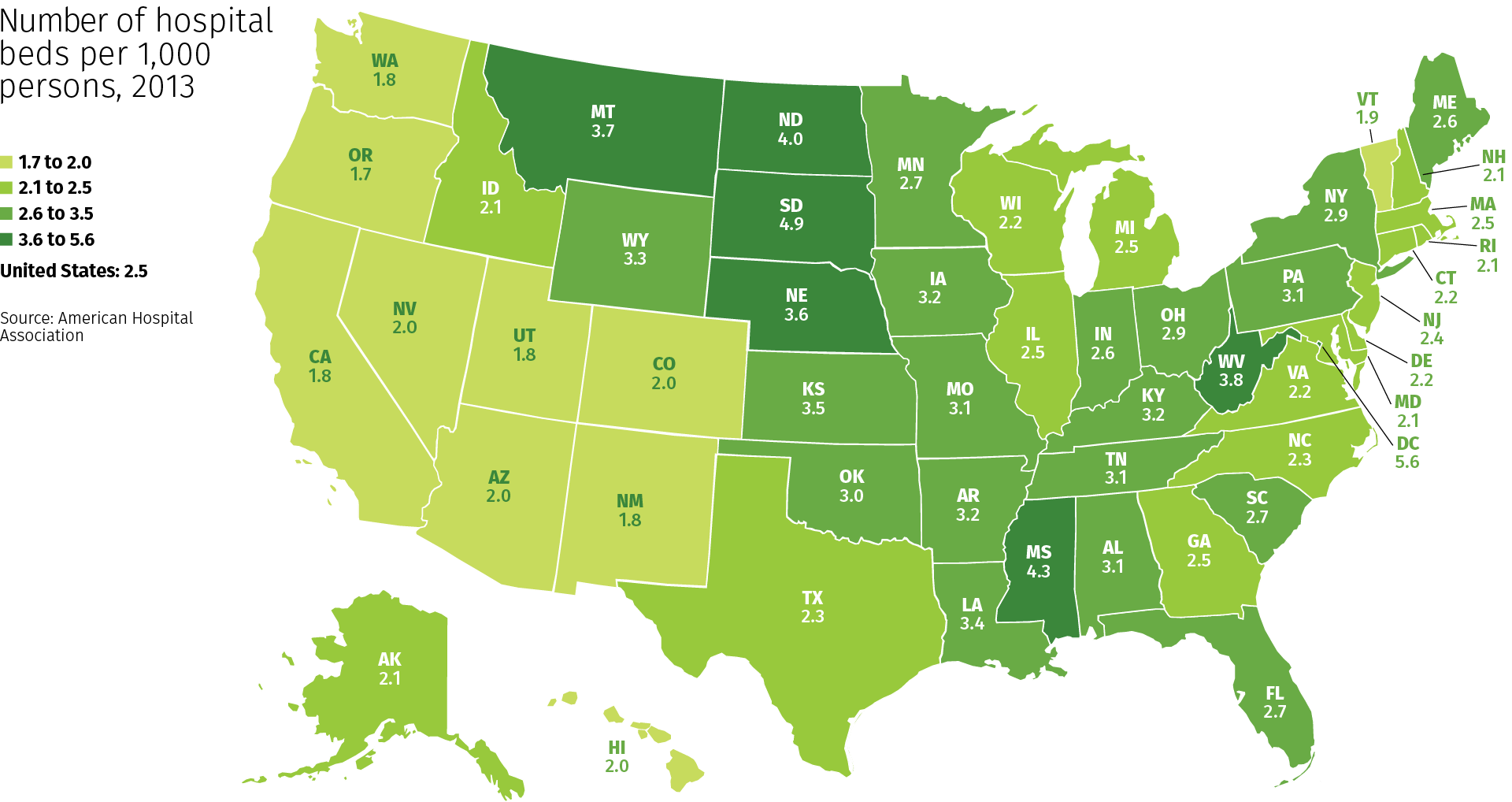
South Dakota has the highest number of hospital beds per 1,000 population in the U.S., while Oregon and Washington have the lowest, according to a ranking from the Kaiser Family Foundation.
The data is based on an analysis of the American Hospital Association’s annual survey from 2015 to 2019.
The national average per 1,000 U.S. residents was 2.4 hospital beds.
Here are the U.S. states ranked by number of staffed hospital beds per 1,000 population:
Note: The list includes ties and results in a numerical listing of 22.
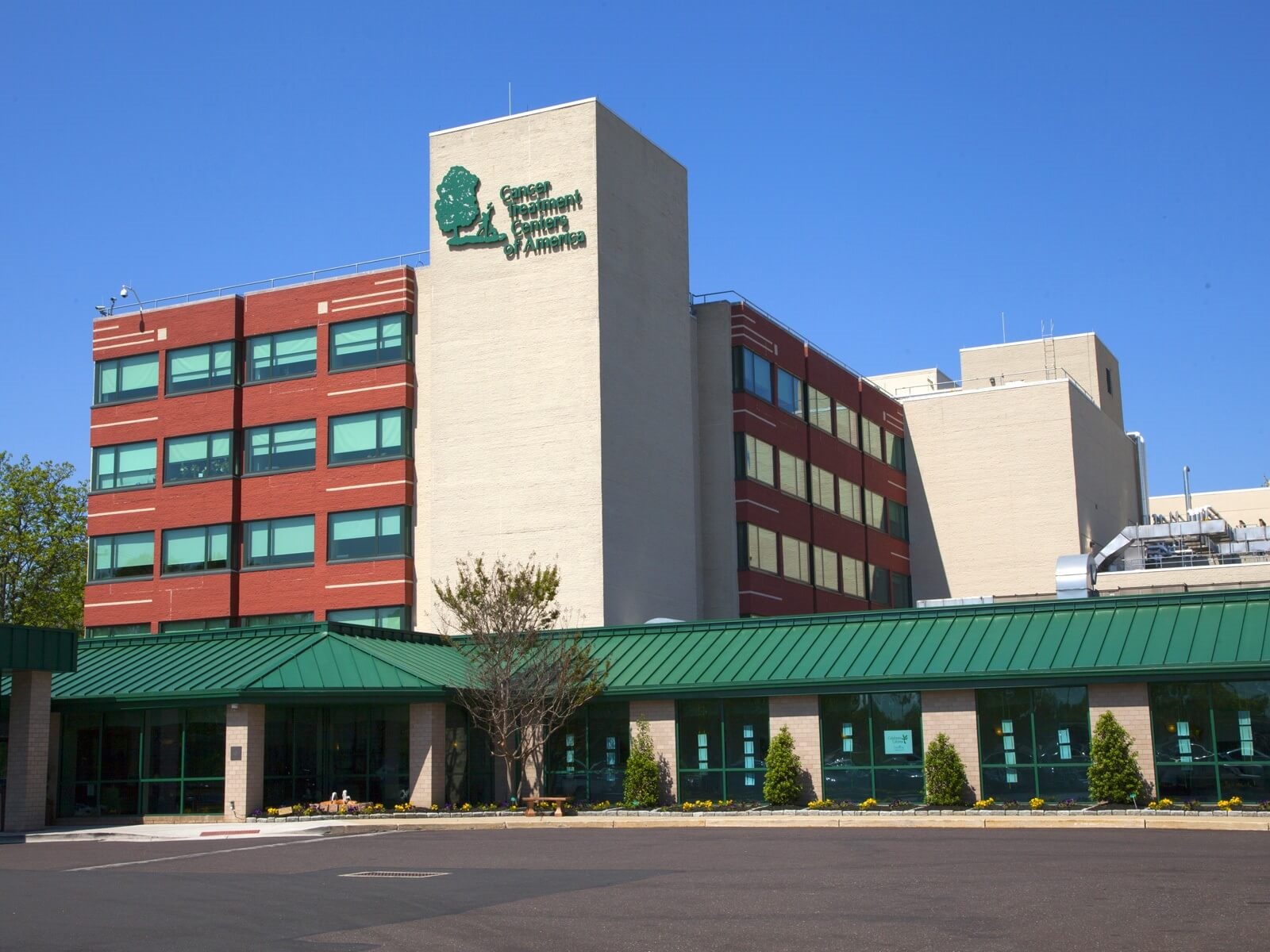
Cancer Treatment Centers of America is selling its hospital in Philadelphia and will lay off the facility’s 365 employees, according to a closure notice filed with the state.
Boca Raton, Fla.-based Cancer Treatment Centers of America signed an agreement in March to sell the hospital to Philadelphia-based Temple University Hospital. The deal requires approval from the Pennsylvania Department of Health.
In the notice filed with the state, Cancer Treatment Centers of America said some displaced Philadelphia workers may be offered jobs at affiliated entities outside of Pennsylvania, according to the Philadelphia Business Journal. The company’s other hospitals are in Chicago, Atlanta, Phoenix and Tulsa, Okla. In March, the company announced it will close its hospital in Tulsa June 1.
Cancer Treatment Centers of America said it anticipates the layoffs in Philadelphia will begin after May 30, according to the Philadelphia Business Journal.
Temple Health CEO Michael Young told the Philadelphia Business Journal that the system wants to hire as many CTCA workers as possible if the deal is finalized.
President Joe Biden moved to unwind Medicaid work requirements in Michigan and Wisconsin, after pulling the rules in Arkansas and New Hampshire.
CMS sent letters to health officials in Michigan and Wisconsin April 6 withdrawing their approval to implement work requirements for Medicaid beneficiaries. In both letters, CMS noted that combined with the COVID-19 pandemic, the work rules risk “significant coverage losses and harm to beneficiaries.”
In March, the Biden administration revoked approval for similar Medicaid work requirements in Arkansas and New Hampshire.
Centers for Disease Control and Prevention (CDC) Director Rochelle Walensky finds herself in a delicate position as she seeks to balance the optimism of increasing vaccinations with the reality that the U.S. is still very much in the grip of a deadly pandemic.
Walensky started the CDC job with a reputation as a savvy communicator, tasked with salvaging the reputation of an agency that took a beating under the Trump administration.
“When I first started at CDC about two months ago, I made a promise to you: I would tell you the truth, even if it was not the news we wanted to hear,” Walensky told reporters recently.
Walensky’s expertise is in HIV research, like her predecessor Robert Redfield, and before being appointed to lead the CDC, she was head of infectious diseases at Massachusetts General Hospital.
While former colleagues say Walensky is the perfect fit for the CDC post, her skills are now being put to the test as she faces criticism for being both too negative and too hopeful.
“She is quite a compelling and clear communicator, but it’s a challenging set of messages to try and get out there,” said Chris Beyrer, a professor of epidemiology at Johns Hopkins Bloomberg School of Public Health.
Public health messaging during a global pandemic is complicated enough, but experts say this particular moment is especially difficult.
After weeks of decline and then stagnation, the rate of coronavirus infections has once again started to climb across much of the country. Cases are up about 12 percent nationally compared with the previous week, averaging around 62,000 cases per day, according to the CDC.
At the same time, nearly 100 million Americans have received at least one dose of a coronavirus vaccine. Many states are expanding vaccine eligibility, in some instances to all adults, and federal health officials say there will be enough supply for everyone to be vaccinated by the end of May.
Walensky tried to emphasize both aspects this week when she issued an emotional appeal to the public.
“We have so much to look forward to, so much promise and potential of where we are, and so much reason for hope. But right now I’m scared,” Walensky said, adding that she had a “sense of impending doom” if people continued to ignore public health precautions.
Yet almost in the next breath, she talked about a “tremendously encouraging” new study showing that vaccinated people were 90 percent protected from infection, meaning they pose an extremely low risk of spreading the virus.
While that may come across as mixed messaging, experts say it accurately reflects not only where things stand right now but also how the country has been reacting to the virus for the past year.
“Whiplash is a true reflection of how we’re all experiencing the epidemic and the response to it. So I’d rather she be honest about that and others be honest about that than give people something that they want … to make them feel better,” said Judith Auerbach, a professor in the University of California San Francisco School of Medicine.
Auerbach, who previously worked with Walensky on HIV research, praised the director’s openness, which she said had been missing from agency leadership during the Trump administration.
“She’s being really honest about her own emotions. That’s hard for a fed to do and get away with,” Auerbach said. “The science that says we all still need to be, in fact, quite scared because we’re in this race between the vaccines … versus the emergence of these variants, and she felt it at a visceral level, and she conveyed that in a way that I thought was quite telling.”
Glen Nowak, director of the Center for Health and Risk Communication at the University of Georgia and a former CDC media relations director, said Walensky’s candor helps establish credibility.
“She has embraced the fact that credibility comes from being transparent and honest and genuine about your fears and your concerns,” Nowak said.
The CDC declined to make Walensky available for an interview, but in a statement to The Hill, an agency spokesman said every communication reflects the latest science and epidemiology.
“At times, moments must balance hope that we will move out of the pandemic with the reality that we are not out of it yet,” the spokesman said.
“We acknowledge the challenge of conveying such hope and promise that vaccines offer with the reality that cases and deaths are rising. While we are sending the critical message that people cannot and should not let up on their prevention measures, we do remain very optimistic about what the future of a fully vaccinated public will offer,” the spokesman added.
On Friday, Walensky again came under criticism for her messaging. In updated guidance, the CDC said it is safe for people who have been fully vaccinated to travel.
But Walensky struck a cautionary tone by saying the CDC still recommends anyone, vaccinated or not, avoid nonessential travel because infection numbers are so high.
“We know that right now we have a surging number of cases,” Walensky said during a White House briefing. “I would advocate against general travel overall. Our guidance is silent on recommending or not recommending fully vaccinated people travel. Our guidance speaks to the safety of doing so.”
Nowak said part of what makes public health messaging so difficult is the fact that science doesn’t always deal in absolutes and that the public overall doesn’t do well with nuance.
“Often people don’t want to listen to the nuance; they want advice and guidance to be stable. They get frustrated with the changes or when it seems to be contradictory. They also get frustrated if it doesn’t match their everyday living experiences,” Nowak said.
With the travel guidance, Walensky attempted to spell out the balance she was trying to strike and asked the public for patience and understanding.
“I want to acknowledge today that providing guidance in the midst of a changing pandemic and its changing science is complex,” Walensky said.
“The science shows us that getting fully vaccinated allows you to do more things safely, and it’s important for us to provide that guidance, even in the context of rising cases.At the same time, we must balance the science with the fact that most Americans are not yet fully vaccinated, which is likely contributing to our rising cases,” she said.
Jen Kates, director for global health and HIV policy at the Kaiser Family Foundation, who has known Walensky for decades, said she thinks the CDC director is aware that she can’t escape criticism, especially when so many people have pandemic fatigue.
If the CDC is too strict and refuses to endorse relatively normal behavior, especially after people get vaccinated, it could risk others refusing to get the shot, Kates said.
But if the agency paints too rosy a picture, more people could act like the pandemic is over and risk further spread of the virus.
“It behooves public officials to always be cognizant that their words are being listened to and can be taken out of context or may be hard for people to grasp,” Kates said. “So I think Dr. Walensky is a great communicator, but that doesn’t mean that this is always easy to do and the balance is always straightforward.”
Abstract:This article is the second in the series that addresses the initial stages of going through a career transition. Career management articles in the blog have been popular. A transition is a traumatic event, to say the least, especially the first time. These articles address what you should be doing BEFORE your transition occurs.
In the last piece that is the first in this series, I addressed the fact that there is little relationship between how good you are at what you do and the probability that you will end up in a transition.
This article addresses what you should be doing to prepare for an unplanned transition.
The ACHE tracks hospital CEO turnover. The average annual rate is around 18%. According to Challenger, Gray, and Christmas, hospital CEO is one of America’s most dangerous occupations measured by potential longevity or lack thereof in a position. One of my most popular articles discusses some of the many reasons for executive turnover that have little to do with performance. A lot of people are very interested in the topic.
HFMA does not track CFO turnover, but it is probably equally rampant as CFOs too often get credit for substandard organizational performance despite having little control or influence over the incurrence of operating cost or results. CFOs and other C-Suite inhabitants bear a disproportionate risk of having their career disrupted by CEO turnover.
If you start asking around, you might be surprised to learn how many healthcare executives were involuntarily ‘freed up to seek other opportunities’ at least once in their career. When I told my friend John at a reunion that I had decided to go into the consulting business, he immediately accused me (correctly) of having been fired. John went on to tell me how lucky I was because few executives that are disruptive innovators have not been fired at least once. To my friend, having been fired is a rite of passage.
John’s career goal at the time was to become the CEO of a large hospital, and he believed that a transition would strengthen his CV. As fate would have it, not too long after the reunion, I got the call from John and, you know, the rest of the story. John went on from this setback to become the long-running CEO of one of the largest Baptist hospitals in the southeast.
For those who push hard in organizations to get them to change their culture for the better and get on a better track, the risk of being let go is much higher. With one exception, every person that I have ever worked with through a transition has emerged a wiser, stronger person in a position much better suited for their skills and talents. While I would never encourage anyone to go through a transition, the process’s outcome has been both cathartic and career-enhancing.
So, given this risk, what should you be doing? Your preparation for a turnover event should start IMMEDIATELY!! If you wait until you are out, you have waited WAY TOO LONG!! If you do not have a networking database, you need to start immediately to develop this asset. My networking database commenced during my first transition. It now has over 3,000 companies and over 4,100 contacts. Most of my contacts are business-related, and most of them will respond to an email or return a call. Contrast this with the call I get too often from a newly terminated executive asking for connection assistance, that never bothered to record phone numbers or email addresses of people that may be in a position to be of help. Too many friends had contact files stored on a corporate phone or a corporate database and lost them when they turned over a phone or access to corporate systems was terminated. Frequently, access is restricted right before the victim learns of their fate as a security measure of the organization. Getting your data back if this happens is not going to be easy or fun.
For this reason, I have successfully refused to use a company-owned phone or put my networking database developed over twenty years on a computer system I do not control. The problem with having business and personal data on the same device is if you give the organization access to ‘their data, they cannot lock it selectively. When they lock or wipe the device, they are going to destroy everything on the device. My networking database is my most valuable personal asset. There is an article in my blog dedicated to networking. The time to start building your networking database and skill is before you need it.
You should start the process of thinking through the next step in your career. Get out a piece of paper. What do you like about your current situation and wish to preserve? What do you want to change? Where are you willing to relocate? What is your idea of the perfect relationship with a superior? What will the effect of a termination/relocation be on your family, and how will you manage that? In other words, what are you going to be when you grow up? A turnover event is sometimes the catalyst that causes someone to decide to start their own business. Is there a path forward in your current situation, or should you be thinking about proactively inducing your turnover event or at least beginning preparations? People that have been through transitions will tell you from experience that it is a lot easier to get a job while employed than when you are not employed.
A turnover event is a huge psychological and physical burden. Everyone around you is going to be affected. Do not delude yourself into thinking you can manage a transition without help, especially the first one. My dad had a sign in his shop,
Shop Rates
Labor – $20
If you watch – $40
If you help – $80
If you already worked on it yourself, $200
My most significant learning from consulting experience is recognizing when an expert is needed and understanding the necessity of getting my ego out of the way in the process of seeking and availing myself or my client of expert assistance. Clients and consultants do more harm than good by trying to do something they have no business doing in a frequently futile effort to save money. Sometimes, the results are disastrous. We have all heard the adages that a doctor treating himself has an idiot patient or a lawyer who represents himself has a moron for a client.
Contact me to discuss any questions or observations you might have about these articles, leadership, transitions, or interim services. I might have an idea or two that might be valuable to you.An observation from my experience is that we need better leadership at every level in organizations. Some of my feedback comes from people who are demonstrating an interest in advancing their careers, and I am writing content to address those inquiries.
The easiest way to keep abreast of this blog is to become a follower. I will notify you of updates as they occur. To become a follower, click the “Following” bubble that usually appears near each web page’s bottom.
I encourage you to use the comment section at the bottom of each article to provide feedback and stimulate discussion. I welcome input and feedback that will help me to improve the quality and relevance of this work.
This blog is original work. I claim copyright of this material with reproduction prohibited without attribution. I note and provide links to supporting documentation for non-original material. If you choose to link any of my articles, I’d appreciate a notification.
If you would like to discuss any of this content, provide private feedback or ask questions, you can reach me at ras2@me.com.