6 latest hospital bankruptcies

https://www.beckershospitalreview.com/finance/6-latest-hospital-bankruptcies-082018.html

Image result for hospital bankruptcies

From reimbursement landscape challenges to dwindling inpatient volumes, many factors lead hospitals to file for bankruptcy.

Here are six hospitals that have filed for bankruptcy protection since Jan. 1:

1. Rockdale, Texas-based Little River Healthcare, its parent company and several of its affiliated entities entered Chapter 11 bankruptcy July 24. One of the hospitals included in the bankruptcy filing, Crockett, Texas-based Timberlands Hospital, closed in 2017.

2Florence (Ariz.) Hospital at Anthem entered Chapter 11 bankruptcy in late May after it failed to contest an involuntary bankruptcy petition from creditors within the required 21-day timeline.

3. Gilbert (Ariz.) Hospital, which is affiliated with Florence Hospital at Anthem, entered Chapter 11 bankruptcy May 24.

4. The Miami Medical Center, a 67-bed hospital that suspended services in October 2017, filed for Chapter 11 bankruptcy protection March 9. The hospital was sold in auction in late June.

5. Iron County Medical Center, a critical access hospital in Pilot Knob, Mo., filed for Chapter 9 bankruptcy Feb. 21. The hospital is owned by the Iron County Hospital District.

6. Surprise Valley Health Care District, which operates 26-bed Surprise Valley Hospital in Cedarville, Calif., filed for Chapter 9 bankruptcy Jan. 4.


Hospital executives believe Amazon can deliver on its hype as a healthcare disrupter

https://www.fiercehealthcare.com/tech/provider-executives-survey-amazon-ceos-reaction-data-apple-google-telemedicine-mergers?mkt_tok=eyJpIjoiTjJRMlpERTBObU0yWldOaiIsInQiOiJPMDVjRGNQVzcxMjIzOGt1ZTZva0R2YU1PXC9mYkczVEtYVHNHWmZzSHc1TjU1RGRZZ1o4VVprZStEV3R3VWdXWFwvQlRoYVg4cGpzakZIOFFkMkthRnVPbVwvNEUwQ3ptOVozRGQ0U3IyVDFENENmZTErMjc3TDhRYlwvaUlrT1oxSWgifQ%3D%3D&mrkid=959610

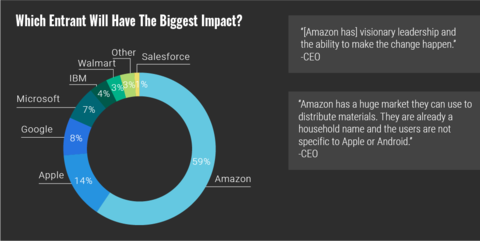
Out of all the technology giants with ambitions in healthcare, hospital executives have overwhelmingly put their faith in Amazon, according to a new survey.

A full 59% of executives say Amazon will have the biggest impact, according to the survey by Reaction Data. Respondents cited resources available to the retail and technology behemoth, the company’s current influence and name recognition.

Comparatively, 14% said Apple, with its foray into EHRs, would be the most influential, followed by Google at 8% and Microsoft at 7%

Among healthcare CEOs—which accounted for 26 of the survey’s 97 respondents—75% said Amazon would make the biggest impact.

About 80% of survey respondents were from the C-suite, including chief nursing officers, chief financial officers and chief information officers. 

While Amazon alone may be generating significant excitement in boardrooms, a previous survey by HealthEdge shows consumers are largely skeptical about Amazon’s partnership with JPMorgan and Berkshire Hathaway.

Amazon’s push into healthcare “has been a shot across the bow for the entire industry,” Rita Numerof, Ph.D., president of Numerof & Associates told FierceHealthcare. The company’s consistent and deliberate investments indicate they are serious about making substantial changes within the industry.

“Amazon is known for its relentless focus on the consumer and its ability to use data systematically to identify and meet unmet needs in an accessible manner,” she said. “Unfortunately, access, consumer engagement, and segmentation haven’t been the hallmark of healthcare delivery.”

Executives were also bullish on telemedicine, with 29% saying the technology would have the biggest impact on healthcare, followed by artificial intelligence at 20%. That’s less surprising given that nearly 75% of respondents were already using telehealth in some way.However, 51% of respondents said telemedicine is revenue neutral, and key focus areas were split equally around rural patients, follow-up care and managing specific populations.


Oxygen equipment provider Lincare pays $5.25M to settle Medicare Advantage fraud suit

https://www.fiercehealthcare.com/payer/lincare-oxygen-durable-equipment-medicare-advantage-fraud-settlement?mkt_tok=eyJpIjoiTjJRMlpERTBObU0yWldOaiIsInQiOiJPMDVjRGNQVzcxMjIzOGt1ZTZva0R2YU1PXC9mYkczVEtYVHNHWmZzSHc1TjU1RGRZZ1o4VVprZStEV3R3VWdXWFwvQlRoYVg4cGpzakZIOFFkMkthRnVPbVwvNEUwQ3ptOVozRGQ0U3IyVDFENENmZTErMjc3TDhRYlwvaUlrT1oxSWgifQ%3D%3D&mrkid=959610

The word fraud framed by other words

One of the country’s largest suppliers of oxygen and respiratory equipment has agreed to pay $5.25 million to settle allegations that it violated anti-kickback laws by reducing copayments for certain Medicare Advantage members.

Lincare has also entered into a corporate integrity agreement with the Office of Inspector General, the Department of Justice announced last week.

The settlement resolves allegations filed by former billing supervisor Brian Thomas, who worked for nearly a decade at the Florida-based company. In his 2015 complaint, which was later joined by federal prosecutors, Thomas claimed Lincare waived copays for Humana’s Medicare Advantage members beginning in December 2011 after the insurer contracted with Apria Healthcare to be an exclusive in-network provider of medical equipment.

In his complaint, Thomas said Lincare matched network benefits by reducing copays from Humana beneficiaries from 30% to 13% to align with copays from Apria. Humana was left paying for a higher charge using government funds.

Lincare was purchased by The Linde Group, a German industrial gas company, for $3.8 billion in 2012. The government alleged Lincare continued the scheme through 2017.

It’s the second major settlement for Lincare, which operates about 1,000 locations across the country. In May, the company paid $875,000 to settle a class action lawsuit from employers who had their information stolen during a data breach.


Anthem partners with Walmart to expand access to over-the-counter drugs

https://www.fiercehealthcare.com/payer/anthem-walmart-over-counter-medicine-medicare-advantage-retail?mkt_tok=eyJpIjoiTjJRMlpERTBObU0yWldOaiIsInQiOiJPMDVjRGNQVzcxMjIzOGt1ZTZva0R2YU1PXC9mYkczVEtYVHNHWmZzSHc1TjU1RGRZZ1o4VVprZStEV3R3VWdXWFwvQlRoYVg4cGpzakZIOFFkMkthRnVPbVwvNEUwQ3ptOVozRGQ0U3IyVDFENENmZTErMjc3TDhRYlwvaUlrT1oxSWgifQ%3D%3D&mrkid=959610

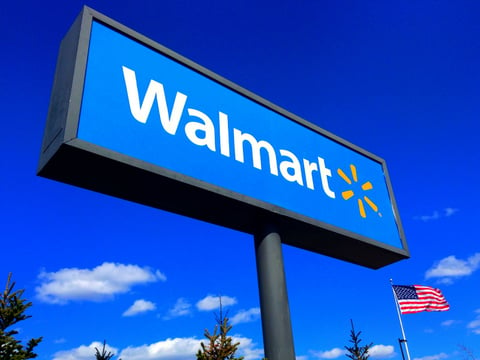
Walmart sign

Anthem has entered a new partnership with retail giant Walmart to offer members access to over-the-counter (OTC) medications.

Beginning in January, Anthem’s Medicare Advantage members will be able to use OTC plan allowances to purchase medications and other supplies such as support braces and pain relievers, the two companies announced on Monday.

Previously, MA beneficiaries with OTC allowances could purchase medications through a catalog or by calling a designated number. Some members were provided a card they could use at a limited set of retail stores.

The new partnership significantly expands access to OTC drugs and supplies by allowing members to make purchases at any of Walmart’s 4,700 locations. 

“The program with Walmart will allow consumers to pick the shopping method that best fits their lifestyle and the initiative is expected to significantly reduce the out-of-pocket cost burden for those enrolled in Anthem’s affiliated MA health plan,” Anthem spokesperson Hieu Nguyen said in an email.

Walmart says 90% of Americans live within 10 miles of a Walmart. The partnership will also give members access to free two-day shipping on orders $35 or more.

“We believe that programs like this can make a tremendous difference for healthcare consumers who often live on a fixed income or are managing chronic medical conditions,” Felicia Norwood, executive vice president and president of Anthem’s Government Business Division, said in a statement. Sean Slovenski, senior vice president of health and wellness at Walmart, said the company is “thrilled to be working with Anthem to provide its Medicare Advantage members with convenient access to our broad assortment of high-quality over-the-counter products.”

Interestingly, the partnership comes months after Walmart was reportedly considering an acquisition of Humana. Slovenski, the former vice president of innovation at Humana, joined Walmart last month. 


The Large Hidden Costs of Medicare’s Prescription Drug Program

The Large Hidden Costs of Medicare’s Prescription Drug Program

Image result for medicare part d

At a glance, Medicare’s prescription drug program — also called Medicare Part D — looks like the perfect example of a successful public-private partnership.

Drug benefits are entirely provided by private insurance plans, with generous government subsidies. There are lots of plans to choose from. It’s a wildly popular voluntary program, with 73 percent of Medicare beneficiaries participating. Premiums have exhibited little to no growth since the program’s inception in 2006.

But the stability in the premiums belies much larger growth in the cost for taxpayers. In 2007, Part D cost taxpayers $46 billion. By 2016, the figure reached $79 billion, a 72 percent increase. It’s a surprising statistic for a program that is often praised for establishing a competitive insurance market that keeps costs low, and that is singled out as an example of the good that can come from strong competition in a private market.

Much of this increase is a result of growing enrollment — it has doubled in the past decade to 43 million — and higher drug prices. But there is also a subtle way in which the program’s structure promotes cost growth.

When enrollees’ drug costs are relatively low, plans pay a large share, typically about 75 percent. But when enrollees’ drug spending surpasses a certain catastrophic threshold — set at $5,000 in out-of-pocket spending in 2018 — 80 percent of drug costs shifts to a government program called reinsurance. This gives people in charge of private insurance plans an incentive to find ways to push enrollees into the catastrophic range, shifting the vast majority of drug costs off their books. For example, they could be less motivated to negotiate for lower drug prices for certain types of drugs if doing so would tend to keep more enrollees out of the catastrophic range.

Reinsurance spending, which is not reflected in premiums, has been rising rapidly.

“This harms the very competition that Part D was supposed to establish,” said Roger Feldman, an economist at the University of Minnesota. Consumers are naturally attracted to lower-premium plans, but choosing them increasingly shifts higher costs onto taxpayers if plans achieve those lower premiums in part by shifting more drug expenses onto the government’s books.

Documenting this is a recent study by Mr. Feldman and Jeah Jung of Penn State University that was published in Health Services Research. The study found that the disconnect between premiums and reinsurance costs has increased over time. Additionally, insurance company plans exhibiting less of an effort to manage the use of high-cost drugs had higher reinsurance costs. This is consistent with incentives to encourage enrollees into the catastrophic range of spending.

The Medicare Payment Advisory Commission has been warning about this problem for several years in its annual reports to Congress. According to MedPAC, between 2010 and 2015, the number of enrollees entering the catastrophic drug cost range grew 50 percent, from 2.4 million to 3.6 million, now accounting for 8 percent of enrollees.

“It’s ironic for a program supposedly built on market principles,” said Mark Miller, a former MedPAC director. “You wouldn’t see this kind of thing in the commercial market.” For commercial market insurance products — such as those offered by employers or in the health insurance marketplaces — only about 1 percent of policyholders reach a catastrophic level of expenditures at which reinsurance kicks in. (Mr. Miller and I are co-authors of an editorial about Ms. Jung’s and Mr. Feldman’s study, which also appears in Health Services Research.)

Reinsurance is the fastest-growing component of Medicare’s drug program, expanding at an 18 percent annual rate between 2007 and 2016. In 2007, it accounted for 17 percent of government spending for Part D. In 2016 it was 44 percent.

The Affordable Care Act hastened this growth. The law requires pharmaceutical manufacturers to pay some of the cost of the drug benefit. (The Bipartisan Budget Act of 2018 further increased how much manufacturers must contribute.) For the purposes of reaching the catastrophic threshold and triggering reinsurance, these industry contributions count as out-of-pocket payments for enrollees, even though they are not.

That means enrollees don’t have to spend as much as they otherwise would to trigger the reinsurance program. Although this is of great benefit to enrollees, it also pushes up taxpayer liability for the program.

Changing the extent to which manufacturer’s contributions count as enrollee out-of-pocket spending is one potential reform of the program. Other solutions include increasing the liability of insurance company plans in the catastrophic range and decreasing the liability of taxpayers.

This would have the effect of bringing premiums more in line with program spending. Doing so would “return Part D to the market-based program it was intended to be,” Ms. Jung said. As it stands, there is a substantial divide between what Part D was billed as and what it actually is.