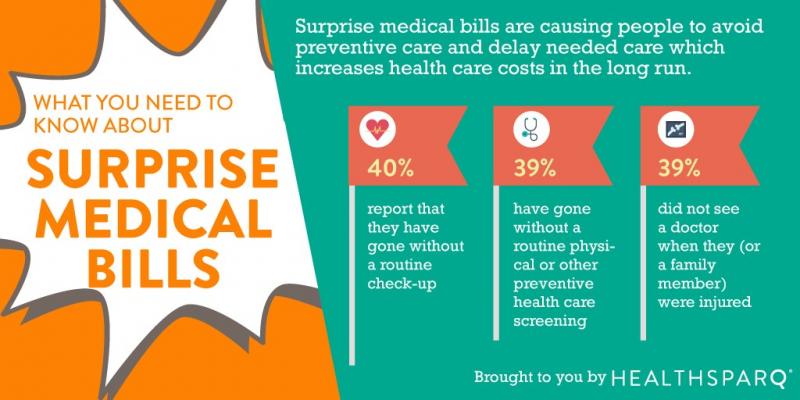
AARP, United Healthcare and CVS keep prescription drug prices higher for seniors

https://www.washingtontimes.com/news/2020/feb/11/aarp-united-healthcare-and-cvs-keep-prescription-d/

Illustration on overpriced prescription drugs for seniors by Alexander Hunter/The Washington Times

Most folks think of the AARP as a membership organization that gives older Americans discounts on magazine subscriptions and cellphone plans. In fact, those business lines are secondary to AARP’s real source of income, a lucrative partnership with United Healthcare.

AARP partners with United Healthcare to offer health insurance plans to its membership. On its face, there’s nothing inappropriate about this type of affinity branding; the problem is that United Healthcare (and, frankly, other insurance companies) have made some decisions at the expense of seniors and the Medicare program, which should run counter to what a seniors-focused advocacy organization endorses. Recent actions by United Healthcare to limit seniors’ access to less expensive versions of Medicare drugs calls into question whether the AARP is looking out for older Americans or its own bottom line.

During the past three years, President Trump has maintained a laser focus on drug prices, causing pharmaceutical companies to respond in a variety of ways, including reducing or, in some instances, halting altogether annual price increases, pledging responsible pricing for new medications and reducing the price of medicines in certain instances.

For example, last year Eli Lilly launched a half-price version of its insulin drug, Humalog, to address affordability barriers for diabetic patients. Gilead created a subsidiary company in order to offer its two revolutionary hepatitis C products, Harvoni and Epclusa, as “authorized generics” at prices more than 70 percent lower than the identical brand version. In 2018, two companies competing in the cardiovascular space, Sanofi and Amgen, each introduced less costly versions of their cholesterol medications for patients who are unresponsive to statins — at 60 percent below the original price. These are all big wins for Mr. Trump’s jawboning campaign.

But the system is not working: These less expensive versions of innovative drugs are not available to many seniors because of how insurance companies and their negotiators (known as “pharmacy benefit managers” or PBMs) design drug coverage via formularies, particularly in Medicare. A perfect case study is cardiovascular disease, the No. 1 cause of death in the United States: For the past 14 months, in many instances, United Healthcare formulary design kept patients on the more expensive versions of the Sanofi and Amgen cholesterol medicines which came coupled with a high out-of-pocket co-insurance for the patient. Further, CVS (which is merging with insurance company Aetna) admitted to creating barriers for patients by requiring doctors to provide a “documented clinical reason” for prescribing the identical, cheaper version of the same medicine. Today in Medicare, CVS continues to block affordable access to the lower cost versions by not covering these medicines anywhere on their national formulary, effectively dissuading a patient at high risk for a heart attack or stroke from purchasing the medicine prescribed by his/her cardiologist.

Why would insurance companies and PBMs want to keep paying for the more expensive version of an identical drug? The answer lies in the backward way drugs are priced in America. Drug manufacturers set the “list price” of a drug the same way a car dealership lists the price of cars or colleges list the price of tuition. What’s actually paid by an insurer in the final transaction is usually steeply discounted from the starting price by the drug company “rebating” a portion — 40 percent on average, oftentimes more — to the PBM/insurance company (which then pocket it). That negotiation should result in reduced out-of-pocket drug costs for seniors. The problem is that this model results in perverse incentives.

Medicines have high “list prices” because the drug company knows that it will need to provide significant discounts/rebates in order to be listed on a health plan’s formulary. Positive formulary placement = patient access to a medicine. Insurance companies and PBMs like the higher list prices because they profit from both the steep, negotiated rebates and the higher co-insurance the patient pays to the plan. In Medicare, once a patient barrels through the initial drug coverage phase, the federal government picks up 80 percent of a senior’s drug costs, reducing the insurer’s liability. In the end, it’s patients who suffer at the pharmacy counter and in the long run.  


Trump budget calls for cutting Medicaid, ACA by about $1 trillion

Trump budget calls for cutting Medicaid, ACA by about $1 trillion

President Trump’s proposed budget includes about $1 trillion in cuts to Medicaid and the Affordable Care Act over a decade, analysts said.

The budget released Monday includes $844 billion over 10 years in cuts from the “President’s health reform vision,” a stand-in for the repeal and replacement of ObamaCare. There are also more than $150 billion in additional cuts from implementing Medicaid work requirements and other changes to the program, which would result in some people losing coverage if they did not meet the requirements.

The cuts drew swift condemnation from Democrats, who pointed out that Trump himself promised not to cut Medicaid, the health insurance program for the poor, during his 2016 campaign.

“I’m not going to cut Medicare or Medicaid,” Trump said in 2015, adding, “Every other Republican is going to cut it.”

“Americans’ quality, affordable health care will never be safe with President Trump,” Speaker Nancy Pelosi (D-Calif.) said in a statement on the budget proposal.

A senior administration official defended the Medicaid cuts, arguing reforms will help preserve the program for people who need it most. “The Budget protects and preserves Medicaid by putting it on a sustainable path, so it can continue to provide vital services to those who need it the most, including children, the disabled, elderly and pregnant women,” the official said.

In contrast to previous years, the budget does not spell out how Trump proposes to repeal and replace ObamaCare. Instead, the budget gives a savings number of $844 billion that could come from any number of possible changes to Medicaid or the health law’s exchanges and subsidies. 

One policy that is specified is that the budget calls for ending the additional federal funding that helped states expand Medicaid to cover more people under the Affordable Care Act, with officials arguing states can step up their spending if they want to expand the program.

Bipartisan Ways and Means leaders unveil measure to stop surprise medical bills

https://thehill.com/policy/healthcare/481985-bipartisan-ways-and-means-leaders-unveil-measure-to-stop-surprise-medical?utm_source=&utm_medium=email&utm_campaign=27536

Image result for surprise medical bills

The bipartisan leaders of the House Ways and Means Committee on Friday released their legislation to protect patients from getting massive, surprise medical bills as congressional action on the subject intensifies.

The legislation is backed by the panel’s chairman, Rep. Richard Neal (D-Mass.), and its top Republican, Rep. Kevin Brady (Texas). It would protect patients from getting bills for thousands of dollars when they go to the emergency room and one of their doctors happens to be outside their insurance network.

Surprise billing is seen as a rare area of possible bipartisan action this year and has support from President Trump.

But the effort has been slowed by varying approaches and intense lobbying from doctor and hospital groups.

The Ways and Means bill is a rival approach to the bipartisan bill passed out of committee last year by the House Energy and Commerce Committee.

The divide between those two committees will have to be overcome for any bill to move forward.

Neal and Brady said in a statement Friday that their approach “differs” from others because “we create a more balanced negotiation process.”

“Our priority throughout the painstaking process of crafting our legislation has been to get the policy right for patients, and we firmly believe that we have done that,” Neal and Brady said. “We look forward to working with our Democratic and Republican colleagues in Congress, as well as the Administration, to advance this measure swiftly.”

The Ways and Means Committee is planning to vote on the legislation next week.

While all sides in the surprise billing fight agree the patient should be protected, the main dispute has been how much the insurer will pay the doctor once the patient is taken out of the middle. 

Doctors and hospitals have lobbied hard against the Energy and Commerce approach, which they fear would lead to damaging cuts to their payments. That approach sets the payment based on the median rate in that geographic area, with the option of going to arbitration for some high-cost bills.

The Ways and Means approach has generally been seen as more favorable to doctors and hospitals, but industry groups have not yet responded to the details on Friday morning.

The Ways and Means bill gives the decision on how much the insurer should pay the doctor to an outside arbiter, although that arbiter will have to consider the median rate usually paid for that service in making its decision.

The House Education and Labor Committee is also planning to vote on legislation next week, and released a bill on Friday that closely reflects the Energy and Commerce and Senate Health Committee legislation, isolating Ways and Means.

Shawn Gremminger, senior director of federal relations at the liberal health care advocacy group Families USA, said it is “disappointing” that Ways and Means is using an approach that will not lower health costs as much, but he said it is good the process is moving forward.

The Energy and Commerce leaders, along with leaders of the Senate Health Committee, who also back their bill, released a conciliatory statement on Friday about the Ways and Means bill.

“Protecting innocent patients has been our top goal throughout this effort, and we appreciate that the other two House committees share this priority,” said Reps. Frank Pallone Jr. (D-N.J.) and Greg Walden (R-Ore.) and Sens. Lamar Alexnader (R-Tenn.) and Patty Murray (D-Wash.). “We look forward to working together to deliver a bill to the president’s desk that protects patients and lowers health care costs for American consumers.”


The Supreme Court isn’t done with the ACA case yet. Here are the next steps.

https://www.healthcaredive.com/news/the-supreme-court-isnt-done-with-the-aca-case-yet-here-are-the-next-steps/570816/

The U.S. Supreme Court is scheduled to review the legal challenge to the Affordable Care Act on Feb. 21 to potentially weigh whether to take the case. However, legal expert Katie Keith from Georgetown University cautioned Healthcare Dive it’s common for the court to reschedule or relist cases for a later conference date.

Tuesday’s one-sentence order from the U.S. Supreme Court denying a request to fast-track the challenge to the Affordable Care Act is not the final word from the high court.

The justices will now decide whether to take up the legal case threatening to overturn the landmark law during their next term, which begins in October.

Essentially, the order returns the case to the typical review process as a group of blue states, led by California’s Democratic Attorney General Xavier Becerra, try to convince the Supreme Court it should hear the case at some point instead of letting it wind its way back through the lower courts.

“The court did not say we’re not reviewing this case at all,” MaryBeth Musumeci, an associate director at Kaiser Family Foundation and graduate of Harvard Law School, told Healthcare Dive.

The blue states sought to expedite the case, which would have resulted in a ruling before the presidential election in November. Some Democrats hoped that would pressure Republicans to come up with a replacement had the law been tossed, or more publicly defend efforts that would kill popular provisions like protections for pre-existing conditions.

The court refused to accelerate its review despite requests from hospitals, insurers, advocacy groups including AARP and a group of bipartisan economic scholars.

“It’s disappointing but it’s not altogether unsurprising. They typically don’t like to grant expedited review,” Katie Keith, a lawyer and health policy expert at Georgetown University​, told Healthcare Dive.

Other legal experts warned against reading too much into Tuesday’s order and what it may mean for the case going forward.

“Expediting was always unlikely. It’s a big ask for little purpose here. I wouldn’t read anything else into it,” Jonathan Adler, a law professor at Case Western Reserve University, told Healthcare Dive​.

Careful observers of the case should expect the justices to vote on whether to take it up by June at the latest, Keith said.

In the meantime, Tuesday’s order sets off another wave of briefs. First, the red states will try to convince the court of its position on whether the legal challenge should be heard in October. Expect that motion in the first few days of February, experts told Healthcare Dive.

Robert Henneke, the lawyer representing the individual plaintiffs, told Healthcare Dive his team will argue that the case is still premature for Supreme Court review. “The opinion from the Fifth Circuit was not a complete opinion,” Henneke said.

The appeals court in part affirmed a lower court’s decision, ruling that the individual mandate is unconstitutional because it can no longer be considered a tax. However, it sent the key question of whether the rest of the ACA can stand without the mandate back to the lower court for further analysis.

Becerra has argued that the lower court’s decision is wrong and, without a definitive ruling from the Supreme Court, the challenge only fuels doubt about the future of the ACA — credited with significantly reducing the ranks of the uninsured.

“The health and wellbeing of millions of our loved ones who rely on the ACA for healthcare is too important. We will do everything in our power to keep fighting for them,” Becerra said in a tweet following the order.

Nevertheless, Tuesday’s result likely thrusts the issue of the ACA back in the spotlight for another presidential campaign cycle.

Much of the healthcare debate among Democrats vying to take on President Donald Trump has revolved around a “Medicare for All” idea. One question now is, will Democrats shift to talk about rescuing the ACA, a law in place but remains in jeopardy?

The problem is the outcome is still uncertain, Stephanie Kennan, senior vice president of federal public affairs at McGuireWoods Consulting, told Healthcare Dive. However, it does give Democrats the opportunity to talk about what’s popular in the bill, noting protections for those with pre-existing conditions.

“It certainly gives them a springboard for them to talk about the things they could do to fix it,” Kennan said.

Despite Tuesday’s outcome, there will still be some Democratic contenders who will campaign for Medicare for All, Bill Jordan, chair of Alston and Bird’s healthcare litigation group, told Healthcare Dive. But this ruling gives Democrats another tool against Republicans, he said.

“As time has gone on, the Affordable Care Act has become more popular, not less popular,” Jordan said.

But he cautioned that anything can happen in the next election, which could entirely alter the political landscape and influence whether the case makes it back up to the Supreme Court if the justices pass this time.


Latest boost for Medicare Advantage

https://www.axios.com/newsletters/axios-vitals-0460cccc-499e-4609-80e6-745311cef1ad.html?utm_source=newsletter&utm_medium=email&utm_campaign=newsletter_axiosvitals&stream=top

Image result for medicare advantage

The Trump administration yesterday announced more changes designed to make Medicare Advantage more appealing and to lower prescription drug costs for seniors.

Why it matters: Although the proposal mainly tinkers around the edges, it could have a meaningful impact on some seniors’ pocketbooks while furthering the administration’s commitment to Medicare Advantage, a cash cow for insurers.

Details: The proposal aims to create more transparency within Medicare’s prescription drug benefit, and to enhance price competition.

  • Beginning in 2022, plans would be required to give beneficiaries tools to compare the out-of-pocket costs of different drugs, which would allow patients to know their drug costs ahead of time and to shop around for the cheapest medications.
  • The proposal also aims to create more price competition among specialty drugs, which tend to be the most expensive drugs on the market.

It also would allow all seniors with end-stage renal disease to enroll in Medicare Advantage, beginning in 2021.

  • Medicare Advantage beneficiaries this year are gaining access to telehealth benefits that aren’t available to seniors enrolled in traditional fee-for-service Medicare, and the new proposal would build on these benefits.


Failure of Fiduciary Duty?

https://www.axios.com/newsletters/axios-vitals-0460cccc-499e-4609-80e6-745311cef1ad.html?utm_source=newsletter&utm_medium=email&utm_campaign=newsletter_axiosvitals&stream=top

Featured image

Sen. Bernie Sanders still may eke out a win in Iowa, and is the consensus front-runner in New Hampshire.

  • But most venture capitalists investing in America’s health care industry — the primary target of Bernie’s ire — have shoved their heads so deep in the sand that they’ve found water, Axios’ Dan Primack writes.

Why it matters: At some point, it could become a failure of fiduciary duty.

Health care accounts for over 20% of all U.S. venture activity.

  • A majority of that is in biotech/pharma, which last year saw 866 deals raise around $16.6 billion.
  • Investors view many of those deals as binary: Either the drug doesn’t work, resulting in a total write-off, or it does work and the financial sky’s the limit. Strike out or grand slam.
  • Sanders pledges to limit the upside, either by limiting drug prices under the current system or (if he gets Medicare for All) by establishing a single, centralized buyer.

Few health care VCs Dan spoke with are working on a Plan B in the event of their risk/reward models being made obsolete. Three main reasons:

  1. They don’t believe Sanders will win.
  2. Even if he does win, they don’t believe Sanders will get Medicare for All.
  3. If Sanders wins and implements his full plan, then it’s such a revolutionary shift that there’s not much health care VCs can do to counter it.

The bottom line: For now, health care venture’s strategy is see no Bernie, hear no Bernie. We’ll see how long that’s viable.


Public Charge Rule Could Erode Enrollment in Insurance Coverage

Public Charge Rule Could Erode Enrollment in Insurance Coverage

Mother and baby at clinic with doctor. Baby is looking directly into the camera.

In a 5-4 vote reflecting the ideological split among the justices, the US Supreme Court on January 27 decided to allow the Trump administration to commence enforcement (PDF) of its “public charge” rule nationwide. Only Illinois, where a statewide injunction is currently in effect, will not begin enforcing the rule. The regulation was slated to take effect last October, but federal judges in California, Illinois, Maryland, New York, and Washington blocked its implementation after states and immigrant rights groups challenged its legality. Federal appeals courts later lifted all but New York’s nationwide injunction and Illinois’ statewide injunction. The Supreme Court has now “stayed,” or put on hold, New York’s injunction, allowing the rule to take effect while the litigation continues.Essential Coverage

The US Citizenship and Immigration Services agency said the new rule will become effective February 24.

The public charge rule sparked controversy because it “would expand the government’s ability to refuse green cards or visas for legal immigrants determined to be a ‘public charge,’ or dependent on public assistance,” Susannah Luthi explained in Politico. “Those using or likely to use Medicaid, food stamps, and other safety-net programs would face greater scrutiny from immigration officials.”

Experts have warned of a “chilling effect” among immigrant communities, meaning that even those who are not subject to the public charge rule could disenroll or avoid public benefits out of fear. The Institute for Community Health estimated that 195,000 to 455,000 California children in need of medical attention could leave Medi-Cal if the rule takes effect. Including adults, this estimate grows to between 317,000 and 741,000 Californians disenrolling from Medi-Cal, according to researchers from UCLA and UC Berkeley (PDF).

The chilling effect has been documented on a national scale. According to the Urban Institute, in 2018, the year when the Trump administration proposed expanding the public charge rule, about 14% of adults in immigrant families reported that fear prompted them or a family member not to apply for a public benefit program or to disenroll from one. Of the adults who experienced chilling effects, 42% said they or their family members did not participate in Medicaid or the Children’s Health Insurance Program.

Soon after the rule was finalized last year, Eisner Health, a community clinic in Los Angeles, started getting phone calls from patients enrolled in Medi-Cal and CalFresh who wanted to end their families’ coverage, Claudia Boyd-Barrett reported in California Health Report. Many of those patients were not yet permanent residents or were members of mixed immigration status families who feared being penalized for using public benefits.

New Rule Doesn’t Apply to Many Immigrants

It is important to note that many immigrants are not subject to the new public charge rule. “It is urgent that all of us working with immigrant communities — via government, legal aid, health care, and more — have accurate and accessible information for families,” Sandra R. Hernández, president and CEO of CHCF, wrote on Twitter.

Mark Ghaly, California Health and Human Services Agency secretary, released a statement emphasizing that immigrant families should learn their rights. “You can find a list of nonprofit organizations providing free legal immigration services on the California Department of Social Services (CDSS) website, here,” Ghaly said.

CDSS offers a list of legal services providers across California who can assist with public charge questions. Protecting Immigrant Families (a partnership of the National Immigration Law Center and The Center for Law and Social Policy) also has resources on the public charge rule.

Following the Supreme Court’s order to stay the nationwide injunction, California Attorney General Xavier Becerra reiterated his commitment to fighting the rule. “We are a nation of immigrants, so we will lean forward in the face of heartless attacks on working families,” Becerra said in a statement. “Together, we’ll continue our fight to stand up for the right of each and every person who calls the United States their home.”

The legal challenges to the public charge rule will continue to move forward in courts around the nation — including in California — the New York Times’s Adam Liptak reported.

Medicaid Block Grants Could Reduce Access for Many

The Trump administration has announced its plan to let states volunteer to convert a portion of their Medicaid funding into block grants. The program, which has been branded a “Healthy Adult Opportunity,” represents a radical change in financing for Medicaid. Medicaid programs, which are operated by states with significant federal funding and oversight, constitute the nation’s health insurance program for Americans with low incomes. Covering over 75 million people, or one in five Americans, Medicaid programs provide services to 83% of children from low-income families, 48% of children with special health care needs, and 45% of nonelderly adults with disabilities.

On January 30, the administrator of the US Centers for Medicare & Medicaid Services, Seema Verma, sent to state Medicaid directors a letter (PDF) about the new block grant program. Verma gave states “the possibility of trading away an entitlement program that expands and contracts depending on how many poor people need the government health coverage,” Amy Goldstein wrote in the Washington Post. “In exchange, for able-bodied adults in the program, states could apply to receive a fixed federal payment and freedom from many of the program’s rules.”

Additionally, participating states would be allowed to limit the health benefits and drugs offered by their Medicaid programs, Rachel Roubein and Dan Diamond reported for Politico. According to one official, patients with behavioral health needs or HIV would be protected under the new plan.

Criticism from Medicaid advocates was swift. Twenty-seven patient and consumer groups, including the American Lung Association, American Cancer Society, and National Alliance on Mental Illness, issued a statement expressing strong opposition to the new guidance. “Block grants and per capita caps will reduce access to quality and affordable health care for patients with serious and chronic health conditions and are therefore unacceptable to our organizations,” they wrote.

“Worst Medicaid Idea Ever”

Frederick Isasi, executive director of Families USA, said in a statement, “Having spent many years working with governors and Medicaid programs, block grants are possibly the worst Medicaid idea ever presented to states by a federal administration. They would allow the federal government to off-load shared Medicaid responsibility at the expense of deep cuts to state budgets, vital programs supported by states, and the people who rely on those programs.”

Joan Alker, executive director and a cofounder of Georgetown University’s Center for Children and Families, warned in a statement that “if states accept a fixed cap on federal funding to meet their health care needs, they may be able to get by in the short term, but they put the health of their citizens and future state budgets at serious risk down the road.”

The block grant program is unlikely to affect California, which has invested heavily in expanding Medi-Cal access and is not expected to apply to participate.

Nonetheless, the block grant proposal shows that the Trump administration continues to prioritize changes that weaken the foundation of the nation’s health care safety net and could dramatically reduce health coverage for millions of Americans with low incomes.


We’re going to our primary care doctors less

https://www.axios.com/newsletters/axios-vitals-ded63eb6-2431-48d0-a186-2f3b52417f2f.html?utm_source=newsletter&utm_medium=email&utm_campaign=newsletter_axiosvitals&stream=top

Image result for primary care physician"

Adults in the U.S. are visiting primary care doctors less often, according to a new study in the Annals of Internal Medicine, which could foreshadow worse health outcomes and higher costs.

By the numbers: The study focused on adults enrolled with a large commercial insurer.

  • Between 2008 and 2016, visits to primary care physicians declined by 24.2%, and nearly half of adults didn’t visit one in any given year by the end of the time frame.
  • Groups with the largest declines were young adults, adults without chronic conditions, and those living in the lowest-income areas.

Meanwhile, visits to alternative facilities like urgent care clinics increased by 46.9%.

The big picture: Primary care doctors are there to keep people healthy. The less often we go to them, the more likely we are to get or remain sick, which ultimately costs the health care system more money.


Health care is Iowa’s only winner right now

https://www.axios.com/newsletters/axios-vitals-ded63eb6-2431-48d0-a186-2f3b52417f2f.html?utm_source=newsletter&utm_medium=email&utm_campaign=newsletter_axiosvitals&stream=top

Image result for health policy"

Iowa Democrats reported last night that their biggest priorities were beating President Trump and health care — but the meltdown of their election reporting systems left their presidential choices unresolved.

Why it matters: We’ve been writing for months that Democrats have a major choice ahead, either picking an advocate of Medicare for All — and siding with the plan that’s less popular with the rest of the country — or a public option advocate.

  • The Iowa debacle means the path the party will take won’t be clear for a while longer.

By the numbers: Several polls — including ones by NBC News, the National Exit Poll and AP Votecast — found that around four in 10 caucus voters said health care was their top issue.

  • Previous polling has found that Medicare for All is less popular overall than a public option, but both were popular among Democratic caucus-goers last night.
  • Seven in 10 said they back a single-payer plan, and almost nine in 10 said they support a public option, per AP Votecast, which was conducted by NORC at the University of Chicago for The Associated Press and Fox News.

Yes, but: Caucus-goers said they prefer a Democratic candidate who can beat Trump over one that agrees with them on issues, CNN reports.

The big picture: Republicans are more than happy to talk about Medicare for All — and its subsequent tax increases and expanded government role in health care — instead of protecting and building on the Affordable Care Act.

  • Whereas the former gives them an opportunity to go on offense, the latter puts the GOP on defense against its 2017 repeal-and-replace efforts and ongoing lawsuit that would strike down the whole health care law, including its protections for pre-existing conditions.