Unemployment Claims Top 42 Million

https://www.thefiscaltimes.com/2020/06/04/Unemployment-Claims-Top-42-Million

Unemployment Claims Top 42 Million

About 1.9 million people filed for unemployment benefits last week, the Department of Labor announced Thursday, bringing the total for initial claims over the last 11 weeks to 42.6 million.

Continuing claims rose by 649,000 over the previous week, for a total of 21.5 million. Adding independent contractors, the number of people receiving unemployment benefits comes to roughly 30 million.

The good news: Initial jobless claims for state benefits continue to fall. Torsten Slok, chief economist at Deutsche Bank Securities, said the job market appears to have bottomed out and is “crawling out of the hole now,” adding that we “have the worst behind us.”
Earlier this week, Mark Zandi, chief economist at Moody’s Analytics, said he thinks the coronavirus recession is technically over, with growth resuming this month. “This Covid recession will go down as the shortest and arguably the most severe in history,” Zandi told The Washington Post.

The bad news: The unemployment numbers are still shockingly high, and the economy is in bad shape by any measure. “Even as states reopen, claims in the millions are an indicator that the economic pain of the Covid-19 crisis is still acute,” Daniel Zhao, senior economist at Glassdoor, told CNBC.

Recovery is expected to be slow and painful. Economist Ed Yardeni said Thursday in a note to clients that he expects it to take more than two years to recover all of the lost jobs, with a return to the February 2020 employment peak not coming until October 2022.

The even worse news: The official unemployment numbers are almost certainly underestimating the damage.

In addition to the state unemployment filings, there were about 623,000 newly reported claims from independent contractors, who are eligible to receive federal aid temporarily under the Pandemic Unemployment Assistance program. But at least half a million filings for pandemic relief payments have yet to show up in the official data, Bloomberg reported Thursday, due to lags in the system. And the weekly unemployment reports tell us nothing about the people who may still be working but are earning far less than they were just a few months ago.

Up next: On Friday the Labor Department will release its employment numbers for May. Economists surveyed by Dow Jones project 8.3 million job losses and an unemployment rate of 20.5%.



CDC director: US needs up to 100,000 contact tracers by September to fight coronavirus

https://thehill.com/policy/healthcare/501157-cdc-director-us-needs-30-to-100-thousand-contact-tracers-by-september-to?utm_source=ActiveCampaign&utm_medium=email&utm_content=Does+the+US+Spend+Too+Much+on+Police%3F&utm_campaign=TFT+Newsletter+06042020

CDC director: US needs up to 100,000 contact tracers by September to fight coronavirus

Centers for Disease Control and Prevention (CDC) Director Robert Redfield told Congress on Thursday that the country needs between 30,000 and 100,000 people working on contact tracing in order to help contain the next wave of the coronavirus.

The estimate shows the daunting challenge of hiring an army of people to interview those infected with coronavirus to identify who they have been in contact with so that those people can quarantine and help prevent the spread of the virus.

“I’ve estimated between 30 and 100,000” contact tracers are needed,” Redfield told the House Appropriations Committee during a hearing Thursday. He acknowledged the figure is “sizable,” though it is actually less than the 300,000 people former CDC director Tom Frieden has estimated the U.S. will need.

He said it is crucial to get the contact tracing system in place by September to try to keep the virus in check ahead of an expected surge in the fall and winter. That could help prevent the type of blunt stay-at-home orders that the U.S. had to implement this spring after missing the window to contain the virus earlier this year.

“We really have to get this built and we have to get it built between now and September,” Redfield said.

Redfield said his agency has met with all 50 states to discuss hiring contact tracers and is pleased that some states have already started to do so. New York City, for example, has hired 1,700 contact tracers. 

He said the CDC Foundation is working to hire personnel to augment state efforts and the CDC has distributed funding to states provided by Congress for the purpose. He added he hopes AmeriCorps is a source of additional staff.

“It is fundamental that we have a fully operational contact tracing workforce that every single case, every single cluster, can do comprehensive contact tracing within 24 to 36 hours, 48 hours at the latest, get it completed, get it isolated, so that we can stay in containment mode as we get into the fall and winter of 2020,” he said.


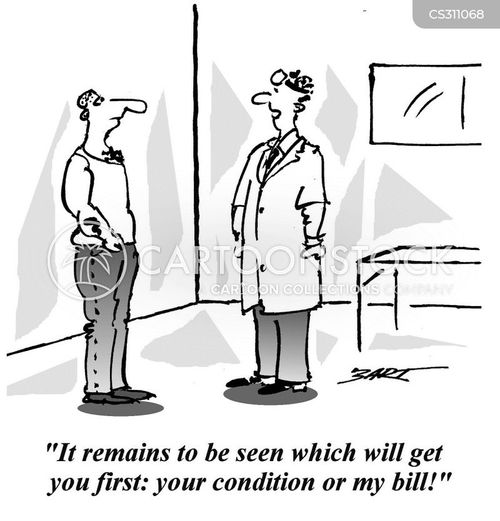
Cartoon – It remains to be seen which will get you first

Cartoon – It remains to be seen which will get you first | HENRY ...

Cartoon – Out of Pocket Experience

Cartoon – Out of Body Feeling vs Out of Pocket Experience | HENRY ...

Hospitals push for release of $50B more in COVID-19 funds

https://www.healthcaredive.com/news/hospitals-push-for-release-of-50b-more-in-covid-19-funds/579072/

COVID-19 Stimulus Bill: What It Means for States

Dive Brief:

  • The American Hospital Association is urging HHS to distribute at least $50 billion more in funding from the $175 billion allocated by Congress to hospitals as providers continue to wrestle with the challenges spurred by the outbreak of the novel coronavirus. 
  • More funds are “urgently needed” for the more than 5,000 hospitals and health systems AHA represents, the group wrote in a letter to HHS Secretary Alex Azar on Tuesday.
  • While AHA is calling for more money for all hospitals, it also wants a special focus paid to hospitals in hot spot areas and those serving a higher number of Medicaid and uninsured patients. 

Dive Insight:

AHA is requesting $10 billion for hot spot areas, $10 billion for hospitals with a larger share of Medicaid and uninsured patients and another $30 billion for all hospitals, including inpatient rehabilitation centers and inpatient psychiatric facilities.

Making substantial funds of money available will help facilities weather the pandemic and will “actually ensure they are able to keep their doors open,” AHA CEO Richard Pollack wrote. The second quarter is expected be the hardest hit to hospital operations.​

On Tuesday, the HHS Office of the Assistant Secretary for Preparedness and Response said it was making available another $225 million for health systems. That’s a drop in the bucket compared to the total federal funds that have already gone out the door. 

So far, the federal government has earmarked a total of $175 billion to disperse to hospitals and providers across the country. Only a portion of those funds have gone out. Initially, HHS sent out $30 billion directed to all eligible hospitals, based on Medicare fee-for-service. The criteria for funding faced criticism over seemingly giving an advantage to certain hospitals over others, such as those with many Medicaid patients.

Other more targeted tranches have followed, including $20 billion based on net patient service revenue. Disbursements of $10 and $12 billion were reserved for rural providers and hot spots, respectively.

AHA’s latest requests seems to acknowledge the concerns others have raised about providers with high Medicaid numbers.

Late last month, America’s Essential Hospitals, which represent safety net hospitals, said the administration should quickly move to dstribute more funding to facilities serving large shares of uninsured and Medicaid members.

“They continue to struggle with the heavy financial costs of this public health emergency and need relief now,” Bruce Siegel, CEO of AEH, said in a statement.

HHS developed funding formulas that rely heavily on a Medicare and net patient service revenue, so facilities that rely more on Medicaid as opposed to private insurers and Medicare, like pediatric hospitals, are at a disadvantage when it comes to receiving funds.

As such, AHA is calling for an additional $20 billion, divided evenly between hot spot hospitals and those with a large share of Medicaid patients.

“These hospitals care for the nation’s most vulnerable patients, who, largely as a result of underlying health conditions, have suffered disproportionately from the pandemic. They have been hospitalized at greater rates, and required more care and resources once hospitalized,” AHA said of hospitals with large shares of Medicaid patients.


Private equity lands $1.5B in Medicare loans

https://www.beckershospitalreview.com/finance/private-equity-lands-1-5b-in-medicare-loans.html?utm_medium=email

One-Click To Private Equity Yields Up To 9%

Private equity companies have borrowed at least $1.5 billion from HHS through two programs intended to provide funding to healthcare providers facing financial damage due to the COVID-19 pandemic, according to Bloomberg‘s analysis of more than 40,000 loans disclosed by HHS. 

The Medicare loans were made to hospitals, clinics and treatment centers controlled by private equity firms through two programs administered by CMS: the Advance Payments Program and the Accelerated Payments Program. Those programs were expanded earlier this year to help offset the financial impact of COVID-19.

HHS approved loans totaling more than $60 million to subsidiaries of companies owned by private equity firm KKR, which has roughly $58 billion of cash to invest, according to Bloomberg. Healthcare facilities owned by private equity firm Apollo Global Management received $500 million in loans, and Cerberus Capital Management’s Steward Health Care System received roughly $400 million in loans. Steward physicians announced June 2 that they’re acquiring the health system from Cerberus.

CMS Administrator Seema Verma said the goal of the programs was to get funds to healthcare providers as quickly as possible. The loan applications did not include questions about beneficial ownership of the healthcare companies seeking loans. 

“We don’t look into ownership, what we look into is are they Medicare-enrolled providers,” Ms. Verma told Bloomberg.

Access the full Bloomberg article here.