The first confirmed coronavirus case in the U.S. was reported on Jan. 19 in a Washington man after returning from Wuhan, China, where the first outbreak of COVID-19 occurred.
Now, data from a new government study paints a different picture — the coronavirus may have been silently spreading in America as early as December 2019.
Researchers with the Centers for Disease Control and Prevention collected 7,389 blood samples from routine donations to the American Red Cross between Dec. 13, 2019 and Jan. 17, 2020.
Of the samples, 106 contained coronavirus antibodies, suggesting those individuals’ immune systems battled COVID-19 at some point.
A total of 39 donations carrying coronavirus antibodies came from residents in the western states of California, Oregon and Washington and 67 samples from the more eastern states of Connecticut, Iowa, Massachusetts, Michigan, Rhode Island and Wisconsin.
The study, published Monday in the journal Clinical Infectious Diseases, adds to growing evidence that the coronavirus had been spreading right under our noses long before testing could confirm it.
“The presence of these serum antibodies indicate that isolated SARS-CoV-2 infections may have occurred in the western portion of the United States earlier than previously recognized or that a small portion of the population may have pre-existing antibodies that bind SARS-CoV-2,” the study reads.
However, the researchers say “widespread community transmission was not likely until late February.”
Some of these early infections may have gone unnoticed because patients with mild or asymptomatic cases may not have sought medical care at the time, the researchers explain in the study. Sick patients with symptoms who did visit a doctor may not have had a respiratory sample collected, so appropriate testing may not have been conducted.
But the researchers wonder if the detection of antibodies in these patient samples really does indicate a past coronavirus infection, and not of another pathogen in the coronavirus family, such as the common cold.
Scientists behind the finding say this “memory” of viruses past could explain why some people are only slightly affected by COVID-19, while others get severely sick.
The researchers call this phenomenon “cross reactivity,” but they note it’s just one of several limitations to their study. The team also said they can’t tell if the COVID-19 cases were community- or travel-associated and that none of the antibody results can be considered “true positives.”
“A true positive would only be collected from an individual with a positive molecular diagnostic test,” the researchers wrote in the study.
Back in May, doctors in Paris also learned the coronavirus had been silently creeping around Europe a month before the official first-known cases were diagnosed in the region.
The first two cases — with known travel to China — in France were reported Jan. 24, but after testing frozen samples from earlier patient records, doctors realized a man with no recent travel had the coronavirus in December.
Lax states are attracting shoppers and students from stricter neighbors — and sending back COVID-19 cases. The imbalance underscores the lack of a national policy.
For months after Washington state imposed one of the earliest and strictest COVID-19 lockdowns in March, Jim Gilliard didn’t stray far from his modular home near Waitts Lake, 45 miles north of Spokane.
The retiree was at high risk from the coronavirus, both because of his age, 70, and his medical condition. Several years ago, he had a defibrillator implanted. So he mainly ventured out during the pandemic to shop for food.
There wasn’t much else to do anyway. Gatherings in his county were limited to no more than 10 people, there was a mask mandate, movie theaters were closed and many nightclubs and concert venues were shuttered because of a state ban on all live entertainment, indoors and out.
An hour away in Idaho, life was more normal. The state left key COVID-19 regulations up to localities, many of which made masks optional. Even in places that required face coverings, enforcement was laxer than in Washington. High school sports, canceled for the fall in Washington, were on full display in Idaho. Most Idaho schools welcomed back students in person, in contrast to the remote learning prevailing in Washington. Businesses reopened earlier and with fewer restrictions. There were concerts and dances.
Weary of Washington’s restrictions, thousands of residents made the easy drive over the border to vacation, shop and dine in Idaho. Gilliard resisted temptation until he learned that the annual Panhandle Bluesfest would go on as scheduled near Priest River, Idaho, on Sept. 12. A keyboardist who used to own a blues club just outside Coeur d’Alene, Idaho, Gilliard was buoyed after months of relative isolation by the prospect of hanging out with friends while listening to music on a remote mountainside surrounded by soaring pine trees and thick hemlocks. He decided to go.
A friend took a picture of Gilliard at the festival. Wearing a bandanna fashioned as a headband, a cut-off T-shirt and dark glasses, he was perched on a tree stump and pointing back at the camera. As was permitted by local regulations at the time, he was not wearing a mask, nor were about 10 people sitting together in the background.
As the number of COVID-19 cases skyrockets nationwide, the extent of the public health response varies from one state — and sometimes one town — to the next. The incongruous approaches and the lack of national standards have created confusion, conflict and a muddled public health message, likely hampering efforts to stop the spread of the virus. The country’s top infectious disease expert, Dr. Anthony Fauci, said last month that the country needs “a uniform approach” to fighting the virus instead of a “disjointed” one.
Nowhere are these regulatory disparities more counterproductive and jarring than in the border areas between restrictive and permissive states; for example, between Washington and Idaho, Minnesota and South Dakota, and Illinois and Iowa. In each pairing, one state has imposed tough and sometimes unpopular restrictions on behavior, only to be confounded by a neighbor’s leniency. Like factories whose emissions boost asthma rates for miles around, a state’s lax public health policies can wreak damage beyond its borders.
“In some ways, the whole country is essentially living with the strategy of the least effective states because states interconnect and one state not doing a good job will continue to spread the virus to other states,” said Dr. Ashish Jha, dean of the Brown University School of Public Health. “States can’t wall themselves off.”
A motorcycle rally in August in Sturgis, South Dakota, with half a million attendees from around the country spread COVID-19 to neighboring Minnesota and beyond, according to Melanie Firestone, an epidemic intelligence service officer for the Centers for Disease Control and Prevention, who co-authored a report on the event’s impact.
South Dakota “didn’t have policies regarding mask use or event size, and we see that there was an impact in a state that did have such policies,” Firestone said. “The findings from this outbreak support having consistent approaches across states. We are all in it together when it comes to stopping the spread of COVID-19.”
Viruses don’t respect geographic boundaries. While some states require visitors, especially from high-risk areas, to be tested or quarantined, others like South Dakota have no such restrictions. Many people who are tired of strict COVID-19 measures in their states have escaped to areas where everyday life more closely resembles pre-pandemic times. There, with fewer protections, they’re at risk of contracting the virus and bringing it back home.
After the Idaho concert, Gilliard started feeling ill and was diagnosed with the coronavirus. For about a week, he stayed in bed. As his condition worsened, he was admitted to a Spokane hospital and placed on a ventilator. He died on Oct. 15. His death certificate lists COVID-19 as the underlying cause.
Going to the Idaho festival likely killed Gilliard, his ex-wife, Robin Ball, said.
“If he had been wearing a mask, not shaking hands and keeping distance, he could probably be alive,” she said. “He had been careful before that. He shouldn’t have been up there.”
The degree of coronavirus regulation tends to track political lines. President-elect Joe Biden carried blue Washington state with 58% of the vote, while President Donald Trump easily won red Idaho with 64%. Trump has helped to fuel the patchwork response to the pandemic, criticizing the approaches of some states, praising others and at times contradicting the advice of his own coronavirus task force and Fauci.
“What really struck me [is] how hard it is to take the pandemic strategy as laid out by the White House with every state on its own and … implement it because every state is not on its own, they are all interconnected,” Jha said.
Biden has said he wants to implement national standards, such as required mask wearing, to help blunt the spread of COVID-19 while acknowledging the federal government has little power to do so. He hopes to work with governors and local officials to establish consistent standards across the country.
A lack of such consistency is affecting eastern Washington, which appears to be absorbing some of the costs — both human and economic — of Idaho’s more laissez-faire approach to the virus. The rate of new cases in and around Spokane, near the Idaho border, is far higher than in Seattle and western Washington, which experienced one of the earliest outbreaks in the country in February. Although slightly more than half of recent COVID-19 cases in Spokane spread among households or personal contacts, Spokane Regional Health District epidemiologist Mark Springer said, “people bringing back COVID-19 from larger events in Idaho” has been a problem. And with Idaho’s rate of new cases now doubling Washington’s, Idahoans who commute to the Spokane area pose an outsized danger. At the same time, Washington’s shuttered businesses have ceded customers to their Idaho competitors.
Public schools in Washington have also suffered. After opening the school year with remote-only instruction, the Newport School District lost about one-fourth of its 1,200 students. Most of them opted either for specialized online-only programs or for nearby private and public schools across the border in Idaho, which offered in-person learning and sometimes didn’t require masks or social distancing, said Newport Superintendent Dave Smith. The plunge in enrollment has led to a $1.2 million drop in funding, he said.
In early October, Newport began some in-person learning but had to return to remote instruction after a COVID-19 outbreak in the community. The source was traced to a Christian church and school only a few feet from the Washington border in Oldtown, Idaho.
“It’s incredibly frustrating,” Smith said. “I certainly think aligned standards across the nation would have changed our situation.”
Washington Gov. Jay Inslee recently called on “Idaho leaders to show some leadership” and be more aggressive in combating COVID-19. He blamed the virus spread in Idaho for straining Washington hospitals. For their part, some in Idaho have complained that the rise of COVID-19 there has more to do with the influx of Washington residents over the summer and fall than with a lighter regulatory touch.
Many of those Washingtonians headed to Coeur d’Alene (pop. 52,400), the seat of Kootenai County and the largest city in northern Idaho. Despite some cancellations, many tourism activities went on as scheduled. The Spokesman-Review newspaper in Spokane ran a feature headlined, “A nearby escape: Coeur d’Alene Resort offers amenities for singles and families.” The resort, the article noted, was offering special packages for families that include a pizza-making experience, scenic cruise tickets and discount theme park tickets. In the resort garage, most of the license plates were from Idaho or Washington.
“Yes, the coronavirus exists,” the article continued. “However, the luxe Coeur d’Alene Resort is open and taking steps to make an experience as safe as possible.” While employees wore masks, the article said, they were optional for guests and about two-thirds opted not to use them. The resort did not respond to requests for comment.
At a park in downtown Coeur d’Alene, a weekly concert series called Live After 5 attracted crowds all summer. Though attendance was lower than in prior years, it swelled as promoters targeted marketing to tourists, concert organizer Tyler Davis said. At one show in July, a member of the band surveyed the large gathering and said, “Look around you guys, it feels kind of normal tonight.” Groups of people danced in front of the stage, food trucks lined up along one side and vendors set up tents. Masks were “encouraged but not required.”
The day after that show, the Panhandle Health District encompassing five Idaho counties ordered a mask mandate in Kootenai. It required masks in indoor and outdoor public places when a social distance of 6 feet could not be maintained.
Springer, the epidemiologist, watched the flow of Spokane County residents to Idaho with concern. “The issue with Idaho is a somewhat significant one for us in that the restrictions are a pretty stark contrast between what is in Idaho and what we have in Washington,” he said. “Coeur d’Alene is a sister community to us.”
Jim Gilliard was a popular figure in the blues music community around Spokane and northern Idaho. In the 1990s, he operated a music club outside Coeur d’Alene called Mad Daddy’s Blues. He was a talented musician himself, playing keyboards in local blues bands, even after losing a finger and badly injuring two others in a table saw accident.
Gilliard was raised in New York City and Pennsylvania. His father, E. Thomas Gilliard, was an acclaimed ornithologist who served as curator of birds at the American Museum of Natural History and was often gone for months at a time on expeditions to New Guinea. After Gilliard met Ball, the two headed to Colorado and enjoyed life as ski bums, moving from resort to resort for a couple of years before eventually settling in Coeur d’Alene, and having a son. After they divorced two decades ago, she stayed in Coeur d’Alene and he ended up in the village of Valley, Washington. (pop. 164).
Gilliard was one of nearly 300 people who paid $25 each to attend the blues festival, which was held 2 miles up a mountain road outside Priest River, Idaho, a tourist town 6 miles from the Washington border.
Bonner County, where the concert was held, is a rural pocket of defiance against government public health mandates related to the coronavirus. When the local library instituted a mask requirement for users, mask-less demonstrators, some clutching small children, protested and tried to enter the library as staff members stood their ground and explained they were only trying to prevent people from getting sick. The county sheriff wrote to the governor criticizing lockdown orders early in the pandemic, alleging that public health officials misled the public and that “COVID-19 is nothing like the plague.”
Concert organizers Billy and Patty Mullaley said they waited until the end of June before deciding to go ahead with it. The only potential roadblock was getting liability insurance at an affordable price during a pandemic, which they were able to do after shopping around.
“At the time, there were not any restrictions” on events like theirs in Idaho, Patty Mullaley said. “We did not take it lightly, having the event. We really put thought into it.” They bleached outhouses and the area around the concert stage offered plenty of space for social distancing, she said. Among those most grateful they went ahead, she said, were musicians who had been starved for gigs because of coronavirus-related cancellations. Featured acts included Sammy Eubanks, Coyote Kings and Tuck Foster and the Tumbling Dice.
Mullaley said the festival drew Washington residents eager for events banned in their own state. “From my experience, everyone and their dog from Washington was over here,” she said. “Our COVID is probably from people coming over here from Washington.”
Few of the hundreds of people at the festival wore masks and many didn’t stay socially distant, according to attendees. “Part of what made it magical was people were completely free and happy and not fearful at all,” said Sylvia Soucy, who had COVID-19 earlier in the summer. People danced barefoot on the soft sand and mingled with friends, she said.
Mullaley said people socially distanced “as much as possible.” In the end, she said, “these were all adults” who made individual decisions. Soucy agreed. “It was completely a choice all of us made,” she said. The remote setting — no cellphone service, no electricity and surrounded by hundreds of acres of undeveloped forest — added to the temporary joy of escaping from the virus, Soucy said.
Soucy said she talked to Gilliard there and he was in good spirits, “glad that people were not worried about being able to get together there on the mountain.” Gilliard also chatted with other friends, including a former girlfriend, according to Soucy. Ball said the former girlfriend was diagnosed with COVID-19 shortly after the festival and notified Gilliard.
“I don’t know why he let his guard down,” Ball said. “I will never understand that.” In the end, she thinks it had to do with “a long summer of not having a lot of stuff to do. He had been so cautious for those seven or eight months. He just didn’t feel like it was going to be a problem.”
The Mullaleys said they were unaware of anyone else from the concert getting COVID-19 around that time. But some Washington residents who tested positive for the coronavirus told contact tracers that they had attended the blues festival, according to Matt Schanz, the administrator of Northeast Tri County Health District, a public health agency in Washington covering counties near the Idaho border.
That doesn’t definitively mean that they contracted the virus at the festival, he said. “We have 550 cases within three counties, and if you read the summary reports, a decent number of those have some affiliation with Idaho,” Schanz said.
South Dakota has largely remained open for business during the pandemic. Gov. Kristi Noem, an ally of Trump’s, has refused to impose a mask mandate, saying there are questions about its effectiveness. The state has not placed any restrictions on bars and restaurants and officials allowed the 10-day motorcycle rally in Sturgis. Such a rally would have been prohibited in Minnesota. Both Minnesota and South Dakota are in the top five states when it comes to rates of cases per capita over the last week.
The CDC advises that outdoor events are less risky than indoor ones. The Sturgis rally, which featured events in both settings, is now linked to at least 86 COVID-19 cases in Minnesota, including four people who were hospitalized and one death, according to a CDC report released in November. The report said the total is likely an undercount as some of those infected declined to share their close contacts with health officials.
“These findings highlight the far-reaching effects that gatherings in one area might have on another area,” the researchers wrote. They added, “This rally not only had a direct impact on the health of attendees, but also led to subsequent SARS-CoV-2 transmission among household, social, and workplace contacts of rally attendees upon their return to Minnesota.”
Mike Kuhle, the mayor of Worthington, Minnesota, said South Dakota’s approach to the pandemic “is a source of heartburn for me and sleepless nights.” His city is close to both the South Dakota and Iowa borders. In addition to worries about the virus spreading from South Dakota, Kuhle said, “during the lockdown people have gone to Sioux Falls for shopping. It’s ugly for our businesses.”
A similar dynamic has played out in the Quad Cities area at the border of Illinois and Iowa. There, thousands of people cross bridges over the Mississippi River every day to work, visit family and shop in each state.
As cases in Iowa began to surge this summer, Gov. Kim Reynolds dismissed mask mandates as “feel-good” measures that are difficult to enforce. Until recently, Iowa restaurants and gyms were allowed to operate at full capacity as long as social distancing measures were in place. There was no state-imposed limit on the size of social gatherings. Nicknamed “COVID Kim” by her critics, Reynolds changed course in mid-November in the face of surging cases and hospitalizations, requiring masks.
Illinois clamped down earlier and harder, instituting a mask mandate at the end of April. Movie theaters opened in Iowa before those in Illinois. Iowa never closed its golf courses when neighboring states like Illinois did.
For Illinois businesses, the gap between the two states’ regulations has been crushing, said Paul Rumler, the president of the Quad Cities Chamber.
“A river runs through it but otherwise this is one community,” he said. On the Illinois side, “we have retailers and restaurants who want to be responsible corporate citizens and follow the guidelines knowing they are at a disadvantage from a business literally 3 miles away.”
Rumler said the chamber advocated for the two states to have a consistent approach to the pandemic to no avail. “If there was a federal standard, it would eliminate the confusion of our region,” he said. “It would make our life a lot easier.”
Debbie Freiburg, a volunteer contact tracer for the county encompassing the Illinois side of the border, said the looser restrictions in Iowa offered Illinois residents the chance to “take a break” from the virus.
“It’s bad and the differences are huge, unfortunately,” she said. “I can be in Iowa in 10 minutes, and there were a lot of us going shopping in Iowa.”
Freiburg, who retired to the area after working as a pediatric cancer nurse in Washington, D.C., said cases in her Illinois county have been tracked to Iowa, including several from a large wedding at a hotel just over the border.
Tensions between Washington and Idaho over their divergent responses to the pandemic escalated in October. As the count of COVID-19 cases climbed, the board of the Panhandle Health District in Idaho voted 4-3 to rescind the mask order it had imposed on Kootenai County three months before. Officials in Washington were stunned. Inslee, the governor, refused to rule out restrictions on border traffic.
The move by the health board came amid growing resistance in the state to mandatory public health measures to control the virus and skepticism that COVID-19 was even real.
A group of Idaho politicians, including Lt. Gov. Janice McGeachin, appeared in a video in October urging the state to limit restrictions. Sitting in a truck with an American flag draped over the side, McGeachin placed a gun over a Bible. “We recognize that all of us by nature are free and equal and have certain inalienable rights,” she said. A legislator in the video said “the pandemic may or may not be occurring.”
State Rep. Tony Wisniewski, who represents Kootenai and also appeared in the video, urged the health board to make masks optional. He compared the mask mandate to what he said was a requirement in Nazi Germany to tell authorities if a neighbor was Jewish.
Health board member Allen Banks said he was “deeply suspicious” of tests for COVID-19. In an email to a senator who had criticized the board’s mask mandate, he wrote, “I hope you and the legislators who support your effort will continue to stand for truth rather than the fantasy of a phony disease based on a false test.”
Board member Walt Kirby, who had voted in July to approve the mask mandate initially, was the deciding vote. He opposed a mandate because people were “pretty damn nasty” to him for supporting it before, he explained. “I am not going to vote for it, I am just not because no one is wearing the damn masks anyway,” Kirby said, adding that he wears a mask. As for people who ignore the advice of public health experts, he said, “I am just sitting back and watching them catch it and die and hopefully I will live through it. You know I am 90 years old already and I am not getting involved in it anymore.”
Even as the requirement was rescinded, cases in Kootenai were soaring. The rate of hospitalizations in the border area in northern Idaho is nearly double the rate in the Spokane region. Overall, the number of new cases in Idaho per capita is almost twice that of Washington.
With the county mandate overturned, the city of Coeur d’Alene considered in late October whether to adopt one on its own. Mayor Steve Widmyer and the City Council were inundated with hundreds of emails and telephone calls, many from mask opponents.
“This is Idaho, not Washington or California,” wrote one resident. “Let the people decide if they wish to mask up or not.” Another told the city leaders, “If you want to live with a mask ‘muzzle’ on your face move to California or Washington.”
Ball, Gilliard’s ex-wife, urged Widmyer to support a mandate. “People come here so they don’t have to wear a mask and fill our bars and businesses while spreading covid,” she wrote.
In Coeur d’Alene, the mayor only votes to break a tie among the city councilors. Widmyer, who had complained that city officials “shouldn’t have been put into this position,” didn’t have to vote, because the council approved the mandate 4-2 on Oct. 26.Protesters outside chanted, “No more masks, we will not comply,” and the blowback has been swift. A group of residents is pushing to recall the pro-mandate councilors. The mayor did not respond to interview requests.
While Coeur d’Alene adopted a mandate, nearby Post Falls and Hayden rejected similar proposals. All three cities are less than 20 miles from the Washington border. Idaho Gov. Brad Little has also remained steadfast in opposition to the idea, unlike Iowa’s Reynolds. “Idaho’s health officials have been mindful of the challenges of mitigating spread of COVID-19 in border communities since the onset of the pandemic,” a spokeswoman for Little said in an email. The governor’s “priority at this time is mitigating the spread of COVID-19 in Idaho and preserving health care capacity for those in need.”
For the Panhandle health board, however, the situation became too dire to ignore. On Nov. 19 it reversed itself again and passed a mask mandate for all five of its counties, including Bonner, the site of the blues festival. But county sheriffs have ignored enforcing the mandate or made it a low priority, according to local media.
The move came too late to save Gilliard. “Until everyone in this country can do the same thing, all states on the same page, limit crowd size and mask mandates that are enforced, this is going to happen,” said Ball, his ex-wife. “It only makes sense. Because what we have been doing hasn’t been working.”
In mid-November, as the United States set records for newly diagnosed COVID-19 cases day after day, the hospital situation in one hard-hit state, Wisconsin, looked concerning but not yet urgent by one crucial measure. The main pandemic data tracking system run by the Department of Health and Human Services (HHS), dubbed HHS Protect, reported that on 16 November, 71% of the state’s hospital beds were filled. Wisconsin officials who rely on the data to support and advise their increasingly strained hospitals might have concluded they had some margin left.
Yet a different federal COVID-19 data system painted a much more dire picture for the same day, reporting 91% of Wisconsin’s hospital beds were filled. That day was no outlier. A Science examination of HHS Protect and confidential federal documents found the HHS data for three important values in Wisconsin hospitals—beds filled, intensive care unit (ICU) beds filled, and inpatients with COVID-19—often diverge dramatically from those collected by the other federal source, from state-supplied data, and from the apparent reality on the ground.
“Our hospitals are struggling,” says Jeffrey Pothof, a physician and chief quality officer for the health system of the University of Wisconsin (UW), Madison. During recent weeks, patients filled the system’s COVID-19 ward and ICU. The university’s main hospital converted other ICUs to treat the pandemic disease and may soon have to turn away patients referred to the hospital for specialized care. Inpatient beds—including those in ICUs—are nearly full across the state. “That’s the reality staring us down,” Pothof says, adding: The HHS Protect numbers “are not real.”
HHS Protect’s problems are a national issue, an internal analysis completed this month by the Centers for Disease Control and Prevention (CDC) shows. That analysis, other federal reports, and emails obtained by Science suggest HHS Protect’s data do not correspond with alternative hospital data sources in many states (see tables, below). “The HHS Protect data are poor quality, inconsistent with state reports, and the analysis is slipshod,” says one CDC source who had read the agency’s analysis and requested anonymity because of fear of retaliation from the Trump administration. “And the pressure on hospitals [from COVID-19] is through the roof.”
Both federal and state officials use HHS Protect’s data to assess the burden of disease across the country and allocate scarce resources, from limited stocks of COVID-19 medicines to personal protective equipment (PPE). Untrustworthy numbers could lead to supply and support problems in the months ahead, as U.S. cases continue to rise during an expected winter surge, according to current and former CDC officials. HHS Protect leaders vigorously defend the system and blame some disparities on inconsistent state and federal definitions of COVID-19 hospitalization. “We have made drastic improvements in the consistency of our data … even from September to now,” says one senior HHS official. (Three officials from the department spoke with Science on the condition that they not be named.)
CDC had a long-running, if imperfect, hospital data tracking system in place when the pandemic started, but the Trump administration and White House Coronavirus Task Force Coordinator Deborah Birx angered many in the agency when they shifted much of the responsibility for COVID-19 hospital data in July to private contractors.TeleTracking Technologies Inc., a small Pittsburgh-based company, now collects most of the data, while Palantir, based in Denver, helps manage the database. At the time, hundreds of public health organizations and experts warned the change could gravely disrupt the government’s ability to understand the pandemic and mount a response.
The feared data chaos now seems a reality, evident when recent HHS Protect figures are compared with public information from states or data documented by another hospital tracking system run by the HHS Office of the Assistant Secretary for Preparedness and Response (ASPR). ASPR manages the Strategic National Stockpile of medicines, PPE—in perilously short supply in many areas—and other pandemic necessities. ASPR collects data nationwide, although it is more limited than what HHS Protect compiles, to help states and hospitals respond to the pandemic.
In Alabama, HHS Protect figures differ by 15% to 30% from daily state COVID-19 inpatient totals. Karen Landers, assistant state health officer, said nearly all of the state’s hospitals report data to HHS via the Alabama Department of Public Health. Although reporting delays sometimes prevent the systems from syncing precisely, Landers says, she cannot account for the sharp differences.
Many state health officials contacted by Science were reluctant to directly criticize HHS Protect or attribute supply or support problems to its data. Landers notes that Alabama relies on its own collected data, rather than HHS Protect’s, for its COVID-19 response. “We are very confident in our data,” she says, because the state reporting system was developed over several years and required little adjustment to add COVID-19. HHS, she adds, has generally been responsive to state requests for medicines and supplies, although Alabama has not always gotten all the PPE it has requested.
Other states, however, say they do rely on HHS Protect. A spokesperson for the Wisconsin Department of Health Services wrote in a response to questions, “When making decisions at the state level we use the HHS Protect data,” but declined to comment about its accuracy. HHS informed Wisconsin officials it distributes scarce supplies based on need indicated by HHS Protect data, the spokesperson wrote.
Pothof says UW’s hospital system has its own sophisticated data dashboard that draws on state, local, and internal sources to plan and cooperate on pandemic response with other hospitals. But small hospitals in Wisconsin—now experiencing shortages of some medicines, PPE, and other supplies—are more dependent on federal support largely based on HHS Protect data. Help might not arrive, Pothof says, if the data show “things look better than they are.”
If the HHS Protect data are suspect, “that’s a very large problem,” says Nancy Cox, former director of CDC’s influenza division and now an affiliated retiree of the agency. If HHS officials use bad data, they will not distribute medicines and supplies equitably, Cox notes, adding: “Undercounting in the hardest hit states means a lower level of care and will result in more severe infections and ultimately in more deaths.”
Birx and the other managers of HHS Protect “really had no idea what they were doing,” says Tom Frieden, CDC director under former President Barack Obama. (Birx declined to comment for this article.) Frieden cautions that ASPR data might also be erroneous—pointing to the need for an authoritative and clear federal source of hospital data. The original CDC system, called the National Healthcare Safety Network (NHSN), should be improved, he said, but it handles nursing home COVID-19 data skillfully and could do the same with hospitals. NHSN is “not just a computer program. It’s a public health program” built over 15 years and based on relationships with individual health facilities, Frieden says. (CDC insiders say HHS officials recently interfered with publication of an analysis showing that NHSN performed well early in the pandemic [see sidebar, below]).
An HHS official says HHS Protect’s data are complex and the department can’t verify any findings in the reports reviewed by Science without conducting its own analysis, which it did not do. But the official says HHS Protect has improved dramatically in the past 2 months and provides consistent and reliable results.
As for the difference between state and HHS Protect data, an HHS official contends state numbers “are always going to be lower” by up to 20%. That’s because hospitals could lose Medicare funding if they do not report to HHS, the official says, but face no penalty for failing to report to the state. So rather than expect identical numbers, HHS looks for state and federal data to reflect the same trajectory—which they do in all cases for COVID-19 inpatient data, according to another confidential CDC analysis of HHS Protect, covering all 50 states.
Yet the same analysis found 27 states recently alternated between showing more or fewer COVID-19 inpatients than HHS Protect—not always just fewer, as HHS says should be the case. Thirty states also showed differences between state and HHS Protect figures that were frequently well above the 20% threshold cited by HHS, and HHS Protect data fluctuated erratically in 21 states (see chart, below).
“Hospital capacity metrics can and should be a national bellwether,” the CDC data expert says. “One important question raised by the discordant data reported by HHS Protect and the states is whether HHS Protect is systematically checking data validity.” HHS has not provided its methodology for HHS Protect data estimates for review by independent experts. But an HHS official says a team of data troubleshooters, including CDC and ASPR field staff, work to resolve anomalies and respond to spikes in cases in a state or hospital.
Out of sync
Tracking hospital inpatients who have COVID-19 has become a crucial measure of the pandemic’s severity. Department of Health and Human Services (HHS) data from the HHS Protect system often diverge sharply from state-supplied data. This chart, drawn from a data analysis from the Centers for Disease Control and Prevention, summarizes some of the similarities and differences for COVID-19 inpatient totals over the past 2 months.
Along with improving trust in its data, HHS Protect needs to make it more accessible, CDC data scientists say. The publicly accessible HHS Protect data are far less complete than the figures in its password-protected database. This effectively hides from public view key pandemic information, such as local supplies of protective equipment.
The site also does not provide graphics highlighting patterns and trends. This might explain, in part, why most media organizations—as well as President-elect Joe Biden’s transition team—instead have relied on state or county websites that vary widely in completeness and quality, or on aggregations such as The Atlantic magazine’s COVID Tracking Project, which collects, organizes, and standardizes state data. (In comparing state and federal data, CDC also used the COVID Tracking Project.)
Frieden and other public health specialists call reliable, clear federal data essential for an effective pandemic response. “The big picture is that we’re coming up to 100,000 hospitalizations within the next few weeks. Hospital systems all over the country are going to be stressed,” Frieden says. “There’s not going to be any cavalry coming over the hill from somewhere else in the country, because most of the country is going to be overwhelmed. We’re heading into a very hard time with not very accurate information systems. And the government basically undermined the existing system.”
An open bed is “a gift” at a Wisconsin hospital where patients can’t believe other people still don’t take covid-19 seriously.
As the coronavirus pandemic swelled around the 160-bed Mayo Clinic hospital, the day was dawning auspiciously. Two precious beds for new patients had opened overnight. At the morning “bed meeting,” prospects for a third looked promising.
Better yet, by midmorning, there were no patients in the Emergency Department. None. Even in normal times, a medium-size hospital like this can go many months without ever reaching zero.
Everyone knew better than to trust this good fortune. They were right.
From 9 a.m. to 10 a.m., seven patients arrived at the emergency room. Fourteen descended the next hour, then 10 more the hour after that.
About a third had signs of covid-19, the illness caused by the virus, most with trouble breathing. But there was also the man who had smashed his fingers with a hammer. The unresponsive woman who had to be resuscitated. An injured elbow. Neck pain. Acute depression.
By 12:05 p.m., Mayo had put itself on “bypass,” sending all ambulances to the two other hospitals in town, a last-resort move rarely employed. By late afternoon, the emergency room was stashing patients in four beds erected in the ambulance garage — the first time it had adopted that tactic — and holding others for hours as they waited for places in the overflowing hospital.
With more than 91,000 covid-19 patients in their beds, U.S. hospitals are in danger of buckling beneath the weight of the pandemic and the ongoing needs of other sick people. In small- and medium-size facilities like this hit hardest by the outbreak’s third wave, that means finding spots in ones and twos, rather than adding hundreds at a time as New York hospitals did when the coronavirus swept the Northeast in the spring.
“A bed is a gift right now,” said Jason Craig, regional chair for the Mayo Clinic Health System in northwest Wisconsin. “I’ll take all of them.”
In Utah, some doctors acknowledge they are informally rationing care, a euphemism for providing some patients a lower level of service than they should receive. In El Paso, the National Guard has been dispatched to handle the overwhelming number of covid-19 corpses, many held in 10 refrigerated trailers outside the medical examiner’s office.
So far, such extreme measures are not widespread, but only because hospitals have spent months preparing for this catastrophe — one expected to grow worse in the weeks to come as the weather turns cold and Americans move indoors.
More challenging still is locating doctors, nurses, respiratory technicians and other staff needed to provide care as the pandemic places unprecedented demand on the entire nation simultaneously. Even Mayo, one of the most prestigious and well-resourced systems in U.S. medicine, is supplementing its Wisconsin staff with nurses from its hospitals in Arizona, Florida and Minnesota, redeploying nurses from other parts of this hospital and hiring temporary travel nurses who sign on for short assignments.
With nearly 300 staff infected or quarantined in northwest Wisconsin, the system has turned to technological solutions and shuttling patients between hospitals as beds open.
“No one could have forecast what we’re dealing with right now, in regard to what the staff are having to do, what the patients are going through,” said Elysia Goettl, nurse manager of the hospital’s medical-surgical unit.
For two days this month, Nov. 18 and 19, Mayo allowed The Washington Post to watch from inside the largest of its five northwest Wisconsin hospitals as it coped with the virus’s staggering consequences.
On that Wednesday, the health system tallied 341 positive coronavirus tests out of 1,295 given in the main facility and four tiny hospitals in Barron, Bloomer, Menomonie and Osseo — an astonishing positivity rate of 26.3 percent. The state’s seven-day rolling average infection rate that day was even higher, at 32.5 percent. (Six days later, Mayo’s rate would fall to 17.6 percent, and later to 14 percent, though its models forecast a continuing surge of patients.)
In contrast, New York Mayor Bill de Blasio (D) closed the nation’s largest school system the same day, when the city’s seven-day average exceeded just 3 percent. Two days earlier, California Gov. Gavin Newsom (D) imposed tough new restrictions when the state’s 14-day average positivity rate reached 4.7 percent.
In the main 160-bed hospital here, there were 166 patients at 9 a.m. Wednesday, 60 of them with covid-19. At 4 p.m., after a day of transfers and discharges, there were a total of 147. By Thursday morning, as emergency room patients and others found their way into the hospital, there were 167.
“We thought we may get some bed relief, and then, of course, the law of health care kicks in,” Craig said.
Wisconsin largely evaded the first two waves of the U.S. pandemic, which crashed through the New York area in March and April and the Sun Belt this summer. Unlike Seattle and elsewhere, Wisconsin’s younger people were infected first as the state reopened. Now, the virus is reaching into the older, more vulnerable population.
In room 41129, on the hospital’s fourth floor, 63-year-old Mark Ahrens was beginning to recover from covid-19. Ahrens fell ill about two weeks earlier, overcome by paralyzing fatigue. His lungs clogged, leading to pneumonia.
Three floors down, his wife, Kathryn, was undergoing surgery the same day to clear out pockets of thick fluid from severe covid-19 infection in one of her lungs. A double-leg amputee with diabetes and high blood pressure, she contracted the disease at the same time as her husband. The couple were admitted together. Ahrens hadn’t spoken to his wife in a week.
“I feel real lucky that I’m still here,” Ahrens said. “Because I was in really bad shape when we came in.”
A careful mask-wearer outside the home, Ahrens believes he and his wife, who is 57, were infected by Kathryn’s grandchildren, who visited the couple’s home for a week. Kathryn’s daughter, Sandy Kassa, assumes her children picked up the virus during an outbreak at their day-care center, then passed it on to her and the couple.
“I thought I had the flu,” Kassa said. She suffered from fever, chills and difficulty breathing, which has lingered for weeks, though she has recovered. “Somebody was reaching up inside my rib cage and squeezing my lungs.”
Small family gatherings are thought to be a significant avenue of virus transmission in the current surge. But Kassa didn’t heed the public health warnings until the virus struck three generations of her family.
“I honestly thought before I became sick that people were just being dramatic,” she said. “Now that I’ve experienced it myself, I just know that it’s real.
“I shouldn’t have had my kids over there.”
Ahrens is incredulous at how casually some people are still treating the virus.
“People were … saying it was fake news and stuff. They’ll probably realize in a year from now, when they lose somebody. If they would listen now, they would be here for the next holidays,” he said.
In the room next to Ahrens, 72-year-old Donna Keller said she fought diarrhea, vomiting and dehydration from covid-19 before she was finally hospitalized. “I thought I could whip it,” she said.
Keller said she, too, was careful to safeguard herself against the virus and is unsure how she became infected. But she doesn’t like what she sees on the street.
“The younger kids, I think, feel they can fight this and it doesn’t affect them,” she said. “But they don’t realize that they pass it on to the older people that have a harder time fighting it.”
Ahrens and Keller were discharged Nov. 20, Ahrens to the small Mayo hospital in Bloomer, where he began rehab, and Keller to her home. On Friday, Ahrens’s wife joined him at the hospital in Bloomer.
Until the surge, the floor where they convalesced was reserved for all kinds of medical and surgical patients. On Nov. 18, 38 of its 40 beds were occupied by covid-19 patients, and the hospital was seeking staff so it could fill the last two. More covid-19 patients spill onto the third and fifth floors and into the intensive care unit.
In normal times, Mayo is nearly this full, said Richard A. Helmers, a pulmonologist and vice president for the region’s hospitals. Mayo does brisk business in high-end care, including cardiac surgery and neurosurgery.
But those patients generally follow a predictable course. Doctors and administrators know when they’ll leave, when the next bed will open. Covid-19 patients can linger for weeks, even a month or more, complicating the effort to find space for the current endless surge of sick people.
Despite the overcrowding, officials stress that the hospital is still open to anyone who needs its care.
A glimpse inside the hospital’s sandstone walls reveals little of the stress it is under. The corridors are clean and quiet. Little equipment is visible. Few people scurry through public areas or cluster in conversation. The hospital was designed this way 10 years ago. If necessary, Mayo could close off the covid unit and create one giant negative-pressure system in an attempt to keep the airborne virus contained.
On Ahrens’s floor, nurses attend to covid-19 patients at least once an hour, and each nurse typically is responsible for at least three patients. In an eight-hour shift, nurses must don gowns, gloves, N95 masks and face shields a minimum of 24 times, checking to ensure they are protected against the virus. After each visit, they carefully strip off the protection and dispose of it.
Some nurses are working 12-hour shifts and overtime in a job in which they are holding patients’ hands as they die and helping others grieve over lost loved ones.
Marybeth Pichler was filling in on the floor recently when another nurse asked her to sit with a dying covid-19 patient. He had perhaps an hour to live. He had been given morphine to ease his discomfort.
“I just sat down, and he just talked,” she said. “He talked about how he used to farm and how he had dairy cows and after he sold the dairy cows, he had Black Angus.” After about 25 minutes, the patient took off the mask that provided him high-flow oxygen and soon passed away.
With no visitors allowed, Pichler said she “felt it was an honor to be able to sit with him and hear about his life. Otherwise … he would have been alone when he died.”
“I knew when I volunteered what I was volunteering for,” she added. “When I’m going to work in the morning, I actually pray to be a blessing to someone or to be there for someone.”
For hospital personnel everywhere, the early part of the pandemic meant confronting a new, lethal and unpredictable virus. Now, the dominant theme is burnout from responding all year with no end in sight, coupled with the complications of home life.
“They’re struggling — emotionally, physically. They’re exhausted,” Goettl, the nurse manager of the medical-surgical unit, said. “And they have given 120 percent on their shift, and they walk out exhausted. They go home to a family where they have to give another 120 percent. We do that day in and day out.”
Sara Annis, who supervises the medical-surgical nurses, works long hours at the hospital while her husband puts in 60 to 80 hours a week trying to keep the couple’s brewpub alive. When neither can be home, they leave their children, ages 9 and 12, there alone to attend school online. Neighbors check up on them.
“It’s a huge, huge struggle just to try to balance work and family life right now,” she said.
Mayo is exploring technology to help with the crisis. Before the pandemic, its advanced care at home program was designed as an experiment to determine whether patients who should be hospitalized could be treated in their own homes. They are provided hospital equipment, full-time monitoring from a central control room and visits by paramedics, nurses or nurse practitioners.
But when the virus struck, the program was pressed into service to help ease crowding. Mayo is now caring for five people at home, including covid-19 patient Rita Huebner.
A Mayo paramedic visited Huebner’s small apartment before she arrived, making room for the hospital equipment she would need. Then he and two others delivered her there late that afternoon.
Huebner, 83, said she may have to rehab in a nursing home but for now accepts recuperating at home. “I’m doing pretty good, but not good enough,” she said. “I’m so damn weak.”
Patients trade the security of having trained caregivers at their bedside for the advantages of staying in their own beds, at times with family around them, said Margaret Paulson, chief clinical officer for the at-home program. Remote monitoring can be done at long distances, including from Mayo’s main headquarters in Minnesota.
On Wednesday, the federal Centers for Medicare and Medicaid Services announced new measures to encourage more hospitals to adopt telehealth programs that could ease the strain of the pandemic.
Until the surge eases, there is only one glimmer of light at the end of this crisis. On Nov. 19, Mayo was notified that its first shipment of the coronavirus vaccine would arrive in early January. A team already is devising a distribution plan.
“We need hope right now,” Craig said. “Hope is what’s going to get us through the winter.”
What it’s like to stay alive as the virus charts its fatal course through a home for the elderly in one of the worst-hit neighborhoods in the Bronx.
When someone in the building died, a notice was often taped to a window in the lobby: “WE REGRET TO ANNOUNCE THE PASSING OF OUR FRIEND….” The signs did not say how or where the friend had died, and because they were eventually removed, they could be easy to miss. In March, as these names began to appear more frequently at Bronxwood, an assisted living facility in New York, Varahn Chamblee tried to keep track. Varahn, who had lived at Bronxwood for almost a year, was president of its resident council. Her neighbors admired her poise and quiet confidence. She spoke regularly with management, but as the coronavirus swept through the five-story building, they told her as little about its progress as they told anyone else.
Some residents estimated that 25 people had died — that was the number Varahn had heard — but others thought the toll had to be higher. There was talk that a man on the second floor had been the first to go, followed by a beloved housekeeper. An administrator known as Mr. Stern called in sick. Around the same time, Varahn noticed that the woman who fed the pigeons had also disappeared.
The New York State Department of Health advises adult care facilities to inform residents about confirmed and suspected COVID-19 cases. But inhabitants of Bronxwood said they were kept in the dark. In the absence of official communication, it was difficult to sort out hearsay from fact. “I was told that it was 42 people,” said Renee Johnson, who lived on the floor above Varahn. “But honestly we don’t know. They are not telling us anything.” When for a couple of weeks Renee herself was bedridden — fatigued and wheezing — there were rumors that she, too, had passed away.
Because so many people were missing, and no one knew where they’d gone, life began to feel like a horror film. The dining room, once an outlet for gossip and intrigue, was shuttered and the theater room padlocked. Staff covered the lobby in tape, as if it were the scene of a crime. The library began filling up with the possessions of those who had vanished: their televisions and computers, their walkers and bags of clothes.
It seemed like a good omen when a few residents came back from the hospital grinning, having faced the ordeal and lived to tell about it. “I wouldn’t even say to them, ‘I thought you were dead,’” Varahn said. “I was just happy to see them.” But then she spotted these survivors in the lobby or going out shopping and worried that the sickness would continue to spread.
The virus was taking the worst toll in the Bronx, and Bronxwood sat within the borough’s hardest-hit ZIP code, although it would be weeks until anyone would know this. But by April, it was clear that elderly Black and brown people with preexisting health conditions, living in crowded housing in the city’s poorest neighborhoods, were among those most susceptible. That many of Bronxwood’s residents belonged to this demographic did not escape anyone there.
When Varahn arrived at Bronxwood in the summer of 2019, she was 65 and still worked at two salons. She hadn’t been planning to move to an assisted living facility, but she was desperate to find an affordable room. She had been sharing a ground-floor apartment with her 28-year-old son in Allerton, a working-class neighborhood in the Bronx, before her landlady pushed her out to make space for her grandchildren. Friends told Varahn she should have taken the matter to court, and maybe she could have, but she believed that things happened for a reason.
In the brick vastness of the east Bronx, with its towering apartment blocks and modest duplexes, Bronxwood’s cream-and-beige exterior stood out. The building was just a 20-minute walk up the street from her old apartment, so she didn’t have to worry about missing her clients, her church sisters or the kids she mentored, who called her Mother V. Her benefits covered the $1,270 rent, which included three meals a day and housekeeping. The shared bedrooms — crammed with two twin beds, two stout night tables, two wardrobes and two wooden dressers — were small, but Varahn didn’t think she’d spend much time in hers.
On the first floor, which housed the recreation and meeting rooms, there was always something to do. Staff threw holiday parties and monthly birthday celebrations. Visitors came by to help with knitting and coloring and computer lessons. There was Uno, Pokeno and afternoon bingo. On Wednesdays, members of the cooking club prepared Cornish hens, fish and chips, liver with onions. In the afternoon, bands would perform — classical and jazz, calypso and merengue — and some of the singers were quite talented.
Not long after Varahn moved in, she met Glenda King at a Bible study group. Glenda, who is 68 and has lived at Bronxwood for over seven years, wears square transition lenses and tucks her gray hair into a prim, low bun. Dryly self-deprecating, she considers herself an introvert who has the misfortune to live in a building with 270 other people. She makes a point of being friendly, even though she likes to say that she has no true friends.
At first, Glenda found Varahn to be reserved, but she soon realized that what she had mistaken for detachment was simply Varahn’s way of taking in her new surroundings. Varahn knew how to draw people out and listen to their problems. She had worked as a beautician since high school, first at flagship boutiques in the city and later for the disco diva Carol Douglas and on the sets of Spike Lee films. Her clients felt comfortable confiding in her, and before long, so did the residents of Bronxwood. “I can go up and talk to her about anything,” Glenda told me. “Her forte is humility.”
All adult care facilities are legally required to maintain a forum where residents can independently discuss their living conditions, but some resident councils, like Bronxwood’s, are more active than others. Although Varahn was new to the building, people encouraged her to run for president. She would bring an unusual amount of political experience to the council: She had previously served as vice chair of the Allerton Barnes Block Association and as president of both the neighborhood merchant’s group and a charity society at her church. Under her bed, she stored the plaques from various luncheons that had celebrated her civic advocacy.
After Varahn’s victory in the September elections, Glenda, who had worked for many years as a typist, took on the duties of council secretary, and Hurshel Godfrey, another longtime resident, assumed the vice presidency. Every month, the council gathered in the main lobby, which fit about 60 people, some of them perched on their walkers. Varahn, who has a broad, serious face and a sleek bob, dressed for the occasion in crisp two-piece suits with lapels. She worked to cultivate a shared sense of purpose. “I never said I could do something, even if that was true,” she said. “I always emphasized that we could do it together.”
One of the first things Varahn noticed that fall, as the weather grew colder, was how few residents had proper winter clothes. Some explained that they were stuck indoors because they lacked coats. Old men shuffled around in flip-flops in the rain. In the annual grant application for extra state funding, Varahn secured a bigger clothing allowance — $200 per resident — and a double-oven stove for the communal kitchen. She brought in educational speakers for Veterans Day and Black History Month, and planned field trips to go out dancing and to the casino. “Varahn had a lot of connections,” Hurshel said. “I knew a few people, but she knew a lot.”
Some of the local politicians Varahn was acquainted with started asking her if she had ever considered running for higher office: The City Council elections were coming up in 2021. In February, she started riding the subway to midtown Manhattan to take a class for first-time candidates. Former campaign managers shared tips on electoral strategy and the best kind of eye contact to make with large crowds. Maybe, she thought, electoral politics was her calling.
At this point, the virus was said to be on the other side of the world. It hadn’t yet surfaced in a nursing home in Kirkland, Washington, or in New Rochelle, just a short drive up the road.
Until the 1980s, elderly Americans with medical needs had limited options: They could age at home with family or aides, or they could “park and die,” as the saying went, at a nursing home.Assisted living facilities emerged as a third way, rejecting the clinical strictures of a medical institution in favor of a more informal, dormlike setting.
In the last four decades, demand for assisted living has soared. The paradigm promises residents the freedom to live autonomously — and operators freedom from regulation. Unlike nursing homes, assisted living facilities are not subject to federal oversight. The standards for care — along with the definition of “assisted living” — vary greatly from state to state (and from facility to facility).
During the pandemic, these freedoms have become liabilities. “If infection control was limited and regulation was already ineffective in nursing homes, it’s almost nonexistent in assisted living,” said David Grabowski, a professor of health care policy at Harvard Medical School who studies long-term care for older adults. “It’s all the problems we are talking about with nursing homes, but even more so. There’s less regulation, far less staffing and many of the residents are just as sick.” The population in assisted living often closely resembles that of nursing homes, yet there are no requirements that the former provide full-time medical staff. In New York, according to government data, half of those in assisted living are over 85, two-thirds need help bathing and a third have Alzheimer’s or some other form of dementia.
At Bronxwood, the state’s third-largest adult care facility, residents said that employees initially lacked protective gear as they cleaned dozens of rooms. As in other homes in the city at the start of the outbreak, shared bathrooms and group meals made it difficult to isolate. And because it is not a medical institution, residents continued to enter and leave the building as they’d always done. (Neither Bronxwood nor Daniel Stern, an administrator, responded to repeated requests for comment.)
Less than 1% of Americans reside in long-term care facilities — a category that includes nursing homes and assisted living residences — but these facilities account for around 40% of the country’s COVID-19 deaths. Researchers caution that this figure represents an undercount. Many states do not publish this data, or do so incompletely, and fewer than half of all states report cases in assisted living facilities, according to research by the Kaiser Family Foundation. “As a result,” the analysis said, “it is difficult to know the extent to which residents and staff at assisted living facilities have been affected by COVID-19 or the extent to which interventions are urgently needed.”
The way that New York counts deaths has been controversial from the start. That’s because the state’s Health Department will not attribute a death to a residential health care facility unless the death occurs on the premises. The unusual policy has baffled residents and their family members, along with lawmakers and health care experts. “This is a really big hole in New York state data,” Grabowski said. “If someone lives for a long time in a nursing home, it makes no sense that their death is then attributed to the hospital rather than the nursing home.” Without a proper count of cases and deaths, advocates argue, officials cannot direct scrutiny or resources to afflicted homes.
For more than two hours at a hearing in August, legislators repeatedly pressed the state health commissioner, Dr. Howard Zucker, for the number of deaths that could be traced back to residential health care facilities. His answers did not satisfy his interrogators. “It seems, sir, that in this case you are choosing to define it differently so you can look better,” said Gustavo Rivera, the state Senate Health Committee chairman, whose district includes part of the Bronx. “And that’s a problem.”
Gov. Andrew Cuomo has boasted about the relatively low death toll in the state’s nursing homes, despite the fact that no other state counts these deaths as New York does. As of mid-November, there have been more than 6,619 virus-related deaths within the state’s nursing homes and 179 in its adult care facilities, according to official data. Bronxwood, however, has never appeared in that tally.
“The public list is incomplete and misleading,” said Geoff Lieberman, the executive director of the Coalition of Institutionalized Aged and Disabled, an organization that advocates on behalf of adult home residents in New York City. “Either everyone at Bronxwood died at the hospital, or the information isn’t being accurately reported.” Before the August hearing, Lieberman and his colleagues at CIAD interviewed residents at 28 adult homes in New York City, including Bronxwood, and tallied around 250 deaths from their accounts — a stark contrast to the 53 deaths that facilities had self-reported to the state. Bronxwood employees likewise sounded the alarm: In April, six staff members told local news that by their count more than a dozen residents had died.
Residents played detective, too. In May, when the U.S. death toll hit 100,000, Renee Johnson tried to match the names she saw in the newspaper to those of her missing neighbors. “We lost a lot of friends,” she said. “And you’re scared — you’re really scared — because you don’t know if you’re next.”
Jonah Bruno, a spokesman for the Department of Health, defended New York’s approach to counting COVID-19 deaths in residential health care settings. “The Department goes to great lengths to ensure the accuracy and consistency in our data reporting,” he wrote in an email. Bruno did not disclose how many residents died in the hospital after falling ill at Bronxwood, but he noted that the facility passed an infection control survey in May. “Since the start of this pandemic,” he added, “we have made protecting the most vulnerable New Yorkers, including those in adult care facilities, our top priority.”
Slowly and then all at once, everything that had made Bronxwood bearable was taken away. Residents were discouraged from seeing one another, going outside or congregating in common areas. Visitors were banned. Whenever people lingered downstairs or smoked out on the patio, staff ushered them back to their rooms.
Varahn hung posters in the lobby to try to boost morale. The first gave the administration and staff five hand-drawn stars and thanked them “for caring during COVID-19.” “WE ARE ALL IN THIS TOGETHER,” read the second, on which she had colored an American flag. Some residents thought their president was doing the best she could, given the circumstances. Others were offended. They didn’t want to thank anyone: They were miserable.
Deborah Berger, who lives on the fourth floor, likened the new regime to living in a giant day care center. Glenda said she felt like a puppy in a doghouse. Renee compared it to jail.
The analogies were ready at hand, but what was harder to express was how little trust they had in the institution tasked with protecting them. “Nobody is talking to us,” Renee said. “The staff just say: ‘Go to your room. Go to your room.’ There’s no feelings. There’s no nothing.”
Glenda washed her hands until she felt as if they were going to fall off. She wiped everything down with bleach — door handles, dresser, windowsill. She had a weak left lung, and she was terrified. “If I get one hit of that coronavirus,” she liked to say, “I’m not going to make it.” When her legs got stiff from sitting, she paced up and down her cappuccino-colored hallway, about the length of a city block. Other times, wearing a surgical mask, she wheeled her walker downstairs, though the state of affairs there could be disappointing. A lot of residents didn’t wear masks. They huddled around the TV and crowded in the elevator. People were getting complacent. “Not me,” Glenda said.
The council had suspended its meetings, but toward the end of April, several residents approached Varahn to report that Bronxwood was not giving them their stimulus checks. In fact, complaints about missing or partial stimulus checks were so widespread throughout the city’s facilities that the state issued a guidance: Residents’ money belonged to residents. Varahn convened an impromptu meeting with the council’s leadership in the stairwell — the only somewhat quiet place in the building — to strategize about what to do.
Hurshel, the vice president, was planning to ask about his check. “Don’t ask,” Varahn coached him. “Say, ‘I came here to get my money and I’ll cash it myself.’” Glenda noted that people with dementia might not remember the existence of the checks in the first place, so she knocked on doors to remind them.
Part of Varahn’s role as president was to relay these and other concerns to Mr. Stern. They had an easy, playful rapport. Sometimes, he asked what an intelligent woman like her was doing living in a place like this. The question flattered her, but it also unsettled her, as if she wasn’t wanted or didn’t belong.
People talked about leaving Bronxwood almost as soon as they arrived, but the truth was that they were there because they had nowhere else to go. The elderly are typically steered to places like Bronxwood after a stay in the hospital. They have taken a fall or needed a surgery, and while they’re recovering, lose their apartment. Others, like Glenda, are recommended by a caseworker at a shelter. It’s not uncommon for such homes to hire recruiters to help fill their beds.
While many assisted living facilities cater to a wealthy clientele, who pay out of pocket, Bronxwood primarily serves low-income seniors. (It is, technically speaking, an adult home with an assisted living program.) Most residents sign over their supplemental security income to pay for the room and board — and out of that sum the facility gives them a $207 “personal needs allowance” each month. The money runs out quickly, since it often goes toward phone bills, toiletries, transportation and more nutritious food.
Out of Bronxwood’s 270 or so residents, more than half are enrolled in its assisted living program, whose costs are covered by Medicaid. In theory, the program offers an extra level of care to those who need it. In practice, it functions as a “huge financial boon” to the adult home industry, said Tanya Kessler, a senior staff attorney with Mobilization for Justice, a legal services organization. Bronxwood can charge Medicaid between $78 and $154 per enrolled resident each day, depending on his or her needs. But Kessler said there’s little oversight into whether this additional funding results in additional care. Bruno, the spokesman, said that the Health Department conducts regular inspections of assisted living programs “to ensure all applicable laws, regulations and guidelines are being followed.”
Healthier residents at Bronxwood told me that they seemed to be roomed with those who were more infirm, effectively placing them in the role of an extra aide. “One of the big complaints we hear is, ‘I’m not well myself, but they put this person in here that they expect me to look after,’” said Sherletta McCaskill, who, as the training director of CIAD, helps adult home residents organize councils and independent living classes. “It speaks to the lack of services that these homes are providing.” The most recent audit by New York’s Office of the Medicaid Inspector General found that Bronxwood had overbilled Medicaid by $4.4 million in 2006 and 2007. (Bronxwood requested an administrative hearing to challenge the findings, according to an OMIG spokesperson; the date is pending.)
In the pandemic, everyone’s escape plans, loudly discussed yet endlessly deferred, took on a new urgency. Residents told Varahn that they were joining the city’s long wait list for subsidized senior housing, or that a son or daughter was coming to rescue them. Faye Washington, who was 68 and lived down the hall from Glenda, tried to compile a list of senior housing options in the Bronx. “You know why I want to get out?” Faye said. “Because when all those people passed away, it killed me.”
Faye told Glenda, “I’m taking you with me.” But Glenda was not in any hurry. It was safer, she felt, to be where an aide could hear if she called for help. She had heart problems, anxiety, memory loss and chronic fatigue. Her family had asked her to stay with them, but she did not want to babysit relatives. As she saw it, if God had wished her to have more children, he would have let her keep getting her period.
Varahn’s family urged her to leave as soon as possible, even if it meant losing a month of rent. But where would she go? Varahn wondered. And then what would she do? The lady who lived across the hall had gone to see her daughter in Georgia, and now she was stuck there while all her things were here.
As the lockdown dragged on, Varahn felt herself sliding into a depression. Before March, she was always out with a client or at some community meeting. Now she was eating three meals a day on a rectangular folding table at the edge of her bed. She was gaining weight from staying inside. Her feet were swollen. Her back hurt.
She started taking walks, sometimes just a few blocks, to relieve the pain. The soccer field across the street, where kids played on Saturdays, was empty. Many of the stores on White Plains Road, Boston Road and Allerton Avenue, including the salons, were closed until further notice, and some days it felt like the entire world was at a standstill.
It wasn’t just the forced isolation that discouraged her. Everything was happening on some sort of screen, and the tedious video engagements and text messages often left her frustrated. In her class for first-time campaigners, which had migrated to Zoom, the connection was always faltering, making it difficult to understand what anyone was trying to say.https://962141ce54c31f8481855073e433ab60.safeframe.googlesyndication.com/safeframe/1-0-37/html/container.html
At other times, she wasn’t isolated enough. Her roommate rose at dawn and sold loose cigarettes throughout the day. People were always stopping by. Whenever Varahn was on a call or at a virtual meeting, the roommate muttered under her breath or cursed sarcastically. Once, the noise was so disruptive to the class that the instructor told Varahn to mute herself, which she found humiliating. What would have been merely an inconvenient pairing in normal times had under quarantine become an oppressively intimate arrangement. There was also the problem of Varahn’s older sister, Childris, whose heart was starting to fail. The grief put a constant pressure on her days. All this made it hard to concentrate, and she soon fell behind on her studies. So many things about her path to the City Council were uncertain now anyway. Was a person of her age expected to knock on doors? Would she have to campaign through a computer screen?
Varahn began searching for a way to reclaim her freedom. She asked Mr. Stern for a room of her own. As far as she could tell, there was plenty of space in the building. A private accommodation could double as a little office for the council, she reasoned — somewhere that residents could feel comfortable speaking to her. But management never acted on her request. Victoria Kelley, a former jazz singer who had lived at Bronxwood for three years, suspected that Varahn’s battle for the clothing allowance had turned administrators against her. Such retaliation is not unheard of, according to advocates who work with residents at adult care facilities. “If you don’t have someone on the council to fight for you, nothing gets done, but Varahn did fight,” Victoria told me. “Some of the naysayers got jealous.”
With the arrival of spring, a different approach revealed itself to Varahn. First she rented a car, so she could get around more easily. Bright flowers fringed the patio, and slender trees cast ragged patches of shade on the sidewalk. Her errands had been piling up, too. She needed to buy cases of bottled water, pick up her son’s stimulus check from her ex-landlord, haul her sheets to the laundromat after her roommate got bedbugs.
Then she started driving for the pleasure of it, humming along to power ballads on Christian radio and chatting on the phone with friends. She found herself going through the boxes in her U-Haul storage unit, making a mental inventory of all the things she didn’t have space for at Bronxwood, like her slow cooker, her turkey roaster, her Ashley Stewart outfits, her dance costumes. One weekend, a few FOR SALE signs caught her attention. That was when she realized what was happening: She wanted out.
It was a complicated undertaking. Most apartments were too expensive, which is why she hadn’t been able to get one in time last year. And even if she was lucky enough to find something affordable, she would have to keep working — perhaps, if salons weren’t allowed to reopen, somewhere that wasn’t a salon. Then again, she didn’t want any of the residents to feel that she was leaving them behind.
One morning toward the end of July, Glenda’s cellphone rang. The sound surprised her, because she had stopped paying the bill. When Glenda called the number back from the room’s landline, it turned out to be Varahn, who announced that she was moving out the next day and promised to stop by in September “to pass the torch.” Glenda told Varahn she was happy for her, and she was. But she wished her friend had let her know sooner. Hurshel, the vice president, was unable to step in, because he, too, had just left. After five years on the city waitlist for affordable housing, he’d finally landed a new spot. It was less than a block away from Bronxwood. “You have to get out of there,” he warned his old friends.
That same week, Bronxwood laid off employees without warning, apparently because of the declining number of residents. There was no longer an aide for the fourth floor, according to three people who lived there, and there was no one to speak up about it. “I feel stripped naked, like we’re getting ready for the slaughterhouse,” Glenda said the next day. We were sitting down the street, and as staff trailed out of the building at the end of the afternoon shift — a long procession of teal and navy scrubs — some of them were wiping away tears. “Right now, the administration can say anything goes.”
Glenda knew she did not want to serve as president, even in an interim capacity, and asked Renee, a former president, what to do. Renee was telling everyone who had asked her this question the same thing: She didn’t have a clue. “We’re so lost right now,” Renee said to me in August. Her bingo crew had dwindled from more than 15 players to fewer than 10. She was pessimistic about the prospects for a socially distanced election: “We don’t even know who is dead or alive.”
Varahn had implied to Glenda that she was staying in the Bronx. In reality, she was moving to suburban Maryland. She had signed the lease for a one-bedroom apartment in a senior living community just a short drive away from her daughter’s house. It was everything that Bronxwood was not: serene and quiet, lush with greenery.
She had told Glenda only half of the story because she couldn’t quite believe her good fortune. “I feel so sorry because some of them are waiting there thinking that they will someday get an apartment,” Varahn said. “If it wasn’t for my associations” — the support from her family, her earnings from the salon — “I would be stuck there, too.”
Her family was relieved about her departure, but Varahn remained uneasy. With a room of her own, she thought, or even a different roommate, she probably would have stayed. As it was, the likely return of the virus in the winter frightened her.
When she packed up her belongings, she felt as if she were packing up the future she had once imagined for herself. “By now, I would have been running for City Council, if this virus didn’t happen,” she said. “So I’m saying to myself, well, you know, that wasn’t in God’s plan.” Though she kept her move a secret, one resident spotted her carrying boxes in the hallway and asked her, “Are you just going to leave us like that?” It was the same question she had been asking herself for months.
In a handwritten letter Varahn gave to Bronxwood’s administrators before she left, she expressed her desire to remain president from afar until it was safe to hold an election. She had planned to retire there, the letter said, yet it was impossible to do so under the current circumstances. She expected Mr. Stern, or at least his secretary, to call to offer his regrets, but she never got a response. It made her feel as though nothing she had done at Bronxwood mattered — as though she had never lived there at all.





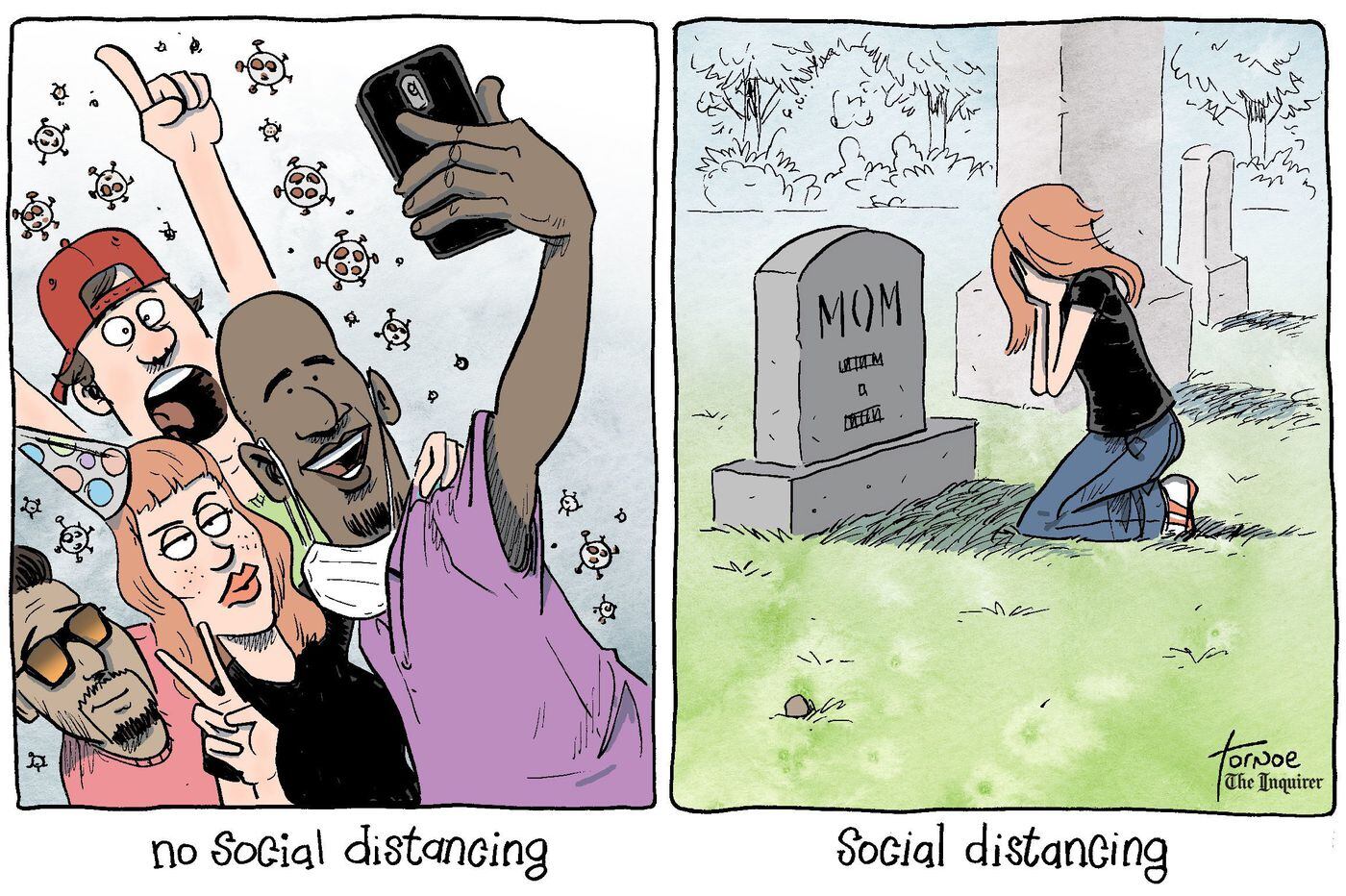
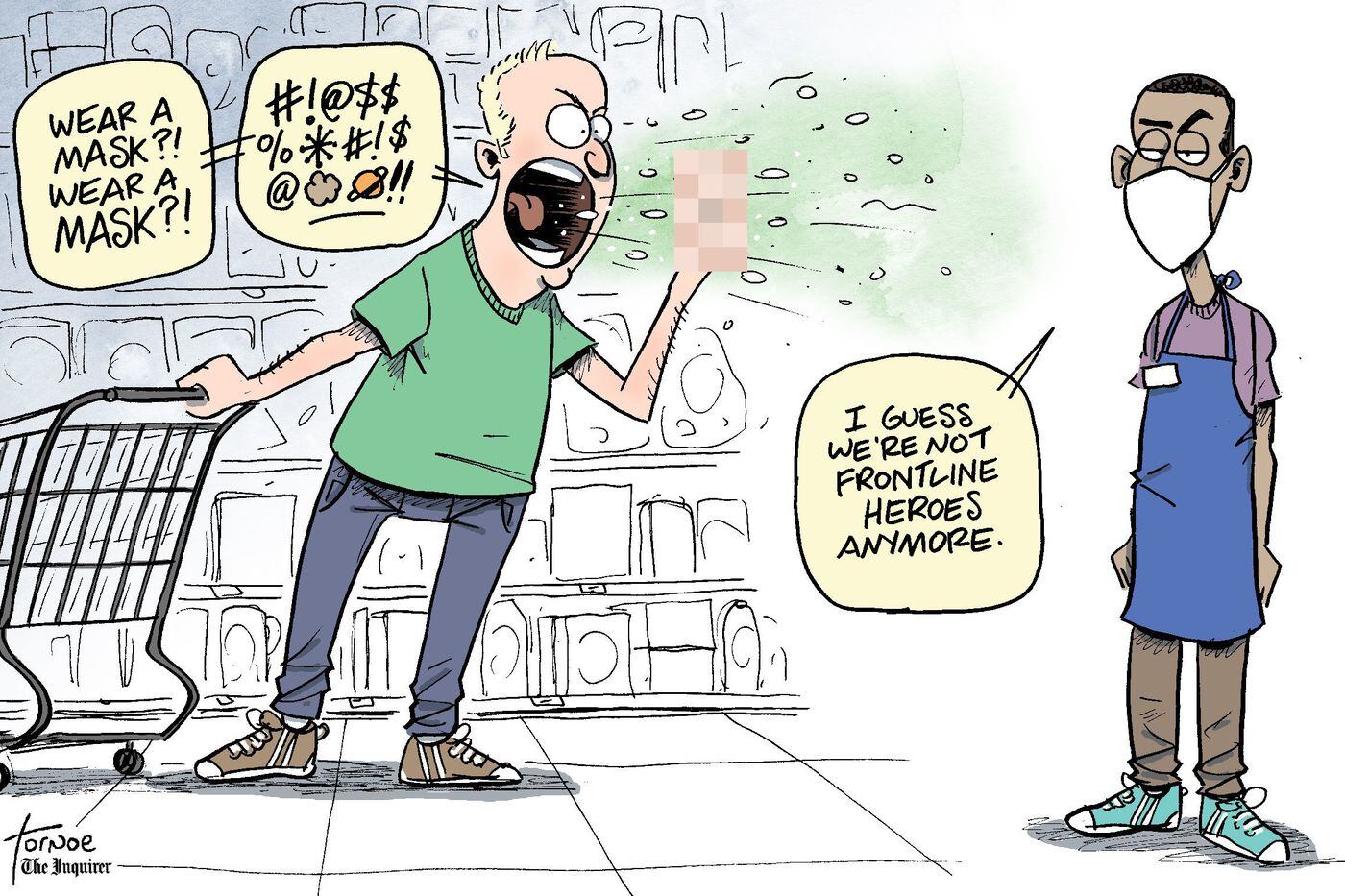




 HENRY KOTULA