Nearly one-third of children tested for COVID in Florida are positive.

https://www.sun-sentinel.com/coronavirus/fl-ne-pbc-health-director-covid-children-20200714-xcdall2tsrd4riim2nwokvmsxm-story.html

Nearly One-Third Of Children Tested For COVID In Florida Are ...

Palm Beach County’s health director warns of risk of long-term damage.

Nearly one-in-three children tested for the new coronavirus in Florida has been positive, and a South Florida health official is concerned the disease could cause lifelong damage even for children with mild illness.

Dr. Alina Alonso, Palm Beach County’s health department director, warned county commissioners Tuesday that much is unknown about the long-term health consequences for children who catch COVID-19.

X-rays have revealed the virus can cause lung damage even in people without severe symptoms, she said.

“They are seeing there is damage to the lungs in these asymptomatic children. … We don’t know how that is going to manifest a year from now or two years from now,” Alonso said. “Is that child going to have chronic pulmonary problems or not?”

Her comments stand in contrast to Gov. Ron DeSantis’ messaging that children are at low risk, and classrooms need to be reopened in the fall. DeSantis has said he would be comfortable sending his children to school if they were old enough to attend.

Some studies suggest that children are less likely to catch COVID-19 than adults. Children are also far less likely to die of the disease. About 17,000 of Florida’s roughly 287,800 cases have been people younger than 18. Of the 4,514 COVID-19 deaths reported by Florida as of Tuesday, four have been younger than 18.

Still, it’s possible COVID-19 could have long-term consequences that will take time to understand, Alonso said.

“This is not the virus you bring everybody together to make sure you catch it and get it over with,” she said. “This is something serious, and we are learning new information about this virus every day.”

State statistics also show the percentage of children testing positive is much higher than the population as a whole. Statewide, about 31% of 54,022 children tested have been positive. The state’s positivity rate for the entire population is about 11%.

Researchers have linked a serious and potentially deadly inflammatory condition with COVID-19 in children. The condition, called pediatric multisystem inflammatory syndrome, doesn’t appear to be widespread. The Florida Department of Health lists 13 confirmed cases of the syndrome.

Dr. Jorge Perez, co-founder of Kidz Medical Services, said it’s too early to say how common and severe long-term damage could be from COVID-19, but early evidence suggests some children infected with the virus could have lasting damage.

“We are learning something every day,” said Perez, who operates pediatric offices throughout South Florida. “We have to be knowledgeable about this and continue to monitor to see what effects it has in children.”

DeSantis told talk radio host Rush Limbaugh last week that the risk to children is “very low.”

“I’ve got a 3-year-old daughter, 2-year-old son, and a newborn daughter,” DeSantis said in the radio interview. “And I can tell you if they were school age, I would have zero concern sending them.”


Over 224,000 COVID-19 deaths forecast in U.S. by November 1, says University of Washington’s IHME

https://www.reuters.com/article/us-health-coronavirus-usa-forecast/over-224000-covid-19-deaths-forecast-in-u-s-by-november-1-says-university-of-washingtons-ihme-idUSKCN24G1S9?fbclid=IwAR19qY7KM_P4bPIMnlP7ax1fB2xXu8Pf4GOxZoar-p2aey6elaVI_SXW4-Y

Over 224,000 COVID-19 deaths forecast in US by November 1, says ...

A newly revised University of Washington model projects the U.S. death toll from COVID-19 will climb to just above 224,000 by Nov. 1, up 16,000 from a prior forecast, due to rising infections and hospitalizations in many states.

But the latest forecast from the university’s Institute for Health Metrics and Evaluation (IHME), released late on Tuesday, also predicts the death toll could be reduced by 40,000 if nearly all Americans wore masks in public.

“Use of masks is up, but not as high as it should be. If 95% of Americans wore masks each time they left their homes, infection rates would drop, hospitalizations would drop, and forecast deaths would drop,” the IHME said in a statement.

The IHME’s new forecast came after Alabama, Florida and North Carolina on Tuesday reported record daily increases in deaths from COVID-19, marking grim new milestones of a second wave of infections surging across much of the U.S.

The new IHME forecast – 224,089 U.S. lives lost by Nov. 1 – was revised upward from the 208,254 deaths projected on July 7.

At least 136,052 Americans have died from COVID-19, the illness caused by the novel coronavirus, while reported U.S. infections have surpassed 3.4 million, according to a tally by Reuters.

The IHME’s projections have been cited in the past by the White House and are watched closely by public health officials.


The burden on teachers

https://www.axios.com/teachers-worry-school-reopening-coronavirus-4f173e1b-f48f-49ad-a319-0b053ddd7295.html

The burden on teachers in reopening the schools - Axios

The debate over whether and how much to re-open schools in the fall has put teachers in the precarious position of choosing between their own safety and the pressures from some parents and local officials.

Why it matters: Teachers are the core of K-12 education. The people we depend on to educate our society’s children may end up bearing the brunt of both the risk and the workload.

What’s happening: With coronavirus cases spiking in many parts of the U.S., districts are weighing the feasibility of keeping classes all virtual, as Los Angeles and San Diego are doing, or conducting a rotation of in-person and remote lessons.

While all back-to-school options have pros and cons, there are specific worries for teachers.

1. Exposure: Despite a child’s overall low health risk if they contract COVID-19, scientists still do not conclusively know if schools could become hotspots for more vulnerable populations.

  • Schools are on a time and money crunch for better ventilation, more disinfectant and masks and proper social distancing techniques. If a cluster of cases do occur, teachers and parents are short on answers about how to isolate students and contact trace.
  • Districts were already facing staffing shortages before the pandemic. And nearly 1.5 million teachers have a condition that puts them at increased risk of serious illness from coronavirus, per a Kaiser Family Foundation study. A separate KFF study out today found that 3.3 million adults age 65 or older live in a household with school-age children.
  • A study in Germany found that infections in schools had not led to outbreaks in the community. But an analysis of a surge of cases in Israel found that nearly half the reported cases in June were traced back to illness in schools.

“We as teachers prepare for active shooters, tornadoes, fires and I’m fully prepared to take a bullet or shield a child from falling debris during a tornado. But if I somehow get it and I’m asymptomatic and I get a student sick and something happens to them or one of their family members, that’s a guilt I would carry with me forever.”

— Michelle Albright, a second grade teacher from northwest Indiana

2. Difficulty of a hybrid approach: Many school districts like New York City are opting to split school between in-person and online to minimize exposure. That’s an effective but more burdensome approach for teachers, top teachers union chief Randi Weingarten told Axios’ Dan Primack Monday.

  • In-person contact with a teacher can make a big difference for students struggling with a concept or who need one-on-one time.
  • But many teachers will have to prepare virtual and in-person lessons and ensure the same learning outcomes for students in both settings — a tall order.

3. Child care availability: Teachers with children of their own are concerned about how to care for them when they are teaching.

  • States could choose to provide child care services for educators as essential employees, but it’s unclear what non-school child care options will be available in areas with high infection rates or where day care centers have struggled to stay in business.

4. Concerns of other school staff: Bus drivers, custodians, classroom aides, administrative staff, cafeteria workers, school nurses and substitute teachers may come in contact with more children throughout the day because they are less likely than teachers to be confined to a single classroom.

What to watch: School districts ought to be finding other roles for teachers who are not comfortable returning to the classroom, such as reassigning them to virtual-only roles or providing one-on-one online tutoring sessions with students, said John Bailey, visiting fellow at the American Enterprise Institute and former domestic policy adviser during the George W. Bush administration.

  • But there’s not much time to sort that out on top of getting teachers the professional development they need for effective remote learning.
  • “What I worry about is that we squandered the few months we had to make sure we can think through these challenges,” Bailey said. “This was one of the most obvious challenges facing schools with reopening and we should have been thinking about that for the last several months. Instead it’s creeping up on districts.”

The bottom line: Due to the unprecedented nature of this pandemic, teachers are worried about the uncertainties and, in some cases, lack of clear planning should conditions worsen. That may drive some to quit teaching altogether.

  • “You’ve got 25% of teachers who may be in either a high-risk situation because of pre-existing conditions or because of age, and a lot of them, if they can, they may just check out and say ‘nobody’s taking care of me. I can’t go back,'” Weingarten said.


MASK UP! It’s Everybody’s Job

Image may contain: one or more people and people sitting, text that says 'MAN UPI MASK UP! IT'S EVERYBODY'S JOB Together we can slow and stop the spread. USE A MASK & PHYSICAL DISTANCE. Americans DO THEIR PART! prCieiandBarca'

More than 400 million people in India re-enter lockdown conditions

https://www.cnn.com/world/live-news/coronavirus-pandemic-07-15-20-intl/index.html

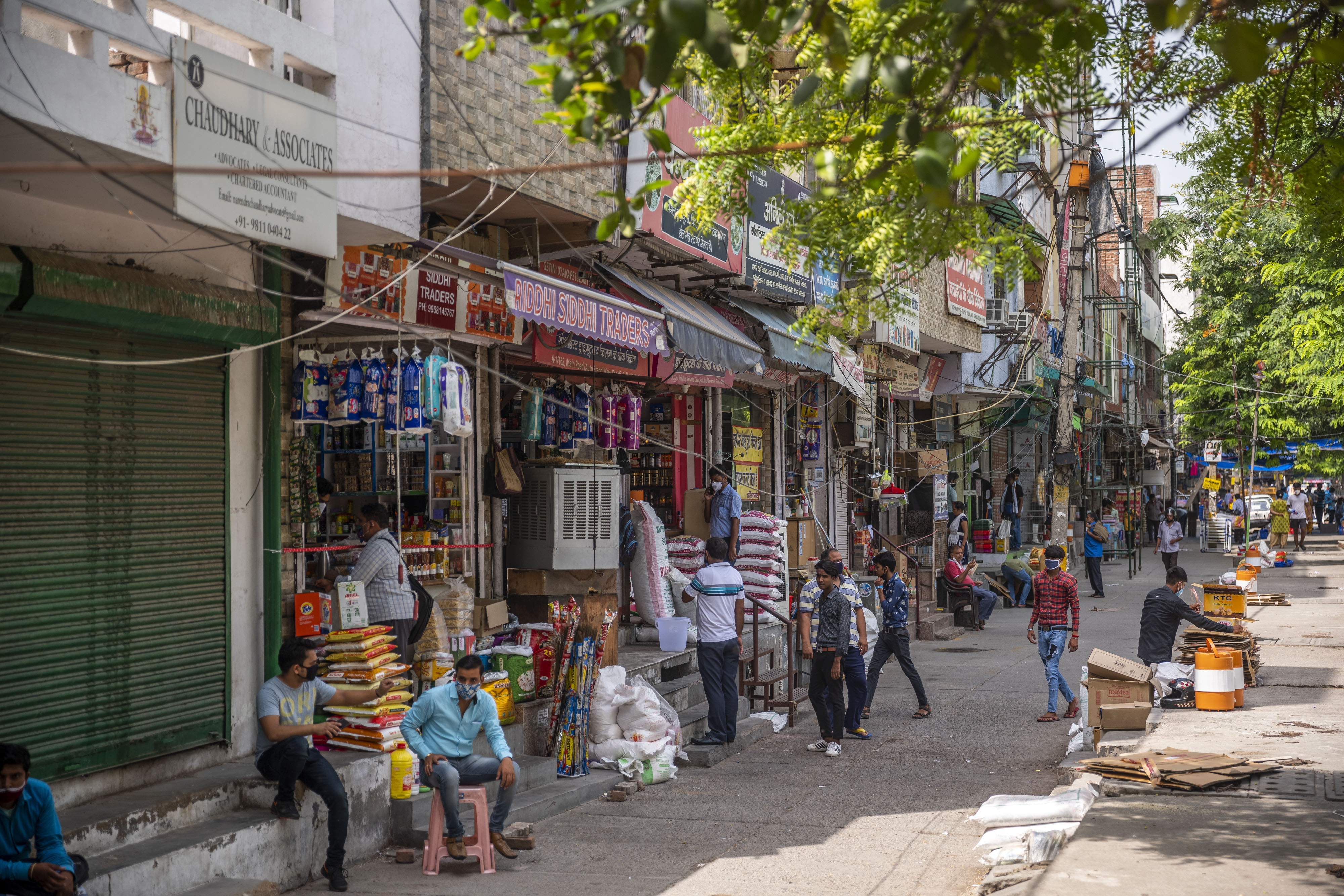
People visit stores on July 14 at the Kondli Wholesale Market in the city of Noida in Uttar Pradesh, India.

More than 400 million people across three Indian states will re-enter lockdown, weeks after a nationwide lockdown was lifted on May 30.

This comes after India recorded 100,000 new coronavirus cases in the past five days as the country struggles to gain control of the worsening pandemic.

On Wednesday, it saw 29,429 new cases, bringing the total to 936,181 confirmed cases and 24,309 deaths.

State and city-wide measures: As cases and deaths continue to soar in India, two of its most populous states — Bihar and Uttar Pradesh — announced various lockdown restrictions.

Bihar’s government announced a 16-day long state-wide lockdown on Tuesday, which would come into effect from July 16, while Uttar Pradesh’s government said Sunday that a lockdown will take place every weekend until the end of July.

Both states had previously lifted their lockdowns on May 30 except for districts with a high number of cases.

The city of Bengaluru, in Karnataka state, which had also initially lifted restrictions, went into a week-long lockdown on Tuesday until July 22. This comes after the state of Maharashtra reinstated a lockdown on June 29 until July 31.

India began easing lockdown restrictions on May 30, but certain states such as West Bengal and Jharkhand continued to have lockdown measures and restrictions on movement, with the exception of certain essential services.

More than 100 million people in these states have remained under lockdown restrictions since late March.

In the capital, New Delhi, where there are no overarching lockdown measures, restrictions continue in its “containment zones,” which include more than 600 localities as of Monday, according to the territory’s Revenue Department. 


Coronavirus cases soar by more than 1 million over 5 days

https://www.cnn.com/2020/07/14/world/million-coronavirus-cases-five-days-intl/index.html

Coronavirus cases soar by more than 1 million over 5 days - WRCBtv ...

Coronavirus cases soared by more than a million globally in just five days as the numbers continue to accelerate from week to week, according to figures from Johns Hopkins University.

Reported cases increased by 1,046,200 from July 6 through July 10, up from a 994,400 increase over the five days from July 5 through July 9.
The total global case number surpassed 13 million on Monday, growing by 1,061,600 between July 8 and July 13.
While some countries that were hit early in the outbreak have managed to contain the virus, the number of cases globally has been accelerating fairly steadily.
There have now been more than half a million deaths from the virus worldwide, according to JHU data.
The World Health Organization’s director-general on Monday warned there would be “no return to the old normal for the foreseeable future.”
Tedros Adhanom Ghebreyesus told a media briefing in Geneva that there were no shortcuts out of this pandemic, and that while we may hope for an effective vaccine, there must be a focus on using the tools that are available now to suppress transmission and save lives.
“We need to reach a sustainable situation where we do have adequate control of this virus without shutting down our lives entirely, or lurching from lockdown to lockdown,” Tedros said.
He told reporters there was a “roadmap to a situation where we can control the disease and get on with our lives” that would require three things: a focus on reducing mortality and suppressing transmission; an “empowered, engaged community” that takes individual measures to protect the whole community; and strong government leadership and communication.
Two countries accounted for half of all new cases added worldwide on Sunday, he told the briefing.
“Yesterday, 230,000 cases of Covid-19 were reported to WHO. Almost 80% of those cases were reported from just 10 countries, and 50% come from just two countries,” he said.
Tedros did not name the countries, but WHO data indicated that he was referring to the United States and Brazil. According to the JHU tally of cases, the US, India and Brazil accounted for more than 112,000 new cases on Sunday.
The US has the world’s highest confirmed numbers, with at least 3.4 million recorded cases and at least 135,615 deaths. Brazil has almost 2 million confirmed cases and India is closing in on one million.
“Let me be blunt: Too many countries are headed in the wrong direction,” Tedros said.
“If governments do not clearly communicate with their citizens and roll out a comprehensive strategy focused on suppressing transmission and saving lives; if populations do not follow the basic principles of physical distancing, hand washing, wearing masks, there is only one way this is going to go. It’s going to get worse and worse and worse.”
“But it does not have to be this way,” he added. “It’s never too late to bring the virus under control, even if there has been explosive transmission.”


Fauci has been an example of conscience and courage.

https://www.washingtonpost.com/opinions/fauci-has-been-an-example-of-conscience-and-courage-trump-has-been-nothing-but-weak/2020/07/13/7c9a7578-c52b-11ea-8ffe-372be8d82298_story.html?fbclid=IwAR0n0o67FMhhUjxqU11cfrd4daMkW0ZWZtIg–I1P3ioLPA7ka7Ew0XT_EA&utm_campaign=wp_main&utm_medium=social&utm_source=facebook

Opinion | Fauci has been an example of conscience and courage ...

When historians try to identify the most shameful documents from the Trump administration, a few are likely to stand out. For unconstitutional bigotry, it is hard to beat the initial executive order banning travel to the United States from Muslim countries. For cruelty and smallness, there is the “zero tolerance” directive to federal prosecutors that led to family separations at the border. For naked corruption, there is the transcript of the quid-pro-quo conversation between President Trump and the president of Ukraine.

But for rash, foolish irresponsibility, I’d nominate the opposition research paper recently circulated by the White House in an attempt to discredit the National Institute of Allergy and Infectious Diseases’ Anthony S. Fauci. As reported by The Post, the document recounted a number of instances — on community transmission, asymptomatic transmission and mask wearing in particular — where Fauci’s views have shifted over time. As far as I know, this official record is unique: A White House attack on the government’s leading infectious-disease specialist during a raging pandemic. It indicates an administration so far gone in rage, bitterness and paranoia that it can no longer be trusted to preserve American lives.

From a purely political standpoint, it is understandable that the administration would want to divert attention from its covid-19 record. Trump’s policy of reopening at any cost is exacting a mounting cost. Five months into the greatest health crisis of modern U.S. history, there are still serious problems with supply chains for protective equipment. There are still long wait times for testing results in many places. The contact tracing process in many communities remains (as one health expert described it to me) “a joke.” More than 132,000 Americans have died.

Rather than addressing these failures, Trump has chosen to sabotage a public official who admits their existence. Rather than confronting these problems, Trump wants to ensure his whole administration lies about them in unison. The president has surveyed America’s massive spike in new infections and thinks the most urgent matter is . . . message discipline.

It is true that a number of Fauci’s views on the novel coronavirus have evolved (though some of the administration’s charges against him are distorted). But attacking a scientist for making such shifts is to willfully misunderstand the role of science in the fight against disease. We do not trust public health officials during an emerging pandemic because they have fully formed scientific views from the beginning. We trust them because 1) they are making judgments based on the best available information and 2) they have no other motive than the health of the public. If, say, health officials were initially mistaken about the possibility of asymptomatic transmission, it is not failure when they change their views according to better data. It is the nature of the scientific method and the definition of their duty.

In the inch-deep world of politics, amending your view based on new information is a flip-flop. In epidemiology, it is known as, well, epidemiology.

Meanwhile, the president is failing according to both requirements of public trust. Trump is not making judgments based on the best available information. And he clearly has political goals that compete with (and often override) his commitment to public health. The president is hoping against hope that the public will forget about the virus until November, or at least about the federal role in fighting it. To apply a veneer of normalcy, he is holding public events that endanger his staff and his audience and is planning a Republican convention that will double as a petri dish.

It now seems likely that the most decisive moment of the American pandemic took place in mid-April when new cases began to stabilize around 25,000 a day. Even four or six more weeks of firm presidential leadership — urging the tough, sacrificial application of stay-at-home orders — might have reduced the burden of disease to more sustainable levels, as happened in Western Europe. And this would have relieved stress on systems of testing, tracing and treatment.

But Trump’s nerve failed him. Instead of holding firm, he began siding with populist demands for immediate opening, pressuring governors to take precipitous steps and encouraging skepticism about basic public health information and measures. This may well have been the defining moment of the Trump presidency. And he was weak, weak, weak.

It is typical for Trump to shift blame. But in this case, the president has selected his fall guy poorly. Fauci has been an example of conscience and courage in an administration that values neither. When Trump encourages a contrast to his own selfishness and cravenness, he only damages himself.


As cases and deaths rise, Americans ponder a return to school

https://mailchi.mp/86e2f0f0290d/the-weekly-gist-july-10-2020?e=d1e747d2d8

Top 10 List of Must Do's for Back to School 2019 ...

The US spent another week headed in the wrong direction, with daily new COVID-19 cases reaching nearly 60,000 on Thursday, the sixth record-setting total in the past ten days.

The spike continued to be most pronounced in states that reopened early, with Texas, South Carolina, Arizona, and Florida hit particularly hard. More worryingly, several states saw daily deaths from COVID rise, with Alabama, Florida, Mississippi, South Dakota and Tennessee hitting one-day death records.

Like the light from some malign star, death numbers are a lagging indicator—a reflection of new case totals from weeks earlier—leading health experts to warn of dark days ahead for the rest of the summer. In his customary understated manner, top White House health advisor Dr. Anthony Fauci said this week, “I don’t think you could say we’re doing great. I mean, we’re just not.”

Responding to concerns about the availability of hospital capacity, Texas Gov. Greg Abbott expanded a ban on elective surgeries to more than 100 counties across the state, and HCA Healthcare delayed inpatient surgeries at more than a dozen of its hospitals in Florida, as did other health systems there.

School reopening emerged as a political flashpoint this week, with President Trump hosting a summit meeting on “Safely Reopening America’s Schools” on Tuesday at the White House. The President criticized reopening guidelines from the Centers for Disease Control (CDC) as being “very tough & expensive”, but on Thursday CDC director Dr. Robert Redfield told CNN that the guidelines, first published in May, would not be revised.

With schools and colleges set to restart in many places next month, the influential American Academy of Pediatrics modified its earlier support for reopening schools, pushing back on the administration’s threatened funding cuts for school districts that do not reopen on time, with in-person classes.

The debate over how to handle school reopening underscores how much time was lost between March and May, when a national reopening plan should have been developed. As the virus surges, with students and teachers set to return in just a few short weeks, and further economic recovery hinging on parents’ ability to send their kids safely to school, the window is rapidly closing on our ability to navigate this critical transition.

US coronavirus update: 3.2M cases; 135K deaths; 38.0M tests conducted.


Coronavirus is spreading in fraternity houses, raising concerns for campuses opening this fall

https://www.washingtonpost.com/national/coronavirus-is-spreading-in-fraternity-houses-raising-concerns-for-campuses-opening-this-fall/2020/07/10/72c986c0-c2f0-11ea-9fdd-b7ac6b051dc8_story.html?fbclid=IwAR290_LVJbF-FPWb4OkSx78MlT9olOI3Q9f3g6ILztueGLkDQSTX85pI2DA&utm_campaign=wp_main&utm_medium=social&utm_source=facebook

Animal House': Where Are They Now? - ABC News

Leaders agonizing about whether, and how, to safely reopen colleges and universities this fall now have another worry: the frat house.

In recent weeks, as students have trickled back onto campus, public health officials have been warning about an alarming rise in coronavirus cases that appears related to fraternity housing and parties that had been a staple of the college experience.

With students often crammed into houses that were hard to police and regulate before the pandemic, public health officials say they think major changes are needed to better protect the health of students and the broader community in college towns from coast to coast.

The concerns center on how easily the virus spreads during social gatherings — particularly indoor events. There is also skepticism about whether students in group housing will follow safety precautions, including forgoing roommates and communal meals, and wearing masks.

“There’s no doubt that this is a massive change, a massive transition for all of us,” said Judson Horras, president and chief executive of the North American Interfraternity Conference, a membership organization representing 6,000 undergraduate fraternity chapters and 250,000 fraternity members. “It won’t look like a normal fall this fall with social events.”

In a sign of the growing concern, the leadership at the University of California at Berkeley sent an urgent appeal Wednesday to students, noting that the number of coronavirus cases on campus had more than doubled in just a week. The majority of cases have been traced back to fraternity or sorority social gatherings, UC-Berkeley University Health Services’ medical director, Anna Harte, and assistant vice chancellor, Guy Nicolette, wrote in a letter to students.

“At the rate we are seeing increases in cases, it’s becoming harder to imagine bringing our community back in the way we are envisioning,” Harte and Nicolette wrote.

The jump in cases at UC-Berkeley comes on the heels of major outbreaks at the University of Washington and University of Mississippi, both of which have been traced to fraternity housing or social functions this summer.

At the University of Washington, in Seattle, at least 155 of the school’s 1,100 fraternity members have tested positive for the coronavirus since an outbreak began about two weeks ago, according to Erik Johnson, the president of the school’s Interfraternity Council.

At the University of Mississippi, in Oxford, health officials said last month that they had traced more than 160 cases back to off-campus fraternity rush parties, which are held to recruit new members. The University of Mississippi has warned fraternities they would be placed on probation if they are found to have hosted parties.

The PolicyLab at Children’s Hospital of Philadelphia raised concerns in a report this week about a growing number of infections in several other college towns, including Auburn, Ala., and Tuscaloosa, Ala., where the University of Alabama is located.

The report did not specifically mention Greek life, but researchers said college towns in general should brace for a sharp increase in cases as students return for the fall semester.

“If these places are having problems with half-empty campuses, we can only assume the fall will take a major toll on these college towns,” the researchers wrote.

In recent days, residents in Kalamazoo, Mich., have been complaining to local news media that parties have continued throughout the summer near fraternity row at Western Michigan University. The complaints follow a message the school’s health center posted July 2 on Twitter warning students to change their social behaviors.

“We answer phone calls everyday from people who were in crowds, at gatherings, and then learned later someone they met was COVID-positive,” the health center wrote. “There is no ‘safe’ party that looks like parties you attended in 2019.”

In a statement, Western Michigan University said college officials are trying to strike a balance by finding ways in which students can “be social and enjoy new and old friendships” while still taking “personal responsibility,” including by staying six feet away from others as much as possible.

“Put more simply, our message is: stay social but stay safe,” said Paula Davis, a university spokeswoman.

Thomas Russo, chief of the division of infectious diseases at the Jacobs School of Medicine and Biomedical Sciences at the University at Buffalo, said fraternities will continue to pose a risk for rampant spread of the virus.

He said many fraternities have characteristics of a bar and indoor restaurant, both of which are said to be locations where the virus spreads efficiently.

“If they are crowded indoors, and they’re in close quarters for a long period of time, it’s just a recipe for getting infected,” Russo said. “And the setting almost guarantees if multiple individuals get infected, you suddenly have scenarios where they can spread it to 10, 20, 30 or 40 other individuals.”

Johnson said that is exactly what happened at the University of Washington this summer. He said the school’s 25 fraternities have not been having parties or large social gatherings since the virus began circulating on the West Coast this spring, which forced the university to shut down.

But as students began moving back into fraternity housing in June, the virus quickly spread among roommates, he said.

“There is not one event, or multiple events, that we can identify as being the repository of this,” said Johnson, who is a senior. “It just spread from people living in a house, or visiting others in a house to hang out, or even just running into someone at a grocery store. . . . It was truly community spread.”

Johnson said most University of Washington cases involved people who were asymptomatic, which Russo said is common for carriers of the virus who are in their late teens or early 20s.

But Russo said colleges and their broader communities should not underestimate the danger facing students and others if an outbreak occurs on campus.

“We think in that age group only a small number will become seriously ill from coronavirus,” Russo said. “But if you have thousands of people infected, unfortunately some of these young adults are still going to have a bad outcome.”

Although the covid-19 death rate among people ages 18 to 29 is very low, Russo said, students are almost certainly going to interact with university staff and faculty who could be more vulnerable, as well as parents and grandparents.

Acknowledging that risk, elected leaders and university administrators are stepping up efforts to draft new guidelines for student housing.

Ohio Gov. Mike DeWine (R) on Thursday called on colleges and universities to step up coronavirus testing while also identifying housing units to “rapidly relocate individuals” should they become sick while living in residence halls or fraternity or sorority houses.

Fraternity members are also vowing to do more to police themselves, including limits on social gatherings.

Penn State’s Interfraternity Council voted Tuesday to halt all social activities indefinitely. The vote came after a 21-year-old student at the university died of coronavirus complications last month shortly after he returned home to eastern Pennsylvania. The student was not a member of a fraternity, but his death was jarring to university officials and student leaders as they prepare to resume classes in the fall.

“It is important to us that the residents of State College are not put at high risk as students return to campus this fall,” the council said in a statement.

At the University of Virginia, where the membership of 61 fraternities and sororities accounts for approximately a third of undergraduates, conversations between the school and Greek student leaders have been underway for months, said Julie Caruccio, an assistant vice president and associate dean of students. The discussions have focused on how to return to school safely.

“Our fraternity and sorority students are abundantly aware that the spotlight is on them,” Caruccio said. “They know, fairly or unfairly, that what they do is going to be watched carefully.”

One aspect of sorority and fraternity life at U-Va. that may be advantageous is that the recruitment of new members — or rush — does not occur until spring. And many of the organizations have said they will recruit new members online rather than through parties or social gatherings.

At the University of Washington, Johnson said the council is calling on fraternities to dramatically limit rental occupancy this year, even if it means chapters may need to lean on alumni or other sources to help pay the bills. Members will be encouraged to wear masks in their fraternity houses, except in their private rooms, Johnson said.

Although Johnson acknowledged that it may be hard to “change behaviors” among some upperclassmen who remember pre-coronavirus college life, he said he expects that abiding by the rules will be fairly easy for younger students.

“We are bringing in a new member class every year,” Johnson said. “Those new members won’t know what the norm was last year.”


Fauci: Surge States Must Pause Reopening

https://www.medpagetoday.com/infectiousdisease/covid19/87527?utm_source=Sailthru&utm_medium=email&utm_campaign=Weekly%20Review%202020-07-12&utm_term=NL_DHE_Weekly_Active

Fauci: Surge States Must Pause Reopening | MedPage Today

NIAID chief pins hopes for long-term containment on vaccine.

States facing COVID-19 surges must hit “pause” on their reopenings and begin to truly follow the CDC guidelines for mitigating its spread, NIAID Director Anthony Fauci, MD, told The Hill during an online webinar hosted by the website on Thursday.

Cases in the U.S. peaked in April but instead of falling to near zero, as happened in many European countries, new daily diagnoses plateaued at about 20,000 per day.

That ended in late May, when new cases began rising again, driven by big increases in California, Texas, Florida, and Arizona. The national rate has been topping 50,000 per day; the widely cited Johns Hopkins University tracker’s count spiked by 113,000 in the 24 hours ending at 8:00 a.m. ET Friday.

“We need to get our arms around that … and we need to do something about it quickly,” Fauci said.

One major challenge is the nature of the virus itself, which is “spectacularly transmissible,” he noted.

But the other problem is that some states ignored public health experts’ advice.

“We went from shutting down to opening up in a way that essentially skipped over all the guideposts,” he said, referring to the benchmarks for each phase of the reopening process. “That’s not the way to go.”

Fauci said he hopes it won’t be necessary for sunbelt states to return to a total shutdown.

“We’ve got to get them to do very fundamental things: closing bars, avoiding congregations of large numbers of people, getting the citizenry in those states to wear masks, maintain six-foot distance, washing hands,” he said. “If we can do that consistently, I will tell you almost certainly you’re going to see a down curve of those infections.”

Fauci also offered his projections for vaccine development.

“We’re really cautiously optimistic that things are moving along quite well with more than one candidate.”

He said the Moderna vaccine, which the NIH helped to develop, “will very likely be going into advanced phase III clinical trials, by the end of this month, July.”

Other “equally promising” vaccine candidates will begin these trials “a little bit later.”

“[W]ith any vaccine development program you never can guarantee success … but the early signs are proving favorable,” he said.

Fauci said he hopes “by the end of this calendar year and the beginning of 2021, that we will have a vaccine that we will be able to begin to deploy to people who need it.”