Renton, Wash.-based Providence suffered its third credit downgrade in less than three weeks when Moody’s revised a rating on bonds the 51-hospital system holds to “A2” from “A1.”
Such a rating reflects an expectation margins will remain weak in 2023. The outlook is negative.
The move follows similar actions by Fitch Ratings March 17 and S&P Global March 21 amid an anticipated multiyear process of financial recovery.
Capital expenditure for Providence is expected to be restricted after the completion of a couple of major projects this year to effect “margin recovery,” Moody’s said.
Providence reported a $1.7 billion operating loss in 2022.
Renton, Wash.-based Providence had its second downgrade in less than a week amid higher expenses that helped lead to steeper-than-expected losses and an expectation of a multiyear recovery.
The rating downgrade from “A+” to “A” applies to the system’s long-term rating as well as to various bonds it holds, S&P Global said March 21. The outlook is negative.
“The negative outlook reflects our view of the steep operating losses that management must address over the next year to put the organization on a path to better cash flow and break-even margins,” S&P said.
The rating downgrade follows a similar move by Fitch March 17.
Positive fundamentals such as its diversified services and robust strategic plan, as well as its leading market positions in all seven of its regionally centered markets, stands Providence in good stead, S&P added.
Providence, a 51-hospital system, recently reported a fiscal 2022 operating loss of $1.7 billion.
Here is a summary of recent credit rating downgrades, going back to the last Becker’s roundup on Jan. 17.
Operating concerns and a bleak financial outlook for some resulted in the following changes:
Geisinger Health System (Danville, Pa.): Moody’s Investors Service downgraded Geisinger Health System’s outstanding bonds from “A1” to “A2” Feb. 13 amid expectations of continued cash flow weakness.
The outlook for the system, which has about $1.3 billion in debt, is stable.
Marshfield (Wis.) Clinic Health System: The system suffered a credit downgrade because of recent operating losses and amid expectations of no immediate financial improvement.
The S&P Global move Feb. 7 to downgrade the system to “BBB+” from “A-” follows a similar move from Fitch Jan. 18.
Marshfield signed a memorandum of understanding with Duluth, Minn.-based Essentia Health to discuss a potential merger Oct. 12 that would include 25 hospitals.
Tower Health (West Reading, Pa.): Troubled Tower Health, which is currently undergoing a strategic review and selling off several assets, suffered a rating downgrade on its bonds, S&P Global reported Feb. 6, adding that the outlook is negative.
“The downgrade reflects Tower Health’s significant ongoing operating losses that are expected to continue in fiscal 2023, and a steep decline in unrestricted reserves to a level that we view as highly vulnerable,” said S&P Global Ratings credit analyst Anne Cosgrove.
Fairview Health (Minneapolis): Moody’s Investors Service downgraded the revenue bond ratings of Fairview Health from “A3” to “Baa1.”
The downgrade reflects Moody’s projection that weak operating performance will be challenging to overcome due to increased labor costs and lower inpatient volume. Inflation and annual transfers to the University of Minnesota in Minneapolis will also hamper margins, Moody’s said.
A number of health systems experienced downgrades to their financial ratings in recent weeks amid ongoing operating losses, declines in investment values and challenging work environments.
Here is a summary of recent ratings since Becker’s last roundup Nov. 15:
The following systems experienced downgrades:
Adventist Health (Roseville, Calif.): Saw a downgraded long-term credit rating on bonds it holds, declining from “A” (negative) to “A-” (stable) by S&P Global Ratings.
The December downgrade follows a 2021 downgrade from Fitch Ratings from “A+” to “A.” That downgrade reflected “a series of one-time events and the lingering deleterious impact from the novel coronavirus” which “resulted in lower than anticipated operating EBITDA margins,” Fitch said. In November, Fitch added to this assessment by downgrading Adventist’s outlook from stable to negative, reflecting “continued negative operational pressure.”
The group, which operates 23 hospitals in California, Hawaii and Oregon, was also assigned an “A” rating by Fitch to 2022 bonds and other outstanding debt.
Catholic Health (Buffalo, N.Y.): The group was downgraded on debt from “B1” to “Caa2” by Moody’s and is in danger of defaulting on its covenants.
The nonprofit health system, which serves residents in Western New York with four acute care hospitals and several other facilities, saw its rating drop in November on approximately $364 million of debt.
Duke University Health System (Durham, N.C.): Downgraded to an “AA-” credit rating by Fitch Ratings.
The December downgrade comes amid concern over Duke’s planned integration of the Private Diagnostic Clinic, a for-profit medical group with more than 1,800 physicians.
The rating, reduced from “AA,” applies both to specific bonds the group holds and to its overall issuer default rating. In addition to the integration of the Private Diagnostic Clinic, Fitch also cited concern over macro issues such as labor and inflationary pressures, which have helped to drag down operating results for the health group.
Main Line Health (Radnor Township, Pa.): – Had its bond rating downgraded to “A1” from “Aa3” by Moody’s.
The December downgrade reflects a multiyear trend of weak operating performance and expectations of tepid progress into 2023, Moody’s said.
In addition to Main Line’s revenue bond rating declining, its outlook has been revised to stable from negative at the lower rating. The hospital group has approximately $651 million in outstanding debt, Moody’s said.
Prime Healthcare (Ontario, Calif.): The group was downgraded on probability of default rating to “B2-PD” from “B1-PD” as well as its ratings of the system’s senior secured notes to “B3” from “B2” by Moody’s.
Moody’s also revised the outlook in November to negative from stable because it projects operating expenses will continue to pressure the 45-hospital system’s profitability in the near term, presenting challenges for “the company’s pace of deleveraging,” according to a Nov. 18 news release.
Westchester County Health Care Corp. and Charity Health System (Valhalla, N.Y): The group was downgraded from “Baa2” to “Baa3” by Moody’s.
The December downgrade for CHS is based on WCHCC’s legal guarantee to pay debt service on CHS’ Series 2015 bonds, if CHS is unable. The outlook for both systems remains negative with WCHCC and CHS having $773 million and $127 million of debt, respectively, at the end of fiscal year 2021, Moody’s said.
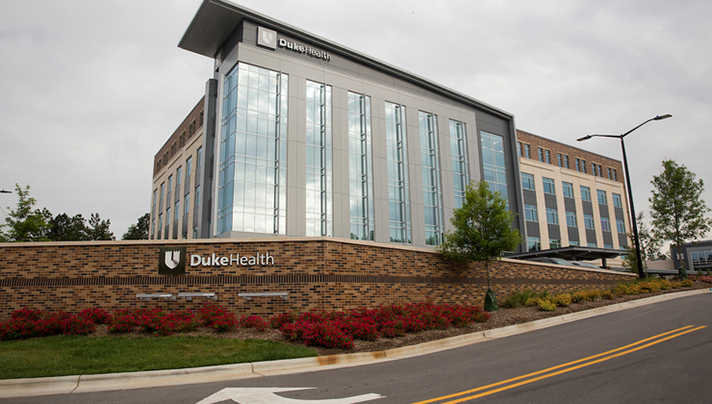
Durham, N.C.-based Duke University Health System was downgraded to an “AA-” credit rating amid concern over its planned integration of the Private Diagnostic Clinic, a for-profit medical group with over 1,800 physicians, Fitch Ratings said Dec. 8.
The rating, declining from “AA,” applies both to specific bonds the group holds and to its overall Issuer Default Rating. In addition to the integration of the PDC, Fitch also cited concern over macro issues such as labor and inflationary pressures, which have helped to drag down operating results for the health group.
“While the transition of the PDC into the Duke Health Integrated Practice will only be effective in July 2023, the uncertainty of the proposed change had already caused some disruption to PDC’s ability to recruit physicians and may have had a negative impact on volumes,” Fitch said.
But while such integration will likely lead to an “extended period of lower operating results,” Duke Health is expected to gradually return to much stronger performance given its robust fundamentals, the ratings group added. Historically, the hospital system had pre-pandemic operating EBITDA margins of over 10 percent, compared with a fiscal year 2022 figure of just 2.1 percent.
The health system, which reported $4.5 billion of total operating revenues in 2022, said its CEO, A. Eugene Washington, MD, will step down in June 2023.
Moody’s Investors Service has downgraded the ratings on Prime Healthcare’s probability of default rating to “B2-PD” from “B1-PD” as well as its ratings of the system’s senior secured notes to “B3” from “B2.”
Moody’s also revised the outlook to negative from stable because it projects operating expenses will continue to pressure the 45-hospital system’s profitability in the near term, presenting challenges for “the company’s pace of deleveraging,” according to a Nov. 18 news release.
The downgrade of the Ontario, Calif.-based system’s ratings reflects Moody’s expectation of continued pressure on the Prime’s profitability in the coming quarters and elevated financial leverage, Moody’s said.
Prime’s debt/EBITDA jumped to about 6.1 times at the end of September from high-3.0 times one year ago, according to Moody’s. While a large part of the leverage increase was due to weak earnings in the first quarter, Moody’s expects the system’s financial leverage will remain high in the 6-6.5 times range in the next 12 months.
This year, the health system saw a surge in operating expenses, not fully offset by an increase in reimbursements, according to Moody’s. A significant portion of the increased expenses can be attributed to rising contract labor costs. Contract labor cost per hour dipped in the third quarter but still remains far higher than in prior years.
Moody’s said social and governance risk considerations are material to the rating downgrade, arguing that Prime’s reliance on clinical labor makes it vulnerable to worsening supply-demand imbalance of such labor and the resultant spike in labor costs. The risk has become more prominent after the pandemic, which triggered increased retirement and a shift from permanent to temporary staffing, especially for nurses, Moody’s said.
A number of health systems experienced downgrades to their financial ratings in recent weeks amid ongoing operating losses and challenging work environments.
Here is a summary of recent ratings since Becker’s last roundup Sept. 21:
The following systems experienced downgrades:
Main Line Health (Radnor Township, Pa.) — downgraded debt rating from “AA” to “AA-” in November (Fitch Ratings)
The downgrade reflects “significant operating losses” in fiscal year 2022, ending June 30, and is in relation to $594 million of bonds the health system holds. While downgrading that specific rating, however, Fitch described the healthcare group’s outlook as stable and said that it will benefit from a good market position in a favorable service area with strong market share.
Fitch described “continued expense challenges” facing the hospital group over the next two years as part of its decision to downgrade the debt rating.
Hannibal (Mo.) Regional Healthcare System — lowered financial outlook in November from stable to negative amid uncertainty around the hospital group’s capital spending plans (Fitch Ratings)
“The Negative Outlook reflects uncertainty around capital spending and the potential issuance of new debt to address infrastructure issues at the system’s main campus and expand inpatient/outpatient capacity,” Fitch said. “A master facilities planning process has begun, but cost estimates and timing are not yet available and the board has not approved any potential projects.”
Fitch also affirmed default ratings for HRHS at “A-.”
ChristianaCare (Newark, Del.) was issued a negative outlook in October (S&P Global Ratings)
Pressures from the pandemic and industry challenges have led to a “volatile operating performance” in the last three years, and ChristianaCare has a small revenue base compared to similarly rated health systems, S&P said,
“The negative outlook reflects [ChristianaCare’s] operating volatility and balance sheet deterioration that, while largely stemming from COVID-19 pandemic and industry pressures, are not characteristic of the ‘AA+’ rating level and could lead to a downgrade during the outlook period,” Chloe Pickett, an S&P credit analyst, said in the firm’s report.
The S&P also affirmed ChristianaCare’s “AA+” long-term rating based on the health system’s leading business position within its service area and healthy balance sheet, according to an Oct. 27 report.
MultiCare Health System (Tacoma, Wash.) had various debt obligations downgraded in October from”AA-” to “A+” (Fitch Ratings)
The downgrades included the healthcare system’s existing bond ratings and $430 million of fixed rate taxable notes as well as the group’s Issuer Default Rating.
“The downgrade of MultiCare’s IDR to ‘A+’ from ‘AA-‘ reflects the considerable operating stress the system is facing in the current fiscal year, in combination with balance sheet metrics that have moderated as a result of equity market volatility and a recent debt issuance,” Fitch said.
Wise Health System (Decatur, Texas) was downgraded to “BB+” from “BBB-” in regard to various debt obligations as it struggles with continued operating challenges (Fitch Ratings)
Wise Health System’s Issuer Default Rating and the ratings on series 2014A, 2021A, 2021B and 2021C hospital revenue bonds issued by Decatur Hospital Authority on behalf of Wise were all downgraded.
“The downgrade reflects the change in Fitch’s assessment of Wise’s operating risk and financial profiles to ‘bb’ from ‘bbb’ due to deterioration in the hospital’s operating performance through six-months (ended June 30) and the expectation of sizable operating and net losses in 2022,” Fitch said.
As everyone in our industry knows, sluggish volumes amid persistently rising costs, especially for labor, have sent health system margins into a downward spiral across 2022. Using the latest data from consultancy Kaufman Hall, the graphic above shows that by the end of this year, employed labor expenses will have increased more than all non-labor costs combined.
While contract labor usage, namely travel nursing, is declining, the constant battle for nursing talent means travel nurses are still a significant expense at many hospitals. Through the first six months of this year, over half of hospitals reported a negative operating margin, and the median hospital operating margin has dropped over 100 percent from 2019.
Larger health systems are not faring better: all five of the large, multi-regional, not-for-profit systems we’ve highlighted below saw their operating margins tumble this year, with drops ranging from three points (Kaiser Permanente) to nearly seven points (CommonSpirit Health and Providence).
While these unfavorable cost trends have been building throughout COVID, health systems now have neither federal relief nor returns from a thriving stock market to help stabilize their deteriorating financial outlooks.
Health system boards will tolerate negative margins in the short-term (especially given that many have months’ worth of days cash on hand), but if this situation persists into 2023, pressure for service cuts, layoffs, and restructuring will mount quickly.
Envision will see weak liquidity over the following 12 to 18 months, and its $1.4B cash reserve will likely run dry by the end of next year.
Physician staffing company Envision Healthcare is struggling financially, and these struggles are reflected in a Moody’s Investors Service credit rating downgrade, which took into account ongoing labor pressures and a decline in volumes linked to the COVID-19 pandemic.
According to Moody’s, Envision will see weak liquidity over the following 12 to 18 months, and its $1.4 billion cash reserve will likely run dry by the end of next year. Moody’s said bankruptcy or restructuring is likely in the cards, and its Corporate Family Rating (CFR) has been downgraded from C to Caa3.
The rating action follows a series of transactions including restructuring of Envision’s senior secured credit facilities, and issuing a new revolving credit facility in July 2022 and other debt in April 2022 at its subsidiary, AmSurg. Moody’s deemed Envision’s transactions to be a distressed exchange, as the loans were exchanged at a price below par. That’s a default under Moody’s definition.
Envision’s capital structure is unsustainable, the rating agency said. Recovery rates for much of the company’s debt will be low. Moody’s expects operating performance will continue to deteriorate due to ongoing labor pressures within the industry, as well as rising interest rates that will cause interest expense to nearly double.
The refinancing has not materially reduced debt, and while the maturities have been extended, Envision remains at risk of being unable to service its debt.
WHAT’S THE IMPACT
There are some factors in play that mitigate some of the risks. Envision has considerable scale and market position as one of the largest physician staffing outsourcers in the country, said Moody’s. The company has strong product diversification within its physician staffing and ambulatory surgery center segments.
However, continuing business pressures and increased interest expense will cause Envision’s free cash flow to be significantly negative in 2022 and beyond.
When assigning the new ratings, Moody’s considered the expected loss on the Envision debt, which the Rating Agency expects will be significant. Moody’s noted that to the extent that there is asset recovery on the Envision business, the share of proceeds to the term loans will be applied to the Envision senior secured first out term loan before the other debt. But it’s expected that there will be material losses.
The outlook is stable for both Envision and the AmSurg subsidiary. Moody’s expects the company to remain distressed and there is a heightened risk of default given the weak liquidity and risks surrounding the ongoing sustainability of the business.
THE LARGER TREND
Envision operates an extensive emergency department, hospital, anesthesiology, radiology and neonatology physician outsourcing segment. The company also operates more than 250 ambulatory surgery centers in 34 states, and is owned by private equity firm KKR. Revenues for the period ending June 30 were about $7 billion.
Although it’s unlikely in the near term, a substantial improvement in Envision’s liquidity position – including refinancing of the existing debt – would be needed to support an upgrade. Envision would also need an improvement in its operating performance, Moody’s said.
Earlier this month, Envision filed a lawsuit against UnitedHealthcare over the insurer’s denied claims, sparking a countersuit from UHC, which claimed Envision fraudulently upcoded claims for services provided to UHC members.
UHC removed Envision from its network last year, claiming the firm’s costs did not reflect fair market rates. According to Envision’s lawsuit, UHC denied about 18% of submitted commercial claims – a number that swelled to 48% of all claims after Envision’s removal from UHC networks, the firm said. And for the highest-acuity claims, Envision is accusing UHC of denying 60% of those claims.
Meanwhile, in June, physicians at Corona Regional Medical Center and Temecula Valley Hospital in California threatened to leave the hospitals if for-profit owner Universal Health Services changes the staffing management firm to Envision, according to an emergency room doctor who heads the hospitals’ current staffing firm, Emergent Medical Associates (EMA). Physicians objected to Envision citing concerns of lower pay and staffing levels leading to lower quality of care.
Credit rating downgrades for several health systems were tied to capital expenditures and cash flow issues in recent months.
The following five health system credit rating downgrades occurred since July:
1. Tower Health (West Reading, Pa.) — lowered in September from “B+” to “CCC+” (Fitch Ratings) “The three-notch downgrade to ‘CCC+’ reflects Tower’s ongoing significant financial losses in fiscal 2022 … with an operating loss of $195 million, or a negative 1.8% operating EBITDA margin,” Fitch said. “Tower Health’s unrestricted liquidity position is also rapidly weakening, falling to just $341.5 million (when excluding $27.9 million in Medicare Advance funding), which results in a very weak cash-to-debt ratio of just 19%.”
2. ProMedica (Toledo, Ohio) — lowered in September from “Baa3” to “Ba2” (Moody’s Investors Service) “The downgrade to ‘Ba2’ reflects material cashflow losses this year, which exceeded Moody’s prior expectations, a significant drain of liquidity even with one-time cash infusions, and narrowing headroom to quarterly bank covenants,” Moody’s said. “In addition to severe losses in the nursing home and assisted living business, the provider business will need to reverse the year-to-date cashflow loss following solid margins in fiscal 2021. Both operations will continue to be challenged by high labor costs and related capacity constraints.”
3. Premier Health (Dayton, Ohio) — lowered in September from “A” to “A-” (Fitch Ratings) “The downgrade of [Premier Health’s] revenue bond rating and IDR to ‘A-‘ is driven by multiple years of weak operating cash flow generation … and coronavirus pandemic-related operating challenges that delayed the realization of improvements expected at Fitch’s last review,” the credit rating agency said.
4. MultiCare (Tacoma, Wash.) — lowered in August from “Aa3” to “A1” (Moody’s Investors Service) “The downgrade to A1 and the revision of the outlook to negative reflect a number of pressures which weaken MultiCare’s credit profile, including: an unexpected 24% increase in debt; a material decline in liquidity; very significant operating losses through the first six months of fiscal 2022; a pending acquisition which would initially be dilutive to credit metrics; and an ambitious capital plan which will entail sizable capital expenditures over the next five years,” Moody’s said. “Operations are expected to improve through the second half of fiscal 2022, but nevertheless full year results will remain weak, providing at best thin headroom to MultiCare’s debt service coverage covenant.”
5. Memorial Health System (Marietta, Ohio) — lowered in July from “BB-” to “B+” (Fitch Ratings) “The downgrade of the IDR to ‘B+’ reflects MHS’s weak net leverage profile through Fitch’s forward-looking scenario analysis given stated growth and spending objectives,” Fitch said. “While operating performance has stabilized over the past three years … and reflects cost efficiency strategies and pandemic relief funding, improved cash flow funded higher levels of capital spending in fiscals 2020 and 2021.”







 HENRY KOTULA