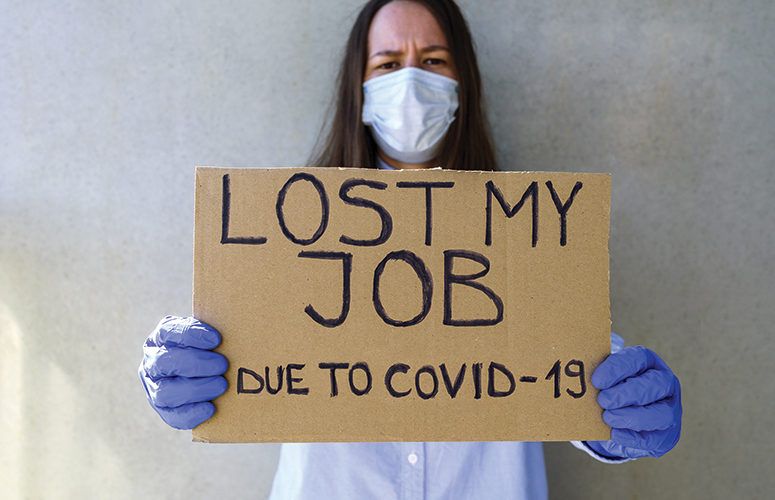
The economy lost 140,000 jobs in December, the first reported losses since April, as the unemployment rate remained steady at 6.7 percent.
Economists expected a small jobs gain of nearly 50,000. The drop is the latest sign of a weakening economy amid the ongoing COVID-19 crisis. All in all, the economy remains about 10 million jobs below its pre-pandemic levels.
“There’s not much comfort to be taken from the stable unemployment rate, given that millions of Americans have left the labor force with nearly 11 million listed as officially out of work,” said Mark Hamrick, senior economic analyst at Bankrate.com.
“Between the human and economic tolls taken by the pandemic, these are some of the darkest hours of this soon-to-be yearlong tragedy.”
The biggest losses were concentrated in leisure and hospitality, a sector particularly vulnerable to the effects of the pandemic, which lost an astonishing 498,000 jobs.
State and local government payrolls shed 51,000 jobs. Congress deferred passing state and local aid in its latest COVID-19 relief bill.
But the overall loss would have been worse had it not been for gains in professional and business services, which added 161,000 jobs; retail trade, which added 120,500 jobs; and construction, which added 51,000.
Some demographic groups have been hit harder by the economic downturn.
The unemployment rate for Hispanics rose to 9.3 percent in December, while Black unemployment remained elevated at 9.9 percent. The rate for whites was 6 percent, and for Asians it was 5.9 percent.
Over a third of jobless people have been unemployed for over 27 weeks.
Their Senate majority will be slim as can be, and their margin for error in the House is also quite small. So it’s not going to be easy to get anything done. But it seems likely that the Biden White House and a Democratic Congress will try to pass legislation to expand health coverage.
Regarding what Democrats’ health care agenda would look like if the party enjoyed full control of Congress and the White House, a senior party official told reporters this fall: “If we don’t take full advantage of this moment, we’ll be making a huge mistake.”
The question is how big they will go. A lengthy health care section will likely be part of any new Covid-19 relief and recovery bill. But will that be the end of it, or do Democrats want to try to pass another health care plan through budget reconciliation? Given Senate rules, that process is probably their best chance of passing a major bill.
Taking a cue from my Future Perfect colleagues and their 21 predictions for 2021, I thought I would lay out some of my expectations for the coming two years of health policy. These projections are based on my own reporting, but they are not meant to be definitive — and nothing is 100 percent guaranteed. It’s more like a list of issues I’ll be watching.
Democrats will expand eligibility for Obamacare subsidies: 85 percent chance
Democrats could attempt to take two bites at the health care apple: first as part of a Covid-19 relief bill, and second in a budget reconciliation package that can pass with a bare majority. I think there is a very strong chance both attempts would end up with provisions expanding eligibility for insurance tax subsidies.
The $2.4 trillion HEROES Act passed by the House, a likely starting point for Covid-19 negotiations between the House and the Senate, would have made anybody currently on unemployment insurance eligible for premium tax credits. That would help people who have lost their employer-sponsored coverage afford a new health care plan. A provision like that is likely to become part of whatever Covid-19 bill Congress comes up with.
A reconciliation bill could make that change permanent and universal. Back in spring 2020, Senate Democrats released a list of their health care priorities in response in response to Covid-19. At the top was a plan to raise the current cutoff for Obamacare subsidies, which stands at 400 percent of the federal poverty level.
Under current law, anybody with an annual income above that threshold, which is about $51,000 for an individual or $87,000 for a family of three, is ineligible for any assistance. Democrats have introduced plans to expand eligibility, either by doubling the income cap to 800 percent of the federal poverty level (like in this bill from Sen. Jeanne Shaheen) or by eliminating it entirely so that nobody pays more than a fixed percentage of their income on health insurance (as President-elect Joe Biden proposed). Democrats could also try to make low-income people in states that have not expanded Medicaid eligible for tax credits to buy private coverage.
The people squeezed under Obamacare have been the ones ineligible for the law’s financial aid. Expanding eligibility could insure up to 4 million people, and it seems like the bare minimum Democrats would want to do on health care with their new power.
The public option won’t be part of a Democratic health care bill: 75 percent chance
Much like the 2009 debate over Obamacare, a new government insurance plan would probably be the most hotly debated proposal if Democrats try to approve a major health care bill. Biden embraced the public option in his campaign, but passing it won’t be easy — in fact, I think it’s more likely than not that it doesn’t happen.
One problem for a public option is budget reconciliation. Unless Democrats are willing to eliminate the 60-vote legislative filibuster, they’ll have to use this special procedural tool in order to pass a bill with just 51 votes.
But budget reconciliation comes with limits on what provisions can be included, narrowly targeted to federal spending, and creating this new program may not qualify. Capital Alpha, a health care policy analysis group, thinks there is “virtually zero chance” a public option like that proposed by Biden during his campaign would be enacted because it likely doesn’t satisfy the reconciliation rules.
Progressives will push Democratic leadership to be as aggressive in pursuing a public option as possible, including in how they handle those procedural limits. But the moderate Senate Democrats who will ultimately dictate what the final package will look like have sounded ambivalent about the public option, and Democrats are wary of the party getting dragged into a messy health care fight.
Support for a public option would be substantial — about 70 percent of Americans say they’re for it, polls show — but so would the opposition. The health care industry will surely mobilize against the plan if Democrats look serious about pursuing it.
I suspect that, either because the moderates rule it out from the start or Democratic leaders balk at a drawn-out health care debate, politics will take the policy off the table.
Democrats will approve Medicare negotiations for prescription drugs: 55 percent chance
Democrats have campaigned for several election cycles now on a promise to give Medicare more power to negotiate drug prices with pharma companies. This promise was a part of the drug pricing bill that House Democrats passed in the last Congress, a plan that was estimated to cut federal spending by $456 billion over 10 years.
Savings are the reason the policy could be handy for Democrats in crafting a budget reconciliation plan. Democrats will need to include provisions that save the government money to help pay for the new provisions that cost money, like expanding eligibility for tax subsidies.
“We have long believed that pharma faces the greatest risk of drug pricing reforms in conjunction with Democrats’ efforts to expand coverage,” Capital Alpha wrote in a recent analysis.
Those twin incentives — delivering on a campaign promise and finding offsets — could help overcome what would surely be fierce industry opposition.
But the politics of drug pricing have shifted during the Covid-19 pandemic, which is why I think there’s only a slightly better than even chance that Congress will approve Medicare negotiations. Pharma has delivered the Covid-19 vaccines in record time, improving the industry’s relationship with the public in the process. This, in turn, has lowered expectations among the experts for how aggressive Democrats will be on drug prices.
“I think now you don’t have all those stories about insulin and EpiPen, plus you have positive stories about vaccines and other drugs,” Walid Gellad, director of the Center for Pharmaceutical Policy and Prescribing at the University of Pittsburgh, told me in December. “You don’t have as fertile an environment for more extreme drug measures.”
Thus, my feeling that the odds for Medicare negotiations are closer to 50/50.
Twenty states and dozens of localities increased their minimum wage on Friday, giving a financial boost to many frontline workers during the pandemic.
New Mexico will see the largest jump, adding $1.50 to its hourly minimum and bringing it up to $10.50. Arkansas, California, Illinois and New Jersey will each increase their minimum wages by $1.
Alaska, Maine and South Dakota will increase wages by just 15 cents an hour, while the rate in Minnesota will rise by half that, at 8 cents, to $10.08 an hour.
Additional increases are scheduled for elsewhere this year, with most changes taking effect on July 1.
Low-income earners, like much of the country’s workforce, have seen their wages remain relatively stagnant for decades when inflation is taken into account. Proponents say the new raises will help reduce poverty and offer much-needed pay hikes to some of the most vulnerable workers.
“Minimum wage increases income levels, reduces poverty, so I think it’s pretty clear that it improves conditions in the lower end of the wage distribution,” said Daniel Kuehn a research associate at The Urban Institute.
Localities are also boosting their minimum pay. Flagstaff, Ariz., will see wages rise from $13 an hour to $15, as will Burlingame, Calif.
In some municipalities, the increases are dependent on business size. Hayward, Calif., for example, will follow the same wage hike as Burlingame, but employers who 25 or fewer workers will need to raise wages from $12 an hour to $14.
Varying minimum wages across localities, Kuehn said, lets governments take into account different cost-of-living conditions.
“I think the ideal policy would include a lot of local variation, but that doesn’t mean a federal floor isn’t helpful,” he said.
The federal minimum wage has been stuck at $7.25 since 2009. In recent years, the goal of a $15 minimum wage has become a standard progressive policy.
House Democrats in July 2019 passed a bill that would gradually increase the federal minimum wage to $15 gradually through 2025, but the measure died in the GOP-controlled Senate.
“While families work hard to make ends meet, their cost of living has surged to unsustainable highs, inflation has eaten nearly 20 percent of their wages and the GOP’s special interested agenda has left them behind,” Speaker Nancy Pelosi (D-Calif.) said at the time.
“No one can live with dignity on a $7.25 an hour wage,” she added.
The issue is back in the political spotlight again with Tuesday’s runoff elections in Georgia that will determine which party controls the Senate for the next two years.
The Democratic challengers are arguing that the federal minimum wage will only increase if they win both races.
“If the federal minimum wage kept up with the cost of living, it would be even higher than $15,” Democratic candidate Jon Ossoff said last week. “The basic premise is that anybody in this country working a single full-time job should be bringing home enough money to sustain themselves and then some.”
But critics argue that minimum wage increases could slow job growth by raising labor costs for employers, an issue of particular concern during the fragile recovery from the coronavirus recession.
“A dramatic increase in the minimum wage even in good economic times has been shown to be harmful,” said Michael Saltsman, the managing director for the Employment Policy Institute, a think tank tied to the restaurant and hospitality industry.
“In the current climate, for many employers it could be the final nail in the coffin,” he added.
Saltsman argued that increasing anti-poverty programs such as the Earned Income Tax Credit are better policies than wage increases. The tax credit essentially operates as a government subsidy for low-wage work, shifting the onus of paying the extra wages from businesses to taxpayers.
Kuehn said there is little evidence to suggest that small and gradual increases of the minimum wage have significant effects on employment.
“The minimum wage increase levels we see get passed are not large enough to have significant employment effects,” he said.
But he concedes that it’s harder to predict the effects of a quick nationwide boost toward $15.
“I think it’s important to note that since we’ve never had a federal increase of that magnitude, there’s a lot we don’t know,” he said. “With something of that size, you would worry about low-wage places like Mississippi or Alabama.”
A report from the nonpartisan Congressional Budget Office in 2019 projected that a gradual increase to $15 through 2025 would mean “1.3 million workers who would otherwise be employed would be jobless in an average week in 2025.”
But it also specified a range of possible outcomes, including no job losses on the low end and as many as 3.7 million jobs lost on the high end.
The report found that 27 million people would see higher income, and that the poorest families would have wages rise as much as 5.2 percent.
Researchers such as Kuehn are adamant that businesses can handle increasing wages at moderate levels, even in the midst of a global health crisis.
“It certainly doesn’t make businesses’ lives easier, but businesses aren’t struggling right now because of wage costs,” he said.
More than 350,000 people have died of the coronavirus in the U.S., with another surge of cases and deaths expected in the coming weeks as a result of smaller holiday gatherings.
The country reached the grim milestone early Sunday morning, according to data compiled by Johns Hopkins University. More than 20 million people have been infected since the pandemic began nearly one year ago, according to the tally.
Public health experts attributed a nationwide spike in cases, hospitalizations and deaths in early December to a large number of Americans traveling over the Thanksgiving holiday, and pleaded with citizens to stay home for Christmas and New Year’s celebrations.
Multiple states have reported a record number of cases, including North Carolina and Arizona, according to the Associated Press. New York hit 1 millions cases total as of Saturday, becoming the fourth state to do so along with Texas, Florida and California.
Last month, federal officials approved two vaccines by Pfizer and Moderna for emergency use. The first round of doses have been administered to doctors, nurses and other front line healthcare workers as well as nursing home residents.
The elderly and other patients deemed “high risk” are the next group of Americans slated to receive vaccines with public health officials estimating younger and healthy citizens can expect to be eligible for vaccination toward the middle to end of spring.
The Centers of Disease Control and Prevention last week reported more than 2 million people in America have been vaccinated, far short of the 20 million figure the federal government initially said it hoped to top by this time. That number has since grown to 4.2 million as of Sunday.
“We would have liked to have seen it run smoothly and have 20 million doses into people today by the end of the 2020, which was the projection,” saidDr. Anthony Fauci, the nation’s leading infectious disease doctor. “Obviously, it didn’t happen, and that’s disappointing.”
Fauci said a targeted approach in assisting local governments in vaccine rollout programs is the best way for the federal government to make up for lost time.
“There really has to be a lot more effort in the sense of resources for the locals, namely, the states, the cities, the counties, the places where the vaccine is actually going into the arms of individuals,” Fauci said.
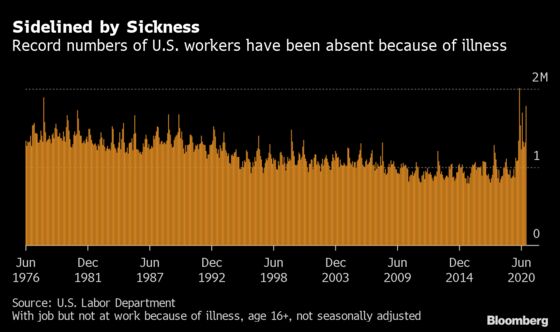
Amid the surge in the ranks of the unemployed during the pandemic, another crucial problem in the labor market has gone mostly overlooked: Workers are calling out sick in record numbers this year.
Whether it’s because they have Covid-19 themselves, are worried about getting it or are taking care of someone who already has it, the number of workers who’ve missed days on the job has doubled in the pandemic.
What’s more, unlike the jobless rate, which has steadily declined from its April peak, the rate of abseenteism — as it is called by economists — has remained stubbornly high. Almost 1.8 million workers were absent in November because of illness, nearly matching the record 2 million set back in April, according to Labor Department data.
These lost days of work are sapping an economic recovery that’s been progressing in fits and starts for much of the past several months. While some indicators have improved markedly, others such as retail sales and consumer spending and incomes have weakened as the pandemic rages on and local governments impose fresh restrictions on businesses and travel.
Michael Gapen, chief U.S. economist at Barclays Plc, said that the vaccine could start driving down absenteeism by the second quarter. Until then, he said, the missed work is leading to supply chain disruptions.
Absenteeism “could lead to shortages, it could lead to higher prices and more restrained output,” Gapen said.
With about 1.5 million new cases per week and deaths at a record pace, employee absenteeism may remain elevated for some time, especially in early 2021 before vaccines are widely distributed and with the rollout in the U.S. moving slower than government officials expected.
Factory Workers
While the Labor Department data tracks people currently in the labor force who are out sick, a separate survey by the Census Bureau captures an even wider view of the challenge. Its latest Household Pulse Survey — based on responses in late November and early December — estimates that more than 11 million people weren’t working because of the virus. The figures also include those who refrained from working because they were worried about getting or spreading the virus, and those caring for someone with symptoms.
The effects of missing workers are especially concentrated in manufacturing. Absenteeism, combined with short-term shutdowns to sanitize facilities and difficulties in returning and hiring workers, limit the sector’s growth potential, according to Timothy Fiore, chair of the Institute for Supply Management’s Manufacturing Business Survey Committee.
The group’s gauge of factory activity grew at a slower pace in November, with the employment component falling back to a level that indicates contraction.
“It’s not a lack of work,” Fiore said on a recent call with reporters, noting absenteeism especially for low- to medium-skill roles. “It’s a lack of people.”
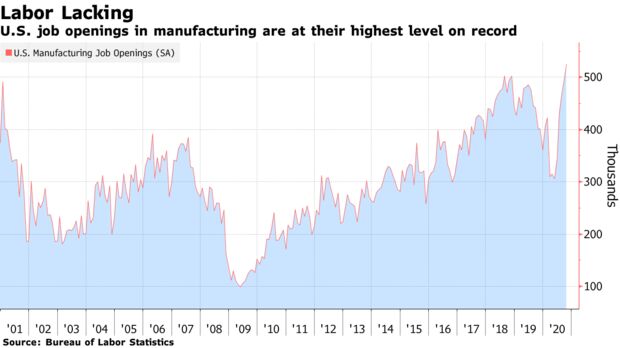
In addition to temporarily absent workers, the manufacturing sector has 525,000 job openings, the most in Labor records back to 2000.
Auto plants are feeling the effects. General Motors Co. put white-collar employees on the production floor in August to cope with high absenteeism amid strong demand. Volkswagen AG Chief Financial Officer Frank Witter has said high levels of missing staff left the automaker “at times struggling to get all the cars built for customer orders.”
U.S. businesses have reported that surging cases precipitated plant closings and infection fears, adding to labor challenges including absenteeism and attrition, according to the Federal Reserve’s latest Beige Book summary of economic conditions. Manufacturers in the Chicago region have used overtime to make up for staff shortages, the Dec. 2 report said.
Sick Leave
For office workers, 90% of professionals said before the pandemic they’d sometimes go to work sick, according to a 2019 study by staffing firm Accountemps. Covid changed the conversation, and more employees are staying home to protect themselves and others.
The Families First Coronavirus Response Act earlier this year made the decision to stay home easier for some Americans by allowing two weeks of paid sick leave for certain employees. The law also allows leave for those unable to work because they must care for a child.
The latest stimulus bill, signed by President Donald Trump on Dec. 27, includes an extension of the act through March 31, but makes paid leave voluntary for employers rather than mandatory as it was in the first iteration. That may continue the trend of workers staying home depending on how many employers choose to grant the leave.
The act, however, excludes essential workers, which means those employed at facilities such as meatpacking plants can’t take advantage of the policy. That in turn can lead to workplace outbreaks and further disrupt production.
With fewer employees at work, slaughter rates at U.S. meat plants fell in the third quarter. Tyson Foods Inc. Chief Executive Officer Dean Banks said on a recent earnings call that absenteeism has “increased the cost and complexity of our operations” and that the company expects that to continue in 2021.
California reported its first case of a new variant of the coronavirus that may be more transmissible, AP reports.
The big picture:California is the second state to document a confirmed case of the variant — which originated in the United Kingdom — after Colorado reported the first case in the United States on Tuesday.
California Gov. Gavin Newsom announced the infection during an online conversation with Anthony Fauci, head of the National Institute of Allergy and Infectious Diseases, according to AP.
The governor said the case was located in Southern California, but he did not provide any other details about the person who was infected.
“I don’t think Californians should think that this is odd. It’s to be expected,” Fauci said Wednesday, per AP.
Of note:There is thus far no evidence that the new variant is more deadly — only that it appears more transmissible. There is also no evidence that COVID-19 vaccines will be less effective against the new variant.
A non-peer reviewed study by the Centre for Mathematical Modelling of Infectious Diseases at the London School of Hygiene and Tropical Medicine found that the variant is 56% more transmissible than other strains.
The British government previously warned that a new variant could be up to 70% more transmissible.
Colorado officials on Tuesday reported the first known case in the United States of a person infected with the coronavirus variant that has been circulating rapidly across much of the United Kingdom and has led to a lockdown of much of southern England.
Scientists have said the variant is more transmissible but does not make people sicker.
The Colorado case involves a man in his 20s, who is in isolation in Elbert County, about 50 miles southeast of Denver, and has no travel history, according to a tweet from the office of Gov. Jared Polis (D).
“The individual has no close contacts identified so far but public health officials are working to identify other potential cases and contacts through thorough contact tracing interviews,” the statement said.
A federal scientist familiar with the investigation said the man’s lack of known travel — in contrast with most confirmed cases outside the United Kingdom — indicates this is probably not an isolated case. “We can expect that it will be detected elsewhere,” said the official, who spoke on the condition of anonymity to discuss the broader context of the announcement.
The Centers for Disease Control and Prevention confirmed as much in a statement Tuesday afternoon, saying additional cases with the new variant will be detected in the United States in coming days. The variant’s apparent increase in contagiousness “could lead to more cases and place greater demand on already strained health care resources,” the agency said in a statement.
Researchers have detected the more transmissible variant in at least 17 countries outside the United Kingdom, including as far away as Australia and South Korea, as of Tuesday afternoon. Officials in Canada had previously said they had identified two cases.
Although the U.K. variant appears more contagious, it is not leading to higher rates of hospitalizations or deaths, according to a report from Public Health England, a government agency. Nor is there any sign that people who were infected months ago with the coronavirus are more likely to be reinfected if exposed to the variant, according to the report. All available evidence indicates that vaccines, and immunity built up in the population, should be protective against this variant.
The Colorado case occurred in a county of about 27,000, which is currently classified, along with much of the state, in the “red” level for the virus, denoting serious but not extreme risk.
Two weeks ago, several hundred people gathered at a community church in the county seat of Kiowa to consider whether to pursue legal actions against Polis and other state officials for imposing coronavirus-related restrictions, according to the Elbert County News. County commissioners and the county sheriff have declined to enforce restrictions emanating from Denver.
“I was expecting to see it in ski country first because those areas are where people from across Colorado, the U.S. and internationally, gather,” said Elizabeth Carlton, an assistant professor of environmental and occupational health at the Colorado School of Public Health. The absence of any apparent travel history associated with the infected person, she said, suggests he “can’t be the only case in Colorado.”
Polis, in his statement, called on Coloradans to do everything they could to prevent transmission by wearing masks, standing six feet apart when gathering with others, and interacting only with members of their immediate households.
The arrival of the new variant “doesn’t fundamentally change the nature of the threat,” said Justin Lessler, an epidemiologist at Johns Hopkins Bloomberg School of Public Health. “It’s no more deadly than the virus was before, and it doesn’t look like it infects people who are immune.”
Lessler echoed others, saying he would be “astounded” if this was the only chain of transmission of the new variant in the United States. “We know that the virus spreads easily and quickly between countries,” he said, and the fact that the infected person had no travel history indicates “this strain has gotten here sometime in the past, and there are chains of transmission ongoing.”
The variant has a higher attack rate, according to the U.K. report, which bolsters the hypothesis that the variant has out-competed other versions of the coronavirus and is now the dominant variant across much of the United Kingdom. Among people known to have been exposed to someone already infected with the variant, 15.1 percent became infected. People exposed to someone infected with the non-variant version had a 9.8 percent infection rate.
That difference suggests the variant is more transmissible, though Public Health England said more investigation is needed to bolster the hypothesis.
The working theory among many scientists is that the increased transmissibility of the variant, known as B.1.1.7, is driven by mutations that have altered the spike protein on the surface of the virus. The variant has 17 mutations — eight of which alter the spike protein.
Precisely how those changes are leading to more infections is unknown. The virus may be binding more easily to receptor cells in the human body, or replicating more easily and driving higher viral loads, enhancing viral shedding by someone who is infected. Another possibility is that people are shedding the virus for a longer period, increasing the chances of passing it along.
“Preliminary evidence suggests that the new variant does not cause more severe disease or increased mortality,” Susan Hopkins, a senior medical adviser to Public Health England, said in a statement released Tuesday.
The newly published data echo the findings in a separate study published last week, based on modeling and hospitalization data — and not yet peer-reviewed — that estimated that the variant is 56 percent more transmissible but does not appear to alter the lethality of the virus.
“The good news is that B.1.1.7 does not seem to cause much more severe disease, and there’s no evidence that it is managing to evade the immune system, which means vaccines are expected to protect against it,” William Hanage, an epidemiologists at the Harvard T.H. Chan School of Public Health, said Tuesday after reviewing the new report. “The bad news is that B.1.1.7 does appear to be much more transmissible.”
Officials in the United States have been signaling since last week that the new variant was probably already present in this country.
“I’m not surprised,” Anthony S. Fauci, director of the National Institute of Allergy and Infectious Diseases, said Tuesday. “I think we have to keep an eye on it, and we have to take it seriously. We obviously take any kind of mutation that might have a functional significance seriously. But I don’t think we know enough about it to make any definitive statements, except to follow it carefully and study it carefully.”
Research findings on coronavirus variants have been ambiguous at times, and scientists say they are still trying to extract reliable signals from noisy data. There have been several false alarms sounded about virus mutations in the past. A major challenge is discerning whether a virus variant is spreading rapidly because it has a competitive advantage based on genetic and structural differences, or because it is simply lucky, having arrived early to a location or leveraged a few superspreader events to gain dominance.
But with the United Kingdom seeing a severe winter surge of infections, public officials are taking no chances and have effectively locked down southern England, including London. Other countries have banned travelers from the United Kingdom.
The United States, despite having the world’s highest number of documented infections, has a weak track record in publishing genomic sequences, the process that enables researchers to track changes in the virus. Most sequences have been published by academic or private research institutions. By comparison, the United Kingdom has a national health system with a robust surveillance system.
“The U.K. made the decision in the spring to do this. The U.S. has sequencing equipment and infrastructure. As with many things in this pandemic, it was not executed the way it should have been,” said Neville Sanjana, a geneticist at New York University.
All viruses mutate randomly, and over time some of those mutations appear to confer some kind of advantage to the virus as it adapts to the human species. The novel coronavirus, SARS-CoV-2, mutates at a slow rate, and scientists do not think the genetic changes seen in the variant so far are sufficient to allow it to elude the vaccines now being administered to millions of people in many countries. But the coronavirus is a moving target and these mutations require surveillance.
Many scientists call the arrival of more transmissible mutations a wake-up call. “The lack of virus sequencing and case tracking in the USA is a scandal,” said Jeremy Luban, a virologist at the University of Massachusetts Medical School.
Francois Balloux, who directs the Genetics Institute at University College London, on Twitter predicted that within two weeks, enough data will accumulate to determine whether this new variant is indeed more transmissible. Previously, Balloux and his colleagues combed through genome sequences, looking for evidence that common variants had increased transmissibility.
“We don’t see much,” he said, referring to a report published in the journal Nature in November that found no signs of mutations that helped the virus to spread more easily. However, he said he “wouldn’t underestimate the evolutionary potential of SARS-CoV-2.”
President-elect Joe Biden plans to deliver an address on the coronavirus pandemic as the nation experiences what his chief medical adviser on the issue, Anthony S. Fauci, described Tuesday as a surge in cases “that has just gotten out of control in many respects.”
Biden’s remarks, planned Tuesday afternoon in Wilmington, Del., are expected to be his most extensive comments to date since early this month, when he laid out a plan for his first 100 days in office that included imploring all Americans to wear masks.
Fauci, appearing on CNN on Tuesday morning, lamented what he expects to be a post-holiday increase in cases and the strong possibility than January’s caseload will exceed even that of December. “You just have to assume it’s going to get worse,” Fauci said.
Fauci also acknowledged that the rollout of vaccines was not reaching as many Americans as quickly as the 20 million that Trump administration had pledged by the end of the month.
“We certainly are not at the numbers that we wanted to be at the end of December,” said Fauci, director of the National Institute of Allergy and Infectious Diseases. “We are below where we want to be.”
But Fauci, who accepted Biden’s invitation to play an expanded role in his administration, expressed hope that by “showing leadership from the top,” Biden could make an impact — comments that appeared to be implicit criticism of President Trump, who has said little publicly about the crisis since Election Day.
“What he’s saying is that let’s take at least 100 days and everybody, every single person put aside this nonsense of making masks be a political statement or not,” Fauci said of Biden. “We know what works. We know social distancing works. We know avoiding congregant settings works. For goodness sakes, let’s all do it, and you will see that curve will come down.”
Separately Tuesday, Vice President-elect Kamala D. Harris plans to get vaccinated in Washington. Biden received his first shot last week.
In remarks earlier this month, Biden also pledged to distribute 100 million vaccine shots in his first 100 days in office and said he wanted to open as many schools safely during the period as possible. He has also promised to sign an executive order requiring masks to be worn on federal property.
On Monday, Celine Gounder, a member of Biden’s covid-19 advisory board, said during a television appearance that Biden is also considering invoking the Defense Production Act to increase production of coronavirus vaccines,
Appearing on CNBC’s “Squawk Box,” Grounder said Biden could invoke the wartime-production law “to make sure the personal protective equipment, the test capacity and the raw materials for the vaccines are produced in adequate supply.”
During his CNN appearance, Fauci said that getting children back to school safely should remain an imperative, despite rising caseloads.
“You can’t have one size fits all, but the bottom line, what I call default position, should be that wherever we are, try as best as we can to get the children back to school and to keep them in school and to have a plan to try and keep them as safe as possible,” he said.
About 200,000 new coronavirus cases have been reported daily in recent weeks, with a record high of 252,431 on Dec. 17.
The nation’s overall caseload surpassed 19 million Sunday, even as the holidays were expected to cause a lag in reporting. Hospitalizations have exceeded 100,000 since the start of December and hit a peak of 119,000 on Dec. 23. Deaths are averaging more than 2,000 a day, with the most ever reported — 3,406 fatalities — on Dec. 17.
With bubble-enclosed Santas and Zoom-enhanced family gatherings, much of the United States played it safe over Christmas while the coronavirus rampaged across the country.
But a significant number of Americans traveled, and uncounted gatherings took place, as they will over the New Year holiday.
And that, according to the nation’s top infectious disease expert, Anthony S. Fauci, could mean new spikes in cases, on top of the existing surge.
“We very well might see a post-seasonal — in the sense of Christmas, New Year’s — surge,” Dr. Fauci said on CNN’s “State of the Union.”
“We’re really at a very critical point,” he said. “If you put more pressure on the system by what might be a post-seasonal surge because of the traveling and the likely congregating of people for, you know, the good warm purposes of being together for the holidays, it’s very tough for people to not do that.”
On “Fox News Sunday,” Adm. Brett P. Giroir, the administration’s testing coordinator, noted that Thanksgiving travel did not lead to an increase of cases in all places, which suggested that many people heeded recommendations to wear masks and limit the size of gatherings.
“It really depends on what the travelers do when they get where they’re going,” Admiral Giroir said. “We know the actual physical act of traveling in airplanes, for example, can be quite safe because of the air purification systems. What we really worry about is the mingling of different bubbles once you get to your destination.”
Still, U.S. case numbers are about as high as they have ever been. Total infections surpassed 19 million on Saturday, meaning that at least 1 in 17 people have contracted the virus over the course of the pandemic. And the virus has killed more than 332,000 people — one in every thousand in the country.
Two of the year’s worst days for deaths have been during the past week. A number of states set death records on Dec. 22 or Dec. 23, including Alabama, Wisconsin, Arizona and West Virginia, according to The Times’s data.
And hospitalizations are hovering at a pandemic height of about 120,000, according to the Covid Tracking Project.
Against that backdrop, millions of people in the United States have been traveling, though many fewer than usual.
About 3.8 million people passed through Transportation Safety Administration travel checkpoints between Dec. 23 and Dec. 26, compared with 9.5 million on those days last year. Only a quarter of the number who flew on the day after Christmas last year did so on Friday, and Christmas Eve travel was down by one-third from 2019.
And AAA’s forecast that more than 81 million Americans would travel by car for the holiday period, from Dec. 23 to Jan. 3, which would be about one-third fewer than last year.
For now, the U.S. is no longer seeing overall explosive growth, although California’s worsening outbreak has canceled out progress in other parts of the country. The state has added more than 300,000 cases in the seven-day period ending Dec. 22. And six Southern states have seen sustained case increases in the last week: Tennessee, Alabama, Georgia, South Carolina, Florida and Texas.
Holiday reporting anomalies may obscure any post-Christmas spike until the second week of January. Testing was expected to decrease around Christmas and New Year’s, and many states said they would not report data on certain days.
On Christmas Day, numbers for new infections, 91,922, and deaths, 1,129, were significantly lower than the seven-day averages. But on Saturday, new infections jumped past 225,800 new cases and deaths rose past 1,640, an expected increase over Friday as some states reported numbers for two days post-Christmas.






 HENRY KOTULA