Germany’s daily coronavirus cases nearly TRIPLE – states bring back tougher measures

https://www.express.co.uk/news/world/1281241/germany-coronavirus-cases-jump-lockdown-lift-tougher-lockdown-rules-angela-merkel?fbclid=IwAR0D6VbvvxIu4PUwUwMOu7AAKePOdxcUhZFyQybDdJTvEmosNZlrDeodLnM

coronavirus

CORONAVIRUS cases in Germany have almost trebled in the past 24 hours sparking fears of a second wave of COVID-19 infections.

Health authorities in Germany have reported more than 900 new cases of the deadly coronavirus less than a week after lockdown restrictions were relaxed by German Chancellor Angela Merkel. The Robert Koch Institute for public health and disease control has reported 933 new COVID-19 infections on Tuesday – an increase from just 357 on Monday.

According to the Institute the infection rate – the so-called “R” rate – has been above one for the past three days.

The rate means on average one person will potentially transmit the virus to one other individual.

The Institute for public health estimated the “R” rate was at 1.07 on Monday and 1.13 on Sunday.

The number indicates that 100 infected people would on average infect 107 others.

Today, the R rate once again dipped just below one with an estimated value of 0.94, but the latest spike in cases will worry some.

Despite the rise in the rate in recent days, the Robert Koch Institute said: “So far, we do not expect a renewed rising trend.”

Last Thursday Ms Merkel outlined a scenario at which the country would need to apply an “emergency brake” and re-impose restrictions.

The lockdown measures would be introduced again if a second wave of new infections were reported at a rate of 50 per 100,000 people.

Since Ms Merkel’s announcement, however, three districts across Germany have used the emergency measures to halt the virus.

The states of North Rhine-Westphalia and Schleswig-Holstein were forced to re-introduce lockdown after outbreaks of coronavirus at meat processing plants.

One district in the state of Thuringia is also understood to have implemented the emergency measures after outbreaks in care homes.

Just six days ago the German Chancellor announced measures to lift the lockdown by opening more shops and outlining the gradual re-opening of schools.

Shops and gyms have been allowed to begin trading providing social distancing measures were enforced.

The Chancellor also announced most Germans will be allowed to meet people from outside their households for the first time.

Top flight Bundesliga matches are also set to begin behind closed-doors this upcoming weekend.

Ms Merkel has been under increasing pressures to kick-start the faltering German economy with widespread protests taking place at the weekend in major cities including Munich.


How a restaurant’s ventilation system can affect the spread of the coronavirus

https://www.cbsnews.com/video/how-a-restaurants-ventilation-system-can-affect-the-spread-of-the-coronavirus/?fbclid=IwAR2z-bdgzOxsKeW-cL2szCpc6UzNtyh3yvdI4PQzGyqA6y8Ge-AAc9m8EF0

As some restaurants reopen, model shows how coronavirus can spread ...

Surprising new research may help keep people safe from coronavirus in restaurants, as states begin to loosen rules and reopen. As Omar Villafranca discovered, there’s something important beyond masks and social distancing that restaurants might need to consider: air currents.


Fauci’s warning about reopening may have more influence over Americans than governors

https://www.washingtonpost.com/politics/2020/05/12/faucis-warning-about-reopening-may-have-more-influence-over-americans-than-governors/?fbclid=IwAR0eDoGHpOUI1Ty2RdCoKcxSzwne2NscJfoVGQXnEH8ud2s5MEKIunzXuRA

White House coronavirus expert Dr Anthony Fauci says world may ...

It’s one of those moments that, even as it occurs, seems definitive. The country’s leading infectious-disease expert, Anthony S. Fauci, offering testimony before a Senate committee about a virus that’s infected more than a million Americans — but doing so remotely, because of his own contact with an infected individual. Speaking from quarantine, Fauci will offer a grim warning: Attempting to return economic activity to normal levels too quickly will “result in needless suffering and death” and itself result in negative effects for the economy.

Fauci’s warning stands in obvious contrast to the assertions of his boss, President Trump. As he has so often over the course of the pandemic, Trump waves away questions about whether states are ready to resume normal economic activity, insisting that many places are ready to gear back up. His White House released a set of recommendations for doing so, recommendations to which Fauci will refer. But even as those recommendations were introduced, Trump undercut them. He quickly embraced anti-social-distancing protests in states with blue governors — states where things were not yet ready to return to normal.

The recommendations espoused by Fauci (and, ostensibly, Trump) set an initial baseline of data that states should meet before taking even introductory steps toward reopening their economies. They’re centered on three categories benchmarks: coronavirus symptoms, actual cases and hospital capacity. The initial presentation from the White House explained how those benchmarks could be met:

For the first two, we have publicly available data that allows us to evaluate how states are doing. In the case of demonstrated symptoms, the data are somewhat old, with the most recent metrics reflecting the week of May 2. What’s more, data on the number of people showing up to emergency rooms with symptoms reflecting possible covid-19 cases (the disease caused by the coronavirus) are compiled only by region. Nonetheless, we can get a sense for how many people in each place are showing symptoms as well as up-to-date information on the number of cases and positive tests in each state.

By now, many states appear to meet the benchmarks on these two conditions. (Again, given the limits on the symptomatic data, it’s tricky to say how each fares in the moment.) A number of states that have already begun to reopen, though, don’t. In Texas, for example, the number of new cases is up and the percent of positive tests is flat. In Georgia, the number of new cases is flat and the rate of positive tests has been variable. Both states are nonetheless reopening.

Georgia’s been in the process of reopening for about three weeks, despite missing the basic benchmarks even when that process began. Gov. Brian Kemp (R) made a blanket determination that things could get back to normal, ignoring the sort of regionalized shifts that Trump himself has advocated.

New York, the state hit hardest by the virus, has implemented a deliberate, region-by-region plan for reopening. Gov. Andrew M. Cuomo (D) has outlined seven different criteria in each region of the state before it can resume some normal economic activity (though not all). (Among those? A program sufficient to trace the contacts of individuals with newly confirmed infections.) As of Monday, only three regions met the seven conditions. New York City hit four of the seven.

This is presumably how states are encouraged to reopen to avoid Fauci’s most dire predictions. It’s no guarantee that outbreaks won’t emerge, but New York’s plan is predicated on safety over normalcy while Georgia’s appears to be the opposite.

That’s the important context for Fauci’s testimony. His warnings about moving slowly are not new — though, in the past, they’ve mostly been tempered by the looming physical presence of a president who’s not very interested in diluting his optimistic economic assumptions. Fauci’s language about the ramifications is strong, but the message is consistent.

It also comes a bit too late for states such as Georgia — at least at the official level. One effect of the effort to get the state back to normal is that many Georgians aren’t ready to do so. Economic data shows that, despite businesses being open, they’re often not seeing many customers. The state’s residents are skeptical about getting back to normal. A new Post-Ipsos poll suggests that they are also skeptical of their governor.

Those participating in protests against social distancing are a small minority. Most Americans understand the thrust of Fauci’s concerns and are willing to support continued social distancing measures. While governors are occasionally skipping over the guidelines offered by Fauci and his team, the consumers who can return the economy to normal are still wary — and may be the best audience for Fauci’s warnings.


Administration contradicts health officials on who can get a coronavirus test

https://www.axios.com/trump-coronavirus-testing-giroir-d83b4703-6d23-47ac-974e-972a8fc85702.html

Trump officials emphasize that coronavirus 'Made in China'

President Trump claimed at a press briefing Monday that any American who “wants” a coronavirus test can get one — contradicting his testing coordinator Adm. Brett Giroir, who just moments earlier said that tests are mostly reserved for people who “need” one because they present symptoms or are participating in contact tracing.

Why it matters: Trump used the briefing largely to celebrate the country’s success in ramping up testing capacity, at one point boasting that “we have met the moment and we have prevailed” in regards to testing. But questions still remain about how Americans will be able to safely return to work if asymptomatic people don’t have access to testing.

Between the lines: The White House, meanwhile, has proven to be a microcosm of what a country with high-quality testing, surveillance and isolation capability can look like.

  • Giroir explained that people who are in close contact with the president are tested regularly using the 15-minute Abbotts lab device, even if they’re asymptomatic.
  • This is how the White House was able to diagnose Pence press secretary Katie Miller and isolate officials like Anthony Fauci who came into contact with her.

What they’re saying: “Right now in America, anybody who needs a test gets a test in America, with the numbers we have,” Giroir said. “If you’re symptomatic with a respiratory illness, that is an indication for a test and you can get a test. If you need to be contact traced, you can get a test.”

  • “And we hope — not hope — we are starting to have asymptomatic surveillance, which is very important. Again, that’s over 3 million tests per week. That is sufficient for everyone who needs a test — symptomatic, contact tracing and, to our best projections, the asymptomatic surveillance we need.”
  • “I think we have been clear all along that we believe and the data indicate we have enough testing to do the phase one gradual reopening that has been supported in the president’s plan and the task force’s plan. It has to be a phased reopening.”

Earlier in the briefing, when asked when Americans can get tested every day like White House senior staff can, Trump responded: “Very soon.”

  • He later said: “If people want to get tested, they get tested. We have the greatest capacity in the world, not even close. If people want to get tested they get tested, but for the most part, they shouldn’t want to get tested.”
  • “There is no reason. They feel good. They don’t have sniffles. They don’t have sore throats. They don’t have any problem.”

The bottom line: Trump and Giroir’s statements blurred the line between two different concepts, as The Daily Beast’s Sam Stein points out. People who “need” a test because they have symptoms or were in contact with an infected person can get one, but the number of tests “needed” to safely reopen the country is not yet sufficient.


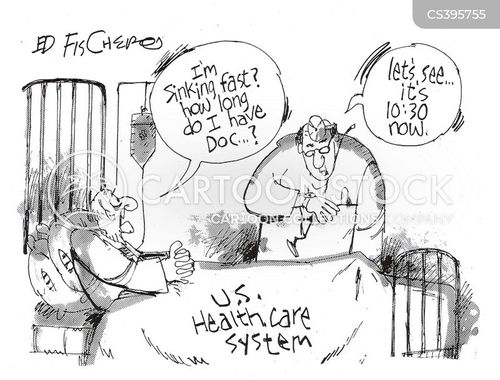
Cartoon – Sinking Fast

Uninsured Cartoons and Comics - funny pictures from CartoonStock

The coronavirus is a moving target

https://www.axios.com/coronavirus-research-treatment-vaccines-aedfbf2c-cf09-4a36-ac99-2afb04298e5d.html

The coronavirus is a moving target for efforts to tackle it - Axios

Solutions for COVID-19 are being developed at the same time as knowledge about the disease evolves, a serious challenge for doctors treating patients and for researchers trying to create vaccines and treatments.

Why it matters: What was first thought of as a respiratory infection now appears much more complex, making efforts to tackle the disease more complicated.

“We’re laying the track as the train is moving and the train is coming very fast,” says Mark Poznansky, director of the Vaccine & Immunotherapy Center at Massachusetts General Hospital. “That is an extraordinary place to be at the global level.”

What’s happening: When the world first encountered COVID-19 four months ago, it was deemed a respiratory infection that hammers the lungs. That’s still the case but in recent weeks, clinicians have been reporting wide-ranging manifestations of the disease in some people.

  • Some of this could be that, with enough cases, there are outliers and anomalies. But that underscores that doctors and researchers are learning as they go.

Details: Renal failure, sepsis, damaged blood vessels, skin lesions, stroke, gastrointestinal problems and blood clots in the lungs and kidneys are being seen in some COVID-19 patients.

  • 20% of hospitalized patients in one study in Wuhan, China had heart damage.
  • 31% of people with the disease studied in a Danish ICU had blood clots.

“It comes across more as a systemic disease exhibited initially as a respiratory disease,” says Poznansky. It’s unclear whether the cause is the virus itself, the immune system’s response to it, or the treatment received.

That has implications for developing vaccines. The goal is to prevent infection but not exacerbate the immune effects in response to the virus.

  • “Is [a vaccine] protective or not in a context where we don’t know what exactly defines a protective immune response to COVID-19?” asks Poznansky.
  • The evolving understanding underscores the need to have multiple vaccines in development. (The current count is 123, per the Milken Institute’s tracker.)

What to watch: The changing percent of the disease will feature in regulatory discussions.

  • “This is the question companies will be discussing with regulators: which surrogate endpoints are acceptable as a proxy for going all the way to the worst possible outcomes in a patient?” says Phyllis Arthur, vice president of infectious diseases and diagnostics policy at biotech trade organization BIO.

The bottom line: Pandemics bring a potent mix of uncertainty and urgency to science that experts say requires both nimbleness and rigor to navigate.

  • “This is what a pandemic is like. It’s uncomfortable,” says Arthur. “You need to move swiftly and do good, solid, evidence-based, risk-benefit ratio assessments and understand what you know and don’t know, and make evidence based policy decisions knowing you don’t have perfect information.”


Cartoon – Learning Online

Coronavirus socialism: Political Cartoons – Redlands Daily Facts

Minneapolis Fed president: ‘The worst is yet to come on the job front’

https://thehill.com/homenews/sunday-talk-shows/497006-minneapolis-fed-president-the-worst-is-yet-to-come-on-the-job?rnd=1589121753

Minneapolis Fed president: 'The worst is yet to come on the job ...

The president of the Federal Reserve Bank of Minneapolis said Sunday that the “worst is yet to come” after a record of 20 million people lost their jobs amid furloughs and layoffs sparked by the coronavirus pandemic in April. 

“I mean the worst is yet to come on the job front, unfortunately,” Neel Kashkari said on ABC’s “This Week.”

“We may be in an environment of gradual relaxing and then having to clamp back down again around the country as the virus continues to spread,” he added. “To solve the economy, we must solve the virus. Let’s never lose sight of that fact.”

Kashkari also contradicted White House economic adviser Larry Kudlow’s prediction for a financially strong half of 2020 and full 2021 when ABC’s George Stephanopoulos asked if that was realistic.

“You know, I wish it were,” he responded. “What I’ve learned in the last few months, unfortunately, this is more likely to be a slow, more gradual recovery.”

The Minneapolis Fed president said a “robust economy” would require a breakthrough in vaccines, testing and therapies. 

“I don’t know when we’re going to have that confidence,” he said, adding, “and ultimately, the American people are going to decide how long the shutdown is.”

The Department of Labor reported last week that the unemployment rate had reached 14.7 percent, which is the highest since the U.S. began tracking in 1948. More than 33 million people have applied for unemployment claims since mid-March. 

Speaking earlier Sunday on “This Week,” Kudlow acknowledged that “very difficult” unemployment numbers could likely be reported in May. But he added that there is a “glimmer of hope” within the unemployment data, with 80 percent of the claims involving those who were furloughed or going through temporary layoffs. 


Infectious disease expert: ‘We are going to see a growth in cases’ in coming weeks

https://thehill.com/homenews/sunday-talk-shows/497011-infectious-disease-expert-we-are-going-to-see-a-growth-in-cases-in?rnd=1589123649

Infectious disease expert: 'We are going to see a growth in cases ...

Columbia University infectious diseases expert Jeffrey Shaman predicted Sunday that the U.S. will see a growth in coronavirus cases in coming weeks as some states loosen restrictions.

Shaman said on NBC’s “Meet the Press” that Trump administration officials have not taken full advantage of the past eight weeks of near-total lockdowns, saying that the period would have “benefitted enormously from consistent messaging” from the White House.

“We do need to start picking ourselves up where we are” he said, pointing to countries that appear to have successfully contained the spread of the virus, such as South Korea, Germany and New Zealand.

“They did this because they tested so aggressively and they used contact tracing and they were able to quarantine people who were becoming infectious,” he said.  “Once you’ve done that, then you’re in this position of strength where reopening the economy is not going to lead necessarily to the rebound in cases that I’m expecting, given this patchwork response that we have right now and the reopenings taking place in some states.”

“What I think we’re probably going to see over coming weeks, probably towards the end of the month, is we’re just going to start to see a growth in cases,” he added. “It’s not going to happen over the next week or two, it’s going to come in with a lag. That built-in delay means any changes we do to social distancing because of reopening, we’re not going to realize for a couple of weeks that we’re already into some period of growth.”

Multiple states have moved to reopen portions of their economy shuttered by state-at-home orders imposed to prevent the spread of coronavirus.

The Labor Department reported last week that a record 20 million Americans lost their jobs in April amid the pandemic.


Make (surgery) hay while the sun is shining

https://mailchi.mp/aa7806a422dd/the-weekly-gist-may-8-2020?e=d1e747d2d8

Growth Mindset & Feedback Cats: Make hay while the sun shines.

As we talk this week with leaders of health systems that have restarted non-emergent surgeries, they report that volume has been slower to return than anticipated. A typical data point: a Midwestern system opened up half of its outpatient surgery capacity two weeks ago, but by the end of this week saw just 15 percent of that capacity being utilized.

Most surgeons are ready to operate, but patients are still reticent to come into a healthcare setting. Many providers are facing more sobering forecasts and expecting that volume may not return to pre-COVID levels until 2021. They’re also anticipating challenges in filling the summer surgery schedule. Patients expecting to have procedures in June or July should be seeing their doctor now, and undergoing screening exams and other diagnostic testing—the months-long surgery “pipeline” has almost evaporated.

And looming over everything are worries about a COVID-19 resurgence forcing another shutdown. Taken together, the outlook seems grim, but one chief strategy officer told us it’s motivation to act quickly: “We have to do as much as we can, as fast as we can, until we can’t.” With a future resurgence and shutdown likely, hospitals and doctors must quickly recruit patients and make them feel comfortable, while finding ways to expedite diagnostics and testing amid operational challenges. And they must deliver as much care as they can while it’s safe to do so. That’s critical for providers’ finances, but even more important for the thousands of patients facing delayed diagnoses, postponed treatments, and prolonged pain as the pandemic continues.