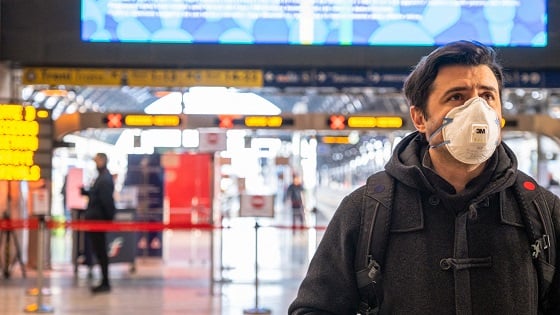
We keep underestimating the coronavirus

https://www.axios.com/newsletters/axios-vitals-10e7b50f-26eb-4233-854a-36a6b5405524.html?utm_source=newsletter&utm_medium=email&utm_campaign=newsletter_axiosvitals&stream=top

Image result for axios We keep underestimating the coronavirus

The U.S. keeps reacting too late to the novel coronavirus, prolonging its economic pain and multiplying its toll on Americans’ health.

Why it matters: The spread and impact of the coronavirus may be unfathomable, but it’s not unpredictable. And yet the U.S. has failed to respond accordingly over and over again.

First, it happened with testing — a delay that allowed the virus to spread undetected.

  • Then we were caught flat-footed by the surge in demand for medical supplies in emerging hotspots.
  • And the Trump administration declined to issue a national shelter-in-place order. The resulting patchwork across the country left enough economic hubs closed to crash the economy, but enough places up and running to allow the virus to continue to spread rampantly.

Between the lines: Proactive containment and mitigation steps would have required extraordinary political and economic capital, especially if they had come early in the process, when many Americans didn’t grasp the full weight of this challenge.

  • But making decisions based on today’s information — without an understanding of how much worse tomorrow will be — is also politically and economically risky, and carries the extra cost of more deaths.

Now, even as testing and hospital capacity remain limited, President Trump is eager for an economic recovery — even though, by all estimates, the outbreak is only going to get worse.

The bottom line: When I asked one senior Health and Human Services official how all of this keeps happening, the official said it’s at least partially due to disconnects — between Trump and his administration; between the government and the private sector, and between the U.S. and the rest of the world.

  • “At the end of the day, the virus has slipped through all those cracks that exist between all of these entities,” the official said.


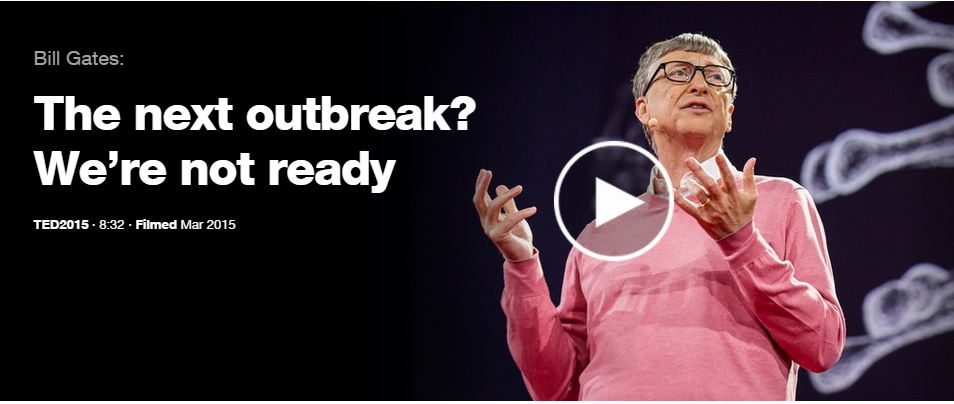
The next outbreak? We’re not ready – Bill Gates 2015

Image result for bill gates the next outbreak we're not ready


Seattle Coronavirus Care: Short in Staff, Supplies and Space

https://www.governing.com/now/Seattle-Coronavirus-Care-Short-in-Staff-Supplies-and-Space.html?utm_term=READ%20MORE&utm_campaign=Pandemic%20Provides%20Defining%20Moment%20for%20Government%20Leaders&utm_content=email&utm_source=Act-On+Software&utm_medium=email

Image result for Seattle Coronavirus Care: Short in Staff, Supplies and Space

At ground zero of America’s coronavirus outbreak, Seattle is overwhelmed by patients needing care. Social distancing and persistent hand washing is no longer enough. “The next step is to start thinking about alternate care systems.”

Amid the first signs that the novel coronavirus was spreading in the Seattle area, a senior officer at the University of Washington Medical Center sent an urgent note to staffers.

“We are currently exceptionally full and are experiencing some challenges with staffing,” Tom Staiger, UW Medical Center’s medical director, wrote on Feb. 29. He asked hospital staff to “expedite appropriate discharges asap,” reflecting the need for more beds.

That same day, health officials announced King County’s — and the nation’s — first death from the coronavirus. Now as cases of virus-stricken patients suffering from COVID-19 multiply, government and hospital officials are facing the real-life consequences of shortcomings they’ve documented on paper for years.

Medical supplies have run low. Administrators are searching for ways to expand hospital bed capacity. Health care workers are being asked to work extra shifts as their peers self-isolate.

And researchers this week made stark predictions for COVID-19’s impact on King and Snohomish counties, estimating 400 deaths and some 25,000 infections by April 7 without social-distancing measures.

“If you start doing that math in your head, based on every person who was infected infecting two other people, you can see every week you have a doubling in the number of new cases,” state health oficer Dr. Kathy Lofy said.

Hand-washing, staying home from work and other measures were no longer enough to sufficiently slow the virus, Lofy said.

Hospital administrators are rapidly changing protocols as the outbreak stresses the system, while frontline health care workers are beginning to feel the effects of disruptions to daily life. UW Medicine on Thursday told employees it would begin postponing elective procedures, beginning March 16.

“We’ve seen what has happened in other countries where they’ve had really rapid spread. The health care system has become overwhelmed,” Lofy said. “We want to do everything we can to prevent that from happening here.”

“We’re Always Full”

King and Snohomish counties offer some 4,900 staffed hospital beds, of which about 940 are used for critical care, according to the researchers — with the Institute for Disease Modeling, the Bill & Melinda Gates Foundation and the Fred Hutchinson Cancer Research Center — who modeled the outbreak’s potential growth. “… This capacity may quickly be filled,” they wrote.

Some of Seattle’s largest hospitals were already near capacity before the outbreak. Harborview Medical Center in downtown Seattle operated at 95 percent of its capacity in 2019, based on its licensed 413 beds and the days of patient care it reported to the Department of Health.

Of 81 hospitals that reported data for all of 2019, excluding psychiatric hospitals, the median hospital operated at 50 percent of its licensed capacity, according to a Seattle Times analysis. Many hospitals staff fewer beds than the maximum their license allows for, so the actual occupancy rate is likely higher.

Katharine Liang, a psychiatry resident physician who works rotations for Seattle-area hospitals, said requests for UW Medicine staffers to discharge patients in a timely fashion are not uncommon as administrators seek extra beds.

“The safety net hospitals, we’re always full,” Liang said, referring to medical centers that care for patients without insurance or means to pay.

Susan Gregg, a spokeswoman for UW Medicine, which operates UW Medical Center, Harborview Medical Center, Valley Medical Center and Northwest Hospital, said that each hospital had a surge-capacity plan being adapted for the outbreak.

“Our daily planning sessions monitor our available beds, supply usage and human resources,” Gregg said in a statement.

While Washington state has a robust system for detecting and monitoring infectious diseases, it has struggled to build the capacity to respond to emergencies like the coronavirus outbreak, according to a review of public data and interviews.

On a per-person basis, the state lags most others in nurses and hospital rooms designed to isolate patients with infectious, airborne diseases, according to a nationwide index of health-security measures.

The U.S. Centers for Disease Control and Prevention launched this initiative — called the National Health Security Preparedness Index — in 2013 to comprehensively evaluate the nation’s readiness for public health emergencies.

The state’s greatest strength, according to the index, is in its ability to detect public-health threats and contain them — scoring 8.5 points out of a possible 10, above the national average.

“It’s a leading state now in terms of how testing capabilities are playing out” for COVID-19, said Glen Mays, a professor at the Colorado School of Public Health who directs the index work.

With the scope of the outbreak becoming clear, the focus is turning to an area that is the state’s weakest on the index: providing access to medical care during emergencies.

When it comes to nurses per 100,000 people, Washington state ranked near the bottom — 46th among states and the District of Columbia — in 2018. It ranked 43rd nationally in the number of hospital isolation rooms — commonly referred to as “negative pressure” rooms, which draw in air to prevent an airborne disease from spreading — per 100,000 people and in neighboring states.

“It’s an area of concern,” Mays said of the state’s health care delivery capacity.

This vulnerability is well known to state policymakers. John Wiesman, Washington state’s health secretary, serves on the national advisory committee of the index and has championed its use as a tool for improvement, Mays said. He recalled Washington seeking lessons from other states that have been more successful and building a “medical reserve corps,” another area where the state has lagged.

The state scored 2.5 points for managing volunteers in an emergency in 2013. In 2018, it had improved to just 2.6.

Health Workers Strained

Less than a week after diagnosed cases of COVID-19 grew rapidly in the Seattle area, administrators at several area hospitals had to hunt for additional medical supplies and called for rationing. They also established fast-shifting isolation policies for sick or potentially exposed staffers.

“Hospitals are being very vigilant. If you have the slightest signs of illness, don’t come to work,” said Alexander Adami, a UW Medicine resident, on Monday.

On March 6, UW Medicine directed employees who tested positive for COVID-19, the illness caused by coronavirus, to remain isolated at home for a minimum of seven days after symptoms developed, according to internal UW documents. Hospital workers told workers with symptoms who hadn’t been tested to remain isolated until they were three days without symptoms. Those who tested negative, or had influenza, could return after 24 hours.

Quarantines for sick workers means others must backfill.

“Programs are having to pull residents in other blocks in other hospitals and other clinics to fill gaps,” Adami said. “There simply aren’t enough people.”

School closures further complicate staffing.

Liang, the resident physician who works rotations for several area hospitals, said she had been pulled into an expanded backup pool on short notice to cover shifts.

Liang is the mother of a 1-year-old. On Wednesday, her family’s day care closed, as it typically does when Seattle schools close. Gov. Jay Inslee has ordered all schools in King, Pierce and Snohomish counties to close until late April.

“I’m not really sure what we’re going to do going forward,” Liang said. “My demands at home are increasing, and now, at the same time because of the same problem, my demands at the hospital are increasing as well.”

Adami, a second-year internal medicine resident, said residents were used to taxing hours, and demands had not been much more excessive than usual, but he remained concerned for the future.

“I would be worried about: We eventually get to the point where there are so many health care workers who become sick we have to accept things like saying, All right: Do you have a fever? No? Take a mask and keep working, because there are people to care for,” he said.

One sign of demand: Some hospitals are asking workers at greater risk of COVID-19 to continue in their roles, even after public health officials encouraged people in these at-risk groups among the broader public to stay home.

Staff over the age of 60 “should continue to work per their regular schedules,” a UW Medicine policy statement said. People who are pregnant, immunocompromised or over 60 and with underlying health conditions were “invited to talk to their team leader or manager about any concerns,” noting that hospital workers’ personal protective equipment would minimize exposure risks.

A registered nurse at Swedish First Hill who is over 60 and who has a history of cardiac issues said she told a manager last week of her concern about working with potential or confirmed COVID-19 patients.

She said a manager adjusted her schedule for an initial shift, but couldn’t guarantee that she would be excused from caring for these patients.

Hours later, the nurse said she suffered a cardiac event and was later admitted to another hospital with a stress-induced cardiomyopathy. The nurse did not want to be named for fear of reprisal by Swedish.

“I’m afraid for my life to work in there,” the nurse said. “I don’t think we’re being adequately protected.”

The nurse is now on medical leave.

In a statement, Swedish said it could not comment on an individual caregiver’s specific circumstances, but that employees at a higher risk are able to request reassignment and if it can not be accommodated, they can take a leave of absence.

“Providing a safe environment for our caregivers and patients is always our top priority, but especially during the current COVID-19 outbreak,” according to the statement.

Anne Piazza, senior director of strategic initiatives for the the Washington State Nurses Association said she had heard from a “flood” of nurses with similar concerns.

Additionally, “we are seeing increased demand for nurse staffing and that we do have reports of nurses being required to work mandatory overtime.”

Wuhan was Overwhelmed

China might provide an example of what could happen to the U.S. hospital system if the pace of transmission escalates, according to unpublished work from researchers with Johns Hopkins University, Harvard University and other institutions.

In Wuhan, the people seeking care for COVID-19 symptoms quickly outpaced local hospitals’ ability to keep up, the researchers found. Even after the city went on lockdown in late January, the number of people needing care continued to rise.

Between Jan. 10 and the end of February, physicians served an average of 637 intensive-care unit patients and more than 3,450 patients in serious condition each day.

But by the epidemic’s peak, nearly 20,000 people were hospitalized on any given day. In response, two new hospitals were built to exclusively serve COVID-19 patients; in all, officials dedicated more than 26,000 beds at 48 hospitals for people with the virus. An additional 13,000 beds at quarantine centers were set aside for patients with mild symptoms.

The researchers analyzed what might happen if a Wuhan-like outbreak happened here.

“Our critical-care resources would be overwhelmed,” said Caitlin Rivers, an epidemiologist at Johns Hopkins Center for Health Security who helped lead the study.

“The lesson here, though, is we have an opportunity to learn from their experience and to intervene before it gets to that point.”

Preparing For The Worst

Hospital administrators are stretching to make the most of their staff, avoid burnout and find space for patients flooding into hospitals.

As of Thursday afternoon, there hadn’t been an unusual uptick in hospitals asking emergency responders to divert patients elsewhere, according to Beth Zborowski, a spokeswoman for the Washington State Hospital Association.

Zborowski said administrators are getting creative to deal with shortages of supplies, staff and space, such as potentially hiring temporary workers.

The state is trying to reduce regulations to help scale up staffing.

The state health department’s Nursing Commission said last Friday it would give “top priority” to reviewing applications for temporary practice permits for nurses to help during the COVID-19 crisis.

After the governor’s emergency proclamation, the Department of Health also said it was allowing volunteer out-of-state health practitioners who are licensed elsewhere to practice without a Washington license.

All the doctors with UW Medicine have been trained, or are being trained on how to care for patients via telemedicine. The number of people using the service has increased tenfold since public health officials urged patients to not visit emergency rooms or visit clinics for minor issues, said Dr. John Scott, director of digital health at UW Medicine.

Some hospitals are creating wards for COVID-19 patients. EvergreenHealth, in Kirkland, converted its 8th floor for the use of these patients.

King County officials last week purchased a motel, which could allow patients to recover outside a clinical setting and free up beds.

“These are places for people to recover and convalesce who are not at grave medical risk, and therefore do not need to be in a hospital,” said Alex Fryer, spokesperson for King County Executive Dow Constantine.

Supply problems are ongoing, even after the federal government fulfilled a first shipment that included tens of thousands of N95 respirator masks, surgical masks and disposable gowns from a federal stockpile.

Piazza said the nursing association continues to receive reports that members at area hospitals are being asked to reuse or share personal protective equipment, wear only one mask a shift or conserve masks for use exclusively with COVID-19 confirmed patients.

“We need to address the safety of frontline caregivers,” Piazza said.

State officials placed a second order for supplies last weekend.

Casey Katims, director of federal affairs for Inslee, said three trucks of medical supplies from the federal stockpile arrived Thursday morning, including 129,380 N-95 respirators; 308,206 surgical masks; 58,688 face shields; 47,850 surgical gowns; and 170,376 glove pairs.

If the measures taken now aren’t enough, state officials have contingency plans they’ve been working on “for a while now,” said Lofy, the state health officer.

“The next step is to start thinking about alternate care systems or alternate care facilities. These are facilities that could potentially be used outside the clinic or the health care system walls.”


Too much for the health care system to handle

https://www.axios.com/newsletters/axios-future-trends-0eb404e7-34a3-40ac-af56-8fefba59535c.html?utm_source=newsletter&utm_medium=email&utm_campaign=newsletter_axiosfuturetrends&stream=top

Illustration of a giant virus cell crushing a crumbling red cross.

A severe coronavirus could easily overwhelm the U.S. health care system, Axios health care editor Sam Baker writes.

Most pandemics put health care workers at particular risk, both to become infected and then to spread the infection.

  • Experts were sounding the alarm even before the first U.S. cases about limited supplies of masks and protective equipment.
  • If health care workers do get sick in large numbers, staffing shortages would make it all the harder to care for new patients.

Experts fear a shortage of ventilators and intensive-care beds, if the outbreak becomes severe.

  • The U.S. has roughly 46,500 beds designated for ICU use, but even in a moderate scenario, it’s projected that 200,000 people could need ICU treatment, according to a report from Johns Hopkins.
  • Yes, but: Many younger, healthier patients will likely be able to recover at home, leaving hospital capacity dedicated mainly to seniors and people with other health complications.

What we’re watching: The coronavirus also seems likely to expose structural gaps in the health care system.

  • Insurers have promised to make coronavirus testing available for free, and a handful of hospital systems have imposed temporary freezes in billing patients for coronavirus treatments.
  • But relying on individual acts of corporate benevolence won’t provide any blanket assurance that care will be affordable, especially to the poor or uninsured — and if people don’t get care because they’re afraid of the cost, rightly or not, that risks further spreading the infection.

Go deeper: Listen to Sam and Dan examine the health care issue.


What you need to know about the Coronavirus

https://www.axios.com/newsletters/axios-future-trends-0eb404e7-34a3-40ac-af56-8fefba59535c.html?utm_source=newsletter&utm_medium=email&utm_campaign=newsletter_axiosfuturetrends&stream=top

Image result for confirmed U.S. cases of COVID-19

There’s a lot of confusion and misinformation swirling around the virus, so here are quick just-the-facts answers to your most urgent concerns, based on current knowledge: 

Q: What are the symptoms I should watch for?

  • Fever (88%) and dry cough (68%) are two of the most common symptoms, followed by fatigue, thick mucus coughed from lungs, shortness of breath, muscle and joint pain, sore throat, headache and chills.

Q. If I have those symptoms, should I go to my doctor or the hospital?

  • Right now, the CDC recommends you distance yourselves from others, including your family and your pets. If you can, designate a separate bedroom and bathroom for yourself.
  • Call your provider and tell them you suspect COVID-19. Remind them of any travel and if you are over 60 or have underlying conditions like diabetes or a heart condition.
  • Don’t share dishes/glasses with anyone; wash hands often; clean surfaces frequently. Stay hydrated.
  • The CDC does not recommended you go to the hospital unless you have shortness of breath, persistent chest pain, new confusion or strong lethargy, or a bluish tint to lips or face.
  • CDC’s hotline number for questions: 800-CDC-INFO (800-232-4636).

Q: Why is there a shortage of tests in the U.S.? When will we get them?

  • The CDC’s initial test for the virus was faulty. And, for reasons that remain unknown, the U.S. opted not to rely on the World Health Organization’s test while the CDC developed a new one. Red tape slowed down academic labs that wanted to quickly develop their own.
  • With both academic and commercial labs now pitching in, testing is becoming more widely available. But we’re still playing catch-up, and the virus has likely been spreading undetected in the meantime.

Q: What’s known about children and COVID-19?

  • Children, fortunately, rarely seem to experience severe complications from the coronavirus, but it’s not known whether children with underlying conditions may be at higher risk for severe illness.
  • It’s unclear what about children’s immune systems is protecting them.

Q: What stage is the outbreak in the U.S.?

  • The virus has now been confirmed in 49 states plus Washington, D.C., and Puerto Rico. However, due to the lack of testing, the level of infection in the U.S. beyond the currently confirmed 2,508 cases is unknown.
  • Scientists believe the number of infections doubles roughly every five to six days.
  • Some think the U.S. and the rest of Europe could follow Italy’s exponential trajectory arc, but this will depend on how effective school closings and event stoppages are at flattening the trajectory curve of the outbreak.


The pandemic shaping the future

https://www.axios.com/newsletters/axios-future-trends-0eb404e7-34a3-40ac-af56-8fefba59535c.html?utm_source=newsletter&utm_medium=email&utm_campaign=newsletter_axiosfuturetrends&stream=top

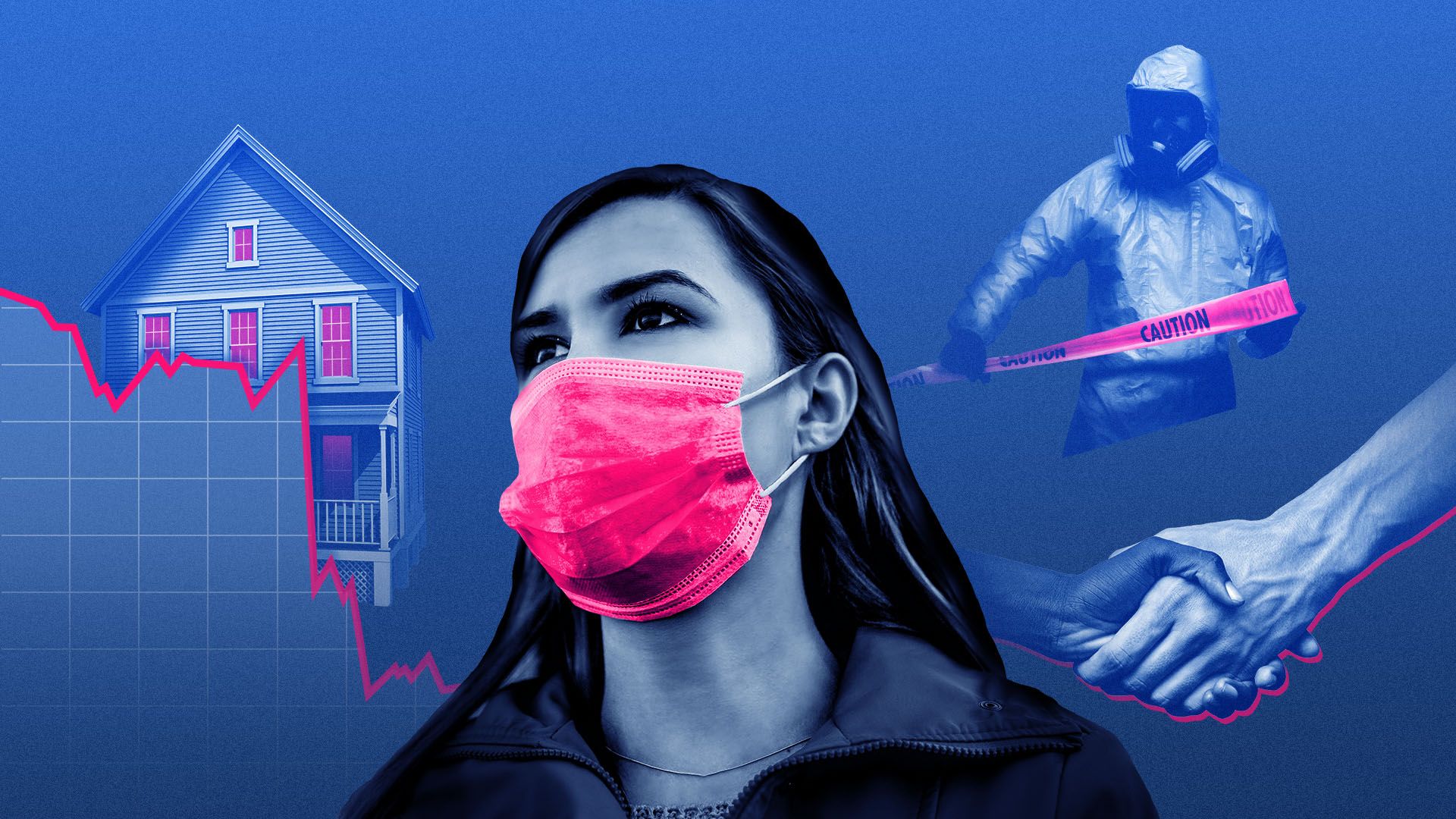
Illustration of a woman in a medical mask surrounded by a falling trend line, a house, a person in a hazmat suit with caution tape, and two hands shaking

The world that emerges from the coronavirus pandemic will be fundamentally different, Axios Future correspondent Bryan Walsh writes.

  • Why it matters: This crisis may prove to be as significant as the 2008 financial meltdown or even 9/11.
  • So the choices that businesses and governments are making now will have enormous social and economic ramifications.

The intrigue: U.S. health and government officials are facing the epidemiological equivalent of the “fog of war,” worsened by a massive American failure to act on weeks of warnings as the virus spread in China.

  • The Trump administration declared a national emergency yesterday, seven weeks after the first U.S. case was announced by the Centers for Disease Control and Prevention.
  • By failing to rapidly scale up testing, U.S. officials have added an additional — and partly unnecessary — layer of uncertainty about how to respond.
  • Harvard epidemiologist Michael Mina calls it “the most daunting virus that we’ve contended with in half a century or more.”

Flashback: As recently as the 1918 influenza pandemic, scientists lacked the ability to rapidly respond to an infectious disease outbreak.

  • Today, scientists can sequence a virus in days, develop rapid tests that can determine infection before obvious symptoms, and use complex mathematical models to predict future spread.

What we’ll find out in coming days:

  • The actual fatality rate of the virus.
  • How contagious it is, and the precise role that children — who seem outwardly unaffected by the disease — may play in transmission.
  • If the outbreak will naturally slow down when the weather warms, as tends to happen with influenza.

What’s next: For now, distance becomes the first line of defense. Schools and companies are shifting online — with potential consequences.

  • If companies are able to function relatively well with a largely remote workforce, expect lower levels of business travel.
  • After decades of emphasizing the efficiency of supply chains — which often meant complex international linkages and just-in-time inventories — businesses will look to build resilient supply chains.

The bottom line: The mobility — of people, capital and products — that we’ve taken for granted may not outlast the virus.


Confronting a national emergency over coronavirus

https://mailchi.mp/325cd862d7a7/the-weekly-gist-march-13-2020?e=d1e747d2d8

Image result for national emergency

President Trump declared a national emergency today, in response to the growing spread of coronavirus across the country. The administration had come under sharp criticism for its sluggish response to the coronavirus crisis, in particular the widespread shortage of tests. Dr. Antony Fauci, director of the National Institute of Health’s infectious disease branch, told Congress on Thursday that the government’s response on testing was “not really geared to what we need right now…That’s a failing. Let’s admit it.”

In response, the administration today announced a series of emergency steps to increase testing capacity, turning to private labs to support the effort. The emergency status frees up $50B in federal emergency funding. Trump also announced that the Health and Human Services (HHS) Secretary will be able to waive regulations around telemedicine licensing, critical access hospital bed requirements and length of stay, and other measures to provide hospitals with added flexibility. House Speaker Nancy Pelosi and Treasury Secretary Steven Mnuchin have negotiated a sweeping aid package that would strengthen safety net programs, and offer sick leave for American workers affected by the virus.

Meanwhile, the American economy likely entered a recession, as consumers continued to pull back on spending on airline travel, entertainment, and other discretionary areas, while financial markets experienced the worst one-day drop in more than 30 years. Many school districts and universities shut down and announced plans to convert to online instruction for the foreseeable future. Employers imposed broad travel restrictions on their employees, moved to teleworking where possible, and even began to lay off workers as demand for services cratered. Shoppers stocked up on staples, cleaning supplies, and (inexplicably) toilet paper, as shelves ran bare in many stores.

Epidemiologists and disease experts urged broad adoption of “social distancing”, restricting large gatherings and reducing the ability of the virus to spread person-to-person. The objective: “flattening the curve” of transmission, so that the healthcare delivery system does not become overwhelmed as the virus spreads exponentially.


The Impacts of the Coronavirus Pandemic

http://connect.brookings.edu/the-impacts-of-the-coronavirus-pandemic?ecid=ACsprvt-3HcA2vsUW0LnSP3fTMVxIuh63w-XOlyQsQ1aObmBrsBe2PiYGLK1FUBp2-0UoJGoVdLX&utm_campaign=brookings-comm&utm_source=hs_email&utm_medium=email&utm_content=84702540

As the coronavirus outbreak continues to spread, Brookings experts are working to keep the public and policymakers informed with nonpartisan, fact-based research and policy recommendations to address the crisis. Below, read a selection of their recent work, including proposals to offset an economic downturn and analyses on the impact on schools, industries, and key countries.

Brookings has also taken new measures to protect our staff, visitors, and the greater community. As we continue to analyze the impact of this global pandemic, you can find the latest work on our coronavirus topic page and stay connected with us via TwitterFacebook, and newsletters.

The economics of the crisis

A U.S. fiscal response. While we still don’t know exactly how the coronavirus outbreak will impact the economy, Jay Shambaugh explains how Congress can help reassure people that there will be support in the event of a downturn. In addition, Shambaugh joined Alan Blinder and David Wessel for a conversation on ways to limit economic harm.

Possible effects on the world economy. New research from Warwick McKibbin outlines seven scenarios for how COVID-19 could impact the global economy. McKibbin also joined the Dollar & Sense podcast to discuss how the epidemic compares to SARS and why it will cause complications for the recent U.S.-China trade deal.

Food security is economic security. To alleviate economic hardship and stimulate the U.S. economy during this time of uncertainty, Lauren Bauer and Diane Whitmore Schanzenbach call on Congress to provide additional resources for improving food security.

How the pandemic compares to the 2008 financial crisis. While there are significant differences between the crises, the Great Recession offers some important lessons for policymakers as they prepare an economic response to the coronavirus, Louise Sheiner discusses.

The oil price collapse. With oil prices plummeting in the wake of the pandemic, Morgan Bazilian and Samantha Gross assess the impacts on the U.S. economy and global energy markets.

The impact on education

How should schools prepare? This week, the Brown Center on Education Policy at Brookings hosted a discussion with health and education leaders on the many issues that may arise as schools decide to close. Watch the video here.

The critical gaps in school emergency preparedness. Many schools have some sort of plan to deal with natural disasters, armed violence, the flu, and other emergencies, but the vast majority have not planned for long school closures. Allison Anderson discusses how to protect students and teachers, while also continuing quality education.

The case for summer school and summer teacher pay. Studies of online learning suggest that students learn less in online environments than in the classroom. Douglas Harris highlights how summer school can prevent students from falling further behind.

The impact on China’s classrooms. Last month, Rebecca Winthrop spoke with Jin Chi, a former Brookings Echidna Global Scholar and professor at Beijing Normal University about the situation for China’s education community.

The international response

Italy’s coronavirus outbreak. Italy is the European country hardest hit by COVID-19. Giovanna De Maio explains why the situation will be a major stress test for Europe and Federica Saini Fasanotti outlines several lessons learned so far.

The effect on China-Japan relations. “The coronavirus has done what few observers thought possible: quell generations of China-Japan antagonism. And for the immediate future, both countries are now bound together in the same public health crisis,” write Cheng Li and Ryan McElveen.

COVID-19 may rewrite the Shinzo Abe era in Japan. The coronavirus crisis stands to deal a severe blow to the Japanese economy and has raised significant questions about the government’s ability to deal with a pandemic, Mireya Solís argues.

The virus is exposing populism’s limits. “Over the past decade, the world has grown more authoritarian, nationalistic, xenophobic, unilateralist, anti-establishment, and anti-expertise. The current state of politics and geopolitics has exacerbated, not stabilized, the crisis,” Thomas Wright and Kurt Campbell write.

What the crisis means for international relations. While the pandemic could strengthen nationalism and isolationism, it also has the potential to spur a new wave of international cooperation, Kemal Derviş and Sebastian Strauss contend.

To learn more about what the coronavirus crisis means for key countries and sectors, see this roundup of commentary from Brookings Foreign Policy experts.