3 health care policy predictions now that Democrats have won control of the Senate

https://www.vox.com/policy-and-politics/22216716/georgia-senate-election-results-obamacare-vote

Health Care Reform - American Academy of Nursing Main Site

How Democratic wins in Georgia affect the odds on 3 health care policy proposals.

Democrats have won control of the Senate, and suddenly the possibilities for health care policy look a little wider than they did before the Georgia runoff elections.

Their Senate majority will be slim as can be, and their margin for error in the House is also quite small. So it’s not going to be easy to get anything done. But it seems likely that the Biden White House and a Democratic Congress will try to pass legislation to expand health coverage.

Regarding what Democrats’ health care agenda would look like if the party enjoyed full control of Congress and the White House, a senior party official told reporters this fall: “If we don’t take full advantage of this moment, we’ll be making a huge mistake.”

The question is how big they will go. A lengthy health care section will likely be part of any new Covid-19 relief and recovery bill. But will that be the end of it, or do Democrats want to try to pass another health care plan through budget reconciliation? Given Senate rules, that process is probably their best chance of passing a major bill.

Taking a cue from my Future Perfect colleagues and their 21 predictions for 2021, I thought I would lay out some of my expectations for the coming two years of health policy. These projections are based on my own reporting, but they are not meant to be definitive — and nothing is 100 percent guaranteed. It’s more like a list of issues I’ll be watching.

Democrats will expand eligibility for Obamacare subsidies: 85 percent chance

Democrats could attempt to take two bites at the health care apple: first as part of a Covid-19 relief bill, and second in a budget reconciliation package that can pass with a bare majority. I think there is a very strong chance both attempts would end up with provisions expanding eligibility for insurance tax subsidies.

The $2.4 trillion HEROES Act passed by the House, a likely starting point for Covid-19 negotiations between the House and the Senate, would have made anybody currently on unemployment insurance eligible for premium tax credits. That would help people who have lost their employer-sponsored coverage afford a new health care plan. A provision like that is likely to become part of whatever Covid-19 bill Congress comes up with.

A reconciliation bill could make that change permanent and universal. Back in spring 2020, Senate Democrats released a list of their health care priorities in response in response to Covid-19. At the top was a plan to raise the current cutoff for Obamacare subsidies, which stands at 400 percent of the federal poverty level.

Under current law, anybody with an annual income above that threshold, which is about $51,000 for an individual or $87,000 for a family of three, is ineligible for any assistance. Democrats have introduced plans to expand eligibility, either by doubling the income cap to 800 percent of the federal poverty level (like in this bill from Sen. Jeanne Shaheen) or by eliminating it entirely so that nobody pays more than a fixed percentage of their income on health insurance (as President-elect Joe Biden proposed). Democrats could also try to make low-income people in states that have not expanded Medicaid eligible for tax credits to buy private coverage.

The people squeezed under Obamacare have been the ones ineligible for the law’s financial aid. Expanding eligibility could insure up to 4 million people, and it seems like the bare minimum Democrats would want to do on health care with their new power.

The public option won’t be part of a Democratic health care bill: 75 percent chance

Much like the 2009 debate over Obamacare, a new government insurance plan would probably be the most hotly debated proposal if Democrats try to approve a major health care bill. Biden embraced the public option in his campaign, but passing it won’t be easy — in fact, I think it’s more likely than not that it doesn’t happen.

One problem for a public option is budget reconciliation. Unless Democrats are willing to eliminate the 60-vote legislative filibuster, they’ll have to use this special procedural tool in order to pass a bill with just 51 votes.

But budget reconciliation comes with limits on what provisions can be included, narrowly targeted to federal spending, and creating this new program may not qualify. Capital Alpha, a health care policy analysis group, thinks there is “virtually zero chance” a public option like that proposed by Biden during his campaign would be enacted because it likely doesn’t satisfy the reconciliation rules.

Progressives will push Democratic leadership to be as aggressive in pursuing a public option as possible, including in how they handle those procedural limits. But the moderate Senate Democrats who will ultimately dictate what the final package will look like have sounded ambivalent about the public option, and Democrats are wary of the party getting dragged into a messy health care fight.

Support for a public option would be substantial — about 70 percent of Americans say they’re for it, polls show — but so would the opposition. The health care industry will surely mobilize against the plan if Democrats look serious about pursuing it.

I suspect that, either because the moderates rule it out from the start or Democratic leaders balk at a drawn-out health care debate, politics will take the policy off the table.

Democrats will approve Medicare negotiations for prescription drugs: 55 percent chance

Democrats have campaigned for several election cycles now on a promise to give Medicare more power to negotiate drug prices with pharma companies. This promise was a part of the drug pricing bill that House Democrats passed in the last Congress, a plan that was estimated to cut federal spending by $456 billion over 10 years.

Savings are the reason the policy could be handy for Democrats in crafting a budget reconciliation plan. Democrats will need to include provisions that save the government money to help pay for the new provisions that cost money, like expanding eligibility for tax subsidies.

“We have long believed that pharma faces the greatest risk of drug pricing reforms in conjunction with Democrats’ efforts to expand coverage,” Capital Alpha wrote in a recent analysis.

Those twin incentives — delivering on a campaign promise and finding offsets — could help overcome what would surely be fierce industry opposition.

But the politics of drug pricing have shifted during the Covid-19 pandemic, which is why I think there’s only a slightly better than even chance that Congress will approve Medicare negotiations. Pharma has delivered the Covid-19 vaccines in record time, improving the industry’s relationship with the public in the process. This, in turn, has lowered expectations among the experts for how aggressive Democrats will be on drug prices.

“I think now you don’t have all those stories about insulin and EpiPen, plus you have positive stories about vaccines and other drugs,” Walid Gellad, director of the Center for Pharmaceutical Policy and Prescribing at the University of Pittsburgh, told me in December. “You don’t have as fertile an environment for more extreme drug measures.”

Thus, my feeling that the odds for Medicare negotiations are closer to 50/50.

Expect a Different Senate Healthcare Agenda if Dems Win Georgia Senate Races

A woman dropping her ballot into a ballot box decorated with the flag of Georgia

If Democratic candidates Raphael Warnock and Jon Ossoff both win Senate seats in Tuesday’s runoff election, and give the Democrats majority power in that chamber, it will change not only what type of healthcare policies are passed by the Senate but which healthcare bills get brought up in the first place.

“The big thing that it means is that [Senate Majority Leader] Mitch McConnell (R-Ky.) no longer controls what bills even get a vote” in the full chamber, said one policy advocate who asked to speak on background. “Last year, a bill on prescription drug pricing passed on a somewhat bipartisan basis out of the Senate Finance Committee,” with the blessing of committee chairman Chuck Grassley (R-Iowa), “and it never even got a vote. It certainly would have passed the House. So it’s not so much that you’re going to see a lot of partisan bills passed with [Vice President Kamala] Harris casting the tie-breaking vote … it’s that things will actually get voted on.”

Leadership of Senate committees also will change, noted Dan Mendelson, founder of Avalere Health, a consulting firm here. And because of that, “you’d see the Senate Finance Committee focused on coverage, and you’d see kind of an aggressive push to figure out how do we expand exchanges, expand Medicaid, and get more people covered in the U.S.”

One of the top priorities will be shoring up the Affordable Care Act (ACA), he continued. “There is no consensus on how to replace the law if it’s struck down by the Supreme Court. Legislation is necessary on an urgent basis.” Some other issues, such as drug costs, “are more likely to be addressed through regulatory approaches rather than legislative ones initially,” Mendelson said.

Marie Fishpaw, director of domestic policy studies at the Heritage Foundation, a right-leaning think tank here, suggested that expanded federal control of healthcare would be under consideration. “Last Congress, a majority of Democrats in the House of Representatives and 15 Democratic senators have already signaled their support for Medicare for All, so we can expect the left will push for more government control of healthcare should they get more power in Congress,” she said in an email. “Whether that happens by expanding Obamacare with a public option or setting up Medicare for All, it all leads to the same outcome in which government officials in Washington have more decision-making power over the kind of healthcare that Americans receive.”

Joe Antos, PhD, scholar in healthcare and retirement policy at the American Enterprise Institute, another right-leaning think tank, said in an email that “with Harris as the tie breaker, Biden will need to avoid issues where Democrats are not solidly behind him (at least Democratic senators). Drug pricing limits and another COVID spending bill are the most likely to be enacted, perhaps fairly quickly.”

The COVID bill will include “another trillion or two,” Antos said, because “despite all the moaning on TV about lack of state funding, the problem isn’t money — it’s organization and the skilled people to wield the needle. I think there would be more money for states and public health.”

As for the ACA, Biden “might try to reinstate the individual mandate with a penalty/tax, but that would only be a political show since the mandate really hasn’t mattered much in increasing number with insurance (after the first 2 years of ACA enrollment),” said Antos. “Increasing access to the premium subsidy is a possibility, but the true left won’t like it.” On the regulatory side, Antos predicted that Biden will “rewrite Medicaid guidance and reject waiver projects that tighten Medicaid rules,” such as waivers seeking to add work requirements for Medicaid.

Like Mendelson, Antos expects to see Biden push for action to lower prescription drug prices — possibly legislatively. “He would even get some Republican votes for limiting what Medicare will pay for Part B drugs and maybe even Part D drugs,” he said. “This isn’t Medicare ‘negotiating’ drug prices — it’s just old-fashioned price setting, which Medicare has done for decades.” Such a thing would be easier to implement in Part B “since we are already in a price-setting regime.” And, because the price controls would only be in effect for Medicare, “prices paid by everyone else will likely rise,” Antos added.

Less likely to succeed is Biden’s proposal for an advisory board that would consider drugs’ therapeutic value in its recommendations on prices. That is “a complex version of the Independent Payment Advisory Board, which never got off the ground,” Antos said.

Biden also may try to ease rules related to funding of reproductive healthcare organizations like Planned Parenthood that provide abortions, but legislative action in that regard would be a tough slog, Antos said, even with a nominally Democrat-controlled Senate. But Biden “could do something administratively” as the Trump administration has done in the other direction.

Senate confirmations of Cabinet members, such as California Attorney General Xavier Becerra as Secretary of Health and Human Services, would also be smoother under a majority-Democratic Senate, said Mendelson.

And what if the Republicans retain the Georgia Senate seats — and their majority? “The primary strategy the Republican leadership has pushed is to slow things down and to kill major legislation, and that goal gets facilitated if there’s a Republican majority,” he added. With McConnell keeping control of the Senate’s agenda, “things will run much more slowly and there will be a mentality of not doing things.”

But it could go the other way as well, Mendelson noted. “The optimistic scenario is that Senate Republicans feel like they have something lose in the midterms in 2022, and they need to build some sort of record of legislative accomplishments.” In that case, premium support for ACA marketplace enrollees and bringing down costs in the small-group insurance market might be in play, he said.

Lawsuit accuses Aetna of systematically denying coverage for cancer treatment

Alliance for Proton Therapy Access - Home | Facebook

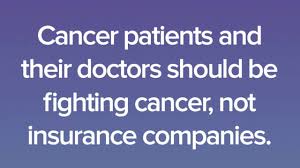
A Florida man filed a class-action lawsuit against Aetna Life Insurance Co., claiming it systematically denied coverage for a cancer treatment called proton beam radiation therapy, according to court documents.

The lawsuit, which has been moved to the District Court for the Middle District of Florida, was filed by Scott Lake. Mr. Lake claims Aetna wrongfully denied coverage for proton beam radiation therapy to treat his prostate cancer. The denial, which deemed the treatment experimental, came despite recommendations from oncologists, he claims. 

While some insurers have begun covering proton beam radiation therapy for certain cancers — for example, Medicare generally covers the treatment — it is not uniform across the commercial insurance industry. In 2019, UnitedHealthcare found itself in court over its denial of coverage to one of its members who also sought the treatment for prostate cancer. 

Aetna’s proton beam radiotherapy policy, last updated in November, outlines when the insurer considers the treatment medically necessary. In the bulletin, Aetna said it considers proton beam radiotherapy “experimental and investigational” for prostate cancer in adults over age 21 “because its effectiveness for these indications has not been established.”

Becker’s reached out to Aetna for comment on this lawsuit. This article will be updated as more information becomes available. 

Jobless claims remain high

An estimated 803,000 people applied for unemployment aid for the first time last week, the Labor Department said Wednesday, showing the economy’s persistent weakness as new drama swirls over Washington’s response to the crisis. The figure was a slight decrease from the previous week but still much higher than normal.

The new Labor Department data show how weak the economy is, particularly the labor market. The surge in new coronavirus cases and deaths in the past few months has cooled the partial economic recovery from the summer.

Retail sales have weakened, and hiring has slowed markedly. The travel and tourism industries have not recovered much of the business lost since March, and thousands of companies — particularly restaurants and bars — have closed. U.S. household spending slipped in November, marking the first drop since April.

After months of stop-and-start negotiations, the bipartisan stimulus package finally offered some hope for households and businesses fighting to make it through the winter.

If Trump does not sign the bill, up to 14 million Americans would lose unemployment aid after Christmas. An eviction moratorium will expire at the end of the year, and $25 billion in emergency rental assistance will not get out the door. Billions of dollars for nutrition assistance, aid for small businesses, child care, transportation services and more will be in jeopardy, and the government will shut down on Dec. 29.

Trump did not play much of a role in the economic relief talks that resulted in Congress passing the $900 billion stimulus package. In the video Trump posted Tuesday night, his main complaint was that he wanted the $600 stimulus checks in the package to be increased to $2,000. This would add $370 billion to the measure.

Democrats quickly rallied around Trump’s demand, and House Speaker Nancy Pelosi (D-Calif.) plans to try to hold a vote on it as soon as Thursday. But it could be virtually impossible to pass such a measure through Congress with unanimous support, leaving the entire bill’s future uncertain.

The stimulus package would extend unemployment benefits of up to $300 per week, beginning as soon as Dec. 27 and run at least through mid-March. The measure also would extend Pandemic Unemployment Assistance — which targets part-time and gig workers who did not qualify for state unemployment insurance benefits — for 11 weeks.

Wednesday’s data showed nearly 400,000 new claims for the Pandemic Unemployment Assistance program.

Unemployment claims rose sharply last week as economic crisis grinds on

U.S. Unemployment Claims Rise Amid Coronavirus Surge - WSJ

Applications for jobless benefits resumed their upward march last week as the worsening pandemic continued to take a toll on the economy.

More than 947,000 workers filed new claims for state unemployment benefits last week, the Labor Department said Thursday. That was up nearly 229,000 from the week before, reversing a one-week dip that many economists attributed to the Thanksgiving holiday. Applications have now risen three times in the last four weeks, and are up nearly a quarter-million since the first week of November.

On a seasonally adjusted basis, the week’s figure was 853,000, an increase of 137,000.

Nearly 428,000 applied for Pandemic Unemployment Assistance, a federal program that covers freelancers, self-employed workers and others who don’t qualify for regular state benefits.

Unemployment filings have fallen greatly since last spring, when as many as six million people a week applied for state benefits. But progress had stalled even before the recent increases, and with Covid-19 cases soaring and states reimposing restrictions on consumers and businesses, economists fear that layoffs could surge again.

“It’s very clear the third wave of the pandemic is causing businesses to have to lay people off and consumers to cut back spending,” said Daniel Zhao, senior economist for the career site Glassdoor. “It seems like we’re in for a rough winter economically.”

Jobless claims rose in nearly every state last week. In California, where the state has imposed strict new limits on many businesses, applications jumped by 47,000, more than reversing the state’s Thanksgiving-week decline.

The monthly jobs report released on Friday showed that hiring slowed sharply in early November and that some of the sectors most exposed to the pandemic, like restaurants and retailers, cut jobs for the first time since the spring. More up-to-date data from private sources suggests that the slowdown has continued or deepened since the November survey was conducted.

Every month, we’re just seeing the pace of the recovery get slower and slower,” said AnnElizabeth Konkel, an economist with the job site Indeed. Now, she said, the question is, “Are we actually going to see it slide backward?”

Many economists say the recovery will continue to slow if the government does not provide more aid to households and businesses. After months of gridlock in Washington, prospects for a new round of federal help have grown in recent days, with congressional leaders from both parties signaling their openness to a compromise and the White House proposing its own $916 billion spending plan on Tuesday. But the two sides remain far apart on key issues.

The stakes are particularly high for jobless workers depending on federal programs that have expanded and extended unemployment benefits during the pandemic. Those programs expire later this month, potentially leaving millions of families with no income during what epidemiologists warn could be some of the pandemic’s worst months.

Biden chooses Xavier Becerra to lead HHS

National

President-elect Joe Biden has chosen California Attorney General Xavier Becerra to be the secretary of the Department of Health and Human Services, the Biden transition team announced this morning and the New York Times first reported last night.

Why it matters: If confirmed, Becerra would be the first Latino to lead the department. He’s also been at the forefront of health care legal battles, most prominently over the future of the Affordable Care Act.

  • Becerra has led the effort by a group of 20 states and the District of Columbia in defending the ACA against a GOP lawsuit aiming to strike down the law. The case was argued in front of the Supreme Court last month.
  • Biden plans to announce several other top health care advisors, people familiar with the rollout told NYT.

Between the lines: Whoever leads HHS will immediately be in charge of addressing what will likely still be an out-of-control pandemic, including the government’s efforts to distribute coronavirus vaccines.

  • The virus has disproportionately affected people of color, and Becerra’s selection follows increasing pressure on Biden from the Latino community and the Congressional Hispanic Caucus to diversity his cabinet, per NYT.
  • On the other hand, Becerra has little experience managing a large bureaucracy or in public health, per Politico.

The big picture: If a global pandemic and the future of the ACA weren’t enough, the HHS secretary could end up in charge of executing most of Biden’s health agenda, particularly if the Senate remains in Republican hands.

  • Becerra’s legal background could prove useful in enacting a lawsuit-proof regulatory agenda.

BonusBiden has selected Rochelle Walensky, chief of infectious diseases at Massachusetts General Hospital and a professor at Harvard Medical School, to lead the Centers for Disease Control and Prevention, Politico reported last night.

About 523,000 people select healthcare plans in the fourth week of open enrollment

https://www.healthcarefinancenews.com/news/about-523000-people-select-healthcare-plans-fourth-week-open-enrollment

More than 818,000 people select healthcare plans in first week of open  enrollment | Healthcare Finance News

That brings the total number of enrollees to 2.9 million, a slight jump over last year but with more days to sign up over 2019.

During the fourth week of the 2020 open enrollment period, from November 22-28, 523,020 people selected plans using the HealthCare.gov platform.

That brings the total number of enrollees to 2,903,547 after the first four weeks of open enrollment. That’s an increase of 523,020 people from last year, which saw 2,380,527 consumers sign up for plans after the first four weeks.

It’s important to note, however, that in 2020 there were more days in this four-week period than last year, since the Centers for Medicare and Medicaid Services measures enrollment Sunday through Saturday. Nov. 1 was on a Sunday this year and on a Friday in 2019, so the first week of 2019 had only three days, while the first week this year measured a full seven.

The numbers are a dip from the third week of open enrollment, during which 758,421 signed up for coverage. 

The HealthCare.gov platform is used by the federally facilitated exchange and some state-based exchanges. Notably, New Jersey and Pennsylvania transitioned to their own platforms for 2021, and due to this they’re absent from HealthCare.gov for 2021 coverage. Those two states accounted for 578,251 plan selections last year, 7% of all plan selections. These enrollees’ selections will not appear in CMS’ figures until it announces the state-based marketplace plan selections.

Open enrollment lasts six weeks and ends on December 14. Those who sign up within that time frame will see their coverage begin January 1, 2021.

WHAT’S THE IMPACT

This is the fourth snapshot of open enrollment figures by CMS during this sign-up period.

Of those selecting plans, 138,183 were new consumers, while 384,837 were renewing coverage. This brings the total number of new consumers to 659,455 since the beginning of open enrollment, while the tally for those renewing coverage now stands at 2,244,092. More than 4,386,530 consumers have been on the applications submitted to date.

A consumer is considered to be a new consumer if they did not have 2020 exchange coverage through Dec. 31 of this year and had a 2021 plan selection. They’re considered a renewing consumer if they have 2020 exchange coverage through Dec. 31 and actively select either the same plan or a new plan for 2021.

The numbers represent those who have submitted an application and selected a plan, net of any cancellations from a consumer, or cancellations from an insurer. The weekly metric represents the net change in the number of uncanceled plan sections over a given period.

Plan selections will not include those consumers who are automatically re-enrolled into a plan. To have their coverage effectuated, consumers generally need to pay their first month’s health plan premium. CMS did not report the number of effectuated enrollments.

In all, there were 1,749,555 HealthCare.gov users recorded during the fourth week, and 57,502 of the Spanish-speaking equivalent, CuidadoDeSalud.gov, bringing the four-week totals to 9,582,790 and 317,487, respectively.

To date, Florida tops in the number of plan selections over the first four weeks with 871,361 sign-ups, followed by Texas (471,849) and Georgia (198,090).

THE LARGER TREND

President-elect Joe Biden has said he is favorable to strengthening and expanding the Affordable Care Act, and favors a government-run public option to run parallel with private offerings.

But prior to Biden’s inauguration on Jan. 20, 2021, CMS may release a final rule based on a proposed rule it released late on Thanksgiving Eve to allow states to implement Section 1332 waivers to waive certain ACA requirements. This allows states to decentralize enrollment through insurers and web brokers. Opponents have said this will expose consumers to junk plans. 

Georgia has already been approved for such a waiver.

According to a recent report from the Kaiser Family Foundation, insurer participation in the ACA marketplace in 2021 is seeing a third straight year of growth as several insurers are entering the market or expanding their service area.

For 2021, 30 insurers are entering the individual market, and an additional 61 are expanding their service area within states.

November jobs report: US economy adds 245,000 jobs, unemployment rate falls to 6.7%

https://finance.yahoo.com/news/november-2020-jobs-report-labor-market-coronavirus-pandemic-unemployment-183714326.html

The 245,000 new jobs added last month is smallest since U.S. recovery began  in May - MarketWatch

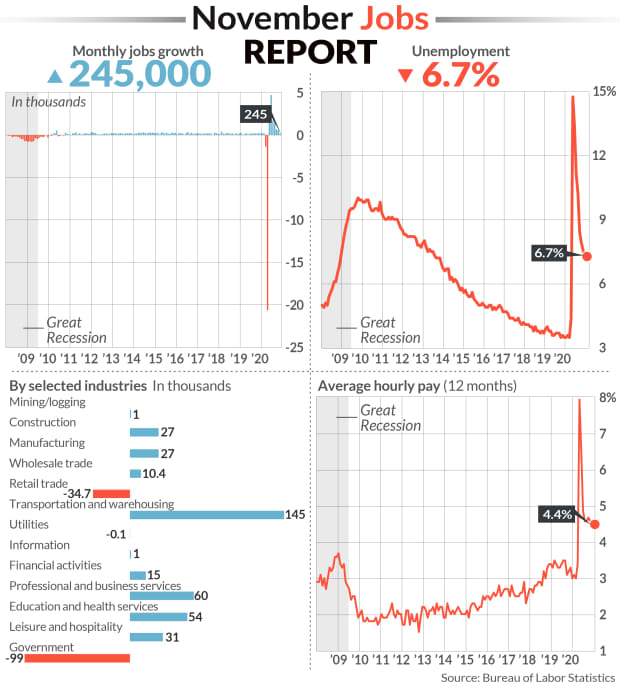
The U.S. economy added back the smallest number of jobs in seven months in November, as the labor market endured mounting pressure from the coronavirus pandemic while businesses wait for a vaccine to be distributed next year.

The U.S. Department of Labor released its monthly jobs report Friday morning at 8:30 a.m. ET. Here were the main results from the report, compared to Bloomberg consensus data as of Friday morning:

  • Change in non-farm payrolls: +245,000 vs. +460,000 expected and a revised +610,000 in October
  • Unemployment rate: 6.7% vs. 6.7% expected and 6.9% in October
  • Average Hourly Earnings month-over-month: 0.3% vs. +0.1% expected and +0.1% in October
  • Average Hourly Earnings year-over-year: 4.4% vs. +4.2% expected and a revised +4.4% in October

During November, a plethora of new stay-in-place measures and curfews swept the nation as COVID-19 cases, hospitalizations and deaths swelled to record levels. These renewed restrictions weighed on the rate of the recovery in the labor market, which had already been slowing after a record surge in rehiring followed the initial wave of lockdowns in the spring.

To that end, job gains in November sharply missed expectations. Non-farm payrolls grew by just 245,000 during the month for the smallest number since April’s record, virus-induced decline. October’s payroll gain was downwardly revised to 610,000 from the 638,000 reported earlier, while September’s gain was raised to 711,000 from 672,000.

A third straight month of declining government employment served as a drag on the headline payrolls figure, as another 93,000 temporary workers hired for the 2020 Census were let go.

In the private sector, retail trade industries shed nearly 35,000 jobs following a gain of 95,000 in October. Leisure and hospitality employers added just 31,000 jobs during November, declining by nearly 90% from October. And in goods-producing industries, manufacturing jobs rose by only 27,000 for the month, falling short of the 40,000 expected.

But a handful of other industries added more jobs in November from October: Transportation and warehousing jobs grew by 145,000 to more than double October’s advance, and growth in wholesale trade positions also doubled to 10,400.

November’s unemployment rate also improved just marginally to 6.7% from the 6.9% reported in October. While down from a pandemic-era high of 14.7% in April, the jobless rate remains nearly double that from before the pandemic.

Other employment reports this week underscored the decelerating trend. Private-sector hiring fell to the lowest level in four months in November, according to data tracked by ADP. New weekly jobless claims began rising again around the 12th of the month, when the Labor Department conducts its surveys for its monthly jobs report. And in the Federal Reserve’s November Beige Book, the central bank noted that nearly all districts reported rising employment, “but for most, the pace was slow, at best, and the recovery remained incomplete.”

The U.S. economy still has a ways to go before fully making up for the drop in payrolls induced by the pandemic. Even with a seventh straight month of net job gains, the economy remains about 9.8 million jobs short of its pre-pandemic level in February. The U.S. economy lost more than 22 million jobs between March and April.

And worryingly, the number of the long-term unemployed has kept climbing. Those classified as “permanent job losers” totaled 3.7 million in November, eclipsing the number of individuals on temporary layoff for the second time since the start of the pandemic. Permanent job losers have increased by 2.5 million since February, before the pandemic meaningfully hit the U.S. economy.

In Washington, congressional lawmakers have for months been at a stalemate over the size and scope of another stimulus package, which could help provide funds for businesses to help keep workers employed, and offer extended unemployment benefits for those the pandemic has kept out of work. Federal unemployment programs authorized under the CARES Act in the spring are poised to expire at the end of the month. These include the Pandemic Emergency Unemployment Compensation and Pandemic Unemployment Assistance programs, which together provide benefits for more than 13 million Americans.

“The only thing that matters about today’s NFP [non-farm payrolls] report is whether it increases the likelihood of a stimulus deal getting done during the lame duck session,” Peter Tchir, head of macro strategy for Academy Securities, said in an email Friday morning. “While the unemployment rate shrunk and wages ticked up nicely, the headline number dropped significantly, was well below average expectations, and included some downward revisions to last month (and upward revisions to 2 months ago)all of which point to a less robust job market.”