We’re going to our primary care doctors less

https://www.axios.com/newsletters/axios-vitals-ded63eb6-2431-48d0-a186-2f3b52417f2f.html?utm_source=newsletter&utm_medium=email&utm_campaign=newsletter_axiosvitals&stream=top

Image result for primary care physician"

Adults in the U.S. are visiting primary care doctors less often, according to a new study in the Annals of Internal Medicine, which could foreshadow worse health outcomes and higher costs.

By the numbers: The study focused on adults enrolled with a large commercial insurer.

  • Between 2008 and 2016, visits to primary care physicians declined by 24.2%, and nearly half of adults didn’t visit one in any given year by the end of the time frame.
  • Groups with the largest declines were young adults, adults without chronic conditions, and those living in the lowest-income areas.

Meanwhile, visits to alternative facilities like urgent care clinics increased by 46.9%.

The big picture: Primary care doctors are there to keep people healthy. The less often we go to them, the more likely we are to get or remain sick, which ultimately costs the health care system more money.


Health care is Iowa’s only winner right now

https://www.axios.com/newsletters/axios-vitals-ded63eb6-2431-48d0-a186-2f3b52417f2f.html?utm_source=newsletter&utm_medium=email&utm_campaign=newsletter_axiosvitals&stream=top

Image result for health policy"

Iowa Democrats reported last night that their biggest priorities were beating President Trump and health care — but the meltdown of their election reporting systems left their presidential choices unresolved.

Why it matters: We’ve been writing for months that Democrats have a major choice ahead, either picking an advocate of Medicare for All — and siding with the plan that’s less popular with the rest of the country — or a public option advocate.

  • The Iowa debacle means the path the party will take won’t be clear for a while longer.

By the numbers: Several polls — including ones by NBC News, the National Exit Poll and AP Votecast — found that around four in 10 caucus voters said health care was their top issue.

  • Previous polling has found that Medicare for All is less popular overall than a public option, but both were popular among Democratic caucus-goers last night.
  • Seven in 10 said they back a single-payer plan, and almost nine in 10 said they support a public option, per AP Votecast, which was conducted by NORC at the University of Chicago for The Associated Press and Fox News.

Yes, but: Caucus-goers said they prefer a Democratic candidate who can beat Trump over one that agrees with them on issues, CNN reports.

The big picture: Republicans are more than happy to talk about Medicare for All — and its subsequent tax increases and expanded government role in health care — instead of protecting and building on the Affordable Care Act.

  • Whereas the former gives them an opportunity to go on offense, the latter puts the GOP on defense against its 2017 repeal-and-replace efforts and ongoing lawsuit that would strike down the whole health care law, including its protections for pre-existing conditions.


For 2020, California Goes Big On Health Care

https://khn.org/news/for-2020-california-goes-big-on-health-care/

https://www.comstocksmag.com/kaiser-health-news/2020-california-goes-big-health-care

California is known for progressive everything, including its health care policies, and, just a few weeks into 2020, state leaders aren’t disappointing.

The politicians’ health care bills and budget initiatives are heavy on ideas and dollars — and on opposition from powerful industries. They put California, once again, at the forefront.

The proposals would lower prescription drug costs, increase access to health coverage, and restrict and tax vaping. But most lawmakers agree that homelessness will dominate the agenda, including proposals to get people into housing while treating some accompanying physical and mental health problems.

“This budget doubles down on the war on unaffordability — from taking on health care costs and having the state produce our own generic drugs to expanding the use of state properties to build housing quickly,” Gov. Gavin Newsom said in a letter to the legislature, which accompanied the $222.2 billion budget proposal he unveiled last Friday. About a third of that money would be allocated to health and human services programs.

But even with a Democratic supermajority in the legislature, these proposals aren’t a slam-dunk. “There are other factors that come into play, like interest groups with strong presence in the Capitol,” including Big Pharma and hospitals, said Shannon McConville, a senior researcher at the nonpartisan Public Policy Institute of California.

Drug Pricing

Newsom’s plan to create a state generic drug label is perhaps his boldest health care proposal in this year’s budget, as it would make California the first state to enter the drug-manufacturing business. It may also be his least concrete.

Newsom wants the state to contract with one or more generics manufacturers to make drugs that would be available to Californians at lower prices. Newsom’s office provided little detail about how this would work or which drugs would be produced. The plan’s cost and potential savings are also unspecified. (Sen. Elizabeth Warren of Massachusetts, who is seeking the Democratic presidential nomination, proposed a similar plan at the federal level.)

Because the generics market is already competitive and generic drugs make up a small portion of overall drug spending, a state generic-drug offering would likely result in only modest savings, said Geoffrey Joyce, director of health policy at USC’s Leonard D. Schaeffer Center for Health Policy & Economics.

However, it could make a difference for specific drugs such as insulin, he said, which nearly doubled in price from 2012 to 2016. “It would reduce that type of price gouging,” he said.

Representatives of Big Pharma said they’re more concerned about a Newsom proposal to establish a single market for drug pricing in the state. Under this system, drug manufacturers would have to bid to sell their medications in California, and would have to offer prices at or below prices offered to any other state or country.

Californians could lose access to existing treatments and groundbreaking drugs, warned Priscilla VanderVeer, vice president for the Pharmaceutical Research and Manufacturers of America, the industry’s lobbying arm.

This proposal could “let the government decide what drugs patients are going to get,” she said. “When the governor sets an artificially low price for drugs, that means there will be less money to invest in innovation.”

Newsom’s drug pricing proposals build on his executive order from last year directing the state to negotiate drug prices for the roughly 13 million enrollees of Medi-Cal, the state’s Medicaid program for low-income residents. He also ordered a study of how state agencies could band together — and, eventually, with private purchasers such as health plans — to buy prescription drugs in bulk.


Homelessness

California has the largest homeless population in the nation, estimated at more than 151,000 people in 2019, according to the U.S. Department of Housing and Urban Development. About 72% of the state’s homeless slept outside or in cars rather than in shelters or temporary housing.

Newsom has asked for $1.4 billion in the 2020-21 state budget for homelessness, most of which would go to housing and health care. For instance, $695 million would boost health care and social services for homeless people via Medi-Cal. The money would fund programs such as recuperative care for homeless people who need a place to stay after they’ve been discharged from the hospital, and rental assistance if a person’s homelessness is tied to high medical costs.

A separate infusion of $24.6 million would go to the Department of State Hospitals for a pilot program to keep some people with mental health needs out of state hospitals and in community programs and housing.


Surprise Bills

California has some of the strongest protections against surprise medical bills in the nation, but millions of residents remain vulnerable to exorbitant charges because the laws don’t cover all insurance plans.

Surprise billing occurs when a patient receives care from a hospital or provider outside of their insurance network, and then the doctor or hospital bills the patient for the amount insurance didn’t cover.

Last year, state Assembly member David Chiu (D-San Francisco) introduced legislation that would have limited how much hospitals could charge privately insured patients for out-of-network emergency services. The bill would have required hospitals to work directly with health plans on billing, leaving the patients responsible only for their in-network copayments, coinsurance and deductibles.

But he pulled the measure because of strong opposition from hospitals, which criticized it as a form of rate setting.

Chiu said he plans to resume the fight this year, likely with amendments that have not been finalized. But hospitals remain opposed to the provision that would cap charges, a provision that Chiu says is essential.

“We continue to fully support banning surprise medical bills, but we believe it can be done without resorting to rate setting,” said Jan Emerson-Shea, a spokesperson for the California Hospital Association.


Medi-Cal For Unauthorized Immigrants

California is the first state to offer full Medicaid benefits to income-eligible residents up to age 26, regardless of their immigration status.

Now Democrats are proposing another first: California could become the first to open Medicaid to adults ages 65 and up who are in the country illegally.

Even though Medicaid is a joint state-federal program, California must fund full coverage of unauthorized immigrants on its own.

Newsom set aside $80.5 million in his 2020-21 proposed budget to cover about 27,000 older adults in the first year. His office estimated ongoing costs would be about $350 million a year.

Republicans vocally oppose such proposals. “Expanding such benefits would make it more difficult to provide health care services for current Medi-Cal enrollees,” state Sen. Patricia Bates (R-Laguna Niguel) said in a prepared statement.


Vaping

Dozens of California cities and counties have restricted the sale of flavored tobacco products in an effort to curb youth vaping.

But last year, state legislators punted on a statewide ban on flavored tobacco sales after facing pressure from the tobacco industry.

Now, state Sen. Jerry Hill (D-San Mateo) is back with his proposed statewide flavor ban, which may have more momentum this year. Since last summer, a mysterious vaping illness has sickened more than 2,600 people nationwide, leading to 60 deaths, according to the Centers for Disease Control and Prevention. In California, at least 199 people have fallen ill and four have died.

Hill’s bill would ban retail sales of flavored products related to electronic cigarettes, e-hookahs and e-pipes, including menthol flavor. It also would prohibit the sale of all flavored smokable and nonsmokable tobacco products, such as cigars, cigarillos, pipe tobacco, chewing tobacco, snuff and tobacco edibles.

Newsom has also called for a new tax on e-cigarette products — $2 for each 40 milligrams of nicotine, on top of already existing tobacco taxes on e-cigarettes. The tax would have to be approved by the legislature as part of the budget process and could face heavy industry opposition.

Tobacco-related bills are usually heard in the Assembly Governmental Organization Committee, “and that is where a lot of tobacco legislation, quite frankly, dies,” said Assembly member Jim Wood (D-Healdsburg), who supports vaping restrictions.


Supreme Court denies blue states’ effort to expedite ObamaCare challenge

Supreme Court denies blue states’ effort to expedite ObamaCare challenge

Supreme Court denies blue states' effort to expedite ObamaCare challenge

The Supreme Court on Tuesday rejected an effort by Democrats to expedite a challenge to a lower court’s ruling striking down a key tenet of ObamaCare, narrowing the possibility that the court takes up the contentious case this year.

The House of Representatives and a group of blue states had asked the court to fast-track their appeal after the 5th Circuit Court of Appeals ruled that the Affordable Care Act’s individual mandate is unconstitutional.

“Under the current state of affairs, there is considerable doubt over whether millions of individuals will continue to be able to afford vitally important care,” the House wrote in a court filing earlier this month.

“Millions of individuals will live with the insecurity of not knowing that they have access to affordable health care, and will be forced to make important life decisions without knowing how those decisions will affect their continued access to such care.”

“If the Court does not hear the case this Term, that uncertainty will likely persist through next year’s open enrollment period,” the House wrote.

Tuesday’s order makes it unlikely that the high court will rule on the health care law before the November presidential election, where health insurance policy is sure to play a prominent role.

The 5th Circuit’s ruling delivered a victory for the coalition of conservative state attorneys general challenging the Obama administration’s signature achievement.

The Trump administration has declined to defend the Affordable Care Act in court, and the president has cheered on legal efforts to dismantle it.

“This decision will not alter the current healthcare system,” President Trump said in a statement last month. “My Administration continues to work to provide access to high-quality healthcare at a price you can afford, while strongly protecting those with pre-existing conditions. The radical healthcare changes being proposed by the far left would strip Americans of their current coverage. I will not let this happen.”

It’s still unclear whether the Supreme Court will decide to hear the challenge to the 5th Circuit ruling. Now that the justices have chosen to adhere to a normal briefing schedule, that decision will likely not come until March at the earliest.


Remembering King’s fight for health-care equity

https://www.limaohio.com/news/393041/remembering-kings-fight-for-health-care-equity

Image result for martin luther king on healthcare

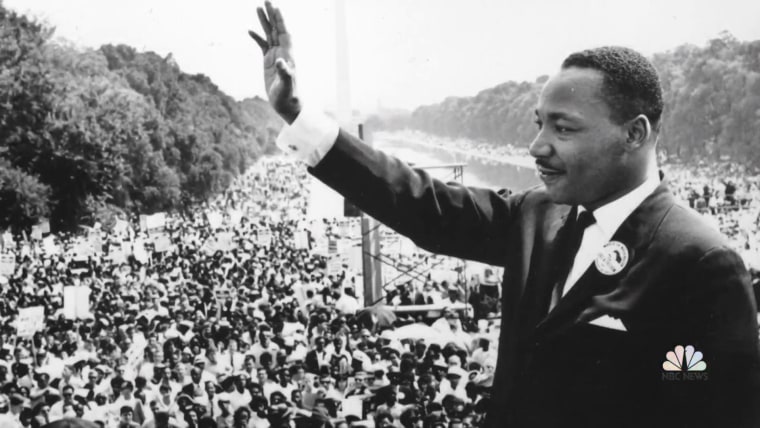
America celebrates a distortion of Martin Luther King Jr., void of his prophetic call to justice by any nonviolent means necessary. Particularly around the annual remembrance of his life Monday, watch for his words to be repackaged in tasty sound bites and stripped of the so-called extremism that prompted FBI Director J. Edgar Hoover to label him “the most dangerous man in America.”

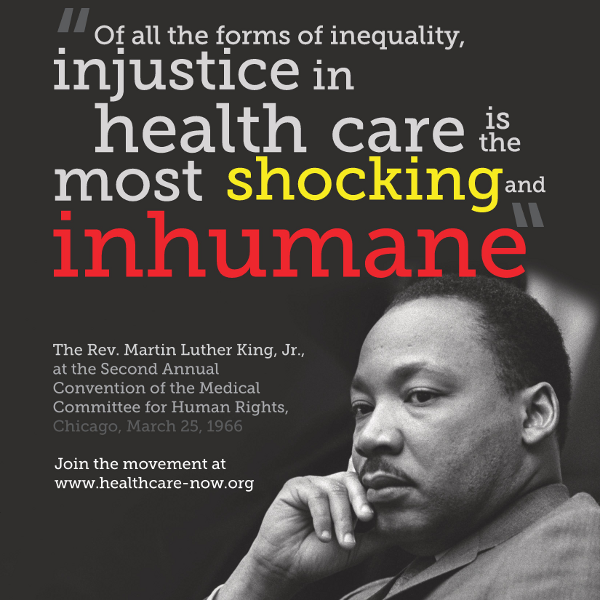
Chicago was a seminal backdrop for King’s work toward justice and the place where he sounded his call for health care justice. Before a medical conference in 1966 he proclaimed, “Of all the forms of inequality, injustice in health is the most shocking and the most inhuman because it often results in physical death.” National criticism ensued because this activist, two years after he won the Nobel Peace Prize, dared to articulate a prophetic truism still relevant in 2020.

Researchers at New York University found that Chicago has the largest gap in life expectancy of any city in the United States (followed by Washington, D.C., and New York). Although the national trend in the gap between blacks and non-Hispanic whites continues to improve, ZIP codes can still determine life expectancy with alarming racial disparities. Like real estate, health inequality is about location, location, location.

Dallas is another city with a dubious distinction. The Urban Institute ranked it last out of 274 U.S. cities in racial equity and racial segregation. A study by Parkland Health and Hospital System and the Dallas County Health Department found that geography is deeply linked to health inequity, where a difference of 2 miles has a life expectancy gap of 26 years. Although separated by 1,000 miles, Dallas and Chicago share similar systemic inequities that perpetuate racial disparities in health.

These glaring divides are an enduring legacy of decades of isolating black Americans seeking homeownership by marking mortgage lending maps with red lines. Today, more than 50 years since the passage of the Fair Housing Act, 91% of the communities identified as “best” on the redlined maps remain middle to upper class, with 85% of these communities having majority white populations. Accordingly, 3 out of 4 redlined neighborhoods remain impoverished, and 67% of redlined neighborhoods remain populated by racial minorities. Many were intentionally located in proximity to industrial areas, municipal landfills and toxic waste sites — and the subsequent negative health impacts persist across generations.

This lengthy history of systemic inequality will take time to remedy, as will the legacy of distrust of the medical establishment from the history of experimentation without consent on black Americans. A doctor known as the “Father of Modern Gynecology” performed barbaric vaginal operations on enslaved women. They were denied anesthesia, physically restrained, repeatedly mutilated. The U.S. Public Health Service denied 600 men therapeutic penicillin from 1932 to 1972 to allow the study of the natural progression of latent syphilis in the Tuskegee syphilis experiment. Their health was compromised, as were their partners and children who were predictably exposed to the disease. Black women, many of them teenagers, were the prime target for controlled breeding through forced sterilization. This practice of eugenics did not end until the 1980s. And there was the Pentagon-funded study of nontherapeutic, whole-body irradiation from 1960 to 1971, in which 25% of the subjects died within one month of exposure. All were poor, most were black, and the Radiological Society of North America awarded the lead physician its highest honor.

Nearing his death, King was deemed “unfavorable” by two-thirds of Americans in a 1966 Gallup poll. Decades later in a 1999 Gallup poll, more than 90% of Americans had a favorable opinion and ranked him as the second most admired person of the 20th century (behind Mother Teresa). As we celebrate his legacy, we should embrace his prescient view on health care inequity and further his goal of creating a just society for all.

Perhaps King’s greatest threat was to recognize that, from Chicago to Dallas and to other cities and towns across the land, we are more alike than different. He dared to criticize health inequities embedded in communities from urban ghettos to the mountains of West Virginia. And although his life was ended while he was building bridges across racial and ethnic divides, his dream of proper health care for all should not. Because if raising his voice against persistent health inequality made King a dangerous man, add us to that list.

Health inequality remains among the greatest injustices of our time, and, as King penned in “Letter From Birmingham Jail,” “injustice anywhere is a threat to justice everywhere.” Like King, let us commit ourselves anew to eradicating these death-dealing realities “until justice rolls down like waters, and righteousness like a mighty stream” (Amos 5:24).


MARTIN LUTHER KING JR.’S HEALTHCARE JUSTICE ADVOCACY MAKES AMERICA’S HOSPITALS BETTER TODAY

Martin Luther King Jr.’s Healthcare Justice Advocacy Makes America’s Hospitals Better Today

Image result for MARTIN LUTHER KING JR.’S HEALTHCARE JUSTICE ADVOCACY MAKES AMERICA’S HOSPITALS BETTER TODAY

Every January, the United States celebrates the lasting legacy of Dr. Martin Luther King Jr. Not widely known is how his civil rights advocacy made a lasting impact on modern-day hospitals, including children’s hospitals.

Today in 170 Children’s Miracle Network Hospitals, every young patient is treated regardless of their race or background. CMN Hospitals are deeply committed to offering world-renowned treatment to all kids in need and that’s why donations to your local hospital can make such a difference for families facing health crises.

Unfortunately, certain hospitals in America were still segregated in the not too recent past. When Brown vs. Board of Education passed in 1954, schools began to desegregate, and this paved the way for institutions like hospitals to follow suite. King’s healthcare justice advocacy advanced health care access in particular for the African American community.

A History of Unequal Healthcare

When patients enter a hospital, they expect to receive a standard of care that will improve their lives regardless of who they might be. That expectation, unfortunately, has not always been backed up by medical institutions across the United States. African Americans, in particular, experienced a history of receiving substandard care and outright abuse within the framework of medical science.

Notable examples of this include:

While the details of those specific examples weren’t publicly known in the 1960s, African Americans were certainly aware that they received care that was inferior to white patients. Doctors and hospitals continued perpetuating this double standard even after the passage of the Civil Rights Act in 1964. The disparity in treatment quality was so egregious that Dr. Martin Luther King Jr. spoke out against it, calling for an awakening in the conscience of the United States.

Desegregating Hospitals

King uttered his famous words on healthcare while addressing the press before attending the annual meeting of the Medical Committee for Human Rights, an organization formed because the American Medical Association was segregated at the time. “Of all the forms of inequality, injustice in health is the most shocking and the most inhuman because it often results in physical death,” said King.

The Civil Rights Act of 1964 isn’t typically associated with healthcare. However, at that point in history, it was well known that some hospitals and medical institutions were resisting the push for desegregation, a practice which hospitals used to provide less than adequate care to African American patients. Hospitals would continue to hold onto such discriminatory practices unless something was done.

Legal Gains for Equality in Hospitals

The reason King spoke out so vehemently in 1966 was due to the passage of Medicare and Medicaid in 1965, something that was only possible due to the efforts of the Medical Committee for Human Rights and its head, W. Montague Cobb. The organization made use of the non-violent protest strategies of King and the Civil Rights Movement. The passage of the Social Security Act, which created Medicare and Medicaid brought federal funding into every hospital and medical institution in the United States, forever binding each facility to the Civil Rights Act, a stipulation of which was that any organization receiving federal funding could not discriminate on the basis of race.

From that point onward, hospitals that clung to the old ways of discrimination were subject to lawsuits from mistreated African Americans and pressure from activists like King and the Medical Committee for Human Rights. This gave King the legal ground to stand on when calling on hospitals to abandon the evil practice of systemic discrimination in 1966 with those now famous words from that 1966 conference.

While we know there’s more work to be done to promote equal healthcare access to every child in need across North America, we’re proud that our non-profit children’s hospitals can be a part of the solution.

Thank you, King.


Private insurance is health care’s pot of gold

https://www.axios.com/jp-morgan-2020-private-health-insurance-prices-costs-1e92f969-bffc-4584-a3c9-e8c4072b5144.html

Image result for Private insurance is health care's pot of gold

Private health insurance is a conduit for exploding health care spending, and there’s no end in sight.

The big picture: Most politicians defend this status quo, even though prices are soaring. And as the industry’s top executives and lobbyists gathered this week in San Francisco, some nodded to concerns over affordability — but then went on to tell investors how they plan to keep the money flowing.


Where it stands: More than 160 million Americans get private insurance through an employer or on their own, and per-person spending in that market rose by almost 7% in 2018, the highest annual growth rate in 14 years.

  • “Prices are definitely going up,” Owen Tripp, CEO of health tech startup Grand Rounds, told me this week during the annual J.P. Morgan Healthcare Conference.
  • His company’s vast amount of commercial health data shows big increases in what companies are spending on hospitals, doctors, specialty drugs, devices and out-of-network services.


What they’re saying: Many in the industry admit price inflation has been hammering the commercial markets for years.

  • “Cost per unit is the primary driver,” Cigna CEO David Cordani said. He did not mention the exploding costs of administering health insurance.
  • One hospital system at the conference acknowledged that “the number one cause of personal bankruptcy is our industry” — before going on to tell investors about the hospital’s strong margins.


Multiple hospital executives claimed they charge commercial plans higher prices to make up for the lower rates they get from Medicare and Medicaid.

  • “Every health system I know of loses money on every Medicaid and every Medicare patient,” Amy Compton-Phillips, a top clinical executive at Providence St. Joseph Health, told me.
  • But the evidence overwhelmingly shows that hospitals’ explanation doesn’t hold water.


Drug spending has risen at a slower rate than hospital and physician spending.

  • But in the commercial market, drug companies also have tripled their spending on programs that cover all or part of patients’ out-of-pocket costs, then bill insurers for the full freight.
  • “It’s an intriguing theory,” said Stephen Ubl, CEO of PhRMA, the pharmaceutical industry’s main lobbying group. “But I would be shocked if we were a significant contributor” to the increased private spending.


The bottom line: The private market is the main pot of money that everyone is chasing at the J.P. Morgan conference, and most in the industry don’t see the ballooning spending within that market as a problem.


The Health 202: Who doesn’t like the new North American trade deal? Pharma.

https://www.washingtonpost.com/news/powerpost/paloma/the-health-202/2020/01/17/the-health-202-who-doesn-t-like-the-new-north-american-trade-deal-pharma/5e20ddda88e0fa6ea99cf6d9/

Image result for The Health 202: Who doesn't like the new North American trade deal? Pharma.

Congress has yet to pass major legislation lowering U.S. drug prices. But there are signs within President Trump’s newly passed North American trade deal that the pharmaceutical industry’s grip on lawmakers may be slipping.

The Senate gave the president his long-sought win yesterday just ahead of his impeachment trial, approving in an 89-to-10 vote a sweeping economic pact between the United States, Canada and Mexico that governs more than $1.2 trillion worth of trade between the three countries.

Lawmakers stripped from the final deal several provisions favored by the drug industry that would have boosted efforts by makers of brand-name drugs to quash competition. It was hailed by manufacturers of generic drugs, hospitals and other health providers, who said it sets up a strong and fair foundation for how pharmaceutical products could be treated in future trade agreements with China and the United Kingdom.

The altered U.S.-Mexico-Canada Agreement is “the most balanced trade agreement the U.S. has ever signed,” Jonathan Kimball, vice president of trade for the generic drug group Association for Accessible Medicines, told me.

“I think one of the most important parts of the trade deal is Democrats and Republicans realize the system must change and the bipartisan majority who voted for it have put a marker down that things are changing,” Kimball said.

Indeed, an overwhelming majority of senators from both parties supported the agreement, which the House passed last month by a similarly wide margin, my Washington Post colleagues Erica Werner and Rachel Siegel report. It replaces the 25-year-old North American Free Trade Agreement, something Trump repeatedly pledged in 2016 to do.

What’s most significant about the USMCA and prescription drug development is what it didn’t include.

An earlier version would have set the period in which the makers of new brand name drugs are protected from competition at 10 years. That’s two years less than the current 12-year “exclusion period” — but enshrining it in the trade deal would have required Congress to gain permission from Mexico and Canada before altering it in the future.

The original trade deal would also have created additional pathways for makers of branded drugs to extend their exclusivity periods — a practice that’s already common as they seek to maximize earnings off a drug before it has any generic competitors. The companies argue these longer exclusivity periods are necessary to let them reclaim their spending on research and development.

Such practices typically involve biologic drugs, medicines that come from living cells containing proteins and other materials that can treat diseases such as cancer or rheumatoid arthritis. It’s these biologics that are the biggest driver of high drug prices.

So makers of branded drugs were predictably excited about version 1.0 of USMCA and disappointed by version 2.0. Stephen Ubl, president of the Pharmaceutical Research and Manufacturers of America, said the stripped-down final version “removes vital protections for innovators.”

“The only winners today are foreign governments who want to steal American intellectual property and free ride on America’s global leadership in biopharmaceutical research and development,” Ubl said in a statement the group issued when the House passed the deal in December.

But the rest of the health-care industry sees the USMCA as a rebuke of an industry that’s already under fire for hiking drug prices while continuing to pocket huge profits.

“Congress and the White House have rightly recognized that at a time when 58 million Americans struggle to afford their prescription drugs, it would be a step in the wrong direction to further enable Big Pharma’s anti-competitive tactics,” said Lauren Aronson, executive director of the Campaign for Sustainable Rx Pricing, a coalition of health groups that includes hospitals, doctors and insurance plans.

From a pure trade standpoint, USMCA isn’t terribly consequential for the U.S. drug industry. Canada and Mexico are not even close to the U.S.’s top trading partners of pharmaceutical products.

Rather, it’s China that produces many of the ingredients U.S. drugmakers use to develop their medicines. Any trade agreement Trump negotiates with China if he wins a second term as president will be more important commercially to the industry. And if that time comes, supporters of the USMCA are hopeful the deal will be used as a starting point.

“We think we now have a template moving forward where both Democrats and Republicans have a trade agreement that supports access to affordable medicines,” Kimball said.


MedPAC recommends 3.3% payment boost for hospitals in 2021

https://www.beckershospitalreview.com/finance/medpac-recommends-3-3-payment-boost-for-hospitals-in-2021.html?utm_medium=email

Related image

The Medicare Payment Advisory Commission voted unanimously Jan. 16 to recommend a 3.3 percent raise in Medicare payments for hospitals next year.

The commission said it wants to give hospitals a 2 percent boost overall and tie the other 1.3 percent to quality metrics to motivate hospitals to reduce mortality and improve patient satisfaction.

CMS has scheduled a 2.8 percent increase in 2021 Medicare payments.

MedPAC said it is recommending the payment boost to reduce the disparity in payments at different care sites and is part of a larger effort to introduce site-neutral payments.

Congress is not required to implement the recommendation.