


Cartoon – Racing Towards Value-based Reimbursement


The agency’s end goal for Medicare Advantage is to match CMS’ vision for its programs as a whole, with an emphasis on health equity.
On Wednesday, the Centers for Medicare and Medicaid Services released proposed payment policy changes for Medicare Advantage and Part D drug programs in 2023 that are meant to create more choices and provide affordable options for consumers.
The Calendar Year 2023 Advance Notice for Medicare Advantage and Part D plans is open to public comment for 30 days. This year, CMS is soliciting input through a health equity lens on the approach to some future potential changes.
The agency’s end goal for Medicare Advantage is to match CMS’ vision for its programs as a whole, which Administrator Chiquita Brooks-LaSure said is “to advance health equity; drive comprehensive, person-centered care; and promote affordability and the sustainability of the Medicare program.”
CMS is proposing an effective growth rate of 4.75% and an overall expected average change in revenue of 7.98%, following a 4.08% revenue increase planned for 2022.
WHAT’S THE IMPACT?
CMS is requesting input on a potential change to the MA and Part D Star Ratings that would take into account how well each plan advances health equity.
The agency is also requesting comment on including a quality measure in MA and Part D Star Ratings that would assess how often plans are screening for common health-related social needs, such as food insecurity, housing insecurity and transportation problems.
The Health Equity Index has been tasked with creating more transparency on how MA plans care for disadvantaged beneficiaries.
Additionally, CMS is requesting input on considerations for assessing the impact of using sub-state geographic levels of rate setting for enrollees with end-stage renal disease, particularly input regarding the impact of MA payment on care provided to rural and urban underserved populations and how such payment changes may impact health equity.
Other areas in which CMS is soliciting input include a variety of payment updates, a new measure concept to assess whether and how MA plans are transforming care by engaging in value-based models with providers’ and updates to risk-adjustment models to continue to pay appropriately for people enrolled in MA and Part D plans.
Public comments on the Advance Notice must be submitted by March 4. The Medicare Advantage and Part D payment policies for 2023 will be finalized in the 2023 Rate Announcement, which will be published no later than April 4.
REACTION
The proposed rule has already elicited reaction from various organizations, including Better Medicare Alliance.
“As we continue to review the Advance Notice in further detail, we appreciate that CMS has offered a thoughtful proposal that will help ensure stability for the millions of diverse seniors and individuals with disabilities who count on Medicare Advantage,” Mary Beth Donahue, president and CEO of the Better Medicare Alliance, said, adding that the proposal furthers the shared goal of improving health equity.
“Medicare Advantage has proven its worth for seniors and taxpayers – providing lower costs, meaningful benefits that address social determinants of health, better outcomes and greater efficiencies for the Medicare dollar,” she said. “A stable rate for 2023 ensures this work can continue. On behalf of our 170 Ally organizations and over 600,000 beneficiary advocates, we applaud CMS for putting seniors first by issuing an Advance Notice that protects coverage choices, advances health equity and preserves affordability for beneficiaries.”
AHIP also responded, with President and CEO Matt Eyles pointing out that for 2022 the average Medicare Advantage monthly premium dropped to $19, down more than 10% since 2021.
“We agree that MA plans play an essential role in improving health equity and addressing the social determinants of health that impact millions of seniors and people with disabilities,” he said. “We support CMS soliciting input on ways to advance these important goals.
“Medicare Advantage enjoys strong bipartisan support because it provides America’s seniors and people with disabilities with access to affordable, high-quality healthcare services,” said Eyles. “We will continue to review the 2023 rate notice and look forward to providing constructive feedback to CMS during the comment period.”
THE LARGER TREND
CMS’ Advance Notice follows a recent congressional letter in which 346 bipartisan members of Congress declared support for Medicare Advantage and urged the agency “to provide a stable rate and policy environment” for the program in 2023.
A December 2021 Morning Consult poll showed that 94% of Medicare Advantage beneficiaries are satisfied with their coverage, while 93% believe that protecting MA should be a priority of the Biden administration.

https://www.healthcarefinancenews.com/news/no-surprises-act-implementation-includes-telehealth

Independent physician groups, which include telehealth docs, must now accept a rate that someone else has negotiated, expert says.
The No Surprises Act has providers scrambling to understand the implications of a law that went into effect earlier this month.
Under the law, patients treated by an out-of-network physician can only be billed at the in-network rate. It protects patients from receiving surprise medical bills from the ER or air ambulance providers or for non-emergency services from out-of-network physicians at in-network facilities.
Patients can no longer receive balance bills – the difference between what the provider charges and what the insurer pays – or be charged a larger cost-sharing amount.
The congressional intent was to save patients sometimes thousands of dollars in unexpected, or surprise, medical bills. But applying the No Surprises Act to clinical care is being left to providers to sort out.
A big question is the definition of an emergency and the benchmark used to determine when it ends, according to Kyle Faget, a partner at Foley who is co-chair of the firm’s Health Care and Life Sciences Practice Groups. She asked: Does the emergency end when the patient is stabilized, or should another standard apply? This includes emergency services for mental health and substance-use disorders.
Another question is around pre-planned services. Patients have to be notified who is providing the care and whether the physician is in-network. If the physician is out-of-network, patients must provide consent. But that can be tricky, for instance, if a patient scheduled for a planned C-section gets an out-of-network doctor who was not scheduled at the time the appointment was made.
At some hospitals, a new layer of administration is needed to comply with the law, Faget said.
Another area not well understood is how the law affects telehealth consults in the ER.
TELEHEALTH AND THE NO SURPRISES ACT
The law states that if treated by a telehealth clinician, the patient can only be billed the in-network rate, said Faget, who specializes in telehealth law.
Telehealth is often used in the ER, according to Faget. Most ER visits require a physician consultation, with hands-on medical care provided by a clinician other than the physician.
Pre-COVID-19, providers were in the embryonic stage of providing virtual emergency care, she said. The pandemic, and a shortage of physicians, spurred virtual care in the ER.
These telehealth providers often work on a contracted basis. They are likely credentialed at the hospital but are not hospital employees, Faget said.
This means they are not credentialed with the insurer. Under the No Surprises Act, they are now subject to the in-network rates negotiated by the hospital.
Telehealth ER physicians could negotiate their own contracts with insurers, but as a small group, they are not likely to get the higher rates they had prior to the implementation of the No Surprises Act.
“It’s an arduous contracting process, and small-group bargaining power is low,” Faget said. “The big hospital system has bargaining power. Those groups providing telehealth services won’t necessarily have agreements in place and, by definition, are out-of-network.”
Independent physician groups, which include telehealth docs, must now accept a rate that someone else has negotiated, Faget said. This fact can be more of an issue than the lower rate they’re now being paid, she said.
“I think telehealth will adapt,” Faget said. “I think it will become the way of doing business.”
WHY THIS MATTERS
The bottom line is that the No Surprises Act is doing what it promised to do – saving patients from getting a large bill not covered by insurance.
Surprise bills are a moral and ethical issue, Faget said. Patients, at their most vulnerable in the ER, are sent home only to get a $5,000 bill they never saw coming.
“It’s like kicking a person when they’re down,” Faget said.
However, in the larger healthcare ecosystem, ending surprise medical bills will ultimately result in cost-shifting, she said.
“Think about the system globally: somebody is paying for something somewhere,” Faget said. “At the end of the day, somebody’s going to have to pay.”
THE LARGER TREND
Providers have told her that the No Surprises Act incentivizes insurance companies to lower their payments, Faget said.
The American Society of Anesthesiologists has accused BlueCross BlueShield of North Carolina of doing this. A letter sent by BCBS of North Carolina to anesthesiology and other physician practices this past November threatens to terminate physicians’ in-network status unless they agree to payment reductions ranging from 10% to over 30%, according to ASA.
The ASA saw this as proof of its prognostication to Congress upon passage of the No Surprises Act: that insurers would use loopholes in the law to leverage their market power.
The AHA and AMA have sued the Department of Health and Human Services over implementation of a dispute-resolution process in the law they say favors the insurer. The arbitrator must select the offer closest to the qualifying payment amount. Under the rule, this amount is set by the insurer, giving the payer an unfair advantage, according to the lawsuit.

The American Hospital Association (AHA) is asking Congress for an additional $25B to help hospitals offset high labor costs, largely incurred by the need to rely on travel nurse staffing firms that charge two to three times pre-pandemic rates. The AHA, along with 200 members of Congress, is urging the Federal Trade Commission to investigate the staffing agencies for anti-competitive activity, although the agency has previously declined to do so.
The Gist: The Department of Health and Human Services (HHS) is now releasing $2B in of provider relief dollars from the CARES Act. Beyond that, after nearly two years and $178B of federal support, hospitals shouldn’t count on additional funds from the government, even as costs of labor and supplies continue to rise.
Instead, we’d expect more scrutiny over how the remaining relief dollars are spent. Federal support during the pandemic has masked structural economic flaws in provider economics, and we expect 2022 will be a year of financial reckoning for many hospitals and health systems.

The California Assembly is poised to vote on a bill Jan. 31 that aims to create a single-payer healthcare system in the state — the bill’s first major battle since a funding proposal for the program was introduced Jan. 6 — according to KTVU FOX 2.
The state’s plan to create a universal healthcare system involves two bills — AB 1400 and ACA 11 — that would implement and subsequently fund the program, dubbed CalCare. The Assembly is expected to only vote on AB 1400 on Jan. 31.
The Assembly must pass the bill Jan. 31 if it hopes to pass the single-payer framework bill by the end of the year. If the bill passes in the Assembly, it would then need approval in the Senate and from voters.
The plan is being met with public pressure that believes the system would “create a new and exorbitantly expensive government bureaucracy.” Lawmaker opposition also largely focuses on the bill’s cost, which would be between $314 billion and $391 billion annually, according to KTVU. The bill’s funding counterpart, ACA 11, proposes to pay for it with a tax increase on businesses and high-earning individuals.
However, proponents argue that CalCare would cost less than the state’s current system, which equates to $517 billion when considering both taxes and household spending.

A Colorado mom got quite the shock when she received a hefty “facility fee” bill for her toddler’s telehealth appointment.
Brittany Tesso said she had already paid a bill from Children’s Hospital Colorado for $676.86 for the 2-hour virtual visit for her 3-year-old son to determine if he required speech therapy, according to a report by KDVR, a Colorado TV station.
But 2 weeks later, she received a separate bill for an additional $847.35, leading Tesso to tell the station: “I would’ve gone elsewhere if they had told me there was an $850 fee, essentially for a Zoom call.”
Tesso said she was told the additional amount was for a “facility fee.”
“I was like, ‘Facility fee? I didn’t go to your facility,'” Tesso told the station. “I was at home and, as far as I could tell, some of the doctors were at home too.” Tesso said she was told by a hospital representative that it charges the same fee whether patients come to the facility or receive care via telehealth.
KDVR had reported an earlier story of a father who said he was charged a $503 facility fee after his son was seen at a medical practice in a building owned by Children’s Hospital Colorado, and roughly 20 viewers reached out to the news outlet about their similar experiences.
Tesso told KDVR that she believed the second bill was a surprise bill, and suggested that state lawmakers could do more to prevent such instances. An HHS rule banning surprise billing went into effect on January 1 of this year.
Adam Fox, deputy director at the Colorado Consumer Health Initiative, told KDVR that patients have little recourse because there are no regulations in the state regarding facility fees charged by hospitals.
In a statement provided to KDVR, Children’s Hospital Colorado said that the issue was not exclusive to the hospital, and that it continually looks at its own practices “to see where it can adjust and improve.”
The hospital added in the statement that it continues “to advocate for state and federal policies that address healthcare consumer cost concerns through more affordable and accessible insurance coverage and hospital and provider price transparency, while also defending children’s access to care and the unique needs of a pediatric hospital.”
In response to a MedPage Today request for comment, the hospital said it had no further information to share.
Telehealth is likely to remain a mainstay in healthcare delivery, according to a December Kaiser Health News (KHN) article, but experts also told KHN that it’s not yet clear how such appointments, and any accompanying facility fees, will be handled moving forward.
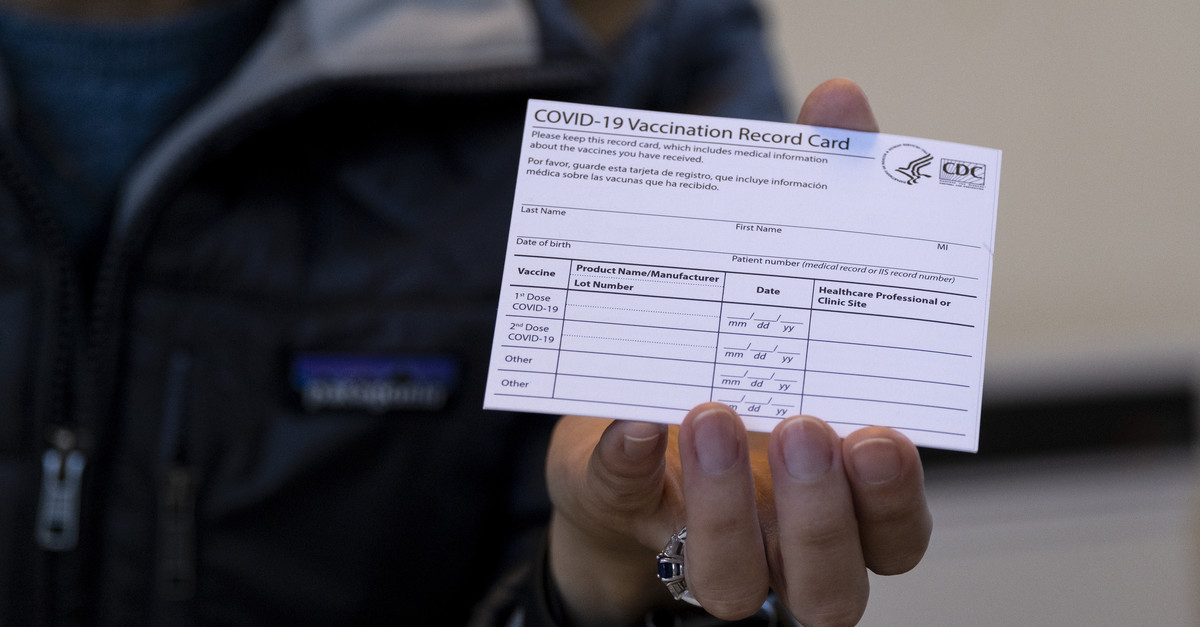
CMS is preparing to enforce its vaccine mandate for health care workers, but the agency may not have an accurate count of how many remain unvaccinated—and five health systems are pushing back on federal hospital vaccination data, calling it “extremely erroneous,” Cheryl Clark writes for MedPage Today.
The Supreme Court earlier this month ruled that CMS could require most health care workers to be vaccinated against Covid-19—but U.S. officials currently do not know exactly how many workers remain unvaccinated, primarily due to a lack of reliable immunization data.
At the end of December, CDC reported that 77.6% of hospital workers were fully vaccinated. However, that figure was based on data from only about 40% of the nation’s hospitals. Hospitals currently send vaccination data to the agency on a voluntary basis, but beginning May 15, they will be required to send in weekly data, just like nursing homes have been.
According to Janis Orlowski, chief health care officer at the Association of American Medical Colleges (AAMC), CDC’s data is likely representative of providers nationwide, as an AAMC survey of 125 academic hospitals found similar results. More than 99% of doctors and close to 90% of nurses were vaccinated, she said, but vaccination rates dropped off to the 30% to 40% range for those in more operational roles, such as transportation and food service workers.
Further adding to the confusion about health care workers’ vaccination rates are potential inaccuracies in a federal database that tracks Covid-19 vaccinations among workers in hospitals across the country. According to five health systems listed as having the highest numbers of unvaccinated workers, the database is “extremely erroneous,” Clark writes.
In the database, Adventist Health Orlando (AHO) is shown to have 18,576 unvaccinated workers, 637 partially vaccinated workers, and 25,253 fully vaccinated workers. However, Jeff Grainger, director of external communications for AdventHealth in Central Florida, said those numbers weren’t possible since the organization “[doesn’t] have 44,000 employees in one hospital.” He added that 96% of AHO’s team members have already complied with CMS’ mandate.
The University of Illinois Hospital (UI) was listed in the database as having 12,049 unvaccinated workers and 272 partially vaccinated workers. Jacqueline Carey, from health system’s public affairs department, disputed these numbers, saying UI had 6,530 workers as of Jan. 19, with 96% of them fully vaccinated. The remainder were either partially vaccinated or had approved exemptions.
The hospital with the third highest number of unvaccinated workers was Mount Sinai Hospital, Clark writes, but Lucia Lee, a hospital spokesperson, said the federal data was inaccurate. According to Lee, Mount Sinai Health System, of which the hospital is a part, has vaccinated 99% of its more than 43,000 employees.
A representative for Ochsner Medical Center, which is listed as having the fourth highest number of unvaccinated workers, also pushed back on the statistics in the database. Currently, 99.57% of Ochsner’s over 34,000 employees are compliant with its Covid-19 policy, with 95% of workers Ochsner Health and Ochsner LSU Health Shreveport fully vaccinated.
Finally, Kena Lewis, a spokesperson for Orlando Regional Medical Center, said that federal data showing the hospital has 44,154 workers is inaccurate. Instead, she said the hospital is one of 10 in the Orlando network, which has 23,709 total employees. Although Lewis did not give the health system’s vaccination rates, she said it “continues to review the guidelines regarding Covid-19 vaccination requirements for health care organizations and will take appropriate steps.”
Although it is not clear why there are discrepancies between the federal data and what these health systems are reporting regarding vaccination rates, there are some potential explanations, Clark writes.
According to Carey, the federal database only includes vaccination information provided by the UI health system and employee health services. This means that vaccinations workers received elsewhere, such as through a personal provider or pharmacy, are not included in the data, and they will show up as being unvaccinated.
Separately, a spokesperson for another of the five organizations told Clark on background that short-term nursing staff contracted through agencies may show up as unvaccinated in the federal database. Although the agencies assure employers the nurses are vaccinated, hospitals do not independently verify this information.
https://www.healthcarefinancenews.com/news/mass-general-brigham-required-implement-cost-savings-plan

The Massachusetts Health Policy Commission has unanimously voted to hold Mass General Brigham accountable for its spending and is requiring the health system to develop and implement a performance improvement plan that will result in cost-saving reforms.
The proposed performance improvement plan must contain specific cost-reducing action steps, savings goals, process and outcome metrics, timetables, and supporting evidence, among other requirements.
MGB has 45 days to file the proposed performance improvement plan with the HPC, request a waiver from the requirement, or request an extension of the filing deadline.
From 2014 to 2019, MGB had a larger, cumulative commercial spending in excess of the benchmark than any other provider, totaling $293 million, the HPC said. MGB’s ongoing cost-control strategies have not reduced its commercial spending growth to below-benchmark rates, the HPC Board said.
MGB is seeking to spend nearly $2.3 billion in Massachusetts on expansions and improvements at two of its hospitals and on the creation of three new ambulatory sites in the communities of Westborough, Westwood, and Woburn, Massachusetts.
“Mass General Brigham has a spending problem,” HPC Chair Dr. Stuart Altman said by statement. “Its spending performance and plan for new expansions at their flagship hospitals and into the Boston suburbs raise significant concerns, as documented by the HPC today.”
The HPC’s analyses found that these expansions would increase commercial healthcare spending by at least $46 million to $90.1 million and translate into higher commercial insurance premiums for Massachusetts residents, families and businesses.
The HPC also said this would impact healthcare access and equity as care shifts to MGB providers from other providers in Massachusetts. Other providers are anticipated to lose $153 million to $261 million in commercial revenue each year. These other providers have fewer financial resources and lower average prices for commercially insured patients and they generally serve larger proportions of MassHealth patients and communities with higher social needs than MGB, HPC said.
Based on these findings, the HPC concluded these expansions are inconsistent with the Commonwealth’s healthcare cost containment goals.
The HPC’s Board took separate action, voting unanimously to issue a public comment detailing its analyses of the three expansion proposals currently under review by the Massachusetts Department of Public Health Determination of Need Program.
WHY THIS MATTERS
MGB includes two academic medical centers and is the largest and generally highest-priced system in the Commonwealth, HPC said.
The HPC’s findings and conclusions stand in contrast to those of Independent Cost Analyses that were conducted by a third-party vendor and released on December 28, 2021, which conclude that all three projects are consistent with the Commonwealth’s cost containment goals.
The December cost analysis, part of the determination of need process, projected those three sites would result in a “small overall decrease” in healthcare spending, MGB said, according to WGBH. Its proposed suburban locations would give its existing patients a lower-cost option than hospital care and save them a drive into Boston, the report said.
“Today’s comments by the Health Policy Commission ignore this state’s crippling healthcare capacity crisis — which preceded the pandemic, as well as the fact that patients deserve the choice to access high quality care, closer to their homes, at a lower cost,” MGB said, according to the report.
THE LARGER TREND
Massachusetts established the Health Policy Commission in 2012 as an independent government agency to lead collective efforts to make healthcare more affordable for residents.
This is the first performance improvement plan to be required from a provider or health plan by the HPC.
 HENRY KOTULA