Benefit design, higher deductibles will increase bad debt for hospitals

https://www.healthcarefinancenews.com/node/139468

Legislative proposals could reduce bad debt, but would likely introduce additional complexity to billing processes.

Changes in insurance benefit design that shift greater financial responsibility to the patient, rising healthcare costs and confusing medical bills will continue to drive growth in bad debt — often faster than net patient revenue, according to a new report from Moody’s.

Legislative proposals to simplify billing have the potential to reduce bad debt, but the downside for hospitals is that they’ll likely introduce additional complexity to billing processes and complicate relationships with contracted physician groups. A recent accounting change will reduce transparency around reporting bad debt.

Higher cost sharing and rising deductibles are the main contributors to the trend of patients assuming greater financial responsibility, a trend that’s been occurring for more than a decade, and that will further increase the amount of uncollected payments. Hospitals and providers are responsible for collecting copays and deductibles from patients, which may not always be possible at the time of service; the longer the delay between providing service and collecting payment, the less likely a hospital is to collect payment.

On top of that, the higher an individual’s deductible is, the greater the share of reimbursement that a hospital has to collect. The prevalence of general deductibles increased to 85% of covered workers in 2018, up from 55% in 2006, and the amount of the annual deductible almost tripled in that time to an average of $1,573.

Multiple factors are driving the trend toward higher cost sharing, including a desire among employees and employers for stable premium growth despite steadily rising healthcare costs and the growing popularity of high deductible health plans.

WHAT’S THE IMPACT

Hospitals face an uphill battle when it comes to reducing bad debt. Strategies include point-of-service collections, enhanced technology to better estimate a patient’s responsibility for a medical bill, and offering low-cost financing or payment plans.

A common feature of these approaches is educating patients about what portion of a medical bill is their responsibility, after taking into account the specifics of their insurance plan. But hospitals often find it hard to provide reliable cost estimates for a given service, which can thwart efforts to provide patients with an accurate estimate of their financial responsibility.

One difficulty is that medical bills partly depend on the complexity of service and amount of resources consumed — which may not be known ahead of time. There’s also the need to incorporate specific benefits of the patient’s own insurance plan. A certain amount of bad debt is likely to arise from patients accessing emergency care given the insufficient time to determine insurance coverage.

Another difficulty in billing is surprise medical bills, received by insured patients who inadvertently receive care from providers outside their insurance networks, usually in emergency situations. While the term “surprise medical bills” refers to a specific, narrow slice of healthcare costs, they have become part of the broader debate about the affordability and accessibility of U.S. healthcare.

THE LARGER TREND

To minimize surprise bills, Congress is considering proposals to essentially “bundle” all of the services a patient receives in an emergency room into a single bill. Under a bundled billing approach, the hospital would negotiate a set charges for a single or “bundled” episode of care in the emergency room. The hospital would then allocate payments to the providers involved.

This approach, which major hospital and physician trade groups oppose, has the potential to significantly affect hospitals and disrupt the business models of physician staffing companies, according to Moody’s. Many hospitals outsource the operations and billing of their emergency rooms or other departments to staffing companies. Bundling services would require a change in the contractual relationship between hospitals and staffing companies.

Another recent proposal in Congress would require in-network hospitals to guarantee that all providers operating at their facilities are also in network. This approach adds significant complexity because many physicians and ancillary service providers are not employed or controlled by the hospitals where they work. Some hospitals would likely seek to employ more physicians, leading to increases in salaries, benefits and wages expense.


9 health systems with strong finances

https://www.beckershospitalreview.com/finance/9-health-systems-with-strong-finances-120919.html

Here are nine health systems with strong operational metrics and solid financial positions, according to recent reports from Fitch Ratings, Moody’s Investors Service and S&P Global Ratings.

Note: This is not an exhaustive list. Health system names were compiled from recent credit rating reports and are listed in alphabetical order.

1. Advocate Aurora Health, a 27-hospital system with dual headquarters in Downers Grove, Ill., and Milwaukee, has an “Aa3” rating and positive outlook with Moody’s. The health system has a favorable liquidity position, low leverage, and healthy margins, according to Moody’s. The credit rating agency expects the health system to continue to benefit from its position as a market leader within two large service areas.

2. Morristown, N.J.-based Atlantic Health System has an “Aa3” rating and stable outlook with Moody’s. The five-hospital system has healthy liquidity and solid operating margins, according to Moody’s. The credit rating agency expects strong patient volume, low reliance on governmental funding and other factors to continue to support Atlantic Health System’s financial metrics.

3. Fountain Valley, Calif.-based MemorialCare has an “AA-” rating and stable outlook with Fitch and S&P. The health system has a strong balance sheet and financial profile, according to Fitch. The credit rating agency expects MemorialCare’s cash flow to improve due to its market strategy, which focuses on revenue diversification.

4. Portland-based Oregon Health & Science University has an “Aa3” rating and stable outlook with Moody’s and an “AA-” rating and stable outlook with S&P. OHSU, which is the only academic medical center in Oregon, has favorable operating performance, strong philanthropy and its clinical offerings draw patients from across Oregon and neighboring states, according to Moody’s. The credit rating agency expects OHSU’s revenue to continue to grow.

5. Albuquerque, N.M.-based Presbyterian Healthcare Services has an “Aa3” rating and stable outlook with Moody’s. The health system has strong revenue growth, good market share for acute care services and a favorable balance sheet. The credit rating agency expects the health system’s insurance plan, which is already a dominant health plan in New Mexico, to continue to grow.

6. Appleton, Wis.-based ThedaCare has an “AA-” rating and stable outlook with Fitch. The health system has solid cash flow and a leading market position in a stable service area, according to Fitch. The credit rating agency expects ThedaCare’s operating performance to continue to improve.

7. Livonia, Mich.-based Trinity Health has an “AA-” rating and stable outlook with Fitch and S&P. The health system has a significant market presence in several states and a strong financial profile, according to Fitch. The credit rating agency expects the health system’s operating margins to continue to improve.

8. Chapel Hill-based University of North Carolina Hospitals has an “Aa3” rating and stable outlook with Moody’s. UNC Hospitals, part of UNC Health Care System, has an excellent market position and strong financial performance, according to Moody’s. The credit rating agency expects UNC Hospitals to continue to grow patient volumes and maintain strong financial performance.

9. Philadelphia-based University of Pennsylvania Health System has an “Aa3” rating and stable outlook with Moody’s. The health system has a strong market position, and substantial investments in facilities will allow the health system to capitalize on its prominent reputation and wide patient draw, according to Moody’s.


Rethinking the model for managing chronic disease

https://mailchi.mp/1d8c22341262/the-weekly-gist-the-spotify-anxiety-edition?e=d1e747d2d8


As we’ve discussed before, the greatest challenge facing health system economics is demographics. Simply put, with 80M Boomers entering their Medicare years, hospitals beds will fill with elderly patients receiving treatment for exacerbations of congestive heart failure (CHF), diabetes, or other chronic conditions, of which the average Medicare beneficiary has four. It’s easy to envision the hospital becoming a giant nursing facility, with the vast majority of beds occupied by Medicare patients receiving nursing care and drugs, only to be sent home until their chronic disease flares again and the cycle repeats, four or five times a year.

Health systems must create a new model for managing Medicare patients with multiple chronic conditions, one that does not rely on care delivered in an inpatient setting. In the graphic below, we outline two approaches for managing a Medicare patient with advanced CHF. The top path illustrates today’s legacy model, where limited support for ongoing care management leaves the patient vulnerable to exacerbations, leading to numerous ED visits and admissions for diuresis, after which the patient returns home to a sub-optimal diet and lifestyle and is likely to return.

A better alternative is illustrated in the second path. Here our CHF patient has access to the ongoing support of a care team, which regularly monitors her status from home with the help of remote monitoring and can communicate with the patient to adjust therapy if early symptoms are detected. At Gist, we’re working with clinicians to understand just how to build this system of care and maximize its impact.

One example: a leading heart failure specialist told us that admissions for CHF could be reduced by one-third if patients with severe heart failure were monitored with a CardioMEMS implantable device, which can detect changes in pressure before the patient has symptoms, allowing for very early intervention. Developing these kind of care approaches to manage chronic disease outside the hospital will be the key to sustainable health system economics—and may have the greatest impact on lowering the total cost of care for the growing Medicare population.


What Makes A Non-Profit Hospital?

What Makes A Non-Profit Hospital?

Image result for What Makes A Non-Profit Hospital?

What are non-profit hospitals and what is the community benefit standard?

Recently, several news outlets including ProPublicaKaiser Health News, and Wall Street Journal have published stories on non-profit hospitals’ medical debt collection practices and the effects on low income patients. These news stories prompted me to take a closer look at non-profit hospitals, their tax-exempt status, the community benefits they must fulfill to qualify for it, and the impact on care.

This is the first piece of two posts that consider the requirements that non-profit hospitals need to fulfill to qualify for their tax-exempt status and the impact of these standards on non-profit hospitals and the communities they seek to serve.

Has the definition of a non-profit hospital evolved over time?

Short answer: yes.

To date, non-profit hospitals have significantly benefited from their tax-exempt status, saving $24.6 billion in taxes in 2011. Originally, hospitals were granted tax-exempt status because of affiliations with religious institutions and for serving a charitable purpose. It wasn’t necessarily related to medical care. However, in 1956, the Internal Revenue Service (IRS) implemented the charity care standard requiring hospitals to offer uncompensated care to patients unable to pay in order to qualify as a charitable organization under Internal Revenue Code 501c3.

Many believed charity care would no longer be necessary after the implementation of Medicare and Medicaid in 1965. Policymakers assumed the two programs would ensure insurance coverage for most people, obviating the need for a charity care standard. This wasn’t the case, and over the next decade, two events led to the elimination of the charity care standard and the introduction of its successor, the community benefit standard, in 1969.

First, the House of Representatives released a report citing concerns about the execution of the charity care standard and its effectiveness. Second, a hospital that did not provide free or discounted health care mounted a legal challenge. The hospital asserted that, because it had an emergency room open to all community members, it was already providing a charitable service and should qualify for non-profit, or 501c3, status. The courts agreed with the hospital, stating that the provision of an open-access emergency room promoted the health of the community. This fulfilled a charitable purpose according to its legal definition. Ultimately, the IRS agreed with the court’s decision and deemed it necessary to change the charity care standard to accommodate this decision.

Consequently, the IRS issued Ruling 69-545, introducing the community benefit standard. From its implementation and onwards instead of being judged solely on the provision of free or discounted care, a hospital’s 501c3 status would be based on whether it “promoted the health of a broad class of individuals in the community,” including but not limited to just providing free or discounted care.

In 2010, additional requirements were included in the community benefit standard. Non-profit hospitals are now required to perform a community health needs assessment every three years and have both an accessible Financial Assistance Policy and Emergency Medical Care Policy (a charge limit for people who qualify for financial assistance and a billings) and a collections system that determines if individuals are eligible for financial assistance prior to engaging in extraordinary collection actions (applies to all emergency and medically necessary care).

What does non-profit status mean for hospitals?

Short answer: tax-exempt with charity donations required.

Most hospitals in the United States are recognized as charitable organizations, with 78 percent qualifying for 501c3 status. This means they are exempt from most taxes and benefit from tax-deductible charity donations and tax-exempt bond financing but they must meet general Internal Revenue Code requirements, including the community benefit standard aimed at improving the health of the surrounding community.

A variety of activities qualify as community benefits. Some examples are charity care, unreimbursed costs through means-tested programs (Medicaid, Medicare, CHIP, etc.), unreimbursed health professions education, unfunded research, and cash and in-kind contributions for community benefits. Hospitals must submit IRS Form 990 Schedule H annually to demonstrate their community benefit expenditures and maintain their 501c3 designations.

Are non-profit hospitals behaving like their for-profit counterparts?

Short answer: often times, yes.

Seven of the ten most profitable hospitals in the country are non-profits. Many of these exhibit for-profit characteristics such as being part of a larger hospital system, being located in urban areas, and not having a teaching program.

But these aren’t the only features of non-profit hospitals that resemble for-profits.study conducted by the Kellogg School of Management found that non-profits regularly behaved like for-profits after financial shocks. In response to financial crises, non-profits cut back on unprofitable services to offset losses instead of increasing prices. This is not what we expect; the study authors argue that we should expect them to do the latter — forgoing financial gain by starting with lower prices with room to increase in times of financial stress. That they don’t suggests that non-profits are already maximizing profits, similar to for-profit hospitals.

While it is unusual for non-profit hospitals to experience large financial profits, it does happen. The question is whether these gains are then reinvested into the hospital’s charity care and community health and wellbeing initiatives.

How much of a non-profit hospital’s revenue goes back into care and its community?

Short answer: some.

Herring, et al. found that, on average, 7.6 percent of non-profit hospitals’ 2012 total expenses were community benefit expenditures, 3 percent were unreimbursed Medicaid costs, and about 2 percent were charity care. (These findings are consistent with past studies.)

In some cases, non-profit hospitals receive tax benefits that far outweigh their community benefit investments. For example, in fiscal year 2011-2012, the University of Pennsylvania Medical Center made approximately $1 billion in profits, spent less than $20 million on charity care, and received $200 million in tax benefits. Cases like these have increased public scrutiny on hospitals’ non-profit status and whether current 501c3 requirements go far enough to ensure that hospitals provide sufficient charity care and community benefits.

Non-profit hospitals maintain their tax exempt status through the fulfillment of the community benefits standard. In the next piece we will look at the impact of these standards on the hospitals and the communities they serve.


An ex-NFL player became a hospital CEO. Feds questioned his qualifications

https://www.beckershospitalreview.com/hospital-management-administration/an-ex-nfl-player-became-a-hospital-ceo-feds-questioned-his-qualifications.html

Image result for An ex-NFL player became a hospital CEO. Feds questioned his qualifications

The CEO of North Tampa Behavioral Health did not meet the requirements to lead the Wesley Chapel, Fla.-based psychiatric hospital, according to a report cited by the Tampa Bay Times.

Bryon Coleman Jr., the former CEO of North Tampa Behavioral, is no longer leading the hospital. Instead, he is in another position within Acadia Healthcare, the Franklin, Tenn.-based parent company of North Tampa Behavioral.

In October, lawmakers called on federal officials to look into North Tampa Behavioral after the Tampa Bay Times published an investigative report that found Mr. Coleman had no healthcare experience. The report also raised quality concerns, claiming North Tampa Behavioral boosted revenues by using a loophole in Florida’s mental health law to hold some patients longer than a 72-hour limit. The hospital rejected the claims.

In November, federal inspectors discovered serious problems at the psychiatric hospital, according to the Tampa Bay Times. Inspectors said medical staff hadn’t been held accountable for poor care. Inspectors also found “no evidence” that Mr. Coleman “met the education or experience requirements defined in the position description” for the CEO role. Officials threatened to end the facility’s federal funding if the issues aren’t addressed by Feb. 19.

Mr. Coleman became CEO of Tampa Behavioral Health in 2018. Prior to that, he quarterbacked for the Green Bay Packers practice squad, managed sales for a trucking company and oversaw employee benefits at an insurance firm, according to the Tampa Bay Times.

In a statement to the Tampa Bay Times, a spokesperson from Acadia denied that federal officials threatened to cut public funding from the hospital and said officials didn’t find Mr. Coleman lacked requirements for his job.

Read the full article here.


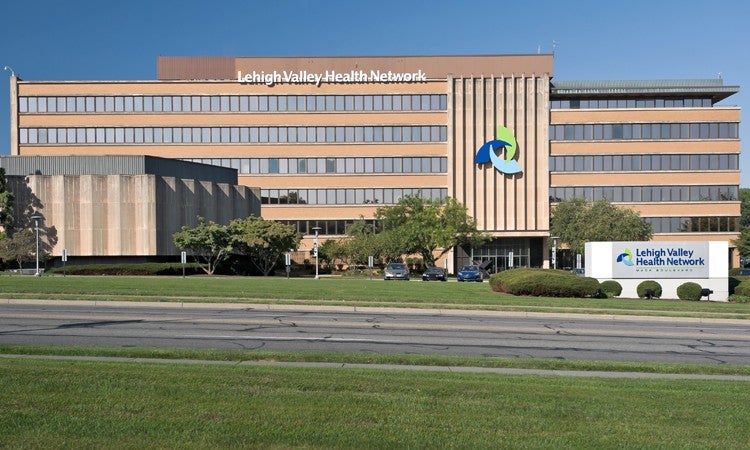
Lehigh Valley Health Network’s net income more than triples to $115M

https://www.beckershospitalreview.com/finance/lehigh-valley-health-network-s-net-income-more-than-triples-to-115m.html

Image result for lehigh valley health network headquarters

Allentown, Pa.-based Lehigh Valley Health Network saw its net income more than triple from $35.1 million in fiscal year 2018 to $115.3 million in fiscal year 2019, according to financial documents released Dec. 4. 

The health system saw its revenue increase year over year to $2.96 billion in the 12 months ended June 30. In the same period in 2018, the system reported revenue of $2.73 billion.

In fiscal year 2019, Lehigh Valley Health reported expenses of $2.86 billion, up from $2.68 billion in 2018.

Expense growth resulted from several factors, including an increase in salaries and wages and supply costs.

Lehigh Valley Health System attributed the net income increase to cutting back on contract workers and overtime and reducing costs on readmissions and contracts, according to The Morning Call. 


UPMC to close hospital in 2020

https://www.beckershospitalreview.com/finance/upmc-to-close-hospital-in-2020.html

Image result for upmc susquehanna sunbury

Pittsburgh-based UPMC will close its hospital in Sunbury, Pa., on March 31, 2020, according to The Daily Item.

The health system cited dwindling patient volume as one of the reasons it is closing UPMC Susquehanna Sunbury.

“This decision was made with careful consideration and analysis of the use of hospital services in the region,”  UPMC Susquehanna President Steven Johnson said, according to The Daily Item. “According to market data, patients are utilizing facilities other than UPMC Susquehanna Sunbury for their care. UPMC must prudently examine opportunities to integrate and consolidate functions balanced against the needs of the community.”

The hospital, previously named Sunbury Community Hospital, has been open for nearly 125 years. Jody Ocker, Sunbury city administrator, said she’s concerned local residents won’t have access to care after the hospital closes.

“I’m very concerned about our residents’ access to care,” she told TV station WNEP. “We have people that are getting around on their electric scooters and their bicycles. They don’t have access to reliable transportation.”

About 150 people will lose their jobs when UPMC Susquehanna Sunbury closes, according to WNEP. UPMC said it will try to relocate employees to other hospitals in the area.


Hospitals vs. the world

https://www.axios.com/newsletters/axios-vitals-3635dfb2-f6b2-4986-b8f0-15acd9436ea4.html?utm_source=newsletter&utm_medium=email&utm_campaign=newsletter_axiosvitals&stream=top

A hospital sign with the 'H' replaced with a dollar sign

Hospitals sued the Trump administration yesterday over its requirement that they disclose their negotiated rates, the latest of the industry’s moves to protect itself from policy changes that could hurt its revenues.

Why it matters: Hospitals account for the largest portion of U.S. health costs — which patients are finding increasingly unaffordable.

The big picture: Hospitals are going to war against Trump’s price transparency push while simultaneously trying to kill Democrats’ effort to expand government-run health coverage.

  • The industry is one of the main forces behind the Partnership for America’s Health Care Future, the group that’s gone on offense against “Medicare for All” and every other proposal that would extend the government’s hand in the health system, as Politico recently reported.
  • It’s also emerging victorious from blue states’ health reforms so far, which all started as proposals much more threatening to hospitals than the watered-down versions that eventually replaced them.

Between the lines: The industry has a lot to lose; even non-for-profit systems are, as my colleague Bob Herman put it, “swimming in cash.”

  • The Trump administration’s transparency measure could lead to either more pricing competition or further regulation, if it exposes egregious pricing practices.
  • And Democrats’ proposals often feature government plans that pay much lower rates than private insurance does.

Hospitals argue that the transparency measure could end up raising prices if providers with lower negotiated rates see what their competitors are getting. They also warn that Democrats’ plans could put hospitals and doctors out of business and threaten patients’ access to care.

The bottom line: Politicians are reacting to patients’ complaints about their health care costs, but the industry has historically been excellent at getting its way.

Go deeper: Hospitals winning big state battles


UNION RESCHEDULES KAISER PERMANENTE STRIKE POSTPONED AFTER CEO’S DEATH

https://www.healthleadersmedia.com/strategy/union-reschedules-kaiser-permanente-strike-postponed-after-ceos-death?spMailingID=16676008&spUserID=MTg2ODM1MDE3NTU1S0&spJobID=1780330838&spReportId=MTc4MDMzMDgzOAS2

The health system’s senior vice president of national labor relations said the conflict is resolvable, ‘and there is no reason to strike.’

A five-day strike that was postponed last month after the sudden death of Kaiser Permanente Chairman and CEO Bernard J. Tyson is back on the calendar.

Thousands of psychologists, therapists, psychiatric nurses, and other healthcare professionals plan to strike December 16–20 at more than 100 Kaiser Permanente facilities across California, the National Union of Healthcare Workers (NUHW) said Wednesday.

“Mental health has been underserved and overlooked by the Kaiser system for too long,” said Ken Rogers, PsyD, MEd, a Kaiser Permanente clinical psychologist who serves as a vice president on the NUHW executive board, in a statement released by the union.

“We’re ready to work with Kaiser to create a new model for mental health care that doesn’t force patients to wait two months for appointments and leave clinicians with unsustainable caseloads,” Rogers said. “But Kaiser needs to show that it’s committed to fixing its system and treating patients and caregivers fairly.”

The union accuses Kaiser Permanente of refusing to negotiate unless mental health clinicians agree to “significantly poorer retirement and health benefits” than those received by its more than 120,000 other California employees.

Dennis Dabney, senior vice president of national labor relations and the Office of Labor Management Partnership at the Kaiser Foundation Health Plan and Hospitals, said the parties have been working together with an external mediator in pursuit of a collective bargaining agreement. The union rejected a compromise solution proposed last week by the mediator, Dabney said.

“The only issues actively in negotiation in Northern California are related to wage increases and the amount of administrative time that therapists have beyond patient time,” Dabney said. “We believe these issues are resolvable and there is no reason to strike.”

The mediator’s recommendation includes about 3% in annual wage increases for therapists in Northern California for four years, plus a $2,600 retroactive bonus, Dabney said

“In Southern California, the primary contract concern relates to wage increases and retirement benefits,” Dabney said.

The mediator’s recommendation includes about 3% in annual wage increases for therapists in Southern California for four years, plus a $2,600 retroactive bonus, even though the organization’s therapists in Southern California “are paid nearly 35% above market,” Dabney said.

“Rather than calling for a strike, NUHW’s leadership should continue to engage with the mediator and Kaiser Permanente to resolve these issues,” Dabney said.


HOSPITAL SPLITS THIS PAYROLL EXPENSE 50/50 WITH LOCAL PAYER TO CURB ER OVERUSE

https://www.healthleadersmedia.com/strategy/hospital-curbs-er-overuse-splitting-payroll-expense-5050-local-payer

Image result for HOSPITAL SPLITS THIS PAYROLL EXPENSE 50/50 WITH LOCAL PAYER TO CURB ER OVERUSE

New Ulm Medical Center struck a deal with a local payer willing to share the cost of a simple intervention. The arrangement has been paying dividends for seven years.


KEY TAKEAWAYS

The intervention slashed PMPM billing by 61% in three years for a small cohort of plan members.

What makes this program atypical is the way the hospital took a broad problem-solving approach while minimizing its expenses.

Patients who use the emergency department at least three times within four months at Allina Health’s New Ulm Medical Center in New Ulm, Minnesota, have their names added to a high-utilization list.

The keeper of that list is Jennifer Eckstein, a licensed social worker who follows up with each patient directly, looking to solve underlying problems that may be driving their frequent ED use. Whether the patients need a primary care physician, a mental healthcare provider, supportive housing, or another solution, Eckstein does her best to address their social determinants of health and steer them away from the ED for non-emergent care.

The intervention is a straightforward concept. Many other hospitals have similarly hired social workers to help meet the needs of these ED frequent flyers. The program at New Ulm Medical Center, in fact, was inspired in part by an earlier and narrower intervention that focused exclusively on mental health needs of ED patients at Allina’s Owatonna Hospital in Owatonna, Minnesota.

But what makes this program a bit different from others is the way New Ulm Medical Center took a broad problem-solving approach while minimizing its expenses. Rather than shouldering the full cost of employing a full-time ED social worker, the hospital partnered with local insurer South Country Health Alliance. They struck a deal and signed a contract agreeing to split the personnel expense 50/50, beginning in 2012.

Allina’s four hospitals in the Twin Cities metro area have regularly staffed social workers in their EDs, too, but none of them fund those positions through cost-sharing arrangements with health plans, according to a spokesperson for the nonprofit health system.

South Country Health Alliance CEO Leota Lind, who has been with the organization since its founding in 2000, says her organization didn’t need much convincing to sign the contract with New Ulm Medical Center. While unmet mental health needs are often a major factor contributing to ED overuse, they are far from the only factor, so the broader approach taken at New Ulm offered a chance to solve a wider range of the challenges that were leading plan members to an ED when they should be seeing a more cost-effective primary care physician instead, Lind says.

“We really just were looking at ways to influence and reduce emergency department visits,” Lind tells HealthLeaders. “By taking that broader scope, it gave us the opportunity to identify what other issues were contributing to that high utilization of the emergency department.”

FEWER DOLLARS, MORE SENSE

South Country Health Alliance and New Ulm Medical Center each contribute about $40,000 per year to cover Eckstein’s salary and benefits—which, at about $80,000 per year, are in line with what other hospital social workers earn in total compensation in the Midwest, says Carisa Buegler, MHA, director of operations for the hospital.

Both the hospital and payer say their shared investment has been paying off.

Before the social worker was introduced, a small cohort of 28 South Country Health Alliance plan members who received care in New Ulm Medical Center’s ED generated $731 per member per month (PMPM) in hospital bills, according to Buegler. A year after Eckstein began her work, in 2012, those bills fell to $416 PMPM, then they kept falling. By the end of the third year, in 2014, the 28-patient cohort generated $286 PMPM in bills, Buegler says.

That 61% reduction means the hospital billed the payer nearly $150,000 less in 2014—just for those 28 patients—than it had before the social worker was introduced. By the end of the third year, the cohort’s overall ED utilization was cut in half, and its inpatient admissions fell 89%, Buegler says.

That’s only part of the impact Eckstein’s labor has produced, since she doesn’t work exclusively with South Country plan members. Eckstein, who was hired into the position when it was created, says she helps roughly 150–200 patients per year, regardless of who’s paying for their care. Some needs are easier to meet than others, so she’s built a sense of rapport with some returning patients over the years.

“The good thing is they utilize me now instead of the ER, so when they get into a pickle or if they’re having trouble with something, they call me,” she says.

Across all payers, the intervention has likely been saving $500,000 or more, Buegler says.

The intervention is about more than just money, of course. It aims also to improve clinical care and patients’ quality of life.

“I don’t think the driver was necessarily just cost but appropriate care at the right place, at the right time, with the right kind of provider,” says South Country Health Alliance Chief Medical Officer Brad Johnson, MD.

But the financial implications of this intervention are especially interesting considering the fact that New Ulm Medical Center is spending $40,000 per year on a program that delivers cost-savings to payers while reducing the hospital’s revenue. The immediate financial benefit goes to the payer, not the provider.

The hospital has seen a 20% reduction in its overall ED volumes in the past five years, and that’s likely the direction in which most hospitals’ EDs are headed, which is generally good news, Buegler says. The situation presents a challenge, though, since value-based payment arrangements haven’t matured and proliferated to a point where they can compensate adequately for the trend, she says.

Why, then, would the hospital keep investing in this intervention?

“It’s the right thing to do,” Buegler says. “It’s providing the best level of care to our patients who are coming in the emergency department seeking help and then providing another level of service to those individuals to help them improve their social conditions, that will then help them to improve their health. … It’s really looking at the patient as a whole person.”

There’s also a longer-term business case to be made for the hospital’s continued investment, Buegler says.

“From a financial perspective, we’re preparing for more value-based payment contracts,” she says.

Although risk-based contracts have been arriving more slowly than many industry stakeholders had expected, leaders remain confident that more value-based models are on the way, so it makes sense for hospitals like New Ulm Medical Center to invest in the future it anticipates, Buegler says.

PLUGGED INTO SUPPORT NETWORK

Eckstein is the sole social worker stationed in the ED, but she’s not running a one-woman show.

New Ulm Medical Center has a social worker assigned to its clinic, too, and South Country Health Alliance employs a physician as a community care connector in each of the 11 counties it serves—so Eckstein has multiple partners just outside the ED’s walls.

“By having that hospital social worker work in partnership with the community care connector at the county, they’re able to effectively make referrals and access some of those other types of community supports that have also helped address the issues that individuals may be experiencing as barriers to managing their healthcare,” Lind says.

This idea of bridging the gap between traditional medical care and broader social services has been central to South Country Health Alliance’s mission since it was founded, Lind says.

“We recognized way back then that those other aspects, those other social, environmental aspects of an individual’s life, impact their ability to manage and maintain their healthcare,” she adds. “That’s been a part of our program since the beginning.”

Johnson says this care coordination is a vital component of the local safety net.

“In rural Minnesota,” he says, “there’s lots of opportunities for people that are not savvy users of the healthcare system to fall through the cracks.”

“THE GOOD THING IS THEY UTILIZE ME NOW INSTEAD OF THE ER, SO WHEN THEY GET INTO A PICKLE OR IF THEY’RE HAVING TROUBLE WITH SOMETHING, THEY CALL ME.”