Late last week, both chambers agreed to an interim funding bill to keep the government open through mid-December. In what is likely the last major piece of legislation before the midterm elections, the bill included an extension of two key Medicare payment programs for rural hospitals, but excluded any new funding for vaccines, testing, or treatment for either COVID-19 or monkeypox.
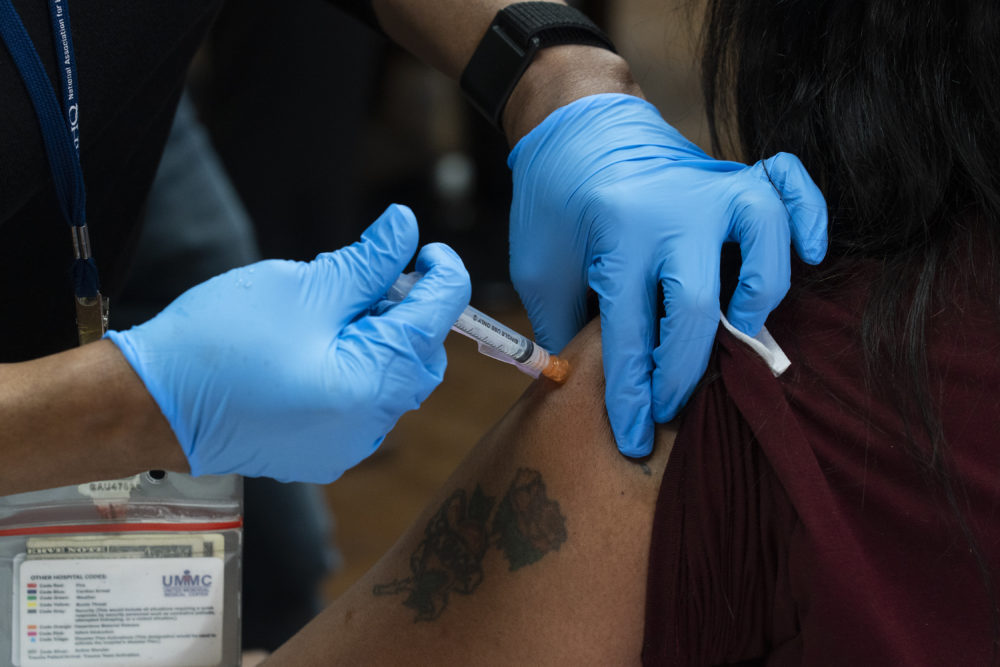
It has been more than 560 days since the Department of Health and Human Services last received federal COVID funding, and its free COVID vaccination program only has enough money to last through the end of 2022.
The Gist: Ever since President Biden declared the pandemic “over”, prospects for the White House’s requested $22B to support the continued pandemic response have diminished. While most hospitals had already given up hope of any additional direct COVID aid coming their way, this bill was the last good chance for the lagging bivalent booster campaign to receive a needed shot in the arm.
A recent Commonwealth Fund study found that if Americans got the new bivalent COVID booster at a rate similar to seasonal flu shots this fall, we could prevent 75K deaths and $44B in medical spending by March 2023—but unfortunately most Americans know little about the boosters, with less than four percent of eligible Americans receiving them so far.
The court ruling comes after the Supreme Court struck down a nearly 30 percent cut to 340B hospital payments from 2018.
October 04, 2022 – A federal judge has ordered HHS to immediately end the almost 30 percent cut in Medicare drug reimbursement to 340B hospitals.
The decision published last week by judge Rudolph Contreras with the US District Court for the District of Columbia rejected HHS’ plan to restore full payment to hospitals participating in the 340B Drug Pricing Program in 2023.
“HHS should not be allowed to continue its unlawful 340B reimbursements for the remainder of the year just because it promises to fix the problem later,” wrote Contreras.
Hospitals participating in the 340B Drug Pricing Program receive outpatient prescription drugs at a discounted price of up to 50 percent since they treat a disproportionate amount of low-income and vulnerable patients. The 340B Program is designed to enable the safety-net providers to stretch their financial resources. Medicare must also reimburse hospitals for administering covered outpatient drugs.
HHS reduced the Medicare drug reimbursement rates for 340B hospitals though in 2018, cutting payments by 28.5 percent in an effort to generate about $1.6 billion in savings. Federal officials reasoned that reimbursing 340B hospitals at the same rate as other hospitals creates an incentive for the hospitals to overprescribe the drugs or prescribe more expensive drugs since they receive covered outpatient drugs at a discounted price.
HHS also argued that 340B hospital reimbursement cuts would lower co-payments for Medicare beneficiaries since the amounts are tied to hospital reimbursement rates.
Hospitals and hospital groups, including the American Hospital Association (AHA) Association of American Medical Colleges (AAMC), and American’s Essential Hospitals, sued the federal government over the reduced reimbursement rates.
The case made it all the way to the Supreme Court where, in a major win for hospitals, judges unanimously ruled that HHS should not have reduced payments to certain hospitals in 2018 and 2019 without surveying hospitals to determine average acquisition costs for drugs. HHS had relied on the average price of the drugs to set lower rates.
However, the Supreme Court did not make judgments on 340B hospital reimbursement cuts for 2020 and later years. Following the Supreme Court’s ruling, HHS announced it would reimburse hospitals for administering 340B-covered drugs the same as non-340B drugs starting Jan. 1, 2023.
Hospital groups again challenged HHS policy, asking the courts to immediately halt the unlawful cuts in 2022.
“The AHA appreciates Judge Contreras’ ruling that the Department of Health and Human Services must immediately stop unlawful reimbursement cuts for 2022 for hospitals participating in the 340B drug pricing program. Halting these cuts will help 340B hospitals provide comprehensive health services to their patients and communities,” said Melinda Hatton, AHA’s general counsel and secretary, regarding the most recent court ruling.
“We continue to urge the Administration to promptly reimburse all the hospitals that were affected by these unlawful cuts in previous years and to ensure the remainder of the hospital field is not penalized for their prior unlawful policy, especially as hospitals and health systems continue to deal with rising costs for supplies, equipment, drugs and labor,” Hatton continued in the public statement.
340B Health’s president and CEO Maureen Testoni also called the court ruling “an important victory for 340B hospitals that have been fighting these unlawful cuts for nearly six years.” 340B health advocates safety-net hospitals participating in the drug pricing program.
“The Centers for Medicare & Medicaid Services (CMS) has the clear responsibility to restore the appropriate payments for 340B drugs immediately, and now a federal court has ordered it to do so without delay,” Testoni said.
HHS has not announced a repayment plan for 340B hospitals. Notably, the court ruling also did not cover the AHA’s motion to include reimbursement cuts from 2020 through 2022 in the case, nor AHA’s motion to repay hospitals for the cuts since 2018 without penalizing other hospitals.
Houston Methodist is reporting an early increase in flu cases, with numbers hitting levels not usually seen until the end of the year.
The hospital recorded 100 cases of influenza A and B in the week ending Sept. 21. A week prior, this figure hit 226.
“We experienced an early uptick in mid-September, which relaxed some last week, but still these are the sorts of numbers we usually see in December, not now,” Wesley Long, MD, PhD, a pathologist and medical director of diagnostic microbiology at Houston Methodist, tweeted Sept. 26.
Texas is the only state in the U.S. — outside of Washington, D.C. — that already has a moderately high rate of flu cases, according to the CDC’s latest weekly flu report published Sept. 23.
The early rise in cases comes amid warnings that this season’s flu season may be severe.
U.S. Senator Patty Murray of Washington is seeking answers from Renton, Wash.-based Providence’s CEO following a Sept. 24 New York Timesreport detailing the system’s alleged debt collection practices.
“According to recent reports, over the past several years, Providence has increasingly extracted payments from low-income patients, even when patients qualified for free or discounted care,” Ms. Murray said in a Sept. 28 letter to CEO Rod Hochman. “The reports allege several disturbing practices, including high-pressure billing conversations at hospital beds when patients are vulnerable, the use of extraordinary collection actions by debt collectors, and patients eligible for free or discounted care being billed for outstanding balances. As a result, patients have gone without food or heat, have seen their credit scores plummet, and have been afraid to seek out further medical care due to the cost—all as a result of practices that potentially violate both state and federal laws.”
Ms. Murray said in the letter she is seeking answers on how many patients Providence has served in recent years who qualified for free or discounted care and how many it referred to debt collection services. She is also seeking information about the system’s billing and debt collection policies, and how much it paid consulting firm McKinsey & Co. for a program designed to increase its revenue. She is seeking answers by Oct. 12.
Washington state’s attorney general filed a lawsuit against Providence in February, alleging that 14 of its hospitals engaged in aggressive tactics to collect payment, failed to ensure discounts for eligible low-income patients, and steered poor patients to debt collectors.
A Providence spokesperson expressed discontent and disagreement with the attorney general’s charges in a statement shared with Becker’s.
“The Providence family of organizations is extremely disappointed that the Office of the Washington State Attorney General has chosen to file inaccurate and unfair charges against us regarding our charity care and financial assistance practices,” the spokesperson said. “Serving every person who comes to us, regardless of ability to pay, is a central tenet of our mission as a not-for-profit organization. We take this responsibility seriously.”
Cross-subsidy economics are increasingly challenged for America’s hospitals. Aging Baby Boomers are moving from commercial insurance to Medicare, decreasing the share of patients with lucrative private coverage, and insurers are increasingly reticent to provide the rate increases providers need to make up for the worsening mix.
At a recent executive retreat, one health system debated the best strategies to increase their capture of commercial volume. Most of the conversation focused on traditional market-based tactics to increase access and awareness in fast-growing, higher income areas of their service region.
For instance, the system’s chief marketing officer was pushing to increase advertising in the rapidly expanding suburbs, and advocated building ambulatory surgery centers in a wealthy area of town with a boom of new home construction.
The chief strategy officer shared a different perspective, supporting an employer-focused strategy. His logic: “In most businesses,the CEO and the janitor have the same benefit plans. If we only focus on the wealthy parts of town, we’re missing a big portion of the workers with good insurance.” He advocated for a new round of direct-to-employer contracting outreach, hoping to steer workers to high-value primary and specialty care solutions.
In reality, any system looking to move commercial share will need to do both—but even the best playbook for building commercial volume is unlikely to close the growing cross-subsidy gap. To maintain profitability in the long term, health systems must reduce costs for managing Medicare patients by delivering lower-cost care in lower-cost settings, with lower-cost staff.
Credit rating downgrades for several health systems were tied to capital expenditures and cash flow issues in recent months.
The following five health system credit rating downgrades occurred since July:
1. Tower Health (West Reading, Pa.) — lowered in September from “B+” to “CCC+” (Fitch Ratings) “The three-notch downgrade to ‘CCC+’ reflects Tower’s ongoing significant financial losses in fiscal 2022 … with an operating loss of $195 million, or a negative 1.8% operating EBITDA margin,” Fitch said. “Tower Health’s unrestricted liquidity position is also rapidly weakening, falling to just $341.5 million (when excluding $27.9 million in Medicare Advance funding), which results in a very weak cash-to-debt ratio of just 19%.”
2. ProMedica (Toledo, Ohio) — lowered in September from “Baa3” to “Ba2” (Moody’s Investors Service) “The downgrade to ‘Ba2’ reflects material cashflow losses this year, which exceeded Moody’s prior expectations, a significant drain of liquidity even with one-time cash infusions, and narrowing headroom to quarterly bank covenants,” Moody’s said. “In addition to severe losses in the nursing home and assisted living business, the provider business will need to reverse the year-to-date cashflow loss following solid margins in fiscal 2021. Both operations will continue to be challenged by high labor costs and related capacity constraints.”
3. Premier Health (Dayton, Ohio) — lowered in September from “A” to “A-” (Fitch Ratings) “The downgrade of [Premier Health’s] revenue bond rating and IDR to ‘A-‘ is driven by multiple years of weak operating cash flow generation … and coronavirus pandemic-related operating challenges that delayed the realization of improvements expected at Fitch’s last review,” the credit rating agency said.
4. MultiCare (Tacoma, Wash.) — lowered in August from “Aa3” to “A1” (Moody’s Investors Service) “The downgrade to A1 and the revision of the outlook to negative reflect a number of pressures which weaken MultiCare’s credit profile, including: an unexpected 24% increase in debt; a material decline in liquidity; very significant operating losses through the first six months of fiscal 2022; a pending acquisition which would initially be dilutive to credit metrics; and an ambitious capital plan which will entail sizable capital expenditures over the next five years,” Moody’s said. “Operations are expected to improve through the second half of fiscal 2022, but nevertheless full year results will remain weak, providing at best thin headroom to MultiCare’s debt service coverage covenant.”
5. Memorial Health System (Marietta, Ohio) — lowered in July from “BB-” to “B+” (Fitch Ratings) “The downgrade of the IDR to ‘B+’ reflects MHS’s weak net leverage profile through Fitch’s forward-looking scenario analysis given stated growth and spending objectives,” Fitch said. “While operating performance has stabilized over the past three years … and reflects cost efficiency strategies and pandemic relief funding, improved cash flow funded higher levels of capital spending in fiscals 2020 and 2021.”
Newport Beach, Calif.-based Hoag Memorial Hospital Presbyterian has received a $106 million donation from the Audrey Steele Burnand estate, The Orange County Reporter reported Sept. 14.
It is the largest donation in the hospital’s history. The estate has donated $134 million to the hospital throughout the years.
The donation will be used for innovation, growth and expansion of the hospital as well as research and improved patient care, according to the report.
“The Steele family’s decades of generosity, continued by the Audrey Steele Burnand estate, have benefited the Orange County community in immeasurable ways,” Flynn Andrizzi, PhD, president of the Hoag Hospital Foundation, said in a statement shared with the publication. “Through this remarkable gift, they once again have demonstrated their compassion for everyone who needs outstanding medical care.”
Hoag broke off a 10-year partnership with Renton, Wash.-based Providence earlier this year to place more focus on the community it serves, according to the publication.
St. Vincent Charity Medical Center in Cleveland will lay off 978 workers when it ends many services in November, according to a notice filed with state regulators.
The hospital, part of Sisters of Charity Health System, is ending inpatient care and most other services in November. After the transition, the facility will offer outpatient behavioral health, urgent care and primary care.
The health system attributed the changes to several factors, including the rise in demand for outpatient care, declining inpatient volume and shifts in the healthcare industry over the last 10 years that have made it challenging to continue operating St. Vincent Charity Medical Center as an acute care hospital.
The changes will result in 978 employees being laid off on Nov. 15, according to the notice filed with state regulators.
“This extremely difficult decision is being made with deep respect and gratitude for our caregivers, and we regret the direct impact this decision will have on those individuals,” reads the layoff notice from the hospital. “Unfortunately, the COVID pandemic, the changing health care landscape, and declining inpatient volumes have led to significant financial challenges that became impossible to overcome.”
The layoffs will affect 446 full-time workers, 264 part-time employees and 268 workers who are called into work as needed, a spokesperson for Sisters of Charity Health System told Becker’s Hospital Review.
St. Louis-based Ascension reported higher expenses in the 12 months ended June 30 and closed out the year with a loss, according to recently released financial documents.
The 144-hospital system reported operating revenue of $27.98 billion in the year ended June 30, up from $27.24 billion a year earlier.
Ascension’s operating expenses climbed to $28.77 billion in the 12 months ended June 30, up from $26.69 billion last year. The increase was attributed to several factors, including higher salaries, wages and benefits due to staffing challenges and increased use of contract and premium labor.
Ascension ended the most recent fiscal year with an operating loss of $879.2 million, compared to an operating income of $676.3 million a year earlier.
After factoring in nonoperating items, Ascension reported a net loss of $1.8 billion for the 12 months ended June 30. A year earlier, the health system posted net income of $5.7 billion.
Ascension is facing many of the same financial pressures as other health systems across the U.S. More than half of hospitals — 53 percent — are projected to have negative margins for the rest of the year.










 HENRY KOTULA