

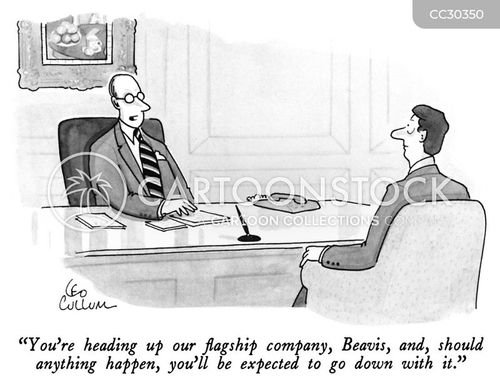
Cartoon – Heading Up the Flagship


SEOUL, SOUTH KOREA – The COVID-19 testing center at H Plus Yangji Hospital in southern Seoul doesn’t look like much from the outside. Resembling a mobile home, the temporary building sits in a parking lot near a loading ramp, propped up on one end by a wooden plank. Its walls are wrapped in red and white, and billboard-like signage proclaims that the hospital was named one of the 100 best in the Republic of Korea.
But inside is a gleaming bank of four booths with transparent plastic walls; rubber gloves embedded through them in a manner similar to a high-grade biosafety lab. When a person walks into a booth, they consult over an intercom with a doctor who remains outside. The doctor can swab their nose and throat using the gloves without ever coming into contact with the patient. The booths maintain negative air pressure, which sucks in any virus-carrying airborne droplets. After the test, a staff member in protective gear disinfects the booth, scrubbing the walls with a squeegee.
Hundreds of similar “walk-in” testing booths located all over the country have been one of the pillars of South Korea’s highly successful strategy to contain COVID-19, helping officials roll out rapid and extensive diagnostic testing.
The nation of 51 million people has also taken a big data approach to contact tracing, using credit card history and location data from cell phone carriers to retrace the movements of infected people. Surveys show most Korean citizens are OK with sacrificing digital privacy to stop an outbreak. At the same time, authorities have pushed an intense—but mostly voluntary—social distancing campaign, leaving most bars, restaurants, and movie theaters free to operate.
The viral scourge is far from over in South Korea—a recent outbreak connected to several nightclubs was reported with 102 cases as of May 12. Despite this, the country’s response could serve as a model for the rest of the world, but achieving this level of speedy success in the face of a pandemic was not easy.
A major factor shaping South Korea’s response was its ability to apply lessons learned during previous outbreaks, especially the country’s MERS coronavirus outbreak in 2015, which resulted in 186 cases and 38 deaths.
In the immediate aftermath, South Korea’s legislature created the legal foundation for a comprehensive strategy for contact tracing—whereby anyone who has interacted with an infected person is traced and placed in quarantine. Amendments explicitly authorized health authorities to request patients’ transaction history from credit card companies and location data from cell phone carriers—and to release the reconstructed movements in the form of anonymous “travel logs” so people could learn the times and places where they might have been exposed.
A huge push with contact tracing and testing managed to corral an early rise in cases that threatened to spiral out of control—hundreds were reported each day, peaking at 909 cases on February 29 with most associated with a religious sect in the city of Daegu. The strategy also managed to snuff out several subsequent coronavirus clusters at churches, computer gaming cafes, and a call center. By April 15, South Korea safely held a national election, in which 29 million people participated. Voters wore masks and gloves; polling centers took everyone’s temperature and separated anyone with a fever. No cases have been traced to the election.
While people in other countries may consider Korea’s data collection a violation of patient privacy, the measures have broad support from the South Korean public. In a March 4 poll led by the Seoul National University Graduate School of Public Health, 78 percent of 1,000 respondents agreed that human rights protections should be eased to strengthen virus containment efforts. Experience with past outbreaks also meant people were quick to stay at home and wear masks in public even before the government began issuing formal guidelines.
Crucially, South Korea had built up its diagnostic testing capabilities after the 2015 MERS outbreak. Unlike the U.S., which relied on testing kits developed by its Centers for Disease Control and Prevention (CDC) in Atlanta, South Korea enlisted the private sector. At a meeting in late January, officials urged local biotech companies to develop testing kits. Within a month, the nation was running more than 10,000 tests daily.
A recent boom in South Korea’s biotech scene, long predating the pandemic, helped with the ramp-up, says Thomas Shin, the CEO of TCM Biosciences, a company in Pangyo, south of Seoul. “During the last five years, there were many new bioscience companies,” says Shin. TCM was one of the companies that heeded the government’s call to develop kits, and it received approval from the country’s Ministry of Food and Drug Safety in April.
Shin says the decision wasn’t necessarily an easy one from a business perspective—new diseases are difficult to forecast, and if they’re snuffed out quickly, it can be hard to recoup the costs of initial development. But with South Korea’s close connections to the outbreak’s epicenter in China, Shin says TCM could see a similar situation developing rapidly on the home front—and projected a business opportunity in the global market. So far, the company has shipped kits worth roughly $2.6 million.
On April 30, the nation reported just four cases, all of them travelers arriving from abroad, marking the first day with zero local infections in two and a half months. As case numbers have continued to fall, the government has cautiously relaxed its guidelines, while signaling a shift to “everyday quarantine” measures, such as wearing masks and temperature checks at schools.
People’s attitudes have also relaxed, leading some officials to worry about complacency and a second wave of infections. The nightclub outbreak may heighten those fears, but the government has already responded aggressively, tracing and testing thousands of people in a matter of days.
Though testing companies were quick to respond to the demand, rolling out the kits presented difficulties. Through February, demand for tests was still outpacing supply, and there were only enough kits to distribute to a select number of hospitals.
Furthermore, hospitals struggled to administer the tests to potentially contagious patients safely and quickly—testing areas needed to be sanitized after each patient, long queues meant the virus could spread while people waited in line, and health workers were running low on protective gear. At Yangji Hospital, this also led to exhausted staff, says hospital director Sang Il Kim.
“Even when we did have kits, the waiting times were just too long for everybody to get tested, so they would have to go to other hospitals,” adds Yoona Chung, a doctor in the hospital’s surgery department.
According to Yangji’s data, the hospital was conducting roughly 10 tests a day by late February—but many more were being turned away due to the wait. Other hospitals in Korea started experimenting with drive-through testing centers, where patients could get tested without leaving their cars. But Yangji Hospital is near a subway station in a crowded neighborhood in southern Seoul; for many of its patients, cars aren’t an option.
So, Kim devised the walk-in booths, which went into pilot operation on March 10. Within days, the number of tests administered in a day had tripled. By the end of the month, the hospital could handle more than 90 patients a day. Hospitals elsewhere in Korea and around the world quickly adopted their own variations on the concept. A hospital in Busan had a similar idea independently but others have had help from Kim.
At Massachusetts General Hospital in Boston, hospital leadership saw news reports on Yangji’s booths and asked an in-house team to create a version, hoping to better protect their health workers and conserve precious protective gear. A bit of Googling and two phone calls later, hospital staff connected her with Kim via email.
“I remember it was 10 p.m., we’re all frustrated, up all night, trying to figure out how to make this work,” says Nour Al-Sultan, a business strategy analyst at the MGH Springboard Studio, the team of researchers and designers tasked with reverse engineering the booths. “I go to bed, and I wake up the next morning, and Dr. Kim is the one who answers all of my questions.”
MGH has now installed about eight booths at three hospitals in the Boston region. According to preliminary data, they’ve reduced the need for protective gowns, which are in short supply, by 96 percent, saving more than 500 gowns a week. The MGH team is now working with colleagues in Uganda to help them develop their own versions of the booths.
“The fact that he took the time to provide me with such generous insights is just a testament to this spirit of global collaboration against the pandemic,” Al-Sultan says.


It’s amazing how many pandemic books there are, and how thoroughly the idea of a global pandemic had crept into our popular culture well before the current situation. My daughter and I watched the Tom Hanks movie Inferno over the weekend, mostly because we wanted to gaze at the city of Florence. It’s not a great movie, but it is visually stunning in several ways. The plot is not something I gave much attention to when I first saw the film a couple of years ago: a rich Ted-talking eccentric decides to kill off most of the people of the world to save the Earth from over-population and the ravages 16 billion people would mean for other species and the health of the biosphere.
When I first saw the film in 2016, I regarded the plotline (will the vial of lethal germs be released or not?) as nothing but the usual “James Bond” setup for whatever else happened in the film. This time I watched it with greater alertness.
The fact is, of course, that COVID-19 is a serious global nuisance that has disrupted the lives of all Americans in a way that almost nobody could have predicted (well, there is Bill Gates, of course), but it is not the Black Plague, which swept away somewhere between one-fourth and one-half of all Europeans between 1348-1352, or the Yellow Fever epidemic in Philadelphia, which killed one in 10 inhabitants of America’s largest city in 1793, or the Spanish Flu, which killed somewhere between 57 and 100 million people worldwide in 1918.
If the coronavirus eventually kills 5 million people worldwide, and a couple of hundred thousand Americans before the vaccines gallop in to save the day a year or 18 months hence, it will have been a comparatively minor event in the history of global pandemics. The moment when it appeared that the hospital and medical infrastructure of New York might collapse has now passed. And though the death toll continues to climb towards perhaps 150,000 American dead by Aug. 1, 2020, the national dread that created a sustained will-we-survive and how-will-we-cope conversation in virtually every household in the United States is mostly over. The question now is when and how (and if) the country can return to what the late John McCain called regular order.
In the past two months I have read more than a dozen pandemic books, from Daniel Defoe’s A Journal of the Plague Year (1721), to Stephen King’s endless The Stand (1978). They are all interesting. If you outline the takeaway insights from these books, written over the span of many hundreds of years, they all make essentially the same points:
https://www.governing.com/context/How-Jefferson-and-Franklin-Helped-End-Smallpox-in-America.html

The great scourge of Thomas Jefferson’s era (1743-1826) was smallpox. Historians have estimated that perhaps as many as 2 billion people have died of smallpox in recorded history. That’s a pretty arbitrary figure, but it certainly indicates how serious the problem was. Modern epidemiology has not only eliminated smallpox as a threat to civilization but has been engaged in a protracted debate about whether to snuff it out altogether once and for all, or to keep a tiny bit of it alive in a handful of tightly secured vials in case we need to study it in the face of other disease epidemics. It was officially declared eradicated in 1980.
For most of human history, you either got it or you didn’t and then you either survived it or you didn’t. George Washington was infected by smallpox in Barbados in 1751. He survived, and though he was slightly disfigured, he was thereafter immune to the disease. It is possible that this early brush with smallpox saved the American Revolution 20 years later. In 18th-century Europe, 400,000 people died annually of smallpox.
By the time Jefferson was born in 1743, there was an experimental inoculation procedure, but it was quite dangerous and therefore highly controversial. The idea was to give healthy individuals a very tiny amount of actual smallpox under quarantine and very carefully controlled conditions and simply hope that the person’s immune system would be able to fight it off. Survival would immunize that individual for life. The procedure required many weeks of quarantine, fasting, puking, and rest, followed by a very light diet through convalescence. John Adams wrote a fascinating account of his own inoculation in 1764. He was 28 years old.
Young Thomas Jefferson’s first journey out of his native Virginia was to Philadelphia in 1766 to be inoculated. He would have undertaken the procedure in Williamsburg or Norfolk had it been available. He made the long journey (eight to 10 days in either direction) because he wanted to protect himself from the disease and study the procedure at the same time for possible incorporation into his own community at Monticello. With his characteristic taciturnity about personal things, Jefferson did not leave us a detailed account of the medical procedure, which required prolonged isolation, personal discipline and a great deal of patience.
Inoculation was first introduced in Europe 40 years earlier. Lady Mary Wortley Montague (1689-1762) had spent time in Turkey as the wife of the British ambassador to the Ottoman Empire. There she had witnessed inoculation in the zenanas (segregated women’s quarters) she visited. She called the procedure “engrafting,” which she described in an important “Letter to a Friend” on April 1, 1717. Mrs. Montagu’s brother had died of smallpox four years earlier and she herself had survived a bout of smallpox in 1715, but with her famous beauty disfigured. She had her five-year-old son Edward inoculated in the British Embassy in Turkey.

When she returned with her family to Britain, she became an outspoken advocate for the procedure. The English medical establishment decried inoculation and denounced Mary Montagu. Still, in 1721 when a smallpox epidemic broke out in England, she had her daughter inoculated in London. This was the first recorded use of the procedure in England. The medical establishment was slow to accept the efficacy of inoculation, which it regarded as an “oriental folk remedy.” It seemed counter-intuitive and just wrong-headed to give a healthy person a dose of smallpox to try to prevent her or him from getting it by accident.
New England Puritan minister Cotton Mather (1663-1728) first promoted inoculation in America. In 1706, Reverend Mather purchased a black slave he named Onesimus (from the Epistle to Philemon). Ten years later, Onesimus told Mather he had been made immune to smallpox in Africa by having the pus of an infected person rubbed on an open wound on his arm. This is known as the variolation method. Mather interrogated other slaves to learn more, confirmed the story, and became an advocate for inoculation. He was subjected to the usual criticism and pushback. An explosive device was thrown through the window of his home. In this instance, racism joined fear as a means of discrediting the medical procedure. What possible wisdom could come from a slave?
The smallpox plague that disturbed Britain in 1721 found its way that same year to Boston. Now Mather and Dr. Zabdiel Boylston, the only physician in Boston who supported the technique, offered their inoculation services to anyone who would trust them. Of the 242 people Boylston inoculated, only six died, or one in 40. Of those who did not undergo the procedure, one in seven died.
America’s greatest exemplar of the Enlightenment, Benjamin Franklin, became a passionate advocate of the procedure after his first son Franky died of smallpox on Nov. 21, 1736, at the age of four. Because Franklin was known to be a friend to inoculation, rumors spread in Philadelphia that Franky had died from the procedure. To set the record straight, the grieving father wrote an article in the Pennsylvania Gazette on Dec. 30, 1736: He had “intended to get [Francis] inoculated as soon as he should have recovered sufficient strength from a flux with which he had been long afflicted.” Franklin assured the public that his son “received the distemper in the common way of infection.”
In 1774, Franklin, who was an indefatigable creator of associations, societies, clubs and public institutions, including volunteer fire departments and lending libraries, established the Society for Inoculating the Poor Gratis to help the poor people of Philadelphia have access to inoculation. In his famous autobiography, Franklin wrote: “In 1736 I lost one of my sons, a fine boy of four years old, by the smallpox taken in the common way. I long regretted bitterly and still regret that I had not given it to him by inoculation. This I mention for the sake of the parents who omit that operation, on the supposition that they should never forgive themselves if a child died under it.”
As a young man, the future English physician Edward Jenner (1749-1823) overheard an English milkmaid say, “I shall never have smallpox for I have had cowpox. I shall never have an ugly pockmarked face.” Many years later, remembering the incident, Jenner, now a doctor, interrogated other milkmaids and then experienced one of the most important “eureka” moments in history. Without understanding how germs work, with no knowledge of anything called a virus, Dr. Jenner realized that cowpox (also known as kinepox) must be closely related to smallpox, and that surviving it seemed to make individuals immune to the more deadly disease. He reckoned that cowpox and smallpox must share some essential epidemiological element and since cowpox was neither lethal nor usually disfiguring, careful use of cowpox material would represent a superior protection against smallpox than variolation, which was a more dangerous procedure.
On May 14, 1796, Jenner inoculated an eight-year-old boy named James Phipps with kinepox pus. Phipps developed mild fever and discomfort. Ten days later he felt fine. Two months after that, Dr. Jenner inoculated the boy again, but this time with serum from a fresh smallpox sore. No disease developed. The smallpox vaccine had been born. Our term “vaccination” dates from this episode. Vaccination comes from the Latin word for cow, “vacca.” Jenner called the cowpox serum “vaccinia.” The terminology reminds us that all western vaccination stems from this moment in 1796.
No good deed goes unpunished, apparently, not even one that changes the history of the planet. In Britain, Edward Jenner was subjected to the usual harassment and ridicule. The paper he submitted to the Royal Society of England was rejected by none other than Sir Joseph Banks, one of Britain’s premier naturalists, botanists, and patrons of science. It took many years and the vaccination experiments of other physicians and scientists before Jenner’s work was vindicated.
Eventually, Jenner received worldwide recognition for his discovery. Devoted like Jefferson to the philanthropic principles of the Enlightenment, Dr. Jenner not only made no effort to enrich himself but devoted so much of his time and energy to promoting vaccination that he endured periods of real poverty. Finally, in 1802, the British Parliament voted him a reward of £10,000. Five years later he received £20,000 more from Parliament.
The true vaccine found its way to America thanks to Dr. John Haygarth of Bath. He sent some of Jenner’s material to Benjamin Waterhouse, a professor of physics at Harvard University. Waterhouse, in turn sent serum and reports of the vaccine’s efficacy to Thomas Jefferson, now the third president of the United States.

Dr. Edward Jenner discovered the true smallpox vaccine in 1796.
In the new world, inoculation had a very rough reception. When John Dalgleish and Archibald Campbell began inoculating individuals in Norfolk, Virginia, an angry mob burned down Campbell’s house. Similar incidents occurred in Salem and Marblehead, Mass. In Charleston, S.C., an inoculation control law of 1738 imposed a fine of £500 on anyone providing or receiving inoculation within two miles of the city. A similar law was passed in New York City in 1747.
The measures in New England were so draconian that Benjamin Waterhouse noted the paradox: “New England, the most democratical region on the face of the earth voluntarily submitted to more restrictions and abridgements of liberty, to secure themselves against that terrific scourge, than any absolute monarch could have enforced.” (This, strangely prescient, anticipates the current debate about liberty versus public health). It was in the middle colonies — Maryland, Pennsylvania, New Jersey — that inoculation was most tolerated in the second half of the 18th century. That’s why Jefferson made the long journey to Philadelphia to be inoculated in 1766.
Jefferson first became aware of the discovery of a true smallpox vaccine from the newspapers he read in Philadelphia and the new capitol in Washington, D.C. Then, on Dec. 1, 1800, just after Jefferson’s election to the presidency, Benjamin Waterhouse sent him his pamphlet on the vaccine with a lovely cover letter saying that he regarded Jefferson as “one of our most distinguished patriots and philosophers.” Jefferson responded immediately, thanking Waterhouse for the publication and declaring, with his usual grace, that “every friend of humanity must look with pleasure on this discovery, by which one evil the [more] is withdrawn from the condition of man: and contemplating the possibility that future improvements & discoveries, may still more & more lessen the catalogue of evils. in this line of proceeding you deserve well of your [country?] and I pray you to accept my portion of the tribute due you.”
The following June, Waterhouse sent Jefferson a long letter explaining how the vaccine must be administered, how the serum could be preserved over time, and how much the controversial procedure needed the public support of a man of Jefferson’s stature in the “republic of letters.” President Jefferson became known as a defender and promoter of vaccination. In fact, he even arranged for his protégé Meriwether Lewis to carry some of the serum with him up the Missouri River in 1804-05, instructing him to “carry with you some matter of the kine pox, inform those of them with whom you may be, of its efficacy as a preservative from the small pox; and instruct & encourage them in the use of it. This may be especially done wherever you may winter.” Unfortunately, by the time the Lewis and Clark Expedition reached their winter encampment in today’s North Dakota, the serum had become inert. Thus Jefferson’s philanthropic initiative to vaccinate the Native Americans of the American West was stillborn.
Then, on May 14, 1806, now in his second term, Jefferson wrote perhaps the greatest presidential fan letter of all time. He took time from his duties as president to write the following letter to Edward Jenner. I quote it in its entirety:
SIR,— I have received a copy of the evidence at large respecting the discovery of the vaccine inoculation which you have been pleased to send me, and for which I return you my thanks. Having been among the early converts, in this part of the globe, to its efficiency, I took an early part in recommending it to my countrymen. I avail myself of this occasion of rendering you a portion of the tribute of gratitude due to you from the whole human family. Medicine has never before produced any single improvement of such utility. Harvey’s discovery of the circulation of the blood was a beautiful addition to our knowledge of the animal economy, but on a review of the practice of medicine before and since that epoch, I do not see any great amelioration which has been derived from that discovery. You have erased from the calendar of human afflictions one of its greatest. Yours is the comfortable reflection that mankind can never forget that you have lived. Future nations will know by history only that the loathsome small-pox has existed and by you has been extirpated. Accept my fervent wishes for your health and happiness and assurances of the greatest respect and consideration.
Who would not have wished to receive this magnificent, selfless, public-spirited, and enlightened letter? Unfortunately, we do not know how or even if Dr. Jenner responded. Except in medical circles, Edward Jenner has been largely forgotten.

 HENRY KOTULA