This Legal Attack on the ACA Could Be the Big One

This Legal Attack on the ACA Could Be the Big One

The flag-draped casket of Justice Ruth Bader Ginsburg lies in repose under the Portico at the top of the front steps of the US Supreme Court. Ginsburg died at 87 on September 18 after serving on the high court for 27 years. 

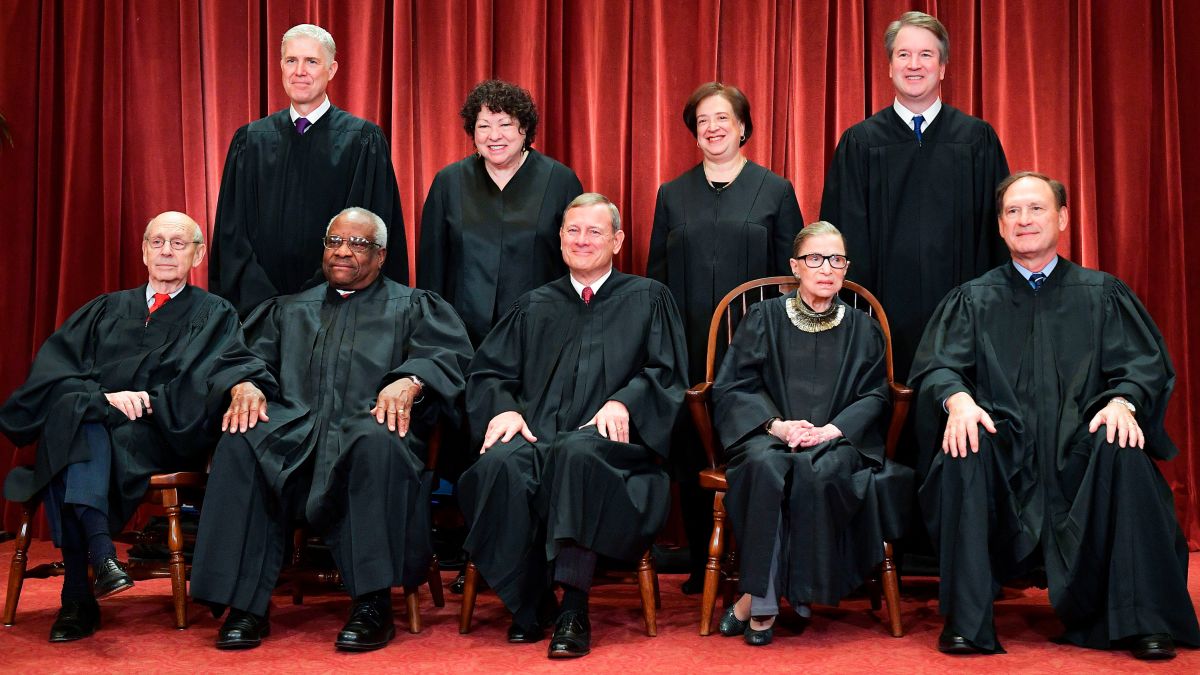
When news broke of Justice Ruth Bader Ginsburg’s death on September 18, the outpouring of grief and gratitude for the accomplishments of the feminist icon was quickly followed by speculation over how her passing will affect the legal challenge to the Affordable Care Act (ACA) now before the US Supreme Court.

The landmark health law survived high court rulings in 2012 and again in 2015. In each case, Chief Justice John Roberts voted with the court’s liberal bloc, including Ginsburg, to uphold the ACA. President Donald Trump has nominated conservative Judge Amy Coney Barrett of the Seventh Circuit of the US Court of Appeals to fill Ginsburg’s seat. Because oral arguments for California v. Texas are set for one week after Election Day, supporters of the law are uneasy.

“If the suit had a trivial chance of success yesterday, it has a new lease on life,” University of Michigan law professor Nicholas Bagley told Amy Goldstein in the Washington Post after learning of Ginsburg’s death. “The ACA has become part of the basic plumbing of the US health care system. Ripping it out at this point would create enormous problems.”

If the ACA is overturned, the consequences could be severe. At this point, the nation remains mired in the coronavirus pandemic, which has metastasized into one of the greatest public health crises in a century. Last week, the US reached the horrific milestones of more than 7 million people infected and 200,000 dead from COVID-19. ACA protections for people with preexisting conditions would disappear if the health law is struck down, and more than 12 million adults who have gained health coverage through the ACA’s Medicaid expansion could lose it. More than 9 million others would lose access to subsidized premiums for private health insurance.

Still, the worst-case scenario is just one of many. Here is a review of the lawsuit, what’s at stake, and the potential outcomes.

Implications of Eliminating the Individual Mandate

California v. Texas originated from a consortium of Republican state attorneys general led by Texas. A California-led coalition of 20 states and Washington, DC, is defending the ACA. The Texas coalition argues that the ACA is unconstitutional in its entirety because Congress in 2017 zeroed out one provision of the lengthy law, the individual mandate. If that part of the ACA is invalid, they argue, then the rest is too.

Many legal experts find this position unpersuasive. The arguments “have been roundly criticized by conservative legal scholars, the Wall Street Journal editorial board, the National Review editorial board, health care stakeholders, and some Republican members of Congress and state officials,” ACA expert Katie Keith, JD, MPH, wrote on the Health Affairs Blog. The Supreme Court is scheduled to hear oral arguments in the case on November 10, one week after the election.

Threats to the Vulnerable

Thanks to the 10-year-old ACA, millions of Americans have gained health coverage. This has proved to be essential during the global pandemic. But if the health law is struck down, about 21 million people who buy health insurance through the ACA exchanges or who gained coverage through Medicaid expansion would be at serious risk of becoming uninsured.

California enthusiastically leaned into the ACA from the start and saw the biggest decline in uninsured residents — 3.7 million — of any state. As the California uninsured rate fell, racial disparities in coverage were also reduced. By 2016, the ACA had produced historic declines in racial disparities in health coverage rates for Californians. (Learn more about the impact of the ACA in California with this collection of resources.)

Nationwide, nearly 133 million people with preexisting conditions could be denied coverage or be required to pay more for a health insurance policy if the ACA is eliminated.Contracting the [coronavirus] is the ultimate preexisting condition,” Andy Slavitt, former administrator of the Centers for Medicare & Medicaid Services under President Barack Obama, and Bagley wrote in the New York Times. “The disease can bring with it mysterious complications and affect virtually every organ system, the immune system, and even the limbs. Young, otherwise healthy people may find themselves uninsurable if the Affordable Care Act is struck down.”

A lawsuit that once seemed like a long shot now has a much more reasonable chance at success — and that means 20 million people’s health coverage really could be in the balance.

—Sam Baker, Axios

Also at risk are essential health benefits that the ACA requires all health plans to cover, including maternity care, mental health services, and substance use disorder treatment. If the law is overturned, they could disappear from insurance plans.

“Other popular provisions hang in the balance, including those that guarantee preventive care with no out-of-pocket payments; end lifetime caps; allow kids to stay on their parents’ insurance through age 26; and make vaccines free to patients. Even some key improvements to Medicare — including a reduction in prescription drug costs for beneficiaries — would be gone,” Slavitt and Bagley wrote.

The ACA’s impacts reach far beyond health care consumers. “Insurance companies, drug companies, hospitals, and doctors have all changed the way they do business because of incentives and penalties in the health law,” Julie Rovner wrote in Kaiser Health News. “If it’s struck down, many of the ‘rules of the road’ would literally be wiped away, including billing and payment mechanisms.”

Supreme Court Scenarios

If the Republican Senate votes to confirm Barrett before the oral arguments for California v. Texas, the ACA faces a tougher battle, though it could be narrowly upheld. Although Barrett has not participated in any cases regarding the ACA on the Seventh Circuit, “her academic writing and public action offer glimpses into her views” opposing the health law, Goldstein and Alice Crites reported in the Washington Post.

If Barrett misses the oral arguments, she will not participate in the case. The Supreme Court could choose to postpone the arguments or proceed with eight justices, which is “far from unprecedented,” Keith wrote. Should that result in a 4-4 ruling, the lower court’s decision would stand, and the case would be remanded to a federal district court judge to decide which other provisions of the law must fall along with the individual mandate. Other provisions on the chopping block “could include the law’s rules banning insurers from denying people coverage or charging them higher premiums because of their medical history,” Dylan Scott wrote in Vox. Litigation could continue for years, during which the ACA would remain the law of the land, according to Keith.

This is not an exhaustive list of potential outcomes. For example, an eight-judge court could narrowly rule in favor of the ACA.

As Sam Baker wrote in Axios, “A lawsuit that once seemed like a long shot now has a much more reasonable chance at success — and that means 20 million people’s health coverage really could be in the balance.”


‘People should worry:’ ACA in limbo after Bader Ginsburg’s passing

https://www.healthcaredive.com/news/people-should-worry-aca-in-limbo-after-bader-ginsburgs-passing/585545/?utm_source=Sailthru&utm_medium=email&utm_campaign=Issue:%202020-09-22%20Healthcare%20Dive%20%5Bissue:29794%5D&utm_term=Healthcare%20Dive

In less than two months, the Supreme Court is set to hear the case that could overturn the Affordable Care Act — without Ruth Bader Ginsburg on the bench, fanning anxieties the landmark law is in greater jeopardy due to her passing. 

“People should worry,” Nicholas Bagley, a health law expert and professor at the University of Michigan, said.

The death of the liberal justice on Friday at the age of 87 means that of the nine justices, there are now only three appointed by Democratic presidents instead of four.

Assuming the liberal wing was set to uphold the ACA, with Bader Ginsburg they would have only needed to pick up one more conservative justice to vote in favor of preserving the law. Chief Justice John Roberts has been a swing vote in several cases involving the law. Roberts’ 2012 vote saved the law from a fatal blow in a 5-4 decision when he deemed the individual mandate could be considered a tax. 

Without Bader Ginsburg, they’ll now need to sway two — raising concerns about whether that’s possible. 

“This opens it wide up and I really do think the law could be at risk,” Katie Keith, another legal expert who has followed the case closely, agreed.

The landmark but politically polarizing legislation ushered in health coverage gains and basic protections for millions under President Barack Obama (who appointed two of the three remaining liberal justices). The law’s latest time at the Supreme Court comes after a group of red states argued the law was moot after Republicans zeroed out a key part of it — a tax penalty for those that did not get insured as was required in the law.

However, a split decision may be welcome by ACA proponents.

If the the liberal wing is only able to sway one conservative justice, resulting in a 4-4 split case, it will buy more time for the law and its defenders, a set of blue states lead by California’s Attorney General Xavier Becerra. 

In that instance, the case would be punted all the way back down to Judge Reed O’Connor. The Fifth Circuit, which oversaw the appeal following a decision by O’Connor, ruled the individual mandate was unconstitutional but did not weigh in on whether the rest of the ACA could stand without the mandate. It sent that question back to O’Connor, and that’s where the case would land again, before O’Connor, in the event the Supreme Court punts.

That outcome buys more time, plus another opportunity to appeal and for the case to again work its way back before the Supreme Court.

But one legal expert said based on cases from this past term there is reason to be hopeful that two conservative justices could be swayed to leave the remainder of the ACA intact even if the mandate is ruled unconstitutional.

Legal experts point to cases from the most recent term in which Brett Kavanaugh and Roberts — both appointed by Republicans — weighed in on severability in a way viewed as favorable for the outcome of the ACA case. 

“I’m pretty hopeful,” Tim Jost, emeritus professor at Washington and Lee University School of Law, said.

Severability is an important question in the challenge to the ACA. The crux of the lawsuit centers on the argument that the individual mandate is so essential and intertwined into the fabric of the ACA that if the mandate is deemed unconstitutional than the entirety of the ACA must fall.

In their legal challenge, the red states and two individual plaintiffs argued that the individual mandate cannot be severed from the rest of the law, so the entire law should be overturned. That’s why ACA case watchers have tried to read the tea leaves by reviewing how justices have weighed in on severability in earlier cases.

Kavanaugh seemed emphatic about his belief that unconstitutional pieces of a larger law should not spell the demise for the entire law.

In a case decided this summer, political organizations were seeking to make robocalls to cell phones. However, a law, barred robocalls to Americans’ cellphones but was later amended by Congress to include an exception for the collection of debt. The plaintiffs argued this was a violation of the First Amendment, favoring debt-collection speech over political speech. The plaintiffs wanted the entirety of the robocall law overturned, not just the exception allowing robocalls for debt collection.

Kavanaugh wrote the 6-3 opinion, finding the exception for debt-collection unconstitutional, but ruling that the remainder of the law can stand. 

In his opinion, Kavanaugh wrote that the court’s preference has been to “salvage rather than destroy” the rest of the law in the event a part is deemed unconstitutional.

“The Court’s precedents reflect a decisive preference for surgical severance rather than wholesale destruction, even in the absence of a severability clause,” Kavanaugh wrote in his opinion in the case, Barr v. Association of Political Consultants.

And Roberts showed similar favor for surgically precise decisions when it comes to severability.  “We think it clear that Congress would prefer that we use a scalpel rather than a bulldozer,” he wrote in a separate 5-4 decision from this latest term regarding a challenge to the Consumer Financial Protection Bureau.


Supreme Court to hear ACA arguments after November election

https://www.healthcaredive.com/news/supreme-court-will-hear-aca-case-after-november-election/583804/?utm_source=Sailthru&utm_medium=email&utm_campaign=Issue:%202020-08-20%20Healthcare%20Dive%20%5Bissue:29204%5D&utm_term=Healthcare%20Dive

Dive Brief:

  • The Supreme Court will hear oral arguments in the Republican-led case seeking to overturn the Affordable Care Act on November 10, exactly one week after the presidential election, according to the court’s online docket on Wednesday.
  • A hearing post-election was the likeliest choice from the outset. The justices’ October schedule did not include the highly anticipated case, leaving just one day for arguments to potentially be heard before the election.
  • Still, Wednesday’s news does not mean the Supreme Court will make a ruling on the case in 2020. Legal experts say a final ruling is still expected next year.


Dive Insight:

The ACA court case has loomed large as the nation has been ravaged by the novel coronavirus pandemic that has sickened millions, killed thousands and severed millions of people from their employer-sponsored health insurance coverage. 

Alternative coverage options introduced or strengthened by the ACA, such as expanded Medicaid coverage or marketplace plans, have served as an important safety net for those who have lost coverage as a result of the pandemic. 

Onlookers have long been waiting for the court to set a date for final arguments in the case against the ACA. Wednesday’s updated docket means the country is one step closer to knowing whether the ACA and its popular provisions, such as protections for pre-existing conditions, will remain the law of the land. 

Waiting to schedule oral arguments until after the election may have been intentional, legal experts say.

The highly unusual decision by the Trump administration’s DOJ to refuse to defend the law is likely to change with the election result, if former Vice President Joe Biden, the Democratic presidential nominee and a staunch ACA backer, wins the White House.

Republicans for years have been trying to dismantle President Barack Obama’s landmark health law, including by eliminating the financial penalty for not holding insurance.

The central argument in the case, brought primarily by a group of red states, is whether the entire law is invalid because it no longer contains the so-called individual mandate. The red states have argued that because Congress lowered the penalty to zero that the individual mandate can no longer be considered a tax and therefore renders the entire law unconstitutional.

Lower courts have ruled in favor of the red state plaintiffs, though the appeals court did not weigh in on whether the rest of the law could be severed from the mandate.


Short-term ‘junk’ plans widely discriminate against those with pre-existing conditions, House probe finds

https://www.healthcaredive.com/news/short-term-junk-plans-widely-discriminate-against-those-with-pre-existing/580556/

U.S. Rep. Castor's Statement Following a Federal Judge's Ruling on ...

Dive Brief:

  • A yearlong probe by the House Committee on Energy and Commerce into bare-bones insurance plans encouraged by the Trump administration found widespread discrimination against people with pre-existing conditions, even as a growing number are enrolled.
  • Top congressional Democrats investigated eight insurers selling short-term, limited duration plans, finding they all denied medical care claims if they found a consumer had a pre-existing condition. Some refused to pay for medical claims for no discernable reason, processing them only after consumers sued or complained to state regulators. Most rescinded coverage if they determined a member had a pre-existing condition or developed one later.
  • An HHS spokesperson defended the coverage as an affordable option to pricier Affordable Care Act plans, telling Healthcare Dive, “We’ve been abundantly clear that these plans aren’t for everyone.” America’s Health Insurance Plans made similar points, with spokesperson David Allen noting: “For Americans with pre-existing conditions, they may not be protected at all.”


Dive Insight:

The investigation looked at 14 companies that sell or market the plans, including eight insurers such as market giants Anthem and UnitedHealth Group, and six brokers.

It found insurers frequently turned down consumers with pre-existing conditions and discriminated against women, turning down applicants who were pregnant or planning to become pregnant and charging women more than men for the same coverage.

The plans had significant coverage limitations. Some excluded routine care like basic preventive visits and pelvic exams. Some plans had hard coverage cutoffs that left consumers with massive medical bills.

In one case, a consumer was billed a whopping $280,000 and lost coverage after being treated for an infection. The insurer said the patient previously had gotten an ultrasound that was “suspicious for deep venous thrombosis.”

AHIP spokesman Allen said it is not surprising given the plans are not intended to replace comprehensive coverage.

“They often do not cover the care and treatments that patients need throughout the year — preventive care, prescription drugs, mental health care or treatments for chronic health conditions — or if they do, they may limit or cap the benefits,” he acknowledged.

On average, short-term plans spend less than half of premium dollars collected from consumers on medical care: only 48%, the investigation found. That’s in stark contrast to plans in the ACA’s individual market, which are required to shell out at least 80% of all premium dollars on claims and benefits.

Short-term insurance represents a significant and growing share of the individual healthcare market. Roughly 3 million consumers bought the plans in 2019, a 27% growth from 2018, the investigation launched in March last year found.

The growth came after the Trump administration, in a controversial move, extended the maximum duration of the plans. The skimpy coverage, which isn’t required to cover the 10 essential benefits under the ACA, was originally designed as cheap safety net coverage for three months.

But in August 2018, HHS expanded the plans to 12 months, with a three year renewal period, and opened them up to all consumers, not just for those who can’t afford other coverage.

ACA supporters and patient advocates blasted the move, which sparked an ongoing legal challenge from safety net providers. Reports of consumers purchasing the coverage, believing it was comprehensive, then being shocked by balance bills prompted the House investigation.

The report also found brokers are paid up to 10 times more compensation for peddling short-term plans than ACA-compliant coverage. The average commission rate for short-term plans compared to ACA plans was 23% versus 2%, respectively.

Currently, 24 states ban or restrict the sale of short-term plans. Some states, including California, Massachusetts, New Jersey and New York, prohibit their sale entirely, while others like Colorado, Connecticut, New Mexico and Rhode Island have such strict regulations that no plans are sold.

Democratic leaders unveiled a bill on Wednesday to bolster the ACA and rescind the administration’s expansion of the plans and expand subsidies, allowing more people to qualify for coverage.

The effort has zero chance of moving this year with Republicans in control of the Senate, but both it and the probe are likely to play into the looming 2020 presidential and congressional elections.

“The heavy-handed tactics uncovered in this investigation demonstrate why Congress must reverse the Trump Administration’s expansion of these junk plans,” E&C Chairman Frank Pallone, D-N.J., Health Subcommittee Chairwoman Anna Eshoo, D-Calif., and Oversight and Investigations Subcommittee Chair Diana DeGette, D-Colo., wrote in a joint statement. “It also shows how dangerous a post-ACA world would be if Republican Attorneys General and the Trump Administration are successful in striking down the law and its protections.”

That lawsuit, led by 18 red states, argues the ACA, which expanded insurance to some 20 million people, is unconstitutional because a tax bill passed in 2017 zeroed out the penalty for its individual mandate. It’s currently pending before the U.S. Supreme Court.

President Donald Trump and his health officials have repeatedly promised people with pre-existing conditions will be protected if the ACA is struck down, but neither the administration nor Republicans in Congress have said specifically how.


White House set to ask Supreme Court this week to overturn ACA: 4 things to know

https://www.beckershospitalreview.com/hospital-management-administration/white-house-to-ask-supreme-court-this-week-to-overturn-aca-4-things-to-know.html?utm_medium=email

New rules for Supreme Court justices as they plan their first-ever ...

The White House is expected to file legal briefs with the Supreme Court this week that will ask the justices to end the ACA, according to The New York Times

Four things to know:

1. The filings are in relation to Texas v. United States, the latest legal challenge to the ACA. Arguments around the case center on whether the ACA’s individual mandate was rendered unconstitutional when the penalty associated with it was erased by the 2017 tax law. Whether that decision invalidates the entire law or only certain parts of it is at question.

2. The White House is set to ask the Supreme Court June 25 to invalidate the law. The filings come at a time when the COVID-19 pandemic has caused millions of Americans to lose their jobs and their employer-based health coverage.

3. Republicans have said they want to “repeal and replace” the ACA, but there is no agreed upon alternative, according to The New York Times. Party strategists told the publication that Republicans will be in a tricky spot if they try to overturn the ACA ahead of the November elections and amid a pandemic. 

4. In addition to the filings, Democratic House speaker Nancy Pelosi is expected to reveal a bill this week that would boost the ACA. Proposals include more subsidies for healthcare premiums, expanding Medicaid coverage for uninsured pregnant women and offering states incentives to expand Medicaid.

Read the full report here


Insurers are refunding surplus revenues now, rather than later

https://www.healthcarefinancenews.com/news/insurers-are-refunding-surplus-revenues-now-rather-later?mkt_tok=eyJpIjoiTldabE9UTTFZbU16TkRneSIsInQiOiI1djBwUWV6SVpzNlJtRUJEdXBEcEM1UkdGZWtvYTZpdkZ5V1NkTHhpNVFnVFwvR2FJSGlDTVVDcE5lTGtmTDhHY0hWQ05XU1NQNWt3UjRRYUtCOVZtS1ZoNG9SN2wxNU1xYmJVT1k5YWptY2hYVVBObCszNVhiREVFSERNT1hxRkMifQ%3D%3D

Why Your Health Insurer May Owe You Money - Consumer Reports

Insurers will be issuing a total of about $2.7 billion in refunds, estimates the Kaiser Family Foundation.

The COVID-19 pandemic’s postponement of elective surgeries and regular care has created a surplus in revenue for insurers due to lower spending.

Health plans are mandated to spend at least 80% of their revenues on medical care. When they make more than that, they have to give money back to the purchasers.

Insurers are doing this now, rather than later, according to the Advisory Board’s practice manager Rachel Sokol, who spoke during the company’s weekly meeting on the impact of COVID-19 to payers.

Insurers want to create immediate value for members, instead of waiting for 2021, she said.

“That’s why we’re seeing the premium discounts now,” Sokol said.

Among those insurers refunding money, UnitedHealthcare said it would provide more than $1.5 billion in initial assistance, including customer premium credits, because its members have been unable to access routine or planned care due to the COVID-19 pandemic.

UnitedHealthcare has seen a lower volume of medical care being delivered than it anticipated when it set premiums.

Commercial fully insured individual and employer customers will get credits ranging from 5% to 20% – depending upon the specific plan – which will be applied to premium billings in June.

WHY THIS MATTERS

Insurers are mandated to provide refunds, but also they want to motivate members to return for regular care, to prevent more costly and complex outcomes later.

While hospitals have taken a financial hit from COVID-19, the major health insurers have shown minimal impact.

In fact, insurers could see a benefit to earnings in 2020 as medical services decline, according to Moody’s Investors Service.

THE LARGER TREND

Under the Affordable Care Act, insurers are required to rebate some premiums to their customers if medical claims fall short of expectations, based on a three-year average of medical costs.

The Medical Loss Ratio of the Affordable Care Act requires insurance companies that cover individuals and small businesses to spend at least 80% of their premium income on healthcare claims and quality improvement, leaving the remaining 20% for administration, marketing, and profit.

The MLR threshold is higher for large group insured plans, which must spend at least 85% of premium dollars on healthcare and quality improvement, according to the Kaiser Family Foundation.

Insurers may either issue rebates in the form of a premium credit or a check payment and, in the case of people with employer coverage, the rebate may be shared between the employer and the employee, Kaiser said.

Using preliminary data reported by insurers to state regulators and compiled by Market Farrah Associates, Kaiser estimates that insurers will be issuing a total of about $2.7 billion across all markets – nearly doubling the previous record high of $1.4 billion last year.


Insurers face uncertainty in setting 2021 premiums

https://www.healthcarefinancenews.com/news/insurers-face-uncertainty-setting-2021-premiums?mkt_tok=eyJpIjoiTldabE9UTTFZbU16TkRneSIsInQiOiI1djBwUWV6SVpzNlJtRUJEdXBEcEM1UkdGZWtvYTZpdkZ5V1NkTHhpNVFnVFwvR2FJSGlDTVVDcE5lTGtmTDhHY0hWQ05XU1NQNWt3UjRRYUtCOVZtS1ZoNG9SN2wxNU1xYmJVT1k5YWptY2hYVVBObCszNVhiREVFSERNT1hxRkMifQ%3D%3D

What To Do When Faced With Career Uncertainty

Insurers need to project the future cost of delayed elective procedures and total expenses of COVID-19 care.

While health insurers have saved money by the cancellation of elective surgeries and many are currently refunding excess revenue under the Medical Loss Ratio, premiums for the 2021 plan year are still in question.

There is a lot of uncertainty, America’s Health Insurance Plans said. Without comprehensive data, insurers are working to estimate 2021 healthcare costs and must base their rates on projected costs, AHIP explained in an infographic.

It is too soon to know what the real healthcare costs of COVID-19 will be. Also, delayed elective and non-urgent care will likely be delivered – and paid for – later.

That care could be more complex and costly because it was delayed, AHIP said.

WHY THIS MATTERS

Insurers are working to meet state deadlines to file 2021 premiums in the individual market.

THE LARGER TREND

Federal law requires insurers to spend 80-85 cents of every premium dollar on medical services and care. The rest, under the Medical Loss Ratio, may go towards administrative expenses, regulatory costs, federal and state taxes, customer service and other expenses.

The COVID-19 pandemic’s postponement of elective surgeries and regular care has created a surplus in revenue for insurers due to lower spending, which many are refunding now.

ON THE RECORD

“COVID-19 has had a very real impact on the economic, physical, and mental health of millions of Americans,” said Jeanette Thornton, senior vice president of Product, Employer, and Commercial Policy at AHIP.  “Our members are working through this uncertainty to strengthen access to affordable care as the fight against the coronavirus continues. COVID-19 dramatically changed the healthcare landscape–in 2020 and for years to come.


Insurers continue to pay rebates while providers struggle

https://mailchi.mp/f2774a4ad1ea/the-weekly-gist-may-22-2020?e=d1e747d2d8

Reform Brings More Health Insurance Rebates | Bankrate.com

Blue Cross Blue Shield of Michigan became the latest health insurer to announce plans to refund money to its enrollees, as reimbursement for healthcare services dropped in the wake of the coronavirus pandemic, with many hospitals and physicians curtailing operations. The company will return $100M to enrollees, in the form of premium discounts and refunds, and said it might increase that amount later in the year depending on how quickly health spending picks up again.

UnitedHealthcare (UHC), Cigna, and Humana are among the other insurers who have recently announced similar plans, with UHC alone slated to give back $1.5B to purchasers. Under the Affordable Care Act, plans must spend between 80 and 85 percent of the premiums they collect on medical care, depending on the segment of the market they cover, and must return excess profits to purchasers if they do not. Insurers are getting ahead of this requirement by returning money now to their employer and individual-market customers.

Meanwhile, some industry observers have begun to question why insurers, who have weathered the pandemic in good financial shape, are not spending more to stabilize the operations of struggling hospitals and physicians in their networks. For instance, Harvard researchers Leemore Dafny and Michael McWilliams proposed this week that insurers extend a “primary care boost” of 50 percent to their payments to doctors through the end of this year. Getting plans to act in concert to support providers will prove to be challenging, of course, and the temptation to free-ride on others’ generosity and instead “spend” excess premium dollars to return cash to customers may prove too strong for its public relations and loyalty benefits.

Or perhaps there are more Machiavellian motives at play: allowing physician practices to suffer financially could result in lower practice valuations, as insurers set their sights on further “vertical integration” plays in the months to come.


Fighting for Coverage

https://www.managedhealthcareexecutive.com/news/fighting-coverage?rememberme=1&elq_mid=12155&elq_cid=876742&GUID=A13E56ED-9529-4BD1-98E9-318F5373C18F

Fighting for Coverage | Managed Healthcare Executive

One of the main goals of the ACA, sometimes referred to as Obamacare, was to provide affordable health insurance to every American.

The law’s passage in 2010 made it possible for nearly 54 million Americans—previously denied coverage due to pre-existing medical conditions—to purchase coverage, as well as landmark provisions to protect those who developed an expensive medical condition while insured from being unexpectedly dropped by their health plan.

By all accounts, such provisions helped a record number of Americans procure medical insurance coverage—and, by extension, reduce healthcare costs and avoid medical bankruptcies.

Yet, with the elimination of the individual mandate penalty in 2017, and other policy changes that have forced up the cost of premiums, many Americans are looking for options off the healthcare exchange.

One such option is the short-term limited duration insurance (STLDI) plan, loosely defined as bare bones medical coverage that can last up to 12 months with the potential for renewal. Managed Healthcare Executive® Editorial Advisor Margaret Murray, chief executive officer of the Association for Community Affiliated Plans (ACAP), said such plans “are not really insurance,”—and refers to them as “junk insurance.” With a new 2018 HHS rule that dramatically expands access to this type of coverage, she worries that their availability will hurt consumers.

“Insurance brokers may offer these plans to consumers and those consumers may not realize that they largely reverse ACA protections regarding pre-existing conditions and coverage limits,” she says. “These plans don’t cover what you think they will cover, the insurance companies can cancel your policy at any time, and they can deny your access to maternity care and certain drugs. It’s not really major medical insurance and it’s not always easy for your average consumer to see that.”

Changing regulations

The Trump Administration contends, with rising insurance premiums, that such short-term plans make health insurance more affordable for the average American.

Cathryn Donaldson, a spokesperson for America’s Health Insurance Plans, a health insurance trade association, says such plans “can provide a temporary bridge for those who are going through a life transition or gap in coverage such as having a baby or changing jobs.”

Yet, Karen Pollitz, a senior fellow at the Kaiser Family Foundation, says STLDI plans embody the old adage about getting what you pay for. STLDI are not required to comply with many of the ACA’s most important protections, which means insurance companies can exclude coverage for pre-existing conditions, charge higher premiums based on health status, impose annual and/or lifetime caps, and opt out of coverage for things like maternity care or mental health treatment. They can also revoke coverage at will.

“Under the ACA, it used to be that short term and minimum essential coverage [MEC] policies had to have a prominent warning printed on the front place that said, if you buy this, you are not getting full coverage and may even owe a tax penalty,” she explains. “Those warnings are no longer there and that’s of concern.”

Furthermore, late last year, HHS put forth a final rule extending the duration of STLDI from a mere three months up to 364 days. In addition, insurers can offer renewals and extensions for up to three years. What is even more concerning, Murray says, is the current Administration is now actively promoting the use of private web broker sites to market STLDI. This can make it more difficult for consumers to understand which plans offer comprehensive medical coverage and which are the riskier STLDI plans.

“The current administration says such plans offer consumers more affordable options—and more choice,” Murray explains. “But the marketing for these plans is really disingenuous. It’s not just that they are just short-term. They don’t cover what people think they will cover. They are very profitable for insurance companies. But they can be very costly for consumers, who likely won’t realize they don’t have comprehensive coverage until they are sick or injured.”

The fall-out

Over the past few months, several high-profile publications like Consumer Reports and the Washington Post have printed stories about the dangers, and unexpected costs, of STLDI for consumers.

“It’s like you are in the market for a car and someone offers you a really affordable roller-skate,” says Pollitz. “But a roller-skate is not the same thing as a car. It’s not going to get you as far if you really need to travel. And it’s going to cost you more in the long run.”

Murray also cautions more widespread adoption of such plans can affect the entire insurance market, siphoning cost-conscious consumers from risk pools and driving up premium costs for everyone.

“There are always some young invincibles, who think they won’t get sick—and there are some invincibles, too—and they will be attracted by the lower premiums,” she says. “But in doing so, that will leave people who are sicker to pay higher rates by moving people out of the ACA marketplace.”

That’s one reason why ACAP, as well as six other health organizations, filed a lawsuit in the U.S. District Court for the District of Columbia on September 14, 2018 in order to roll back the new STLDI rule and stop the expansion of such plans. Murray said the HHS rule violates the ACA, “undercutting plans that comply” with the still active legislation. They argue the Trump Administration is using these new rules to try to overturn the ACA—which they have not yet been able to successfully repeal in Congress.

“We thought this was important enough that it was worth suing the federal government in order to try and stop it,” she says. “We had hoped to get a summary judgment last year because we wanted to stop the spread of STLDI plans for the 2020 open enrollment. Unfortunately, we didn’t get that. The judge ruled against us. But we are appealing it—and the hope is that we will have a decision to stop these things being sold in 2021.

The take-home message

Donaldson says it is vital the healthcare community educate consumers about the risks of STLDI plans and make sure they are better aware of what sort of comprehensive plans are available on the Healthcare.gov marketplace.

“While alternative plans such as association health plans and STLDI may present more affordable premiums, they are not a replacement for comprehensive coverage and may not cover the treatments or prescriptions an individual may need throughout the year,” she says.

Pollitz agrees.

“We understand that life happens and there may be all manner of reasons why you are separated from coverage,” she says. “But it is becoming harder and harder to distinguish these plans from real coverage especially now that they are now being aggressively marketed to people all over the country. And it’s vital that people understand that 90% of consumers will play less than the listed price on Healthcare.gov marketplace because they qualify for subsidies. It really does pay to take the time to look before you sign up for one of these short-term plans.”


Molina readies for ‘significant’ Medicaid member bump as more lose jobs

https://www.healthcaredive.com/news/molina-readies-for-significant-medicaid-member-bump-as-more-lose-jobs/577191/

Molina Healthcare's purchase of Medicaid managed care provider ...

Dive Brief:

  • Molina executives said it will likely experience a “significant” increase of Medicaid and exchange members as the pandemic continues to wash over the country and forces more out of work and job-based coverage, according to comments made during Friday’s first quarter earnings call.   
  • The company reaffirmed its 2020 earnings outlook with “enhanced confidence” given the “net-positive” effects likely to stem from the impact of novel coronavirus, as executives noted a steep decline in elective procedures and utilization very late in March and the limited impact COVID-19 has had on costs so far.
  • Overall for the first quarter, Molina beat Wall Street expectations on earnings per share and revenue which increased to $4.5 billion. Yet, it was only one of two managed care organizations to miss on medical loss ratio targets, which increased to 86.3% due to higher costs in its marketplace business. 

Dive Insight:

Another 3.8 million Americans filed for unemployment last week, bringing the total of out-of-work Americans to more than 30 million since the outbreak unfolded.

That presents an opportunity for insurers like Molina that are primarily positioned in Medicaid and Affordable Care Act exchange lines of business. Medicaid coverage is based on income and reserved for low-income Americans and the marketplace, or exchanges, tie coverage to income and financial help for those with incomes below a certain threshold.

Although its membership is likely to swell due to current economic conditions, Molina CEO Joe Zubretsky cautioned investors Friday by saying, “by how much we do not yet know.”

Zubretsky said Medicaid has proven it’s a stress-tested model that works in both robust economies and those in a recession.

So far, through April 27, 950 of Molina’s members have been hospitalized with COVID-19, a small fraction of Molina’s 3.4 million membership base. The average length of stay was about 10 days for these members, but they have not been able to assess the costs per episode yet, executives said Friday.

Its plans in Washington, California and Michigan were most affected. However, its Michigan plans have experienced the highest number of cases. 

By business line, Medicare members have experienced the highest percentage of COVID-19 diagnoses followed by Medicaid and marketplace members, in line with reports of the disease disproportionately affecting older Americans.

Molina also said it had entered into a definitive agreement to acquire Magellan Complete Care for $820 million in cash. The deal is expected to close in the first quarter of 2021. The deal gives Molina about 155,000 more members. Last year, Magellan generated more than $2.7 billion in revenue, according to Molina.

Magellan operates in six states, three of which would be new for Molina, including Arizona, Virginia and Massachusetts.