The High Stakes of Low Scientific Standards

https://www.axios.com/coronavirus-pandemic-science-problems-e6e619b8-c1a8-4e06-97d9-c328d4d0400e.html

The Lucky Seven States Already Pursuing Gambling Legislation In 2018

In the midst of this pandemic, science is suffering from low standards for some research, a new study argues.

The big picture: Science — which is slow, methodical and redundant — isn’t necessarily made for the immediacy and acute public interest brought on by a health crisis.

  • Scientists rely on peer review and back and forth exchange that leads to a more polished final study. But a health crisis like the current pandemic, or the Ebola outbreak, creates a sense of urgency that can be antithetical to the scientific process.

What’s happening: A new study out today in the journal Science warns many of the clinical trials and studies first published about treatments and other issues involving the current pandemic were designed poorly or had other issues that affected their outcomes.

  • Studies that have yet to go through peer-review — like a recent, flawed study of the use of hydroxychloroquine to treat coronavirus — have found their way into news stories thanks to pre-print services, leading to problematic reporting and real-time peer review through Twitter.
  • More than 18 clinical trials testing hydroxychloroquine to treat the novel coronavirus have enrolled more than 75,000 patients in North America.
  • “This massive commitment concentrates resources on nearly identical clinical hypotheses, creates competition for recruitment, and neglects opportunities to test other clinical hypotheses,” the study says.
  • Early, flawed work has potentially increased the risk that later results may have gotten false positives and more media attention than they deserved, the new study says.

Yes, but: While the pandemic is exacerbating these problems with misinformation and lax research standards, it isn’t the cause of them.

  • “Some of the problems that we’re seeing right now are actually not that exceptional compared to the problems that we have under normal conditions as well, just that maybe they’re a little bit more amplified and have a little more visibility,” Jonathan Kimmelman, director of the Biomedical Ethics Unit at McGill University and one of the authors of the new paper, told Axios.
  • These kinds of issues cropped up during previous health crises, and while the authors of the new study argue that some of those problems around information sharing and standards of research have improved, there’s still a long way to go.

What’s next: Many of these issues around varying standards of research and communication could be remedied through better communication among researchers and the agencies funding their work.

  • Instead of having a number of fragmented studies competing for resources and looking for effective treatments, the researchers say it would make more sense to bring them under one umbrella, allowing them to coordinate.
  • “You could reduce variation, and you might get answers more quickly,” Alex John London, the director of the Center for Ethics and Policy at Carnegie Mellon and one of the authors of the new study, told Axios.
  • The authors are also calling on clinicians to resist performing their own small studies, instead opting to join up with larger trials.
  • They also say agencies need to help build those larger studies and avoid making statements to the public about unvalidated treatments that may or may not work, instead opting to elevate larger studies in their various stages to the public.


Governors Reject Pence’s Claim on Virus Testing

Coronavirus and Reopening: Governors Say They Lack Tests as Trump ...

Democratic and Republican governors bristled at claims from the Trump administration that the supply of tests was adequate to move firmly toward reopening the country.

Governors facing growing pressure to revive economies decimated by the coronavirus said on Sunday that a shortage of tests was among the most significant hurdles in the way of lifting restrictions in their states.

“We are fighting a biological war,” Gov. Ralph Northam of Virginia said on “State of the Union” on CNN. “We have been asked as governors to fight that war without the supplies we need.”

In interviews on Sunday morning talk shows, Mr. Northam was among the governors who said they needed the swabs and reagents required for the test, and urged federal officials to help them get those supplies.

The governors bristled at claims from the Trump administration that the supply of tests was adequate. On NBC’s “Meet the Press,” Vice President Mike Pence said “there is a sufficient capacity of testing across the country today for any state in America” to go to the first of three phases that the administration says are needed for the country to emerge from the coronavirus shutdown.

Mr. Northam, a Democrat, called Mr. Pence’s claim “delusional.” In Michigan, Gov. Gretchen ​Whitmer, also a Democrat, said the state could perform “double or triple” the number of tests it is doing now “if we had the swabs or reagents.” ​Gov. Larry Hogan​ of Maryland, a Republican, said that it was “absolutely false” to claim that governors were not acting aggressively enough to pursue as much testing as possible.

“It’s not accurate to say there’s plenty of testing out there, and the governors should just get it done,” Mr. Hogan ​said​ on “State of the Union​.​”​ “That’s just not being straightforward.”

The conflicting messages come as the debate over how and when to reopen the economy has intensified. President Trump on Saturday expressed his confidence in the nation’s testing capability and said some governors have “gotten carried away,” while state officials said they feared moving too early could cause the virus to flare again.

“As tough as this moment is,” Ms. Whitmer said in an interview with CNN, “it would be devastating to have a second wave.”

In a news conference on Sunday evening, Mr. Trump expressed his confidence in the federal response, including his administration’s relationship with governors and the capacity for testing.

Mr. Trump said the administration was preparing to use the Defense Production Act to compel one U.S. facility to increase production of test swabs by over 20 million per month. The announcement came after he defended his response to the accusations that there was an insufficient amount of testing to justify reopening the economy any time soon.

“You’ll have so many swabs you won’t know what to do with them,” Mr. Trump said.

Officials at every level have faced increasingly competing pressures, balancing maintaining stay-at-home orders against the exasperation and economic toll they are producing. On Saturday and Sunday, modest protests took place in several cities across the country, where demonstrators flouted social distancing rules as they demanded that restrictions be relaxed.

Yet there was also a widespread sense that much of the public understood the governors’ concerns and shared them. Nearly 60 percent of American voters said they were worried that measures would be relaxed too soon, causing deaths to rise, according to a new poll from NBC News and The Wall Street Journal.

Officials in various states said they had started staging plans for reopening their economies and were working in concert with neighboring states in determining when to lift restrictions.

In South Carolina, Gov. Henry McMaster said that he had spoken with the governors of other southeastern states, including Florida and Tennessee. “Told them South Carolina was ready,” Mr. McMaster, a Republican, said on Twitter on Saturday.

On Sunday, governors from across the Northeast, including New York, New Jersey, Connecticut and Pennsylvania, said they were creating a regional council focused on restoring the economy and addressing unemployment.

Still, many governors, including Andrew M. Cuomo of New York and Philip D. Murphy of New Jersey, said that testing still needed to be ramped up considerably before moving forward, and that they needed federal help to do so.

There are currently about 150,000 diagnostic tests conducted each day, according to the Covid Tracking Project. Researchers at Harvard estimated last week that in order to ease restrictions, the nation needed to at least triple that pace of testing.

Dr. Deborah Birx, the coronavirus response coordinator for the White House, also pushed back against criticism that not enough people were being tested, saying that not every community required high levels of testing and that tens of thousands of test results were probably not being reported.

“We need to predict community by community the testing that is needed,” Dr. Birx said Sunday on CBS’s “Face the Nation​.” “Each will have a different testing need, and that’s what we’re calculating now.”

On the ABC program “This Week,” Dr. Birx said she thought statistics on testing were incomplete: “When you look at the number of cases that have been diagnosed, you realize that there’s probably 30,000 to 50,000 additional tests being done that aren’t being reported right now.”

Shortages of supplies have restricted the pace of testing, according to commercial laboratories. Dr. Birx said that a team at Walter Reed National Military Medical Center was calling hundreds of labs around the country to determine exactly what supplies they need “to turn on full capacity, which we believe will double the number of tests that are available for Americans.”

In the news conference on Saturday, Mr. Trump said the criticism of the administration was driven by Democrats. “Unfortunately, some partisan voices are trying to politicize the issue of testing,” he said.

Yet, Gov. Jay Inslee of Washington noted that governors from both parties had been among those voicing frustration over a lack of federal support with testing. He also criticized what he saw as a discordant message from Mr. Trump, which, he argued, undermined governors’ stay-at-home orders and inspired “people to ignore things that actually can save their lives.”

“These orders actually are the law of these states,” Mr. Inslee, a Democrat, said in an interview with “This Week.” He added: “And, again, these are not just Democrats. These are Republican-led states as well. To have an American president to encourage people to violate the law, I can’t remember any time during my time in America where we have seen such a thing.”

Now, with states transitioning away from addressing the peak of the pandemic, governors stand to face a difficult landscape to navigate.

Governors across the political spectrum have stepped into the spotlight during the coronavirus crisis, holding daily news briefings and going back and forth with the president. But if they drew praise for taking quick action to protect public health, taking responsibility for when and how to reopen could prove far more politically perilous, said Ray Scheppach, a public policy professor at the University of Virginia and a former longtime executive director of the National Governors Association.

“That is one of the reasons you’re seeing groups of governors and states get together,” he said, noting the alliances made by clusters of governors around the country.

“Doing something with the surrounding states does give you a certain amount of political cover,” both with constituents and the White House, Professor Scheppach said. “They don’t want to get pushed around by this president and they are stronger in a group.”

Having claimed responsibility for reopening the country, governors are now offering hesitant timelines. Offering no date for reopening may leave people feeling despondent at a time when “people need more certainty as opposed to less,” Professor Scheppach said. But being too firm comes with the risk of having to push out deadlines and test the public’s patience.

“You can do it once,” he said, as Mr. Cuomo and others have done. “But you begin to lose if you do that two or three times.”

Governors said they had become acutely aware of the dilemmas they face.

In his appearance on CNN, Mr. Hogan was shown footage of a long line winding around a supermarket in a Maryland suburb of Washington where free food was being handed out. The video was an unsettling avatar of the economic damage wrought by the virus. He said he shared in the frustration over the economy, but he also noted that his state had not yet reached its peak in cases.

“My goal is to try to get us open as quickly as we possibly can,” he said, “but in a safe way.”


Pro-gun activists using Facebook groups to push anti-quarantine protests

https://www.washingtonpost.com/technology/2020/04/19/pro-gun-activists-using-facebook-groups-push-anti-quarantine-protests/?fbclid=IwAR3FTssf8nkcPHuqyVFyxpT17Zd3PwRnL6xSxL-Njeou_AQ4osiGmUK5FyI&utm_campaign=wp_main&utm_medium=social&utm_source=facebook

Pro-gun activists using Facebook groups to push anti-quarantine ...

A trio of far-right, pro-gun provocateurs is behind some of the largest Facebook groups calling for anti-quarantine protests around the country, offering the latest illustration that some seemingly organic demonstrations are being engineered by a network of conservative activists.

The Facebook groups target Wisconsin, Ohio, Pennsylvania and New York, and they appear to be the work of Ben Dorr, the political director of a group called “Minnesota Gun Rights,” and his siblings, Christopher and Aaron. By Sunday, the groups had roughly 200,000 members combined, and they continued to expand quickly, days after President Trump endorsed such protests by suggesting citizens should “liberate” their states.

The online activity helps cement the impression that opposition to the restrictions is more widespread than polling suggests. Nearly 70 percent of Republicans said they supported a national stay-at-home order, according to a recent Quinnipiac poll. Ninety-five percent of Democrats backed such a measure in the survey.

Still, the Facebook groups have become digital hubs for the same sort of misinformation spouted in recent days at state capitol buildings — from comparing the virus to the flu to questioning the intentions of scientists working on a vaccine.

Public-health experts say stay-at-home orders are necessary to slow the spread of the new coronavirus, which has already killed more than 40,000 in the United States. The Trump administration last week outlined three phases for states to reopen safely — guidelines contradicted by the president when he urged citizens to rise up against the rules that heed the recommendations of his own public-health advisers.

“If people feel that way, you’re allowed to protest,” Trump said Sunday. “Some governors have gone too far, some of the things that happened are maybe not so appropriate.”

Facebook said Sunday it did not plan to take action to remove the groups or events, partly because states have not outlawed them. Organizers also have called for “drive-in” protests, in keeping with recommendations that people keep a short distance between each other. In other cases, involving protests planned for states like New Jersey and California, the company has removed that content, Facebook said.

“Unless government prohibits the event during this time, we allow it to be organized on Facebook. For this same reason, events that defy government’s guidance on social distancing aren’t allowed on Facebook,” said Andy Stone, a spokesman for the company.

None of the Dorr brothers responded to calls and emails on Sunday.

“Wisconsinites Against Excessive Quarantine” was created on Wednesday by Ben Dorr. His brother Christopher is the creator of “Pennsylvanians Against Excessive Quarantine,” as well as “Ohioans Against Excessive Quarantine.” A third brother, Aaron, is the creator of “New Yorkers Against Excessive Quarantine.”

The online coordination offered additional clues about how the protest activity is spreading nationwide, capturing the imagination of the president and of Fox News even though it represents the views of a small minority of Americans. Trump himself tied the protests to gun rights — a primary cause for the Dorr brothers — in telling Virginians that the Second Amendment was “under siege” as he urged them to liberate the state.

On the ground, pro-Trump figures — including some who act as surrogates for his campaign — as well as groups affiliated with prominent conservative donors have helped organize and promote the demonstrations.

Some of the most vehement protest activity, in Michigan, has been organized by the Michigan Conservative Coalition. Its founders are a Republican state lawmaker and his wife, Meshawn Maddock, who sits on the Trump campaign’s advisory board and is a prominent figure in the “Women for Trump” coalition. Jeanine Pirro, a Fox News host and avid Trump supporter, interviewed Maddock on her show Saturday, telling her, “Keep going. Thank you.”

Also promoting the demonstrations — including spending several hundred dollars to advertise the event on Facebook — was the Michigan Freedom Fund, which is headed by Greg McNeilly, a longtime adviser to the DeVos family. He served as campaign manager for Dick DeVos, the husband of Education Secretary Betsy DeVos, when he ran unsuccessfully for governor of Michigan in 2006.

The state’s Democratic governor, Gretchen Whitmer, who has become a target for Trump and his conservative allies, last week criticized the nonprofit, noting that it was “funded in large part by the DeVos family,” and saying it was “really inappropriate for a sitting member of the United States president’s cabinet to be waging political attacks on any governor, but obviously, on me here at home.”

McNeilly said the funds used to promote the event were “not dedicated program funds” but instead came from “our grassroots fundraising efforts,” and so had “nothing to do with any DeVos work.”

The Dorr brothers manage a slew of pro-gun groups across a wide range of states, from Iowa to Minnesota to New York, and seek primarily to discredit organizations like the National Rifle Association as being too compromising on gun safety. Minnesota Gun Rights, for which Ben Dorr serves as political director, describes itself as the state’s “no-compromise gun rights organization.”

In numerous states, they have bypassed rules requiring them to register as lobbyists by arguing that they are instead involved in “pro-gun grassroots mobilization,” as “Ohio Gun Owners,” whose board Chris Dorr directs, describes its work.

A now-retired state legislator in Iowa, who in 2017 sought to close a loophole allowing the brothers to skirt lobbying rules, said he was not surprised the Dorr brothers were involved in fomenting resistance to the public-health precautions.

“The brothers will do anything to fan the flames of a controversial issue, and maybe make a quick nickel,” said the former state legislator, Republican Clel Baudler.

Nearly 97,000 people had joined “Wisconsinites Against Excessive Quarantine” by Sunday afternoon, a Facebook group whose posts are visible only to members that asserted Gov. Tony Evers has been on a “power trip, controlling our lives, destroying our businesses” and “forcing us to hand over our freedoms and our livelihood!” In the group, some members speculated that Evers closed most state businesses and shuttered schools to appease pharmaceutical giants — not because of data showing the novel coronavirus is highly contagious and deadly, infecting more than 4,300 in the state and killing 220.

The group, along with Ben Dorr, created an event on Facebook for a “drive-in rally” at the capital next Friday that has attracted hundreds of pledged participants. They also seek to steer visitors to a website for the “Wisconsin Firearms Coalition,” where people can enter their names, email addresses and other contact information and share their views with the state’s governor. In doing so, they encourage visitors who are not “already a member of the Wisconsin Firearms Coalition” to “join us.” A page asking users to join the Minnesota group offered several rates for membership, from $35 to $1,000.

Another private Facebook group focused on Pennsylvania, gaining more than 63,000 members by Sunday. Many questioned the wisdom of wearing masks publicly, contrary to recommendations by state and federal officials, and linked to a similar website catering to Pennsylvania gun owners. Still another targeting New York had become a forum for roughly 23,000 members to question whether the coronavirus is really that bad — despite the fact New York City has become the epicenter of the U.S. outbreak.

“While seizing power at a breathtaking pace,” the group’s description began, “Andrew Cuomo is sending NY’s economy into a death spiral!”


The Costly Toll of Not Shutting Down Spring Break Earlier

https://www.yahoo.com/news/costly-toll-not-shutting-down-161107861.html

The Costly Toll of Florida Not Shutting Down Spring Break During ...

You could find Beatriz Diaz at this spring’s Winter Party Festival in Miami Beach, giving out hand sanitizer.

It was early March. She knew the coronavirus was beginning to make its way around the world, but she figured if she kept her hands clean and avoided sweaty people, she would be safe.

“I was thinking, ‘OK, well, hold on, the government did not cancel it, so it should be fine,’” she said.

Within days, reports started popping up on Facebook about a DJ and several partygoers who were suddenly terribly ill. By the end of the month, two people who attended the festival had died.

As of last week, 38 people had reported that they were symptomatic or had tested positive for the coronavirus in the weeks following the event, according to the organizer, the National LGBTQ Task Force. Diaz was among them.

Weeks before Florida ordered people to stay at home, the coronavirus was well into its insidious spread in the state, infecting residents and visitors who days earlier had danced at beach parties and reveled in theme parks. Only now, as people have gotten sick and recovered from — or succumbed to — COVID-19, the disease caused by the coronavirus, has the costly toll of keeping Florida open during the spring break season started to become apparent.

Gov. Ron DeSantis, a Republican, has blamed travelers from New York, Europe and other places for seeding the virus in the state. But the reverse was also true: People got sick in Florida and took the infection back home.

The exact number of people who returned from leisure trips to Florida with the coronavirus may never be known. Cases as far away as California and Massachusetts have been linked to the Winter Party Festival, a beachside dance party and fundraiser for the LGBTQ community held March 4-10. Another California man died after going to Orlando for a conference and then to a packed Disney World. Two people went to Disney and later got relatives sick in Florida and Georgia.

Slow action by Florida’s governor left local leaders scrambling to make their own closure decisions during one of the busiest and most profitable times of the year for a state with an $86 billion tourism economy. The result was that rules were often in conflict, with one city canceling a major event while a neighboring city allowed another event to continue.

The governor, who did not order people to stay home until April 1, has said the state supported local governments that ordered event cancellations and beach closures but that it was not his role to step in first.

“Let’s have tailored approaches, surgical approaches, that are going to work best for those regions,” DeSantis said at a news conference March 24. “These blunt measures — you wouldn’t want to do them on a community where the virus hasn’t spread.”

With little testing available, local officials made decisions blindly. Data that suggested looming trouble, such as rising fever readings from internet-connected thermometers, were ignored, a spokeswoman for Kinsa Health, the company that produces the thermometers, has said.

Only later did the effects become apparent.

Florida has confirmed more than 17,500 coronavirus cases and nearly 400 deaths, with the epidemic still expanding in the state.

A video by data analytics and visualization company Tectonix showed how cellphones that were on one Fort Lauderdale beach at the beginning of March spread across the country — up the Eastern Seaboard and further West — over the next two weeks.

“At the time, there was still this debate: Should we close public beaches? Should we shut down these big public events?” said Mike DiMarco, the company’s chief marketing officer. “When you actually see it visually on a map like that, it brings a ton of awareness to what that really looks like.”

The first festivalgoer to die was Israel Carrera, a 40-year-old Lyft and Uber driver who spent several days in the hospital in Miami Beach before his death March 26. His boyfriend, who also attended, got mildly sick and is now making plans to deliver Carrera’s ashes to his surviving family in Cuba.

Ron Rich, a 65-year-old festival volunteer, died over the weekend of March 28.

The decision to hold the festival five weeks ago came at a different point in the crisis, before a single person had tested positive in Miami-Dade County, said Rea Carey, executive director of the National LGBTQ Task Force. The event ended the day before the World Health Organization declared the virus a pandemic.

“It points to what we didn’t know at the time,” she said. “If we had had the information that is available now, the information that has become available after Winter Party as this pandemic has played out, we would have made a different decision.”

Photos of the festival show hundreds of people crammed in front of a stage under neon lights, dancing, hugging and practicing little social distancing.

Diaz, 42, got a fever March 15. The next day her girlfriend was also sick. By the time Diaz was confirmed positive for COVID-19, she had been grocery shopping, gone to the pharmacy and spent time with her employer’s 80-year-old father and 14-year-old daughter.

“I understand that was my choice to be there; I take full responsibility for that,” Diaz, who lives in Wilton Manors, Florida, said of the Winter Party Festival, which drew about 5,500 people and has been a fixture in the LGBTQ community for more than 25 years.

“I am really upset for the way it was handled,” she said.

Loc Nguyen, a software developer, felt exhausted from the time he returned home to Los Angeles from the festival March 9. He went to work the next day but had to call in sick after that, feeling shortness of breath and such terrible shivers that he wrapped himself in three winter jackets to go to the doctor.

“You’re coughing and gasping for air,” Nguyen said. “You are scared. You can’t breathe.”

His friend who went to the festival with him also tested positive. A third friend got sick but was unable to get a test.

Nguyen knew the risk of attending but said he did not want to lose the money he had spent on tickets. He did not blame organizers for holding the festival and pointed to mixed messages from local officials.

“If one city closes and one city is open, it’s not consistent,” he said. “And therefore you can’t stop this pandemic.”

On March 6, the city of Miami, which is separate from Miami Beach, canceled the Ultra Music Festival, a marquee electronic dance music event that draws tens of thousands of people. Other local leaders criticized the action as too drastic: The Centers for Disease Control and Prevention was not yet recommending mass closures. Florida announced its first confirmed coronavirus case March 1, but it was in the Tampa area.

“We should live our lives normally,” with public health safeguards in place, Mayor Carlos Gimenez of Miami-Dade County said March 5.

By March 12, he had reversed course and canceled the Miami Open tennis tournament and the county youth fair. The fairgrounds now house a field hospital.

“We did what we thought — and I’m sure all cities did what they thought — was the right thing to do at the right time,” Gimenez said last week. “It’s called novel coronavirus for a reason. We don’t really know how it acts.”

Mayor Francis Suarez of Miami, one of the first elected officials in the country to test positive for the coronavirus, said other jurisdictions’ decisions to keep events going proved costly.

“That ended up as a national embarrassment, when you saw what happened with the spring breakers and what happened unfortunately, tragically, with the music festival,” he said, referring to the Winter Party.

Further north, near Orlando, people streamed into the six Disney World theme parks before they closed March 15. Courtney Sheard recalled that the weather was beautiful and that a new ride at Hollywood Studios, Mickey & Minnie’s Runaway Railway, was especially crowded.

After she got back home to Naples, Florida, on March 12, she awoke with a terrible headache and a sore throat. Her 3-year-old daughter, Journey, ran a fever and vomited.

By the time she received a positive test result, Sheard, 30, had been around her sister, her sister’s children, a friend, her parents, beachgoers and diners at a Bonefish Grill.

When Sheard learned that Jeffrey Ghazarian, 34, had died March 19 in California after visiting the theme park, she figured that the coronavirus had been circulating in Disney while he, and then she, were there.

“Think of all the people from around the world, from around the country, that were in Disney and then went home,” she said.

Officials at Walt Disney World did not respond to a request for comment.

Mayor Jerry Demings of Orange County, home to Orlando, said local officials had insufficient guidance to act consistently to slow the spread.

“We were left to our own devices to come up with strategies ourselves because of the lack of direction from the federal government and governor’s office,” he said.

Nicholas Hickman started feeling ill three or four days after returning home to Ringgold, Georgia, on March 11. He had spent five days at Disney with friends who were on spring break. They were also celebrating Hickman’s 20th birthday.

Back home, Hickman came down with a fever, chills and chest pains but struggled to get tested because no one else in his county had received a coronavirus diagnosis.

Hickman has since recovered, but only after getting his mother, and likely his father, sick. He does not blame Disney for his infection.

“If we would have been told not to go to Disney and just avoid going, we would not have gone,” he said. “There’s no way we would have gone.”


Trump suggests doctors complain about lack of coronavirus equipment in order to get on TV

https://www.yahoo.com/news/trump-suggests-doctors-complain-lack-141500695.html

PPE Shortage Endangering Health Workers Worldwide - GineersNow

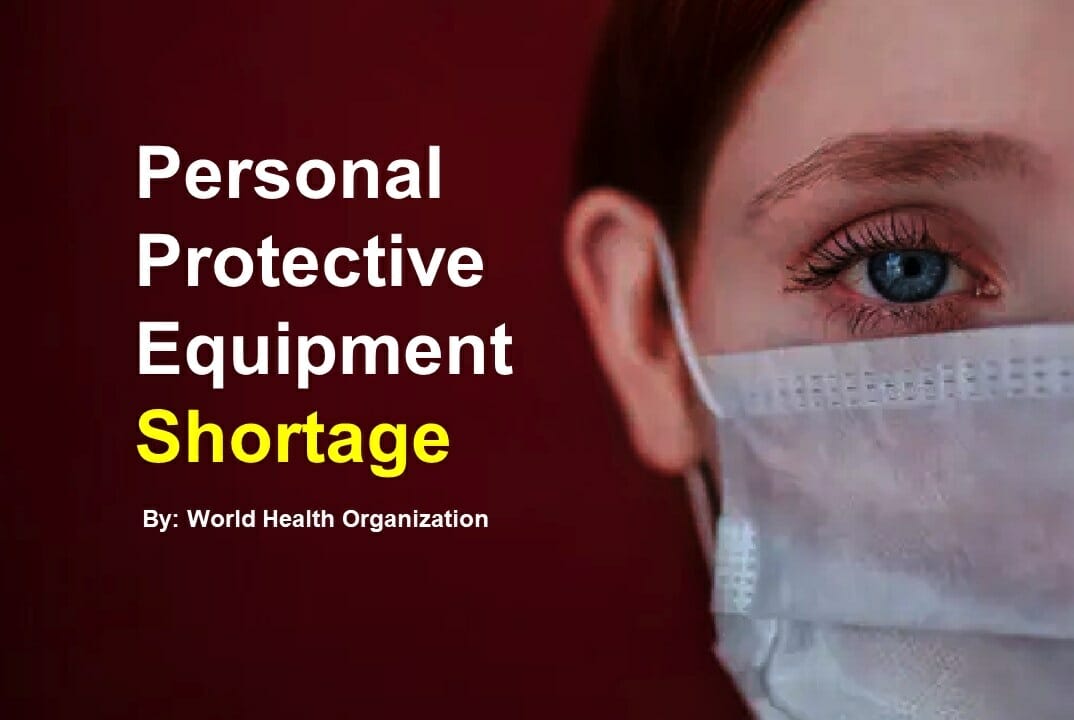
Donald Trump has implied doctors and elected officials say they do not have enough personal protective equipment (PPE) and other materials to get on television amid the coronavirus crisis.

The US president had a row with Jim Acosta, CNN’s chief White House correspondent, over the shortage of PPE, which includes essential gear such as hand sanitiser, gloves, aprons, and face masks, during his coronavirus press briefing.

Acosta said: “We hear from a lot of people who see these briefings as sort of ‘happy talk’ briefings. And some of the officials don’t paint as rosy a picture of what is happening around the country. If you look at some of these questions – do we have enough masks? No. Do we have enough tests? No. Do we have enough PPE? No.”

Mr Trump interjected: “Why would you say that? The answer is yes. I think the answer is yes.”

Acosta referred to doctors and other medical officials who have vented their frustrations about the dearth of essential equipment on CNN.

The president hit back: “A lot of it is fake news.”

Acosta said: “Doctors and medical officers come on our air and say ‘we don’t have enough tests, we don’t have enough masks’.”

Mr Trump chipped in: “Well yeah, depending on your air they are always going to say that because otherwise, you are not going to put them on.”

The spat comes as doctors and healthcare workers across America are battling against a shortage of face masks which safeguard them against coronavirus – sparking fears doctors will not be able to provide life-saving care if they fall ill.

America has become the first country in the world to record more than 2,000 people dying from coronavirus in one day alone, according to Johns Hopkins University figures.

People who contract coronavirus in the US are at greater risk than those in the UK or Canada due to America not having a national health service.

Americans are at risk of running up bills for coronavirus treatment which force them to fork out tens of thousands of dollars. The situation is exacerbated by the fact many have lost their healthcare insurance due to job losses linked to the pandemic.