As people across the country refuse mask mandates, public health officials are fighting an uphill battle with little government support.
DR. MEGAN SRINIVAS was attending a virtual American Medical Association discussion around the “Mask Up” initiative one evening in July when she began to receive frantic messages from her parents begging her to confirm to them that she was all right.
“Somebody obtained my father’s unlisted cell phone number and spoofed him, making it look like it was a phone call coming from my phone,” she told Des Moines’s Business Record for a November profile. “Essentially they insinuated that they had harmed me and were on the way to their house to harm them.”
This malicious hoax, made possible by doxxing Srinivas’s private information, was only the most severe instance of abuse and harassment she had endured since she became a more visible proponent of mask-wearing and other mitigation measures at the beginning of Covid-19 pandemic. A Harvard-educated infectious disease physician and public health researcher on the faculty of the University of North Carolina, Srinivas currently lives and works in Fort Dodge, her hometown of 24,000 situated in the agricultural heart of northwest Iowa.
Srinivas is not just a national delegate for the AMA, but a prominent face of Covid-19 spread prevention locally, appearing on panels and local news segments. Fort Dodge itself is situated deep within Iowa’s 4th Congressional District, a staunchly conservative area that simply replaced white supremacist Rep. Steve King with a more palatable Republican.Join Our NewsletterOriginal reporting. Fearless journalism. Delivered to you.I’m in
Basic health measures promoted by Srinivas in Iowa since the beginning of the pandemic have been politicized along the same fault lines as they have across the rest of the country. Some remain in the middle ground, indifferent to health guidelines out deep attachment to “normal” pre-pandemic life. Others have either embraced spread-prevention strategies like mask-wearing or refused to acknowledge the existence of the virus at all. In a red state like Iowa, an eager audience for President Donald Trump’s misinformation about the dangers of the coronavirus has made the latter far more common, which has made Srinivas’s job more difficult and more dangerous.
“It was startling at first, the volume at which [these threats were] happening,” Srinivas told The Intercept. “I know people get very heated about politics and the issues that people advocate for in general, but especially on something like this where it’s merely trying to provide a public service, a way people can protect themselves and their loved ones and community based on medical objective facts. That’s surprising that this is the reaction people have.”
“I have trolls like other people, I’ve been doxxed, I’ve gotten death threats,” she said. “When you say anything people don’t want to hear, there will be trolls and there will be people who will try to argue against you. The death threats were something I wish I could say were new, but when I’ve done things like this in the past, I’ve had people say not-so-nice things in the past when I’ve had advocacy issues.”An untenable pressure has been placed on public health workers thrust in a politicized health crisis — and that pressure only appears to be worsening.
At the same time, as an Iowa native, Srinivas has been able to gain some trust through tapping into local networks like Facebook. Though she has encountered a great deal of anger, she’s also seen success in the form of a son who’s managed to convince his diabetic father, a priest, to hold off on reopening his church thanks to her advice, and through someone who’s been allowed to work from home based on recommendations Srinivas made on a panel.
“At this point, almost everyone knows at least one person that’s been infected. Unfortunately, it leads to a higher proportion of the population who knows someone who’s not just been infected, but who’s had serious ramification driven by the disease,” Srinivas said. “So it’s come to the point where, as people are experiencing the impact of the disease closer to home, they’re starting to understand the true impact and starting to be willing to listen to recommendations.”
Without cooperation and support at the state level, however, what Srinivas can accomplish on her own is limited. Even as the number of Covid-19 cases grew and put an increasing strain on Iowa’s hospitals over the past few months, it took until after the November election for Iowa’s Republican Gov. Kim Reynolds to tighten Iowa’s mask guidance. And board members in Webster County, where Srinivas lives, only admitted in November that she had been right to advocate for a mask mandate all along. Though Trump lost the election nationally, he won Iowa by a considerable margin, which Reynolds has claimed as a vindication of her “open for business” attitude and has continued downplaying the pandemic’s severity.
“The issue with her messaging is it creates a leader in the state that should be trusted who’s giving out misinformation,” Srinivas said. “Naturally, people who don’t necessarily realize that this is misinformation because it’s not their area of expertise want to follow what their leader is saying. That’s a huge issue under the entire public health world right now, where we have a governor that is spreading falsehood like this.”
The embattled situation in which Srinivas has found herself is the new normal for public health officials attempting to stem the tide of a deadly viral outbreak, particularly in the middle of country where the pandemic winter is already deepening. Advocating for simple, potentially lifesaving measures has become a politically significant act, working to inform the public means navigating conflicting regulatory bodies, and doing your job means making yourself publicly vulnerable to an endless stream of vitriol and even death threats. The result across the board is that an untenable pressure has been placed on public health workers thrust in a politicized health crisis — and that pressure only appears to be worsening.
DESPITE THE FACT that Wisconsin’s stay-at-home order was nullified by the state’s Supreme Court in May, the Dane County Health Department has used its ability to exercise local control in an attempt to install mitigation measures that go beyond those statewide. By issuing a mask mandate ahead of a statewide rule and advocating for education and compliance efforts, the department currently considers itself in a good place regarding health guideline compliance.
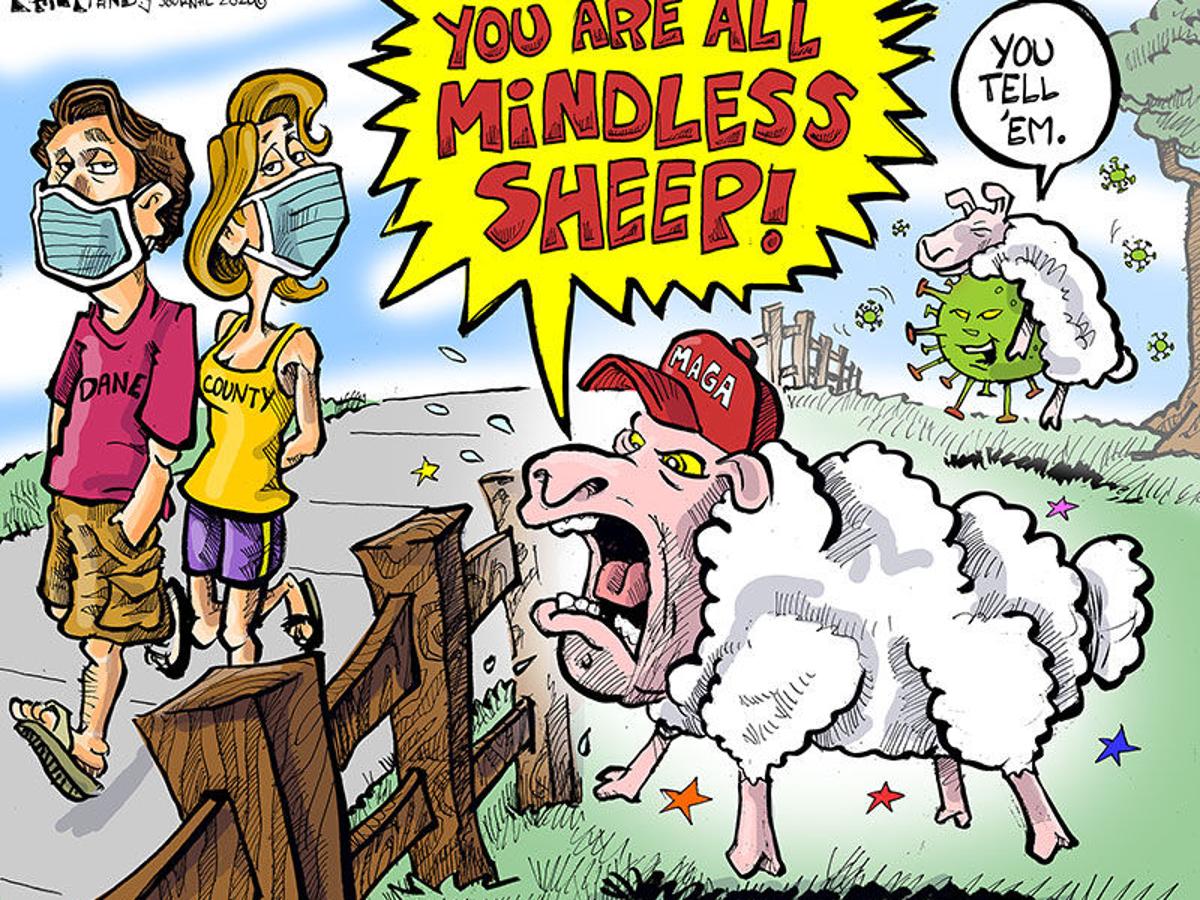
These actions have drawn a lot of ire from those unhappy with the regulations, however. According to a communications representative for the department, anti-maskers have held a protest on a health officer’s front lawn, a staff member was “verbally assaulted” in a gas station parking lot (an incident that prompted the department to advise its employees to only wear official clothing to testing sites), and employees performing compliance checks on businesses have been told to never perform these checks alone after “instances of business owners get a little too close for comfort.” They’ve also received a number of emails accusing health workers of being “Nazis,” “liars,” “political pawns,” and purely “evil.”
In Kansas’s Sedgwick County, Wichita — the largest city in the state — has been considering new lockdown measures after a November surge in coronavirus cases has threatened to overwhelm its hospitals. Though Democratic Gov. Laura Kelly attempted to instate a mask mandate in July, 90 of the state’s 105 counties rejected it, including Sedgwick, though the health board issued its own directive and Wichita had installed its own at the city level.
Now, with cases surging again, just as Srinivas saw the number of believers rising as more got sick, counties in Kansas that previously resisted mask mandates are changing their tune after Kelly announced a new mandate. But Sedgwick County health officials see an intractable line in the sand when it comes to who’s on board with mitigation measures and are focused more on what those who are already on board need to be told.
“It seems like a lot of the naysayers are naysayers and the supporters are supporters,” Adrienne Byrne, director of Sedgwick County Health Department, said. “There’s some people that are just kind of whatever about it. We just remind people to wear masks, it does make a difference. As we’ve gone on, studies have shown that it works.”
“I think it’s important to acknowledge to people that it is tiring, to acknowledge and validate their experience that people want to be over this stuff, but it’s important to reinforce that we are in a marathon,” she said. “In the beginning, we all wanted to hear that we would reach a magical date and we would be done with this stuff.”
Sedgwick has managed the streams of angry messages but has seen her colleagues in rural counties endure far worse, including death threats. She knows of one public health worker in Kansas who quit after being threatened, and others who have cited the strain of the politicized pandemic as their reason for leaving the public health profession.
“We’re certainly losing some health officials, there’s no question about that,” said Georges Benjamin, president of the American Public Health Association. “In the long arc of history, public health officials are pretty resilient. And while it absolutely will dissuade people from entering the field, we all need to do a better job of equipping them for these issues in the future.”
Benjamin would like to see institutional and public support for public health workers resemble that given to police or firefighters, government professionals who are well-funded, believed to be essential to the functioning of society, and wielding a certain level of authority.
“For elected officials who are charged with protecting the officials and their public officials, our message to officials then is that they should protect their employees,” Benjamin said.
IN RURAL NEBRASKA, the situation has presented even more complex challenges to public health workers. Outside of Omaha, the rural expanse is ruled by a deeply entrenched conservatism and, like Iowa’s governor Reynolds, Nebraska’s Republican Gov. Pete Ricketts has resisted a mask mandate. The Two Rivers Public Health Department, which oversees a wide swath of central Nebraska and its biggest population center, Kearney (population 33,000), is a popular pit stop along the Interstate 80 travel corridor and home to a University of Nebraska outpost.
Prior to the pandemic, Nebraska’s decentralized public health system had seen significant atrophy, according to Two Rivers Health Director Jeremy Eschliman, and was wholly unprepared for this level of public health event. There were few epidemiologists to be found outside of Omaha, though the department was able to hire one earlier this year. It also became clear early on that, despite the department’s traditionally strong ties with local media, messaging around the pandemic would be an uphill battle to get people to adapt new habits, especially when the president was telling them otherwise.
“There was one clear instance I remember when I caught a bit of heckling when I said, ‘Hey, this is serious. We’re going to see significant death is what the models show at this point in time,’” Eschliman said. “[The station said], ‘Are you serious? That seems way out in left field’ or something to that effect. That station had a very conservative following and that was the information they received.”
Eschliman has taken a realistic stance to promoting mask-wearing, thinking of it as akin to smoking. (“You could walk up to 10 people and try to tell them to quit smoking and you’re not going to get all 10 to quit,” he said. “Fun fact: You’re not going to get more than maybe one to even quit for a small period of time.”) Over the summer, he traveled just over Nebraska’s southern border into Colorado, where he was struck by the night-and-day difference between his neighbor state’s adoption of mask-wearing and Nebraskan indifference to it, each following the directives of their state leaders.“It’s become very difficult to do the right thing when you don’t have the political support to do so.”
Home rule is the law of the land in Nebraska, and there’s been strong rural opposition to mask mandates, despite more liberal population centers like Lincoln and Omaha installing their own. It’s taken Kearney until November 30 to finally install its own after outbreaks at the college and in nursing homes. Public health care workers have also been left on their own to make controversial decisions that have caused political friction. In May, the local health board voted not to share public health information with cities and first responders due to what they decided were issues of information confidentiality.
“Mayors, county board members, and police chiefs ran a sort of a smear campaign against me and the organization,” Eschliman said. “So when we talk about resiliency, that’s what we’re dealing with. It’s become very difficult to do the right thing when you don’t have the political support to do so.”
Even having a Democratic governor doesn’t necessarily ensure that support. In Hill County, a sparsely populated region of Montana’s “Hi-Line” country along the Canadian border, Sanitarian Clay Vincent supports Gov. Steve Bullock’s mask mandate, but doesn’t understand why it exists if it’s not enforceable. The way he sees it, if laws are made, they should create consequences for those who refuse to follow them.
But Vincent and the Hill County Health Board also saw what happened elsewhere in the state, in Flathead County, where lawsuits were brought against five businesses who refused to follow Bullock’s mask mandate. After a judge threw the lawsuit out, those businesses launched a countersuit against the state, alleging damages. In order to bring businesses in Hill County into compliance with the mask mandate, the health board is considering slapping them with signs identifying them as health risks or, barring that, simply asking them to explain their refusal to comply.
“These are community members. Everybody knows everybody and [the board isn’t] trying to make more of a division between those who are and those who are not, but I come back to the fact that public laws are put there for the main reason to protect the public from infectious diseases,” Vincent said. “You have to support the laws, or people sooner or later don’t give any credence to the public health in general.”
Regardless of whether they can push the Hill County businesses into compliance, the political winds are already changing in Montana. Republican Gov.-elect Greg Gianforte will take power in January and likely bring the party’s aversion to mask mandates with him. President-elect Joe Biden will take power at the same time, and even if he attempts to install a nationwide mask mandate, it will likely be difficult to enforce and may end up meaning little out in Montana. It will also likely exacerbate ongoing tensions in communities throughout the state. The building that houses Hill County Health Department in the town of Havre was already closed this summer out of fear that a local group opposed to the mask mandate and nurses doing contract tracing are routinely threatened in the course doing their jobs.
Regardless, Vincent is determined to encourage and enforce public health guidelines as much as it’s in his power to do so, no matter the backlash. He sees protecting the public as no different than preventing any other kind of disease. “I don’t care if it’s hepatitis or HIV or tuberculosis or any of these things,” he said. “You’re expected to deal with those and make sure it’s not affecting the public. Otherwise you have a disaster.”
Lax states are attracting shoppers and students from stricter neighbors — and sending back COVID-19 cases. The imbalance underscores the lack of a national policy.
For months after Washington state imposed one of the earliest and strictest COVID-19 lockdowns in March, Jim Gilliard didn’t stray far from his modular home near Waitts Lake, 45 miles north of Spokane.
The retiree was at high risk from the coronavirus, both because of his age, 70, and his medical condition. Several years ago, he had a defibrillator implanted. So he mainly ventured out during the pandemic to shop for food.
There wasn’t much else to do anyway. Gatherings in his county were limited to no more than 10 people, there was a mask mandate, movie theaters were closed and many nightclubs and concert venues were shuttered because of a state ban on all live entertainment, indoors and out.
An hour away in Idaho, life was more normal. The state left key COVID-19 regulations up to localities, many of which made masks optional. Even in places that required face coverings, enforcement was laxer than in Washington. High school sports, canceled for the fall in Washington, were on full display in Idaho. Most Idaho schools welcomed back students in person, in contrast to the remote learning prevailing in Washington. Businesses reopened earlier and with fewer restrictions. There were concerts and dances.
Weary of Washington’s restrictions, thousands of residents made the easy drive over the border to vacation, shop and dine in Idaho. Gilliard resisted temptation until he learned that the annual Panhandle Bluesfest would go on as scheduled near Priest River, Idaho, on Sept. 12. A keyboardist who used to own a blues club just outside Coeur d’Alene, Idaho, Gilliard was buoyed after months of relative isolation by the prospect of hanging out with friends while listening to music on a remote mountainside surrounded by soaring pine trees and thick hemlocks. He decided to go.
A friend took a picture of Gilliard at the festival. Wearing a bandanna fashioned as a headband, a cut-off T-shirt and dark glasses, he was perched on a tree stump and pointing back at the camera. As was permitted by local regulations at the time, he was not wearing a mask, nor were about 10 people sitting together in the background.
As the number of COVID-19 cases skyrockets nationwide, the extent of the public health response varies from one state — and sometimes one town — to the next. The incongruous approaches and the lack of national standards have created confusion, conflict and a muddled public health message, likely hampering efforts to stop the spread of the virus. The country’s top infectious disease expert, Dr. Anthony Fauci, said last month that the country needs “a uniform approach” to fighting the virus instead of a “disjointed” one.
Nowhere are these regulatory disparities more counterproductive and jarring than in the border areas between restrictive and permissive states; for example, between Washington and Idaho, Minnesota and South Dakota, and Illinois and Iowa. In each pairing, one state has imposed tough and sometimes unpopular restrictions on behavior, only to be confounded by a neighbor’s leniency. Like factories whose emissions boost asthma rates for miles around, a state’s lax public health policies can wreak damage beyond its borders.
“In some ways, the whole country is essentially living with the strategy of the least effective states because states interconnect and one state not doing a good job will continue to spread the virus to other states,” said Dr. Ashish Jha, dean of the Brown University School of Public Health. “States can’t wall themselves off.”
A motorcycle rally in August in Sturgis, South Dakota, with half a million attendees from around the country spread COVID-19 to neighboring Minnesota and beyond, according to Melanie Firestone, an epidemic intelligence service officer for the Centers for Disease Control and Prevention, who co-authored a report on the event’s impact.
South Dakota “didn’t have policies regarding mask use or event size, and we see that there was an impact in a state that did have such policies,” Firestone said. “The findings from this outbreak support having consistent approaches across states. We are all in it together when it comes to stopping the spread of COVID-19.”
Viruses don’t respect geographic boundaries. While some states require visitors, especially from high-risk areas, to be tested or quarantined, others like South Dakota have no such restrictions. Many people who are tired of strict COVID-19 measures in their states have escaped to areas where everyday life more closely resembles pre-pandemic times. There, with fewer protections, they’re at risk of contracting the virus and bringing it back home.
After the Idaho concert, Gilliard started feeling ill and was diagnosed with the coronavirus. For about a week, he stayed in bed. As his condition worsened, he was admitted to a Spokane hospital and placed on a ventilator. He died on Oct. 15. His death certificate lists COVID-19 as the underlying cause.
Going to the Idaho festival likely killed Gilliard, his ex-wife, Robin Ball, said.
“If he had been wearing a mask, not shaking hands and keeping distance, he could probably be alive,” she said. “He had been careful before that. He shouldn’t have been up there.”
The degree of coronavirus regulation tends to track political lines. President-elect Joe Biden carried blue Washington state with 58% of the vote, while President Donald Trump easily won red Idaho with 64%. Trump has helped to fuel the patchwork response to the pandemic, criticizing the approaches of some states, praising others and at times contradicting the advice of his own coronavirus task force and Fauci.
“What really struck me [is] how hard it is to take the pandemic strategy as laid out by the White House with every state on its own and … implement it because every state is not on its own, they are all interconnected,” Jha said.
Biden has said he wants to implement national standards, such as required mask wearing, to help blunt the spread of COVID-19 while acknowledging the federal government has little power to do so. He hopes to work with governors and local officials to establish consistent standards across the country.
A lack of such consistency is affecting eastern Washington, which appears to be absorbing some of the costs — both human and economic — of Idaho’s more laissez-faire approach to the virus. The rate of new cases in and around Spokane, near the Idaho border, is far higher than in Seattle and western Washington, which experienced one of the earliest outbreaks in the country in February. Although slightly more than half of recent COVID-19 cases in Spokane spread among households or personal contacts, Spokane Regional Health District epidemiologist Mark Springer said, “people bringing back COVID-19 from larger events in Idaho” has been a problem. And with Idaho’s rate of new cases now doubling Washington’s, Idahoans who commute to the Spokane area pose an outsized danger. At the same time, Washington’s shuttered businesses have ceded customers to their Idaho competitors.
Public schools in Washington have also suffered. After opening the school year with remote-only instruction, the Newport School District lost about one-fourth of its 1,200 students. Most of them opted either for specialized online-only programs or for nearby private and public schools across the border in Idaho, which offered in-person learning and sometimes didn’t require masks or social distancing, said Newport Superintendent Dave Smith. The plunge in enrollment has led to a $1.2 million drop in funding, he said.
In early October, Newport began some in-person learning but had to return to remote instruction after a COVID-19 outbreak in the community. The source was traced to a Christian church and school only a few feet from the Washington border in Oldtown, Idaho.
“It’s incredibly frustrating,” Smith said. “I certainly think aligned standards across the nation would have changed our situation.”
Washington Gov. Jay Inslee recently called on “Idaho leaders to show some leadership” and be more aggressive in combating COVID-19. He blamed the virus spread in Idaho for straining Washington hospitals. For their part, some in Idaho have complained that the rise of COVID-19 there has more to do with the influx of Washington residents over the summer and fall than with a lighter regulatory touch.
Many of those Washingtonians headed to Coeur d’Alene (pop. 52,400), the seat of Kootenai County and the largest city in northern Idaho. Despite some cancellations, many tourism activities went on as scheduled. The Spokesman-Review newspaper in Spokane ran a feature headlined, “A nearby escape: Coeur d’Alene Resort offers amenities for singles and families.” The resort, the article noted, was offering special packages for families that include a pizza-making experience, scenic cruise tickets and discount theme park tickets. In the resort garage, most of the license plates were from Idaho or Washington.
“Yes, the coronavirus exists,” the article continued. “However, the luxe Coeur d’Alene Resort is open and taking steps to make an experience as safe as possible.” While employees wore masks, the article said, they were optional for guests and about two-thirds opted not to use them. The resort did not respond to requests for comment.
At a park in downtown Coeur d’Alene, a weekly concert series called Live After 5 attracted crowds all summer. Though attendance was lower than in prior years, it swelled as promoters targeted marketing to tourists, concert organizer Tyler Davis said. At one show in July, a member of the band surveyed the large gathering and said, “Look around you guys, it feels kind of normal tonight.” Groups of people danced in front of the stage, food trucks lined up along one side and vendors set up tents. Masks were “encouraged but not required.”
The day after that show, the Panhandle Health District encompassing five Idaho counties ordered a mask mandate in Kootenai. It required masks in indoor and outdoor public places when a social distance of 6 feet could not be maintained.
Springer, the epidemiologist, watched the flow of Spokane County residents to Idaho with concern. “The issue with Idaho is a somewhat significant one for us in that the restrictions are a pretty stark contrast between what is in Idaho and what we have in Washington,” he said. “Coeur d’Alene is a sister community to us.”
Jim Gilliard was a popular figure in the blues music community around Spokane and northern Idaho. In the 1990s, he operated a music club outside Coeur d’Alene called Mad Daddy’s Blues. He was a talented musician himself, playing keyboards in local blues bands, even after losing a finger and badly injuring two others in a table saw accident.
Gilliard was raised in New York City and Pennsylvania. His father, E. Thomas Gilliard, was an acclaimed ornithologist who served as curator of birds at the American Museum of Natural History and was often gone for months at a time on expeditions to New Guinea. After Gilliard met Ball, the two headed to Colorado and enjoyed life as ski bums, moving from resort to resort for a couple of years before eventually settling in Coeur d’Alene, and having a son. After they divorced two decades ago, she stayed in Coeur d’Alene and he ended up in the village of Valley, Washington. (pop. 164).
Gilliard was one of nearly 300 people who paid $25 each to attend the blues festival, which was held 2 miles up a mountain road outside Priest River, Idaho, a tourist town 6 miles from the Washington border.
Bonner County, where the concert was held, is a rural pocket of defiance against government public health mandates related to the coronavirus. When the local library instituted a mask requirement for users, mask-less demonstrators, some clutching small children, protested and tried to enter the library as staff members stood their ground and explained they were only trying to prevent people from getting sick. The county sheriff wrote to the governor criticizing lockdown orders early in the pandemic, alleging that public health officials misled the public and that “COVID-19 is nothing like the plague.”
Concert organizers Billy and Patty Mullaley said they waited until the end of June before deciding to go ahead with it. The only potential roadblock was getting liability insurance at an affordable price during a pandemic, which they were able to do after shopping around.
“At the time, there were not any restrictions” on events like theirs in Idaho, Patty Mullaley said. “We did not take it lightly, having the event. We really put thought into it.” They bleached outhouses and the area around the concert stage offered plenty of space for social distancing, she said. Among those most grateful they went ahead, she said, were musicians who had been starved for gigs because of coronavirus-related cancellations. Featured acts included Sammy Eubanks, Coyote Kings and Tuck Foster and the Tumbling Dice.
Mullaley said the festival drew Washington residents eager for events banned in their own state. “From my experience, everyone and their dog from Washington was over here,” she said. “Our COVID is probably from people coming over here from Washington.”
Few of the hundreds of people at the festival wore masks and many didn’t stay socially distant, according to attendees. “Part of what made it magical was people were completely free and happy and not fearful at all,” said Sylvia Soucy, who had COVID-19 earlier in the summer. People danced barefoot on the soft sand and mingled with friends, she said.
Mullaley said people socially distanced “as much as possible.” In the end, she said, “these were all adults” who made individual decisions. Soucy agreed. “It was completely a choice all of us made,” she said. The remote setting — no cellphone service, no electricity and surrounded by hundreds of acres of undeveloped forest — added to the temporary joy of escaping from the virus, Soucy said.
Soucy said she talked to Gilliard there and he was in good spirits, “glad that people were not worried about being able to get together there on the mountain.” Gilliard also chatted with other friends, including a former girlfriend, according to Soucy. Ball said the former girlfriend was diagnosed with COVID-19 shortly after the festival and notified Gilliard.
“I don’t know why he let his guard down,” Ball said. “I will never understand that.” In the end, she thinks it had to do with “a long summer of not having a lot of stuff to do. He had been so cautious for those seven or eight months. He just didn’t feel like it was going to be a problem.”
The Mullaleys said they were unaware of anyone else from the concert getting COVID-19 around that time. But some Washington residents who tested positive for the coronavirus told contact tracers that they had attended the blues festival, according to Matt Schanz, the administrator of Northeast Tri County Health District, a public health agency in Washington covering counties near the Idaho border.
That doesn’t definitively mean that they contracted the virus at the festival, he said. “We have 550 cases within three counties, and if you read the summary reports, a decent number of those have some affiliation with Idaho,” Schanz said.
South Dakota has largely remained open for business during the pandemic. Gov. Kristi Noem, an ally of Trump’s, has refused to impose a mask mandate, saying there are questions about its effectiveness. The state has not placed any restrictions on bars and restaurants and officials allowed the 10-day motorcycle rally in Sturgis. Such a rally would have been prohibited in Minnesota. Both Minnesota and South Dakota are in the top five states when it comes to rates of cases per capita over the last week.
The CDC advises that outdoor events are less risky than indoor ones. The Sturgis rally, which featured events in both settings, is now linked to at least 86 COVID-19 cases in Minnesota, including four people who were hospitalized and one death, according to a CDC report released in November. The report said the total is likely an undercount as some of those infected declined to share their close contacts with health officials.
“These findings highlight the far-reaching effects that gatherings in one area might have on another area,” the researchers wrote. They added, “This rally not only had a direct impact on the health of attendees, but also led to subsequent SARS-CoV-2 transmission among household, social, and workplace contacts of rally attendees upon their return to Minnesota.”
Mike Kuhle, the mayor of Worthington, Minnesota, said South Dakota’s approach to the pandemic “is a source of heartburn for me and sleepless nights.” His city is close to both the South Dakota and Iowa borders. In addition to worries about the virus spreading from South Dakota, Kuhle said, “during the lockdown people have gone to Sioux Falls for shopping. It’s ugly for our businesses.”
A similar dynamic has played out in the Quad Cities area at the border of Illinois and Iowa. There, thousands of people cross bridges over the Mississippi River every day to work, visit family and shop in each state.
As cases in Iowa began to surge this summer, Gov. Kim Reynolds dismissed mask mandates as “feel-good” measures that are difficult to enforce. Until recently, Iowa restaurants and gyms were allowed to operate at full capacity as long as social distancing measures were in place. There was no state-imposed limit on the size of social gatherings. Nicknamed “COVID Kim” by her critics, Reynolds changed course in mid-November in the face of surging cases and hospitalizations, requiring masks.
Illinois clamped down earlier and harder, instituting a mask mandate at the end of April. Movie theaters opened in Iowa before those in Illinois. Iowa never closed its golf courses when neighboring states like Illinois did.
For Illinois businesses, the gap between the two states’ regulations has been crushing, said Paul Rumler, the president of the Quad Cities Chamber.
“A river runs through it but otherwise this is one community,” he said. On the Illinois side, “we have retailers and restaurants who want to be responsible corporate citizens and follow the guidelines knowing they are at a disadvantage from a business literally 3 miles away.”
Rumler said the chamber advocated for the two states to have a consistent approach to the pandemic to no avail. “If there was a federal standard, it would eliminate the confusion of our region,” he said. “It would make our life a lot easier.”
Debbie Freiburg, a volunteer contact tracer for the county encompassing the Illinois side of the border, said the looser restrictions in Iowa offered Illinois residents the chance to “take a break” from the virus.
“It’s bad and the differences are huge, unfortunately,” she said. “I can be in Iowa in 10 minutes, and there were a lot of us going shopping in Iowa.”
Freiburg, who retired to the area after working as a pediatric cancer nurse in Washington, D.C., said cases in her Illinois county have been tracked to Iowa, including several from a large wedding at a hotel just over the border.
Tensions between Washington and Idaho over their divergent responses to the pandemic escalated in October. As the count of COVID-19 cases climbed, the board of the Panhandle Health District in Idaho voted 4-3 to rescind the mask order it had imposed on Kootenai County three months before. Officials in Washington were stunned. Inslee, the governor, refused to rule out restrictions on border traffic.
The move by the health board came amid growing resistance in the state to mandatory public health measures to control the virus and skepticism that COVID-19 was even real.
A group of Idaho politicians, including Lt. Gov. Janice McGeachin, appeared in a video in October urging the state to limit restrictions. Sitting in a truck with an American flag draped over the side, McGeachin placed a gun over a Bible. “We recognize that all of us by nature are free and equal and have certain inalienable rights,” she said. A legislator in the video said “the pandemic may or may not be occurring.”
State Rep. Tony Wisniewski, who represents Kootenai and also appeared in the video, urged the health board to make masks optional. He compared the mask mandate to what he said was a requirement in Nazi Germany to tell authorities if a neighbor was Jewish.
Health board member Allen Banks said he was “deeply suspicious” of tests for COVID-19. In an email to a senator who had criticized the board’s mask mandate, he wrote, “I hope you and the legislators who support your effort will continue to stand for truth rather than the fantasy of a phony disease based on a false test.”
Board member Walt Kirby, who had voted in July to approve the mask mandate initially, was the deciding vote. He opposed a mandate because people were “pretty damn nasty” to him for supporting it before, he explained. “I am not going to vote for it, I am just not because no one is wearing the damn masks anyway,” Kirby said, adding that he wears a mask. As for people who ignore the advice of public health experts, he said, “I am just sitting back and watching them catch it and die and hopefully I will live through it. You know I am 90 years old already and I am not getting involved in it anymore.”
Even as the requirement was rescinded, cases in Kootenai were soaring. The rate of hospitalizations in the border area in northern Idaho is nearly double the rate in the Spokane region. Overall, the number of new cases in Idaho per capita is almost twice that of Washington.
With the county mandate overturned, the city of Coeur d’Alene considered in late October whether to adopt one on its own. Mayor Steve Widmyer and the City Council were inundated with hundreds of emails and telephone calls, many from mask opponents.
“This is Idaho, not Washington or California,” wrote one resident. “Let the people decide if they wish to mask up or not.” Another told the city leaders, “If you want to live with a mask ‘muzzle’ on your face move to California or Washington.”
Ball, Gilliard’s ex-wife, urged Widmyer to support a mandate. “People come here so they don’t have to wear a mask and fill our bars and businesses while spreading covid,” she wrote.
In Coeur d’Alene, the mayor only votes to break a tie among the city councilors. Widmyer, who had complained that city officials “shouldn’t have been put into this position,” didn’t have to vote, because the council approved the mandate 4-2 on Oct. 26.Protesters outside chanted, “No more masks, we will not comply,” and the blowback has been swift. A group of residents is pushing to recall the pro-mandate councilors. The mayor did not respond to interview requests.
While Coeur d’Alene adopted a mandate, nearby Post Falls and Hayden rejected similar proposals. All three cities are less than 20 miles from the Washington border. Idaho Gov. Brad Little has also remained steadfast in opposition to the idea, unlike Iowa’s Reynolds. “Idaho’s health officials have been mindful of the challenges of mitigating spread of COVID-19 in border communities since the onset of the pandemic,” a spokeswoman for Little said in an email. The governor’s “priority at this time is mitigating the spread of COVID-19 in Idaho and preserving health care capacity for those in need.”
For the Panhandle health board, however, the situation became too dire to ignore. On Nov. 19 it reversed itself again and passed a mask mandate for all five of its counties, including Bonner, the site of the blues festival. But county sheriffs have ignored enforcing the mandate or made it a low priority, according to local media.
The move came too late to save Gilliard. “Until everyone in this country can do the same thing, all states on the same page, limit crowd size and mask mandates that are enforced, this is going to happen,” said Ball, his ex-wife. “It only makes sense. Because what we have been doing hasn’t been working.”
In mid-November, as the United States set records for newly diagnosed COVID-19 cases day after day, the hospital situation in one hard-hit state, Wisconsin, looked concerning but not yet urgent by one crucial measure. The main pandemic data tracking system run by the Department of Health and Human Services (HHS), dubbed HHS Protect, reported that on 16 November, 71% of the state’s hospital beds were filled. Wisconsin officials who rely on the data to support and advise their increasingly strained hospitals might have concluded they had some margin left.
Yet a different federal COVID-19 data system painted a much more dire picture for the same day, reporting 91% of Wisconsin’s hospital beds were filled. That day was no outlier. A Science examination of HHS Protect and confidential federal documents found the HHS data for three important values in Wisconsin hospitals—beds filled, intensive care unit (ICU) beds filled, and inpatients with COVID-19—often diverge dramatically from those collected by the other federal source, from state-supplied data, and from the apparent reality on the ground.
“Our hospitals are struggling,” says Jeffrey Pothof, a physician and chief quality officer for the health system of the University of Wisconsin (UW), Madison. During recent weeks, patients filled the system’s COVID-19 ward and ICU. The university’s main hospital converted other ICUs to treat the pandemic disease and may soon have to turn away patients referred to the hospital for specialized care. Inpatient beds—including those in ICUs—are nearly full across the state. “That’s the reality staring us down,” Pothof says, adding: The HHS Protect numbers “are not real.”
HHS Protect’s problems are a national issue, an internal analysis completed this month by the Centers for Disease Control and Prevention (CDC) shows. That analysis, other federal reports, and emails obtained by Science suggest HHS Protect’s data do not correspond with alternative hospital data sources in many states (see tables, below). “The HHS Protect data are poor quality, inconsistent with state reports, and the analysis is slipshod,” says one CDC source who had read the agency’s analysis and requested anonymity because of fear of retaliation from the Trump administration. “And the pressure on hospitals [from COVID-19] is through the roof.”
Both federal and state officials use HHS Protect’s data to assess the burden of disease across the country and allocate scarce resources, from limited stocks of COVID-19 medicines to personal protective equipment (PPE). Untrustworthy numbers could lead to supply and support problems in the months ahead, as U.S. cases continue to rise during an expected winter surge, according to current and former CDC officials. HHS Protect leaders vigorously defend the system and blame some disparities on inconsistent state and federal definitions of COVID-19 hospitalization. “We have made drastic improvements in the consistency of our data … even from September to now,” says one senior HHS official. (Three officials from the department spoke with Science on the condition that they not be named.)
CDC had a long-running, if imperfect, hospital data tracking system in place when the pandemic started, but the Trump administration and White House Coronavirus Task Force Coordinator Deborah Birx angered many in the agency when they shifted much of the responsibility for COVID-19 hospital data in July to private contractors.TeleTracking Technologies Inc., a small Pittsburgh-based company, now collects most of the data, while Palantir, based in Denver, helps manage the database. At the time, hundreds of public health organizations and experts warned the change could gravely disrupt the government’s ability to understand the pandemic and mount a response.
The feared data chaos now seems a reality, evident when recent HHS Protect figures are compared with public information from states or data documented by another hospital tracking system run by the HHS Office of the Assistant Secretary for Preparedness and Response (ASPR). ASPR manages the Strategic National Stockpile of medicines, PPE—in perilously short supply in many areas—and other pandemic necessities. ASPR collects data nationwide, although it is more limited than what HHS Protect compiles, to help states and hospitals respond to the pandemic.
In Alabama, HHS Protect figures differ by 15% to 30% from daily state COVID-19 inpatient totals. Karen Landers, assistant state health officer, said nearly all of the state’s hospitals report data to HHS via the Alabama Department of Public Health. Although reporting delays sometimes prevent the systems from syncing precisely, Landers says, she cannot account for the sharp differences.
Many state health officials contacted by Science were reluctant to directly criticize HHS Protect or attribute supply or support problems to its data. Landers notes that Alabama relies on its own collected data, rather than HHS Protect’s, for its COVID-19 response. “We are very confident in our data,” she says, because the state reporting system was developed over several years and required little adjustment to add COVID-19. HHS, she adds, has generally been responsive to state requests for medicines and supplies, although Alabama has not always gotten all the PPE it has requested.
Other states, however, say they do rely on HHS Protect. A spokesperson for the Wisconsin Department of Health Services wrote in a response to questions, “When making decisions at the state level we use the HHS Protect data,” but declined to comment about its accuracy. HHS informed Wisconsin officials it distributes scarce supplies based on need indicated by HHS Protect data, the spokesperson wrote.
Pothof says UW’s hospital system has its own sophisticated data dashboard that draws on state, local, and internal sources to plan and cooperate on pandemic response with other hospitals. But small hospitals in Wisconsin—now experiencing shortages of some medicines, PPE, and other supplies—are more dependent on federal support largely based on HHS Protect data. Help might not arrive, Pothof says, if the data show “things look better than they are.”
If the HHS Protect data are suspect, “that’s a very large problem,” says Nancy Cox, former director of CDC’s influenza division and now an affiliated retiree of the agency. If HHS officials use bad data, they will not distribute medicines and supplies equitably, Cox notes, adding: “Undercounting in the hardest hit states means a lower level of care and will result in more severe infections and ultimately in more deaths.”
Birx and the other managers of HHS Protect “really had no idea what they were doing,” says Tom Frieden, CDC director under former President Barack Obama. (Birx declined to comment for this article.) Frieden cautions that ASPR data might also be erroneous—pointing to the need for an authoritative and clear federal source of hospital data. The original CDC system, called the National Healthcare Safety Network (NHSN), should be improved, he said, but it handles nursing home COVID-19 data skillfully and could do the same with hospitals. NHSN is “not just a computer program. It’s a public health program” built over 15 years and based on relationships with individual health facilities, Frieden says. (CDC insiders say HHS officials recently interfered with publication of an analysis showing that NHSN performed well early in the pandemic [see sidebar, below]).
An HHS official says HHS Protect’s data are complex and the department can’t verify any findings in the reports reviewed by Science without conducting its own analysis, which it did not do. But the official says HHS Protect has improved dramatically in the past 2 months and provides consistent and reliable results.
As for the difference between state and HHS Protect data, an HHS official contends state numbers “are always going to be lower” by up to 20%. That’s because hospitals could lose Medicare funding if they do not report to HHS, the official says, but face no penalty for failing to report to the state. So rather than expect identical numbers, HHS looks for state and federal data to reflect the same trajectory—which they do in all cases for COVID-19 inpatient data, according to another confidential CDC analysis of HHS Protect, covering all 50 states.
Yet the same analysis found 27 states recently alternated between showing more or fewer COVID-19 inpatients than HHS Protect—not always just fewer, as HHS says should be the case. Thirty states also showed differences between state and HHS Protect figures that were frequently well above the 20% threshold cited by HHS, and HHS Protect data fluctuated erratically in 21 states (see chart, below).
“Hospital capacity metrics can and should be a national bellwether,” the CDC data expert says. “One important question raised by the discordant data reported by HHS Protect and the states is whether HHS Protect is systematically checking data validity.” HHS has not provided its methodology for HHS Protect data estimates for review by independent experts. But an HHS official says a team of data troubleshooters, including CDC and ASPR field staff, work to resolve anomalies and respond to spikes in cases in a state or hospital.
Out of sync
Tracking hospital inpatients who have COVID-19 has become a crucial measure of the pandemic’s severity. Department of Health and Human Services (HHS) data from the HHS Protect system often diverge sharply from state-supplied data. This chart, drawn from a data analysis from the Centers for Disease Control and Prevention, summarizes some of the similarities and differences for COVID-19 inpatient totals over the past 2 months.
Along with improving trust in its data, HHS Protect needs to make it more accessible, CDC data scientists say. The publicly accessible HHS Protect data are far less complete than the figures in its password-protected database. This effectively hides from public view key pandemic information, such as local supplies of protective equipment.
The site also does not provide graphics highlighting patterns and trends. This might explain, in part, why most media organizations—as well as President-elect Joe Biden’s transition team—instead have relied on state or county websites that vary widely in completeness and quality, or on aggregations such as The Atlantic magazine’s COVID Tracking Project, which collects, organizes, and standardizes state data. (In comparing state and federal data, CDC also used the COVID Tracking Project.)
Frieden and other public health specialists call reliable, clear federal data essential for an effective pandemic response. “The big picture is that we’re coming up to 100,000 hospitalizations within the next few weeks. Hospital systems all over the country are going to be stressed,” Frieden says. “There’s not going to be any cavalry coming over the hill from somewhere else in the country, because most of the country is going to be overwhelmed. We’re heading into a very hard time with not very accurate information systems. And the government basically undermined the existing system.”
At a rural health system in Wisconsin, officials and medical experts began drawing up protocols for the once unthinkable practice of deciding which patients should get care. The chief quality officer of a major New York hospital network double- and triple-checked his system’s stockpile of emergency equipment, grimly recalling the last time he had to count how many ventilators he had left. In Arizona, a battle-weary doctor watched in horror as people flooded airports and flocked to stores for Black Friday sales, knowing it was only a matter of time before some of them wound up in his emergency room.
Days after millions of Americans ignored health guidance to avoid travel and large Thanksgiving gatherings, it’s still too soon to tell how many people became infected with the coronavirus over the course of the holiday weekend. But as travelers head home to communities already hit hard by the disease, hospitals and health officials across the country are bracing for what scientist Dave O’Connor called “a surge on top of a surge.”
“It is painful to watch,” said O’Connor, a virologist at the University of Wisconsin at Madison. “Like seeing two trains in the distance and knowing they’re about to crash, but you can’t do anything to stop it.”
“Because of the decisions and rationalizations people made to celebrate,” the scientist added, “we’re in for a very dark December.”
The holiday, which is typically one of the busiest travel periods of the year, fell at a particularly dire time in the pandemic. Some 4 million Americans have been diagnosed with the coronavirus in November — twice the previous record, which was set last month. More than 2,000 people are dying every day. Despite that, over a million people passed through U.S. airports the day before Thanksgiving — the highest number of travelers seen since the start of the outbreak.
Many states did not report new case counts over the holiday, and it typically takes about a week for official records to catch up after reporting delays, said Caitlin Rivers, an epidemiologist at the Johns Hopkins Center for Health Security.
But in two to three weeks, she said, “I fully expect on a national level we will see those trends continue of new highs in case counts and hospitalizations and deaths.”
The nation has already notched several bleak milestones over the holiday weekend. On Thanksgiving Day, hospitalizations in the United States exceeded 90,000 people for the first time. The following day, the country hit 13 million cases. At least nine states have seen 1 in every 1,000 residents die of the coronavirus.
Mark Jarret, the chief quality officer for New York’s Northwell Health system, said he understood that many people are tiring of constant vigilance after nine months of isolation and Zoom gatherings and waving at people from six feet away.
“But we’re so close to getting some control,” he said, noting that federal officials are on the verge of authorizing one or more vaccines against the virus next month. “This is not the time to let up. This is the time to put on the best defense we can to prevent further spread, further death.”
Officials urged people who traveled or spent time with people outside their household to stay at home for 14 days to avoid further spread of the virus. Some jurisdictions are moving toward lockdown measures not seen since the spring. Los Angeles County on Friday issued a three-week “safer at home” order, limiting business capacity and prohibiting gatherings other than religious services and protests.
Meanwhile, the December holidays are looming.
“Hopefully people will try to minimize their risks around Christmas, especially if there’s data that show Thanksgiving was really harmful,” O’Connor said.
To Cleavon Gilman, a Navy veteran and emergency room doctor in Yuma, Ariz., the wave of holiday travel was “a slap in the face.”
“It’s as if there’s not a pandemic happening,” he said. “We’re in a war right now, and half the country isn’t on board.”
On Friday, members of the University of Arizona coronavirus modeling team issued an urgent warning to state health officials, projecting that the state will exceed ICU capacity by the beginning of December.
“If action is not immediately taken, then it risks a catastrophe on a scale of the worst natural disaster the state has ever experienced,” the team wrote in a letter to Steven Bailey, chief of the Bureau of Public Health Statistics. “It would be akin to facing a major forest fire without evacuation orders.”
Arizona has no statewide mask mandate, and businesses in many parts of the state, including indoor dining at restaurants, remain open.
Gilman said the intensive care unit at his hospital is full and there’s nowhere to transfer new patients. When he’s home, his mind echoes with the sound of people gasping for breath. He and his colleagues are exhausted, and with cases spiking across the country, he worries there is no way they can handle the surge that will probably follow Thanksgiving celebrations.
In La Crosse, Wis., Gundersen Health System chief executive Scott Rathgaber echoed that fear. “We’ve had to tell our hard-working staff, ‘There’s no one out there to come rescue us,’” he said.
Like many in his college town, Rathgaber is anxious about what will happen when students who spent the holiday with their families return to campus. Though the University of Wisconsin and other schools shifted classes online for the remainder of the semester, he anticipates students who have jobs and apartments in La Crosse will return to town.
“We had trouble the first time the students came back,” Rathgaber said, noting that the start of college classes in September preceded outbreaks in nursing homes and a spike in deaths in La Crosse County. “I will continue to implore, to beg people to take this seriously.”
Gundersen has already more than tripled the size of the covid-19 ward at its main hospital, and even before this week it was almost entirely full. Physicians from the system’s rural clinics have been reassigned to La Crosse to help in the ICU. Staff who may have been exposed to the virus are being called back before completing their 14-day quarantine. And Rathgaber now attends regular meetings with ethicists and end-of-life caregivers to figure out Gundersen’s triage protocol if the hospital becomes overwhelmed.
“We’re not at a breaking point, but we are getting there,” Rathgaber said. “I’m concerned about what the next two weeks will bring.”
As record numbers of coronavirus cases overwhelm hospitals across the United States, there is something strikingly different from the surge that inundated cities in the spring: No one is clamoring for ventilators.
The sophisticated breathing machines, used to sustain the most critically ill patients, are far more plentiful than they were eight months ago, when New York, New Jersey and other hard-hit states were desperate to obtain more of the devices, and hospitals were reviewing triage protocols for rationing care. Now, many hot spots face a different problem: They have enough ventilators, but not nearly enough respiratory therapists, pulmonologists and critical care doctors who have the training to operate the machines and provide round-the-clock care for patients who cannot breathe on their own.
Since the spring, American medical device makers have radically ramped up the country’s ventilator capacity by producing more than 200,000 critical care ventilators, with 155,000 of them going to the Strategic National Stockpile. At the same time, doctors have figured out other ways to deliver oxygen to some patients struggling to breathe — including using inexpensive sleep apnea machines or simple nasal cannulas that force air into the lungs through plastic tubes.
But with new cases approaching 200,000 per day and a flood of patients straining hospitals across the country, public health experts warn that the ample supply of available ventilators may not be enough to save many critically ill patients.
“We’re now at a dangerous precipice,” said Dr. Lewis Kaplan, president of the Society of Critical Care Medicine. Ventilators, he said, are exceptionally complex machines that require expertise and constant monitoring for the weeks or even months that patients are tethered to them. The explosion of cases in rural parts of Idaho, Ohio, South Dakota and other states has prompted local hospitals that lack such experts on staff to send patients to cities and regional medical centers, but those intensive care beds are quickly filling up.
Public health experts have long warned about a shortage of critical care doctors, known as intensivists, a specialty that generally requires an additional two years of medical training. There are 37,400 intensivists in the United States, according to the American Hospital Association, but nearly half of the country’s acute care hospitals do not have any on staff, and many of those hospitals are in rural areas increasingly overwhelmed by the coronavirus.
“We can’t manufacture doctors and nurses in the same way we can manufacture ventilators,” said Dr. Eric Toner, an emergency room doctor and senior scholar at the Johns Hopkins Center for Health Security. “And you can’t teach someone overnight the right settings and buttons to push on a ventilator for patients who have a disease they’ve never seen before. The most realistic thing we can do in the short run is to reduce the impact on hospitals, and that means wearing masks and avoiding crowded spaces so we can flatten the curve of new infections.”
Medical association message boards in states like Iowa, Oklahoma and North Dakota are awash in desperate calls for intensivists and respiratory therapists willing to temporarily relocate and help out. When New York City and hospitals in the Northeast issued a similar call for help this past spring, specialists from the South and the Midwest rushed there. But because cases are now surging nationwide, hospital officials say that most of their pleas for help are going unanswered.
Dr. Thomas E. Dobbs, the top health official in Mississippi, said that more than half the state’s 1,048 ventilators were still available, but that he was more concerned with having enough staff members to take care of the sickest patients.
“If we want to make sure that someone who’s hospitalized in the I.C.U. with the coronavirus has the best chance to get well, they need to have highly trained personnel, and that cannot be flexed up rapidly,” he said in a news briefing on Tuesday.
Dr. Matthew Trump, a critical care specialist at UnityPoint Health in Des Moines, said that the health chain’s 21 hospitals had an adequate supply of ventilators for now, but that out-of-state staff reinforcements might be unlikely to materialize as colleagues fall ill and the hospital’s I.C.U. beds reach capacity.
“People here are exhausted and burned out from the past few months,” he said. “I’m really concerned.”
The domestic boom in ventilator production has been a rare bright spot in the country’s pandemic response, which has been marred by shortages of personal protective equipment, haphazard testing efforts and President Trump’s mixed messaging on the importance of masks, social distancing and other measures that can dent the spread of new infections.
Although the White House has sought to take credit for the increase in new ventilators, medical device executives say the accelerated production was largely a market-driven response turbocharged by the national sense of crisis. Mr. Trump invoked the wartime Defense Production Act in late March, but federal health officials have relied on government contracts rather than their authority under the act to compel companies to increase the production of ventilators.
Scott Whitaker, president of AdvaMed, a trade association that represents many of the country’s ventilator manufacturers, said the grave situation had prompted a “historic mobilization” by the industry. “We’re confident that our companies are well positioned to mobilize as needed to meet demand,” he said in an email.
Public health officials in Minnesota, Mississippi, Utah and other states with some of the highest per capita rates of infection and hospitalization have said they are comfortable with the number of ventilators currently in their hospitals and their stockpiles.
Mr. Whitaker said AdvaMed’s member companies were making roughly 700 ventilators a week before the pandemic; by the summer, weekly output had reached 10,000. The juggernaut was in part fueled by unconventional partnerships between ventilator companies and auto giants like Ford and General Motors.
Chris Brooks, chief strategy officer at Ventec Life Systems, which collaborated with G.M. to fill a $490 million contract for the Department of Health and Human Services, said the shared sense of urgency enabled both companies to overcome a thicket of supply-chain and logistical challenges to produce 30,000 ventilators over four months at an idled car parts plant in Indiana. Before the pandemic, Ventec’s average monthly output was 100 to 200 machines.
“When you’re focused with one team and one mission, you get things done in hours that would otherwise take months,” he said. “You just find a way to push through any and all obstacles.”
Despite an overall increase in the number of ventilators, some researchers say many of the new machines may be inadequate for the current crisis. Dr. Richard Branson, an expert on mechanical ventilation at the University of Cincinnati College of Medicine and an author of a recent study in the journal Chest, said that half of the new devices acquired by the Strategic National Stockpile were not sophisticated enough for Covid-19 patients in severe respiratory distress. He also expressed concern about the long-term viability of machines that require frequent maintenance.
“These devices were not built to be stockpiled,” he said.
The Department of Health and Human Services, which has acknowledged the limitations of its newly acquired ventilators, said the stockpile — nine times as large as it was in March — was well suited for most respiratory pandemics. “These stockpiled devices can be used as a short-term, stopgap buffer when the immediate commercial supply is not sufficient or available,” the agency said in a statement.
Projecting how many people will end up requiring mechanical breathing assistance is an inexact science, and many early assumptions about how the coronavirus affects respiratory function have evolved.
During the chaotic days of March and April, emergency room doctors were quick to intubate patients with dangerously low oxygen levels. They subsequently discovered other ways to improve outcomes, including placing patients on their stomachs, a protocol known as proning that helps improve lung function. The doctors also learned to embrace the use of pressurized oxygen delivered through the nose, or via BiPAP and CPAP machines, portable devices that force oxygen into a patient’s airways.
Many health care providers initially hesitated to use such interventions for fear the pressurized air would aerosolize the virus and endanger health care workers. The risks, it turned out, could be mitigated through the use of respirator masks and other personal protective gear, said Dr. Greg Martin, the chief of pulmonary and critical care at Grady Health Systems in Atlanta.
“The familiarity of taking care of so many Covid patients, combined with good data, has just made everything we do 100 times easier,” he said.
Some of the earliest data about the perils of intubating coronavirus patients turned out to be incomplete and misleading. Dr. Susan Wilcox, a critical care specialist at Massachusetts General Hospital, said many providers were spooked by data that suggested an 80 percent mortality rate among ventilated coronavirus patients, but the actual death rate turned out to be much lower. The mortality rate at her hospital, she said, was about 25 to 30 percent.
“Some people were saying that we should intubate almost immediately because we were worried patients would crash and have untoward consequences if we waited,” she said. “But we’ve learned to just go back to the principles of good critical care.”
Survival rates have increased significantly at many hospitals, a shift brought about by the introduction of therapeutics like dexamethasone, a powerful steroid that Mr. Trump took when he was hospitalized with the coronavirus. The changing demographics of the pandemic — a growing proportion of younger patients with fewer health risks — have also played a role in the improving survival rates.
Dr. Nikhil Jagan, a critical care pulmonologist at CHI Health, a hospital chain that serves Iowa, Kansas and Nebraska, said many of the coronavirus patients who were arriving at his emergency room now were less sick than the patients he treated in the spring.
“There’s a lot more awareness about the symptoms of Covid-19,” he said. “The first go-around, when people came in, they were very sick right off the bat and in respiratory distress or at the point of respiratory failure and had to be intubated.”
But the promising new treatments and enhanced knowledge can go only so far should the current surge in cases continue unabated. The country passed 250,000 deaths from the coronavirus last week, a reminder that many critically ill patients do not survive. The daily death toll has been rising steadily and is approaching 2,000.
“Ventilators are important in critical care but they don’t save people’s lives,” said Dr. Branson of the University of Cincinnati. “They just keep people alive while the people caring for them can figure out what’s wrong and fix the problem. And at the moment, we just don’t have enough of those people.”
For now, he said there was only one way out the crisis: “It’s not that hard,” he said. “Wear a mask.”






/cloudfront-us-east-1.images.arcpublishing.com/sltrib/N2O6A445TNBPTN7OGAFQO4ONLY.jpg)
 HENRY KOTULA