Coronavirus cases soar by more than 1 million over 5 days

https://www.cnn.com/2020/07/14/world/million-coronavirus-cases-five-days-intl/index.html

Coronavirus cases soar by more than 1 million over 5 days - WRCBtv ...

Coronavirus cases soared by more than a million globally in just five days as the numbers continue to accelerate from week to week, according to figures from Johns Hopkins University.

Reported cases increased by 1,046,200 from July 6 through July 10, up from a 994,400 increase over the five days from July 5 through July 9.
The total global case number surpassed 13 million on Monday, growing by 1,061,600 between July 8 and July 13.
While some countries that were hit early in the outbreak have managed to contain the virus, the number of cases globally has been accelerating fairly steadily.
There have now been more than half a million deaths from the virus worldwide, according to JHU data.
The World Health Organization’s director-general on Monday warned there would be “no return to the old normal for the foreseeable future.”
Tedros Adhanom Ghebreyesus told a media briefing in Geneva that there were no shortcuts out of this pandemic, and that while we may hope for an effective vaccine, there must be a focus on using the tools that are available now to suppress transmission and save lives.
“We need to reach a sustainable situation where we do have adequate control of this virus without shutting down our lives entirely, or lurching from lockdown to lockdown,” Tedros said.
He told reporters there was a “roadmap to a situation where we can control the disease and get on with our lives” that would require three things: a focus on reducing mortality and suppressing transmission; an “empowered, engaged community” that takes individual measures to protect the whole community; and strong government leadership and communication.
Two countries accounted for half of all new cases added worldwide on Sunday, he told the briefing.
“Yesterday, 230,000 cases of Covid-19 were reported to WHO. Almost 80% of those cases were reported from just 10 countries, and 50% come from just two countries,” he said.
Tedros did not name the countries, but WHO data indicated that he was referring to the United States and Brazil. According to the JHU tally of cases, the US, India and Brazil accounted for more than 112,000 new cases on Sunday.
The US has the world’s highest confirmed numbers, with at least 3.4 million recorded cases and at least 135,615 deaths. Brazil has almost 2 million confirmed cases and India is closing in on one million.
“Let me be blunt: Too many countries are headed in the wrong direction,” Tedros said.
“If governments do not clearly communicate with their citizens and roll out a comprehensive strategy focused on suppressing transmission and saving lives; if populations do not follow the basic principles of physical distancing, hand washing, wearing masks, there is only one way this is going to go. It’s going to get worse and worse and worse.”
“But it does not have to be this way,” he added. “It’s never too late to bring the virus under control, even if there has been explosive transmission.”


Fauci has been an example of conscience and courage.

https://www.washingtonpost.com/opinions/fauci-has-been-an-example-of-conscience-and-courage-trump-has-been-nothing-but-weak/2020/07/13/7c9a7578-c52b-11ea-8ffe-372be8d82298_story.html?fbclid=IwAR0n0o67FMhhUjxqU11cfrd4daMkW0ZWZtIg–I1P3ioLPA7ka7Ew0XT_EA&utm_campaign=wp_main&utm_medium=social&utm_source=facebook

Opinion | Fauci has been an example of conscience and courage ...

When historians try to identify the most shameful documents from the Trump administration, a few are likely to stand out. For unconstitutional bigotry, it is hard to beat the initial executive order banning travel to the United States from Muslim countries. For cruelty and smallness, there is the “zero tolerance” directive to federal prosecutors that led to family separations at the border. For naked corruption, there is the transcript of the quid-pro-quo conversation between President Trump and the president of Ukraine.

But for rash, foolish irresponsibility, I’d nominate the opposition research paper recently circulated by the White House in an attempt to discredit the National Institute of Allergy and Infectious Diseases’ Anthony S. Fauci. As reported by The Post, the document recounted a number of instances — on community transmission, asymptomatic transmission and mask wearing in particular — where Fauci’s views have shifted over time. As far as I know, this official record is unique: A White House attack on the government’s leading infectious-disease specialist during a raging pandemic. It indicates an administration so far gone in rage, bitterness and paranoia that it can no longer be trusted to preserve American lives.

From a purely political standpoint, it is understandable that the administration would want to divert attention from its covid-19 record. Trump’s policy of reopening at any cost is exacting a mounting cost. Five months into the greatest health crisis of modern U.S. history, there are still serious problems with supply chains for protective equipment. There are still long wait times for testing results in many places. The contact tracing process in many communities remains (as one health expert described it to me) “a joke.” More than 132,000 Americans have died.

Rather than addressing these failures, Trump has chosen to sabotage a public official who admits their existence. Rather than confronting these problems, Trump wants to ensure his whole administration lies about them in unison. The president has surveyed America’s massive spike in new infections and thinks the most urgent matter is . . . message discipline.

It is true that a number of Fauci’s views on the novel coronavirus have evolved (though some of the administration’s charges against him are distorted). But attacking a scientist for making such shifts is to willfully misunderstand the role of science in the fight against disease. We do not trust public health officials during an emerging pandemic because they have fully formed scientific views from the beginning. We trust them because 1) they are making judgments based on the best available information and 2) they have no other motive than the health of the public. If, say, health officials were initially mistaken about the possibility of asymptomatic transmission, it is not failure when they change their views according to better data. It is the nature of the scientific method and the definition of their duty.

In the inch-deep world of politics, amending your view based on new information is a flip-flop. In epidemiology, it is known as, well, epidemiology.

Meanwhile, the president is failing according to both requirements of public trust. Trump is not making judgments based on the best available information. And he clearly has political goals that compete with (and often override) his commitment to public health. The president is hoping against hope that the public will forget about the virus until November, or at least about the federal role in fighting it. To apply a veneer of normalcy, he is holding public events that endanger his staff and his audience and is planning a Republican convention that will double as a petri dish.

It now seems likely that the most decisive moment of the American pandemic took place in mid-April when new cases began to stabilize around 25,000 a day. Even four or six more weeks of firm presidential leadership — urging the tough, sacrificial application of stay-at-home orders — might have reduced the burden of disease to more sustainable levels, as happened in Western Europe. And this would have relieved stress on systems of testing, tracing and treatment.

But Trump’s nerve failed him. Instead of holding firm, he began siding with populist demands for immediate opening, pressuring governors to take precipitous steps and encouraging skepticism about basic public health information and measures. This may well have been the defining moment of the Trump presidency. And he was weak, weak, weak.

It is typical for Trump to shift blame. But in this case, the president has selected his fall guy poorly. Fauci has been an example of conscience and courage in an administration that values neither. When Trump encourages a contrast to his own selfishness and cravenness, he only damages himself.


White House goes public with attacks on Fauci

White House goes public with attacks on Fauci

Dr. Anthony Fauci describes his 'very different' relationships ...

Tensions between the White House and Anthony Fauci, the government’s top infectious diseases expert, are spilling into the open as officials openly attack the doctor for his public health advice during the coronavirus pandemic. 

Fauci’s advice has often run contrary to President Trump’s views, and the attacks on Fauci have begun to look like a traditional negative political campaign against an opponent. Yet this time, the opponent is a public health expert and career civil servant working within the administration. 

Dan Scavino, deputy chief of staff for communications, shared a cartoon on his Facebook page late Sunday that depicted Fauci as a faucet flushing the U.S. economy down the drain with overzealous health guidance to slow the spread of the pandemic.

The cartoon, which shows Fauci declaring schools should remain closed and calling for “indefinite lockdowns,” did not accurately portray what Fauci has advised in public.

Adm. Brett Giroir, the administration’s testing czar, downplayed any riff within the White House coronavirus task force before offering some criticism of Fauci.

“I respect Dr. Fauci a lot, but Dr. Fauci is not 100 percent right and he also doesn’t necessarily, and he admits that, have the whole national interest in mind,” Giroir told “Meet the Press” on Sunday. “He looks at it from a very narrow public health point of view.”

There have been tensions between Trump and Fauci throughout the pandemic. The president has repeatedly downplayed the severity of the virus, broken with the advice of his own public health experts and painted rosy but at times misleading pictures of the U.S. response. Fauci, who has served four decades in his current post, has offered blunt talk on the dangers of the pandemic that has directly contradicted the president from time to time.

But the latest criticisms mark a shift as the White House has begun publicly undermining one of the leading public health voices in the administration at a time when multiple states are struggling to get new outbreaks under control.

White House trade adviser Peter Navarro, whom the president tapped to manage the use of the Defense Production Act, said he personally proceeds with caution before heeding Fauci’s advice.

Trump said last week that Fauci is a nice man but that he’s “made a lot of mistakes.”

A White House official this weekend sent media outlets a lengthy list of “mistakes” Fauci has made since the pandemic began, like his comment in March that there is no need for people to wear masks.

That comment came before scientists knew people could spread the virus without showing symptoms, and Fauci, the Centers for Disease Control and Prevention (CDC) and other experts now urge people to use face coverings in public.

Public health experts have leaped to Fauci’s defense on Twitter, noting that Fauci is one of the most respected health experts in the world, having worked for six presidents and researched HIV/AIDS, Ebola, Zika and a variety of other infectious diseases.

“When studies show that, opposite from SARS & MERS, COVID19 is most infectious soon after infection & less infectious later, we recognize asymptomatic transmission and importance of masks,” tweeted Tom Frieden, the former director of the CDC.

“That’s called science, not a mistake. The real, deadly mistake is not listening to science.” 

Ashish Jha, director of the Harvard Global Health Institute, tweeted, “His track record isn’t perfect. It’s just better than anyone else I know. Sidelining Dr. Fauci makes the federal response worse. And it’s the American people who suffer.”

Polls still show the public trusts Fauci more than Trump for accurate information on the virus, with Democrats more likely than Republicans to believe the infectious diseases expert.

White House press secretary Kayleigh McEnany during a “Fox & Friends” interview Monday insisted Fauci’s recommendations were reaching Trump, while saying he represented only “one viewpoint” among many considered by the president.

“The point of the task force is to be a whole of government look at what is best for this country,” McEnany said when asked about the status of the relationship between Trump and Fauci. “Dr. Fauci is one member of a team, but rest assured, his viewpoint is represented and the information gets to the president through the task force.”

Still, Fauci’s public appearances became few and far between as his dire warnings about the state of the pandemic in the U.S. increasingly clashed from more hopeful messages coming from the White House. 

Fauci also told the Financial Times last week that he hadn’t briefed Trump in two months, in which time a growing number of states have experienced significant surges in cases.

Fauci was not present at the White House coronavirus task force media briefing last week, events that have become rarer even as the COVID crisis grows worse.

And while he was a regular on cable news in the early days of the pandemic, his appearances have dwindled, a fact he said last week could be because of his “honesty.” 

While Fauci has warned that the U.S. could hit 100,000 new COVID-19 cases per day if steps aren’t taken to alter the trajectory of the outbreaks, Trump has tied the rise in cases to increased testing. 

While Fauci attributed outbreaks in some states to reopening too quickly after the spring lockdowns, Trump and his top allies have mostly stood by their decision to push governors to jump over checkpoints set by the White House.

Fauci has refuted the president’s claims that the rise in cases is solely tied to increased testing and that 99 percent of cases are “totally harmless.” 

And as Trump touted a falling COVID-19 death rate, which is actually now increasing, Fauci has said the U.S. shouldn’t take comfort in the “false narrative,” noting the disease can cause other severe health outcomes. 

Fauci’s warnings grew more urgent last week when he warned that the U.S. is “facing a serious problem” and the pandemic has become politicized. 

“And you know from experience historically that when you don’t have unanimity in an approach to something, you’re not as effective in how you handle it,” Fauci said in an interview with FiveThirtyEight. “So I think you’d have to make the assumption that if there wasn’t such divisiveness, that we would have a more coordinated approach.”


Our new default coronavirus strategy: herd immunity

https://www.axios.com/newsletters/axios-vitals-8f089110-bdd3-440e-9f8a-d8e431e2e18e.html?utm_source=newsletter&utm_medium=email&utm_campaign=newsletter_axiosvitals&stream=top

The U.S.'s new default coronavirus strategy: herd immunity - Axios

By letting the coronavirus surge through the population with only minimal social distancing measures in place, the U.S. has accidentally become the world’s largest experiment in herd immunity.

Why it matters: Letting the virus spread while minimizing human loss is doable, in theory. But it requires very strict protections for vulnerable people, almost none of which the U.S. has established.

The big picture: Cases are skyrocketing, with hospitalizations and deaths following suit in hotspots. Not a single state has ordered another lockdown, even though per capita cases in Florida and Arizona have reached levels similar to New York and New Jersey’s in April.

  • Most states never built up the testing, contact tracing and isolation systems it would take to prevent the virus from spreading widely.
  • The Trump administration is generally ignoring or downplaying soaring caseloads across the South and West, and is pushing schools to fully reopen in the fall.
  • In Florida, where infections, hospitalizations and deaths are surging, Gov. Ron DeSantis “has repeatedly ruled out a sweeping mask mandate or taking the state back into a lockdown to stem the virus, although local governments have acted on their own,” per Bloomberg.

Between the lines: Separating older, sicker people from younger, healthier ones while the virus burns through the latter group could be a way to achieve herd immunity — assuming immunity exists — without hundreds of thousands of people dying.

  • But the U.S. hasn’t adopted such a strategy with any planning or foresight. Although younger people make up a larger portion of coronavirus cases now than they did earlier in the pandemic, vulnerable people still go to work or live with non-vulnerable people.

Yes, but: Some cities and states, particularly in the Northeast, are focused on containing the virus rather than living with it.


Trump sidelines public health advisers in growing rift over coronavirus response

https://www.washingtonpost.com/health/trump-sidelines-public-health-advisers-in-growing-rift-over-coronavirus-response/2020/07/09/ad803218-c12a-11ea-9fdd-b7ac6b051dc8_story.html?fbclid=IwAR0MI5VGiJQmUsyEpzYDj09Q0VVxxYMlHwx-UjfHdmMu1PdGD6uIzv8R2fM&utm_campaign=wp_main&utm_medium=social&utm_source=facebook

The Health 202: Health officials promise to ramp up pandemic ...

The June 28 email to the director of the Centers for Disease Control and Prevention was ominous: A senior adviser to a top Health and Human Services Department official accused the CDC of “undermining the President” by putting out a report about the potential risks of the coronavirus to pregnant women.

The adviser, Paul Alexander, criticized the agency’s methods, and said its warning to pregnant women “reads in a way to frighten women . . . as if the President and his administration can’t fix this and it is getting worse.”

As the country enters a frightening phase of the pandemic with new daily cases surpassing 62,000 on Wednesday, the CDC, the nation’s top public health agency, is coming under intense pressure from President Trump and his allies, who are downplaying the dangers in a bid to revive the economy ahead of the Nov. 3 election. In a White House guided by the president’s instincts, rather than by evidence-based policy, the CDC finds itself forced constantly to backtrack or sidelined from pivotal decisions.

The latest clash between the White House and its top public health advisers erupted Wednesday, when the president slammed the agency’s recommendation that schools planning to reopen should keep students’ desks six feet apart, among other steps to reduce infection risks. In a tweet, Trump — who has demanded schools at all levels hold in-person classes this fall — called the advice “very tough & expensive.”

“While they want them open, they are asking schools to do very impractical things. I will be meeting with them!!!” Trump tweeted Wednesday. Within hours, Vice President Pence had asserted the agency would release new guidance next week.

“The president said today we just don’t want the guidance to be too tough,” Pence told reporters. “And that’s the reason next week the CDC is going to be issuing a new set of tools.”

Analysts say the deepening divide is undermining the authority of one of the world’s premier public health agencies, which previously led fights against malaria, smallpox and HIV/AIDS. Amid the worst public health crisis in a century, the CDC has in recent months altered or rescinded recommendations on topics including wearing masks and safely reopening restaurants and houses of worship as a result of conflicts with top administration officials.

“At a time when our country needs an orchestrated, all-hands-on deck response, there is simply no hand on the tiller,” said Beth Cameron, former senior director for global health security and biodefense on the White House National Security Council.

In the absence of strong federal leadership, state and local officials have been left to figure things out for themselves, leading to conflicting messaging and chaotic responses. Trump’s decision to pull the U.S. out of the World Health Organization further undermined efforts to influence global strategies against the coronavirus, including how vaccines will be distributed.

The CDC, meanwhile, is increasingly isolated — a function both of its growing differences with the White House and of its own significant missteps earlier in the outbreak.

Those stumbles include the botched rollout of test kits likely contaminated at a CDC lab in late January, which led to critical delays in states’ ability to know where the virus was circulating. And the CDC’s initial decision to test only a narrow set of people gave the virus a head start spreading undetected across the country.

During a May lunch with Senate Republicans, Trump told the group the CDC “blew it” on the coronavirus test and that he’d installed a team of “geniuses” led by his son-in-law Jared Kushner to handle much of the response,” according to two people familiar with the lunch who spoke on the condition of anonymity.

“There is a view the CDC is staffed with deep state Democrats that are trying to tweak the administration,” said one adviser who also spoke on the condition of anonymity to reveal private conversations.

White House officials, who see the president’s reelection prospects tied to economic recovery, also say they’ve been deeply frustrated by what they view as career staffers at the agency determined “to keep things closed,” according to a senior administration official who spoke on the condition of anonymity to reveal internal deliberations.

Trump believes the CDC is “ineffective” and a “waste of time,” but doesn’t blame CDC Director Robert Redfield and generally likes him, said another official speaking on the condition of anonymity. “He just thinks he is a poor communicator,” the official added.

Joe Grogan, former head of the White House Domestic Policy Council, said Redfield had fans inside the White House who work on “addiction issues, on life issues, on HIV issues,” among other topics.

But he said Redfield has few political appointees to help him run a complex agency. “How do you run a place like that with … [few] appointees?” Grogan asked.

HHS Secretary Alex Azar called the director “a key scientific guide for the President and his administration, a trusted source for the American people, and a closely engaged partner of state and local governments.”

But Redfield is not a voice in coronavirus task force meetings, and “is never really in the Oval [Office] with the president,” said another senior administration official, who also spoke on the condition of anonymity to discuss the internal dynamics.

Even Redfield’s supporters say he has failed to be an effective advocate for the agency.

“Bob Redfield’s commitment to public health is completely strong,” said William Schaffner, a veteran infectious-disease specialist at Vanderbilt University. But he said Redfield lacks the standing, deftness, and communication capacity to persuade skeptical audiences, including those in the White House, that protecting public health and fostering economic recovery are not opposing goals.

Redfield, for his part, downplayed Trump’s criticism of the CDC school reopeniing guidelines after a coronavirus task force briefing Wednesday, saying the agency and the president were “totally aligned.”

“We’re both trying to open the schools,” he said.

White House spokesman Judd Deere also disputed big differences, saying in a statement the White House and the CDC “have been working together in partnership since the very beginning of this pandemic to carry out the President’s highest priority: the health and safety of the American public.

“The CDC is the nation’s trusted health protection agency and its infectious disease and public health experts have helped deliver critical solutions to save lives. We encourage all Americans to continue to follow the CDC’s guidelines and use best-practices they have learned, such as social distancing, face coverings, and good hygiene, to maintain public health and continue our Transition to Greatness.”

But some health experts were indignant the agency had been ordered to rewrite guidance to reopen schools to “make it easier and cost less” — a demand that effectively “turns science on its head,” said Tom Inglesby, director of Johns Hopkins University’s Center for Health Security.

“CDC should be giving their best judgments on how to lower risks to make schools safer,” he said. “That’s their job. If they aren’t allowed to do that, the public will lose confidence in the guidance.”

Why are they ‘not shouting “fire”?’

The diminished role of the 74-year-old agency has bewildered infectious-disease experts, as well as members of the public seeking guidance.

After six states set one-day case records on July 3, Carlos del Rio, executive associate dean at Emory University’s School of Medicine, tweeted at Tom Frieden, a former CDC director, “Tom, where is @CDCgov ? Why are they not out there shouting ‘fire’?”

Frieden shot back: “They are still there, still doing great work, just not being allowed to talk about it, not being allowed to guide policy, not being allowed to develop, standardize, and post information that would give, by state and county, the status of the epidemic and of our control measures.”

Jeffrey Duchin, the health officer at Seattle and King County health department, added: “Agree. Muzzled, neutered and exiled.”

The agency has been largely invisible. After more than three months of silence, it resumed briefings for the public last month. There have been two.

By comparison, when the H1N1 swine flu pandemic hit the United States in the spring of 2009, the CDC held briefings almost every day for six consecutive weeks.

During this outbreak, the agency’s regular briefings ended abruptly after White House officials were angered when a top CDC leader warned that Americans could face “significant disruption” to their lives as a result of the virus’s spread to the United States.

CDC officials say they are still getting their message out, pointing to more than 2,000 documents providing pandemic-related information about reopening and staying safe for dozens of groups and venues, including funeral home directors, amusement parks, and pet owners. Each Friday, the CDC also posts CovidView, a weekly report of selected data and trends on testing, hospitalizations, and reported deaths.

But the information is posted without additional explanation or analysis.

“I want to hear a real person give me three minutes based on these findings,” said del Rio, also a global health and infectious-disease professor at Emory. “I want to see them in the news, being interviewed, giving us the data.”

Scientists at the CDC and former colleagues speak of deep frustration and low morale over its inability to fully share and explain scientific and medical information.

Researchers are fearful for their jobs and want to protect the integrity of the data they release. “If you want to say something, you’re thinking, ‘what’s the White House going to say and how are they going to use it,’ ” said one longtime scientist who spoke on the condition of anonymity for fear of retaliation.

The lack of briefings has fostered misunderstandings at times. In early April, for instance, when the agency reversed its position and recommended the use of cloth face coverings, CDC scientists gave no public briefings explaining why they made the change.

“It’s not rocket science,” said Nancy Cox, a virologist and former CDC official who led the influenza program for 22 years and was part of the agency’s response during the 2009 H1N1 swine flu pandemic. “But the reasoning behind those changes should be explained as clearly as possible and then you can get everyone on board.”

In the CDC’s absence, academic medical centers, public health and professional disease groups have filled the void by holding coronavirus briefings and providing analysis of key issues, data and research studies. Frieden, the president of Resolve to Save Lives, a New York nonprofit, has also been posting long Twitter threads analyzing the weekly CDC data released on Fridays.

Speaking ‘with an unfettered voice’

Alarmed at the agency’s diminished role, nearly 350 public health organizations sent a letter Tuesday to Azar urging him to advocate for the CDC. The agency must be allowed to speak based on the best available science “and with an unfettered voice,” said John Auerbach, president and chief executive of Trust for America’s Health, a public health nonprofit that led the effort.

House Democrats echoed those concerns in a separate letter to Azar last month. Reps. Diana DeGette of Colorado and Frank Pallone Jr. of New Jersey, who chairs the House Energy and Commerce Committee, said they were troubled by reports that administration officials are considering narrowing the CDC’s mission and embedding more political appointees at the Atlanta-based agency.

Traditionally the CDC has one political appointee, the director. Now it has Redfield and five other political appointees, including two advisers who were added in recent weeks.

“Now more than ever, the American people need a robust and effective CDC that is not repeatedly undermined by others in the administration, including the President and the Vice President,” the letter said.

White House Chief of Staff Mark Meadows views the agency as a problem and has criticized the CDC repeatedly to other administration officials, said a senior administration official.

White House and HHS officials are discussing what the CDC’s “core mission needs to be,” said one adviser familiar with the talks who spoke on the condition of anonymity to comment on policy deliberations. The discussions were first reported by Politico.

Over the years, the agency that was founded to fight malaria now works on virtually every aspect of public health. “It has tried to be everything to everyone,” the adviser said, suggesting the agency might need to refocus more narrowly.

On the global front, administration officials are also weighing a $2.5 billion initiative called the President’s Response to Outbreaks that would move a significant portion of national and international pandemic responses to the State Department, according to a draft obtained by The Post. Details were first reported by Devex.

“There is no clear leadership role for CDC” in this plan, said Jennifer Kates, a senior vice president for global health and HIV policy at the Kaiser Family Foundation. “In global health, you need an engaged CDC.”

Taken together, the administration efforts seem “designed to position CDC to the margins,” said one federal health official who spoke on the condition of anonymity for fear of retaliation.

‘Boogeyman where there aren’t any’

The report that drew the email attack, accusing the agency of undermining the president, had provided detailed but incomplete information about pregnancy risks related to the coronavirus. It found pregnant women with covid-19 were more likely to be hospitalized, admitted to an intensive care unit, and to need ventilator support than infected women who are not pregnant.

The sender, Alexander, a specialist in health research methods, is a senior adviser to Michael Caputo, a longtime Trump ally who was recently appointed assistant HHS secretary for public affairs , which includes the CDC.

The email was directed to Redfield and Caputo.

Even amid the intense criticism of the agency, the email “crosses the line,” said the official, who was aware of the content.

Like all of the CDC’s reports, the analysis itself noted several limitations. One key one that researchers acknowledged was that they did not have data to indicate whether the pregnant women were hospitalized because of labor and delivery, or because they had covid-19.

Administration officials are “seeing political boogeymen where there aren’t any,” the federal health official said, adding that such narratives could further hamper the U.S. response.

“It could feed the fire to limit the flow of scientific data and communication to the general population,” the official said. “People are getting sick and dying. Can we just focus on the science?”

Alexander said in his email that the lack of data about why women were hospitalized was a “key issue.”

“The CDC is undermining the President by what they put out, this is my opinion and sense, and I am reading it and can see the subtle and direct hits,” he wrote.

Alexander, also a part-time assistant professor at McMaster University in Hamilton, Ontario, did not respond to emails and telephone calls seeking comment.

Caputo said in an interview that he agreed with Alexander. The CDC represents itself as the gold standard for public health agencies, he said, “but in the case of pregnancy analysis, it wasn’t even bronze.”

He called CDC’s track record “spotty” and “questionable,” pointing to Zika diagnostic testing errors in 2016.

“In many cases over the years, regardless of administration, the CDC has undermined presidents and themselves,” Caputo said, referring to leaked drafts of CDC guidances. “Who says the CDC is the sole font of wisdom when it comes to detecting and fighting deadly pathogens?”

Experts say that even with some big unanswered questions, the pregnancy findings represent the best available evidence and are important. The lack of data reflects decades of long-neglected national surveillance on pregnancy.

“I don’t think this is frightening women,” said Denise Jamieson, who heads the obstetrics and gynecology department at Emory University and Emory Healthcare. True, the report “suffers from completeness of data,” she said. But now doctors can be more confident that pregnant women are more likely to have severe disease and use “this really important information” to counsel patients, she said.


Merkel says pandemic reveals limits of ‘fact-denying populism’

Merkel says pandemic reveals limits of ‘fact-denying populism’

Covid-19 has exposed the limits of 'fact-denying populism', Merkel ...

German Chancellor Angela Merkel told European Union (EU) countries Wednesday that the coronavirus pandemic is showing the limits of “fact-denying populism” as she urged the bloc to reach an agreement on an economic recovery package.

Merkel said that the EU “must show that a return to nationalism means not more, but less control,” according to France 24.

Without naming any specific nations, Merkel said: “We are seeing at the moment that the pandemic can’t be fought with lies and disinformation, and neither can it be with hatred and agitation.”

“Fact-denying populism is being shown its limits,” she added. “In a democracy, facts and transparency are needed. That distinguishes Europe, and Germany will stand up for it during its presidency.”

The pandemic has killed more than 100,000 people in the 27 EU nations and sparked what is expected to be the largest recession the continent has experienced in decades.

On Tuesday the EU released a report predicting the bloc’s economy will contract more than initially expected due to coronavirus-related lockdowns.

Merkel on Wednesday joined EU Economy Commissioner Paolo Gentiloni in urging the commission to quickly reach an agreement on the 750 billion-euro stimulus package proposed earlier this year.

“The depth of the economic decline demands that we hurry,” Merkel told lawmakers, according to The Associated Press. “We must waste no time — only the weakest would suffer from that. I very much hope that we can reach an agreement this summer. That will require a lot of readiness to compromise from all sides — and from you too.


U.S. coronavirus cases rise by nearly 50,000 in biggest one-day spike of pandemic

https://www.yahoo.com/news/u-coronavirus-cases-rise-nearly-013221004.html

Dr Fauci warns US could see 100,000 new coronavirus cases PER DAY ...

New U.S. COVID-19 cases rose by nearly 50,000 on Wednesday, according to a Reuters tally, marking the biggest one-day spike since the start of the pandemic.

The record follows a warning by the government’s top infectious diseases expert that the number could soon double to 100,000 cases a day if Americans do not come together to take steps necessary to halt the virus’ resurgent spread, such as wearing masks when unable to practice social distancing.

In the first week of June, the United States added about 22,000 new coronavirus cases each day. But as the month progressed, hotspots began to emerge across the Sun Belt. In the last seven days of June, daily new infections almost doubled to 42,000 nationally.

Brazil is the only other country to report more than 50,000 new cases in one day. The United States reported at least 49,286 cases on Tuesday.

More than half of new U.S. cases each day come from Arizona, California, Florida and Texas, home to 30% of the country’s population. All four states plus 10 others saw new cases more than double in June.

The daily increase in new cases could reach 100,000 unless a nationwide push was made to tamp down the fast-spreading virus, Dr. Anthony Fauci, head of the National Institute of Allergy and Infectious Diseases, told a U.S. Senate committee on Tuesday.

“We can’t just focus on those areas that are having the surge. It puts the entire country at risk,” Fauci said.

The rise in cases is not just the result of more testing. Hospitalizations are also skyrocketing.

Nationally, 7% of coronavirus diagnostic tests came back positive last week, up from 5% the prior week, according to a Reuters analysis. Arizona’s positivity test rate was 24% last week, Florida’s was 16%. Nevada, South Carolina and Texas were all 15%, according to the analysis.

(Open https://tmsnrt.rs/2WTOZDR in an external browser for a Reuters interactive)

Some of the recent increase traces back to Memorial Day holiday celebrations in late May. Health experts are worried about Independence Day celebrations this weekend, when Americans traditionally flock to beaches and campgrounds to watch fireworks displays.


Six months in, coronavirus failures outweigh successes

Six months in, coronavirus failures outweigh successes

Covid-19 news: UK deaths fall below five-year average | New Scientist

In the six months since the World Health Organization (WHO) detected a cluster of atypical pneumonia cases at a hospital in Wuhan, China, the coronavirus pandemic has touched every corner of the globe, carving a trail of death and despair as humankind races to catch up.

At least 10.4 million confirmed cases have been diagnosed worldwide, and the true toll is likely multiples of that figure. In the United States, health officials believe more than 20 million people have likely been infected.

A staggering 500,000 people around the globe have died in just six months. More people have succumbed to the virus in the U.S. — 126,000 — than the number of American troops who died in World War I.

But even after months of painful lockdowns worldwide, the virus is no closer to containment in many countries. Public health officials say the pandemic is getting worse, fueled by new victims in both nations that have robust medical systems and poorer developing countries.

“We all want this to be over. We all want to get on with our lives. But the hard reality is this is not even close to being over,” WHO Director-General Tedros Adhanom Ghebreyesus said Monday. “Globally, the pandemic is actually speeding up.”

In the U.S., the fierce urgency of March and April has given way to the complacency of summer, as bars and restaurants teem with young people who appear largely convinced the virus poses no threat to them. New outbreaks, especially among younger Americans, have forced 16 states to pause or roll back their reopening plans.

“This is a really challenging point in time. It’s challenging because people are tired of the restrictions on their activity, people are tired of not being able to socialize, not being able to go to work,” said Richard Besser, a former acting director of the Centers for Disease Control and Prevention (CDC) who now heads the Robert Wood Johnson Foundation.

“You have people who have reached that point of pandemic fatigue where they just don’t want to hear it anymore, they just want to go back to their life,” he added.

The number of new U.S. cases has risen sharply in recent weeks, led disproportionately by states in the South, the Midwest and the Sun Belt. More than a quarter-million people tested positive for the coronavirus last week, and more than 40,000 tested positive on three consecutive days over the weekend.

“We are now having 40-plus thousand new cases a day. I would not be surprised if we go up to 100,000 a day if this does not turn around. And so I am very concerned,” Anthony Fauci, director of the National Institute for Allergy and Infectious Diseases, told a Senate panel on Tuesday.

Public health experts now worry that a rising tide of death is about to crest across the United States. Officials in Alabama, Arizona, California, Mississippi and Texas are reporting a surging number of COVID-19 hospitalizations, leading to fears that health systems could soon be overrun.

“If you’re over the hospital capacity, people will start dying faster,” said Eric Feigl-Ding, an epidemiologist and health economist at the Harvard T.H. Chan School of Public Health and a senior fellow at the Federation of American Scientists.

Already, Arizona has reported more coronavirus deaths per million residents in the last week, at 4.77, than any nation on Earth except Chile and Peru.

The response to the coronavirus pandemic has varied widely, and in some parts of the world, both wealthy and developing nations have brought it under control. In the U.S., some states hit hard early on have wrangled transmission under control.

But even in states that have achieved some measure of success, the spikes in cases stand in stark contrast to countries that have bent the epidemiological curves to manageable levels.

Mass screenings in South Korea crushed the spread, and quick action to identify and isolate contacts in more recent hot spots have meant new outbreaks are quickly contained. South Korea, with a population of 51 million, has reported just 316 new cases in the past week, fewer than the number of new cases reported in Rhode Island, a state with slightly more than 1 million residents.

Germany raced to protect its elderly population and rapidly expanded its hospital capacity. It deployed the world’s most successful diagnostics test, developed at a Berlin hospital, on a massive scale. With a population of 83 million, the country has reported 78 coronavirus deaths in the past week; Mississippi, population 3 million, reported 96 coronavirus-related deaths during the same period.

Vietnam imposed mandatory quarantines on contacts, including international travelers, in government-run centers to stop the spread. Among its 95 million residents, Vietnam has confirmed 355 total cases since the outbreak began. Alabama, population 4.9 million, reported 358 cases on Sunday alone.

Those countries have begun loosening restrictions on their populations and their economies, with few signs of major flare-ups.

The United States has begun to open up too but without bending the curve downward, and the results have been disastrous. The number of daily confirmed cases has more than doubled in nine states over the past two weeks and has increased by more than half in 17 more.

“I have really grave concerns that viral transmission is going to get out of control,” Besser said.

In interviews, public health experts and epidemiologists confess to feelings of depression and disgust over the state of the nation’s response. Some remain exasperated that there is still no coordinated national response from the White House or federal agencies.

President Trump has rarely mentioned the virus in recent weeks, aside from using racial epithets and suggesting his administration would slow testing to reduce the number of confirmed cases. He later said he was joking.

“There should be some sort of federal leadership,” Feigl-Ding said. “Every state’s on its own, for the most part.”

Left to their own devices, some states are trending in the right direction. Connecticut, Maryland, New Hampshire, New York, North Dakota, Rhode Island, South Dakota and the District of Columbia have seen their case counts decline for two consecutive weeks or more. New York reported 4,591 new cases in the last week — a startlingly high figure but only a fraction of the 65,000 cases infecting the state during its worst week, in early April.

States with their numbers on the decline have benefited from fast action and strict measures. They’re also viewed as role models for states that are now experiencing surges.

“States who are now on the rapid upslope need to act quickly, take the advice and example of states that have already been through this,” said Abraar Karan, an internist at Brigham and Women’s Hospital and Harvard Medical School. “We know what needs to be done to win this in the short run, and we are working on what needs to happen for the longer term.”

If there is a silver lining, it is that the number of tests American states are conducting on a daily basis has grown to about 600,000, on its way toward the millions the nation likely needs to fully control the spread.

But that silver lining frames a darkening cloud: As the virus spreads, even the higher testing capacity has been strained, and state and local governments are hitting their limits and running low on supplies.

The greater number of tests does not account for the speed of the spread, as Trump has suggested. The share of tests that come back positive has averaged almost 7 percent over the last week, according to The Hill’s analysis of national figures; in the first week of June, just 4.6 percent of tests were coming back positive.

If greater testing were responsible for more cases, the percentage coming back positive should decrease rather than increase. The higher positive rates are an indication the virus is spreading more rapidly.

As with so much else in American life, the coronavirus has become a political battleground. The new front is over face masks, which studies show dramatically reduce transmission. States that have mandated wearing masks in public saw the number of new cases decline by a quarter between the first and third weeks of June; states that do not require masks in any setting saw the number of cases rise by 84 percent over that same span.

“From a public health perspective, it’s demoralizing, it’s tragic … because our public health leaders know what to do to get this under control, but we’re in a situation where the CDC is not out front in a leadership role. We’re not hearing from them every day. They’re not explaining and capturing people’s hearts and minds,” said Besser, the former CDC chief. “If we have a vaccine, that will be terrific if it’s safe and effective. But until that point, these are the only tools we have, these tools of public health, and they’re very crude tools.”


3 moral virtues necessary for an ethical pandemic response and reopening

https://theconversation.com/3-moral-virtues-necessary-for-an-ethical-pandemic-response-and-reopening-140688?utm_medium=email&utm_campaign=Latest%20from%20The%20Conversation%20for%20June%2026%202020%20-%201662516009&utm_content=Latest%20from%20The%20Conversation%20for%20June%2026%202020%20-%201662516009+Version+A+CID_98447eb9cb25b06b85aed07c7fd721bd&utm_source=campaign_monitor_us&utm_term=3%20moral%20virtues%20necessary%20for%20an%20ethical%20pandemic%20response%20and%20reopening

3 moral virtues necessary for an ethical pandemic response and ...

The health and economic impacts of the coronavirus pandemic are not equally felt. From the United States to Brazil and the United Kingdomlow-wage workers are suffering more than others and communities of color are most vulnerable to the virus.

Despite the disparities, countries are reopening without a plan to redress these unequal harms and protect the broader community going forward. Our ethics research examines the potential for using virtues as a guide for a more moral coronavirus response.

Virtues are applied morals – actions that promote individual and collective well-being. Examples include generosity, compassion, honesty, solidarity, fortitude, justice and patience. While often embedded in religion, virtues are ultimately a secular concept. Because of their broad, longstanding relevance to human societies, these values tend to be held across cultures.

We propose three core virtues to guide policymakers in easing out of coronavirus crisis mode in ways that achieve a better new normalcompassion, solidarity and justice.

1. Compassion

Compassion is a core virtue of all the world’s major religions and a bedrock moral principle in professions like health care and social work. The distinguishing characteristic of compassion is “shared suffering:” Compassionate people and policies recognize suffering and take actions to alleviate it.

As the French philosopher André Comte-Sponville said, compassion “means that one refuses to regard any suffering as a matter of indifference or any living being as a thing.”

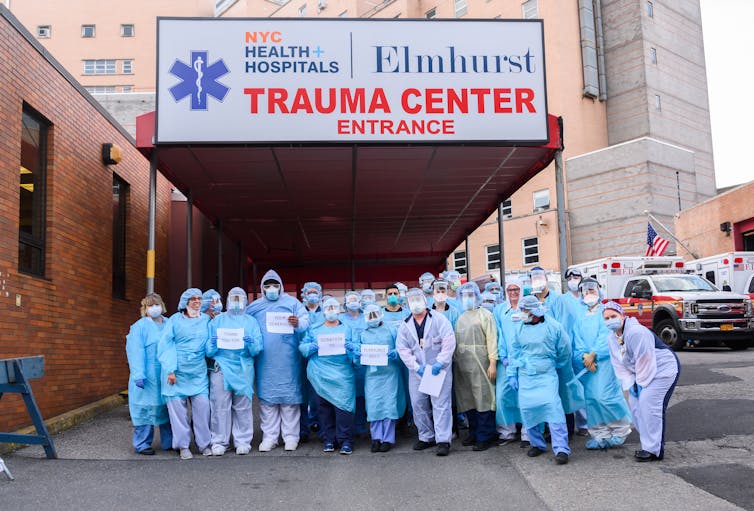
Individual acts of compassion abound in the coronavirus crisis, like frontline health care professionals and neighbors who deliver food, among other examples.

Compassion and solidarity on display at New York’s Elmhurst Hospital, during the April peak of the city’s coronavirus outbreak. Noam Galai/Getty Images

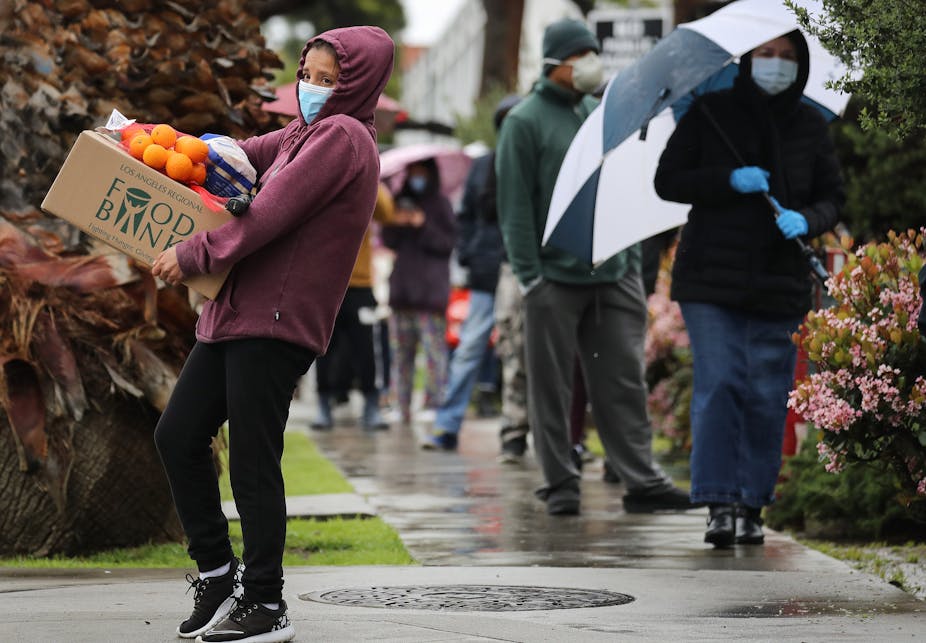
Some pandemic-era policies also reflect compassion, such as regulations preventing evictions and expanding unemployment benefits and giving food aid to poor familes.

A compassion-guided reopening aimed at preventing or reducing human suffering would require governments to continually monitor and alleviate the pain of their people. That includes addressing new forms of suffering that arise as circumstances change.

2. Solidarity

In a global pandemic, the actions people do or don’t take affect the health of others worldwide. Such shared emergencies require solidarity, which recognizes both the inherent dignity of each individual person and the interdependence of all people. As United Nations officials have emphasized, “we are all in this together.”

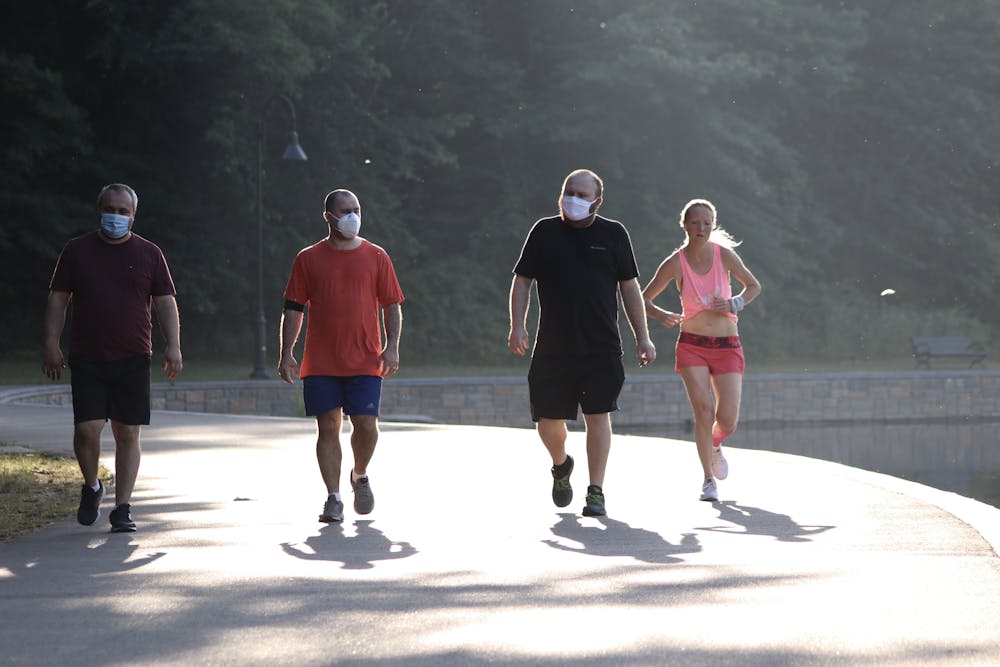
Public health measures like stay-at-home orders, social distancing and wearing masks reflect solidarity. While compliance in the United States has not been universal, data indicate broad approval for these measures. A new study found that 80% of Americans nationwide support staying home and social distancing and 74% support using face coverings in public.

To achieve these acts of solidarity, the leaders most praised in their countries and abroad – from U.S. National Institutes of Health director Dr. Anthony Fauci to New Zealand prime minister Jacinda Ardern – have relied primarily on moral persuasion, not threats of punishment.

By delivering clear information, giving simple and repeated behavioral guidance, and setting a good example, they’ve helped convince millions to take personal responsibility for protecting their community.

Face masks signal that wearers care about protecting others around them. Islam Dogru/Anadolu Agency via Getty Images

3. Justice

Justice focuses on the fair distribution of resources and the social structures that enable what the Dutch philosopher Patrick Loobuyck has called a “condition of equality.”

Justice-oriented policies are necessary for a moral reopening because of the pandemic’s disproportionate health and economic impacts. The evidence clearly shows that communities of colorlow-income populationspeople in nursing homes and those on the margins of society, such as homeless people and undocumented immigrants, are hardest hit.

Justice-oriented policies would aim for equitable balancing of necessary pandemic resources. That means directing testing and health equipment toward vulnerable communities – as identified by COVID-19 tracking data and risk factors like housing density and poverty – and ensuring free, widespread vaccine distribution when it becomes available.

In the U.S., economic justice will also require aggressively investing in minority-run businesses and poorer areas to guard against further harm to owners, employees and neighborhoods.

Similarly, all American school children have lost critical classroom hours, but lower-income children have been disproportionately damaged by remote learning in part due to the digital divide and loss of free lunch programs. Justice would demand channeling additional resources to the students and schools that need them most.

A moral reopening

Using virtues to guide social policies is an old idea. It dates back at least to the Greek thinker Aristotle.

Social distance stickers to prepare Nepal’s empty Tribhuwan International Airport for reopening. Narayan Maharjan/NurPhoto via Getty Images

New Zealand is a good example of virtuous pandemic policymaking, even considering its advantages in having wealth, low density and no land borders. Its coronavirus response included not only aggressive public health measures but also a well articulated message of being united in the COVID-19 fight and recurring government payments so workers did not have to risk their health for their job.

Note that it isn’t enough to apply just one virtue in a crisis of this magnitude. Policies built on compassion, solidarity and justice should be deployed in combination.

A compassionate post-pandemic response that does not address underlying inequalities, for example, ignores certain communities’ specific needs. Meanwhile, tackling specific injustices without engaging everyone in efforts like mask-wearing endangers the public health.

Bolstered by scientific evidence, virtue ethics can help nations reopen not just economically but morally, too.


Coronavirus Cases may be 10x higher than official count says CDC

https://www.axios.com/newsletters/axios-vitals-59e9ac1a-ab86-4f8a-917a-8c9d52f5835f.html?utm_source=newsletter&utm_medium=email&utm_campaign=newsletter_axiosvitals&stream=top

NC coronavirus update June 25: North Carolina's mask mandate goes ...

The real number of U.S. coronavirus cases could be as high as 23 million — 10 times the 2.3 million currently confirmed cases — the Centers for Disease Control and Prevention told reporters yesterday, Axios’ Marisa Fernandez reports.

Between the lines: The new estimate is based on antibody testing, which indicates whether someone has previously been infected by the virus regardless of whether they had symptoms.

  • “This virus causes so much asymptomatic infection. The traditional approach of looking for symptomatic illness and diagnosing it obviously underestimates the total amount of infections,” CDC director Robert Redfield said.

The agency also expanded its warnings of which demographic groups are at risk, which now include younger people who are obese and who have underlying health problems.

  • The shift reflects what states and hospitals have been seeing since the pandemic began, which is that young people can get seriously ill from COVID-19.

The new guidance also categorizes medical conditions that can affect the severity of illness:

  • Conditions that increase risk: Chronic kidney disease; chronic obstructive pulmonary disease; obesity; weakened immune system from solid organ transplant; serious heart conditions, such as heart failure, coronary artery disease or cardiomyopathies; sickle cell disease; Type 2 diabetes.
  • Conditions that may increase risk: Chronic lung diseases, including moderate to severe asthma and cystic fibrosis; high blood pressure; a weakened immune system; neurologic conditions, such as dementia or history of stroke; liver disease; pregnancy.