Kaiser’s net income surges to $2B in Q2

https://www.beckershospitalreview.com/finance/kaiser-s-net-income-surges-to-2b-in-q2.html

Image result for kaiser net income

Oakland, Calif.-based Kaiser Permanente’s revenue, operating income and net income for its nonprofit hospital and health plan units increased year over year in the second quarter of 2019.

The healthcare giant reported operating revenue of $21.4 billion in the second quarter of this year, up 9.3 percent from $19.6 billion in the same period a year prior.

Kaiser’s health plan unit — as well as favorable accounting estimates compared to the second quarter of 2018 — contributed to the growth. Kaiser saw health plan membership increase from 12.2 million as of June 30, 2018, to 12.3 million as of June 30.

As Kaiser’s revenue grew, so did operating expenses. Expenses climbed from $19.3 billion in the second quarter of 2018 to $20.3 billion in the second quarter of 2019.

With operating expenses accounted for, Kaiser reported operating income of $1.1 billion in the second quarter of 2019. That’s up from $345 million in the first quarter of 2018.

Kaiser’s nonoperating income was $930 million in the second quarter of this year, up from $308 million in the same period a year prior.

The boost was attributable to strong investment performance, along with an accounting change that took effect Jan. 1, the organization said. Under the accounting change, Kaiser reported unrealized gains on certain equities as net nonoperating income, which added $223 million to the organization’s nonoperating income and expenses in the second quarter of 2019.

Kaiser ended the second quarter of 2019 with net income of $2 billion. That’s up more than 213 percent from its net income of $653 million in the first quarter of last year.

“Strong results are essential for us to deliver on our nonprofit mission to improve affordability while advancing our high-quality care and service for our members and customers. This also allows us to make strategic investments in technology, people and care facilities,” said Kaiser Executive Vice President and CFO Kathy Lancaster. “At the same time, it’s critical we remain fiscally vigilant in today’s increasingly competitive environment with growing industry and financial pressures.”


Seventy two percent of all rural hospital closures are in states that rejected the Medicaid expansion

https://www.gq.com/story/rural-hospitals-closing-in-red-states

Image result for rural hospital bankruptcies

States that refused Obamacare’s Medicaid expansion are hemorrhaging hospitals in rural areas.

Roughly 20 percent of Americans live in rural areas, including more than 13 million children, according to the last U.S. census. And, according to research and reporting by the Pittsburg Morning Sun and its parent company, GateHouse Media, those people have been steadily losing access to hospitals for years.

In Oklahoma, Georgia, South Carolina, and Mississippi, at least 52 percent of all rural hospitals spent more money than they made between 2011 to 2017. In Kansas, it’s 64 percent, and five hospitals there shut down completely in that time. Since 2010, 106 rural hospitals have closed across the country. (Another 700 are “on shaky ground,” and about 200 are “on the verge of collapse,” according to Gatehouse.) Of those 106 that closed, 77 were in deep red states where local politicians refused the Obama administration’s Medicaid expansion that came about as a result of the Affordable Care Act.

In short, the federal government provided funds to expand coverage for Medicaid, a program that helps pay for health care for low income patients. But the expansion was optional, and 14 Republican-controlled states rejected to take the money. The only state that bucked this trend was Utah, where rural hospitals were among the most profitable in the country thanks to a policy of shifting funds and resources from urban hospitals. Only 14 percent of rural hospitals operated at a loss and none shut down over the same time period.

The number of rural hospitals has been shriveling for some time now: more than 200 rural hospitals closed between 1990 and 2000, according to a report from the Office of Health and Human Services. Since rural areas have been losing hospitals for decades already, every additional closure is more devastating. And even the hospitals that remain open are struggling to stay fully staffed. According to the Health Resources and Services Administration, rural parts of the U.S. need an additional 4,022 doctors to completely close their coverage gaps.

Just refusing the Medicaid expansion alone doesn’t completely account for the hundreds of rural hospital closures across Republican-controlled states. For one thing, medical treatment and technology has gotten more advanced. Dr. Nancy Dickey, president of the Rural and Community Health Institute at Texas A&M, told Gatehouse, “Most of what we knew how to do in the 1970s and 1980s could be done reasonably well in small towns. But scientific developments and advances in neurosurgery, microscopic surgery and the like required a great deal more technology and a bigger population to support the array of technology specialists.” As a result, the number of services that rural hospitals offered started to shrink, while at the same time rural populations dwindled as both jobs and young people moved away. What’s left were older, poorer populations that needed more medical care and had less money to pay for it. In that situation, hospitals can’t generate enough revenue to stay open, let alone enough to pay the salaries of even new doctors, who carry an average of $200,000 in student debt.

Still, if the state legislatures and governors had accepted the money, billions of dollars could have gone to improving insurance coverage and propping up the hospitals’ bottom lines. In a health-care industry where the average CEO pay is $18 million a year, hospitals have to produce a lot of money to justify their existence to shareholders. The Medicaid expansion was one of the few lifelines available to rural Americans, and their politicians snubbed it.


Hospital profitability down as operators lack flexibility to cut costs, Kaufman Hall says

https://www.healthcaredive.com/news/hospital-profitability-down-as-operators-lack-flexibility-to-cut-costs-kau/559705/

Image result for Hospital cut costs, Kaufman Hall says

Dive Brief:

  • Hospital profitability declined for the first time this year during the month of June. Operating margins were down 1.88%, according to a new flash report from Kaufman Hall.
  • Analysts blamed the decline on the inability of many hospitals to rapidly cut expenses to match a decrease in patient volumes. Bad debt and charity care expenses were also up.
  • Meanwhile, non-labor expenses per adjusted discharge rose 5.3% compared to June 2018, while labor expenses per adjusted discharge increased 4.9%.

Dive Insight:

Hospital and healthcare system operations are often so large and complex that at times they can’t act quickly to address declines in profitability. Based on the most recent Kaufman Hall flash hospital report, June 2019 appears to be one of those times.

The report concluded hospitals lacked the flexibility to cut costs as patient volumes decreased. In June, adjusted discharges, patient days and emergency department visits dropped more than 5% compared to May 2019. Operating room minutes declined by 7% compared to May and are down 1.8% year over year, a trend the report said was “most concerning.” At the same time, expenses rose significantly compared to June 2018.

There were some exceptions. Hospitals with 500 beds or more saw an increase in pre-tax profit margins for the third consecutive month, which the report attributed to increased revenues. Smaller hospitals ( fewer than 25 beds and 200-299 beds) also had improved margins, which was connected to increased inpatient volumes. However, mid-sized hospitals (300-499 beds) saw the biggest decline in profitability, while those in the 100-199 bed range also struggled.

Hospitals in the South also fared better than average, which the report attributed to “strong expense management during a period of stagnant volume growth.” By comparison, hospitals in the Midwest, where revenues were flat while bad debt and labor costs were on the rise, had pre-tax margins that were nearly 3.7% lower.

But the report also suggested that most hospital operators are not seeing the big picture. “Nationwide, hospitals continue to be overly optimistic about inpatient volumes, while underestimating the increase in ambulatory care,” it said.

Hospitals also face other potential headwinds: The upcoming Physician Payment Fee Schedule from CMS may not be favorable to providers; federal legislation to end surprise medical bills could wind up being enacted in law; and the courts could wind up striking down the Affordable Care Act, leaving some 20 million Americans without health insurance.

The report concluded “a lack of flexibility is a fundamental risk to hospitals and health systems and something that industry disruptors are likely to use to their advantage in the coming months and years.”


HCA Misses on Key Financials, Stock Drops Sharply

https://www.healthleadersmedia.com/finance/hca-misses-key-financials-stock-drops-sharply

The Nashville-based for-profit hospital operator’s revenues went up slightly, but other metrics missed the mark.

Though HCA Healthcare’s total revenues increased to $12.6 billion in Q2, the company missed on other key areas, according to its latest earnings released Tuesday morning.

HCA reported a net income of $783 million, down from $820 million this time last year, and an adjusted EBTDA of $2.29 that was better than Q2 2018 but fell from Q1 2019.

The Nashville-based for-profit hospital operator’s financial numbers from Q2 sent its stock tumbling in early morning trading, where it was down more than 10% by 10 a.m.  

Same facility admissions and same facility equivalent admissions each rose by 2.1% and 2.6%, respectively, while same facility emergency room visits jumped 3% year-over-year.

However, growth in same facility outpatient surgeries and same facility revenues per equivalent admission slowed in Q2 while same facility inpatient surgeries declined 0.1%.

The company updated its financial guidance in light of its Q2 results, projecting diluted earnings per share in a range between $10.25 and $10.65.

HCA had two major developments in Q2, asking a federal judge to dismiss a class action lawsuit alleging unfair billing practices at three Florida hospitals and its acquisition of 24 MedSpring urgent care centers from Fresenius Medical Care.

ADDITIONAL HCA Q2 EARNINGS REPORT HIGHLIGHTS:

  • Salaries, benefits, supplies, and other operating expenses accounted for 81.9% of revenues, down from 80.8% this time last year.
  • The company repurchased $242 million worth of stock in Q2 and has just over $1.75 billion remaining under its existing repurchase agreement.
  • The company also declared a quarterly cash dividend of $0.40 per share to be paid on September 30.
  • By the end of Q2, HCA was operating 184 hospitals, down from 185 hospitals at the end of Q2.

For complete financial information, review HCA Healthcare’s filing with the Securities and Exchange Commission.


Healthcare Executives See a Mixed Outlook

https://www.jpmorgan.com/commercial-banking/insights/healthcare-mixed-outlook

Image result for Healthcare Executives See a Mixed Outlook

In a recent survey of healthcare leaders, most were confident about their own organizations going into the new year. But respondents expressed concern about a range of evolving industry-wide challenges, including costs, technology and talent.

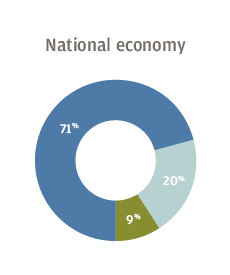
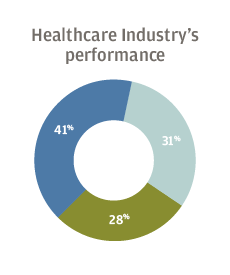
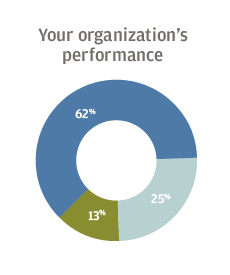
A majority of US healthcare executives surveyed by J.P. Morgan said they were optimistic about the financial performance of their own organizations going into 2019, as well as the national and local economies. But most were less positive about the outlook for the industry as a whole, with 28 percent expressing pessimism and another 31 percent merely neutral.

National economy 71% optimistic, 20% neutral, 9% pessimistic
Healthcare Industry's performance 41% optimistic, 31% neutral, 28% pessimistic
Your organization's performance 62% optimistic, 13% neutral, 25% pessimistic
Legend - Optimistic, Blue
Legend: Neutral Gray
Legend: Pessimistic, Green

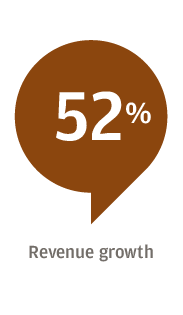
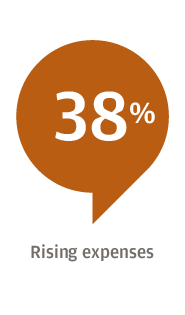
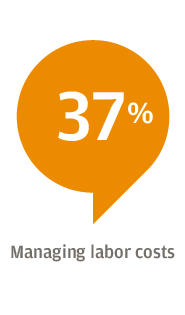
Respondents to the survey, conducted Oct. 16 to Nov. 2 of 2018, said their biggest concerns were revenue growth, rising expenses and labor costs. The executives said their organizations plan to invest the most in information technology and physician recruitment.

Healthcare Changes Shape Perceptions

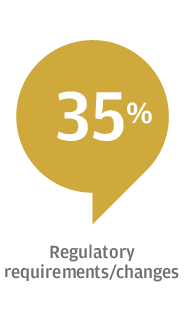
The pessimism about the industry likely stems, in part, from regulatory uncertainty and an ongoing shift from a fee-for-service model toward a value-based payment system, said Will Williams, Senior Healthcare Industry Executive within J.P. Morgan’s Commercial Banking Healthcare group. “Healthcare is going through the most transition of any industry in the country right now,” he said. Amid this upheaval, healthcare organizations face a combination of challenges, including lower reimbursement rates for Medicaid and Medicare patients, increased competition, and higher costs for labor, pharmaceuticals and technology investments.

The optimism that executives feel about their own hospital or healthcare group may come from a sense that an individual organization can adapt to industry changes, said Jenny Edwards, Commercial Banker in the healthcare practice at J.P. Morgan. “You can control certain factors, and make adjustments to compensate for the headwinds.”

Biggest Challenges for the New Year

Growth Strategies

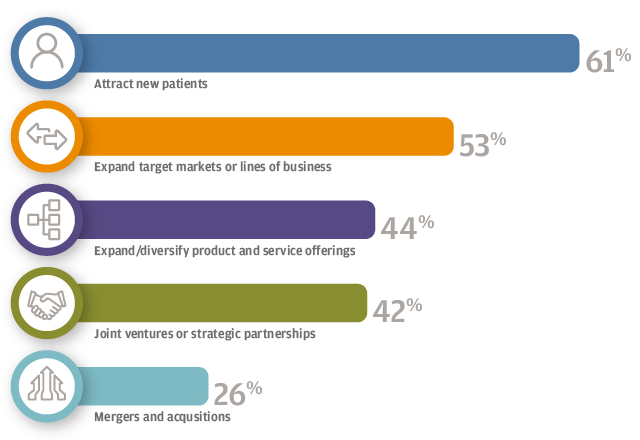
For 61 percent of respondents, the focus is on attracting new patients, followed by expanding target markets or lines of business (53 percent), and expanding or diversifying product and service offerings (44 percent). Hospitals, for example, have worked to add more patients to their broader healthcare system by opening clinics for urgent care or physical therapy, Edwards said.

As patient habits change, hospital systems have needed to become more consumer-focused, Edwards said. Patients are more likely to shop around for their care, expect transparent pricing and review healthcare workers on social media sites. This “retail-ization” trend in healthcare is accelerating, Edwards said. “You can shop for healthcare like you would a new pair of jeans.”

Skilled Talent Wanted

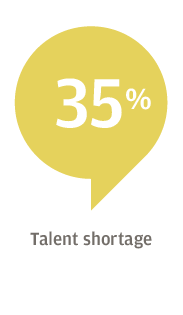
The talent shortage is top of mind for many healthcare executives, with 92 percent of survey respondents saying they were at least somewhat concerned with finding candidates with the right skill set. For 35 percent of respondents, the talent shortage is one of their top three challenges.

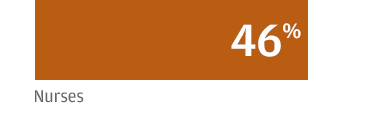
For those respondents who expressed concern, the most difficulty arises in filling positions for physicians (52 percent) and nurses (46 percent). To address the challenge, 76 percent said they expect to increase compensation of their staff over the next 12 months. According to 37 percent of respondents, the talent pool’s high compensation expectations factor into the shortage.

Most Challenging Positions to Fill

52%
46%
38%
29%
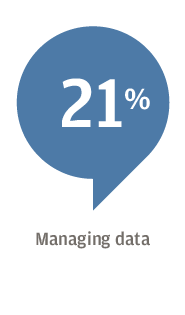
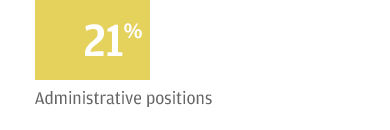
21%
21%

The talent shortage is an issue across the industry, Williams said, and burnout among doctors and nurses presents an ongoing problem. One contributing cause could be evolving changes in daily practice, with considerably more time today spent on electronic medical record entries and less on patient care. Williams said, “Doctors are getting frustrated. The problem is trying to replace those doctors as they quit practicing.”

Healthcare executives are particularly concerned about shortages of primary care professionals. “Rural communities already have these shortages,” said Brendan Corrigan, Vice Chair of the J.P. Morgan Healthcare Council.

Labor costs tend to be higher in healthcare than in other sectors, Williams said, as a hospital must have coverage for all of its major roles 24 hours a day. When asked where they struggle with workforce management, the survey respondents cite staff turnover and its associated cost (47 percent), the ability to flex staff based on patient volumes (41 percent), and the cost of overtime and premium labor (36 percent). These workforce issues not only represent specific challenges; they all contribute to labor costs, which, as noted above, rank in the top three challenges for 2019.

Investments for a Changing Industry

A majority (51 percent) of organizations plan to invest in IT over the next 12 months. Other areas for investment included physician recruitment (44 percent) and new or replacement facilities (36 percent).

Since healthcare organizations manage a large amount of private patient health information, data security remains a large part of IT expenditures. “It’s a huge focus—they’re spending a lot of time and money on preventing a breach,” Edwards said. She goes on to note that the transition to patient EMR systems brings another big IT expense—more than $1 billion for the largest healthcare systems.

Overall, the survey showed healthcare executives grappling with rising costs and structural changes that affect the entire industry. “Healthcare is trying to figure out how to fix themselves,” Williams said.


Healthcare’s Leading Financial Challenges and Opportunities in 2019

https://www.jpmorgan.com/commercial-banking/insights/healthcare-financial-challenges-2019

Image result for Healthcare’s Leading Financial Challenges and Opportunities in 2019

Faced with slim margins and rising costs, the healthcare industry is looking to blockchain, data analytics and innovation to help drive savings and unlock new revenue.

The healthcare industry is facing an urgent need to reduce costs and increase revenue. Research from the Healthcare Advisory Council reveals the not-for-profit health system will need between $40 million and $44 million annually in cost avoidance over the next eight years to maintain a sustainable margin. The challenge is significant, but emerging technologies and innovative strategies are creating opportunities for greater efficiency, better patient care and decreased costs, according to executives and other leaders in healthcare.

Making a Margin on Medicare

Health systems with the best margin sustainability pursue effective cost-avoidance practices, including:

  • Embedding cost discipline throughout the organization
  • Escalating spending decisions
  • Reducing unnecessary hires
  • Matching patient acuity to the level of care
  • Reducing drug formulary costs

But even with these practices, cost avoidance is challenging—particularly when it comes to Medicare-reliant seniors, who often require frequent medical treatments and hospital admissions. Turning to advanced electronic medical records (EMRs) that are designed around a health system’s risk and workflow can improve treatment decisions and continuity of care, leading to decreased admissions, better cost effectiveness and a greater profit margin.

Simultaneously, some health systems are looking to a pre-paid, value-based medicine model, as opposed to the more common fee-for-service model. Value-based medicine moves the payment upstream, incentivizing providers to focus on maintaining patient health rather than on providing medical interventions. Decreasing the amount of care needed to keep patients healthy has a direct impact on the size of an organization’s margins.

Blockchain: The Potential to Change Healthcare

One of the most common inefficiencies in healthcare is how physicians are credentialed. The months-long process for clinician credentialing commands significant time and costs. Emerging blockchain technology may be one solution to this persistent point of inefficiency.

With blockchain, rather than sending a clinician credentialing application to several organizations for verification, the physician and all credentialing locations—as members of a dedicated blockchain network—can have access to the physician’s highly encrypted log. Any changes to the physician’s log can be transmitted to the network and validated by private keys known only to each party and with algorithms agreed upon by the network. In this, trust transfers from a third-party clearinghouse to the network as a whole.

In the blockchain world, the physician could provide access codes to the hospital to review their verified credentials. This could save as much as 80 percent of the current cost and time invested in physician credentialing. Using the same technology and process, blockchain may also be a valuable tool for finding efficiencies when working with patient records.

Venture Capital: Strategic Investing 2.0

Healthcare system-based venture capital funds are growing rapidly. In 2017, more than 150 distinct corporate venture groups operated within the healthcare arena, according to Health Enterprise Partners, and these groups participated in 38 percent of all healthcare IT financing.

There are four common objectives for starting such a fund:

  • Generate new income sources not subject to healthcare reimbursement pressure
  • Identify promising companies that executives might not otherwise encounter
  • Create a vehicle to enhance brand integrity and expand market reach
  • Foster a culture of innovation

Once healthcare investors establish their fund objectives (or mix of objectives), they define their investment approach. This includes establishing a decision-making chain with operational leaders and board members that can allow decisions to be made quickly and in an established pattern. It also includes building infrastructure and could mean adopting a rigorous information environment system, like a healthcare customer relationship management (CRM) system, as well as developing stringent custody and accounting procedures for securities.

Funds should gather resources to support the interactions between the investment fund and the companies in which they invest. At the outset, they should decide the relationship they will have with their investment targets and whether return on investment is a primary or secondary goal. As a part of choosing investment targets, it is important that funds address an important problem of the parent organization and in a way that the organization supports.

Time Is Money: Accelerating the Pace of Care

For health systems, every patient hour costs $250 in direct operating costs, more than half of which owe to labor. By this, improving efficiency and decreasing the time needed for tasks can save money and support a healthy margin. A mix of advanced analytical data and targeted interpersonal relations can help reduce the time required for common hospital and health system tasks. Predictive analytic modeling software can help yield clearer insight into operations, revealing ways to break down barriers between departments and more effectively manage census levels. This optimizes census distribution inside a complex medical center.

Another rich source of potential healthcare savings lies in the staff hiring process. Successful staff hiring for all income levels is one of the great challenges for health systems, but data analytics can help make the hiring process more efficient. With models built on the characteristics of successful hires, predictive analytics can point to applicants with the best potential for success, improving confidence in hiring decisions. Importantly, while analytics and automation can play a big part in finding the best applicants, once a candidate becomes an employee, important decisions like promotions or relocations require direct personal contact.

Data and Dollars Innovation

As health systems explore avenues for increased efficiency, lower costs and better margins, J.P. Morgan has developed digital innovations to support healthcare investment, strategy and operation. Two of the most applicable include:

  • Enhanced Healthcare Lockbox: J.P. Morgan has supercharged its lockbox technology with machine learning. The auto-posting rate has increased by nearly one-fifth, allowing hospitals and health systems to redeploy assets to other revenue-generating sectors like denial management. The high-tech upgrade has also saved three to four days in clients’ working capital.
  • Corporate Quick Pay: The need for hospitals and health systems to collect an increasing amount of money directly from patients has resulted in an explosion in low-dollar patient refunds. This creates a problem for the accounts payable departments of healthcare institutions, which were not designed to issue thousands of small checks to patients. J.P. Morgan’s Corporate Quick Pay solution allows health systems to send payments directly to a patient’s bank account using email or text message.

These innovations in artificial intelligence and machine learning drive efficiency across a range of areas. Consider the benefits one client enjoyed by virtue of J.P. Morgan’s digital tools:

  • 70,000 paper-based claims converted to electronic
  • 99.3 percent lift rate for all paper received in lockbox
  • 18 percent increase in auto-posting after implementation
  • Three to four days’ improvement to working capital

Going forward, emerging technologies and strategies are indispensable for healthcare systems striving to grow margins in a time when health costs and needs are increasing. Ultimately, hospitals and health systems that find pathways to greater profitability will be best positioned to achieve their primary goal: delivering better care that leads to better patient outcomes.


Purdue Pharma struggling amid lawsuits

https://www.axios.com/newsletters/axios-vitals-1b40c794-c913-4681-b2ac-7a6e9746718f.html?utm_source=newsletter&utm_medium=email&utm_campaign=newsletter_axiosvitals&stream=top

Related image

Purdue, the maker of OxyContin, is facing sluggish sales, a dwindling workforce and restructuring challenges as it fights a slew of lawsuits claiming that the company contributed to the opioid epidemic, WSJ reports.

  • The company’s revenue is expected to be less than $1 billion this year for the first time in a decade, and it has said it’s considering filing for bankruptcy.
  • Sales for OxyContin have been declining since 2010, as providers have changed their prescribing habits and the public has grown more aware of the threat of opioid addiction.

Purdue’s financial reliance on OxyContin was a result of business decisions made by the company and its board, including members of the Sackler family — which is also under legal scrutiny.

  • The company’s leaders are now more focused on dealing with the ongoing litigation than growing the business, sources told the WSJ.


When a hospital wields monopoly power

https://www.axios.com/newsletters/axios-vitals-1b40c794-c913-4681-b2ac-7a6e9746718f.html?utm_source=newsletter&utm_medium=email&utm_campaign=newsletter_axiosvitals&stream=top

Illustration of a giant health plus on top of a pile of cash, the ground underneath is cracking.

NorthBay Healthcare, a not-for-profit hospital system in California, recently gave a candid look into how it operates, telling investors it has used its negotiating clout to extract “very lucrative contracts” from health insurance companies.

Why it matters: This is a living example of the economic theories and research that suggest hospitals will charge whatever they want if they have little or no competition, Axios’ Bob Herman reports.

Details: NorthBay owns two hospitals and several clinics in California’s Solano County. Kaiser Permanente owns the only other full-service hospital in the county, and Sutter Health operates some medical offices. (A NorthBay spokesperson argued the system is “more akin to the David among two Goliaths.“)

Three health insurers have terminated their contracts with NorthBay over the past couple years. During a June 19 call with bondholders, executives explained why this has happened.

“We’ve been able to maintain very lucrative contracts without the competition. And what the payers are saying is, they would like us to be like 90% of the rest of the United States in terms of contract structure.”

Jim Strong, interim CFO, NorthBay Healthcare

Between the lines: NorthBay’s revenue has increased by 50% over the past few years, from $400 million in 2013 to $600 million in 2018, due in large part to its natural monopoly and oligopoly over hospital services.

  • This is exactly what we should expect to happen when sellers have the upper hand over buyers, economists say.

NorthBay also serves as a cautionary tale for price transparency, the policy fix du jour.

  • If the health care system is consolidated, consumers don’t have anywhere else to go,” said Sunita Desai, a health economist at NYU. “Even if they see the prices of a given hospital, they’re limited in terms of how much they can ‘shop’ across providers.”