Fauci says US could have ‘millions’ of coronavirus cases and over 100,000 deaths

https://thehill.com/homenews/administration/490048-fauci-says-us-could-have-millions-of-coronavirus-cases-and-over?rnd=1585493013

Fauci says coronavirus deaths in US could top 100,000 ...

Dr. Anthony Fauci, one of the faces of the Trump administration’s coronavirus task force, on Sunday warned that the novel coronavirus could infect millions of people in the United States and account for more than 100,000 deaths. 

Speaking on CNN’s “State of the Union,” Fauci said that, based on what he’s seeing, the U.S. could experience between 100,000 and 200,000 deaths from Covid-19.

“We’re going to have millions of cases,” Fauci, the head of the National Institute of Allergy and Infectious Diseases, said, noting that projections are subject to change, given that the disease’s outbreak is “such a moving target.”

The novel coronavirus, which first appeared in China in December, has infected more than 124,000 people in the U.S. and accounted for more than 2,000 deaths, according to a Johns Hopkins University database. The U.S. has reported the most confirmed cases of the virus worldwide.

Video of Dr. Fauci telling @jaketapper that “Looking at what we’re seeing now, I would say between 100,000 and 200,000 cases… excuse me, deaths. I mean, we’re going to have millions of cases.”

These next few weeks could be pretty rough.

The outbreak has upended everyday life, causing a mass closure of businesses and schools as federal and state officials enforce measures designed to slow the spread of the disease. Areas such as the New York metropolitan area have been hit particularly hard, producing concerns about a surge in patients overwhelming its health care system.

Fauci has continually called for social-distancing requirements to remain in place for an extended period of time. He said Sunday that lifting those restrictions would depend on the availability of testing kits that will be able to confirm a diagnosis within about 15 minutes.

“It’s going to be a matter of weeks. It’s not going to be tomorrow and it’s certainly not going to be next week,” he said.

Fauci added that he wanted to to see a substantial flattening of the curve in terms of cases before curbing social-distancing restrictions. 

“As I have said before, it’s true the virus itself determines that timetable. You can try and influence that timetable by mitigating against the virus, but, ultimately, it’s what the virus does,” he said.


Philadelphia hospital won’t reopen to treat COVID-19 patients

https://www.beckershospitalreview.com/patient-flow/philadelphia-hospital-won-t-reopen-to-treat-covid-19-patients.html?utm_medium=email

Closed Philadelphia Hospital Won't Be Used To Treat COVID-19 Patients

Hahnemann University Hospital, which closed last year, will not be reopened to treat COVID-19 patients, Philadelphia Mayor Jim Kenney announced March 26.

Philadelphia leaders identified Hahnemann as a possible site to quarantine patients who have tested positive for or been exposed to COVID-19. However, the mayor said the city is ending its effort to rent the shuttered hospital after negotiations with the hospital’s owner, Joel Freedman, failed to progress.

“We need to focus on the crisis at hand — including the need to develop facilities that will serve as field hospitals, as quarantine space, and as isolation space — facilities that will help save lives,” Mr. Kenney said. “We will focus our energies on working with other property owners in order to find temporary solutions to these absolutely vital needs. And I fully expect that we will find owners who are ready and willing to step up, to work with us, to do what is best for all Philadelphians.”

Talks collapsed a few days after Philadelphia Managing Director Brian Abernathy said negotiations with Mr. Freedman were not going well.

“I think he is looking at how to turn an asset that is earning no revenue into an asset that earns some revenue, and isn’t actually particularly thinking through what the impacts are on public health,” Mr. Abernathy said of Mr. Freedman at a March 24 press briefing, according to WHYY. “I think he’s looking at this as a business transaction rather than providing an imminent and important aid to the city and our residents.”

Regarding the city’s decision to end negotiations, Mr. Freedman’s Broad Street Healthcare Properties provided the following statement to Becker’s:

“We appreciate and applaud the city’s efforts to address the health crisis quickly. We understand that the city doesn’t feel that the Hahnemann building currently fits their urgent needs as a quarantine site. Should the situation change we stand ready to reengage in discussions on how the city or the state can best use the facility.”


Grocery workers are keeping Americans alive during the COVID-19 pandemic. Here’s what they need.

https://www.brookings.edu/blog/the-avenue/2020/03/25/grocery-workers-are-keeping-americans-alive-during-the-covid-19-pandemic-heres-what-they-need/?utm_campaign=Brookings%20Brief&utm_source=hs_email&utm_medium=email&utm_content=85335188
Grocery workers are keeping Americans alive during the COVID-19 ...

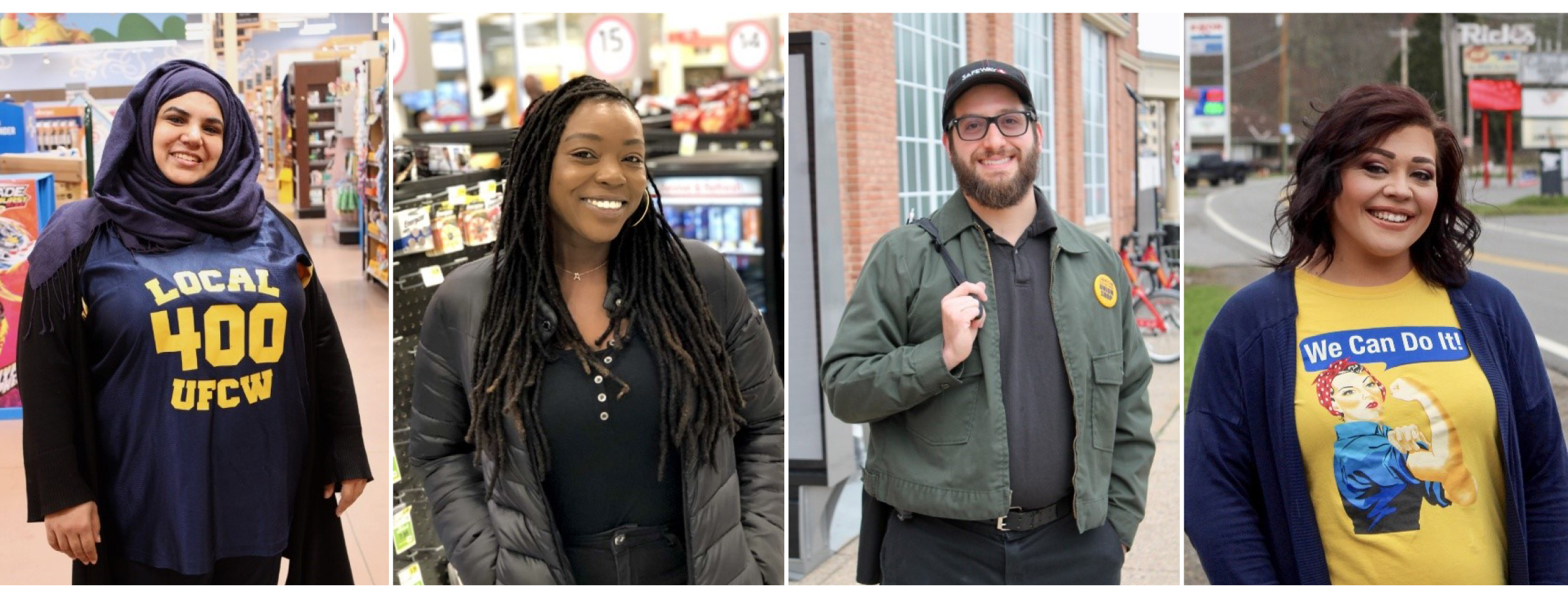
As worried Americans pack supermarket aisles in anticipation of quarantines and shelter-in-place orders, grocery workers like Courtney Meadows are working at a frantic pace to keep Americans fed and alive, and risking their own health in the process.

Meadows, a cashier at Kroger in Beckley, W.Va., said her store is the busiest she has seen it in 10 years on the job. “I have worked through snow scares, a blizzard, two derechos, holidays, anything that can impact a grocery store,” she told me. “This is the absolute worst I have seen it. It is a sea of people everywhere.”

Over the last week, I traveled to supermarkets across the Washington, D.C. region and interviewed workers from Virginia, Maryland, West Virginia and the District to hear—in their words—how COVID-19 is impacting them. These crowded stores I visited had few visible safeguards or protections for workers.

“We aren’t staying six feet away from the customers,” said Michelle Lee, a Safeway cashier in Alexandria, Va. “When we ring them up, they are like two feet away from us. We check out 200 customers a day. A doctor can wear a mask and protective gear. We don’t have all of that.”

Amber Stevens, a cashier at Shoppers in Prince George’s County, Md., expressed concern over social distancing as well. “I do still have a job to go to, but it isn’t helping me with social distancing because I am hands-on with customers,” she told me. “That is the scary part. Dealing with money, having to be so close to people.”

More than their own health, the grocery store employees I interviewed expressed the most concern about the safety of those around them: their loved ones at home, their elderly customers, their colleagues with underlying health conditions, and their neighbors in crowded apartment buildings. Several workers welled up with emotion as they described how hard it is to be unable to care for older relatives during the pandemic.

“All of that worry plus the stress of double the number of customers we normally have,” said Lisa Harris, a cashier at Kroger in Richmond, Va. “This isn’t just for one day. It is for weeks.”

As grocery workers put their lives on the line—often for low wages and few benefits—it is imperative that employers, policymakers, and even customers act with urgency to protect, support, and compensate them.

EMPLOYERS MUST KEEP GROCERY WORKERS HEALTHY

Employers need to implement immediate steps to reduce grocery workers’ exposure to COVID-19. First, employers should expand access to personal protective equipment (PPE) such as masks and gloves and end any restrictions on workers wearing them. While supplies of protective masks and gloves are extremely limited across the country, employers and policymakers should prioritize PPE for grocery workers as they become available. Employers should provide adequate cleaning supplies and hand sanitizer, regular opportunities for workers to wash their hands, and frequent equipment cleaning.

Second, stores should shorten hours and limit the number of customers at any given time. While several stores—including Trader Joe’sWalmart, and Safeway—have limited store hours and introduced “senior only” hours, most stores are not following the CDC’s guidance of limiting gatherings to 50 people. Even tighter restrictions may be needed to keep workers safe as the virus spreads; for instance, some stores in China are checking customers’ temperatures before they enter the store.

Third, grocery stores should implement additional measures to protect workers and enforce safe spacing of customers. Albertsons, which owns Safeway and 19 other grocery chains, was the first major company to announce they will install plexiglass “sneeze-guard” barriers at checkouts in its 2,200 stores over the next two weeks. Walmart and Kroger have made similar commitments, and other grocery stores should follow.

Even in the absence of specific CDC guidelines for grocery workers, employers should act boldly and creatively to modify stores to keep workers safe, continuously adapt to evolving best practices, and respond to safety priorities identified by unions like the United Food and Commercial Workers International Union (UFCW), which represents over 1.2 million workers.

INCREASE COMPENSATION AND OFFER HAZARD PAY

The coronavirus pandemic has put a harsh spotlight on the low wages that grocery workers earn for their life-saving work. At Kroger, the country’s second-largest grocery chain with 453,000 workers, the average hourly wage of cashiers is just $9.94 per hour, according to estimates on Indeed.com.

Lisa Harris, a Kroger cashier, described the financial hardships she and her low-wage colleagues face: “I have coworkers who stand all day serving people, and then have to go pay for their own groceries with food stamps. I am very lucky that my boyfriend works in pizza because that is our survival food. If we can’t afford to buy food, he brings home a pizza.”

Even in “normal” times, grocery workers—like other service and low-wage workers—deserve better wages. In these extreme times, adequately compensating them is even more imperative. As grocery sales soar and their stock prices rise, employers should provide additional compensation and hazard pay to their workers on the front line.

“I think that some pay increase would be wonderful,” Kroger cashier Courtney Meadows told me. “I don’t think they understand the toll that comes through in our lives. They don’t see it. They don’t see the panic on people’s faces.”

In response to the pandemic, the two largest grocery employers, Kroger and Walmart, have offered workers one-time bonuses of $300. Responding to pressure from the UFCW, Safeway and Shoppers are now offering an additional $2 per hour of hazard pay, while Whole Foods and Target are also raising pay $2 per hour.

These pay increases are an important start, but they don’t go far enough. The raises should be permanent, and enough to provide a family-sustaining wage to workers.

ENSURE ACCESS TO HEALTH INSURANCE AND EXTEND PAID SICK LEAVE

Now more than ever, paid sick leave and health insurance are critical for grocery workers. Well before the COVID-19 pandemic, hundreds of thousands of grocery workers didn’t receive paid sick leave from their employers. Responding to public outrage and pressure from employees and unions, most large employers now have updated their sick leave policy to respond to COVID-19. However, their policies don’t go far enough: They are temporary, focus narrowly on COVID-19, and are insufficient to meet the needs of workers.

Companies including Safeway, Kroger, and Walmart are now offering 14 days paid sick leave for workers with a confirmed COVID-19 diagnosis. But COVID-19 tests are in extremely short supply and many workers with suspected cases will be unable to get tested. Employers should modify paid leave policies to allow flexibility for ill workers to access the benefits even without a confirmed test, at least until testing is more widely available.

Policies should cover paid leave for grocery workers to care for their immediate family members or people they live with if they become ill. Employers should also compensate workers for any coronavirus-related medical bills that are not covered by their health insurance.

Employers should provide extra support to grocery workers who are especially high-risk, such as older workers and the immunocompromised. The most vulnerable workers may need to simply stay home during the pandemic and not work for weeks or months. Employers should do their part to ensure those workers have extended paid leave or other forms of adequate compensation and benefits, including health insurance.

CUSTOMERS CAN HELP KEEP GROCERY WORKERS SAFE

A major concern for the workers I interviewed was the actions of individual customers that could jeopardize their health. Many workers noted that customers continue to come to their store even when they are sick.

“Some customers will come through the line and cough or sneeze in their hand,” said Safeway cashier Michelle Lee. “If you are sick, you should stay home or cough in their elbow.”

Customers should do their part by keeping a safe distance from workers at checkout and throughout the store, practicing proper hygiene when coughing or sneezing, and staying home when ill.

RIGHT NOW, GROCERY WORKERS ARE EMERGENCY PERSONNEL

On March 15, Minnesota Governor Tim Walz made grocery store employees and food distribution personnel eligible for free child care by designating them as emergency workers. Four days later, Vermont’s Department of Public Safety added grocery workers to its list of essential personnel, giving them free child care at school-based centers set up by the state.

Other states should follow the lead of Minnesota and Vermont and designate grocery workers as emergency personnel, granting them the same protections and benefits as first responders and health workers.

If we had an opportunity to get free child care, people like me could go in,” Matt Milzman, a 29-year-old Safeway cashier in Washington, D.C. and father of two small children, told me. “They need all the people they can. I am low risk and healthy. I would much rather me work than someone who is older with a million health problems.”

Grocery workers are among the true heroes of the pandemic, providing basic necessities to keep Americans alive, but also human comfort for their customers during an anxious time.

“I choose to be happy and positive,” cashier Courtney Meadows told me. “If you can talk and make someone laugh, that might be the only positive thing in their life that day. That is what I choose to do.”

We owe them not only our gratitude, but the protection, support, and compensation they deserve.


Small hospitals’ bailout concerns

https://www.axios.com/newsletters/axios-vitals-61745839-012e-4bd1-8843-24917a73b6e2.html?utm_source=newsletter&utm_medium=email&utm_campaign=newsletter_axiosvitals&stream=top

Country Closures: Rural Communities Adapt As More Hospitals Shut Down

Congress is about to provide $100 billion for hospitals and other health care providers to cope with the fallout from the coronavirus, but small hospitals have no idea how to access those funds — and many need the money immediately, Axios’ Bob Herman reports.

What they’re saying: “A lot of rural hospitals out there need a cash infusion today,” Alan Morgan, CEO of the National Rural Health Association, told Axios. “How is it going to happen? What is the process? There are way more questions than answers.”

Details: The stimulus bill says “the Secretary of Health and Human Services shall, on a rolling basis, review applications and make payments” to hospitals and other providers, out of a $100 billion fund.

  • HHS did not respond to questions about how that process would work.

Between the lines: Many hospitals are part of large, profitable systems that benefit from their area’s demographics. The coronavirus will cause them financial distress, but they are not in danger of going under.

  • Rural and safety net hospitals, which treat disproportionate amounts of older and low-income patients, have a lot less wiggle room to call off elective procedures as they wait for a coronavirus surge.
  • Many small hospitals can’t get new loans from banks and could miss payroll as soon as next week.

The bottom line: Bob asked Morgan how this process was supposed to work. “I don’t know,” he said, “and we are greatly concerned.”


U.S. leads world in confirmed coronavirus cases for first time

https://www.axios.com/united-states-most-coronavirus-cases-52b6d1b5-bc65-4b86-a42d-712cf9e3b556.html?stream=top&utm_source=alert&utm_medium=email&utm_campaign=alerts_all

Coronavirus dashboard: Catch up fast - Axios

The United States on Thursday reported the most coronavirus cases in the world for the first time, over China and Italy with at least 82,404 infections and more than 1,000 deaths, according to data from Johns Hopkins.

Why it matters: From the beginning, the U.S. — with a population of more than 325 million — has repeatedly underestimated and reacted slowly to the coronavirus, prolonging its economic pain and multiplying its toll on Americans’ health.

First, it happened with testing — a delay that allowed the virus to spread undetected, Axios’ Caitlin Owens reports.

  • Then we were caught flat-footed by the surge in demand for medical supplies in emerging hotspots.
  • And the Trump administration declined to issue a national shelter-in-place order. The resulting patchwork across the country left enough economic hubs closed to crash the economy, but enough places up and running to allow the virus to continue to spread rampantly.

What they’re saying: At a press conference Thursday, President Trump attributed the U.S. overtaking China to ramped up testing, before casting doubt on whether the Chinese government is reporting accurate numbers.

  • It is possible that China, which was the site of the original coronavirus outbreak, has been underreporting its cases.
  • The Chinese government covered up the outbreak in its first few weeks, likely allowing the virus to spread both domestically and throughout the rest of the world.

Flashback: Exactly one month ago on Feb. 26, President Trump said at a coronavirus press briefing that the U.S. has 15 reported cases and that “the 15 within a couple of days is going to be down to close to zero.”


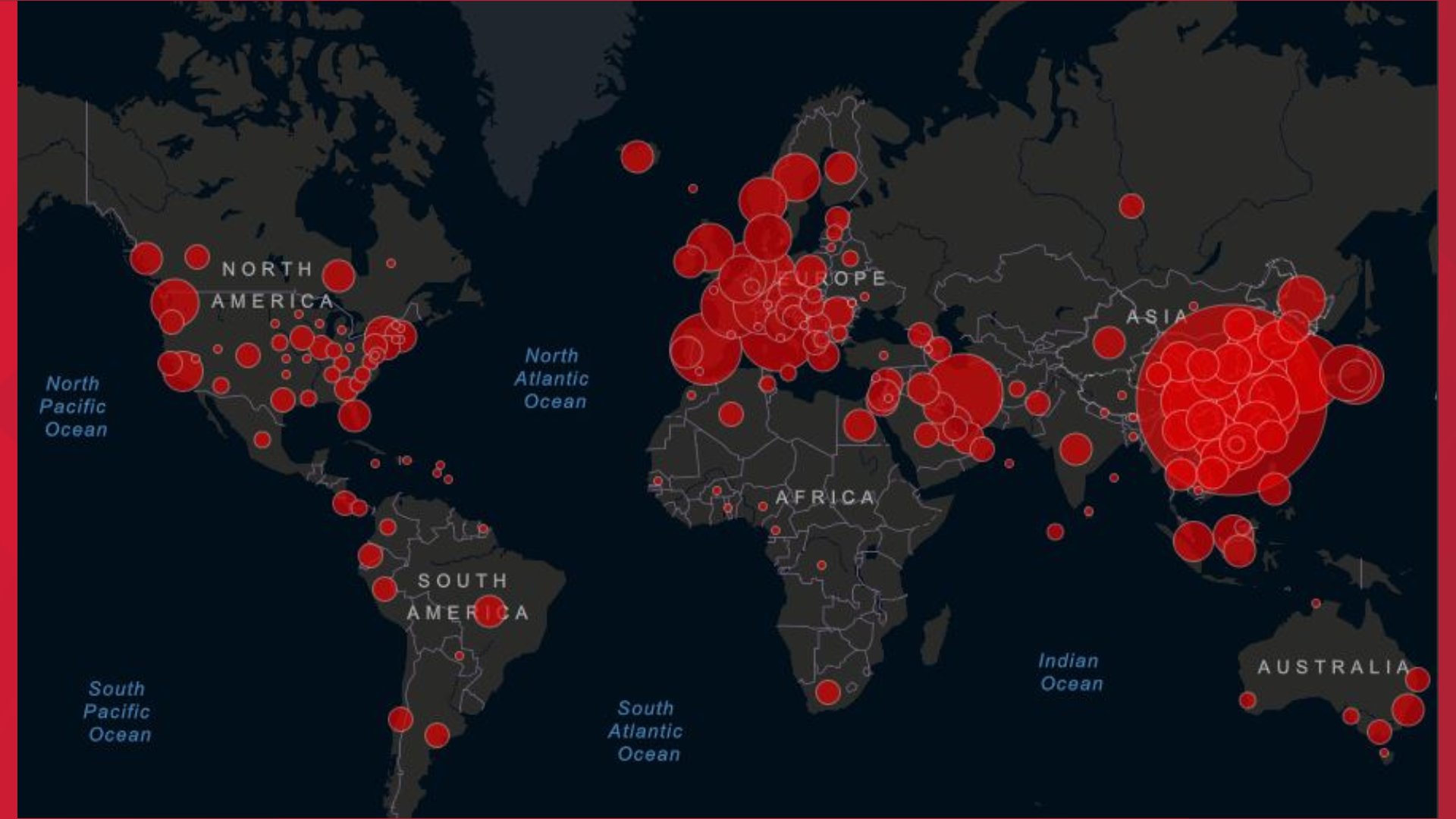
U.S. now has more confirmed Coronavirus Cases than China and Italy

https://www.arcgis.com/apps/opsdashboard/index.html?fbclid=IwAR3ZcDx_u6lJk1W7uXkLTT2SzyFEQfjKcLFFvuiIP7vS3SxEeVBvfTO_NRs#/bda7594740fd40299423467b48e9ecf6

These interactive maps show all reported coronavirus cases in the ...


TED How we must respond to the COVID-19 pandemic | Bill Gates

https://interestingengineering.com/video/bill-gates-explains-how-we-must-respond-to-the-covid-19?utm_source=Facebook&utm_medium=video&utm_campaign=organic&utm_content=Mar26&fbclid=IwAR2rdOpbqBMQpAk9iklTVoZ3FMtkuLKHisfa0kUKRalvFRksb5gfFDaoV_I

Image result for TED How we must respond to the COVID-19 pandemic | Bill Gates

The billionaire philanthropist predicted the pandemic several years ago. Now, he shares his views on the current situation.

In this TED talks interview, philanthropist billionaire Bill Gates discusses his expert views on COVID-19. He shares why he predicted a few years ago that a global pandemic would hit the world.

Gates explains that the real danger in COVID- 19 is that it is infectious before symptoms have started. He calls these types of viruses worst-case scenarios.

“Ebola, you’re actually flat on your back before you’re very infectious so you’re not at church or on a bus or at a store. With most respiratory viruses like the flu at first, you only feel a little bit of a fever and a little bit sick. So there’s the possibility you’re going about your normal activities and infecting other people. Human to human transmissible respiratory viruses that in the early stage aren’t stopping you from doing things, that’s kind of a worst-case,” says the Microsoft co-founder.

He goes on to say that people move around more now, making for more worldwide victims. Gates also says that he understood the virus would be very difficult to contain back in January when he heard that it was human to human transmissible.

Finally, the entrepreneur shares what was happening behind the scenes during that period. The interview is a must-see not only for Bill Gates fans but for everyone who is concerned about COVID-19.


Hospitals consider universal do-not-resuscitate orders for coronavirus patients

https://www.washingtonpost.com/health/2020/03/25/coronavirus-patients-do-not-resucitate/?utm_campaign=wp_post_most&utm_medium=email&utm_source=newsletter&wpisrc=nl_most

Image result for Hospitals consider universal do-not-resuscitate orders for coronavirus patients

Worry that ‘all hands’ responses may expose doctors and nurses to infection prompts debate about prioritizing the survival of the many over the one.

Hospitals on the front lines of the pandemic are engaged in a heated private debate over a calculation few have encountered in their lifetimes — how to weigh the “save at all costs” approach to resuscitating a dying patient against the real danger of exposing doctors and nurses to the contagion of coronavirus.

The conversations are driven by the realization that the risk to staff amid dwindling stores of protective equipment — such as masks, gowns and gloves — may be too great to justify the conventional response when a patient “codes,” and their heart or breathing stops.

Northwestern Memorial Hospital in Chicago has been discussing a do-not-resuscitate policy for infected patients, regardless of the wishes of the patient or their family members — a wrenching decision to prioritize the lives of the many over the one.

Richard Wunderink, one of Northwestern’s intensive-care medical directors, said hospital administrators would have to ask Illinois Gov. J.B. Pritzker for help in clarifying state law and whether it permits the policy shift.

“It’s a major concern for everyone,” he said. “This is something about which we have had lots of communication with families, and I think they are very aware of the grave circumstances.”

Officials at George Washington University Hospital in the District say they have had similar conversations, but for now will continue to resuscitate covid-19 patients using modified procedures, such as putting plastic sheeting over the patient to create a barrier. The University of Washington Medical Center in Seattle, one of the country’s major hot spots for infections, is dealing with the problem by severely limiting the number of responders to a contagious patient in cardiac or respiratory arrest.

Several large hospital systems — Atrium Health in the Carolinas, Geisinger in Pennsylvania and regional Kaiser Permanente networks — are looking at guidelines that would allow doctors to override the wishes of the coronavirus patient or family members on a case-by-case basis due to the risk to doctors and nurses, or a shortage of protective equipment, say ethicists and doctors involved in those conversations. But they would stop short of imposing a do-not-resuscitate order on every coronavirus patient. The companies declined to comment.

Lewis Kaplan, president of the Society of Critical Care Medicine and a University of Pennsylvania surgeon, described how colleagues at different institutions are sharing draft policies to address their changed reality.

“We are now on crisis footing,” he said. “What you take as first-come, first-served, no-holds-barred, everything-that-is-available-should-be-applied medicine is not where we are. We are now facing some difficult choices in how we apply medical resources — including staff.”

The new protocols are part of a larger rationing of lifesaving procedures and equipment — including ventilators — that is quickly becoming a reality here as in other parts of the world battling the virus. The concerns are not just about health-care workers getting sick but also about them potentially carrying the virus to other patients in the hospital.

R. Alta Charo, a University of Wisconsin-Madison bioethicist, said that while the idea of withholding treatments may be unsettling, especially in a country as wealthy as ours, it is pragmatic. “It doesn’t help anybody if our doctors and nurses are felled by this virus and not able to care for us,” she said. “The code process is one that puts them at an enhanced risk.”

Wunderink said all of the most critically ill patients in the 12 days since they had their first coronavirus case have experienced steady declines rather than a sudden crash. That allowed medical staff to talk with families about the risk to workers and how having to put on protective gear delays a response and decreases the chance of saving someone’s life.

A consequence of those conversations, he said, is that many family members are making the difficult choice to sign do-not-resuscitate orders.

Code blue

Health-care providers are bound by oath — and in some states, by law — to do everything they can within the bounds of modern technology to save a patient’s life, absent an order, such as a DNR, to do otherwise. But as cases mount amid a national shortage of personal protective equipment, or PPE, hospitals are beginning to implement emergency measures that will either minimize, modify or completely stop the use of certain procedures on patients with covid-19.

Some of the most anxiety-provoking minutes in a health-care worker’s day involve participating in procedures that send virus-laced droplets from a patient’s airways all over the room.

These include endoscopies, bronchoscopies and other procedures in which tubes or cameras are sent down the throat and are routine in ICUs to look for bleeds or examine the inside of the lungs.

Changing or eliminating those protocols is likely to decrease some patients’ chances for survival. But hospital administrators and doctors say the measures are necessary to save the most lives.

The most extreme of these situations is when a patient, in hospital lingo, “codes.”

When a code blue alarm is activated, it signals that a patient has gone into cardiopulmonary arrest and typically all available personnel — usually somewhere around eight but sometimes as many as 30 people — rush into the room to begin live-saving procedures without which the person would almost certainly perish.

“It’s extremely dangerous in terms of infection risk because it involves multiple bodily fluids,” explained one ICU physician in the Midwest, who did not want her name used because she was not authorized to speak by her hospital.

Fred Wyese, an ICU nurse in Muskegon, Mich., describes it like a storm:

A team of nurses and doctors, trading off every two minutes, begin the chest compressions that are part of cardiopulmonary resuscitation or CPR. Someone punctures the neck and arms to access blood vessels to put in new intravenous lines. Someone else grabs a “crash cart” stocked with a variety of lifesaving medications and equipment ranging from epinephrine injectors to a defibrillator to restart the heart.

As soon as possible, a breathing tube will be placed down the throat and the person will be hooked up to a mechanical ventilator. Even in the best of times, a patient who is coding presents an ethical maze; there’s often no clear cut answer for when there’s still hope and when it’s too late.

In the process, heaps of protective equipment is used — often many dozens of gloves, gowns, masks, and more.

Bruno Petinaux, chief medical officer at George Washington University Hospital, said the hospital has had a lot of discussion about how — and whether — to resuscitate covid-19 patients who are coding.

“From a safety perspective you can make the argument that the safest thing is to do nothing,” he said. “I don’t believe that is necessarily the right approach. So we have decided not to go in that direction. What we are doing is what can be done safely.”

However, he said, the decision comes down to a hospital’s resources and “every hospital has to assess and evaluate for themselves.” It’s still early in the outbreak in the Washington area, and GW still has sufficient equipment and manpower. Petinaux said he cannot rule out a change in protocol if things get worse.

GW’s procedure for responding to coronavirus patients who are coding includes using a machine called a Lucas device, which looks like a bumper, to deliver chest compressions. But the hospital has only two. If the Lucas devices are not readily accessible, doctors and nurses have been told to drape plastic sheeting — the 7-mil kind available at Home Depot or Lowe’s — over the patient’s body to minimize the spread of droplets and then proceed with chest compressions. Because the patient would presumably be on a ventilator, there is no risk of suffocation.

In Washington state which had the nation’s first covid-19 cases, UW Medicine’s chief medical officer, Tim Dellit, said the decision to send in fewer doctors and nurses to help a coding patient is about “minimizing use of PPE as we go into the surge.” He said the hospital is monitoring health-care workers’ health closely. So far, the percentage of infections among those tested is less than in the general population, which, he hopes, means their precautions are working.

‘It is a nightmare’

Bioethicist Scott Halpern at the University of Pennsylvania is the author of one widely circulated model guideline being considered by many hospitals. In an interview, he said a blanket stop to resuscitations for infected patients is too “draconian” and may end up sacrificing a young person who is otherwise in good health. However, health-care workers and limited protective equipment cannot be ignored.

“If we risk their well-being in service of one patient, we detract from the care of future patients, which is unfair,” he said.

Halpern’s document calls for two physicians, the one directly taking care of a patient and one who is not, to sign off on do-not-resuscitate orders. They must document the reason for the decision, and the family must be informed but does not have to agree.

Wyese, the Michigan ICU nurse, said his own hospital has been thinking about these issues for years but still is unprepared.

“They made us do all kinds of mandatory education and fittings and made it sound like they are prepared,” he said. “But when it hits the fan, they don’t have the supplies so the plans they had in place aren’t working.”

Over the weekend, Wyese said, a suspected covid-19 patient was rushed in and put into a negative pressure room to prevent the virus spread. In normal times, a nurse in full hazmat-type gear would sit with the patient to care for him, but there was little equipment to spare. So Wyese had to monitor him from the outside. Before he walked inside, he said, he would have to put on a face shield, N95 mask, and other equipment and slather antibacterial foam on his bald head as the hospital did not have any more head coverings. Only one powered air-purifying respirator or PAPR was available for the room and others nearby that could be used when performing an invasive procedure — but it was 150 feet away.

While he said his hospital’s policy still called for a full response to patients whose heart or breathing stopped, he worried any efforts would be challenging, if not futile.

“By the time you get all gowned up and double-gloved the patient is going to be dead,” he said. “We are going to be coding dead people. It is a nightmare.”