US Supreme Court Agrees to Review Affordable Care Act — for the Third Time

US Supreme Court Agrees to Review Affordable Care Act — for the Third Time
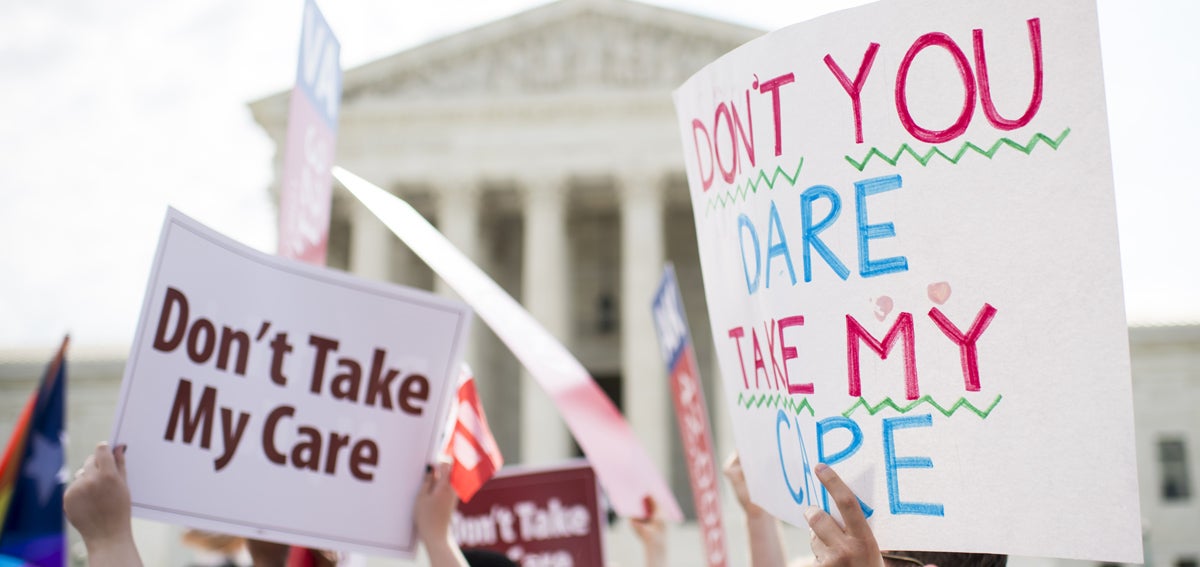
Image result for US Supreme Court Agrees to Review Affordable Care Act — for the Third Time

The fate of the Affordable Care Act (ACA) is once again in the hands of the US Supreme Court. On March 2, the court announced that it would hear a case challenging the health law, a wide-ranging measure that “touches the lives of most Americans, from nursing mothers to people eating at chain restaurants,” wrote Reed Abelson, Abby Goodnough, and Robert Pear in the New York Times. This will be the third time the court will rule on the ACA since President Barack Obama signed it on March 23, 2010.Essential Coverage

“The justices will review a federal appeals court decision that found part of the law . . . unconstitutional and raised questions about whether the law in its entirety must fall,” reported Robert Barnes in the Washington Post. He noted that it is one of the first cases accepted for the Supreme Court term beginning October 5, which means a decision is not likely until spring or summer of 2021.

Should the court overturn the ACA, many Americans would lose the benefits afforded under the law. As Dylan Scott wrote in Vox, “everything would go: protections for preexisting conditions, subsidies that help people purchase insurance, the Medicaid expansion.”

Let’s break down each of those categories.

Protections for Preexisting Conditions

Before the ACA, people with preexisting conditions, which included common medical conditions like asthma, diabetes, and cancer, were denied health insurance or charged higher insurance premiums. Important benefits like maternity care and mental health services frequently were carved out of the benefit packages in health plans sold in the individual market — that is, outside of employer-sponsored coverage. An issue brief (PDF) by the Department of Health and Human Services estimated that up to 133 million nonelderly Americans have a preexisting condition.

As Andy Slavitt, the former administrator of the Centers for Medicare & Medicaid Services under President Obama, wrote on Twitter, examples of being charged more included “$4,270 more for asthma, $17,060 for pregnancy, and $160,510 for metastatic cancer.”

Under the ACA, insurers are no longer allowed to deny coverage or charge higher prices to people with preexisting conditions. But if the Supreme Court rules against the ACA, these protections would vanish.

Medicaid Expansion

A key provision of the ACA is expanded eligibility for enrollment in Medicaid, a federally funded state option adopted so far by 36 states and the District of Columbia. More than 12 million adults with low incomes have gained Medicaid coverage through this provision, and research comparing expansion and nonexpansion states has linked expanded Medicaid access to better health outcomes.

According to the Urban Institute, if the ACA is repealed, “the uninsurance rate across all expansion states would increase from 9% of the nonelderly under current law to 17% under repeal. In nonexpansion states, the uninsurance rate would increase from 15% of the nonelderly to 21%.” Many of the newly uninsured would be the result of losing the Medicaid coverage the ACA provided.

“The uninsured rate for Black Americans would increase from 11% to 20% without Obamacare,” Scott reported. “There would also be a dramatic spike in uninsurance among Hispanics.”

Subsidies to Help People Purchase Insurance

To expand access to affordable health insurance for those who can’t get it through their jobs, the ACA offers federal subsidies to people with low and moderate incomes who buy insurance through the ACA insurance exchanges. The subsidies take the form of premium tax credits and cost-sharing subsidies.

Approximately 9.2 million Americans receive federal subsidies, reported Abelson, Goodnough, and Pear. “On average, the subsidies covered $525 of a $612 monthly premium for customers in the 39 states that use the federal marketplace,” they wrote.

If the ACA is overturned and the subsidies are eliminated, the cost of health insurance would become unaffordable for many of those 9.2 million people, and the uninsured population would soar.

Polls Show Public Support for the ACA

According to the February 2020 KFF Health Tracking Poll, 55% of Americans say they now favor the ACA, a new high compared to approval ratings below 40% as recently as 2016. Today 85% of Democrats express favorable views of the law, compared to 53% of independents and 18% of Republicans.

Though overall support for the health law remains partisan, many of its provisions have broad bipartisan support, KFF staff wrote in Health Affairs. For instance, large majorities of Democrats (94%), independents (88%), and Republicans (77%) have a favorable view of the ACA’s health insurance exchanges, and most Democrats (80%), independents (71%), and Republicans (54%) view the Medicaid expansion favorably.

Rising Health Costs Worsen California’s Coronavirus Threat

The global spread of the novel coronavirus disease known as COVID-19 puts threats to the ACA into perspective. Despite the coverage gains made under the ACA, nearly 28 million Americans remain uninsured, and that number would rise if the law were overturned. As Chris Sloan, associate principal at the consulting firm Avalere Health, told Caitlin Owens in Axios, we “could see uninsured or underinsured patients . . . skipping necessary treatment because they believe they can’t afford it.”

“Some lawmakers are concerned that the tens of millions who are underinsured — Americans with high deductibles or limited insurance — may also be at risk of unexpected expenses as more and more people are exposed to the virus,” Reed Abelson and Sarah Kliff reported in the New York Times.

Kristof Stremikis, director of CHCF’s market analysis and insight team, wrote in a recent blog post, “In an era when the average deductible facing a working family in California now exceeds $2,700, it’s not hard to imagine how many people missed detection and treatment opportunities because they could not afford to pay for them.”

To address some of these concerns, the California Department of Insurance (PDF) and the Department of Managed Health Care (PDF) directed all commercial health plans and Medi-Cal plans to “immediately reduce cost-sharing (including, but not limited to, co-pays, deductibles, or co-insurance) to zero for all medically necessary screening and testing for COVID-19, including hospital, emergency department, urgent care, and provider office visits where the purpose of the visit is to be screened and/or tested for COVID-19.”

Similar policies have been announced by state regulators in Washington and New York, the San Francisco Chronicle reported.


Miami man with ‘junk plan’ owes thousands after hospital visit for coronavirus symptoms

https://www.beckershospitalreview.com/finance/miami-man-with-junk-plan-owes-thousands-after-hospital-visit-for-coronavirus-symptoms.html?utm_medium=email

Image result for skinny health plans

A man in Miami went to Jackson Memorial Hospital last month to receive a test for coronavirus after developing flu-like symptoms. He didn’t have the virus, but he was hit with a $3,270 medical bill, according to the Miami Herald.   

Osmel Martinez Azcue said he normally would have used over-the-counter medicine to fight his flu-like symptoms. However, since he had recently visited China, he followed the advice of public health experts and went to the hospital to get tested for coronavirus, known as COVID-19. 

Mr. Azcue said hospital staff told him a CT scan would be necessary to screen for coronavirus. He asked to receive a flu test first. The flu test came back positive.

A few weeks after leaving Jackson Memorial Hospital, Mr. Azcue received a $3,270 medical bill. Though he was insured, Mr. Azcue had a so-called “junk plan,” which offered limited benefits and didn’t cover pre-existing conditions.

Based on his insurance plan, Mr. Azcue is responsible for $1,400 of the bill, hospital officials told the Miami Herald. However, to get the claim covered, Mr. Azcue said his insurance company requested three years of medical records to show that his flu didn’t relate to pre-existing conditions.

The sale of “junk plans,” like the one Mr. Azcue pays $180 per month for, expanded after President Donald Trump’s administration rolled back ACA regulations in 2018.

Access the full Miami Herald article here.


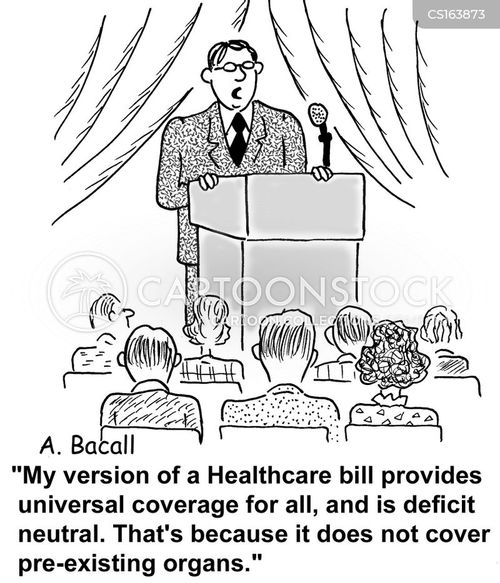
Cartoon – Modern Health Insurance Coverage

Image result for cartoon inadequate health insurance coverage


Health care is Iowa’s only winner right now

https://www.axios.com/newsletters/axios-vitals-ded63eb6-2431-48d0-a186-2f3b52417f2f.html?utm_source=newsletter&utm_medium=email&utm_campaign=newsletter_axiosvitals&stream=top

Image result for health policy"

Iowa Democrats reported last night that their biggest priorities were beating President Trump and health care — but the meltdown of their election reporting systems left their presidential choices unresolved.

Why it matters: We’ve been writing for months that Democrats have a major choice ahead, either picking an advocate of Medicare for All — and siding with the plan that’s less popular with the rest of the country — or a public option advocate.

  • The Iowa debacle means the path the party will take won’t be clear for a while longer.

By the numbers: Several polls — including ones by NBC News, the National Exit Poll and AP Votecast — found that around four in 10 caucus voters said health care was their top issue.

  • Previous polling has found that Medicare for All is less popular overall than a public option, but both were popular among Democratic caucus-goers last night.
  • Seven in 10 said they back a single-payer plan, and almost nine in 10 said they support a public option, per AP Votecast, which was conducted by NORC at the University of Chicago for The Associated Press and Fox News.

Yes, but: Caucus-goers said they prefer a Democratic candidate who can beat Trump over one that agrees with them on issues, CNN reports.

The big picture: Republicans are more than happy to talk about Medicare for All — and its subsequent tax increases and expanded government role in health care — instead of protecting and building on the Affordable Care Act.

  • Whereas the former gives them an opportunity to go on offense, the latter puts the GOP on defense against its 2017 repeal-and-replace efforts and ongoing lawsuit that would strike down the whole health care law, including its protections for pre-existing conditions.


Supreme Court denies blue states’ effort to expedite ObamaCare challenge

Supreme Court denies blue states’ effort to expedite ObamaCare challenge

Supreme Court denies blue states' effort to expedite ObamaCare challenge

The Supreme Court on Tuesday rejected an effort by Democrats to expedite a challenge to a lower court’s ruling striking down a key tenet of ObamaCare, narrowing the possibility that the court takes up the contentious case this year.

The House of Representatives and a group of blue states had asked the court to fast-track their appeal after the 5th Circuit Court of Appeals ruled that the Affordable Care Act’s individual mandate is unconstitutional.

“Under the current state of affairs, there is considerable doubt over whether millions of individuals will continue to be able to afford vitally important care,” the House wrote in a court filing earlier this month.

“Millions of individuals will live with the insecurity of not knowing that they have access to affordable health care, and will be forced to make important life decisions without knowing how those decisions will affect their continued access to such care.”

“If the Court does not hear the case this Term, that uncertainty will likely persist through next year’s open enrollment period,” the House wrote.

Tuesday’s order makes it unlikely that the high court will rule on the health care law before the November presidential election, where health insurance policy is sure to play a prominent role.

The 5th Circuit’s ruling delivered a victory for the coalition of conservative state attorneys general challenging the Obama administration’s signature achievement.

The Trump administration has declined to defend the Affordable Care Act in court, and the president has cheered on legal efforts to dismantle it.

“This decision will not alter the current healthcare system,” President Trump said in a statement last month. “My Administration continues to work to provide access to high-quality healthcare at a price you can afford, while strongly protecting those with pre-existing conditions. The radical healthcare changes being proposed by the far left would strip Americans of their current coverage. I will not let this happen.”

It’s still unclear whether the Supreme Court will decide to hear the challenge to the 5th Circuit ruling. Now that the justices have chosen to adhere to a normal briefing schedule, that decision will likely not come until March at the earliest.


Hospitals, insurers urge Supreme Court to hear ACA case to avert havoc

https://www.healthcaredive.com/news/hospitals-insurers-urge-supreme-court-to-hear-aca-case-to-avert-havoc/570525/

Dive Brief:

  • The main lobbying groups for both the hospital and insurance industries filed amicus briefs Wednesday urging the Supreme Court to take on the controversial case seeking to overturn the Affordable Care Act.
  • By sending the key question in the case back down to the lower court for a “do-over,” the appellate court’s ruling “casts a long shadow of uncertainty over ACA-based investments,” America’s Health Insurance Plans said in its brief.
  • Various hospital lobbying groups argued the case creates enormous uncertainty for industry, raising questions about whether they should continue to invest in the provisions that are so closely intertwined with the ACA, according to their brief.

Dive Insight:

Two courts have so far ruled against the landmark health law, finding that the individual mandate is unconstitutional because Congress stripped away the financial penalty for forgoing insurance coverage.

Without the financial penalty attached, the so-called individual mandate can no longer be considered a tax and is therefore unconstitutional, according to the courts. A lower court went even further than the appellate court and found that the entire law must fall because the mandate cannot be severed from the remainder of the ACA.

The appellate court avoided answering this key question regarding severability and sent it back to the lower court for additional analysis. The appellate court ruling generated outcry from industry, which argues the case will take years to wind its way through the courts leaving a cloud of uncertainty in its wake.

The ACA fundamentally reshaped the nation’s healthcare system and is credited with lowering the ranks of the uninsured by millions.

A coalition of blue states that stepped in to defend the law petitioned the Supreme Court to hear the case and asked for an expedited review. Meanwhile, a group of red states looking to overturn the law has argued the case does not merit intervention from the high court.

After failed attempts by Republicans in Congress to kill the law entirely, in 2017 Congress cut the penalty for not having insurance coverage to zero in a unrelated tax bill. The red states and two individual plaintiffs from Texas have argued the move renders the law unconstitutional.

AHIP argues that the ACA can stand without the penalty (and has) since Congress’ changes in 2017.

“Congress has unmistakably indicated through its actions: that the ACA should continue in operation even in the absence of the individual mandate,” AHIP said in its brief, arguing a repeal of the law would “wreak havoc” on the nation’s healthcare system.

Other advocacy groups, including AARP, American Cancer Society and Small Business Majority filed separate briefs urging the Supreme Court to take on the case. A group of bipartisan economic scholars also submitted a brief in support of the Supreme Court taking on the case.


New York State Investigates Christian Health Cost-Sharing Affiliate

Image result for New York State Investigates Christian Health Cost-Sharing Affiliate

Subpoenas have been issued to a company that solicits memberships for a health insurance alternative that offers no guarantees for covering medical bills.

New York State officials are investigating a business representing a major Christian group offering an alternative to health insurance, joining several states scrutinizing these cost-sharing programs that provide limited coverage.

On Wednesday, New York state insurance regulators issued a subpoena to Aliera, which markets the Christian ministry run by Trinity Healthshare, according to people who have seen the subpoena.

More than one million Americans have joined such groups, attracted by prices that are far lower than the cost of traditional insurance policies that must meet strict requirements established by the Affordable Care Act, like guaranteed coverage for pre-existing conditions.


These Christian nonprofit groups offer low rates because they are not classified as insurance and are under no legal obligation to pay medical claims. But state regulators are questioning some of the ministries’ aggressive marketing tactics, saying some consumers were misled or did not grasp the lack of comprehensive coverage in the case of a catastrophic illness.

Some members have paid hundreds of dollars a month, and then have been left with hundreds of thousands in unpaid medical bills in several states where the ministries, which are not subject to regulation as insurers, failed to follow through on pooling members’ expenses.

Numerous states are taking action against Aliera Healthcare, the for-profit company based in Georgia that was been the subject of an investigation by The Houston Chronicle. The Texas attorney general sued Aliera last summer to stop it from offering “unregulated insurance products to the public,” while Connecticut, Washington and New Hampshire are trying to stop Trinity and Aliera from doing business in those states.

Regulators say they are concerned that the ministry is, in fact, operating as an insurer. In New York, which has not previously investigated any ministries, there have been 15 to 20 complaints, including accusations that Aliera misrepresented the coverage being offered. It’s not clear how many customers Aliera has in New York.

“It’s deeply disappointing to see state regulators working to deny their residents access to more affordable alternatives offered by health care sharing ministries,” said Aliera in an emailed statement.

“We’re proud of the work we do to help ministries provide a more flexible method for securing affordable high-quality health care, and we will continue to vigorously defend against the false claims about our company, just as we expect the health care sharing ministries we serve to vigorously defend their members’ right to exercise their religious convictions in making health care choices,” it said.

Trinity, which was not subject to the subpoena, has said its website makes clear that the ministry does not offer health insurance.


Beyond the ACA: Healthcare legal fights to watch in 2020

https://www.healthcaredive.com/news/beyond-the-aca-healthcare-legal-fights-to-watch-in-2020/569793/

All eyes were on the legal drama over the Affordable Care Act as 2019 drew to a close — and while that case remains a focus for this year — a lot more is also at stake.

Payers and providers are fiercely contesting a price transparency push from the Trump administration that would force privately negotiated rates out into the open. The administration is also being challenged over regulations regarding risk corridor payments to payers and the expansion of association health plans.

Antitrust concerns are also front and center, as payers clash over exclusive broker policies in Florida.

As policy debates rage on this year through presidential debates and on Capitol Hill, courthouses will also be a key battleground for the industry in 2020.  Below are the big cases to watch.

ACA and the high court

The most consequential case still making its way through the court system is the challenge to the Affordable Care Act. At the end of last year, an appeals court notched a win for the red states fighting the law by declaring the individual mandate was no longer constitutional after the penalty was zeroed out by a Republican-controlled Congress.

The three-judge panel, however, stopped short of declaring the entire ACA void, instead asking the lower court that made the argument that the rest of the law is not severable from the individual mandate to revisit and clarify its ruling.

Supporters of the ACA are trying to speed up what is almost certainly the next major step for the court case by petitioning the Supreme Court on Friday to hear the case before the November presidential election.

“States, health insurers, and millions of Americans rely on those provisions when making important — indeed, life-changing — decisions. The remand proceedings contemplated by the panel majority would only prolong and exacerbate the uncertainty already caused by this litigation,” according to the Jan. 3 petition filed by California Attorney General Xavier Becerra and a coalition of 19 other states and D.C.

Five justices are needed to approve the suggested expedited timeline while four are needed to agree to hear the case at all. More will be clear in the next couple of months as justices make their decisions. The ultimate decision — whether it comes in months or years — will have huge ramifications across the healthcare landscape.

Price transparency pushback

The legal clash between hospitals and the administration over forcing providers to reveal negotiated rates is set to heat up quickly in the new year.

The federal judge overseeing the case recently released a timeline for how it is expected to proceed in the coming months. Hospitals are seeking a swift ruling and summary judgment. HHS faces a Feb. 4 deadline to file its opposition motion to the summary judgment, while deadlines for motions extend through March 10.

“That is an extremely accelerated schedule,” James Burns, a partner at Akerman, told Healthcare Dive. “My strong suspicion is that we’ll get a ruling from the judge late spring or earlier summer at the latest, which is obviously all before the election.”

Hospital groups including the American Hospital Association and health systems have alleged that the administration’s push to force negotiated rates out into the open exceeds the government’s authority and violates the First Amendment because it compels hospitals to reveal confidential and proprietary information. Legal experts say the principal argument will center around whether the government exceeded its authority, not the First Amendment.

Risk corridor payments

On last month’s Supreme Court docket was a case regarding an ACA risk adjustment program. At issue are $12 billion in payments insurers say they are owed from losses on state exchanges.

Early participants in the marketplaces were hit hard in some cases as they attempted to adjust to people gaining coverage under the ACA. A few nonprofit co-ops were driven to close when CMS declared the program had to be budget neutral and therefore only about one-eighth of the expected risk corridor amount could be paid out.

A number of justices seemed to lean toward ruling in favor of the insurers during arguments in front of the high court, Tim Jost, health law expert and professor emeritus at Washington and Lee University School of Law, told Healthcare Dive​. “Only a couple of the justices that spoke seemed inclined to support the government, but we’ll see what happens there,” he said.

If the payers do prevail, there’s still the question of exactly how much they are owed and how the money will be distributed. It could ultimately affect medical loss ratio rebates or premiums down the road, he said.

CSR fight in court this week

The legal fight over canceled payments to insurers​ under the ACA drags on as oral arguments begin this week in a federal appeals court.

A number of insurers including Maine Community Health Options and Sanford Health claim they’re owed millions in cost-sharing reduction payments that the government failed to pay out after the Trump administration said Congress failed to appropriate the funds. The payments were intended to repay insurers for lowering the cost of care to make coverage affordable for those with low incomes.

Health Options and Sanford both won in the lower courts after judges ruled they were entitled to the unpaid CSR payments. The cases have been consolidated within the appeals court and oral arguments start Thursday.

A ruling in favor of insurers in the risk corridor case could be a good sign for their fight to be reimbursed for CSRs as well, Jost said.

Oscar antitrust argument

Health insurer Oscar has alleged that Blue Cross Blue Shield of Florida is enforcing a broker policy that is impeding Oscar’s ability to sell individual exchange plans and undermines competition in Florida.

The key question in this case is whether Florida Blue, a dominant insurer in the sunshine state, can lawfully bar independent brokers from working with other carriers like Oscar by threatening to cut off their ability to sell all other Florida Blue plans if they sell Oscar’s individual plans.

A lower court ruled against Oscar and found that such arrangements are shielded from antitrust scrutiny. A federal law excludes the “business of insurance” from antitrust scrutiny in some cases, legal experts say this case shouldn’t be exempt from antitrust enforcement.

A group of 10 antitrust scholars called the ruling “dangerous” and “plainly incorrect,” in an amicus brief Dec. 23 to the U.S. Court of Appeals for the 11th District.

“The practice at issue here — forming exclusive deals with industry gatekeepers to box out potential entry by competitors — is a quotidian business strategy that appears across many industries and raises well-recognized antitrust concerns,” according to the amicus brief.

Oscar alleges that consumers are harmed if brokers are barred from discussing other plan options outside Florida Blue.

The Department of Justice also intends to file an amicus brief, according to a recent filing in the appeals case.

Association, short-term health plans

The federal court of appeals in D.C. heard arguments late last year to review a judge’s decision in March 2019 declaring association health plans an “end-run” around the ACA. AHPs are offered by business or professional associations and aren’t bound by ACA requirements protecting pre-existing conditions and mandating essential benefits.

U.S. District Judge John Bates had strong language in March for the Trump administration, which is being challenged for loosening restrictions on what groups can offer AHPs — and therefore expanding their presence in the marketplace.

The D.C. appeals court is expected to rule on the case in the coming months. Jost’s take from the oral arguments is that the court seem inclined to reverse Bates’ decision, though he warned the outcome is not certain. “It’s a technical case that really has more to do with interpreting ERISA than the Affordable Care Act, though both are relevant,” he said.

A similar challenge has risen on short-term health plans, which were originally meant as stopgap coverage but have been expanded by the Trump administration to offer up to three years worth of coverage.

U.S. District Judge Richard Leon ruled in favor of the administration in July, saying the plans did not undermine the ACA. The plaintiffs, including the Association for Community Affiliated Plans, the National Alliance on Mental Illness and AIDS United, quickly appealed to the U.S. Court of Appeals in D.C.

Briefs are due this month and argument is likely in the spring, Jost said.

If AHPs and short-term plans are allowed to continue as the Trump administration has pushed for, it presents a concern for the viability of ACA risk pools. Consumer warnings against short-term plans, however, may be working, he said.

“There’s been a lot of publicity about how risky these plans are and I think they probably have not been achieving the same market strength they were hoping for,” he said.


Five health care fights to watch in 2020

Five health care fights to watch in 2020

Image result for 2020 healthcare issues

Advocates hope lawmakers can beat the odds and move major health care legislation in the new year.

2019 opened with bipartisan talk of cracking down on drug prices and surprise medical bills. But it ended without major legislation signed into law on either front, and a host of other health care battles, including a lawsuit threatening the entire Affordable Care Act, looming over the coming election year.

Here are five health care fights to watch in 2020. 


Drug pricing

Lowering drug prices was supposed to be an area for potential bipartisan action in 2019, but the effort ran into a brick wall of industry lobbying and partisan divisions. 

There is a push to finally get legislation over the finish line in 2020, though.

Speaker Nancy Pelosi (D-Calif.) is calling for attaching drug pricing legislation to a package of expiring health care programs, like community health center funding, that must be renewed by May 22. She hopes the pressure from that deadline helps carry a larger package, but that is far from certain, especially as the election gets closer.

Democrats point to President Trump’s vow to support allowing the government to negotiate drug prices during his 2016 campaign. While Trump backed off that pledge this year, they hold out hope he might come back around. Senate Majority Leader Mitch McConnell (R-Ky.) is also strongly opposed to the idea, and has concerns about a more modest bill from Sens. Chuck Grassley (R-Iowa) and Ron Wyden (D-Ore.) that could provide a more realistic bipartisan path.

“The president said when he ran and until relatively recently that he would support negotiated prices and I expect at some point he will go back to that, and we’re just going to keep pushing the Senate to try to achieve that,” said House Energy and Commerce Committee Chairman Frank Pallone Jr. (D-N.J.).


Surprise billing

The other major health care initiative that Pelosi says she wants in the May package is protecting patients from surprise medical bills.

That effort has also fallen prey to intense industry lobbying and congressional infighting. 

Backers of a bipartisan bill from the House Energy and Commerce Committee and Senate Health Committee on the issue pushed for including the measure in a year-end spending and were deeply frustrated when it was left out.

A key factor was House Ways and Means Committee Chairman Richard Neal (D-Mass.) putting forward the outline of a rival plan days before this month’s funding deadline, showing a split on the way forward.

“It’s certainly going to be harder [next year],” said Shawn Gremminger, senior director of federal relations at Families USA, a liberal health care advocacy group.

“You are now under six months out from the general election,” he said about moving legislation in May 2020.

Backers have a tough road ahead. They will have to bridge the divide between the competing plans and overcome lobbying from powerful doctor and hospital groups, who worry the legislation could lead to damaging cuts to their payments.


ObamaCare

Outside of Capitol Hill negotiating rooms, the GOP lawsuit to overturn the Affordable Care Act is looming large. 

A federal appeals court last week issued a long-awaited ruling on the fate of the law, though it did little to settle the issue. The 5th U.S. Circuit Court of Appeals ruled that the law’s mandate to have health insurance is unconstitutional, but punted on the question of whether any of the rest of the law should also be struck down, instead sending it back to the lower court.

The most tangible effect of the move could be to push a final Supreme Court decision on the fate of the law past the 2020 elections, though it’s possible the justices could still choose to take the case sooner.

Democrats intend to hammer Republicans over the lawsuit during next year’s campaign, though, a strategy that paid off for the party during the 2018 midterms when they focused on health care. 

The Democratic group Protect Our Care launched a national TV ad on Friday, saying “President Trump and Republicans just won a major decision in their lawsuit to repeal health care from millions of American families,” and warning of the loss of pre-existing condition protections.


Medicare for All 

In the Democratic presidential race, “Medicare for All” is a central dividing line.

How the issue plays out in 2020 will depend in large part on who wins the Democratic nomination. If progressives like Sens. Bernie Sanders (I-Vt.) or Elizabeth Warren (D-Mass.) win the nomination, Republicans will be able to go full bore on their attacks that private health insurance would be eliminated under the proposal.

Even more moderate candidates like former Vice President Joe Biden and South Bend, Ind., Mayor Pete Buttigieg PETER (PETE) PAUL BUTTIGIEGPoll: Biden remains ahead of Sanders by 10 points2020 predictions: Trump will lose — if not in the Senate, then with the votersButtigieg’s former chief of staff to be sworn in as mayoral successorMORE would face attacks that their public option plans are a step down the road toward eventually implementing full-scale single payer.

The internal debate on the issue has faded somewhat from its peak. Health care has not featured as prominently in the last two debates, and some of the fighting has shifted to other areas, like candidates’ fundraising practices.

But the issue is still simmering and could burst back to open warfare among Democrats at any point.


Vaping

The battle over e-cigarette flavors will likely resume in 2020 as the Trump administration and Congress try to cut rising youth vaping rates.

Public health advocates are pushing the administration to clear the market of flavors like mint and fruit that they argue are fueling a youth vaping epidemic.

Trump said he would eliminate those flavors in September, but has appeared to back down after backlash from vaping advocates and the e-cigarette industry.

Now he says he would like to find a compromise that preserves such flavors for adults while keeping them away from kids.

Advocates like the Campaign for Tobacco-Free Kids plan to pressure Trump to follow through on his word, though it’s looking unlikely.

However, the e-cigarette market could also look vastly different after May 2020, when companies must apply to the Food and Drug Administration to stay on the market

The industry must prove its products benefit public health, a big ask for companies like Juul, whose products are favored by kids who vape.

House Democrats also plan to vote on a bill that would ban flavored e-cigarette and tobacco products, but it’s not clear if it will get a vote in the Senate.


Obamacare Ruling May Spare Republicans Some Political Pain

Image result for Obamacare Ruling May Spare Republicans Some Political Pain

The practical effect of the decision is likely to be months of delays, pushing the final outcome of the case beyond the 2020 election.

A federal appeals court in New Orleans handed Republicans a Christmas present.

The court had been considering a case with the potential to dismantle the entire Affordable Care Act, an outcome that could have set off waves of chaos and disruption leading up to the November election, and for which there was very little contingency planning.


The court had two main options. It could have agreed with the Trump administration, along with a set of Republican state officials and a district court in Texas, and overturned all of the law. Or it could have upheld Obamacare, undermining the arguments of the White House and its allies.

The court found a third way. In a decision at the close of business Wednesday, two of the three judges signaled their support for a key part of the Republicans’ legal argument. The two agreed with a lower court that Obamacare’s individual mandate had been made unconstitutional by a 2017 law that eliminated the financial penalty for remaining uninsured. But the judges punted on the case’s key question of what that meant for the rest of the health law, asking a lower court to reconsider it. The effect is likely to be months of delays, pushing the final outcome of the case beyond the 2020 election.


Starting in 2017, the Republicans’ failed effort to repeal and replace large portions of the health law was deeply unpopular and became a central campaign theme of the 2018 election, in which Democrats won a House majority. Democrats cast themselves as the protectors of Obamacare’s most popular provisions, especially its protections for Americans with pre-existing health conditions.

While most Democrats would have favored a court ruling that upheld Obamacare, a reprise of those politics could have given them a lift in an election year. Voters tend to trust Democrats more than Republicans on health care, but much of the debate during the primary season has focused on ambitious new expansions of government coverage. Those proposals do not enjoy the widespread support attached to the preservation of Obamacare’s core consumer protections.

Those dynamics have allowed Republicans to focus on arguments that they will protect private insurance and oppose socialism, without forcing them to articulate their own detailed health plans. President Trump has periodically hinted at an imminent Obamacare replacement plan, but he has yet to produce one. Mitch McConnell, the Senate majority leader, has declined to produce or advance a major health care bill in the Senate.


But if a court had ruled that all of Obamacare had to be wiped off the books, it would have been far harder for Republicans to avoid articulating their vision for health care. The public did not like their previous attempts in 2017, and there has been little progress, even behind the scenes, to produce an alternative plan more palatable to the public. Two concepts have emerged since then, one from a group of conservative think tanks, and one from the House Republican Study Committee. Neither has received much public attention by party leaders, and both share the basic structure of an earlier legislative plan that divided Republican legislators so much that it never made it to a vote.

Meanwhile, Democrats could have retreated to safer ground, by promising to reinstate popular Obamacare provisions.


If the court had overturned all of Obamacare, it could have meant major disruptions to the health system. Such a ruling, if upheld by the Supreme Court, would have eliminated consumer protections for people with pre-existing health conditions, and wiped away financial assistance that have helped millions of middle-class Americans buy their own coverage.

It would have erased the Medicaid expansion, which provides health insurance to millions of low-income Americans in three dozen states. It would have reversed Medicare policies that make prescription drugs more affordable for seniors, and Food and Drug Administration rules that have allowed cheaper copies of expensive biologic drugs to enter the market.

It would have undone major experiments in the delivery of care, meant to improve health care quality. It would have rolled back enhanced punishments for Medicare fraud. It would have reduced requirements that workplaces provide space for lactating mothers to pump breast milk, and requirements that chain restaurants post calorie counts for their food.

Around 20 million more Americans would have become uninsured, according to an estimate from the Urban Institute. Experts on Medicare policy said they were not even sure how some of the changes could have been carried out now that they have been enshrined in complex regulations and built on in subsequent laws.


None of those effects would have happened immediately, even if the Fifth Circuit had agreed in full with the lower court; the Supreme Court would have probably weighed in. But the prospect of such huge changes had the potential to reset the political conversation about health care in both parties. By avoiding a decision on the case’s consequences, the Fifth Circuit has effectively postponed that shift.

In a statement Wednesday night, President Trump applauded the court’s ruling that the individual mandate was unconstitutional. But he emphasized that the decision would not result in any meaningful changes to voters’ health care.

“The radical health care changes being proposed by the far left would strip Americans of their current coverage,” he said. “I will not let this happen. Providing affordable, high-quality health care will always be my priority. They are trying to take away your health care, and I am trying to give the American people the best health care in the world.”


Such a statement would have been harder to issue if the court panel had agreed with the arguments made by Mr. Trump’s lawyers and called for the reversal of Obamacare’s coverage expansions.

Democrats’ frustration with the court’s indecision was palpable. Chuck Schumer, the Senate minority leader, described the judges’ move as “cowardly.” The decision is “obviously an attempt to shield Republicans from the massive blowback they would receive from the public if the highest court in the land were to strike down the A.C.A. before the upcoming election,” he said in a statement.

It’s possible, of course, that the case will reach a final disposition sooner anyway. California’s attorney general, Xavier Becerra, announced that he and other Democratic state officials involved in the case would be appealing the decision to the Supreme Court. Even though the appellate court sent the case back to Texas, the country’s highest court could still choose to take it, should four justices wish to. But the most likely path involves months or years of additional litigation, with lingering uncertainty over the fate of Obamacare.