Elizabeth Warren’s $20.5 Trillion Plan to Fund Medicare for All

https://www.thefiscaltimes.com/2019/11/01/Elizabeth-Warren-s-205-Trillion-Plan-Fund-Medicare-All

Image result for Medicare for All

Elizabeth Warren on Friday detailed how she intends to pay for Medicare for All without raising costs for middle-class households. The senator from Massachusetts said her plan will cover everyone in the country without raising overall spending, “while putting $11 trillion back in the pockets of the American people by eliminating premiums and virtually eliminating out-of-pocket costs.”

Warren’s plan relies in large part on redirecting existing spending toward a universal, federal health care system, while adding new revenues from taxes on the wealthy, the financial sector and large corporations. “We can generate almost half of what we need to cover Medicare for All just by asking employers to pay slightly less than what they are projected to pay today, and through existing taxes,” Warren said.

Some key details from the Warren plan:

Much lower cost estimate: Warren starts with the Urban Institute’s estimate that the federal government would need $34 trillion more over 10 years to pay for Medicare for All, but she slices that number dramatically — down to $20.5 trillion — by using existing federal and state spending on programs including Medicaid to fund a portion of her proposal, along with larger assumed savings produced by a streamlined system paying lower rates to hospitals, doctors and other health care providers.

Total health care spending stays about the same: Warren projects about $52 trillion in national health care spending over 10 years, close to estimates for the existing system, despite covering more people and offering more generous benefits, including long-term care, audio, vision and dental benefits. Applying Medicare payment levels across the health care system is projected to produce substantial savings that would be used to finance the expanded size and scope of the plan.

Heavy reliance on employer funding: The employer contribution to Medicare for All is pegged at $8.8 trillion, with employers required to contribute to the federal government 98% of what they would pay in employee premiums. Businesses with fewer than 50 employees would be exempt.

Public spending continues: State and local governments would be still on the hook for the $6 trillion they currently spend on Medicaid, the Children’s Health Insurance Program and public employee premiums.

New taxes on the wealthy: Warren proposes a new 3% tax on household wealth over $1 billion — and that’s on top of her proposed wealth tax, which calls for a separate 3% tax on wealth over $1 billion (and a 2% tax on wealth between $50 million and $1 billion). Combined with an annual capital gains tax on the top 1% of households, her proposal projects that the new health-care-focused wealth taxes would produce $3 trillion.

Taxes on business and finance: Warren says she can raise $3.8 trillion through “targeted” taxes on big business and financial transactions, including a financial transaction tax of .01% on the sale of stocks, bonds and derivatives.

Reduced tax evasion: Cracking down on tax evasion is projected to bring in $2.3 trillion. “The federal government has a nearly 15% ‘tax gap’ between what it collects in taxes what is actually owed because of systematic under-enforcement of our tax laws, tax evasion, and fraud,” Warren said. “By investing in stronger enforcement and adopting best practices on tax reporting, withholding, and filing, experts predict that we can close the tax gap by a third.”

Revenue increase from higher take-home pay: Employees would no longer pay premiums for health insurance, providing a pay hike and higher tax revenues, estimated to total $1.4 trillion.

Abolishing the Overseas Contingency Operations fund: Warren is calling for reduced military spending, with a focus on what some call the “slush fund” that covers the cost of overseas military operations. Eliminating this off-budget spending is projected to save $800 billion.

Immigration reform: Expanded legal immigration would bring in $400 billion in revenue as more incomes are subject to taxes, Warren says.

A record tax cut? Once the new revenues and cost savings are added up, Warren says her plan will deliver what amounts to an historic tax cut. “No middle class tax increases. $11 trillion in household expenses back in the pockets of American families. That’s substantially larger than the largest tax cut in American history.”

Warren won plaudits from some analysts and policy wonks for releasing a plan, but the details she laid out are also being picked apart by critics and rivals, with some experts already expressing doubts about her assumptions and numbers. Here’s some of the reaction:

Congratulations from a conservative: “Kudos to Senator Warren for actually releasing a plan,” said Scott Greenberg, formerly an analyst with the right-leaning Tax Foundation. “There are a lot of things in here that will draw attacks from the left and from the right, and it might have been politically easier not to release it at all. But Warren has stuck by her commitment to explain her proposals.”

Criticism from a key rival: “The mathematical gymnastics in this plan are all geared towards hiding a simple truth from voters: it’s impossible to pay for Medicare for All without middle class tax increases,”  said Kate Bedingfield, deputy campaign manager for Joe Biden. Bedingfield argued that employees would end up paying the tax on employers.

Dire warnings from the White House: “It is the middle class who would have to pay the extra $100 billion or more to finance this kind of socialist government takeover of health care,” said Larry Kudlow, President Trump’s top economic adviser. “It would have a catastrophic effect on the economy and all these numbers that we’re seeing, all these numbers, on incomes per household, on wage increases, on jobs, all these numbers would literally evaporate and by the by, so would the stock market.”

Tax vs. premium: Warren’s plan will likely kick off a debate about the difference between taxes and health care premiums, and whether that difference matters, says William Gale of the Brookings Institution. “Does [the Warren plan] raise ‘taxes’ on the middle class?,” Gale asked Friday. “Short answer — it does not raise ‘burdens’ on the middle class.”

Cost reduction is crucial: “The key to Warren’s plan for financing Medicare for all is aggressively constraining prices paid to hospitals, physicians, and drug companies. We’d still have the most expensive health system in the world, but it would be less expensive than it is now,” said Larry Levitt of the Kaiser Family Foundation. “Warren’s plan to aggressively constrain health care prices under Medicare for all would be quite disruptive. On the other hand, every other developed country has managed to figure it out, so we know it’s possible.”

And the battle is ultimately political: “In laying out the specifics of her Medicare for all plan, Warren’s challenge is more about politics than arithmetic,” Levitt continued. “She is taking on the wealthy, corporations, and pretty much every part of the health care and insurance industries. Those are some powerful enemies.”

So don’t expect major legislation soon: “Experts will argue for months whether [Warren is] being too optimistic — whether her cost estimates are too low and her revenue estimates too high, whether we can really do this without middle-class tax hikes,” said economist Paul Krugman. “You might say that time will tell, but it probably won’t: Even if Warren becomes president, and Dems take the Senate too, it’s very unlikely that Medicare for all will happen any time soon.”


Premiums for ACA Health Plans Drop in 2020

https://www.realclearhealth.com/2019/10/23/premiums_for_aca_health_plans_drop_in_2020_279468.html?utm_source=morning-scan&utm_medium=email&utm_campaign=mailchimp-newsletter&utm_source=RC+Health+Morning+Scan&utm_campaign=dfd654c92e-MAILCHIMP_RSS_EMAIL_CAMPAIGN&utm_medium=email&utm_term=0_b4baf6b587-dfd654c92e-84752421&mc_cid=dfd654c92e&mc_eid=cb200f8a98

Image result for Premiums for ACA Health Plans Drop in 2020

Premiums for the most popular health plans sold under the Affordable Care Act will drop for the second consecutive year, the Trump administration said Tuesday, as the law enters its 10th year and shows further signs of stabilizing.


A group of Republicans has unveiled its healthcare plan. Here is what’s new and what isn’t

https://www.fiercehealthcare.com/payer/a-group-republicans-have-a-new-healthcare-plan-here-what-new-and-what-isn-t?mkt_tok=eyJpIjoiT0RZNE4yTm1PV1psTmpNeSIsInQiOiJ5R3gxMEwrdUhPWUdZVlBTZ3NWWkdMV08xOCtObDdFaGdHaE1hN0o4Z2p5WnBaN3hjd2lDVm5ybnBhWUtUNFdlTW1LcndtaTN1WUtNVzg1NmUrQjJmWEhqTWpJR3BkUmVuZmVNS2FzdmRWdENuMEtNT0tJMXozUW93N0lVQmZ5WSJ9&mrkid=959610

Capitol building in Washington

The Republican Study Committee (RSC), a group of 145 House GOP lawmakers, rolled out a new healthcare plan to counter Democrats’ call for “Medicare for All.”

However, the plan itself closely resembles the Affordable Care Act (ACA) repeal bill called the American Health Care Act (AHCA) that the House passed in 2017 and contributed greatly to the loss of the GOP House majority in 2018.

For the plan to become law, Republicans would have to retake the House in 2020, and President Donald Trump would need to be reelected. However, if those victories happen, the plan could be a blueprint for how a GOP-controlled Congress would move forward on healthcare, as the committee counts among its members both GOP leadership and rank and file.

Here are three takeaways from the plan:

Shifting to high-risk pools

The plan would retain the ACA’s requirement that individual market plans cover pre-existing conditions. However, it takes out provisions that ensure patients with pre-existing conditions get affordable coverage such as requirements that prevent plans from charging sicker people higher premiums than healthy customers.

The plan does introduce high-risk pools that would be used by people with high healthcare costs, a commonly deployed tactic by states for the individual market before the ACA. The high-risk pools would be funded by repackaging the funding used for the ACA’s subsidies and the Medicaid expansion.

However, the plan doesn’t identify the full amount that should be devoted to high-risk pools, which segregate high-cost customers on the individual market.

The plan cites a 2017 report from consulting firm Milliman that estimated a federally supported high-risk pool could require $3.3 billion to $16.7 billion a year. The AHCA also called for high-risk pools but only gave $2.5 billion a year to help states fund them.

While the “$17 billion annual price tag may not seem ideal, it sets up a sustainable path for the individual market,” the RSC report said.

The desire for more funding for high-risk pools is likely a nod to Democratic attacks during the 2018 midterms that the AHCA threatened pre-existing condition protections. The nonpartisan Congressional Budget Office said the AHCA, which let states waive pre-existing condition protections, would lead to people in those states not getting affordable coverage for their pre-existing conditions.

While the AHCA had funding for high-risk pools, experts across the healthcare spectrum said that it wasn’t enough. It would remain to be seen how much more funding would be needed.

Doubling down again on health savings accounts

Bolstering health savings accounts has been a very popular reform idea among Republicans, and that enthusiasm is clear in the RSC plan.

The plan proposes to increase how much an employee can contribute to a health savings account. Currently, an individual can contribute $3,500 and a family can contribute $7,000.

A 2018 bill that passed out of the House but didn’t make it through Congress increased the contribution cap to $6,650 for an individual and $13,300 for a family.

Now, the RSC plan wants to increase the figures again, this time to $9,000 per individual and $18,000 for families, in line with a proposal from libertarian think tank Cato Institute.

“The RSC plan would also expand health savings accounts so that they could be used for a number of health services and products that currently must be paid for with after-tax dollars,” the plan said.

Replace Medicaid expansion with a block grant

This is another common reform in ACA repeal plans. The bill would phase out the enhanced federal matching rate for the Medicaid expansion to pre-expansion levels.

In addition, the bill would replace the existing open-ended federal match with a fixed amount in a block grant.

But the plan has a new twist in a new “flex-grant” that would give more funding to states that adopt a work requirement. However, half of the funding for any flex-grant must go toward supporting the purchase of private plans for low-income individuals.

So far, 12 states have gotten approval from the Trump administration to install work requirements for their Medicaid expansion population. But of those 12 states, three have had their work requirement programs struck down by legal challenges.

Some states are also considering installing their own block grants. Tennessee has released a draft proposal for a block grant but has yet to get federal approval.


How Pending Decision on Obamacare Could Upend 2020 Campaign

Supporters of expanding Medicare at a town hall meeting this summer in Forked River, N.J.  Health care registers as a top priority for voters in poll after poll.

A federal appeals court’s ruling on the Affordable Care Act could be a huge headache for the president and take Democrats’ focus off Medicare for all.

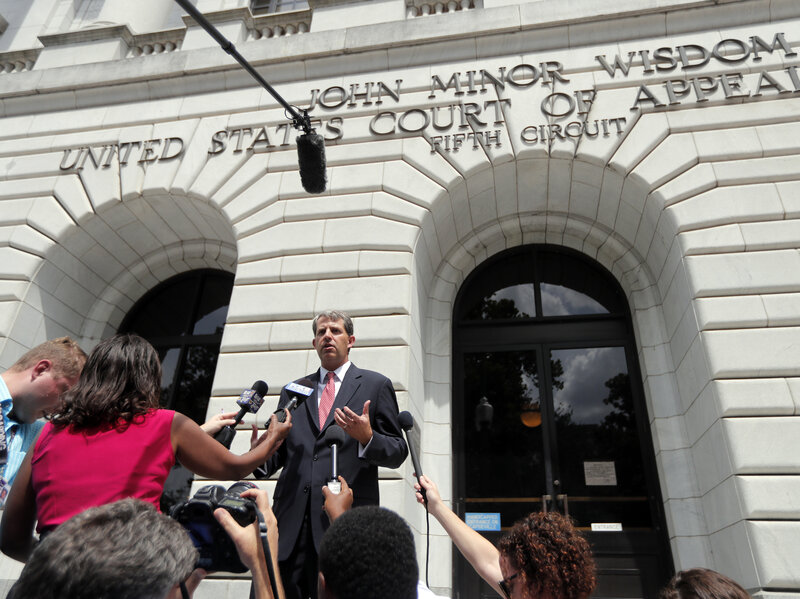
 A federal appeals court in New Orleans is preparing a ruling on the Affordable Care Act that could put the law’s future front and center in the presidential race, overwhelming the current Democratic debate over Medicare for all and reigniting the health care-driven worries that helped Democrats win back the House last year.

Three judges on the Fifth Circuit Court of Appeals are weighing whether to uphold a Texas judge’s ruling that the law’s requirement for most Americans to have health insurance is unconstitutional, and that the rest of the sprawling law cannot function without it. It is hard to imagine a thornier domestic issue for President Trump, whose administration not only refused to defend the law in the case filed by Texas and 19 other states but sided with the plaintiffs, asking the court to invalidate it.

A ruling against Barack Obama’s signature domestic achievement as president, which provides health coverage for about 24 million Americans, would almost certainly be stayed pending further appeal.

But if it comes in the next few weeks, it could create significant confusion during open enrollment for the Obamacare plans offered through the law’s online marketplaces. And it would open a huge vulnerability for Mr. Trump, whose health care platform largely consists of attacking as socialism Democratic plans to expand government health care, either through Medicare for all or a government-run health care option that would be offered through the Affordable Care Act’s marketplaces.

A ruling against the health law would probably reframe the Democratic conversation on health policy away from moving beyond the Affordable Care Act toward Republican efforts to take health care away. That message, a driving force in the 2018 midterm campaigns, could resonate more broadly than the party’s current arguments over expanding coverage.

“Democrats will do better talking about what Trump can take away than about their new policy visions,” said Chris Jennings, a longtime Democratic adviser on health care. “The Texas case may reframe discourse around health policy more toward that type of discussion, which of course Republicans will hate.”

The law’s most popular provision is protections for people with pre-existing medical conditions, but it includes much more, such as health insurance exchanges where people can buy private coverage with subsidies, an expansion of Medicaid and requirements for what insurance must cover, from emergency services to prescription drugs.

The appeals court panel could decide to partly reverse Judge Reed O’Connor of the Federal District Court in Fort Worth, affirming that the mandate that most Americans have health insurance is unconstitutional but rejecting Judge O’Connor’s ruling that the rest of the law cannot stand without it. That would cause barely a ripple, because the tax penalty for not having insurance was reduced to zero in the 2017 tax overhaul and the effects have been negligible.

But a ruling that upheld his decision in full, or even one that said the mandate and pre-existing condition protections had to go, would send shock waves through the health care and political systems. Either outcome would probably play into Democratic hands, especially in contests against vulnerable Republicans like Senators Martha McSally of Arizona, Cory Gardner of Colorado, Susan Collins of Maine and Thom Tillis of North Carolina.

Republicans are not conceding that possibility. Asked how a ruling against the law might affect members of the party seeking re-election, the spokesman for the House Republican campaign arm, Chris Pack, said: “Both Democrats and Republicans oppose Obamacare. The only difference is that Democrats want to replace it with socialized single-payer health care that makes private health insurance illegal.”

In fact, most Democrats would welcome a renewed debate over the Affordable Care Act. Many Democrats in Congress have resisted Medicare for all; instead they have sought to shore up the existing health law and trap Republicans on pre-existing conditions. Senator Chuck Schumer of New York, the Democratic leader, intends to force a floor vote as soon as next week on a resolution to overturn a Trump rule that lets states promote skimpy-but-inexpensive insurance plans that do not meet the law’s coverage standards.

The vote, Mr. Schumer said Tuesday on the Senate floor, “will present our Republican colleagues with a choice: whether to protect Americans with pre-existing conditions or not to protect them.”

Mr. Trump is in a box on health care, the issue that registers as a top priority for voters in poll after poll. He wants deals on ending surprise medical bills and lowering prescription drug prices, but the Senate and House are far apart on what drug price legislation they would agree to, and impeachment proceedings could derail any chance of bipartisan measures.

Public support for the health law remains high, driven in part by swing voters. And few Americans believe Mr. Trump will offer details of a new health care plan before the end of the year, according to a Kaiser poll released this week. They also doubt any plan he releases would offer “better care at lower costs,” as he has promised.

Alex M. Azar II, the secretary of health and human services, has repeatedly played down the importance of expanding coverage to the remaining uninsured; instead, he has said, Mr. Trump wants to improve the health care system for all Americans. His efforts thus far have mostly been directed at discrete groups of patients: a plan to reduce new H.I.V. infections by 75 percent over five years, for example, and another to move people with advanced kidney disease to home-based, instead of clinic-based, dialysis.

At oral arguments before the appeals court panel in July, a lawyer from the Justice Department indicated the Trump administration would seek a stay if the panel upheld Judge O’Connor’s decision. The losing side could appeal directly to the Supreme Court, increasing the chances of a ruling or at least oral arguments before that court in the final months of the presidential campaign. Alternatively, it could first ask for a hearing by the full appeals court, which would slow down the process.

The appeals panel could also send the case back to Judge O’Connor to reconsider, an option that August Flentje, a lawyer for the Justice Department, embraced during oral arguments. That would also draw out the court fight.

When the six-week open enrollment period starts next month, there will be more insurers offering plans through the Affordable Care Act markets. Premiums have stabilized, too, after a few years of price increases. But it will be a much lower-profile effort than in past years; the Trump administration has cut the budget for both advertising and enrollment help. As a result, a court ruling against the law would paralyze open enrollment if people assume there is no use buying or renewing coverage under a law that was ruled unconstitutional, and if no effort is mounted to counter that misunderstanding.

“It will require a doubling down, a dramatic increase in education — which is exactly the opposite of what this administration has done,” said Leslie Dach, executive director of Protect Our Care, a consumer advocacy group aligned with Democrats. “Someone will need to educate people that low-cost, quality health insurance is still available to them.”


Heads Up: A Ruling On The Latest Challenge To The Affordable Care Act Is Coming

https://www.npr.org/sections/health-shots/2019/10/12/769038397/heads-up-a-ruling-on-the-latest-challenge-to-the-affordable-care-act-is-coming?fbclid=IwAR3g7_yZtBbywVWukbTC0PmcInHcioxPcF9Y5LsWYLpEH5Gs-3ZgBGgINVM

A decision in the latest court case to threaten the future of the Affordable Care Act could come as soon as this month. The ruling will come from the panel of judges in the 5th Circuit Court of Appeals, which heard oral arguments in the Texas v. Azar lawsuit.

An estimated 24 million people get their health coverage through programs created under the law, which has faced countless court challenges since it passed.

In court in July, only two of the three judges — both appointed by Republican presidents — asked questions. “Oral argument in front of the circuit went about as badly for the defenders of the Affordable Care Act as it could have gone,” says Nicholas Bagley, a professor of law at the University of Michigan. “To the extent that oral argument offers an insight into how judges are thinking about the case, I think we should be prepared for the worst — the invalidation of all or a significant part of the Affordable Care Act.”

Important caveat: Regardless of this ruling, the Affordable Care Act is still the law of the land. Whatever the 5th Circuit rules, it will be a long time before anything actually changes. Still, the timing of the ruling matters, says Sabrina Corlette, director of the Center on Health Insurance Reforms at Georgetown University.

“If that decision comes out before or during open enrollment, it could lead to a lot of consumer confusion about the security of their coverage and may actually discourage people from enrolling, which I think would be a bad thing,” she says.

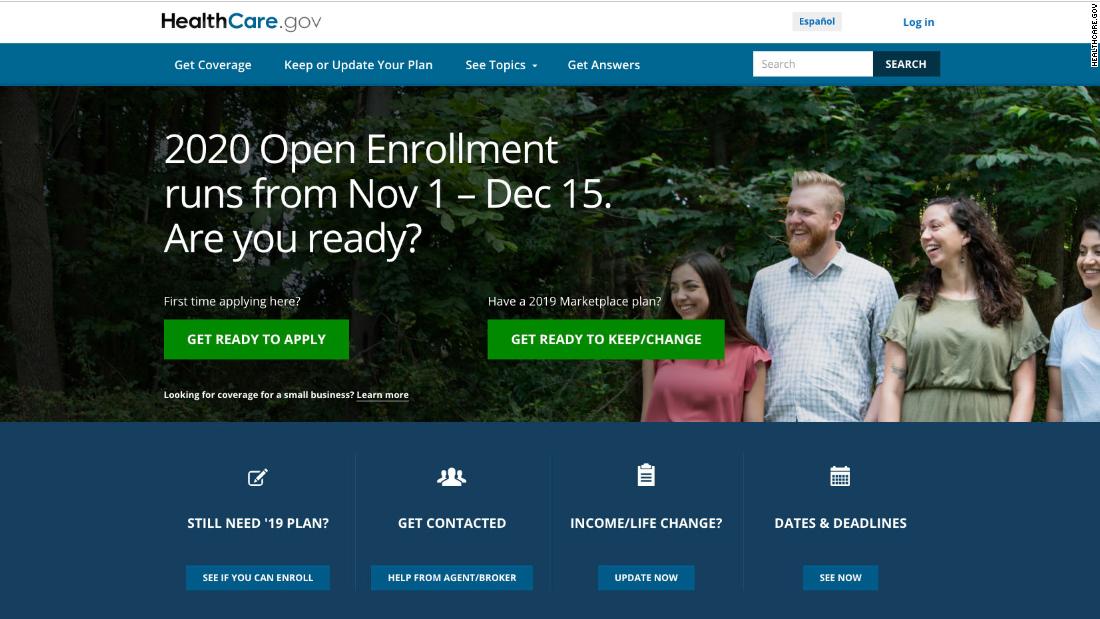
Don’t be confused. Open enrollment begins Nov. 1 and runs at least through Dec. 15, and the insurance marketplaces set up by the law aren’t going anywhere anytime soon.

That’s not to underplay the stakes here. Down the line, sometime next year, if the Supreme Court ends up taking the case and ruling the ACA unconstitutional, “the chaos that would ensue is almost possible impossible to wrap your brain around,” Corlette says. “The marketplaces would just simply disappear and millions of people would become uninsured overnight, probably leaving hospitals and doctors with millions and millions of dollars in unpaid medical bills. Medicaid expansion would disappear overnight.

I don’t see any sector of our health care economy being untouched or unaffected,” she adds.

So what is this case that — yet again — threatens the Affordable Care Act’s very existence?

A quick refresher: When the Republican-led Congress passed the Tax Cuts and Jobs Act in 2017, it zeroed out the Affordable Care Act’s penalty for people who did not have health insurance. That penalty was a key part of the Supreme Court’s decision to uphold the law in 2012, so after the change to the penalty, the ACA’s opponents decided to challenge it anew.

Significantly, the Trump administration decided in June not to defend the ACA in this case. “It’s extremely rare for an administration not to defend the constitutionality of an existing law,” says Abbe Gluck, a law professor and the director of the Solomon Center for Health Law and Policy at Yale University. “The administration is not defending any of it — that’s a really big deal.”

The basic argument made by the state of Texas and the other plaintiffs? The zero dollar fine now outlined in the ACA is a “naked, penalty-free command to buy insurance,” says Bagley.

Here’s how the argument goes, as Bagley explains it: “We know from the Supreme Court’s first decision on the individual mandate case that Congress doesn’t have the power to adopt a freestanding mandate, it just has the power to impose a tax.” So therefore, the argument is that “the naked mandate that remains in the Affordable Care Act must be unconstitutional.”

The case made by the plaintiffs goes further, asserting that because the individual mandate was described by the Congress that enacted it as essential to the functioning of the law, this unconstitutional command cannot be cut off from the rest of the law. If the zero dollar penalty is unconstitutional, the whole law must fall.

Last December, a federal judge in Texas agreed with that entire argument. His judgement was appealed to the panel of judges in the 5th Circuit. Even if those judges agree that the whole law is unconstitutional, that would not be the end of the story — the case will almost certainly end up before the Supreme Court. It would be the third case to challenge the Affordable Care Act in the nation’s highest court.

So if the ruling will be appealed anyway, does it matter? “It matters for at least two reasons,” Bagley says. “First of all, if the 5th Circuit rejects the lower court holding and decides that the whole law is, in fact, perfectly constitutional, I think there’s a good chance the Supreme Court would sit this one out.”

On the other hand, if the 5th Circuit invalidates the law, it almost certainly will go the Supreme Court, “which will take a fresh look at the legal question,” he says. Even if the Supreme Court ultimately decides whether the ACA stands, “you never want to discount the role that lower court decisions can play over the lifespan of a case,” Bagley says.

The law has been dogged by legal challenges and repeal attempts from the very beginning, and experts have warned many times about the dire consequences of the law suddenly going away. Nine years in, “the Affordable Care Act is now part of the plumbing of our nation’s health care system,” Bagley says. “Ripping it out would cause untold damage and would create a whole lot of uncertainty.”


Americans need more convincing on Medicare for All, poll says

https://www.pbs.org/newshour/health/americans-need-more-convincing-on-medicare-for-all-poll-says?omnicid=CFC1688174&mid=henrykotula@yahoo.com

Americans need to know more before they can make up their minds about proposed overhauls to the nation’s health care system, according to a survey released Thursday.

When asked if they wanted to wipe out private health insurance for a so-called Medicare for All public insurance program, 40 percent of U.S. adults between the ages of 19 to 64 said they did not know enough to offer an opinion.

A few Democratic presidential candidates have put forward their proposed health care plans, including Medicare for All. Sen. Bernie Sanders, I-Vt. and Sen. Elizabeth Warren, D-Mass. have advocated for Medicare for All models that replace private insurance with a national health insurance plan. And Sen. Kamala Harris, D-Calif., released a health care proposal that covered 330 million Americans under one government health care plan. According to the candidates, these plans would make health care affordable for more Americans. It could help reduce the number of uninsured Americans, which currently amounted to 27.5 million people nationwide in 2018, according to the Census Bureau, marking a rise of 1.9 million people over the previous year.

According to a July 22 poll from the PBS NewsHour, NPR and Marist, 70 percent of U.S. adults said they supported Medicare for All proposals as long as they maintain an option to keep private health insurance. A system like this has been proposed by Pete Buttigieg. By comparison, when asked in a separate question, only 41 percent of survey respondents said they wanted to scrap private health insurance for a government-run plan.

In this latest poll from the Commonwealth Fund, another 32 percent of Americans said they opposed the idea, while 27 percent of Americans favored such a plan, according to the survey results published by the Commonwealth Fund, which researches health policy. The survey polled 4,914 U.S. adults ages 19 to 64 from March 19 to June 9.

“People are confused about what this might mean for them, and what it might mean for the health system and what it might mean in terms of trade-offs,” said Sara Collins, vice president of Health Care Coverage and Access at the Commonwealth Fund, during a call with reporters Wednesday.

Americans are largely satisfied with their health insurance, but lacked confidence that their health care coverage could protect them financially if they fell seriously ill and required medical care.

“These satisfaction rates reflect the fact that most people don’t use their insurance a ton,” said Sabrina Corlette, a research professor and co-founder of the Center on Health Insurance Reforms at Georgetown University. “It’s sporadic interactions.”

Eighty-five percent of working-age Americans said they were satisfied with their health insurance. That included private health insurance, Medicaid, and coverage purchased on the individual marketplace established under the Affordable Care Act. Another 14 percent said they were dissatisfied with their current health insurance.

In contrast, 61 percent of U.S. adults age 16 to 64 said they were confident that they would be able to afford the cost of care if they became seriously ill, while 38 percent of Americans said they were not confident.

These survey results come as Democratic presidential candidates promote their health care plans going into the 2020 election. Meanwhile, Republicans in Congress and the Trump administration have promised to replace the Affordable Care Act, known as Obamacare, with “something better,” although it is unclear what that would be. To date, they have eliminated some policies put into place under Obamacare, including dismantling the individual mandate.

Health care will be one of the most important issues among voters going into the next presidential election. Health care costs for Americans are the highest among industrialized nations. Meanwhile, life expectancy has dropped nationwide in recent years, in part due to the rise in drug overdose deaths, many of which are tied to the opioid crisis. Among developed nations the OECD ranked for infant mortality, the U.S. was among the bottom 11, after Russia.

This survey suggests that all the campaigns have their work cut out for them if they want to ramp up public awareness of proposals on the table to fix health care, Corlette said. She said the public needs more education and discussion about possible solutions aimed at problems in the U.S. health care system.

“It strikes me as a really good opportunity for people on both sides of the debate,” Corlette said. “There’s clearly a lot of people who have just not made up their mind.”

But she said the lack of confidence in how much protection health coverage affords people tugs at the reality that “the system doesn’t work really well for people who are very sick.”

New analysis from the Kaiser Family Foundation supports that notion. Annual family premiums for employer-based health insurance rose 5 percent to $20,576 on average, faster than wage growth, which increased by 3.4 percent, according to the study, published in Health Affairs. And since 2009, those premiums jumped 54 percent.

Health insurance costs and coverage only provide part of the picture of what troubles Americans, said Thomas Miller, a resident fellow with the conservative American Enterprise Institute.

Policymakers need to think about more than tinkering with “incremental expansions of coverage on the margins beyond where we already are,” Miller said. “It’s important to remember that people need most of all economic growth, job security and reasons to be optimistic about managing their lives.”


Paying for healthcare shouldn’t bankrupt families

https://www.modernhealthcare.com/opinion-editorial/paying-healthcare-shouldnt-bankrupt-families?utm_source=modern-healthcare-daily-finance&utm_medium=email&utm_campaign=20190923&utm_content=article4-readmore

Image result for medical bills bankruptcy

Healthcare costs in the U.S. are too high. Americans struggle to afford basic needs like prescription drugs and too often face crushing surprise bills after undergoing necessary medical procedures. Seniors in particular feel the weight of health expenses when they discover that the Medicare benefits they earned don’t always provide sufficient coverage.

While the Affordable Care Act instituted protections for Americans with pre-existing conditions, guaranteed essential health benefits and made some progress in lowering patients’ costs, those advancements are under attack in the courts and through regulatory actions. I chair the House Ways and Means Committee, which has jurisdiction over a great deal of our nation’s healthcare system, including Medicare. Under Democratic leadership, we are fighting to bring down healthcare costs and preserve critical existing health protections.

Our committee hit the ground running this year. The first hearing I convened as chairman focused on protecting Americans with pre-existing conditions. Nearly 130 million Americans have a pre-existing condition—anything from asthma to cancer to diabetes. Thanks to the ACA, insurance companies can no longer refuse to cover these individuals. The hearing shed light on the importance of this safeguard and the ways it provides Americans with greater peace of mind and financial security.

We also highlighted the immense pain families will endure if 18 Republican state attorneys general succeed in their case to repeal the law.

House Democrats, along with Democratic state attorneys general, jumped into this court battle and continue to defend the millions of Americans with health conditions from discrimination and financial ruin.

We also took concrete steps to increase transparency and lower drug prices. Ways and Means advanced legislation that sheds light across the healthcare supply chain—from pharmaceutical manufacturers to pharmacy benefit managers—to help reduce costs for families. More can be done. In the coming months, the committee will consider legislation to improve the Medicare Part D program, establishing an out-of-pocket cap on expenses for beneficiaries. This would lower costs for seniors and save taxpayers money.

Part D reform is just one way to improve Medicare for beneficiaries. Many seniors aren’t aware that Medicare does not cover routine vision, hearing or dental exams. I will work to change that. Helping seniors access the glasses, hearing aids or dental care they need will save them money on the front end. This coverage will also prevent the trauma and expense of falls or other related health problems that could arise down the road as a result of inadequate services.

Some of the most jarring and devastating medical costs Americans encounter are surprise medical bills. Ways and Means plans to tackle this problem too. We are crafting legislation now that will help patients avoid the huge expenses that follow inadvertently being treated by out-of-network providers.

Healthcare is a necessity and it’s a human right. Paying for it shouldn’t bankrupt families. We can lower patient costs without stifling medical innovation or throwing hospitals into turmoil. It’s possible to achieve commonsense solutions that strengthen our nation’s healthcare system while reducing the burden on consumers.


Biden, Sanders, Warren clash over Medicare for All in Houston

Biden, Sanders, Warren clash over Medicare for All in Houston

Image result for Biden, Sanders, Warren clash over Medicare for All in Houston

The battle over health care that has dominated the Democratic race for the White House took center stage in Houston, where for the first time the top three candidates tangled over whether the nation is ready for sweeping reforms.

Former Vice President Joe Biden went back and forth at the opening of Thursday’s debate with the two progressives who are his leading challengers atop the polls, Sens. Bernie Sanders (I-Vt.) and Elizabeth Warren (D-Mass.).

Arguing that the “Medicare for All” proposal championed by Sanders would cost people their insurance, Biden called out the Vermont senator as a socialist and said his proposals would be too costly.

At one point in the debate, Biden said of Warren and Sanders that “nobody’s yet said how much it’s gonna cost for the taxpayer.”

He also pointed to the taxes that would have to increase for middle class people to pay for Medicare for All.

“There will be deductible in your paycheck,” Biden said, referencing the chunk that taxes would take out of people’s pay.

Sanders said most Americans were getting a raw deal in terms of their present health care costs compared with countries that have systems more similar to his Medicare for All approach.

“Let us be clear, Joe, in the United States of America we are spending twice as much per capita on health care as the Canadians or any other major country on earth,” Sanders said. 

“This is America,” Biden retorted. 

“Yeah, but Americans don’t want to pay twice as much as other countries and they guarantee health care to all people,” Sanders responded. 

Health care is a top issue in the race according to polls, and Democrats believe they can win the White House if the general election against President Trump is focused on the issue.

But it is also the issue that divides the Democratic candidates the most, with Biden and other centrists proposing more modest steps, such as reforms to ObamaCare.

The battle over health care is intertwined with the debate Democrats are having over which of their candidates is best positioned to defeat President Trump, with some in the party worried that Warren and Sanders are too liberal to win a general election. Others say their bold ideas are what is needed for the party to defeat Trump.

Biden argues Medicare for All means scrapping former President Obama’s signature achievement, the Affordable Care Act, instead of building on it.

While Sanders touted that everyone would have coverage under his plan and that it would be more generous, with no premiums or deductibles, Biden countered with the cost of the proposal, which estimates put at around $32 trillion over 10 years.

In the debate’s first hour, Biden was already hitting Sanders and Warren over the cost of the plan.

“The senator says she’s for Bernie,” Biden said of Warren’s support for Sanders’s Medicare for All plan. “Well I’m for Barack.”

Warren, pressed by host George Stephanopolous on whether middle class taxes would rise from Medicare for All, did not directly answer, pivoting to argue that overall costs for the middle class would go down once the abolition of premiums and deductibles is taken into account.

“What families have to deal with is cost, total cost,” Warren said, adding: “The richest individuals and the biggest corporations are going to pay more, and middle class families are going to pay less.”

Other candidates were also in the middle of the Medicare for All exchanges.

Sen. Kamala Harris (D-Calif.), who drew flak in the early months of the campaign for seeming to change her position on health care several times, touted the plan she eventually developed, to allow some private insurance to remain under Medicare for All by allowing private companies to administer some plans in a tightly regulated way.

“I want to give credit to Bernie. Take credit, Bernie,” Harris said, while adding, “I wanted to make the plan better, which I did.”

At another point in the debate, Biden dismissed the idea that employers would raise workers’ wages if employers no longer had to provide health insurance under a Medicare for All system. 

“My friend from Vermont thinks the employer’s going to give you back what you’ve negotiated as a union all these years … they’re going to give back that money to the employee?” Biden said.

“As a matter of fact they will,” Sanders interjected.

“Let me tell you something, for a Socialist you’ve got a lot more confidence in corporate America than I do,” Biden responded. 

While all of the Democrats advocate large additional government spending to expand health insurance coverage, the debates over whether private insurance should remain as an option has proven to be a particularly fierce source of debate.

Republicans have sensed an opening on that point as well, eagerly bashing Democrats for wanting to take away employer-sponsored coverage that millions of Americans have. Sanders and Warren counter that Medicare for All coverage would be better insurance, with no deductibles at all, so people would not miss it.

“I’ve actually never met anybody who likes their health insurance company,” Warren said, noting people like their doctors, which they would be able to keep. 

Sen. Amy Klobuchar (D-Minn.), who has staked out a more moderate ground, tore into Sanders, though, over his plan’s elimination of private insurance.

“While Bernie wrote the bill, I read the bill, and on page eight of the bill it says that we will no longer have private insurance as we know it,” Klobuchar said.

“I don’t think that’s a bold idea, I think it’s a bad idea,” she added. 

Amid the division, Harris tried to strike a unifying note.

“I think this discussion is giving the American people a headache,” she said. “What they want to know is that they’re going to have health care and cost will not be a barrier to getting it.” 


Republicans ready to revive ACA repeal talks

https://www.beckershospitalreview.com/hospital-management-administration/republicans-ready-to-revive-aca-repeal-talks.html

Image result for aca repeal

Sen. Lindsey Graham, R-S.C., promised to revive ACA repeal in Congress if Republicans can win back a majority in the House and reelect President Donald Trump in 2020, according to an interview on South Carolina radio show “The Morning Answer with Joey Hudson,” featured by The Hill

“This is what 2020 is about: If we can get the House back, and keep our majority in the Senate, and President Trump wins reelection, I can promise you, not only are we going to repeal Obamacare, we are going to do it in a smart way where South Carolina would be the biggest winner,” Mr. Graham said.

Mr. Graham, who failed to pass an ACA repeal plan in 2017, called “Medicare for All” and other Democratic presidential candidates’ healthcare plans “crazy.”  

“Medicare for All is $30 trillion, and it’s going to take private sector healthcare away from 180 million Americans,” he said. Instead, he proposed giving states the power to determine healthcare policy through block grants and other smaller reforms. This would allow states to test conservative healthcare policies against liberal ones, he said. 

“This election has got a common thing: Federalism versus socialism,” Mr. Graham said. “What I want to do is make sure the states get the chance to administer this money using conservative principles if you are in South Carolina, and if you want Medicare for All in California, knock yourself out.”

Trump to Sign Medicare Order as Part of Attack on Democrats’ Health-Care Message

https://www.wsj.com/articles/trump-administration-proposal-would-allow-prescription-drug-imports-from-canada-11564580906?utm_source=Sailthru&utm_medium=email&utm_campaign=Newsletter%20Weekly%20Roundup:%20Healthcare%20Dive%2008-03-2019&utm_term=Healthcare%20Dive%20Weekender

Image result for band aid

Administration moves ahead to bolster Medicare Advantage plans and authorize lower-cost drug imports from Canada, as it takes on Medicare for All.

President Trump is preparing to sign an executive order next week on Medicare and moving ahead with allowing some drug imports from Canada, part of the administration’s effort to engineer a response to Democratic proposals that candidates say would expand health coverage to all Americans.

The executive order would aim to strengthen Medicare for 44 million Americans and portray the president as defending it against Democrats who want to expand it nationwide under their Medicare for All strategy, a White House official said Wednesday.

The administration on Wednesday also said it would allow the imports of some drugs from Canada, backing an idea most Democratic candidates have also said they support. More executive orders, including one on drug prices, are possible, according to a person familiar with the plans.

Mr. Trump is taking a two-pronged approach to his 2020 campaign message on health care, attacking Medicare for All as socialism and rolling out a blitz of health-care initiatives intended to position him as the person who can drive down costs and protect health care.

The president is expected to contrast the Democrats’ plans with his in a speech set for Aug. 6. “He’s going to indict and impugn the idea of Medicare for All,” a White House official said of the speech. Senior White House aides and agency officials are holding meetings several times a week on health care plans, the official said.

Democratic challengers say Mr. Trump has endangered coverage by backing cuts to Medicare and a lawsuit that could dismantle the Affordable Care Act.

“We are not about trying to take away health care from anyone,” Massachusetts Democratic Sen. Elizabeth Warren said during the candidates’ debate Tuesday. “That’s what the Republicans are trying to do.”

This week, the administration proposed a rule that would compel hospitals to disclose discounted rates with insurers. The president signed an executive order to overhaul kidney-disease care, and the White House relaxed restrictions on pretax health savings accounts so the money can be used on treatment to prevent disease.

Mr. Trump is expected to sign the Medicare executive order next week at The Villages, a Florida retirement community with 120,000 residents that is majority Republican.

Mr. Trump may call for agency action to bolster Medicare Advantage plans, which private insurers offer under contract with Medicare and cover about 22 million people, according to two people familiar with the executive order. The president is likely to focus on curbing waste and abuse in Medicare that can add to the program’s cost. In addition, the order may aim to let Medicare Advantage plans offer a wider array of supplemental benefits. The administration has already taken steps in this direction by letting home health-care providers become partners in the Medicare Advantage contracts.

Mr. Trump also is expected to push for changes that could lower the price of patient visits to hospital outpatient clinics, two of the people said. Those visits can cost more than visits to clinics operated by doctors. “This is part of the president’s broader vision to put American patients first,” one person familiar with the executive order said.

A White House spokesman declined to confirm the details or comment on the executive order.

House Republicans and Health and Human Services Secretary Alex Azar have criticized the plans from Democrats, saying they would end Medicare Advantage and imperil the Medicare program, which covers 44 million Americans.

“Our administration wants to strengthen the program, protect the program, make sure it’s sustainable over the long term,” Seema Verma, administrator at the Centers for Medicare and Medicaid Services, said Wednesday at a press event. “We need to work toward that instead of forcing so many more people onto the program.”