Federal Public Health Emergency (PHE) Extended

https://mailchi.mp/tradeoffs/research-corner-5267789?e=ad91541e82

Earlier this month, the Biden administration officially extended the federal public health emergency (PHE) declaration it had set in place for COVID-19. That means the PHE provisions will stay in effect for another 90 days — until mid-January at least.

When the PHE does end, a number of rules developed in response to the pandemic will sunset. One of those is a provision that temporarily requires states to let all Medicaid beneficiaries remain enrolled in the program — even if they have become ineligible during the pandemic.

Estimates suggest that millions could lose Medicaid coverage when this emergency provision ends. Among those who would lose coverage because they are no longer eligible for the program, about one-third are expected to qualify for subsidized coverage on the Affordable Care Act (ACA) marketplaces. Most others are expected to get coverage through an employer. It remains an open question, though, how many people will successfully transition to these other plans. 

recent paper by health economics researcher Laura Dague and colleagues in the Journal of Health Politics, Policy, and Law sheds light on these dynamics. The authors used a prior change in eligibility in Wisconsin’s Medicaid program to estimate how many people successfully transitioned to a private plan when their Medicaid eligibility ended.

Wisconsin’s Medicaid program is unique. Back in 2008 — before the ACA passed — Wisconsin broadly expanded Medicaid eligibility for non-elderly adults. After the ACA came into effect, Wisconsin reworked its Medicaid program in a way that made about 44,000 adults (mostly parents) with incomes above the federal poverty line ineligible for the program. To remain insured, they would have to switch to private coverage (via Obamacare or an employer). 

Using data from the Wisconsin All-Payer Claims Database (APCD), the researchers found that:

  • Only about one-third of those 44,000 people had definitely enrolled in private coverage within two months of exiting the Medicaid program.
     
  • The remaining two-thirds of people were uninsured or their insurance status couldn’t be determined.
     
  • Even using the most optimistic assumptions to fill in that missing insurance status data, the authors estimated only up to 42% of people might have had private coverage within three months.
     
  • Nearly 1 in 10 enrollees had re-entered Medicaid coverage within six months, possibly due to fluctuations in household income. 

This paper has several limitations. Health insurers are not required to participate in Wisconsin’s APCD, so the authors may not be capturing all successful transitions from Medicaid to private insurance. The paper also does not distinguish between different types of private insurance: Some coverage gains may have resulted from employer-based insurance rather than the ACA marketplace. 

Still, the findings suggest that when a large number of Wisconsin residents lost Medicaid eligibility in 2014, many were not able to transition from Medicaid to private coverage. Wisconsin’s experience can help us understand what might happen when the national public health emergency ends and Medicaid programs resume removing people from their rolls.

A Self-Inflicted Wound: The Looming Loss of Coverage

https://www.medpagetoday.com/opinion/second-opinions/101004?trw=no

Millions are about to lose Medicaid while still eligible.

President Biden recently said that the pandemic is “over.” Regardless of how you feel about that statement or his clarification, it is clear that state and federal health policy is and has been moving in the direction of acting as if the pandemic is indeed over. And with that, a big shoe yet to drop looms large — millions of Americans are about to lose their Medicaid coverage, even though many will still be eligible. This amounts to a self-inflicted wound of lost coverage and a potential crisis for access to healthcare, simply because of paperwork.

An August report from HHS estimated that about 15 million Americans will lose either Medicaid or Children’s Health Insurance Program (CHIP) coverage once the federal COVID-19 public health emergency (PHE) declaration is allowed to expire. Of these 15 million, 8.2 million are projected to be people who no longer qualify for Medicaid or CHIP — but nearly just as many (6.8 million) will become uninsured despite still being eligible.

Why Is This Happening?

This Medicaid “cliff” will happen because the extra funding states have been receiving under the Families First Coronavirus Response Act (FFCRA) since March 2020 was contingent upon keeping everyone enrolled by halting all the bureaucracy that determines whether people are still eligible. Once all the processes to redetermine eligibility resume, the lack of up-to-date contact information, requests for documentation, and other administrative burdens will leave many falling through the cracks. A wrong addressone missed letter, and it all starts to unravel. This will have potentially devastating implications for health.

When Will This Happen?

HHS has said they will provide 60 days’ notice to states before any termination or expiration of the PHE — and they haven’t done so yet. It also seems incredibly unlikely that they would announce an end date for the PHE before the midterm elections, as that would be a major self-inflicted political wound. So, odds are that we are safe until at least January 2023 — but extensions beyond that feel less certain.

What Are States Doing to Prepare?

CMS has issued a slew of guidance over the past year to help states prepare for the end of the PHE and minimize churn, another word for when people lose coverage. Some of this guidance has included ways to work with managed care plans, which deliver benefits to more than 70% of Medicaid enrollees, to obtain up-to-date beneficiary contact information, and methods of conducting outreach and providing support to enrollees during the redetermination process.

However, the end of the PHE and the Medicaid redetermination process will largely be a state-by-state story. Georgetown University’s Center for Children and Families has been tracking how states are preparing for the unwinding process. Unsurprisingly, there is considerable variation between states’ plans, outreach efforts, and the types of information accessible to people looking to renew their coverage. For example, less than half of all states have a publicly available plan for how the redetermination process will occur. While CMS has encouraged states to develop plans, they are not required to submit their plans to CMS and there is no public reporting requirement.

Who Will Be Hurt Most?

If you dig into the HHS report, you will see that the disenrollment cliff will likely be a disaster for health equity — as if the inequities of the pandemic itself weren’t enough.majority of those projected to lose coverage are non-white and/or Latinx, making up 52% of those losing coverage because of changes in eligibility and 61% among those losing coverage because of administrative burdens. Only 17% of white non-Latinx are projected to be disenrolled inappropriately, compared to 40% of Black non-Latinx, 51% of Asian American, Native Hawaiian, and Pacific Islander, and 64% of Latinx people — a very grim picture. This represents a disproportionate burden of coverage loss, when still eligible, among those already bearing inequitable burdens of the pandemic and systemic racism more generally.

Another key population at risk are seniors and people with disabilities who have Medicaid coverage, or those who aren’t part of the Modified Adjusted Gross Income (MAGI) population. Under the Affordable Care Act, states are required to redetermine eligibility at renewal using available data. This process, known as ex parte renewal, prevents enrollees from having to respond to, and potentially missing, onerous re-enrollment notifications and forms. Despite federal requirements, not all states attempt to conduct ex parte renewals for seniors and people with disabilities who have Medicaid coverage, or those who aren’t qualifying based on income. Excluding these groups from the ex parte process has important health equity implications, leaving already vulnerable groups more exposed and at risk for having their coverage inappropriately terminated.

What Can Be Done?

There are ways to mitigate some of this coverage loss and ensure people have continued access to care. HHS recently released a proposed rule that would simplify the application for Medicaid by shifting more of the burden of the application and renewal processes onto the government as opposed to those trying to enroll or renew their coverage. We could also change the rules to allow states to use more data, like information collected to verify eligibility for the Supplemental Nutrition Assistance Program (SNAP), in making renewal decisions, rather than relying so much on income. The Biden administration also made significant investments into navigator organizations, which can help those who are no longer eligible for Medicaid transition to marketplace coverage. Furthermore, states should use this as an opportunity to determine the most effective ways to reach Medicaid enrollees by partnering with researchers to test different communication methods surrounding renewals and redeterminations.

As the federal government and state Medicaid agencies continue to prepare for the end of the PHE, it is critical that they consider who these burdensome processes will affect the most and how to improve them to prevent people from falling through the cracks. More sick Americans without access to care is the last thing we need.

New York declares polio a state emergency

New York Gov. Kathy Hochul on Sept. 9 declared a state of emergency amid evidence that polio is spreading in communities around the state. The move unlocks federal resources to help the state respond and boost vaccination rates. 

Under the declaration, pharmacists, emergency medical personnel and midwives can now administer polio vaccines. The executive order also requires providers to send polio vaccination data to the state’s health department. 

“On polio, we simply cannot roll the dice,” said Mary Bassett, MD, health commissioner at the state’s health department. “If you or your child are unvaccinated or not up to date with vaccinations, the risk of paralytic disease is real. I urge New Yorkers to not accept any risk at all.”

The declaration came the same day state health officials reported that the virus had been detected in wastewater samples from Nassau County. Officials have also found the virus in sewage samples from New York City, Orange County, Sullivan County and Rockland County, where the nation’s first polio case in nearly a decade was confirmed July 21 in an unvaccinated man. Health officials have suggested the Rockland County case may just be the “tip of the iceberg” with hundreds of other cases potentially going undetected in the state. 

The threat of polio’s resurgence is magnified by the many pockets of unvaccinated residents throughout the state. New York’s polio vaccination rate is 78.96 percent. That figure is lower in many of the counties where the virus has been detected in wastewater. In Rockland County, for example, the polio vaccination rate is 60.3 percent, state data shows. Nationwide, polio vaccination coverage sits at about 93 percent, according to the CDC.

15 million people may lose Medicaid coverage after COVID-19 PHE ends, says HHS

https://www.healthcarefinancenews.com/news/15-million-people-may-lose-medicaid-coverage-after-covid-19-phe-ends-says-hhs?mkt_tok=NDIwLVlOQS0yOTIAAAGGiU3xe03L9n9GxXZ9yaIV-qA-J7yJdgxxS3cvHsltDu68qeQvkjp9itAyWko5emSDE6no51ICx_rIZyr_2p4wJhXx3hLDN834FGQ0wrLf

Children, young adults will be impacted disproportionately, with 5.3 million children and 4.7 million adults ages 18-34 predicted to lose coverage.

Roughly 15 million people could lose Medicaid coverage when the COVID-19 public health emergency ends, and only a small percentage are likely to obtain coverage on the Affordable Care Act exchanges, according to a new report from the Department of Health and Human Services.

Using longitudinal survey data and 2021 enrollment information, HHS estimated that, based on historical patterns of coverage loss, this would translate to about 17.4% of Medicaid and Children’s Health Insurance Program (CHIP) enrollees leaving the program.

About 9.5% of Medicaid enrollees, or 8.2 million people, will leave Medicaid due to loss of eligibility and will need to transition to another source of coverage. Based on historical patterns, 7.9% (6.8 million) will lose Medicaid coverage despite still being eligible – a phenomenon known as “administrative churning” – although HHS said it’s taking steps to reduce this outcome.

Children and young adults will be impacted disproportionately, with 5.3 million children and 4.7 million adults ages 18-34 predicted to lose Medicaid/CHIP coverage. Nearly one-third of those predicted to lose coverage are Hispanic (4.6 million) and 15% (2.2 million) are Black.

Almost one-third (2.7 million) of those predicted to lose eligibility are expected to qualify for marketplace premium tax credits. Among these, more than 60% (1.7 million) are expected to be eligible for zero-premium marketplace plans under the provisions of the American Rescue Plan. Another 5 million would be expected to obtain other coverage, primarily employer-sponsored insurance.

An estimated 383,000 people projected to lose eligibility for Medicaid would fall in the coverage gap in the remaining 12 non-expansion states – with incomes too high for Medicaid, but too low to receive Marketplace tax credits. State adoption of Medicaid expansion in these states is a key tool to mitigate potential coverage loss at the end of the PHE, said HHS.

States are directly responsible for eligibility redeterminations, while the Centers for Medicare and Medicaid Services provides technical assistance and oversight of compliance with Medicaid regulations. Eligibility and renewal systems, staffing capacity, and investment in end-of-PHE preparedness vary across states. 

HHS said it’s working with states to facilitate enrollment in alternative sources of health coverage and minimize administrative churning. These efforts could reduce the number of eligible people losing Medicaid, the agency said.

The Inflation Reduction Act of 2022 extends the ARP’s enhanced and expanded Marketplace premium tax credit provisions until 2025, providing a key source of alternative coverage for those losing Medicaid eligibility, said HHS.

WHAT’S THE IMPACT?

While the model projects that as many as 15 million people could leave Medicaid after the PHE, about 5 million are likely to obtain other coverage outside the marketplace and nearly 3 million would have a subsidized Marketplace option. And some who lose eligibility at the end of the PHE may regain it during the unwinding period, while some who lose coverage despite being eligible may re-enroll.

The findings highlight the importance of administrative and legislative actions to reduce the risk of coverage losses after the continuous enrollment provision ends, said HHS. Successful policy approaches should address the different reasons for coverage loss.

Broadly speaking, one set of strategies is needed to increase the likelihood that those losing Medicaid eligibility acquire other coverage, and a second set of strategies is needed to minimize administrative churning among those still eligible for coverage.

Importantly, some administrative churning is expected under all scenarios, though reducing the typical churning rate by half would result in the retention of 3.4 million additional enrollees.

THE LARGER TREND

CMS has released a roadmap to ending the COVID-19 public health emergency as health officials are expecting the Biden administration to extend the PHE for another 90 days after mid-October.

The end of the PHE, last continued on July 15, is not known, but HHS Secretary Xavier Becerra has promised to give providers 60 days’ notice before announcing the end of the public health emergency.

A public health emergency has existed since January 27, 2020.

Federal government adjusts monkeypox vaccine strategy

https://mailchi.mp/11f2d4aad100/the-weekly-gist-august-12-2022?e=d1e747d2d8

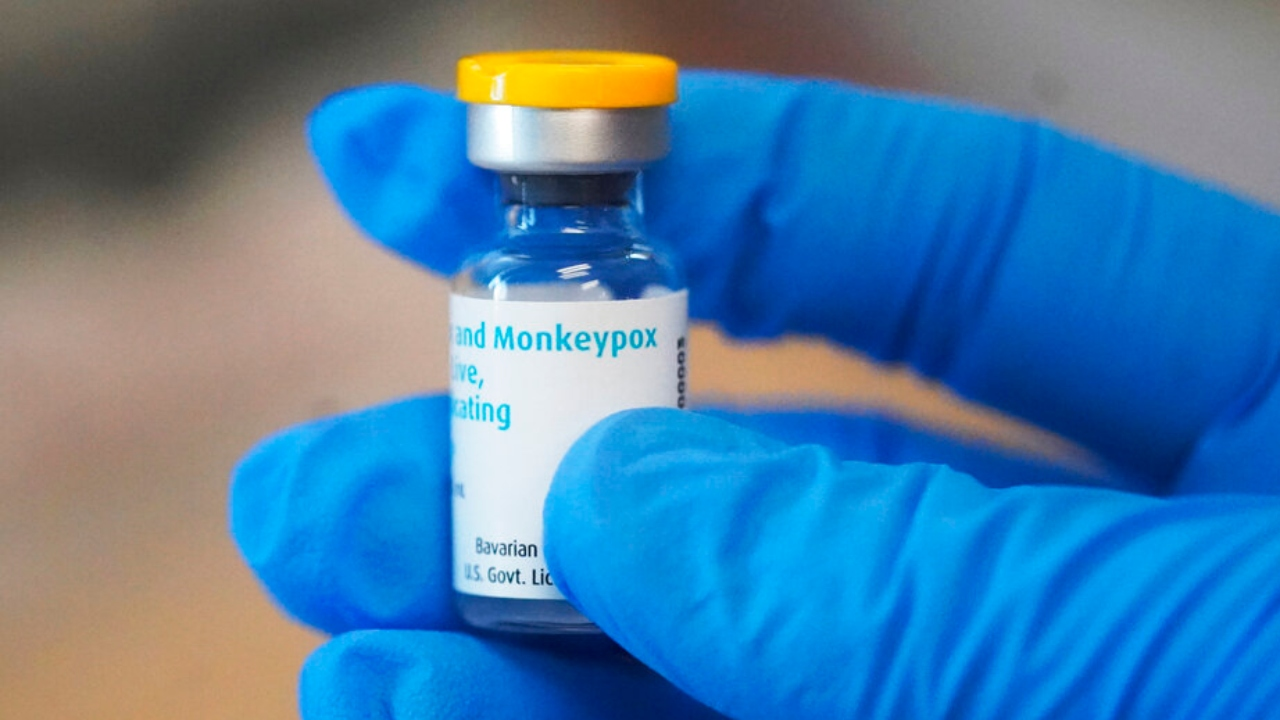
This week, the Food and Drug Administration (FDA) announced a change intended to stretch out the limited supply of monkeypox vaccine doses, allowing the shots to reach five times the number of patients. Monkeypox, a disease in the smallpox family, is spread primarily through skin-to-skin contact, often causing patients to develop painful lesions.

Although most cases resolve within a few weeks, the rapid growth in cases, now more than 9K domestically and 30K globally, is still a cause for concern, leading federal officials to declare a public health emergency last week. The FDA is also recommending that providers administer the vaccine between layers of skin, rather than below the skin into fatty tissue. This dosing change will allow providers to extend the nearly half a million doses not yet sent to states, in order to reach the more than 1.6M Americans considered highest risk.

The Gist: The country is now dealing with two public health emergencies from highly contagious diseases simultaneously. While monkeypox isn’t nearly as transmissible, deadly, or overwhelming to the healthcare system as COVID, the public health response has nonetheless been lackluster (and this week’s new COVID guidance suggests that the CDC has largely given up on managing the response, devolving responsibility to individuals in nearly all settings). 

For those hoping that the COVID experience would spark faster action by our public health system, the federal response to monkeypox shows we haven’t applied the lessons learned. Public health authorities aren’t conducting rigorous disease surveillance, testing and treatments remain hard to get, and Congress isn’t dedicating funds for the response. The lack of proactive leadership is likely to result in healthcare providers again bearing the brunt of efforts to manage another unsuppressed viral outbreak. 

San Francisco, New York state call monkeypox an emergency: 5 updates

New York state declared an imminent threat and San Francisco issued a state of emergency over monkeypox July 28 as the virus continues to spread in the U.S., NBC News reported. 

The news comes after the World Health Organization declared monkeypox a global emergency July 23 and as the CDC reported 4,907 confirmed cases nationwide as of July 28. California and New York account for more than 40 percent of the reported cases in the U.S., according to The Washington Post.

In a statement, New York State Commissioner of Health Mary Bassett, MD, said the declaration allows local health departments “to access additional state reimbursement, after other federal and state funding sources are maximized, to protect all New Yorkers and ultimately limit the spread of monkeypox in our communities.” It covers monkeypox prevention response and activities from June 1 through the end of the year. 

In San Francisco, the monkeypox public health emergency takes effect Aug. 1, city officials said in a news release. The release, from Mayor London Breed and the San Francisco Department of Public Health, said the declaration “will mobilize city resources, accelerate emergency planning, streamline staffing, coordinate agencies across the city, allow for future reimbursement by the state and federal governments and raise awareness throughout San Francisco about [monkeypox].”

Four other updates: 

1. HHS announced July 28 that nearly 800,000 additional monkeypox vaccine doses will be available for distribution to states and jurisdictions. The 786,000 additional doses are on top of the more than 300,000 doses already distributed. This means the U.S. has secured a total of about 1.1 million doses “that will be in the hands of those who need them in the next several weeks,” HHS Secretary Xavier Becerra said during a July 28 news conference. The additional doses will be allocated based on the total population of at-risk people and the number of new cases in each jurisdiction. “This strategy ensures that jurisdictions have the doses needed to complete the second dose of this two-dose vaccine regimen for those who have been vaccinated over the past month,” HHS said in a news release. 

2. As of the morning of July 29, the U.S. has held off on declaring a national monkeypox emergency. Mr. Becerra said July 28 that HHS “continue[s] to monitor the response throughout the country on monkeypox” and will weigh any decision regarding a public health emergency declaration based on the response.

3. The monkeypox response is straining public health workers. Health experts are concerned over how the monkeypox response will further deplete the nation’s public health workforce, still strained and burnt out from the ongoing COVID-19 pandemic. Barriers to testing, treatment and vaccine access largely mirror the missteps in the early coronavirus response, Megan Ranney, MD, emergency physician and academic dean of  Brown University School of Public Health in Providence, R.I, told The Washington Post. “I can’t help but wonder if part of the delay is that our public health workforce is so burned out,” she said. “Everyone who’s available to work on epidemiology or contract tracing is already doing it for COVID-19.” 

4. Monkeypox testing demand is low, commercial laboratories told CNN. In recent weeks, five major commercial laboratories have begun monkeypox testing, giving the nation capacity to conduct 80,000 tests per week. While Mayo Clinic Laboratories can process 1,000 samples a week, it’s received just 45 specimens from physicians since it began monkeypox testing July 11, according to the July 28 CNN report. “Without testing, you’re flying blind,” William Morice, MD, PhD, president of Mayo’s lab and chair of the board of directors at the American Clinical Laboratory Association, told the news outlet. “The biggest concern is that you’re not going to identify cases and [monkeypox] could become an endemic illness in this country. That’s something we really have to worry about.”

Anticipating the end of the public health emergency

https://mailchi.mp/ce4d4e40f714/the-weekly-gist-june-10-2022?e=d1e747d2d8

The Biden administration recently signaled that it will extend the federal COVID-19 public health emergency (PHE), which has been in place for nearly two-and-a-half years, beyond its current July 15 expiration date. As shown in the graphic above, a number of key pandemic-era policies would end if the PHE were discontinued. Hospitals, already experiencing financial challenges, would face an immediate 20 percent reduction in Medicare reimbursement for each hospitalized COVID patient. 

Combined with the end of funding for treating uninsured COVID patients, and with millions of Americans expected to lose Medicaid coverage when eligibility checks restart, the cost of treating COVID patients will fall more heavily on providers. More treatment costs will also be passed on to patients, as most private insurers no longer waive cost-sharing for COVID care.

On the telemedicine front, Congress has temporarily extended some Medicare telehealth flexibilities (including current payment codes and coverage for non-rural beneficiaries) for five months after the PHE ends, while CMS studies permanent coverage options. But further Congressional action will be required to keep current Medicare telehealth coverage in place, and these decisions will surely influence private insurers’ telehealth reimbursement policies. 

Although the Biden administration promises that it will provide sixty days’ notice before terminating the PHE or letting it expire, providers must prepare for the inevitable financial hit when the PHE ends.

How the pandemic may fundamentally change the health-care system

https://www.washingtonpost.com/politics/2022/03/11/how-pandemic-may-fundamentally-change-health-care-system/

Welcome to Friday’s Health 202, where today we have a special spotlight on the pandemic two years in.

🚨 The federal government is about to be funded. The Senate sent the long-term spending bill to President Biden’s desk last night after months of intense negotiations. 

Two years since the WHO declared a pandemic, what health-care system changes are here to stay?

Nurses screened patients at a drive-through testing site in March 2020. (Win McNamee/Getty Images)

Exactly two years ago, the World Health Organization declared the coronavirus a pandemic and much of American life began grinding to a halt. 

That’s when the health-care system, which has never been known for its quickness, sped up. The industry was forced to adapt, delivering virtual care and services outside of hospitals on the fly. Yet, the years-long pandemic has exposed decades-old cracks in the system, and galvanized efforts to fix them.

Today, as coronavirus cases plummet and President Biden says Americans can begin resuming their normal lives, we explore how the pandemic could fundamentally alter the health-care system for good. What changes are here to stay — and what barriers are standing in the way?

A telehealth boom

What happened: Telehealth services skyrocketed as doctors’ offices limited in-person visits amid the pandemic. The official declaration of a public health emergency eased long-standing restrictions on these virtual services, vastly expanding Medicare coverage. 

But will it stick? Some of these changes go away whenever the Biden administration decides not to renew the public health emergency (PHE). The government funding bill passed yesterday extends key services roughly five months after the PHE ends, such as letting those on Medicare access telehealth services even if they live outside a rural area.

But some lobbyists and lawmakers are pushing hard to make such changes permanent. Though the issue is bipartisan and popular, it could be challenging to pass unless the measures are attached to a must-pass piece of legislation. 

  • “Even just talking to colleagues, I used to have to spend three or four minutes while they were trying desperately not to stare at their phone and explain to them what telehealth was … remote patient monitoring, originating sites, and all this wonky stuff,”said Sen. Brian Schatz (D-Hawaii), a longtime proponent of telehealth.
  • “Now I can go up to them and say, ‘So telehealth is great, right?’ And they say, ‘yes, it is.’ ”
A new spotlight on in-home care

What happened: The infectious virus tore through nursing homes, where often fragile residents share rooms and depend on caregivers for daily tasks. Ultimately, nearly 152,000 residents died from covid-19.

The devastation has sparked a rethinking of where older adults live and how they get the services they need — particularly inside their own homes. 

  • “That is clearly what people prefer,” said Gail Wilensky, an economist at Project HOPE who directed the Medicare and Medicaid programs under President George H.W. Bush. “The challenge is whether or not it’s economically feasible to have that happen.”

More money, please: Finding in-home care — and paying for it — is still a struggle for many Americans. Meanwhile, many states have lengthy waitlists for such services under Medicaid.

Experts say an infusion of federal funds is needed to give seniors and those with disabilities more options for care outside of nursing homes and assisted-living facilities. 

For instance, Biden’s massive social spending bill included tens of billions of dollars for such services. But the effort has languished on Capitol Hill, making it unclear when and whether additional investments will come. 

A reckoning on racial disparities

What happened: Hispanic, Black, and American Indian and Alaska Native people are about twice as likely to die from covid-19 than White people. That’s according to age-adjusted data from a recent Kaiser Family Foundation report

In short, the coronavirus exposed the glaring inequities in the health-care system. 

  • “The first thing to deal with any problem is awareness,” said Georges Benjamin, the executive director of the American Public Health Association. “Nobody can say that they’re not aware of it anymore, that it doesn’t exist.”

But will change come? Health experts say they hope the country has reached a tipping point in the last two years. And yet, any real systemic change will likely take time. But, Benjamin said, it can start with increasing the number of practitioners from diverse communities, making office practices more welcoming and understanding biases. 

We need to, as a matter of course, ask ourselves who’s advantaged and who’s disadvantaged” when crafting new initiatives, like drive-through testing sites, Benjamin said. “And then how do we create systems so that the people that are disadvantaged have the same opportunity.”

House Republicans press HHS to end COVID-19 emergency, but hospitals want extension

House Republicans are demanding the Biden administration starts winding down the COVID-19 public health emergency, while hospital lobbying groups are pressing it to do the opposite.

A group of more than 70 House Republicans wrote Thursday to Department of Health and Human Services (HHS) Secretary Xavier Becerra asking to start the process to wind down the COVID-19 public health emergency (PHE), which was recently extended until April. At the same time, several hospital advocacy groups are hoping the agency keeps the PHE beyond this spring and wants a 60-day notice as to when it will end.

“Although the PHE was certainly necessary at the outset of the pandemic, it was always meant to be temporary,” according to the GOP letter led by Rep. Cathy McMorris Rodgers, R-Washington, ranking member of the House Energy and Commerce Committee.

Republicans want HHS to release a concrete timeline for when the agency plans to exit the PHE.

“We recognize that the PHE cannot end overnight, and that certain actions must be taken to avoid significant disruption to patients and healthcare providers, including working with Congress to extend certain policies like maintaining access to telehealth services for our nation’s seniors,” the letter added.

The PHE granted major flexibilities for providers to get reimbursed by Medicare for telehealth, but those powers will go away after the PHE. It also gave flexibility on several reporting requirements and eased other regulatory burdens.

Another major issue is that states are going to be able to start eligibility redeterminations for Medicaid, which have been paused since the PHE went into effect in January 2020. State Medicaid directors are seeking a heads-up on when the emergency will go away, as states can start to disenroll ineligible beneficiaries after the PHE expires.

Republicans also want Becerra to cite any programs that should be made permanent, and they want “swift action” to lift all COVID-19 vaccine mandates.

The Supreme Court upheld the Biden administration’s healthcare worker vaccine mandate, overturning a lower court’s stay that affected half of the country. The Centers for Medicare & Medicaid Services has deadlines for states to comply with the vaccination mandate, and facilities that don’t fully comply could risk losing participation in Medicare and Medicaid.

The Republicans charge that the mandates have not “stopped the spread of COVID-19 but have alienated many Americans and have caused staff shortages at hospitals and other healthcare facilities.”

Key drivers of the staff shortages, however, have been a massive surge of the virus overwhelming facilities caused by the omicron variant along with increased expenses facilities have faced for temporary nursing staff. Those lingering expenses are the reason hospital groups are pressing for HHS to do the opposite and extend the PHE beyond April.

The Federation of American Hospitals (FAH) also wrote to Becerra Thursday (PDF) seeking to continue to extend the PHE “well beyond its current expiration date in April 2022.” Even though the omicron surge appears to be easing, the virus is still creating major operational challenges for providers, FAH said.

It also wants the administration to give hospitals a 60-day heads-up when it plans to end the PHE.

“Unwinding the complex web of PHE waiver-authorized operations, programs and procedures—which will have been in place and relied on for more than two years—is a major undertaking that, if rushed, risks destabilizing fragile healthcare networks that patients rely on for care,” the letter said.

The American Hospital Association also wrote to congressional leaders Tuesday seeking for more relief from Congress to help systems overcome staffing shortages that have exacerbated due to the omicron surge.

“The financial pressures hospitals and health systems faced at the beginning of the public health emergency continue, with, for example, ongoing delays in non-emergent procedures, in addition to increased expenses for supplies, medicine, testing and protective equipment,” the letter said.

FAH President Chip Kahn told Fierce Healthcare on Friday that the issues Republicans address in the letter are different from the priorities of the FAH, namely that the association doesn’t focus on mask or vaccine mandates.

“What we are saying is that the PHE has many aspects to it, and so … we think [it] should be extended, but if you don’t then we need to have a lengthy or carefully thought through transition,” Kahn said.

He added that Becerra’s predecessor, acting Secretary Eric Hargan, told providers that they would get a 60-day notice before the end of the PHE. That deadline for such a 60-day notice is Feb. 15.

Kahn said he understands the administration may be under political pressure to end the emergency, but prior notice is absolutely needed.

“I don’t know how they will respond but if they do choose to pull out, we just want to make sure that it doesn’t leave anything behind,” he said.