The Case for the Public Option Over Medicare for All

https://hbr.org/2019/10/the-case-for-the-public-option-over-medicare-for-all?utm_source=The+Fiscal+Times&utm_campaign=27ee43ca78-EMAIL_CAMPAIGN_2019_10_16_09_52&utm_medium=email&utm_term=0_714147a9cf-27ee43ca78-390702969

How can the United States better control its health care costs and quality and still achieve universal coverage? The strongest choice is not Medicare for All, which would eliminate private insurance; it’s the public option, which would allow people to choose from Medicare or private insurers. But the public option can only succeed in controlling costs and quality and achieving universal coverage if it is implemented without the financing gimmicks that characterize Medicare.

In this article, we define the principles that can make the public option the legitimate and powerful competitor to private insurance firms and how this competition would expand access and improve cost and quality. But first we’ll clarify how extremely important the universal coverage is.

Universal Health Care Coverage: Life and Death Politics

Universal health care coverage is central to the physical, fiscal, and political well-being of a nation. Nowhere is that more evident than in the United States, the wealthiest nation in the world, which  still has 28.3 million people without health insurance. Americans have literally died, gone bankrupt, become disabled, and stayed in dead-end jobs that offer insurance. And yet, despite the lack of universal coverage, the United States spends more as a percentage of GDP than any other nation and its quality of care is erratic. Even with its world-class resources and medical technology, it ranks the lowest among developed nations in avoiding preventable deaths.

Universal coverage has a long history in other developed countries. It began as primarily employer-based health insurance coverage in the 1880s in Germany, morphed into government-backed universal coverage in England in 1948, marched across Western and Eastern Europe in the ensuing 25 years, and then into Latin America, Africa, Asia, and Canada, making the United States the exception among developed countries. Finally, after 65 years and 12 presidents, the United States passed the Affordable Care Act (ACA) in 2010 to significantly reduce the 45 million Americans who did not have insurance.

The passage of the legislation was hard fought and its results, nine years later, are mixed. On the plus side, the ACA insured more than 20 million additional Americans, lowering the percentage of the U.S. population that was uninsured from 17% in 2008 to 10% in 2016, and fewer people have suffered financial shocks since being insured through the ACA. Although the data are early, it may help make Americans healthier.

But there are negatives too. The ACA’s slogan, “if you like your plan or doctor, you can keep it,” proved to be false for many. And 14.7 million of the more than 20 million were insured through Medicaid, the U.S. health insurance for the indigent, which the important Oregon Health Insurance Experiment found had no effect on health status (but it did have a positive effect on self-reported mental health status). Health care remains unaffordable to millions: Premiums for insurance purchased on ACA-related exchanges rose by a staggering 26%, which helps explain why unsubsidized enrollment declined by 2.5 million people between 2017 and 2018. Those newly insured who were not covered by Medicaid faced ACA policies with substantial deductibles of at least $1,400 for an individual or $2,800 for a family. Finally, the small numbers of insurers that agreed to participate in the ACA had little incentive to compete on price, lower out-of-pocket costs, or by offering a broad choice of providers.

So what the United States needs, and Americans want, are lower premiums and out-of-pocket costs for health care, a sufficient number of competitive private insurers to honor the promise “if you like your plan or doctor, you can keep it,” and, as surveys reveal, no  exclusion for pre-existing conditions, no lifetime limits on benefits, and coverage for children up to age 26 on parents’ insurance.

The Medicare for All option, which would eliminate all private insurers, is clearly not the answer Americans want. They do not want to lose their private health insurance to a public bureaucracy or to pay its $3.2 trillion annual price tag in the form of higher taxes.

How the Public Option Can Cure the U.S. Health Care System

The aim of improving health care affordability, continued private insurance, and better access to quality providers can be achieved with the public option, but only if it is implemented with rates that reflect realistic underwriting and accurate and fair cost accounting.

The Medicare component of the public option is wildly popular: 85% of Medicare beneficiaries are satisfied with the federal program. And why not? Many doctors accept it, and the beneficiaries pay only a fraction of the cost, passing the rest onto future generations. The U.S. Congress, Democrats and Republicans alike, gives away benefits to users whose value substantially exceeds what they pay. Each beneficiary on average receives $310,000 more in benefits than they paid. The unpaid bills — $37 trillion at last count — have been kicked down the road to future generations in the form of bigger federal deficits. The Galen Institute reports that Medicare’s annual deficits are responsible for one-third of U.S. federal debt.

Yet, Medicare’s enormous scale confers genuine administrative and purchasing efficiencies. Medicare spends up to seven times less than private insurers on administrative costs. It also pays hospitals 40% less and providers 2 to 3.5 times less than private insurers do for the same services. Some contend that providers merely shift Medicare and Medicaid’s unpaid charges to private insurers, but that charge has been refuted. Rather, it is plausible that these payments appropriately help to squeeze out the one-third of health care expenditures that many experts view as sheer waste.

The public option can take advantage of these efficiencies but only if it is implemented without the financing gimmicks that have artificially lowered the costs of Medicare at the expense of our progeny and that would allow it to unfairly compete with private insurers.

To assure that all insurers play on a level playing field, public-financing principles must conform to those of private insurers. For one, the public option’s expenses must be financed by current users, not future generations. In other words, it should be pay as you go, just like private insurance. The public option’s accounting also should include all its expenses, such as the unfunded liability for Medicare employees’ post-retirement benefits, which are often buried in some fund other than Medicare’s. It must also account for the cost of the money that American taxpayers and debt holders have invested in building Medicare’s infrastructure, including its buildings, equipment, and workers. After all, private insurers incur costs to build the infrastructure that allows them to market their products; yet, under current accounting practices, Medicare gets these assets for free. To keep it real, expert accountants would routinely audit the public option’s financial statements to certify that its expenses are accurately stated, just as they do for private insurers.

Private insurers will be forced to compete with the public option’s lower costs through improved pricing, service, and quality. They can offer, for example, low-cost policies that transport enrollees from high-cost states to high-quality, low-cost ones such as Utah. Or they can emulate Ashley Furniture’s sending an enrollee to low-cost Mexico for an orthopedic procedure, replete with an American surgeon who was paid three times Medicare’s rate payments to the patient of $5,000 plus all her travel and out-of-pocket costs. (For political reasons, Medicare cannot emulate policies that favor certain states or send its enrollees out of the United States.) To help the private insurers to compete, new legislation should allow bundling of health, life, casualty, disability, and any other products, as well as the ability to sell across state lines. This enhanced competition among insurers and providers would lower costs, thereby increasing access to coverage and likely improving the quality of care.

We personally believe that the United States would be better off emulating three European countries — Germany, Switzerland, and The Netherlands — which are lauded for the quality of their universal coverage health care systems and yet spend far less on them than the United States. These countries are fiscally much healthier than nations with government-run health insurance systems akin to Medicare for All. But the reality is this model is politically untenable in the United States because it relies entirely on private insurers and would require eliminating highly popular Medicare and giving people vouchers for buying private-insurance policies.

Americans generally like both private insurance and Medicare but universally deplore their costs. Medicare for All eliminates private insurers and increases taxpayers’ burden. The public option keeps private insurers and controls health care costs.  However, it will require legislative and governmental administrative backbone and independent oversight to assure that the public option achieves these goals legitimately — without resorting to Medicare’s financing gimmicks.


What Does Medicare Actually Cover?

What Does Medicare Actually Cover?

Image result for What Does Medicare Actually Cover?

If it followed the path of traditional Medicare, it would end up paying for a lot of coverage that has little medical value.

In the first congressional hearing held on “Medicare for all” in April, Michael Burgess, a Republican congressman from Texas and a physician, called such a proposal “frightening” because it could limit the treatments available to patients.

The debate over Medicare for all has largely focused on access and taxpayer cost, but this raises a question that hasn’t gotten much attention: What treatments would it cover?

A good starting place for answers is to look at how traditional Medicare currently handles things. In one sense, there are some important elements that Medicare does not cover — and  arguably should. But a little digging into the rules governing treatments also reveals that Medicare allows a lot of low-value care — which it arguably should not.

Many countries don’t cover procedures or treatments that have little medical value or that are considered too expensive relative to the benefits. American Medicare has also wrestled with the challenge of how to keep out low-value care, but for political reasons has never squarely faced it.

You might remember the factually misguided “death panel” attack on the Affordable Care Act, which preyed on discomfort with a governmental role in deciding what health care would or would not be paid for. (This discomfort also extends to private plans, exemplified by the backlash against managed care in the 1990s.)

Perhaps as a result, Americans don’t often talk about what treatments and services provide enough value to warrant coverage.

You can divide current Medicare coverage into two layers.

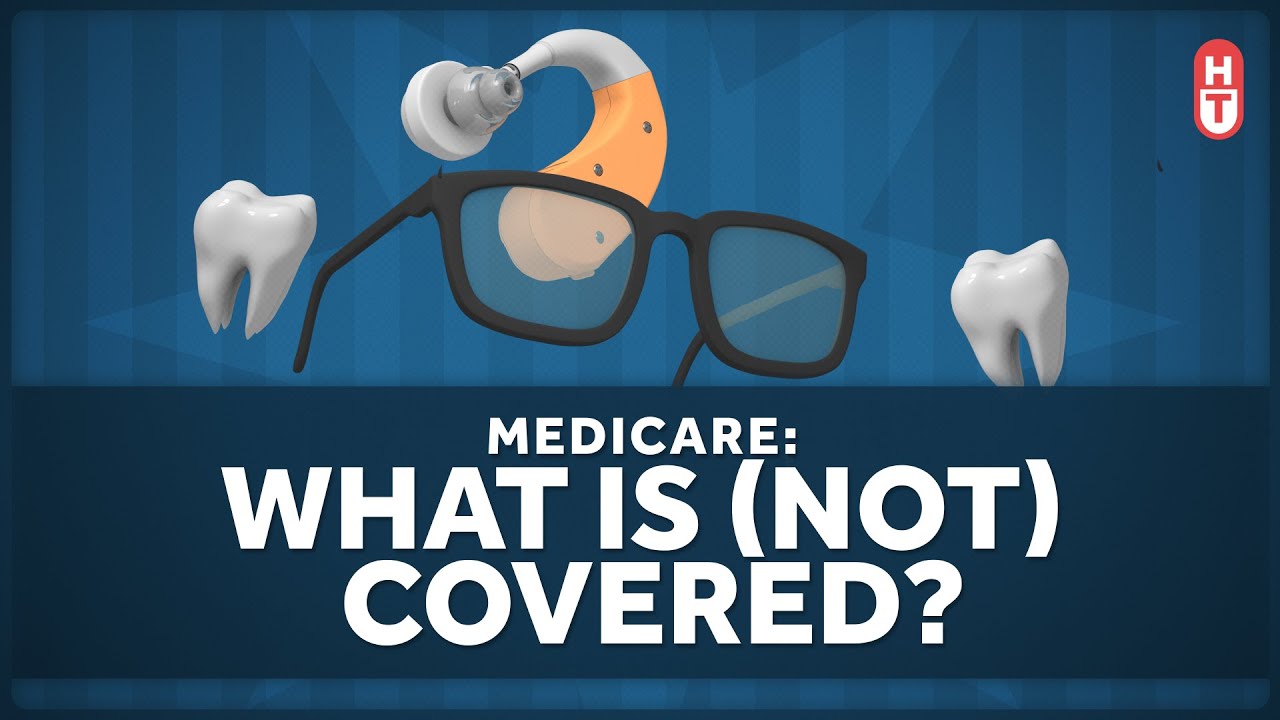
The first is relatively transparent. Traditional Medicare does not cover certain classes of care, including eyeglasses, hearing aids, dental or long-term care. When the classes of things it covers changes, or is under debate, there’s a big, bruising fight with a lot of public comment. The most recent battle added prescription drug coverage through legislation that passed in 2003.

Over the years, there have also been legislative efforts to add coverage for eyeglasses, hearing aids, dental and long-term care — none of them successful. Some of these are available through private plans. So a Medicare for all program that excluded all private insurance coverage and that resembled today’s traditional Medicare would leave Americans with significant coverage gaps. Most likely, debate over what Medicare for all would cover would center on this issue.

But there is a second layer of coverage that receives less attention. Which specific treatments does Medicare pay for within its classes of coverage? For instance, Medicare covers hospital and doctor visits associated with cancer care — but which specific cancer treatments?

This second layer is far more opaque than the first. By law, treatments must be reasonable and necessary” to be approved for Medicare coverage, but what that means is not very clear.

We think of Medicare as a uniform program, but some coverage decisions are local. What people are covered for in, say, Miami can be different from what people are covered for in Seattle.

Many treatments and services are covered automatically because they already have standard billing codes that Medicare recognizes and accepts. For treatments lacking such codes, Medicare makes coverage determinations in one of two ways: nationally or locally.

Although Medicare is a federal (national) program, most coverage determinations are local. Private contractors authorized to process Medicare claims decide what treatments to reimburse in each of 16 regions of the country.

In theory, this could allow for lots of variation across the country in what Medicare pays for. But most local coverage determinations are nearly identical. For example, four regional contractors have independently made local coverage determinations for allergen immunotherapy, but they all approve the same treatments for seasonal allergy sufferers.

There are more than 2,000 local coverage determinations like these. National coverage decisions, which apply to the entire country, are rarer, with only about 300 on the books.

When Medicare makes national coverage decisions, sometimes it does so while requiring people to enter clinical trials.

It has been doing this for over a decade. The program is called coverage with evidence development, and its use is rare. Fewer than two dozen therapies have entered the program since it was introduced in 2006. But it allows Medicare to gather additional clinical data before determining if the treatment should be covered outside of a trial. To be considered, the treatment must already be deemed safe, and it must already be effective in some population. The aim is to test if the treatment “meaningfully improves” the health of Medicare beneficiaries.

Only one therapy (CPAP, for sleep apnea) that entered this process has ever emerged to be covered as a routine part of Medicare. The others are in a perpetual state of limbo, neither fully covered nor definitively not covered. CAR-T cell therapy, a type of cancer immunotherapy, which appears to be very successful but is also very expensive, is one of the most recent to enter this process.

Despite the complexity of all these coverage determination methods — local, national, contingent on clinical trials — the bottom line is that very few treatments are fully excluded from Medicare, so long as they are of any clinical value. And this suggests that it’s not very likely that Medicare for all would deny coverage for needed care.

A 2018 study in Health Affairs found only 3 percent of Medicare claims were denied in 2015. And traditional Medicare doesn’t limit access to doctors or hospitals either, as it is accepted by nearly every one. (This is in contrast with Medicare Advantage.)

Medicare has a troubled history in considering cost-effectiveness in its coverage decisions. Past efforts to incorporate it have failed. For example, regulations proposed in 1989 were withdrawn after a decade of internal review.

As a result, Medicare covers some treatments that are extremely expensive for the program and that offer little benefit to patients. The Medicare Payment Advisory Commission recently studied this in detail. In a 2018 report to Congress, it noted that up to one-third of Medicare beneficiaries received some kind of low-value treatment in 2014, costing the program billions of dollars. If Medicare for all followed in traditional Medicare’s path, it could be wastefully expensive.

The United States has had a historical unwillingness to face cost-effectiveness questions in health care decisions, something many other countries tackle head-on. Some Americans favor Medicare for all because it would make the system more like some overseas. And yet, in choosing not to consider the value of the care it covers, Medicare remains uniquely American.


Republicans ready to revive ACA repeal talks

https://www.beckershospitalreview.com/hospital-management-administration/republicans-ready-to-revive-aca-repeal-talks.html

Image result for aca repeal

Sen. Lindsey Graham, R-S.C., promised to revive ACA repeal in Congress if Republicans can win back a majority in the House and reelect President Donald Trump in 2020, according to an interview on South Carolina radio show “The Morning Answer with Joey Hudson,” featured by The Hill

“This is what 2020 is about: If we can get the House back, and keep our majority in the Senate, and President Trump wins reelection, I can promise you, not only are we going to repeal Obamacare, we are going to do it in a smart way where South Carolina would be the biggest winner,” Mr. Graham said.

Mr. Graham, who failed to pass an ACA repeal plan in 2017, called “Medicare for All” and other Democratic presidential candidates’ healthcare plans “crazy.”  

“Medicare for All is $30 trillion, and it’s going to take private sector healthcare away from 180 million Americans,” he said. Instead, he proposed giving states the power to determine healthcare policy through block grants and other smaller reforms. This would allow states to test conservative healthcare policies against liberal ones, he said. 

“This election has got a common thing: Federalism versus socialism,” Mr. Graham said. “What I want to do is make sure the states get the chance to administer this money using conservative principles if you are in South Carolina, and if you want Medicare for All in California, knock yourself out.”

Rural hospitals take spotlight in coverage expansion debate

https://www.modernhealthcare.com/payment/rural-hospitals-take-spotlight-coverage-expansion-debate?utm_source=modern-healthcare-daily-dose-wednesday&utm_medium=email&utm_campaign=20190807&utm_content=article1-readmore

Image result for rural hospital

Opponents of the public option have funded an analysis that warns more rural hospitals may close if Americans leave commercial plans for Medicare.

With the focus on rural hospitals, the Partnership for America’s Health Care Future brings a sensitive issue for politicians into its fight against a Medicare buy-in. The policy has gone mainstream among Democratic presidential candidates and many Democratic lawmakers.

Rural hospitals could lose between 2.3% and 14% of their revenue if the U.S. opens up Medicare to people under 65, the consulting firm Navigant projected in its estimate. The analysis assumed just 22% of the remaining 30 million uninsured Americans would choose a Medicare plan. The study based its projections of financial losses primarily on people leaving the commercial market where payment rates are significantly higher than Medicare.

The estimate assumed Medicaid wouldn’t lose anyone to Medicare, and plotted out various scenarios where up to half of the commercial market would shift to Medicare.

The analysis was commissioned by the Partnership for America’s Health Care Future, a coalition of hospitals, insurers and pharmaceutical companies fighting public option and single-payer proposals.

In their most drastic scenario of commercial insurance losses, co-authors Jeff Goldsmith and Jeff Leibach predict more than 55% of rural hospitals could risk closure, up from 21% who risk closure today according to their previous studies.

Leibach said the analysis was tailored to individual hospitals, accounting for hospitals that wouldn’t see cuts since they don’t have many commercially insured patients.

The spotlight on rural hospitals in the debate on who should pay for healthcare is common these days, particularly as politicians or the executive branch eye policies that could cut hospital or physician pay.

On Wednesday, Sen. Elizabeth Warren (D-Mass.) seemingly acknowledged this when she published her own proposal to raise Medicare rates for rural hospitals as part of her goal to implement single payer, or Medicare for All. She is running for the Democratic nomination for president for the 2020 election.

“Medicare already has special designations available to rural hospitals, but they must be updated to match the reality of rural areas,” Warren said in a post announcing a rural strategy as part of her campaign platform. “I will create a new designation that reimburses rural hospitals at a higher rate, relieves distance requirements and offers flexibility of services by assessing the needs of their communities.”

Warren is a co-sponsor of the Medicare for All legislation by Sen. Bernie Sanders (I-Vt.), who is credited with the party’s leftward shift on the healthcare coverage question. But she is trying to differentiate herself from Sanders, and the criticisms about the potentially drastic pay cuts to hospitals have dogged single-payer debates.

Most experts acknowledge the need for a significant policy overhaul that lets rural hospitals adjust their business models. Those providers tend to have aging and sick patients; high rates of uninsured and public pay patients over those covered by commercial insurance; and fewer patients overall than their urban counterparts.

But lawmakers in Washington aren’t likely to act during this Congress. The major recent changes have mostly been driven by the Trump administration, where officials just last week finalized an overhaul of the Medicare wage index to help rural hospitals.

As political rhetoric around the public option or single payer has gone mainstream this presidential primary season, rural hospitals will likely remain a talking point in the ideas to overhaul or reorganize the U.S.’s $3.3 trillion healthcare industry.

This was in evidence in May, when the House Budget Committee convened a hearing on Medicare for All to investigate some of the fiscal impacts. One Congressional Budget Office official said rural hospitals with mostly Medicaid, Medicare and uninsured patients could actually see a boost in a redistribution of doctor and hospital pay.

But the CBO didn’t analyze specific legislation and offered a vague overview of how a single-payer system might look, rather than giving exact numbers.

The plight of rural hospitals has been used in lobbying tactics throughout this year — in Congress’ fight over how to end surprise medical bills as well as opposition to hospital contracting reforms proposed in the Senate.

And it has worked to some extent. Both House and Senate committees have made concessions to their surprise billing proposals to mollify some lawmakers’ worries.


Democratic Debate Turns Ferocious Over Health Care

Candidates in the first night of this week’s Democratic presidential debates sparred over health care coverage.

It took only one question — the very first — in Tuesday night’s Democratic presidential primary debate to make it clear that the issue that united the party in last year’s congressional elections in many ways now divides it.

When Jake Tapper of CNN asked Senator Bernie Sanders whether his Medicare for All health care plan was “bad policy” and “political suicide,” it set off a half-hour brawl that drew in almost every one of the 10 candidates on the stage. Suddenly, members of the party that had been all about protecting and expanding health care coverage were leveling accusations before a national audience at some of their own — in particular, that they wanted to take it away.

“It used to be Republicans that wanted to repeal and replace,” Gov. Steve Bullock of Montana said in one of the more jolting statements on the subject. “Now many Democrats do as well.”

Those disagreements set a combative tone that continued for the next 90 minutes. The health care arguments underscored the powerful shift the Democratic Party is undergoing, and that was illustrated in a substantive debate that also included trade, race, reparations, border security and the war in Afghanistan.

In the end, it was a battle between aspiration and pragmatism, a crystallization of the struggle between the party’s left and moderate factions.

It is likely to repeat itself during Wednesday night’s debate, whose lineup includes former Vice President Joseph R. Biden Jr. and Senator Kamala Harris of California. He supports building on the Affordable Care Act by adding an option to buy into a public health plan. She released a proposal this week that would go further, eventually having everyone choose either Medicare or private plans that she said would be tightly regulated by the government.

Democrats know all too well that the issue of choice in health care is a potent one. When President Barack Obama’s promise that people who liked their health plans could keep them under the Affordable Care Act proved to be untrue, Republicans seized on the fallout so effectively that it then propelled them to majorities in both the House and Senate.

On Tuesday night, Representative Tim Ryan of Ohio evoked those Republican attacks of years ago on the Affordable Care Act, saying the Sanders plan “will tell the union members that give away wages in order to get good health care that they will lose their health care because Washington is going to come in and tell them they have a better plan.”

Republicans watching the debate may well have been smiling; the infighting about taking away people’s ability to choose their health care plan and spending too much on a pipe-dream plan played into some of President Trump’s favorite talking points. Mr. Trump is focusing on health proposals that do not involve coverage — lowering drug prices, for example — as his administration sides with the plaintiffs in a court case seeking to invalidate the entire Affordable Care Act, putting millions of people’s coverage at risk.

It was easy to imagine House Democrats who campaigned on health care, helping their party retake control of the chamber, being aghast at the fact that not a single candidate mentioned the case.

Mr. Sanders’s plan would eliminate private health care coverage and set up a universal government-run health system that would provide free coverage for everyone, financed by taxes, including on the middle class. John Delaney, the former congressman from Maryland, repeatedly took swings at the Sanders plan, suggesting that it was reckless and too radical for the majority of voters and could deliver a second term to Mr. Trump.

Mr. Sanders held firm, looking ready to boil over at time — “I wrote the damn bill,” he fumed after Mr. Ryan questioned whether benefits in his plan would prove as comprehensive as he was promising. Senator Elizabeth Warren of Massachusetts, the only other candidate in favor of a complete overhaul of the health insurance system that would include getting rid of private coverage, chimed in to back him up.

At one point she seemed to almost plead. “We are not about trying to take away health care from anyone,” she interjected. “That’s what the Republicans are trying to do.”

Mr. Delaney has been making a signature issue of his opposition to Medicare for all, instead holding up his own plan, which would automatically enroll every American under 65 in a new public health care plan or let them choose to receive a credit to buy private insurance instead. He repeatedly disparaged what he called “impossible promises.”

He was one of a number of candidates — including Beto O’Rourke, the former congressman from Texas; Senator Amy Klobuchar of Minnesota and Mayor Pete Buttigieg of South Bend, Ind. — who sought to stake out a middle ground by portraying themselves as defenders of free choice with plans that would allow, but not force, people to join Medicare or a new government health plan, or public option. (Some candidates would require people to pay into those plans, while others would not.)

The debate moderators also pressed Mr. Sanders and Ms. Warren on whether the middle class would have to help pay for a Sanders-style plan, which would provide a generous set of benefits — beyond what Medicare covers — to every American without charging them premiums or deductibles. One of the revenue options Mr. Sanders has suggested is a 4 percent tax on the income of families earning more than $29,000.

In defending his plan, Mr. Sanders repeatedly pointed out how many Americans are uninsured or underinsured, unable to pay high deductibles and other out-of-pocket costs and thus unable to seek care.

Analysts often point out that the focus on raising taxes to pay for universal health care leaves out the fact that in exchange, personal health care costs would drop or disappear.

“A health reform plan might involve tax increases, but it’s important to quantify the savings in out-of-pocket health costs as well,” Larry Levitt, executive vice president for health policy at the nonpartisan Kaiser Family Foundation, tweeted during the debate. “Political attacks don’t play by the same rules.”

A Kaiser poll released Tuesday found that two-thirds of the public supports a public option, though most Republicans oppose it. The poll also found about half the public supports a Medicare for all plan, down from 56 percent in April. The vast majority of respondents with employer coverage — which more than 150 million Americans have — rated it as excellent or good.

In truth, Mr. Delaney’s own universal health care plan could also face political obstacles, not least because it, too, would cost a lot. He has proposed paying for it by, among other steps, letting the government negotiate drug prices with pharmaceutical companies and requiring wealthy Americans to cover part of the cost of their health care.

Had Mr. Sanders not responded so forcefully to the attacks, it would have felt like piling on, though some who criticized his goals sounded more earnest than harsh.

“I think how we win an election is to bring everyone with us,” Ms. Klobuchar said, adding later in the debate that a public option would be “the easiest way to move forward quickly, and I want to get things done.”


How a Medicare Buy-In or Public Option Could Threaten Obamacare

Related image

Some Democrats are proposing a government alternative to private insurance. But allowing people to choose such a plan may destabilize the A.C.A., some experts say.

It seems a simple enough proposition: Give people the choice to buy into Medicare, the popular federal insurance program for those over 65.

Former Vice President Joseph R. Biden Jr. is one of the Democratic presidential contenders who favor this kind of buy-in, often called the public option. They view it as a more gradual, politically pragmatic alternative to the Medicare-for-all proposal championed by Senator Bernie Sanders, which would abolish private health insurance altogether.

A public option, supporters say, is the logical next step in the expansion of access begun under the Affordable Care Act, passed while Mr. Biden was in office. “We have to protect and build on Obamacare,” he said.

But depending on its design, a public option may well threaten the A.C.A. in unexpected ways.

A government plan, even a Medicare buy-in, could shrink the number of customers buying policies on the Obamacare markets, making them less appealing for leading insurers, according to many health insurers, policy analysts and even some Democrats.

In urban markets, “a public option could come in and soak up all of the demand of the A.C.A. market,” said Craig Garthwaite, a health economist at the Kellogg School of Management at Northwestern University.

And in rural markets, insurers that are now profitable because they are often the only choices may find it difficult to make money if they faced competition from the federal government.

Some insurers could decide that a smaller and uncertain market is not worth their effort.

If the public option program also matched the rates Medicare paid to hospitals and doctors, “I think it would be really hard to compete,” Mr. Garthwaite said. Even leading insurers do not have the leverage to demand lower prices from hospitals and other providers that the government has.

Whether to implement a public option or Medicare buy-in has become a defining question among Democratic presidential candidates and is likely to be a contentious topic at this week’s debates.

On Monday, Senator Kamala Harris took an alternate route, unveiling a plan that would allow private insurers to participate in a Medicare-for-all scheme, akin to their role currently offering private plans under Medicare Advantage.

The recent spate of proposals reprises some of the most difficult questions leading up to the passage of the A.C.A., in many ways a compromise over widely divergent views of the role of the government in ensuring access to care.

After a shaky start, the federal and state Obamacare marketplaces are surprisingly robust, despite repeated attempts by Republicans to weaken them. They provide insurance to 11 million customers, many of whom receive generous federal subsidies to help pay for coverage.

The A.C.A. is now a solidly profitable business for insurers, with several expanding options after earlier threats to leave. For example, Centene, a for-profit insurer, controls about a fifth of the market, offering plans in 20 states. It is expected to bring in roughly $10 billion in revenues this year by selling Obamacare policies.

In spite of stock drops because of investors’ concerns over Medicare-for-all proposals, for-profit health insurers have generally thrived since the law’s passage.

But a buy-in shift in insurance coverage could profoundly unsettle the nation’s private health sector, which makes up almost a fifth of the United States economy. Depending on who is allowed to sign up for the plan, it could also rock the employer-based system that now covers some 160 million Americans.

In a recent ad, Mr. Biden features a woman who wants to keep her current coverage. “I have my own private insurance — I don’t want to lose it,” she said.

A spokesman for Mr. Biden argued that a public option can extend the success of the Affordable Care Act.

“Joe Biden thinks it would be an egregious mistake to undo the A.C.A., and he will stand against anyone — regardless of their party — who tries to do so,” said Andrew Bates, a spokesman for Mr. Biden, in an email.

Major insurers and hospital chains, pharmaceutical companies and the American Medical Association have joined forces to try to derail efforts like Medicare-for-all and the public option. Mr. Sanders denounced these powerful interests in a recent speech.

“The debate we are currently having in this campaign and all over this country has nothing to do with health care, but it has everything to do with the greed and profits of the health care industry,” he said.

Other critics of the public option, including Seema Verma, the administrator of the Centers for Medicare and Medicaid Services, argue Democrats’ programs will lead to a “complete government takeover.”

“These proposals are the largest threats to the American health care system,” she said in a speech earlier this month.

Some experts predict that private insurers will adapt, while others warn that the government could wind up taking on the sickest customers with high medical bills, leaving the healthier, profitable ones to private insurers.

It’s uncertain whether hospitals, on the other hand, could thrive under some versions of the public option. If the nation’s 5,300 hospitals were paid at much lower rates by a government plan — rates resembling those of Medicare — they might lose tens of billions of dollars, the industry claims. Some would close.

One variant of the public option — letting people over 50 or 55 buy into Medicare — is often depicted as less drastic than a universal, single-payer program. But this option would also be problematic, experts said.

This consumer demographic is quite valuable to insurers, hospitals and doctors.

Middle-aged and older Americans have become the bedrock of the Obamacare market. Some insurers say this demographic makes up about half of the people enrolled in their A.C.A. plans and, unlike younger people who come and go, is a reliable and profitable source of business for the insurance companies.

The aging-related health issues of people in this group guarantee regular doctor visits for everything from rising blood pressure to diabetes, and they account for a steady stream of lucrative joint replacements and cardiac stent procedures.

The 55-to-64 age group, for example, accounts for 13 percent of the nation’s population, but generates 20 percent of all health care spending, according to the Kaiser Family Foundation.

Several experts said that designing a buy-in program that is compatible with the existing public and private plans could be daunting.

“You’d have to do it carefully,” said Representative Donna Shalala, a Florida Democrat who served as the secretary of health and human services under President Bill Clinton.

Linda Blumberg, a health policy expert at the Urban Institute, a nonpartisan think tank, agreed. “The idea of Medicare buy-ins was taken very seriously before there was an Affordable Care Act,” she said. “In the context of the A.C.A., it’s a lot more complicated to do that.”

Many dismiss concerns about whether insurers can compete.

“Any time a market shrinks in America, insurers don’t like it,” said Andy Slavitt, the former acting Medicare administrator under President Obama and a former insurance executive. Mr. Slavitt noted that insurers raised similar concerns about the federal law when it was introduced. “They’ll figure it out,” he said.

In Los Angeles County, five private insurers that sell insurance in the A.C.A. market already compete with L.A. Care Health Plan, which views itself as a kind of public option, said John Baackes, the plan’s chief executive.

The insurer offers the least expensive H.M.O. plan in the county by paying roughly Medicare rates. “We’ve proved that the public option can be healthy competition,” he said.

But the major insurance companies, which were instrumental in defeating the public option when Congress first considered making it a feature of the A.C.A., are already flexing their lobbying muscle and waging public campaigns.

In Connecticut, fierce lobbying by health insurers helped kill a state version of the public option this spring. Cigna resisted passage of the bill, threatening to leave the state. “The proposal design was ill-conceived and simply did not work,” the company said in a statement.

Blue Cross plans could lose 60 percent of their revenues from the individual market if people over 50 are shifted to Medicare, said Kris Haltmeyer, an executive with the Blue Cross Blue Shield Association, citing an analysis the company conducted. He said it might not make sense for plans to stay in the A.C.A. markets.

Siphoning off such a large group of customers could also lead to a 10 percent increase in premiums for the remaining pool of insured people, according to the Blue Cross analysis. More younger people with expensive medical conditions have enrolled than insurers expected, and insurers would have to increase premiums to cover their costs, Mr. Haltmeyer said.

Tricia Neuman, a senior vice president at the Kaiser Family Foundation, which studies insurance markets, said a government buy-in that attracted older Americans could indeed raise premiums for those who remained in the A.C.A. markets, especially if those consumers had high medical costs.

But some experts countered that prognosis, predicting that premiums could go down if older Americans, whose health care costs are generally expensive, moved into a Medicare-like program.

“The insurance companies are wrong about opposing the public option,” Ms. Shalala said.

Dr. David Blumenthal, the president of the Commonwealth Fund, a foundation that funds health care research, said a government plan that attracted people with expensive conditions could prove costly.

“You might, as a taxpayer, become concerned that they would be more like high-risk pools,” he said.

Jonathan Gruber, an M.I.T. economist who advised the Obama administration during the development of the A.C.A., likes Mr. Biden’s plan and argues there is a way to design a public option that does not shut out the private insurers.

“It’s all about threading the needle of making a public option that helps the failing system and not making the doctors and insurers go to the mat,” he said.

Many experts point to private Medicare Advantage plans, which now cover one-third of those eligible for Medicare, as proof that private insurers can coexist with the government.

But the real value of a public option, some say, would stem from the pressure to lower prices for medical care as insurers were forced to compete with the lower-paying government plans, like Medicare.

Washington State recently passed the country’s first public option, capping prices as part of its plan to provide a public alternative to all residents by 2021.

“It’s couched in this language in expanding coverage, but it does it by regulating prices,” said Sabrina Corlette, a health policy researcher at Georgetown University.

The hospital industry would most likely fight just as hard to defeat any proposal that would convert a profitable group of customers, Americans who are privately covered at present, into Medicare beneficiaries.

Private insurers often pay hospitals double or triple what Medicare pays them, according to a recent study from the nonprofit Rand Corporation.

While Ms. Shalala supports a public option as an alternative to “Medicare for All,” she is clear about how challenging it will be to preserve both Obamacare and the private insurance market. “You can’t do it off the top of your head,” she said.


The Lessons of Washington State’s Watered Down ‘Public Option’

Jay Inslee, the governor of Washington, signing a measure in May that puts the state on track to create the nation’s first “public option” health insurance.

Jay Inslee, the governor of Washington, signing a measure in May that puts the state on track to create the nation’s first “public option” health insurance.

A big health care experiment for Democrats shows how fiercely doctors and hospitals will fight.

For those who dream of universal health care, Washington State looks like a pioneer. As Gov. Jay Inslee pointed out in the first Democratic presidential debate on Wednesday, his state has created the country’s first “public option” — a government-run health plan that would compete with private insurance.

Ten years ago, the idea of a public option was so contentious that Obamacare became law only after the concept was discarded. Now it’s gaining support again, particularly among Democratic candidates like Joe Biden who see it as a more moderate alternative to a Bernie Sanders-style “Medicare for all.”

New Mexico and Colorado are exploring whether they can move faster than Congress and also introduce state-level, public health coverage open to all residents.

But a closer look at the Washington public option signed into law last month, and how it was watered down for passage, is a reminder of why the idea ultimately failed to make it into the Affordable Care Act and gives a preview of the tricky politics of extending the government’s reach into health care.

On one level, the law is a big milestone. It allows the state to regulate some health care prices, a crucial feature of congressional public option and single-payer plans.

But the law also made big compromises that experts say will make it less powerful. To gain enough political support to pass, health care prices were set significantly higher than drafters originally hoped.

“It started out as a very aggressive effort to push down prices to Medicare levels, and ended up something quite a bit more modest,” said Larry Levitt, senior vice president for health reform at the Kaiser Family Foundation.

So while Washington is on track to have a public option soon, it may not deliver the steep premium cuts that supporters want. The state estimates that individual market premiums will fall 5 percent to 10 percent when the new public plan begins.

“This bill is important, but it’s also relatively modest,” said David Frockt, the state senator who sponsored the bill. “When I see candidates talking about the public option, I don’t think they’re really grasping the level of opposition they’re going to face.”

During the Affordable Care Act debate, more liberal Democrats hoped a public option would reduce the uninsured rate by offering lower premiums and putting competitive pressure on private plans to do the same. President Obama backed it, saying in 2009 that such a policy would “keep the private sector honest.”

The public option came under fierce attack from the health care industry. Private health plans in particular did not look forward to competing against a new public insurer that offered lower rates, and fought against a government-run plan that they said “would significantly disrupt the coverage that people currently rely on.” The policy narrowly fell out of the health care law but never left the policy debate.

Congressional Democrats have started to revisit the idea in the past year, with health care as a top policy issue in the 2018 midterm elections.

“During the midterm elections, Medicare for all was gaining a lot of traction,” said Eileen Cody, the Washington state legislator who introduced the first version of the public option bill. “After the election, we had to decide, what do we want to do about it?”

Ms. Cody introduced a bill in January to create a public option that would pay hospitals and doctors the same prices as Medicare does, which is also how many congressional public option proposals would set fees. The Washington State Health Benefit Exchange, the marketplace that manages individual Affordable Care Act plans, estimates that private plans currently pay 174 percent of Medicare fees, making the proposed rates a steep payment cut.

“I felt that capping the rates was very important,” Ms. Cody said.“If we didn’t start somewhere, then the rates were going to keep going up.”

Doctors and hospitals in Washington lobbied against the rate regulation, arguing that they rely on private insurers’ higher payment rates to keep their doors open while still accepting patients from Medicaid, the public plan that covers lower-income Americans and generally pays lower rates.

“Politically, we were trying to be in every conversation,” says Jennifer Hanscom, executive director of the Washington State Medical Association, which lobbies on behalf of doctors. “We were trying to be in the room, saying rate setting doesn’t work for us — let’s consider some other options. As soon as it was put in the bill, that’s where our opposition started to solidify.”

Legislators were in a policy bind. The whole point of the public option was to reduce premiums by cutting health care prices. But if they cut the prices too much, they risked a revolt. Doctors and hospitals could snub the new plan, declining to participate in the network.

“The whole debate was about the rate mechanism,” said Mr. Frockt, the state senator. “With the original bill, with Medicare rates, there was strong opposition from all quarters. The insurers, the hospitals, the doctors, everybody.”

Mr. Frockt and his colleagues ultimately raised the fees for the public option up to 160 percent of Medicare rates.

“I don’t think the bill would have passed at Medicare rates,” Mr. Frockt said. “I think having the Medicare-plus rates was crucial to getting the final few votes.”

Other elements of the Washington State plan could further weaken the public option. Instead of starting an insurance company from scratch, the state decided to contract with private insurers to run the day-to-day operations of the new plan.

“It would have cost the state hundreds of millions of dollars just to operate the plan,” said Jason McGill, who recently served as a senior health policy adviser to Mr. Inslee. He noted that insurers were required to maintain large financial reserves, to ensure they don’t go bankrupt if a few patients have especially costly medical bills.

“Why would we do that when there are already insurers that do that? It just didn’t make financial sense. It may one day, and we’ll stay on top of this, but we’re not willing to totally mothball the health care system quite yet.”

Hospitals and doctors will also get to decide whether to participate in the new plan, which pays lower prices than private competitors. The state decided to make participation voluntary, although state officials say they will consider revisiting that if they’re unable to build a strong network of health care providers.

Most federal versions of the public option would give patients access to Medicare’s expansive network of doctors and hospitals.

Although Mr. Frockt is proud of the new bill, he’s also measured in describing how it will affect his state’s residents. After going through the process of passing the country’s first public option, he’s cautious in his expectations for what a future president and Democratic Congress might be able to achieve. But he does have a clearer sense of what the debate will be like, and where it will focus.

“This is a core debate in the Democratic Party: Do we build on the current system, or do we move to a universal system and how do we get there?” he said. “I think the rate-setting issue is going to be vital. It’s what this is all about.”


On the Doorstep With a Plea: Will You Support Medicare for All?

Art Miller listened patiently as the stranger on his doorstep tried to sell him on the Medicare for All Act of 2019, the single-payer health care bill that has sharply divided Democrats in Congress and on the presidential campaign trail.

The visitor, Steven Meier, was a volunteer canvasser who wanted Mr. Miller to call his congresswoman, Abby Finkenauer, the young Democrat who took a Republican’s seat last year in this closely divided district — and press her to embrace Medicare for all. Beyond congressional politics, there was the familiar role that Iowa plays as the first state to weigh in on the fight for the Democratic presidential nomination.

“I want to know how my grandkids are going to pay for it, O.K.?” Mr. Miller, 71, mused, peering at the flier that Mr. Meier had handed him.

It was a fairly typical encounter for Mr. Meier, 39, who with hundreds of volunteers around the country is working with National Nurses United, the country’s largest nurses’ union, to build grass-roots support for the single-payer bill, a long shot on Capitol Hill and a disruptive force in the party. House Democrats have declared this Saturday and Sunday to be “a weekend of action on health care” — but they are split over whether to embrace extreme change or something closer to the status quo.

A single-payer health care system would more or less scrap private health insurance, including employer-sponsored coverage, for a system like Canada’s in which the government pays for everyone’s health care with tax dollars. Democrats not ready for that big a step are falling back on a “public option,” an alternative in which anyone could buy into Medicare or another public program, or stick with private insurance — a position once a considered firmly on the party’s left wing.

Lawmakers like Ms. Finkenauer, mindful of the delicate political balance in their districts, fear the “socialism” epithet that President Trump and his party are attaching to Medicare for all. On Friday, Mr. Trump called the House bill “socialist health care” that would “crush American workers with higher taxes, long wait times and far worse care.” But even Ms. Finkenauer, who beat the incumbent Republican in November by 16,900 votes, has been pulled left by the debate, embracing the public option, which could not get through Congress when the Affordable Care Act passed in 2010.

“In a divided Congress, I’m focused on what we can do to bring immediate relief to Iowans,” she said in an email.

The nurses’ union and a number of other progressive groups want nothing less than a government system that pays for everyone’s health care, seizing on the issue’s prominence and a round of Medicare for all hearings in the House with canvassing in the districts of many of the 123 House Democrats who have not thrown their support behind a single-payer system.

“Hearings are a moment for us to have a national stage for this campaign,” Jasmine Ruddy, the lead organizer for the nurse union’s Medicare for all campaign, told several dozen new volunteers on a training call last month. “It’s up to us to take advantage of the momentum we already see happening and turn it into political power.”

But building support for a single-payer health care system has been slow going. On Wednesday, the chairman of the Ways and Means Committee, Representative Richard E. Neal of Massachusetts, convening the House’s third Medicare for all hearing, said it was about “exploring ideas.”

Republicans warned darkly of sky-high tax increases, doctor shortages and long waits for care. Representative Kevin Brady of Texas, the senior Republican on the committee, said his constituents were “frightened” about their private coverage being “ripped out from under them.”

The nurses’ union campaign began just after Democrats won the House in November, when the union and several other groups held a strategy call with Representative Pramila Jayapal, Democrat of Washington, the chief author of the Medicare for All Act, and Senator Bernie Sanders of Vermont, who pushed Medicare for all into the mainstream during his 2016 presidential campaign.

“Rather than try to convince people it’s the right system,” Ms. Ruddy said, “our strategy is to reach the people who are already convinced that health care is a human right, to bring them in and actually make them feel the action they are taking matters.”

In Dubuque, Mr. Meier and his partner, Briana Moss, have knocked on 250 doors and gathered about 50 signatures over the past few months. About 20 volunteers, including a retired nurse and several college students, are also involved. Nationwide, canvassers have knocked on 20,000 doors and collected 14,000 signatures since February.

On a Saturday afternoon, Mr. Miller, a Vietnam veteran, told Mr. Meier about his positive experience with government health care through the Department of Veterans Affairs, saying, “I’ve seen how it can work.”

A few houses down, a woman who owns a cleaning service and would give only her first name, Sharon, and her party affiliation, Republican, said that if the bill covered abortions, “I won’t go for that.”

She added that she would be happy to stop paying $170 a month for supplemental insurance to cover what Medicare does not, but she did not want to see people who do not work receive free care. From the garage, her husband hollered that he agreed. Conceding defeat, Mr. Meier and Ms. Moss moved along.

Both Sanders supporters, they took on the cause in part because Ms. Moss has Type 1 diabetes and has struggled on and off to stay insured, though now she has Medicaid under the Affordable Care Act’s expansion of the program. Ms. Moss, 30, went to see Ms. Finkenauer in her district office this year and asked if she supported a government system that eliminated insurance. Ms. Finkenauer, she said, stated her preference for a public option.

“That’s simply a compromise that leaves the insurance companies still in the game,” said Mr. Meier, who recently started working at John Deere building backhoes and will soon have employer-based coverage after being uninsured for his entire adult life.

The Jayapal and Sanders bills would both expand traditional Medicare to cover all Americans, and change the structure of the program to cover more services and eliminate most deductibles and co-payments. There would effectively be no private health insurance, because the new system would cover almost everything; Mr. Sanders has said private coverage could be sold for extras like cosmetic surgery.

While polling does show that Medicare for all has broad public support, that drops once people learn it would involve raising taxes or eliminating private insurance. That finding bewilders Mr. Meier, given many of the conversations he has on people’s front steps.

Those conversations keep coming. Rick Plowman 66, complained bitterly about how despite having Medicare, he had to pay nearly $500 for inhalers to treat his chronic obstructive pulmonary disease. Still, he was skeptical.

“I just don’t know what it’s going to look like down the road,” Mr. Plowman said. “Even Social Security for kids, you know? Even for you guys?”

“I’m willing to start making that sacrifice right now,” Mr. Meier pushed back. Mr. Plowman signed the petition.

At a white bungalow around the corner, Mr. Meier found — finally — that he was preaching to the choir with Bobby Daniels, 50, and his wife, Andrea, 46. Mr. Daniels, a forklift operator from Waterloo, said their coverage came with a $3,000 deductible and he would “most definitely” support Medicare for all. Ray Edwards, 36, an uninsured barber, also heartily signed on.

At the final stop of the day, Mr. Meier and Ms. Moss encountered Jeremy Shade, 36, a registered Republican who promptly told them his sister lived in Canada and had spent “hours and hours in the hospital, waiting for care” under that country’s single-payer system.

“I get that concern, and it’s something I’m worried about, too,” Mr. Meier said as Mr. Shade’s dog barked. “Would you be interested in maybe just calling Abby Finkenauer and saying, ‘Hey, what are we doing about the health care problem in this country?’”

“My wife would,” Mr. Shade said, explaining that she was a Democrat. “I’m real wary about it.”

Two hours of hot canvassing amid swarms of gnats had yielded six petition signatures and a few pledges to call Ms. Finkenauer. Mr. Meier was determined to end on a positive note. “I really think health care could be the issue that could get people to stop being so on one side or the other,” he said, a point that Mr. Shade accepted, shaking his hand before retreating inside.