Care Now, Pay Later – How Embedded Finance is Poised to Improve Healthcare

In an era of significant medical debt, rising healthcare costs and delayed
treatments, our current healthcare system is ripe for solutions that alleviate the
burden of paying patient bills.

Enter embedded finance. While not a new concept by any stretch – it
has long existed in retail – fintechs and traditional banks are determined to give patients more
options and a fundamentally better experience in the way they pay for healthcare services. In doing
so, a financially strained domestic healthcare system stands to benefit from increased cash flow,
improved health equity and optimized patient engagement.


Simply put, embedded finance is the integration of financial services – such as payment, lending,
banking and insurance features – into another company’s normal service or products
. We have all
undoubtedly come across these offerings in our daily lives as consumers. Think private label credit
cards with retail chains or airlines, digital wallet purchase options at the Amazon checkout, a buynow-pay-later (BNPL) plan from Affirm or Klarna, or insurance obtained from a car rental.


The goal of embedded finance:

is to improve a user’s experience by accessing financial services
without leaving a brand’s platform. By layering application programming interface (API)-driven
fintech or banking capabilities on top of a website or mobile app for, say, a hospital patient portal, the
bundled solution allows the user to stay on one website or application to complete a financial
transaction
. Doing so removes friction in the experience and delivers a breadth of contextual
information that a provider or payer can use to prompt further action on the patient’s medical journey.


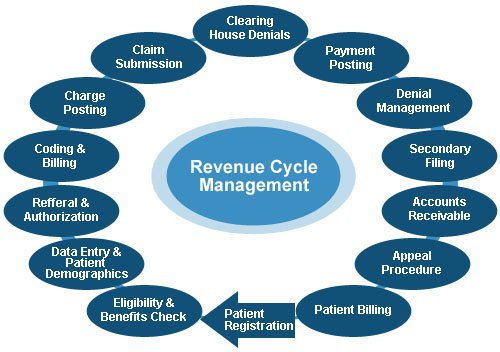
The implications for embedded finance in healthcare are vast and benefit every stakeholder across the revenue cycle value chain:

Patients: Flexibility and convenience to better structure and plan bill payment while receiving
greater access to financial options and additional services that improve the care experience
such as reminders and health tracking

Providers: Faster and higher rates of collections coupled with ongoing patient dialogue that
cements loyalty, affords clinicians the opportunity to suggest customized treatment options,
and improves revenue composition and potential valuation

Payers: More efficient claims processing cycle, automated processes and improved data
security

The burden of patient bills and increasing medical costs are not new to our system. Yet there has
been a confluence of fundamental changes that make embedded finance particularly attractive in
healthcare going forward, including increased smartphone usage and Internet penetration, COVID19 adoption of fintech products across healthcare settings, rising inflation rates that reduce a
patient’s ability to pay and the adoption of mobile-based apps among younger, digitally native
consumers and lower income patients.

These tailwinds support a massive addressable market as healthcare is expected to comprise approximately 23% of a U.S. embedded finance industry set to exceed $230 billion by 2025, or a 10x increase from $23 billion in 2020.

Significant attention and capital investment are accelerating the rise of embedded finance in healthcare.

Punctuated by attractive elements at the intersection of technology, financial services and healthcare sectors, nimble fintech companies and large financial institutions alike are competing for market presence. For example, pioneering healthcare-focused fintech PayZen closed $220 million in fresh capital in late 20223, while banks such as Wells Fargo and Synchrony have launched the popular medical-focused credit cards Health Advantage and CareCredit, respectively. Cain Brothers’ parent company, KeyBank, has also advanced an embedded strategy to provide healthcare digital innovation at scale and enhance patient experiences by acquiring XUP Payments in 2021. The resulting U.S. landscape for healthcare embedded finance is one that is evolving rapidly and that we are monitoring closely for investment and eventual M&A consolidation.

With expanding options around the type of medical care received and where it is received, we expect the financial tools at a patient’s disposal to garner significant attention in the years to come.

Embedded finance is a leading solution positioned to improve health equity and the financial well-being of millions of patients across the U.S., as well as fuel sector growth. Just as we’re accustomed now to buying pretty much anything with a few clicks, so too will embedded finance become a ubiquitous part of the healthcare landscape.

Most Adults with Past-Due Medical Debt Owe Money to Hospitals

https://www.urban.org/research/publication/most-adults-past-due-medical-debt-owe-money-hospitals

This brief examines past-due medical debt among nonelderly adults and their families using nationally representative survey data collected in June 2022. The analysis assesses the share of adults ages 18 to 64 with past-due medical bills owed to hospitals and other health care providers as well as the actions taken by hospitals to collect payment or make bills easier to settle.

It focuses on the experiences of adults with family incomes below and above 250 percent of the federal poverty level (FPL), approximating the income cutoff used by many hospitals to determine eligibility for free and discounted care.

WHY THIS MATTERS

In their efforts to protect patients from medical debt, policymakers have increasingly focused on the role of hospital billing and collection practices, with particular scrutiny directed toward nonprofit hospitals’ provision of charity care. Understanding the experiences of people with past-due bills owed to hospitals and other providers can shed light on the potential for new consumer protections to alleviate debt burdens.

WHAT WE FOUND

  • More than one in seven nonelderly adults (15.4 percent) live in families with past-due medical debt. Nearly two-thirds of these adults have incomes below 250 percent of FPL.
  • Nearly three in four adults with past-due medical debt (72.9 percent) reported owing at least some of that debt to hospitals, including 27.9 percent owing hospitals only and 45.1 percent owing both hospitals and other providers. Adults with past-due hospital bills generally have much higher total amounts of debt than those with past-due bills only owed to non-hospital providers.
  • Most adults (60.9 percent) with past-due hospital bills reported that a collection agency contacted them about the debt, but much smaller shares reported that the hospital filed a lawsuit against them (5.2 percent), garnished their wages (3.9 percent), or seized funds from a bank account (1.9 percent).
  • Though about one-third (35.7 percent) of adults with past-due hospital bills reported working out a payment plan, only about one-fifth (21.7 percent) received discounted care.
  • Adults with incomes below 250 percent of FPL were as likely as those with higher incomes to experience hospital debt collection actions and to have received discounted care.

The concentration of past-due medical debt among families with low incomes and the large share who owe a portion of that debt to hospitals suggests that expanded access to hospital charity care and stronger consumer protections could complement health insurance coverage expansions and other efforts to mitigate the impact of unaffordable medical bills.

HOW WE DID IT

This analysis draws on data from the June 2022 round of the Urban Institute’s Health Reform Monitoring Survey (HRMS), a nationally representative, internet-based survey of adults ages 18 to 64 that provides timely information on health insurance coverage, health care access and affordability, and other health topics. Approximately 9,500 adults participated in the June 2022 HRMS.

The survey questionnaire and information about the survey design is available at https://www.urban.org/policy-centers/health-policy-center/projects/health-reform-monitoring-survey/survey-resources.

Hospitals’ off-site fees draw lawmakers’ scrutiny

More than two years after Congress acted to shield patients from surprise medical bills, lawmakers are turning to another source of unexpected medical costs: the fees that hospitals tack on for services provided in clinics they own.

Why it matters: 

As health systems push more care outside hospital walls, they’re charging extra “facility fees” for common services like blood tests, X-rays and, in some cases, even telehealth visits.

  • Critics say the practice drives up health care costs while padding hospital profits and incentivizing more consolidation. But hospitals argue the fees cover the cost of nurses, lab technicians, medical records and equipment — and that limiting them could reduce patient care.

Driving the news: 

The fees have caught the attention of Congress, which could take up price transparency legislation.

But five states are currently considering laws to curb facility fees for certain services or strengthen existing laws, per the National Academy for State Health Policy, which has proposed model legislation.

  • Connecticut is updating a 2015 law that required notifications when facility fees were being charged by hospitals.
  • “Rising costs remain a barrier for far too many people and result in many people putting off care because they can’t afford it,” Deidre Gifford, executive director of the Connecticut Office of Health Strategy, said last month, when Democratic Gov. Ned Lamont proposed a package of reforms.
  • Colorado lawmakers are targeting the practice, despite mounting hospital resistance, Kaiser Health News reported.
  • And Texas legislators are weighing prohibitions on off-campus fees — a move the Texas Hospital Association brands “unprecedented and dangerous.”
  • Lawmakers in Indiana and Massachusetts are eyeing similar moves.

How it works: 

Many health services can be provided in both hospital and outpatient settings. But some patients who visit an offsite clinic are billed as if they were treated in the hospital.

  • Some might receive a facility fee if they haven’t yet met their health plan deductible. Others could see the added cost reflected later in higher premiums and copays.
  • A 2020 Rand report found facility and related professional charges factored in employers and private insurers paying 224% of what Medicare would have paid for the same services at the same facilities.

Some business groups like the Employers’ Forum of Indiana are advocating for bans or moratoriums on the fees, citing the increased cost of offering competitive benefits.

The other side: 

Hospitals maintain that facility fees are needed to cover essential infrastructure like electronic health record systems and other overhead costs. Some refer to them as “people fees,” saying they cover the expenses of nurses, lab technicians, pharmacists and other essential staff.

  • Texas hospitals are concerned about what they say is the broad definition of a facility fee in pending legislation in the state’s Senate, saying it could eliminate all hospital payments besides those that go to physicians.
  • “We need to quantify what problem we’re trying to solve,” said Cameron Duncan, vice president of advocacy at the Texas Hospital Association.
  • The group said the bill as originally filed would result in 69% of Texas hospitals closing their outpatient clinics.

The intrigue: 

Insurers that negotiated covered costs with hospitals and health systems have remained largely quiet on the fees.

  • And the vagaries of hospital pricing means transparency requirements alone may not give patients warning about added fees.
  • “It’s not clear from data either that the fees are consistent, or that you could decipher that the fee is consistent for each type of procedure,” said Vicki Veltri, senior policy fellow at National Academy for State Health Policy and former leader of the Connecticut Office of Health Strategy.

The bottom line: 

Patients increasingly get charged like they’re in a hospital even if they didn’t set foot in one as physicians’ offices are increasingly scooped up by massive health systems.

  • While those health systems tout access and efficiencies to drive down health care costs, facility fees are driving more lawmakers and regulators to do a reality check.

Payers revise prior authorization policies ahead of new regulations

https://mailchi.mp/c6914989575d/the-weekly-gist-march-31-2023?e=d1e747d2d8

On Wednesday, UnitedHealth Group (UHG) announced that it will reduce its prior authorization claims volume by 20 percent for its commercial, Medicare Advantage, and Medicaid businesses later this year. Next year, it will launch a “gold card” program for qualifying providers that will further streamline care approvals. Cigna also shared that it has removed nearly 500 services from prior authorization review since 2020, relying on an electronic process for faster response times. These changes come in the wake of a Centers for Medicare and Medicaid Services (CMS) proposed rule, set to be finalized in April, that aims to streamline prior authorization by requiring certain payers to establish a method for electronic transmission, shorten response time for physician requests, and provide a reason for denials. 

The Gist: These changes address two of providers’ primary complaints around prior authorizations: there are too many of them, and payers take too long to process them. However, technology options aiming to solve this problem through automation are by no means a foolproof solution. 

As ProPublica recently reportedalgorithm-based electronic claims processing solutions that improve response times can create other challenges, including improper automatic denials, and can expand prior authorization to lower-cost services, for which it was previously determined to be inefficient to rely on human review. Quicker responses must still be accurate and fair, necessitating that insurance companies closely monitor, audit, and hone technology solutions. 

Tracking the rise of high-intensity billing in emergency care

https://mailchi.mp/ad2d38fe8ab3/the-weekly-gist-january-6-2023?e=d1e747d2d8

 The December issue of Health Affairs included an intriguing study that sought to explain the recent trend toward more high-intensity billing in emergency departments (EDs). Using ED visit data for “treat-and-release” visits (i.e. ED patients who were not admitted to the hospital), the study found that visits deemed high-intensity, as defined by certain high-complexity or critical care billing codes, rose from around 5 percent of visits in 2006 to 19 percent in 2019.

The authors conclude that while about half of this increase can be explained by changes in patient case mix and available care services that were visible in claims data, the other half is due to the adoption of sophisticated revenue cycle management programs, and industry-wide changes to billing practices that include upcoding. 

The Gist: At first blush, an increase in high-intensity ED billing may not be a bad thing, if it means that greater numbers of people with low-acuity needs are going to urgent care centers, and avoiding EDs for needs that can be managed elsewhere. But the study finds that treat-and-release rates are going up for high-intensity patients. 

Though the authors list many potential reasons for this—including the changed role of the ED as a diagnostic referral center used by primary care physicians for quick workups of complex patients, the growing number of multimorbid seniors, and value-based care’s pressure to reduce hospital admission rates in favor of more resource-intensive ED visits—we have a strong suspicion that good old-fashioned upcoding also plays a role, especially as the percentage of emergency medicine practices managed by private equity companies increased from four percent to over eleven percent across the same time period as the study. 

CMS proposes new prior authorization requirements for payers

https://mailchi.mp/3a7244145206/the-weekly-gist-december-9-2022?e=d1e747d2d8

On Tuesday, the Centers for Medicare and Medicaid Services (CMS) announced a proposed rule that aims to streamline the prior authorization process by requiring certain payers to establish a method for electronic transmission, shorten response time for physician requests, and provide a reason for denials. This rule replaces one proposed in December 2020 that was never finalized. 

In addition to applying to Medicaid and Affordable Care Act exchange plans, the new rule would also apply to Medicare Advantage plans, which the previous rule did not. If finalized, it will take effect in 2026.

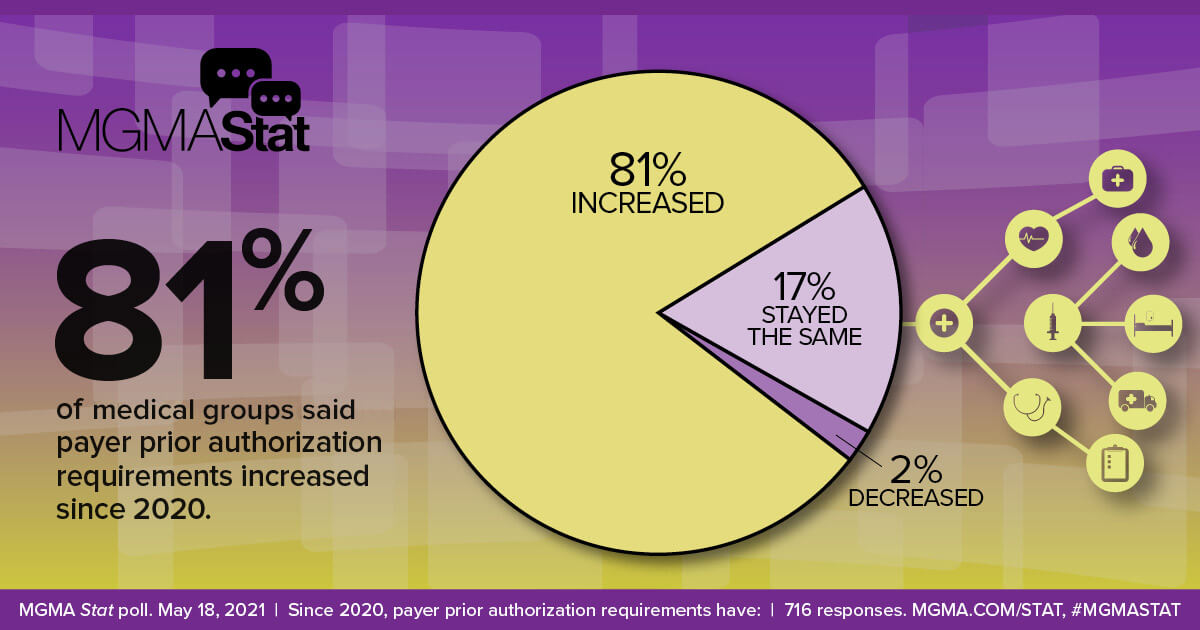
The Gist: Managing prior authorization requests is one of providers’ greatest sources of frustration, with over 80 percent of physicians rating it as “very or extremely burdensome” in a recent Medical Group Management Association survey. 

Not only would patients would benefit from faster turnarounds, but even major payers agree that the status quo is suboptimal, and payer advocacy organization AHIP has signaled support for transmitting prior authorization requests electronically. 

The challenge for regulators will be to strike a balance that satisfies the competing interests of payers and providers—turnaround time is likely to be a sticking point—but the one good thing about a system that no one likes is that there’s plenty of room for improvement. 

Increasing denials, unfavorable payer mix among top RCM concerns: report

Revenue cycle challenges “seem to have intensified over the past year,” according to Kaufman Hall’s “2022 State of Healthcare Performance Improvement” report, released Oct. 18. 

The consulting firm said that in 2021, 25 percent of survey respondents said they had not seen any pandemic-related effects on their respective revenue cycles. This year, only 7 percent said they saw no effects. 

The findings in Kaufman Hall’s report are based on survey responses from 86 hospital and health system leaders across the U.S.

Here are the top five ways leaders said the pandemic affected the revenue cycle in 2022:

1. Increased rate claim denials — 67 percent

2. Change in payer mix: Lower percentage of commercially insured patients — 51 percent

3. Increase in bad debt/uncompensated care — 41 percent

4. Change in payer mix: Higher percentage of Medicaid patients — 35 percent

5. Change in payer mix: Higher percentage of self-pay or uninsured patients — 31 percent

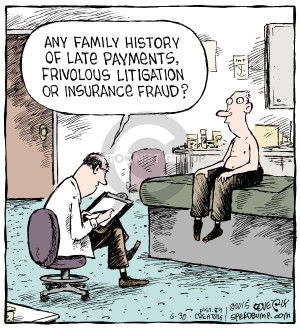
Cartoon – In Denial

Oklahoma hospital terminates Medicare Advantage contracts amid financial challenges


Stillwater Medical Center in Oklahoma has ended all in-network contracts with Medicare Advantage plans amid financial challenges at the 117-bed hospital, the Stillwater News Press reported Oct. 14.

Humana and BCBS of Oklahoma were notified that their members will no longer receive in-network coverage after Jan. 1, 2023.

“BCBSOK is willing to work with Stillwater Medical Center in finding solutions that will allow Payne County residents continued local access to Medicare Advantage providers,” a BCBS spokesperson told the newspaper.

The hospital said it made the decision after facing rising operating costs and a high prior authorization burden for the MA plans.

“This was a very tough financial decision for the Stillwater Medical leadership team. Our cost to operate has increased 26 percent over the past 2 years,” Tamie Young, vice president of revenue cycle at SMC, told the News Press. “Financial challenges are increased by a 22 percent denial of service rate from Medicare Advantage plans. This is in comparison to a less than 1 percent denial rate from traditional Medicare.”