Administration’s new pandemic adviser pushes controversial ‘herd immunity’ strategy, worrying public health officials

https://www.washingtonpost.com/politics/trump-coronavirus-scott-atlas-herd-immunity/2020/08/30/925e68fe-e93b-11ea-970a-64c73a1c2392_story.html?utm_campaign=wp_post_most&utm_medium=email&utm_source=newsletter&wpisrc=nl_most


One of President Trump’s top medical advisers is urging the White House to embrace a controversial “herd immunity” strategy to combat the pandemic, which would entail allowing the coronavirus to spread through most of the population to quickly build resistance to the virus, while taking steps to protect those in nursing homes and other vulnerable populations, according to five people familiar with the discussions.

The administration has already begun to implement some policies along these lines, according to current and former officials as well as experts, particularly with regard to testing.

The approach’s chief proponent is Scott Atlas, a neuroradiologist from Stanford’s conservative Hoover Institution, who joined the White House earlier this month as a pandemic adviser. He has advocated that the United States adopt the model Sweden has used to respond to the virus outbreak, according to these officials, which relies on lifting restrictions so the healthy can build up immunity to the disease rather than limiting social and business interactions to prevent the virus from spreading.

Sweden’s handling of the pandemic has been heavily criticized by public health officials and infectious-disease experts as reckless — the country has among the highest infection and death rates in the world. It also hasn’t escaped the deep economic problems resulting from the pandemic.

But Sweden’s approach has gained support among some conservatives who argue that social distancing restrictions are crushing the economy and infringing on people’s liberties.

That this approach is even being discussed inside the White House is drawing concern from experts inside and outside the government who note that a herd immunity strategy could lead to the country suffering hundreds of thousands, if not millions, of lost lives.

“The administration faces some pretty serious hurdles in making this argument. One is a lot of people will die, even if you can protect people in nursing homes,” said Paul Romer, a professor at New York University who won the Nobel Prize in economics in 2018. “Once it’s out in the community, we’ve seen over and over again, it ends up spreading everywhere.”

Atlas, who does not have a background in infectious diseases or epidemiology, has expanded his influence inside the White House by advocating policies that appeal to Trump’s desire to move past the pandemic and get the economy going, distressing health officials on the White House coronavirus task force and throughout the administration who worry that their advice is being followed less and less.

Atlas declined several interview requests in recent days. After the publication of this story, he released a statement through the White House: “There is no policy of the President or this administration of achieving herd immunity. There never has been any such policy recommended to the President or to anyone else from me.”

White House communications director Alyssa Farah said there is no change in the White House’s approach toward combatting the pandemic.

“President Trump is fully focused on defeating the virus through therapeutics and ultimately a vaccine. There is no discussion about changing our strategy,” she said in a statement. “We have initiated an unprecedented effort under Operation Warp Speed to safely bring a vaccine to market in record time — ending this virus through medicine is our top focus.”

White House officials said Trump has asked questions about herd immunity but has not formally embraced the strategy. The president, however, has made public comments that advocate a similar approach.

“We are aggressively sheltering those at highest risk, especially the elderly, while allowing lower-risk Americans to safely return to work and to school, and we want to see so many of those great states be open,” he said during his address to the Republican National Convention Thursday night. “We want them to be open. They have to be open. They have to get back to work.”

Atlas has fashioned himself as the “anti-Dr. Fauci,” one senior administration official said, referring to Anthony S. Fauci, the nation’s top infectious-disease official, who has repeatedly been at odds with the president over his public comments about the threat posed by the virus. He has clashed with Fauci as well as Deborah Birx, the White House coronavirus response coordinator, over the administration’s pandemic response.

Atlas has argued both internally and in public that an increased case count will move the nation more quickly to herd immunity and won’t lead to more deaths if the vulnerable are protected. But infectious-disease experts strongly dispute that, noting that more than 25,000 people younger than 65 have died of the virus in the United States. In addition, the United States has a higher number of vulnerable people of all ages because of high rates of heart and lung disease and obesity, and millions of vulnerable people live outside nursing homes — many in the same households with children, whom Atlas believes should return to school.

“When younger, healthier people get the disease, they don’t have a problem with the disease. I’m not sure why that’s so difficult for everyone to acknowledge,” Atlas said in an interview with Fox News’s Brian Kilmeade in July. “These people getting the infection is not really a problem and in fact, as we said months ago, when you isolate everyone, including all the healthy people, you’re prolonging the problem because you’re preventing population immunity. Low-risk groups getting the infection is not a problem.”

Atlas has said that lockdowns and social distancing restrictions during the pandemic have had a health cost as well, noting the problems associated with unemployment and people forgoing health care because they are afraid to visit a doctor.

“From personal communications with neurosurgery colleagues, about half of their patients have not appeared for treatment of disease which, left untreated, risks brain hemorrhage, paralysis or death,” he wrote in The Hill newspaper in May

The White House has left many of the day-to-day decisions regarding the pandemic to governors and local officials, many of whom have disregarded Trump’s advice, making it unclear how many states would embrace the Swedish model, or elements of it, if Trump begins to aggressively push for it to be adopted.

But two senior administration officials and one former official, as well as medical experts, noted that the administration is already taking steps to move the country in this direction.

The Department of Health and Human Services, for instance, invoked the Defense Production Act earlier this month to expedite the shipment of tests to nursing homes — but the administration has not significantly ramped up spending on testing elsewhere, despite persistent shortages. Trump and top White House aides, including Atlas, have also repeatedly pushed to reopen schools and lift lockdown orders, despite outbreaks in several schools that attempted to resume in-person classes.

The Centers for Disease Control and Prevention also updated its testing guidance last week to say that those who are asymptomatic do not necessarily have to be tested. That prompted an outcry from medical groups, infectious-disease experts and local health officials, who said the change meant that asymptomatic people who had contact with an infected person would not be tested. The CDC estimates that about 40 percent of people infected with covid-19, the disease caused by the coronavirus, are asymptomatic, and experts said much of the summer surge in infections was due to asymptomatic spread among young, healthy people.

Trump has previously floated “going herd” before being convinced by Fauci and others that it was not a good idea, according to one official.

The discussions come as at least 5.9 million infections have been reported and at least 179,000 have died from the virus this year and as public opinion polls show that Trump’s biggest liability with voters in his contest against Democratic nominee Joe Biden is his handling of the pandemic. The United States leads the world in coronavirus cases and deaths, with far more casualties and infections than any other developed nation.

The nations that have most successfully managed the coronavirus outbreak imposed stringent lockdown measures that a vast majority of the country abided by, quickly ramped up testing and contact tracing, and imposed mask mandates.

Atlas meets with Trump almost every day, far more than any other health official, and inside the White House is viewed as aligned with the president and White House Chief of Staff Mark Meadows on how to handle the outbreak, according to three senior administration officials.

In meetings, Atlas has argued that metropolitan areas such as New York, Chicago and New Orleans have already reached herd immunity, according to two senior administration officials. But Birx and Fauci have disputed that, arguing that even cities that peaked to potential herd immunity levels experience similar levels of infection if they reopen too quickly, the officials said.

Trump asked Birx in a meeting last month whether New York and New Jersey had reached herd immunity, according to a senior administration official. Birx told the president there was not enough data to support that conclusion.

Atlas has supporters who argue that his presence in the White House is a good thing and that he brings a new perspective.

“Epidemiology is not the only discipline that matters for public policy here. That is a fundamentally wrong way to think about this whole situation,” said Avik Roy, president of the Foundation for Research on Equal Opportunity, a think tank that researches market-based solutions to help low-income Americans. “You have to think about what are the costs of lockdowns, what are the trade-offs, and those are fundamentally subjective judgments policymakers have to make.”

It remains unclear how large a percentage of the population must become infected to achieve “herd immunity,” which is when enough people become immune to a disease that it slows its spread, even among those who have not been infected. That can occur either through mass vaccination efforts, or when enough people in the population become infected with coronavirus and develop antibodies that protect them against future infection.

Estimates have ranged from 20 percent to 70 percent for how much of a population would need to be infected. Soumya Swaminathan, the World Health Organization’s chief scientist, said given the transmissibility of the novel coronavirus, it is likely that about 65 to 70 percent of the population would need to become infected for there to be herd immunity.

With a population of 328 million in the United States, it may require 2.13 million deaths to reach a 65 percent threshold of herd immunity, assuming the virus has a 1 percent fatality rate, according to an analysis by The Washington Post.

It also remains unclear whether people who recover from covid-19 have long-term immunity to the virus or can become reinfected, and scientists are still learning who is vulnerable to the disease. From a practical standpoint, it is also nearly impossible to sufficiently isolate people at most risk of dying due to the virus from the younger, healthier population, according to public health experts.

Atlas has argued that the country should only be testing people with symptoms, despite the fact that asymptomatic carriers spread the virus. He has also repeatedly pushed to reopen schools and advocated for college sports to resume. Atlas has said, without evidence, that children do not spread the virus and do not have any real risk from covid-19, arguing that more children die of influenza — an argument he has made in television and radio interviews.

Atlas’s appointment comes after Trump earlier this summer encouraged his White House advisers to find a new doctor who would argue an alternative point of view from Birx and Fauci, whom the president has grown increasingly annoyed with for public comments that he believes contradict his own assertions that the threat of the virus is receding. Advisers sought a doctor with Ivy League or top university credentials who could make the case on television that the virus is a receding threat.

Atlas caught Trump’s attention with a spate of Fox News appearances in recent months, and the president has found a more simpatico figure in the Stanford doctor for his push to reopen the country so he can focus on his reelection. Atlas now often sits in the briefing room with Trump during his coronavirus news conferences, even as other doctors do not. He has given the president somewhat of a medical imprimatur for his statements and regularly helps draft the administration’s coronavirus talking points from his West Wing office as well as the slides that Trump often relies on for his argument of a diminishing threat.

Atlas has also said he is unsure “scientifically” whether masks make sense, despite broad consensus among scientists that they are effective. He has selectively presented research and findings that support his argument for herd immunity and his other ideas, two senior administration officials said.

Fauci and Birx have both said the virus is a threat in every part of the country. They have also put forward policy recommendations that the president views as too draconian, including mask mandates and partial lockdowns in areas experiencing surges of the virus.

Birx has been at odds with Atlas on several occasions, with one disagreement growing so heated at a coronavirus meeting earlier this month that other administration officials grew uncomfortable, according to a senior administration official.

One of the main points of tension between the two is over school reopenings. Atlas has pushed to reopen schools and Birx is more cautious.

“This is really unfortunate to have this fellow Scott Atlas, who was basically recruited to crowd out Tony Fauci and the voice of reason,” said Eric Topol, a cardiologist and head of the Scripps Research Translational Institute in San Diego. “Not only do we not embrace the science, but we repudiate the science by our president, and that has extended by bringing in another unreliable misinformation vector.”


Convalescent Plasma: The Unanswered Questions

https://www.medpagetoday.com/infectiousdisease/covid19/88264?xid=fb_o&trw=no&fbclid=IwAR0F6xiRAQ7ngBz4pNozJ2VqWm0-UJqGdlQojfOeyXbPJjbAeYtGL8jbAiw

“The data don’t show anything useful”

Problems with the government’s rationale for authorizing use of convalescent plasma in COVID-19 patients go far beyond the dustup over the purported 35% survival benefit cited by top officials on Sunday, numerous researchers say.

That figure quickly came under fire, leading to an apology from Commissioner Stephen Hahn, MD — but that’s not the only criticism leveled at the FDA’s analysis of the available data.

Much of it came from the Mayo Clinic and FDA expanded access program (EAP), at this point published only as a preprint manuscript. Although a large number of patients were included, the study was observational only, with no untreated control group. That makes the findings merely hypothesis-generating, and can’t offer any firm conclusions.

That’s fine for issuing an emergency use authorization (EUA), but not so much for making claims about survival benefit, independent researchers said.

“It’s not even a question of overstating,” Adam Gaffney, MD, MPH, a critical care doctor and health policy researcher at Harvard Medical School, told MedPage Today. “You can’t state much at all when you don’t have a randomized controlled trial.”

“People have made a big deal of Hahn referring to relative versus absolute risk reduction, but I think that’s less of a big deal,” Gaffney said. “The biggest problem is that the data they are citing … is not randomized. That’s the source of all the problems.”

Hahn took heat for saying that a “35% improvement in survival is a pretty substantial clinical benefit” further explaining that of “100 people who are sick with COVID-19, 35 would have been saved because of the administration of plasma.”

Critics rapidly took to Twitter, stating that the interpretation was incorrect. Hahn was referring to relative risk reduction, not absolute risk reduction. Thus, calculating the number of lives saved — which isn’t something experts recommend doing based on observational data in the first place — would have translated to somewhere more in the ballpark of 5 out of 100.

Moreover, the “risk reduction” came from a comparison of patients treated with high-titer plasma versus those receiving lower-titer preparations. The study offered no basis for concluding how many patients may have been “saved” relative to standard care.

And the 35% reduction in that analysis was for 7-day mortality; the relative reduction at 30 days was only 23%.

Hahn’s recital of the 35% figure “was just PART of the error,” tweeted Vinay Prasad, MD, MPH, of the University of California San Francisco. “The entire comparison is flawed. It is not a suitable control. The data don’t show anything useful.”

“The much broader problem here is the lack of commitment to performing large, national randomized controlled trials,” Gaffney said. “We could have done it for convalescent plasma. Instead, we did the EAP. I understand why people wanted it, but now we don’t know [if convalescent plasma works]. We have a question mark instead of a period.”

Undermining Trust in FDA?

Critics have charged that serious mistakes like Hahn’s misstatement could undermine FDA’s credibility, especially as it faces challenging decisions about potentially approving a vaccine this fall.

“This is playing out in the context of a hyper-politicized moment,” Gaffney said. “It behooves everyone to be extremely cautious in speaking about these things to avoid the appearance of politicization.”

On CBS This Morning on Tuesday, Hahn addressed concerns about politicization by offering reassurance to the “American people that this decision was made based upon sound science and data.”

In response to questions about the timing of the EUA announcement — it came just a day after President Donald Trump tweeted allegations that the “deep state” was holding back access to COVID-19 treatments with Hahn’s Twitter handle cited, and a day before the Republican National Convention got underway — Hahn said the agency had been working on the application for 3 or 4 weeks and was waiting on additional validation data, which were received at the end of last week and over the weekend.

“We’re going to continue to get data and as we’ve done with any other authorization, we will update that decision as new data come,” Hahn said on the news program. His agency initially issued an EUA for hydroxychloroquine, for instance, but later revoked it when the negative randomized trial data became available.

Lack of Access to FDA’s Data Review

Whether the public will ever see the full convalescent plasma data underlying the EUA is another matter. The “Clinical Memorandum” issued as the evidence behind the FDA’s decision glossed over the statistical analysis conducted by the agency; in particular, it made no mention of the 35% relative reduction in deaths.

Another problem with that is the 35% figure’s source isn’t fully clear. Although the EAP preprint manuscript is the most obvious source, Gaffney noted that HHS Secretary Alex Azar said it referred to a subgroup of patients under age 80 who were not on a ventilator. That is not found in the publicly available data. He also pointed to a tweet by FDA spokesperson Emily Miller that contains an agency slide showing a 37% reduction in mortality for non-intubated patients age 80 or under treated within 72 hours who got high-titer convalescent plasma, compared with low-titer product. Neither of those figures is reflected in the EAP manuscript.

The FDA did not return a request by MedPage Today for the full summary of data reviewed by FDA and any independent statistical analysis done by the agency.

Shmuel Shoham, MD, of Johns Hopkins University in Baltimore, said during a press briefing organized by the Infectious Diseases Society of America that “enormous amounts of data have been generated” from the EAP, in which more than 70,000 patients have been treated.

“Some data have been reported in articles and at meetings, but that’s only part of what the FDA — this is their program — has access to,” he said. “The stuff in the public domain is only a fraction of the data they have collected.”

Shoham is on the scientific advisory board of the EAP and is involved in two convalescent plasma clinical trials at Johns Hopkins.

Gaffney said Mayo researchers and FDA reviewers have noted that physicians were blinded to the dose of antibody given in plasma infusions, which he described as a “pseudo-randomization effect. We could use that to make more causal inferences about the effectiveness of antibody titers.”

However, he said there were some significant differences between those who received high-titer versus low-titer antibody, including differences in P-to-F ratio (a measure of inhaled oxygen to blood oxygen) and in those with five or more severe risk factors, suggesting the low-titer group was sicker to begin with than the high-titer group.

Also, patients in the EAP received a variety of other treatments: about half got steroids and 40% were given remdesivir.

“This is why we do randomized controlled trials,” Gaffney said. “Without them it’s very difficult to ensure that the effect you see is the result of the drug, and not the result of patient characteristics.”

Is an Answer Forthcoming?

Several randomized controlled trials of convalescent plasma are underway in the U.S., but the big concern is that wider access to convalescent plasma will limit enrollment. Will clinicians recommend that their patients enroll in a trial in which they might receive placebo? Will patients agree?

For the Hopkins studies, the prevention trial has enrolled 25 people out of a goal of 500, and its outpatient trial has enrolled 50 people of its 600-patient goal.

Liise-anne Pirofski, MD, of Montefiore Medical Center in New York, started a study at the end of April, looking to enroll 300 people. She said the team enrolled the first 150 people quickly, but “then the pandemic began to wane in New York.” With subsequent funding from the NIH, the trial has managed to enroll 190 patients, and has now expanded to four additional sites: New York University, Yale, the University of Miami, and the University of Texas Houston.

Clifton Callaway, MD, PhD, of the University of Pittsburgh Medical Center and lead investigator on the C3PO trial looking at outpatient convalescent plasma, said he hopes the EUA doesn’t discourage participation.

“To the contrary, I believe it should reassure persons considering participation that the FDA feels that convalescent plasma is safe and potentially useful and that the FDA specifically comments: ‘Current data suggest the largest clinical benefit is associated with high-titer units of CCP administered early in the course of disease.’ Giving high-titer convalescent plasma earlier (before you are sick enough to be in the hospital) is exactly what C3PO is testing.”

In addition to determining whether earlier or prophylactic treatment works, Shoham said other unanswered questions include identifying whether other components in plasma are useful therapies and whether low-titer plasma can work at all.

“What everyone agrees on is that the gaps in knowledge that exist can best be addressed by high-quality randomized controlled trials,” he said.

Pirofski said the science and data should be the focus, “rather than the decision and what drove the decision…. I don’t think anyone knows what drove that decision other than the people in that room. Hopefully they know.”


Top U.S. Officials Told C.D.C. to Soften Coronavirus Testing Guidelines

The Centers for Disease Control and Prevention abruptly changed its recommendations, saying people without Covid-19 symptoms should not get tested.

 Trump administration officials on Wednesday defended a new recommendation that people without Covid-19 symptoms abstain from testing, even as scientists warned that the policy could hobble an already weak federal response as schools reopen and a potential autumn wave looms.

The day after the Centers for Disease Control and Prevention issued the revised guidance, there were conflicting reports on who was responsible. Two federal health officials said the shift came as a directive to the Atlanta-based C.D.C. from higher-ups in Washington at the White House and the Department of Health and Human Services.

Adm. Brett P. Giroir, the administration’s coronavirus testing czar, called it a “C.D.C. action,” written with input from the agency’s director, Dr. Robert R. Redfield. But he acknowledged that the revision came after a vigorous debate among members of the White House coronavirus task force — including its newest member, Dr. Scott W. Atlas, a frequent Fox News guest and a special adviser to President Trump.

“We all signed off on it, the docs, before it ever got to a place where the political leadership would have, you know, even seen it, and this document was approved by the task force by consensus,” Dr. Giroir said. “There was no weight on the scales by the president or the vice president or Secretary Azar,” he added, referring to Alex M. Azar II, the secretary of health and human services.

Regardless of who is responsible, the shift is highly significant, running counter to scientific evidence that people without symptoms could be the most prolific spreaders of the coronavirus. And it comes at a very precarious moment. Hundreds of thousands of college and K-12 students are heading back to campus, and broad testing regimens are central to many of their schools’ plans. Businesses are reopening, and scientists inside and outside the administration are growing concerned about political interference in scientific decisions.

Democratic governors who were weighing how to keep the virus contained as their economies and schools come to life said limiting testing for asymptomatic citizens would make the task impossible.

“The only plausible rationale,” Gov. Andrew M. Cuomo of New York told reporters in a conference call from Albany, N.Y., “is that they want fewer people taking tests, because as the president has said, if we don’t take tests, you won’t know the number of people who are Covid-positive.”

Over the weekend, the Food and Drug Administration, under pressure from Mr. Trump, gave emergency approval to expand the use of antibody-rich blood plasma to treat Covid-19 patients. The move came just days after scientists, including Dr. Anthony S. Fauci, the nation’s top infectious disease expert, and Dr. Francis S. Collins, the director of the National Institutes of Health, intervened to stop the practice because of lack of evidence that it worked.

The move echoed a decision by the Food and Drug Administration to grant an emergency use waiver for hydroxychloroquine, a malaria drug repeatedly sold by Mr. Trump as a treatment for Covid-19. The agency revoked the waiver in June, when clinical trials suggested the drug’s risks outweighed any possible benefits.

The testing shift, experts say, was a far more puzzling reversal. Dr. Giroir said the move was “discussed extensively by” members of the White House coronavirus task force, and he named Dr. Redfield, Dr. Atlas, Dr. Fauci and Dr. Stephen M. Hahn, the commissioner of food and drugs. Notably, he did not name Dr. Deborah L. Birx, the White House coronavirus response coordinator. But he said Dr. Fauci was among those who had “signed off.”

In a brief interview, Dr. Fauci said he had seen an early iteration of the guidelines and did not object. But the final debate over the revisions took place at a task force meeting on Thursday, when Dr. Fauci was having surgery under general anesthesia to remove a polyp on his vocal cord. In retrospect, he said, he now had “some concerns” about advising people against getting tested, because the virus could be spread through asymptomatic contact.

“My concern is that it will be misinterpreted,” Dr. Fauci said.

The newest version of the C.D.C. guidelines, posted on Monday, amended the agency’s guidance to say that people who had been in close contact with an infected individual — typically defined as being within six feet of a person with the coronavirus and for at least 15 minutes — “do not necessarily need a test” if they do not have symptoms.

Exceptions might be made for “vulnerable” individuals, the agency noted, or if health care providers or state or local public health officials recommended testing.

Dr. Giroir said the new recommendation matched existing guidance for hospital workers and others in frontline jobs who have “close exposures” to people infected with the coronavirus. Such workers are advised to take proper precautions, like wearing masks, socially distancing, washing their hands frequently and monitoring themselves for symptoms.

He argued that testing those exposed to the virus was of little utility, because tests capture only a single point in time, and that the results could give people a false sense of security.

“A negative test on Day 2 doesn’t mean you’re negative. So what is the value of that?” Dr. Giroir asked, adding, “It doesn’t mean on Day 4 you can go out and visit Grandma or on Day 6 go out without a mask on in school.”

The guidelines come amid growing concern that the C.D.C., the agency charged with tracking and fighting outbreaks of infectious disease, is being sidelined by its parent agency, the Department of Health and Human Services, and the White House. Under ordinary circumstances, administering public health advice to the nation would fall squarely within the C.D.C.’s portfolio.

Experts have called the revisions alarming and dangerous, noting that the United States needs more testing, not less. And they have expressed deep concern that the C.D.C. is posting guidelines that its own officials did not author. A former C.D.C. director, Dr. Thomas R. Frieden, railed against the move on Twitter on Wednesday:

Dr. Tom Frieden
@DrTomFrieden
Two unexplained, inexplicable, probably indefensible changes, likely imposed on CDC’s website. * Dammit, if you come from a place with lots of Covid, quarantine for 14 days * If you’re a contact, get tested. If +, we can trace your contacts and stop chains of spread. A sad day.

Later, in an interview, Dr. Frieden elaborated. He noted that the C.D.C. had recently dropped its recommendation that people quarantine for 14 days after traveling from an area with a high number of cases to one where the virus was less prevalent. And he reiterated that testing the contacts of those infected was an important means of curbing the spread of the virus.

“We don’t know the best protocol for testing of contacts: Should you test all contacts? That’s the kind of study that frankly needs to get done,” Dr. Frieden said. But absent the answer to that question, he added, “I certainly wouldn’t say, ‘Don’t test contacts.’”

Democrats, including Speaker Nancy Pelosi and two governors — Mr. Cuomo and Gavin Newsom of California — were outraged by the changes. Mr. Newsom said California would not follow the new guidelines, and Mr. Cuomo blamed Mr. Trump.

Representative Frank Pallone Jr. of New Jersey, a Democrat and the chairman of the House Energy and Commerce Committee, also chimed in on Twitter: “The Trump Admin has a lot of explaining to do. #COVID19 testing is essential to stopping the spread of the pandemic. I’m concerned that CDC is once again caving to political pressure. This simply cannot stand.”

Mr. Trump has suggested that the nation should do less testing, arguing that administering more tests was driving up case numbers and making the United States look bad. But experts say the true measure of the pandemic is not case numbers but test positivity rates — the percentage of tests coming back positive.

As Dr. Giroir denied that politics was involved, he encouraged the continued testing of asymptomatic people for surveillance purposes — to determine the prevalence of the virus in a given community — and said such “baseline surveillance testing” would still be appropriate in schools and on college campuses.

“We’re trying to do appropriate testing, not less testing,” he said.

Still, the revisions left many public health officials scratching their heads. They might have made sense when the United States was experiencing a shortage of tests, some experts said, but that no longer appears to be the case. Dr. Frieden, however, said it was possible the administration was trying to conserve testing in case of another surge.

“The problem is we have too many cases, so there is basically no way to keep up the testing if you have a huge outbreak,” he said.

Jennifer Nuzzo, an epidemiologist at Johns Hopkins Bloomberg School of Public Health, said she was “not as up in arms about the content of the guidelines” as she was about the idea that the C.D.C.’s own experts did not write them — and that C.D.C. officials were referring all questions about them to the health department in Washington.

“These guidelines are clearly controversial, and many are calling on C.D.C. to explain its rationale for them, but C.D.C. is unable to comment,” she said in an email. “This is really dangerous precedent, and I fear it will erode public trust in C.D.C.”


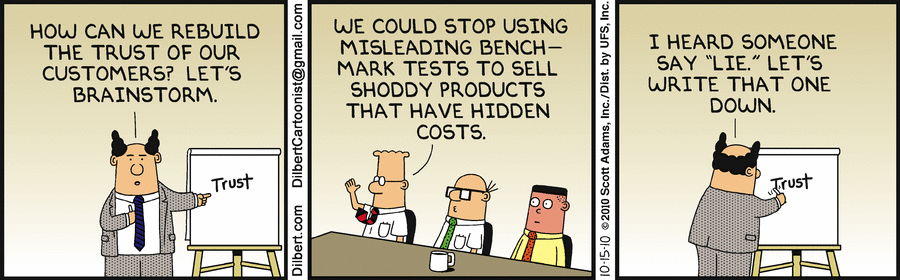
Cartoon – The Vagueness Campaign

The Dilbert Strip for September 27, 2012: Social Media Expert This ...

Billions in Hospital Virus Aid Rested on Compliance With Private Vendor

Billions in Hospital Virus Aid Rested on Compliance With Private ...

The Department of Health and Human Services told hospitals in April that reporting to the vendor, TeleTracking Technologies, was a “prerequisite to payment.”

The Trump administration tied billions of dollars in badly needed coronavirus medical funding this spring to hospitals’ cooperation with a private vendor collecting data for a new Covid-19 database that bypassed the Centers for Disease Control and Prevention.

The highly unusual demand, aimed at hospitals in coronavirus hot spots using funds passed by Congress with no preconditions, alarmed some hospital administrators and even some federal health officials.

The office of the health secretary, Alex M. Azar II, laid out the requirement in an April 21 email obtained by The New York Times that instructed hospitals to make a one-time report of their Covid-19 admissions and intensive care unit beds to TeleTracking Technologies, a company in Pittsburgh whose $10.2 million, five-month government contract has drawn scrutiny on Capitol Hill.

“Please be aware that submitting this data will inform the decision-making on targeted Relief Fund payments and is a prerequisite to payment,” the message read.

The financial condition, which has not been previously reported, applied to money from a $100 billion “coronavirus provider relief fund” established by Congress as part of the $2.2 trillion Coronavirus Aid, Relief and Economic Security Act, or CARES Act, signed by President Trump on March 27. Two days later, the administration instructed hospitals to make daily reports to the C.D.C., only to change course.

“Another data reporting ask,” a regional official in the health department informed colleagues in an email exchange obtained by The Times, adding: “It comes with $$ incentive. We really need a consolidated message on the reporting/data requests, this is past ridiculous.”

A colleague replied, “Another wrinkle. What a mess.”

The disclosure of the demand in April is the most striking example to surface of the department’s efforts to expand the role of private companies in health data collection, a practice that critics say infringes on what has long been a central mission of the C.D.C. Last month, the federal health department moved beyond financial incentives and abruptly ordered hospitals to send daily coronavirus reports to TeleTracking, not the C.D.C., raising concerns about transparency and reliability of the data.

Officials at the Department of Health and Human Services say that the moves were necessary to improve and streamline data collection in a crisis, and that the one-time reports collected in April by TeleTracking were not available from any other source.

“The national health system has not been challenged in this way in any time in recent history,” Caitlin Oakley, a department spokeswoman, said in a statement, adding that TeleTracking offered a “standardized national hospital capacity tracking system which provided more real-time, better informed data to make decisions from.”

But critics remain alarmed.

“In the middle of a pandemic, the Trump administration is using funds meant to support hospitals as a tool to coerce them to use an unproven, untrusted and deeply flawed system that sidelines public health experts,” Senator Patty Murray of Washington, the ranking Democrat on the Senate Health Committee, said in a statement.

In a statement, TeleTracking said it has three decades of experience providing health care systems “with actionable data and unprecedented visibility to make better, faster decisions.”

Still, public health experts and hospital executives are puzzled as to why the health agency chose such a difficult time to employ an untested private vendor rather than improve the C.D.C.’s National Healthcare Safety Network, a decades-old disease tracking system that was deeply familiar to hospitals and state health departments.

The N.H.S.N., as it is known, had built up trust over decades of working with hospitals and state health departments. Administrators were reluctant to make the switch.

“People — especially in public health and clinical health — are very protective of their data, so that trust factor is certainly an issue,” said Patina Zarcone, the director of informatics for the Association of Public Health Laboratories. “The fear of having their data leaked or misused or used for a purpose that they weren’t aware of or agreed to — I think that’s the biggest rub.”

Ms. Oakley said the C.D.C.’s system was “not designed for use in a disaster response” and could not adapt quickly in a crisis. Allies of the C.D.C. say withholding taxpayer dollars from the CARES Act in lieu of cooperation was an inappropriate effort to push hospitals into a system they were reluctant to use.

“It’s an absolutely enormous lever,” said William Schaffner, an infectious disease expert at Vanderbilt University. “It’s a compulsion to oblige institutions to report to this TeleTracking system because they knew if it weren’t tied to money, it wouldn’t happen.”

The Pittsburgh company has no obvious ties to the Trump administration. Rather, the push appears to be part of a broader privatization. The Health and Human Services Department has also asked the Minnesota-based manufacturer 3M “to create, and continuously update, a nationwide clinical data set on Covid-19 treatment,” according to documents obtained by The Times.

The effort is separate from the TeleTracking data collection. Tim Post, a company spokesman, said that because 3M already operates hospital information systems, it is “uniquely positioned,” with the permission of its clients, to submit information to the health department to help officials study disease patterns and recommend treatment options.

Some experts say this kind of cooperation with the private sector is long overdue. But the push also appears to be driven at least in part by an intensifying rift between the C.D.C., based in Atlanta, and officials at the White House and Department of Health and Human Services, the parent agency of the disease control centers.

Dr. Deborah L. Birx, the White House coronavirus response coordinator, and Mark Meadows, the president’s chief of staff, have taken a dim view of the C.D.C. and believe its reporting systems were inadequate. In a recent interview, Michael Caputo, the spokesman for Mr. Azar, accused the C.D.C. of having “a tantrum.”

Accurate hospital data — including information about coronavirus caseloads, deaths, bed capacity and personal protective equipment — is essential to tracking the pandemic and guiding government decisions about how to distribute scarce resources, like ventilators and the drug remdesivir, the only approved treatment for hospitalized Covid-19 patients.

The health agency has set up a new database, H.H.S. Protect, to collect and analyze Covid-19 data from a range of sources. TeleTracking feeds hospital data to that system.

But the public rollout of H.H.S. Protect has been rocky. The nonpartisan Covid Tracking Project identified big disparities between hospital data reported by states and the federal government and deemed the federal data “unreliable.”

The tension dates to March, when the novel coronavirus was making its first surge in the United States

On March 29, Vice President Mike Pence, charged by Mr. Trump with overseeing the federal response, informed hospital administrators that the C.D.C. was setting up a “Covid-19 Module,” and asked them to file daily reports which, he said, were “necessary in monitoring the spread of severe Covid-19 illness and death as well as the impact to hospitals.”

But around that time, TeleTracking submitted a proposal for data collection to the Trump administration, through an initiative, ASPR Next, created to promote innovation. On April 10, TeleTracking was awarded its contract.

The health department’s spokeswoman said the intent was to complement the C.D.C., not compete with it. Like the C.D.C.’s network, TeleTracking’s system requires manual reporting on a daily basis. But in June, Ms. Murray demanded the administration provide more information about what she called a “multimillion-dollar contract” for a “duplicative health data system.”

Some hospital officials also objected to the change.

“We have been directing our hospitals to N.H.S.N.,” Jackie Gatz, a vice president of the Missouri Hospital Association, wrote to a regional health and human services official in an email obtained by The Times, “and now this email with a much greater carrot — CARES Act distributions — is routing them to TeleTracking.”

When the order was delivered, flaws had already emerged in the new system.

“H.H.S. has acknowledged long wait times for those calling for technical support, and indicated that TeleTracking recently added 100 staff to respond to call center requests,” the American Hospital Association wrote to its members in a “special bulletin” on April 23. “They also are directing hospitals to leave a message if they are unable to reach someone live.”

At the time, hospitals had the option of making their daily coronavirus reports to TeleTracking or the C.D.C. Few were using the new database.

In June, the administration again used a stick to demand that hospitals report to TeleTracking, this time in order to obtain remdesivir. By July, with Dr. Birx pushing to bolster hospital compliance, the administration instructed hospitals to stop filing daily reports to the C.D.C. and to send them to TeleTracking instead.

One official at a major academic hospital, who spoke on the condition of anonymity for fear of angering officials in Washington, said the switch left her “unable to sleep at night.”

“Ethically, it felt like they had taken a very trusted institution in the C.D.C. and all of that trust built up with many public health people,” she said, then “moved it onto a politically and financially motivated portion of this response.”

Health and human services officials say the government now has a much more complete picture of hospital bed capacity, with more than 90 percent of hospitals reporting. But Dr. Janis M. Orlowski, the chief health officer for the Association of American Medical Colleges, who worked with Dr. Birx and the administration to bolster hospital reporting, said that she was “stunned” by the switch and that the increase in reporting came because of efforts by her group and others, not the TeleTracking system.

Dr. Orlowski said the data and maps now published on the administration’s H.H.S. Protect data hub are “just not as sophisticated as the C.D.C.”

The switch also generated pushback inside the C.D.C., where officials have refused to analyze and publish TeleTracking data, saying they could not be assured of its quality and had continuing questions about its accuracy, according to a senior federal health official.

Administration officials say the C.D.C. is working with a little-known office in the executive branch — the United States Digital Service — to build a “modernized automation process” in which data will continue to flow directly to the Department of Health and Human Services. But the project is in its infancy, one senior federal health official said.

Critics say that if the department believed the C.D.C.’s health network had problems, those should have been fixed.

“We have a public health system that depends upon communication from hospitals to state health departments to the C.D.C.,” said Dr. Schaffner, the Vanderbilt University infectious disease expert. “It’s very well established. Can it be improved? Of course. But to cut out the public health infrastructure and report to a private firm essential public health data is misguided in the extreme.”


Fake vs genuine people: 10 ways to spot the difference

Fake vs genuine people: 14 ways to spot the difference

Check Out 10 Ways To Identify Fake People - EKSUOLOFOFO

Not sure who you’re dealing with?

Fake vs genuine people may look the same, but with a little bit of knowledge, you can spot the difference.

Fake people are ingenuine and often hypocritical. They do things for their own gain but hide behind altruism.

Genuine people are true to themselves. They do things because they want to, not because they have to. Plus, they enjoy helping people.

Fake people aren’t just frustrating—they can even be damaging to your health.

In this article, I’ll break down the key difference between fake and genuine people, explain how to tell if someone is a genuine person, and share some tips on standing up for yourself.

Let’s begin.

Fake vs genuine people

The key difference between fake and genuine people is honesty.

Fake people aren’t honest with themselves and the people around them. They do things based on lies and deceit.

Genuine people are honest with themselves and others. Their actions are aligned with what they believe.

The problem is that fake people often don’t know they’re being fake. They may be acting based on lies without knowing how hypocritical they are being.

Fake people don’t know they’re fake because of self-deception.

How can you recognize someone is being fake?

5 things fake people often do

1) Lead people on

Fake people often lead people on because they are trying to please everyone. They spend so much time trying to please everyone else that a lot of people get let down in the process.

2) Cancel plans

Whether they never invite you out to do things in the first place or they cancel at the last minute, they’re fake. They’re probably so busy trying to please the other people that they made plans with that they have to cancel yours.

3) Talk about you behind your back

This is what’s really annoying about fake people. To your face, you’re their best friend. But as soon as you’re away, you’re nothing. They sit and gossip about you to make themselves look better to whoever it is they’re trying to impress.

4) Never get mad

You know who gets mad? Real people! Those who claim that they hardly ever get mad or frustrated about things are fake. Everyone is passionate about something, and everyone gets mad.

5) Disappear when you need them

Need help moving? Going through a difficult breakup? Fake people disappear right when you need them. As soon as you ask them for help, they are gone.

How to tell if someone is genuine

It can be hard to tell if someone is a genuinely nice person or if they are only being nice to you because they need something from you.

Unfortunately, many people are only out to help themselves, but there are still lots of genuine people walking around on the planet.

Here’s how you can spot a genuine person from a fake person.

1) Have a few close friends

Those who are authentic to their selves know that they can’t do everything. They can’t commit to dozens of people, so they have a few close friends that they really commit to.

2) Show up

When a true, genuine person makes plans with you, they’re going to show up. They don’t cancel on you last minute, and they aren’t going to make you wait for a “date” that’s never going to happen. They enjoy your company.

3) Admire people

Genuine people don’t gossip. Instead, they admire the positive qualities that they find in people around them. They talk about the positive, not the negative, and like to share good things.

4) Get angry and feel hurt

Real people feel things. They aren’t going to sugarcoat and act as though nothing bothers them. When genuine people are passionate about something, they’re here to show it. They invest their time and energy into their passions, and they’ll make it known.

5) There for you

When you’re hurting, genuine people hurt with you. They aren’t going to make you feel like you have no one. You can rely on them, and when something happens or you need a helping hand, they’ll be there.

Standing up to fake people

If you have fake people in your life, it’s essential to build the courage to stand up for yourself.

It’s not just about not being pushed around by this particular fake person, though this is important.

It’s also important because it teaches you to set boundaries.

This will make a big difference the next time someone fake enters your life.

I learned the importance of boundary-setting in Rudá Iandê’s free masterclass on embracing your inner beast. It’s a brilliant masterclass and completely changed how I see myself.

I used to think it was a bad idea standing up for myself. I would worry so much about what other people think.

By the time I finished watching Rudá Iandê’s masterclass, my perspective had completely shifted.

Are fake people bad for you?

Fake people are annoying, but are they actually bad for your health? Well, yes, they can be.

It takes time and energy to invest in a relationship, and when that investment is in something fake, it’s hurtful. But it goes beyond that.

Plenty of studies have found that there is a link between our relationships and our well-being. When our social relationships are complicated or one-sided, we feel worse. The strength of our connection to people is what really matters.

So, what does this mean?

Basically, if you have 20 friends, but none of them would come and pick you up after you’ve blown a tire, then your relationships aren’t that great.

But if you had just one or two friends that you could count on, that would show up when needed, the strength of that connection is great. This helps you to feel whole and connected to others, which is beneficial to your health.

Why are there so many fake people?

In today’s world, it seems like there are a lot more fake people than ever before. And it may be true. Thanks to social media and the notoriety that a person can gain from it, it seems like everyone wants to be famous.

To be famous, at least some people have to like you. So, a lot of people will act fake in hopes of getting a following and more people to like them. There are a lot of people who use the internet as a means to stop their loneliness, but it can just make it worse for them.

Why do people act fake?

People act fake because:

  • They aren’t happy with who they truly are
  • They want to feel better about themselves
  • They want people to follow them
  • They want to control others
  • They don’t like their life

Everyone is fake sometimes

The truth is when it comes to fake vs genuine people, everyone is fake sometimes. Whether you’re fake to your coworkers or your so-called friends is up to you. But being fake isn’t something that is good for us.

The opposite, being authentic, is what makes us better people. And while I’m going to talk a bit more about authenticity in a moment, I just want to say that anyone who is fake and putting on a show, isn’t worth your time. You make strong connections with others, and those are the friendships to keep.

How do you really know you’re dealing with a fake person? Well, I’m glad you asked. There are 10 easy ways to test whether the person you’re dealing with is fake or genuine.

10 ways to know you’re dealing with a fake person

Every fake person has 10 tell-tale signs that they’re fake. No matter how hard they try to hide how unauthentic they are, these signs say otherwise:

1) Full of themselves

It probably doesn’t come as a surprise, but fake people are full of themselves. They think that they’re better than everyone around them, and they love to brag. If you find that you have that one friend who is always trying to brag about their own accomplishments, they’re not being genuine.

2) Are manipulative

Fake people have a sort of “mob mentality.” They manipulate others and want everyone to believe what they believe. To do this, they will appeal to others’ emotions. Sometimes, they’ll bandwagon behind a “hot issue” or something that will give them the most notoriety.

3) Jaded with emotions

Like I mentioned before, fake people don’t do emotions well. Most of the time, they think that they’re a waste of time. Since it doesn’t get them ahead, they don’t do them.

Sure, they can fake emotions here and there to get a rise out of people and hope for more people to follow them. But, that’s about as far as they get. Their emotions are jaded, and when you come to them for help, they’re going to be emotionally there for you.

4) Judge you

Do you have a friend that is always judging you? A lot of times, fake people are insecure about what they have. They think that if you don’t believe the same things they do, then you’re wrong. To counteract their own insecurity, they judge you.

It doesn’t feel good. They even use this judgment as a way to try and get back control. Since they want to build their own egos up, they think that by putting you down, it makes them look better. This is where all of their energy is focused.

5) Have hostile humor

Though they may plaster on a kind smile and say nice things, when their humor comes out, it’s clear to see that they’re fake. Many people use hostile humor to try and hide the shame that they feel with their own selves.

Since fake people aren’t happy with their true, authentic selves, they use hostile humor to make them feel better. By putting you down, it builds them up. Then when you get mad about their hostile humor, they blow you off or act like it isn’t a big deal. Remember, they don’t “do” emotions.

6) Aren’t consistent

It’s that friend who always has a new idea. One moment they’re investing in stocks, the next moment their opening up an online store, and finally, they’ve found their dream of being a realtor.

Sound familiar?

Those friends who lack consistency and can’t stay still aren’t true to themselves. They’re as fake as they come, and they don’t care if they leave a big mess behind them.

7) Don’t learn lessons

Fake people don’t get a free pass when it comes to their mistakes, but they think that they do. When they do make a mistake, they aren’t going to admit to it. Or even if they do admit to it, they aren’t going to learn from it.

Genuine people recognize their mistakes and learn from them. Fake people would rather act like it never happened in the first place.

8) Unrealistic expectations

Not only do they put you down and try to control you, but fake people also have unrealistic expectations. They expect people to drop everything for them last-minute, but they wouldn’t do the same for you.

On top of that, they expect to have the best of everything. Often times, fake people are constantly buying new things, especially expensive ones. They want to showcase the success that they have, and they believe that their belongings are how they can do that.

9) Always need the attention

Having your engagement party? Well, your fake friend is about to announce a huge promotion. If they have the chance to steal the spotlight, they will. These people want to be the star of the show, and they don’t care what show it is.

Attention always has to be focused on this person because they demand it. They want to be noticed, and they need that praise from others to feel good about themselves. Unfortunately, it leads to a lot of hurt people when they do something toxic like this.

10) Don’t respect your boundaries

Maybe the biggest sign of fake people? They don’t respect your boundaries.

Once you talk to them, they blow you off. This can be if you bring up hurt feelings or some time where they made a mistake. Boundaries are nonexistent to them unless they were the ones that set them.

Because of this, these friendships can be hard to sever, and they can lead to a lot of pain. But anyone who doesn’t respect your boundaries is not worth keeping around in your life.

Be authentic and attract authenticity

When it comes to fake vs genuine people, it can be hard to know which is which. However, the 10 ways I’ve outlined is a great start. Because fake people usually look for people who will follow them or people who are easily controlled, the best way to get rid of fake people is by being authentic yourself.

As Rudá Iandê says, “Our world is full of fake perfection and happiness, but craving for authenticity.” It is by being your authentic self that you will find deep, lasting connections that will help you to lead a happy and healthy life.

Our lives are too short to spend investing in fake people. Choose to be yourself and be authentic, and you’ll find genuine people to share your life with.


FDA chief apologizes for overstating plasma effect on virus

https://abcnews.go.com/Health/wireStory/fda-commissioner-overstated-effects-virus-therapy-72595122?fbclid=IwAR3Um3rVuom9rJNCOvccmmTBDOrrRePEu1BX1VgRvAzYbpL2NATGjY2-1IY

FDA chief apologizes for overstating plasma effect on virus

Food and Drug Administration Commissioner Stephen Hahn is apologizing for overstating the life-saving benefits of using convalescent plasma to treat COVID-19 patients.

Responding to an outcry from medical experts, Food and Drug Administration Commissioner Stephen Hahn on Tuesday apologized for overstating the life-saving benefits of treating COVID-19 patients with convalescent plasma.

Scientists and medical experts have been pushing back against the claims about the treatment since President Donald Trump’s announcement on Sunday that the FDA had decided to issue emergency authorization for convalescent plasma, taken from patients who have recovered from the coronavirus and rich in disease-fighting antibodies.

Trump hailed the decision as a historic breakthrough even though the treatment’s value has not been established. The announcement on the eve of Trump’s Republican National Convention raised suspicions that it was politically motivated to offset critics of the president’s handling of the pandemic.

Hahn had echoed Trump in saying that 35 more people out of 100 would survive the coronavirus if they were treated with the plasma. That claim vastly overstated preliminary findings of Mayo Clinic observations.

Hahn’s mea culpa comes at a critical moment for the FDA which, under intense pressure from the White House, is responsible for deciding whether upcoming vaccines are safe and effective in preventing COVID-19.

The 35% figure drew condemnation from other scientists and some former FDA officials, who called on Hahn to correct the record.

“I have been criticized for remarks I made Sunday night about the benefits of convalescent plasma. The criticism is entirely justified. What I should have said better is that the data show a relative risk reduction not an absolute risk reduction,” Hahn tweeted.

The FDA made the decision based on data the Mayo Clinic collected from hospitals around the country that were using plasma on patients in wildly varying ways — and there was no comparison group of untreated patients, meaning no conclusions can be drawn about overall survival. People who received plasma with the highest levels of antibodies fared better than those given plasma with fewer antibodies, and those treated sooner after diagnosis fared better than those treated later.

Hahn and other Trump administration officials presented the difference as an absolute survival benefit, rather than a relative difference between two treatment groups. Former FDA officials said the misstatement was inexcusable, particularly for a cancer specialist like Hahn.

“It’s extraordinary to me that a person involved in clinical trials could make that mistake,” said Dr. Peter Lurie, a former FDA official under the Obama administration who now leads the nonprofit Center for Science in the Public Interest. “It’s mind-boggling.”

The 35% benefit was repeated by Health and Human Services Secretary Alex Azar at Sunday’s briefing and promoted on Twitter by the FDA’s communication staff. The number did not appear in FDA’s official letter justifying the emergency authorization.

Hahn has been working to bolster confidence in the agency’s scientific process, stating in interviews and articles that the FDA will only approve a vaccine that meets preset standards for safety and efficacy.

Lawrence Gostin of Georgetown University said Hahn’s performance Sunday undermined those efforts.

“I think the integrity of the FDA took a hit, if I were Stephen Hahn I would not have appeared at such a political show,” said Gostin, a public health attorney.

Hahn pushed back Tuesday morning against suggestions that the plasma announcement was timed to boost Trump ahead of the Republican convention.

“The professionals and the scientists at FDA independently made this decision, and I completely support them,” Hahn said, appearing on “CBS This Morning.”

Trump has recently accused some FDA staff, without evidence, of deliberately holding up new treatments “for political reasons.” And Trump’s chief of staff, Mark Meadows, said over the weekend that FDA scientists “need to feel the heat.”

The administration has sunk vast resources into the race for a vaccine, and Trump aides have been hoping that swift progress could help the president ahead of November’s election.

At Sunday’s briefing Hahn did not correct Trump’s description of the regulatory move as a “breakthrough.” He also did not contradict Trump’s unsupported claim of a “deep state” effort at the agency working to slow down approvals.

Former FDA officials said the political pressure and attacks against the FDA carry enormous risk of undermining trust in the agency just when it’s needed most. A vaccine will only be effective against the virus if it is widely taken by the U.S. population.

“I think the constant pressure, the name-calling, the perception that decisions are made under pressure is damaging,” said Dr. Jesse Goodman of Georgetown University, who previously served as FDA’s chief scientist. “We need the American people to have full confidence that medicines and vaccines are safe.”

Convalescent plasma is a century-old approach to treating the flu, measles and other viruses. But the evidence so far has not been conclusive about whether it works, when to administer it and what dose is needed.

The FDA emergency authorization is expected to increase its availability to additional hospitals. But more than 70,000 Americans have already received the therapy under FDA’s “expanded access” program. That program tracks patients’ response, but cannot prove whether the plasma played a role in their recovery.

Some scientists worry the broadened FDA access to the treatment will make it harder to complete studies of whether the treatment actually works. Those studies require randomizing patients to either receive plasma or a dummy infusion.