The U.S. Anxiety Pandemic

The U.S. bombing of Iran’s nuclear capability is unsettling: whether MAGA or not, hawk or dove, young or old, conservative or liberal, rich or poor—it matters.

Stability at home and abroad is utopian to some but desired by all. Pandemics, mass violence, natural disasters and even election results contribute to instability and lend to insecurity. Operation Midnight Hammer might contribute to the nation’s anxiety—time will tell.

The immediate aftermath of the bunker-bombings in Iran will involve two orchestrated campaigns by government officials:

  • The Campaign to Contain Middle East Tension: military, diplomatic and economic levers will be put to the test to limit escalation of the bombing and limit its consequence to the region.
  • The Campaign to Win Public Support: issues of consequence like military intervention ultimately depend on public opinion that support laws, funding and subsequent actions taken in response. History teaches and political leaders understand that ‘winning the hearts and minds’ of the public is necessary to success. Predictably, justification for Operation Midnight Hammer will be messaged loudly by supporters and challenged by critics.

For the moment, the news cycle will shift to foreign policy and away from tariffs, inflation, household prices and the “Big Beautiful Budget Bill” which the Senate Republicans hope to bring to the floor this week. News media will speculate about the after-effects of the Israeli-Iran bombing and what role the U.S. plays in an increasingly complicated geopolitical landscape marked by marked by armed conflicts Gaza, Ukraine, Myanmar, Yemen and 26 and other countries.

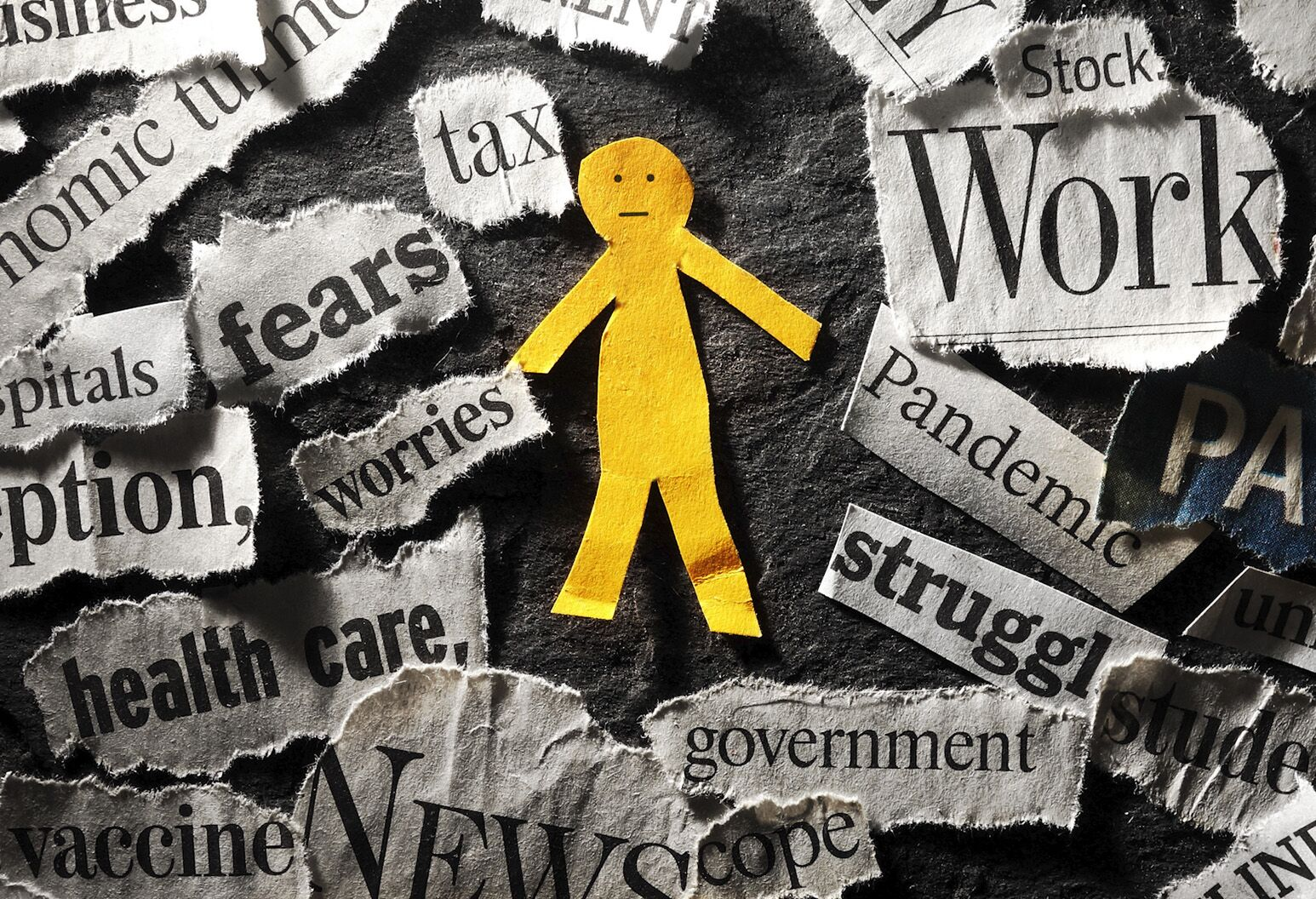
The attention these get in traditional media and social media channels will exacerbate public anxiety that’s already high: 19% U.S. adults and 40% of the country’s adolescents suffer from anxiety disorder: “a persistent, excessive fear or worry that interferes with daily life and functioning”. But, per the National Institute of Mental Health, fewer than a third suffering from severe anxiety receive professional treatment.

In the public health community, much is known about anxiety: it’s more prevalent among women than men, in minority populations, lower income populations and in the Southeast. It’s significant across all age groups, and at an alarming level among young working-class adults facing unique issues like affordability and job insecurity.  And it is stigmatized in certain communities (i.e. certain fundamentalist religious sects, certain ethnic communities) lending to silent suffering and unattended consequences.

My take:

Operation Midnight Hammer came at a time of widespread public anxiety about the economy, tariffs, inflation, costs of living and political division. I will let pundits debate the advisability and timing of the bunker-bombing but I know one thing for sure: mental health issues—including anxiety, mood and substance abuse disorders– deserve more support from policymakers and more attention by the healthcare community.

  • The former requires local, state and federal lawmakers to revisit and enforce mental health parity laws already on the books but rarely enforced.
  • The latter requires the healthcare community to elevate behavioral health to a national priority alongside obesity, heart disease, cancer and aging to secure the public’s health and avoid unintended consequences of neglect.

Regrettably, the issue is not new. Employers, school systems, religious organizations and local public health agencies have been mental health default safety values to date; extreme have been temporarily shuffled to in hospital emergency rooms most ill-equipped to manage them. But systematic, community-wide, evidence-based help for those in need of mental health remains beyond their reach.

The Trump administration’s healthcare leaders under HHS’ Kennedy and CMS’ Oz espouse the U.S. healthcare system should prioritize chronic disease and preventive health. They believe its proficiency in specialty care is, in part, the result of lucrative incentives that reward providers and their financial backers handsomely in these areas.

In the President’s February 13 Executive Order establishing the Make America Healthy Again Commission, its goal was laid out:

“To fully address the growing health crisis in America, we must re-direct our national focus, in the public and private sectors, toward understanding and drastically lowering chronic disease rates and ending childhood chronic disease.  This includes fresh thinking on nutrition, physical activity, healthy lifestyles, over-reliance on medication and treatments, the effects of new technological habits, environmental impacts, and food and drug quality and safety…  We must ensure our healthcare system promotes health rather than just managing disease.”

Nothing could be more timely and necessary to the Commission’s work than addressing mass anxiety and mental health as a national priority. And nothing is more urgently needed in communities than mainstreaming anxiety and mental health into the systems of health that accept full risk for whole person health.

PS: Before Operation Midnight Hammer over the weekend, I had prepared today’s report focused on two government reports about the long-term solvency of the Medicaid and Medicare programs. Given the gravity of events in Israel and Iran and other hot spots, and after discussions with my family and friends this weekend, it became clear public anxiety is high.

I am concerned about the future and worry about the health system’s response. It’s composed of good people doing worthwhile work who are worried about the future.  I recently spoke to a group on the theme (link below): ‘the future for healthcare is not a repeat of its past.’ That lends to anxiety unless accompanied by a vision for a better future. That’s what all hope for those in Iran, Gaza, Israel and beyond, and for all who serve in our industry.

Hospital purchasing still buffeted by trade winds

https://www.axios.com/2025/06/18/hospital-purchasing-tariffs-trump-ppe

Tariffs and supply chain uncertainty are playing havoc with hospitals’ purchasing plans, especially for lower-margin products like gloves, gowns and syringes.

Why it matters: 

The uncertainty is in some cases delaying spending decisions, including capital improvements, as health system administrators wait to see the effect of increased duties and whether manufacturers win exemptions from the Trump administration.

What they’re saying: 

“Hospitals are definitely feeling a pinch,” Mark Hendrickson, director of Premier’s supply chain policy, told Axios. “We’ve never seen tariffs for this long a period of time for this broad a portfolio of products in basically all of our lifetimes.”

  • “It’s really an uncertain enough environment that we’re cautioning members from panic buying and buying ahead,” he added. “We don’t want to drive artificial shortages of products that could be avoided.”

The big picture: 

The health care supply chain is already hard enough to navigate, with certain sterile injectable drugs and other essentials regularly going into shortage.

  • But President Trump’s existing and threatened tariffs are scrambling the calculus for health systems and the group purchasing organizations they contract with, as they seek a steady supply of what they need and identify possible new sources.
  • “Everyone in the supply chain, from hospitals to suppliers to manufacturers, is grappling with how to plan thoughtfully and proceed in a way that doesn’t either under- or over-correct for the potential impacts of these tariffs,” Akin Demehin, the American Hospital Association’s vice president of quality and patient safety policy, told Axios.

Between the lines: 

So far, there haven’t been clear price hikes or shortages.

  • But certain types of products are being watched more closely, starting with low-cost, high-volume items often imported from China such as PPE and disposable medical devices.
  • “Are there going to be instances where those low margin products are just not worth manufacturing anymore?,” Hendrickson said.

U.S. manufacturing of protective gear picked up during the pandemic, to alleviate foreign supply chain disruptions. But some of those sources dried up with the end of mask mandates and other public health measures, when hospitals went back to buying from overseas.

  • The hospital association is particularly concerned about critical minerals and derivatives used in medical imaging, radioactive drugs and other applications, which could be subject to sectoral levies imposed in the interests of national security.
  • Last month, the AHA sent a letter to the Trump administration calling for medical exemptions.

The bottom line: 

“We haven’t seen the bottom fall out,” Hendrickson said. “I’m hoping we don’t.”

The UAW Strike: What Healthcare Provider Organizations Should Watch

Politicians, economists, auto industry analysts and main street business owners are closely watching the UAW strike that began at midnight last Thursday. Healthcare should also pay attention, especially hospitals. medical groups and facility operators where workforce issues are mounting.

Auto manufacturing accounts for 3% of America’s GDP and employs 2.2 million including 923,000 in frontline production. It’s high-profile sector industry in the U.S. with its most prominent operators aka “the Big Three” operating globally. Some stats:

  • The US automakers sold an estimated 13.75 million new and 36.2 million used vehicles in 2022.
  • The total value of the US car and automobile manufacturing market is $104.1 billion in 2023:
  • 9.2 million US vehicles were produced in 2021–a 4.5% increase from 2020 and 11.8% of the global total ranking only behind China in total vehicle production.
  • As of 2020, 91.5% of households report having access to at least one vehicle.
  • There were 290.8 million registered vehicles in the United States in 2022—21% of the global market.
  • Americans spend $698 billion annually on the combination of automobile loans and insurance.

By comparison, the healthcare services industry in the U.S.—those that operate facilities and services serving patients—employs 9 times more workers, is 29 times bigger ($104 Billion vs. $2.99 trillion/65% of total spend) and 6 times more integral in the overall economy (3% vs. 18.3% of GDP).  

Surprisingly, average hourly wages are similar ($31.07 in auto manufacturing vs. $33.12 in healthcare per BLS) though the range is wider in healthcare since it encompasses licensed professionals to unskilled support roles. There are other similarities:

  • Each industry enjoys ubiquitous presence in American household’ discretionary. spending.
  • Each faces workforce issues focused on pay parity and job security.
  • Each is threatened by unwelcome competitors, disruptive technologies and shifting demand complicating growth strategies.
  • Each is dependent on capital to remain competitive.
  • And each faces heightened media scrutiny and vulnerability to misinformation/disinformation as special interests seek redress or non-traditional competitors seek advantage.

Ironically, the genesis of the UAW dispute is not about wages; it is about job security as electric-powered vehicles that require fewer parts and fewer laborers become the mainstay of the sector. CEO compensation and the corporate profits of the Big Three are talking points used by union leaders to galvanize sympathizer antipathy of “corporate greed” and unfair treatment of frontline workers.

But the real issue is uncertainty about the future: will auto workers have jobs and health benefits in their new normal?

In healthcare services sectors—hospitals, medical groups, post-acute care facilities, home-care et al—the scenario is similar: workers face an uncertain future but significantly more complicated. Corporate greed, CEO compensation and workforce discontent are popular targets in healthcare services media coverage but the prominence of not-for-profit organizations in healthcare services obfuscates direct comparisons to for-profit organizations which represents less than a third of the services economy. For example, CEO compensation in NFPs—a prominent target of worker attention—is accounted differently for CEOs in investor-owned operations in which stock ownership is not treated as income until in options are exercised or shares sold. Annual 990 filings by NFPs tell an incomplete story nonetheless fodder for misinformation.

The competitive landscape and regulatory scrutiny for healthcare services are also more complicated for healthcare services. Unlike auto manufacturing where electric vehicles are forcing incumbents to change, there’s no consensus about what the new normal in U.S. healthcare services will be nor a meaningful industry-wide effort to define it. Each sector is defining its own “future state” based on questionable assumptions about competitors, demand, affordability, workforce requirements and more. Imagine an environmental scan in automakers strategy that’s mute on Tesla, or mass transit, Zoom, pandemic lock-downs or energy costs?

While the outlook for U.S. automakers is guardedly favorable, per Moody’s and Fitch, for not-for-profit health services operators it’s “unsustainable” and “deteriorating.”

Nonetheless, the parallels between the current state of worker sentiment in the U.S. auto manufacturing and healthcare services sectors are instructive. Auto and healthcare workers want job security and higher pay, believing their company executives and boards but corporate profit above their interests and all else. And polls suggest the public’s increasingly sympathetic to worker issues and strikes like the UAW more frequent.

Ultimately, the UAW dispute with the Big Three will be settled. Ultimately, both sides will make concessions. Ultimately, the automakers will pass on their concession costs to their customers while continuing their transitions to electric vehicles.

In health services, operators are unable to pass thru concession costs due to reimbursement constraints that, along with supply chain cost inflation, wipe out earnings and heighten labor tension.  

So, the immediate imperatives for healthcare services organizations seem clear as labor issues mount and economics erode:

  • Educate workers—all workers—is a priority. That includes industry trends and issues in sectors outside the organization’s current focus.
  • Define the future. In healthcare services, innovators will leverage technology and data to re-define including how health is defined, where it’s delivered and by whom. Investments in future-state scenario planning is urgently needed.
  • Address issues head-on: Forthrightness about issues like access, prices, executive compensation, affordability and more is essential to trustworthiness.  

Stay tuned to the UAW strike and consider fresh approaches to labor issues. It’s not a matter of if, but when.

PS: I drive an electric car—my step into the auto industry future state. It took me 9 hours last Thursday to drive 275 miles to my son’s wedding because the infrastructure to support timely battery charges in route was non-existent. Ironically, after one of three self-charges for which I paid more than equivalent gas, I was prompted to “add a tip”. So, the transition to electric vehicles seems certain, but it will be bumpy and workers will be impacted.

The future state for healthcare is equally frought with inadequate charging stations aka “systemness” but it’s inevitable those issues will be settled. And worker job security and labor costs will be significantly impacted in the process.

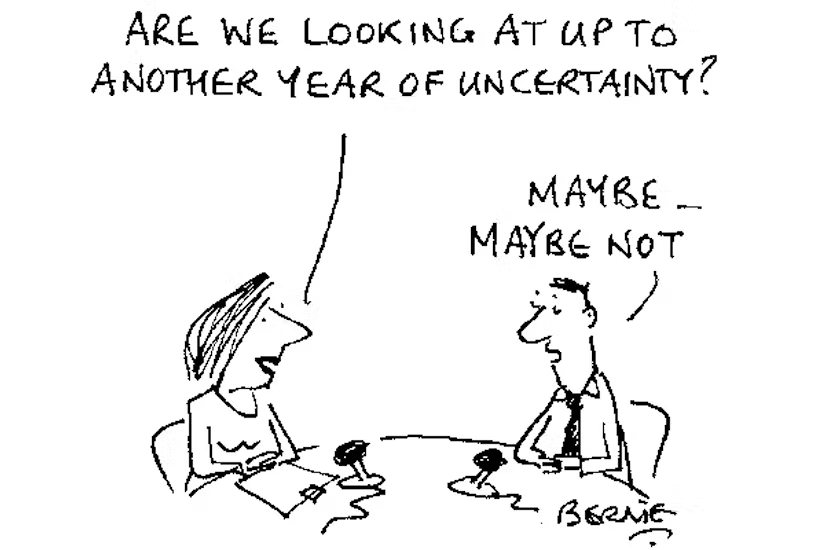
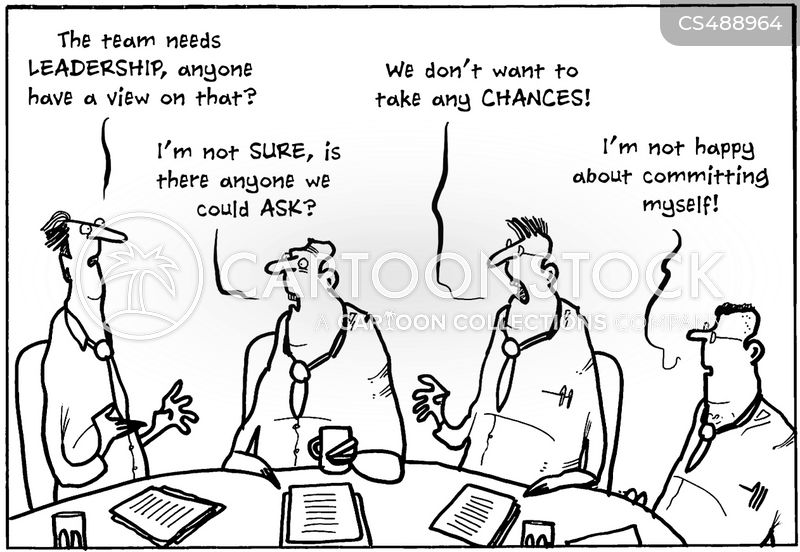
The silent killer — toxic ambiguity

One of the most overlooked, yet lethal forms of organizational rot is toxic ambiguity. Basically, killing people with fog, Jim VandeHei writes.

Why it matters: 

Think of all the time wasted, relationships ruined, budgets missed and moods fouled by leaders or managers offering hazy direction.

  • Ambiguity is a silent killer — like a slow natural-gas leak. You don’t realize until it’s too late that you have a massive, spreading issue.

Gallup developed a workplace survey system for companies to track engagement and performance. We use it at Axios to spot pockets of emerging staff issues.

  • We often score lower than I’d like on the first question — whether “I know what is expected of me at work.” This drives me nuts: How can any person at any level not know what their damn job is?
  • Turns out, this is common. Many people feel foggy, even if leaders feel they’re being crystal clear.

The toxicity comes when the ambiguity is so thick others can exploit the cloudiness, or suffer from it. Here are some common manifestations to watch for:

  1. Fuzzy strategy. In an ideal world, any person under you should be able to jump out of bed at a moment’s notice and recite the three most important things you’re doing as a company or organization. If they can’t, how can they guide others or prioritize? The only remedy for this is constant, clear repetition of what matters most.
  2. Fuzzy thinking. If you’re a leader and you can’t articulate those three things with precision and certainty, you’re screwed. It means you didn’t sharpen your own thinking before trying to sharpen the thinking of others. This is why I constantly write down what matters most so I can stress-test my own clarity.
  3. Fuzzy communications. You might have strong, concrete thoughts — but not explain them clearly. That’s akin to having the perfect, delicious recipe, but not following it — and then wondering why people don’t love your dish. Your ideas might be brilliant. But if you don’t find strong, memorable words to express them, they will be lost.
  4. Fuzzy accountability. This one often trips me up. People don’t know they own something unless explicitly told and empowered. And others don’t know whom to listen to unless you make it clear who’s the decider. Little gets done right without clear accountability, dictated and announced in advance.
  5. Fuzzy feedback. Few things cripple individuals, teams and companies more than foggy feedback. Many managers are afraid to be direct, and hide what they mean by over-talking or over-complimenting. This leaves people confused about their standing and what they need to do better.

💡 What you can do: If you’re unsure what’s expected of you, that’s on you!

  • Ask your boss: “What’s the No. 1 thing I’ll be judged on?” or “What is Job 1 for me — the biggest specific thing I need to do for the team?”
  • If you get a foggy response, push for clarity. It’s tough to crush a performance review if you don’t know what’ll be reviewed.

The big picture: 

Clarity and candor are tough but essential — especially in anxious or uncertain times.

Threats of prison time put gynecologists in impossible circumstances

https://mailchi.mp/9e0c56723d09/the-weekly-gist-july-8-2022?e=d1e747d2d8

In states with laws that criminalize performing abortions, physicians are facing the dilemma of having to wait until a pregnant patient’s death is imminent to perform a potentially lifesaving procedure. Reporting from STAT News reveals how these laws are disrupting care. A physician in Missouri, which outlaws all abortions unless the life of the mother is in danger, described having to spend hours getting clearance from a hospital ethics team to perform the procedure on a patient with an ectopic pregnancy.

Even non-pregnancy care is being impacted. An arthritis patient taking methotrexate, which can also be used for abortion, was told by her doctor that all prescriptions for the drug are on pause due to legal uncertainty.

The Gist: Doctors and hospital legal counsel are dealing with a new legal landscape, marked by restrictive, ill-defined anti-abortion laws that fail to clarify what constitutes a medical emergency.

Physicians are forced to interpret unclear laws, often written without help from medical professionals, and many feel compelled to wait until patients are in dangerous, life-threatening situations to provide care—the opposite of what was instilled in them during years of training.   

COVID vaccine strategy still murky after FDA experts meet

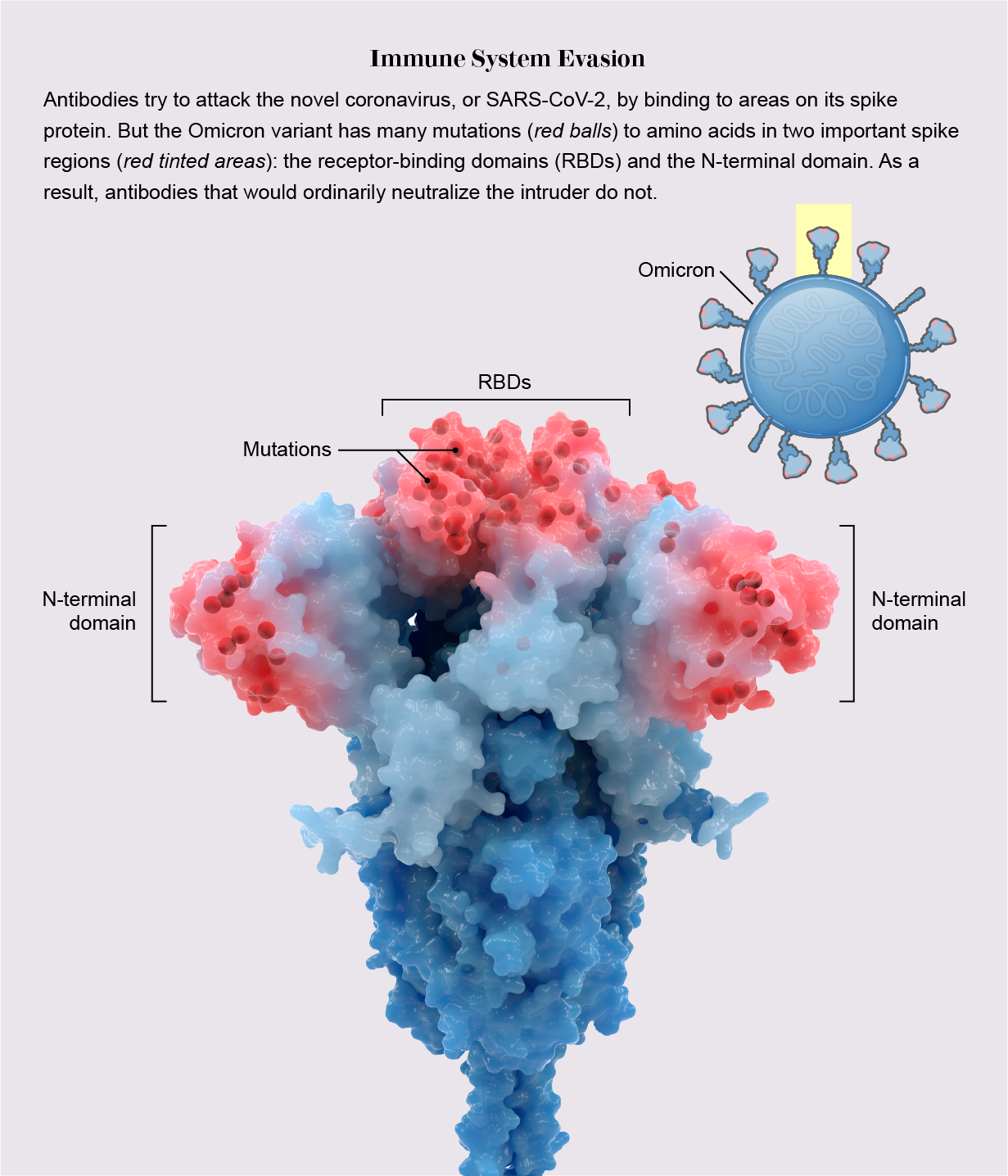
The COVID-19 vaccine strategy for the fall remains beset with unanswered questions after an FDA expert panel on Tuesday spent hours debating how and whether to update the shots.

Why it matters: Time is running short to develop a game plan with existing vaccines losing effectiveness against new variants and more than half of Americans still without a booster dose.

Driving the news: The Vaccines and Related Biological Products Advisory Committee voted 19-2 to recommend an Omicron-specific update to COVID-19 booster vaccines expected to be rolled out within the next few months.

But key questions were left unanswered:

  • The panel didn’t formally decide whether to update shots with the prevalent Omicron strain in circulation, currently the fast-spreading BA.4 and BA.5 subvariants, or the BA.1 lineage that emerged late last year, as the World Health Organization recommended.
  • The consensus appeared to be for a bivalent, or combination, booster combining the original COVID-19 strain that emerged in late 2019 with BA.4 and BA.5.
  • The FDA will continue to evaluate what to do about the primary series of vaccines for the fall.
  • Experts were split on whether there was enough data to recommend the updated shots for kids, or whether more studies are needed on dosage and possible side effects.
  • There also were concerns about what effect an updated vaccine would have on developing nations’ willingness to use older COVID shots to inoculate their populations.
  • And above all, it’s unclear whether all the questions about who gets which shot when will add to public confusion and apathy that’s dogged the vaccination effort in recent months.

What they’re saying: “None of us has a crystal ball and we’re trying to use every last ounce of what we can from predictive modeling and data that’s emerging to try to get ahead of a virus that’s very crafty,” said top FDA vaccine regulator Peter Marks.

  • “Unfortunately, looking in the past doesn’t help us a great deal to look in the future for [a] virus that has baffled a lot of us and made predictions almost irrelevant,” said acting panel chairman Arnold Monto, a University of Michigan epidemiologist.

The timetable: Pfizer-BioNTech said an updated mRNA vaccine could be ready in October if regulatory uncertainties are ironed out. Moderna said it could have large amounts ready in late October or early November. Novavax is still awaiting emergency use authorization for its protein-based shot, but said it could have an updated vaccine by the fourth quarter.