Michigan this week counted more people hospitalized with COVID-19 than at any other time during the pandemic

https://www.cnn.com/2021/12/09/us/hospital-covid-19-deaths-michigan/index.html

Coronavirus: Michigan's highest-in-the-U.S. case count exceeds California,  Texas combined | CTV News

Nurse Katie Sefton never thought Covid-19 could get this bad — and certainly not this late in the pandemic. “I was really hoping that we’d (all) get vaccinated and things would be back to normal,” said Sefton, an assistant manager at Sparrow Hospital in Lansing, Michigan. But this week Michigan had more patients hospitalized for Covid-19 than ever before. Covid-19 hospitalizations jumped 88% in the past month, according to the Michigan Health & Hospital Association.

“We have more patients than we’ve ever had at any point, and we’re seeing more people die at a rate we’ve never seen die before,” said Jim Dover, president and CEO of Sparrow Health System.

“Since January, we’ve had about 289 deaths; 75% are unvaccinated people,” Dover said. “And the very few (vaccinated people) who passed away all were more than 6 months out from their shot. So we’ve not had a single person who has had a booster shot die from Covid.”

Among the new Covid-19 victims, Sefton said she’s noticed a disturbing trend.

We’re seeing a lot of younger people. And I think that is a bit challenging,” said Sefton, a 20-year nursing veteran.She recalls helping the family of a young adult say goodbye to their loved one. “It was an awful night,” she said. “That was one of the days I went home and just cried.”

‘We haven’t peaked yet’

It’s not just Michigan that’s facing an arduous winter with Covid-19. Nationwide, Covid-19 hospitalizations have increased 40% compared to a month ago, according to data from the US Department of Health and Human Services. This is the first holiday season with the relentless spread of the Delta variant — a strain far more contagious than those Americans faced last winter.

“We keep talking about how we haven’t peaked yet,” Sefton said.Health experts say the best protection against Delta is to get vaccinated and boosted. But as of Thursday, only about 64.3% of eligible Americans had been fully vaccinated, and less than a third of those eligible for boosters have gotten one.

Sparrow Hospital nurse Danielle Williams said the vast majority of her Covid-19 patients are not vaccinated — and had no idea they could get pummeled so hard by Covid-19.“Before they walked in the door, they had a normal life. They were healthy people. They were out celebrating Thanksgiving,” Williams said. “And now they’re here, with a mask on their face, teary eyed, staring at me, asking me if they’re going to live or not.”

‘The next few weeks look hard’

Dover said he’s saddened but not surprised that his state is getting walloped with Covid-19.“Michigan is not one of the highest vaccination states in the nation. So it continues to have variant after variant grow and expand across the state,” he said.

“The next few weeks look hard. We’re over 100% capacity right now,” Dover said.”Most hospitals and health systems in the state of Michigan have gone to code-red triage, which means they won’t accept transfers. And as we go into the holidays, if the current growth rate that we’re at today, we would expect to see 200 in-patient Covid patients by the end of the month — on a daily basis.”And that would mean “absolutely stretching us to the breaking point,” Dover said.”We’ve already discontinued in-patient elective surgeries,” he said. “In order to create capacity, we took our post-anesthesia recovery care unit and converted it into another critical care unit.”

‘There’s a lot of frustration’

Nurse Leah Rasch is exhausted. She’s worked with Covid-19 patients since the beginning of the pandemic and was stunned to see so many people still unvaccinated enter the Covid unit.

“I did not think we’d be here. I truly thought that people would be vaccinated,” the Sparrow Hospital nurse said.”I don’t remember the last time we did not have a full Covid floor.”The relentless onslaught of Covid-19 patients has impacted Rasch’s own health. “There’s a lot of frustration,” she said. “The other day, I had my first panic attack … I drove to work and I couldn’t get out of the car.”

‘We need everybody to get vaccinated’

Dover said many people have asked how they can support health care workers.”If you really want to support your staff, and you really want to support health care heroes, get vaccinated,” he said. “It’s not political. We need everybody to get vaccinated.”

He’s also urging those who previously had Covid-19 to get vaccinated, as some people can get reinfected.”My daughter’s a good example. She had Covid twice before she was eligible for a vaccine,” Dover said. “She still got a vaccine because we know that if you don’t get the vaccine, just merely having contracted Covid is not enough to protect you from getting it again. And I know that from personal experience. “And those who are unvaccinated shouldn’t underestimate the pandemic right now, Dover said.

“The problem is, it’s not over yet. I don’t know if people realize just how critical it still is,” he said.”But they do realize it when they come into the ER, and they have to wait three days for a bed. And at that point, they realize it.”

How to Talk about Vaccines at Thanksgiving

May be an image of 6 people and text that says 'How to talk about vaccines at Thanksgiving The big thing to know when talking to family and friends about vaccine falsehoods during the holidays: It's better to respond with facts than to offer corrections.'

“Please pass the green beans.” “What kind of pie is that?”“What about spike proteins!?”These are some of the phrases that may be uttered during your Thanksgiving and holiday dinners this season. But! We have prepared a glossary for you. Swipe through a quick guide to some of the most misused terms around vaccines that PolitiFact has noticed in our fact-checking. And because we know that shouts of “that’s wrong!” don’t go over smooth like gravy, we’re including an expert’s advice on how to talk about vaccine falsehoods with family and friends.The big thing to know: It’s better to respond with facts than to offer corrections.”If they said something like ‘the vaccine is dangerous,’ include a statistic about how 75% of the people in their state have gotten vaccinated and none have died, or how severe and dangerous COVID-19 is,” said Rupali Limaye, an associate scientist at Johns Hopkins School of Public Health. “And, ultimately, make sure you’re saying it all with empathy.”

May be an image of text that says '"Spike protein" The human body and other organisms are made up of a variety of proteins, and SARS-COV-2, the virus that causes COVID-19, has its own. The virus' spike protein, which allows the virus to penetrate cells and cause infection, has sharp bumps that protrude from the surface of the virus' outer envelopes. COVID-19 vaccines introduce a piece of the protein- but not the harmful part of the virus which the immune system quickly identifies, attacks and destroys as a foreign invader.'
May be an image of text that says '"mRNA" The Pfizer and Moderna COVID-19 vaccines use messenger RNA to deliver an instruction manual to cells for making the coronavirus' spike protein. They're different from conventiona vaccines that use part of a bacterium or virus to induce protein production. The mRNA is fragile and quickly broken down in the body once the cells learn the blueprint, which is usually within three days of receiving the vaccine. The molecule does not we repeat, does not enter the nucleus of cells and alter a person's DNA.'
May be an image of text that says '"VAERS" VAERS stands for the Vaccine Adverse Effects Reporting System, a critical reporting tool for the federal government to collect and analyze data on after-effects from all vaccines, not just COVID-19. Unlike other government data sources, VAERS is designed so that anyone- parents, patients and health care professionals can report health effects that occur after a vaccination, whether or not those effects were caused by the vaccine. The reports aren't verified before they're entered, and anyone with a computer can access the data.'
May be an image of text that says '"Syncytin-1" Syncytin-1, a protein found in humans and some animals, is most known for helping develop the placenta, the temporary organ that helps nourish a fetus during pregnancy. Syncytin-1 and the coronavirus spike protein have almost nothing in common, making the vaccine highly unlikely to trigger a reaction. "If someone says they heard the vaccine causes infertility, would just respond with something direct- like that there are no studies that show a link between the vaccines and infertility Zero," an expert said.'
May be an image of text that says '"Ivermectin" vermectir is an anti-parasitic medication that has been widely touted as a COVID-19 treatment despite health authorities warning against COVID-19 patients self-medicating with the drug. When people started to believe it could treat COVID- 19, some of them ingested forms of the drug made for animals, causing a dramatic uptick in calls to poison control. Officials warn that more research is still needed on ivermectin's effectiveness as a COVID-19 treatment.'
May be an image of text that says 'A final word about words The best way to talk through different views on vaccines with loved ones is by making your point in a personal context that takes the focus off them. "Think of family member they want to protect, so it's not all about them," said Rupali Limaye, an associate scientist at Johns Hopkins School of Public Health." "Like 'Hey, I'm really concerned about grandma and just want to make sure we are doing all we can to protect her. It leaves the pressure off them but they still have some skin in the game."'

30% of hospital healthcare workers remained unvaccinated as of September

Dive Brief:

  • Some 30% of U.S. healthcare workers employed at hospitals remained unvaccinated as of Sept. 15, according to an analysis of Centers for Disease Control and Prevention data published Thursday by the Association for Professionals in Infection Control and Epidemiology.
  • The findings include data from 3.3 million healthcare workers at more than 2,000 hospitals, collected between Jan. 20 and Sept. 15.
  • Healthcare personnel working in children’s hospitals had the highest vaccination rates, along with those working in metropolitan counties.

Dive Insight:

The vaccination rate for healthcare workers is roughly in line with that of the general population, though the risk of exposure and transmission can be higher in settings where infected COVID-19 patients are treated, Hannah Reses, CDC epidemiologist and lead author of the analysis, said.

When the shots were initially rolled out, vaccination rates climbed among healthcare workers, rising from 36% to 60% between January and April of 2021, the analysis found. But a major slowdown occurred shortly after.

From April to August, vaccination rates rose just 5%. They then rose 5% again in just one month — from August to September — likely due to the delta variant and more systems implementing their own mandates, the report said.

Researchers also found discrepancies in vaccination rates based on the type of hospitals and their geographic locations.

By September, workers at children’s hospitals had the highest vaccination rates (77%), followed by those at short-term acute care hospitals (70%), long-term care facilities (68.8%), and critical access hospitals (64%).

Among healthcare workers at facilities in metropolitan areas, about 71% were vaccinated by September, compared to 65% of workers at rural facilities.

The findings come as health systems work to comply with new vaccination mandates from the Biden administration.

Healthcare facilities must follow the CMS rule, which stipulates employees must be fully vaccinated by Jan. 4 or risk losing Medicare and Medicaid funding. Unlike the Occupational Safety and Health Administration’s rule that applies to businesses with 100 employees or more but excludes healthcare providers, the CMS rule does not allow for a testing exception.

Both agencies’ rules were met with pushback. The attorneys general of 10 mostly rural states — Missouri, Nebraska, Arkansas, Kansas, Iowa, Wyoming, Alaska, South Dakota, North Dakota and New Hampshire — filed a lawsuit on Oct. 10 against CMS for its rule and said the mandates would exacerbate existing staffing shortages.

“Requiring healthcare workers to get a vaccination or face termination is unconstitutional and unlawful, and could exacerbate healthcare staffing shortages to the point of collapse, especially in Missouri’s rural areas,” the state’s attorney general, Eric Schmitt, said in a statement.

But some regional systems that implemented their own mandates have seen positive results.

After UNC Health and Novant Health in North Carolina required the shots, staff vaccination rates rose to 97% and 99%, respectively, according to a White House report.

Among Novant Health’s 35,000 employees, about 375 were suspended for not complying, and about 200 of those suspended employees did end up getting vaccinated so they could return to work, according to the report.

And some major hospital chains across the country are joining suit with the looming deadline, including HCA with its 183 hospitals and more than 275,000 employees.

The chain is requiring employees be fully vaccinated by the CMS deadline on Jan. 4, a spokesperson said in an email statement.

At the same time, this year’s flu season is difficult to predict, though, “the number of influenza virus detection reported by public health labs has increased in recent weeks,” Reses said.

“The CDC is preparing for flu and COVID to circulate along with other respiratory viruses, and so flu vaccination therefore will be really important to reduce the risk of flu and potentially serious complications, particularly in combination with COVID-19 circulating,” Reses said.

The magic of 70% and masks.

May be an image of text that says 'Stark correlation between California counties' vaccination and case rates Region: Bay Area GaS San Joaquin Valley Northern California Southern California STATE 50 ga 25 45% population with least one dose California's new COVID cases are settling down after this summer's surge, and a divide has clearly emerged.'

This chart shows that once 70% of the population gets at least one shot and mask compliance is very good: you can beat this virus.

Pfizer says its COVID-19 vaccine is safe, effective in kids ages 5 to 11

Pfizer says its COVID-19 vaccine is safe, effective in kids ages 5 to 11

COVID vaccine for kids 5-11: Pfizer says low dose safe, effective

Pfizer on Monday announced that testing showed that its COVID-19 vaccine was “safe” and “well tolerated” by children ages 5 to 11 and “robust neutralizing antibody responses” were observed.

The pharmaceutical company said that a “favorable safety profile” had been observed in its trial of the vaccine among children under the age of 12. For its trial, the company used doses a third of what is administered to people ages 12 and up.

“Over the past nine months, hundreds of millions of people ages 12 and older from around the world have received our COVID-19 vaccine. We are eager to extend the protection afforded by the vaccine to this younger population, subject to regulatory authorization, especially as we track the spread of the Delta variant and the substantial threat it poses to children,” Pfizer CEO Albert Bourla said.

“Since July, pediatric cases of COVID-19 have risen by about 240 percent in the U.S. – underscoring the public health need for vaccination. These trial results provide a strong foundation for seeking authorization of our vaccine for children 5 to 11 years old, and we plan to submit them to the [Food and Drug Administration (FDA)] and other regulators with urgency,” he added.

Pfizer’s trial included 2,268 participants between the ages of 5 and 11. According to the company, the doses resulted in side effects comparable to what was observed among the trial for patients ages 16 to 25. It also said that it expects to include its results in an upcoming submission to the FDA for emergency use authorization.

In the U.S., no COVID-19 vaccines have been approved for children under the age of 12, leaving many children and the adults who are in close proximity to them particularly vulnerable during the most recent surge brought on by the delta variant.

National Institute of Health Director Francis Collins on Sunday said he believed parents and teachers should be placed in the same category as health care workers in terms of COVID-19 risk, due to their close contact with children who are ineligible to be vaccinated.

In August, the number of pediatric hospitalizations in the U.S. due to COVID-19 reached a record high of nearly 2,000. While children are generally believed to be less likely to develop severe cases of the coronavirus, new variants continue to pose the potential threat of causing more severe symptoms.

This announcement comes shortly after an advisory panel for the FDA voted last week in favor of recommending a third dose of the Pfizer-BioNTech vaccine for people over 65 and in certain high-risk groups. The panel voted against administering a third dose to all vaccine-eligible people.

According to the Centers for Disease Control and Prevention, nearly 75 percent of the eligible population — ages 12 and up — has received at least one dose of a COVID-19 vaccine. Around 64 percent of those over the age of 12 are fully vaccinated.

The Fourth U.S. Wave of COVID-19 Could Be Ebbing. The Fifth Might Be Worse

Fourth COVID Wave Could Be Ebbing. The Fifth Might Be Worse | Time

We May Be in for a Repeat of Last Winter

It may feel like eons ago, but try to recall summer 2020: While there were coronavirus surges in some parts of the country, national case rates were low. In some areas, the virus almost faded away entirely. But of course, the respite didn’t last. Cases began rising again in the fall of 2020, peaking at an average of more than 250,000 per day in January 2021.

The U.S. may be in for something even worse this year, my colleague Chris Wilson warns.

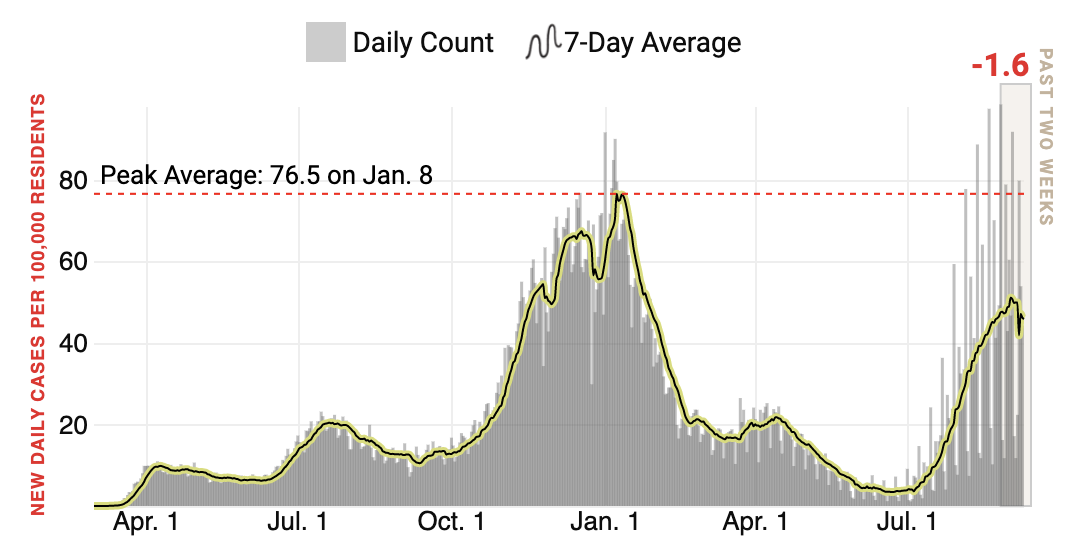
After a heartbreakingly bad summer, the virus’ spread appears to be ebbing, Chris writes. As of today, the U.S. is reporting about 145,000 diagnoses per day—too high for comfort, but at least a modest downward trend from over 160,000 daily cases at the end of August. In many hotspot states, diagnoses are significantly lower than they were a month or two ago.

But kids are now returning to school, cooler weather will force social gatherings indoors and holiday travel season will soon be upon us. With the highly contagious Delta variant now the dominant strain and millions of Americans still unvaccinated, we may be heading for a repeat of last year.

Of course, the situation isn’t exactly the same. More than half the population (and counting) is fully vaccinated, and many other people have at least some level of natural immunity after surviving an infection. That will certainly help keep cases down, but it may not be enough. As Chris points out, seven U.S. states set new daily case records this summer, even with vaccines widely available. As long as there are millions of unvaccinated people in the U.S., the virus will find a way to spread—particularly when it’s as contagious as the Delta variant.

So what can you do? At the risk of sounding like a broken record, the advice is the same as ever: get vaccinated if you haven’t, get your kids vaccinated if they’re old enough, wear masks if you gather with people indoors and stay home if you feel unwell.

President Joe Biden’s announcement Thursday that broadly expanded mandatory COVID-19 vaccinations or at least compulsory weekly testing is a sign, possibly, that the administration sees the writing on the wall. Even with tentative but promising signs that the fourth wave of surging cases in COVID-19 in the United States, dating back to the first days of summer, was waning, without drastic measures, the fifth will be catastrophically worse.

The new requirements are estimated to affect about 100 million people, including most federal workers and a substantial number of private sector employees—many of whom are already vaccinated. This would largely affect working-age residents (age 18-64), who currently number above 200 million, of whom 59.8% are vaccinated, according to TIME’s analysis of daily figures from the U.S. Centers for Disease Control and Prevention. That leaves more than 80 million who remain unvaccinated, though the White House orders will only cover a fraction of them.

The question is now: What happens this fall and winter, when children are at school and Americans once again travel for the holidays? In spite of desperate warnings from the CDC that people stay home for last year’s holiday, they largely did not, which led to the third spike in cases, which reached heights that dwarfed the first two. That doesn’t bode well for Christmas 2021, especially given that, in this current, fourth wave, seven states have already surpassed their previous peaks in cases (with another four doing nearly as poorly):

Within the next several days, we may see a modest surge from travel over the Labor Day weekend, but the real test will come in about two months—still all too soon. The holidays always sneak up on us. Under one possibility, many millions of Americans may be bolstered by a booster shot of the COVID-19 vaccine, though this will be scant protection for those who have yet to receive a first.

Evidence that surging cases could inspire more unvaccinated Americans to change their mind was initially encouraging, but did not extend indefinitely. Should the fourth wave recede considerably, it may take a fifth to convince a significantly greater number.

The number that sticks out

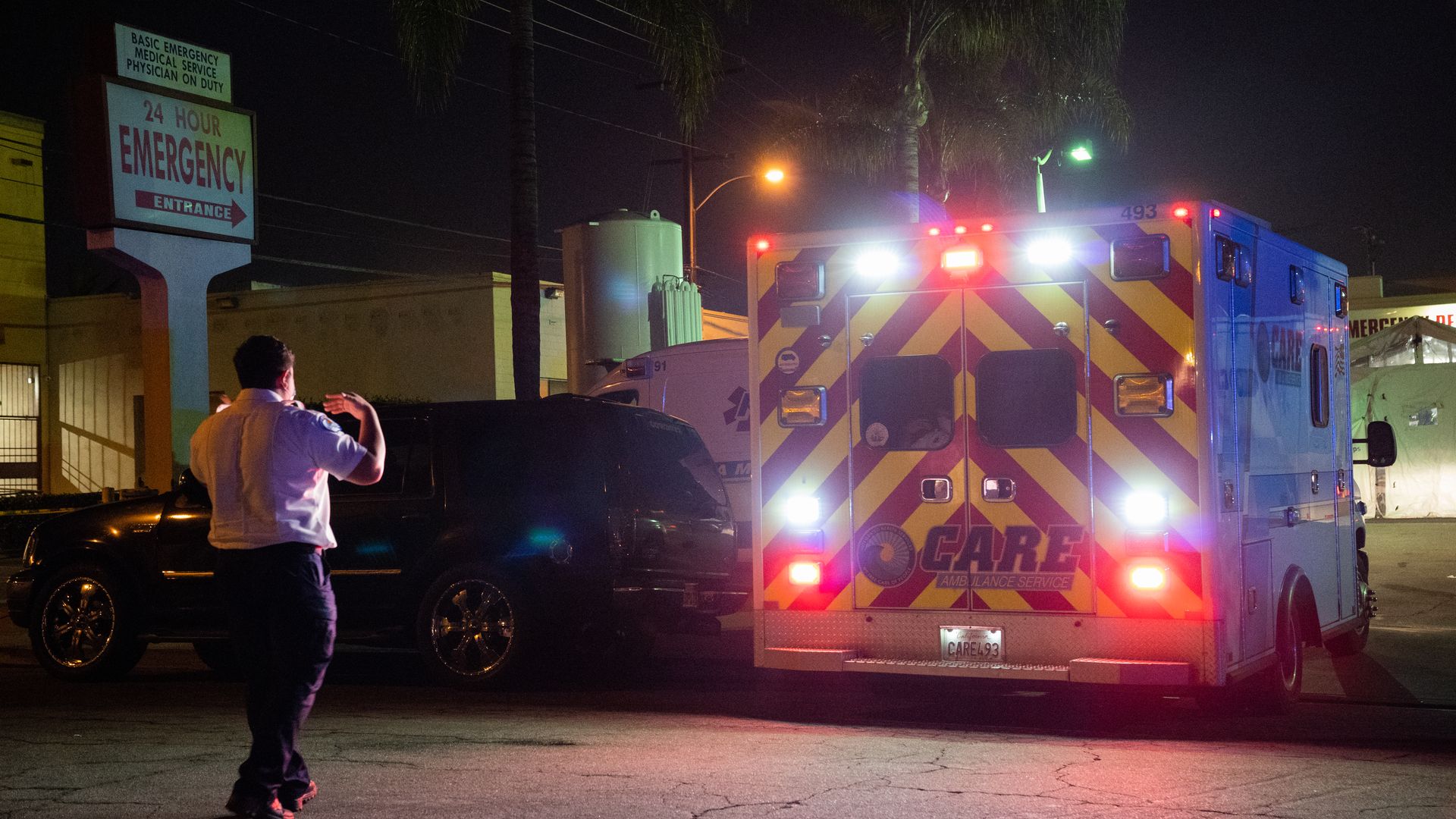
An EMT directs an ambulance outside the emergency room of the East Los Angeles Doctors Hospital.

Not a typo: Unvaccinated people are 11 times more likely to die of COVID than those who’ve gotten the shot, the CDC found.

By the numbers: Of 37,948 hospitalizations in 13 jurisdictions studied between April and July, 2,976 patients— or about 8% — were vaccinated, Axios’ Noah Garfinkel reports.

  • Of 6,748 deaths, 616 — or about 9% — were people who were fully vaccinated.

The three vaccines “showed continued robust protection for all adults — greater than 82 percent — for hospitalization, emergency room and urgent care trips,” The Washington Post reports.

  • Another study found the Moderna vaccine most effective against Delta. But Pfizer and J&J also worked.

20 Years Since 9/11: Why the U.S. Should Vaccinate the World

When will a coronavirus vaccine be ready? | Coronavirus | The Guardian

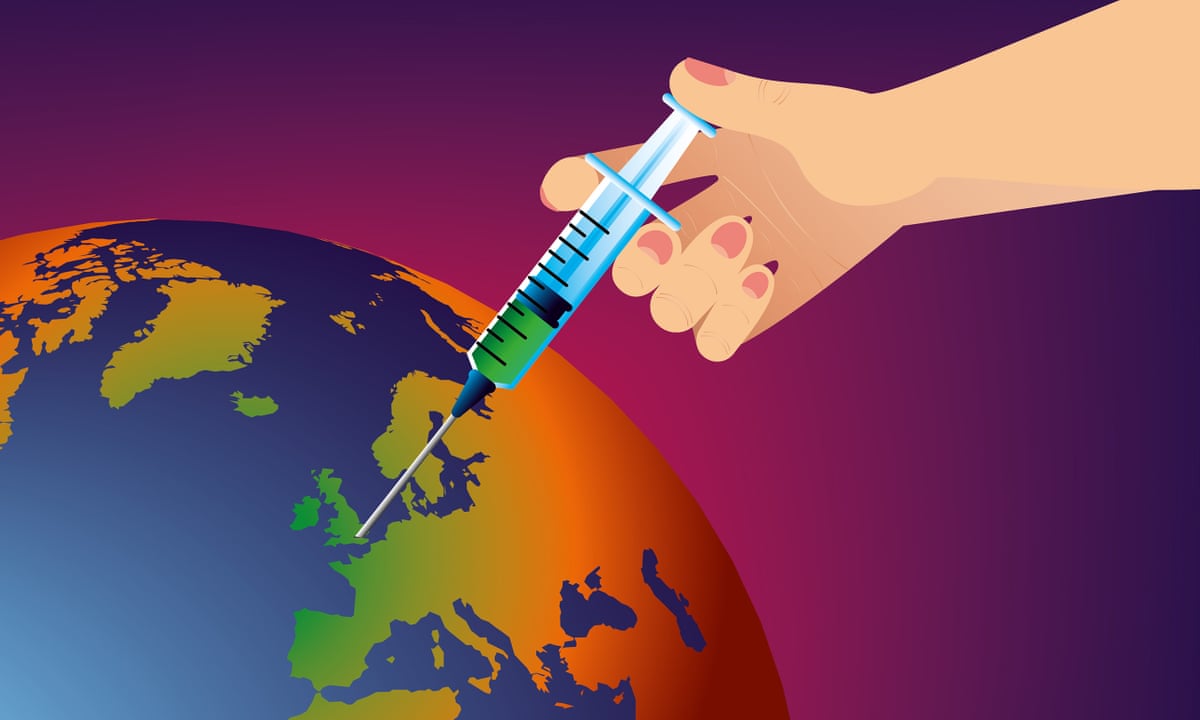
Earlier this week, David States and Bill Gardner argued that the U.S. should lead the developed nations in a program to immunize the entire human population. The Washington Post reported that President Biden is expected to call for a global vaccine summit conference.

David and Bill wrote that we should do this because it would save many lives. Perhaps this is all that needs to be said. We also argued that the U.S. stood to benefit if we could substantially reduce the number of global covid cases. This would reduce U.S. coronavirus exposure and slow the rate of evolution of new coronavirus variants. The economic cost to the U.S. of a more severe pandemic could easily be greater than the cost of making and distributing the vaccine. If so, the global vaccination effort would pay for itself.

There is, however, another moral argument for global vaccination, this one tied to 9/11 and the ensuing global war on terror. Since 9/11, the U.S. has engaged in 20 years of warfare in countries across the world.

The consequences of that war have been catastrophic. According to the Watson Institute at Brown University,

At least 801,000 people have been killed by direct war violence in Iraq, Afghanistan, Syria, Yemen, and Pakistan… The U.S. post-9/11 wars have forcibly displaced at least 38 million people in and from Afghanistan, Iraq, Pakistan, Yemen, Somalia, the Philippines, Libya, and Syria. This number exceeds the total displaced by every war since 1900, except World War II.

Of course, much of that violence was committed by al-Qaeda, ISIS, or the Syrian government. Some of the civil wars that have followed 9/11 might have happened anyway. Nevertheless, Americans failed to limit their 9/11 response to the specific individuals who carried out the attacks. This was a principal cause of the ensuing death and displacements.

So now, the U.S. is known not only for baseball and democracy but also for drone strikes and torture. If we led an effort to vaccinate the world, it would be one of the largest humanitarian actions in history. We should do this to set an example and balance the effects of the global war on terror.

A Delta-driven decline in consumer confidence

https://mailchi.mp/c5fab2515162/the-weekly-gist-august-20-2021?e=d1e747d2d8

After a calmer start to the summer, the Delta variant is eroding consumer confidence as COVID-19 surges across many parts of the US once again. Using the latest data from Morning Consult’s Consumer Confidence Index, the graphic above shows the fluctuations in consumer confidence levels across the last year. 

The most recent COVID surge has caused a five-point drop in confidence in the past month and, with cases still rising, we expect this trend to continue into the fall. Notably, with renewed masking guidance and increasing reports of breakthrough infections, confidence has dropped more among fully vaccinated individuals than among the unvaccinated.

Consumers’ comfort levels aren’t only dropping when it comes to daily activities, like grocery shopping or dining at a restaurant, but also with respect to healthcare. A recent survey from Jarrard Phillips Cate & Hancock finds that while consumers feel safer visiting healthcare settings in August 2021 than they did back in January, more than a third of consumers report the current COVID situation is making them less likely to seek non-emergency care, and 44 percent say they are more likely to pursue virtual care alternatives. 

Health systems must be able to seamlessly “dial up” or “dial down” their virtual care capabilities in order to meet fluctuating consumer demand and avoid another wave of missed or deferred care.

Cartoon – State of the Union (Vaccine Hesitancy)

May be a cartoon of text that says 'JON ADAMS @CITYCYCLOPS "Honey, come look! I've found some information all the world's top scientists and doctors missed."'