Early data on vaccine distribution by race and ethnicity show a mismatch between those population groups receiving the vaccine, and those that have been hardest hit by the pandemic. As the graphic above shows, Black and Hispanic Americans have thus far been vaccinated at considerably lower rates in many states compared to their share of population as a whole—and these disparities are likely to worsen as states shift focus to senior populations for priority access, moving away from prioritizing essential workers, who tend to be more racially diverse.
The White population skews older, which stands to widen disparities in the near-term. Another compounding issue: vaccine hesitancy.
A recent Morning Consult poll found that, despite an overall increase in overall vaccine willingness, Black Americans remain the most hesitant, with only 48 percent willing to get the vaccine.
Meanwhile, Black and Hispanic Americans continue to be disproportionately impacted by COVID, with hospitalization and death rates nearly three to four times greater than those of White Americans.
Hesitancy will become an increasingly urgent problem as larger swathes of the population become eligible for vaccination, especially given that communities of color tend to be younger, as shown above.
The national COVID indicators all continued to move in the right direction this week, with new cases down 16 percent, hospitalizations down 26 percent, and deaths (while still alarmingly high at more than 3,000 per day) down 6 percent from the week prior.
More good news: both nationally and globally, the number of people vaccinated against COVID now exceeds the total number of people infected with the virus, at least according to official statistics—the actual number of coronavirus infections is likely several times higher.
On the vaccine front, Johnson & Johnson filed with the Food and Drug Administration (FDA) for an Emergency Use Authorization for its single-dose COVID vaccine, which could become the third vaccine approved for use in the US following government review later this month. The J&J vaccine is reportedly 85 percent effective at preventing severe COVID disease, although it is less effective at preventing infection than the Pfizer and Moderna shots.
Elsewhere, TheLancet reported interim Phase III results for Russia’s Sputnik V vaccine trials, showing it to be 91 percent effective at preventing infection, and a new study found the Oxford-AstraZeneca vaccine to be 75 percent effective against the more-contagious UK virus variant.
Amid the positive vaccine news, the Biden administration moved to accelerate the vaccination campaign, invoking the Defense Production Act to boost production and initiating shipments directly to retail pharmacies. With the House and Senate starting the budget reconciliation process that could eventually lead to as much as $1.9T in stimulus funding, including billions more for vaccines and testing, it feels as though the tide may be finally turning in the battle against coronavirus.
While the key indicators are still worrisome—we’re only back to Thanksgiving-week levels of new cases—and emerging variants are cause for concern, it’s worth celebrating a week that brought more good news than bad.
Best to follow Dr. Fauci’s advice for this Super Bowl weekend, however: “Just lay low and cool it.”
Over the weekend I realized that my son Henry, born in June 2019, has lived more than half of his life in the pandemic era. He’s too young to be cognizant of it, of course, but my wife and I are acutely conscious of the experiences his older brother had already enjoyed by the time he was Henry’s age, things that are impractical or impossible in the moment.
He’s not alone in that, of course. Most Americans are experiencing some ongoing deprivations because of the pandemic. (Most of those for whom the pandemic is not imposing unusual restrictions are, ironically, probably contributing to the pandemic’s extent and duration.) Just about everyone in the United States is eagerly scanning the horizon for signs of normalcy — as we have been for months, occasionally spotting oases that too often turn out to be mirages.
So when will we return to some semblance of normal? It’s hard to say with certainty. The best tool we have to reach that point, though, is the broad deployment of the vaccines approved for emergency use by the government. But even the existence of those vaccines can’t completely answer the question.
For example, the rate at which the vaccines are deployed makes a massive difference. A pace of 2 million shots per day as opposed to 1 million seems like a subtle distinction but, obviously, means achieving immunity for recipients twice as fast.
What level of immunity is necessary is a question of its own. Do we need 70 percent of the country to have been immunized? Or, as infectious-disease expert Anthony S. Fauci has recently said, is the figure closer to 80 or 85 percent?
When doing this calculation, do you include the 26 million Americans who have already had coronavirus infections? What about young people? The vaccine trials included only those age 16 and over. Those younger have constituted about a 10th of the total infections. And what vaccine are we talking about? The Pfizer and Moderna iterations require two shots; the vaccine from Johnson & Johnson requires only one.
All of these factors affect how we can figure out when the country might hit the herd-immunity mark. If we assume that young people will be included among those needed to be vaccinated — a complicated question on its own — the calculator below will allow you to figure out when immunity might be achieved at various immunization rates.
At this rate, the country would reach 70 percent herd immunity through vaccinations by Nov. 10
How we calculate this: There are about 330 million Americans, meaning that we need 231 million to be resistant to the virus to hit 70 percent immunity. We can take out the 5.8 million Americans who’ve already been vaccinated. That leaves 211.3 million people to be vaccinated.
From there the math is straightforward: doing two-shot vaccinations at a rate of 1.5 million shots per day means it will take 282 days to complete the job.
Bear in mind that sliding the little bar to determine how quickly shots are administered is far easier than actually scaling up the infrastructure to do so. President Biden’s original target for daily vaccinations was 1 million; he recently increased it to 1.5 million. At that rate, we’re still months from resolution. But because administering the vaccine is more complicated and requires more tracking than vaccinations such as that for the seasonal flu, it’s necessarily trickier to scale up.
At this point, the more urgent concern is the efficacy of the vaccine against any variants of the virus that might emerge. Manufacturers have already noted that the vaccine works less well against a virus variant first identified in South Africa, though the vaccines are still broadly effective, particularly at protecting the recipient from severe illness or death after infection.
Well, that and the fact that a fifth of Americans said in a recent Kaiser Family Foundation poll that they won’t get the vaccine or would do so only if it was required. Happily, more Americans are now saying they’re eager to get a vaccine.
The faster we get people immunized, the better we protect against the emergence of new mutations that prove less able to be controlled by the vaccines. The faster we get shots in arms, as the phrasing has it, the faster we get back to normal.
Which would be nice for all of us, including my 1-year-old.
Two members of Congress from Massachusetts have tested positive for the coronavirus, one after receiving both doses of the vaccine, a reminder that people can still be vulnerable to infection after being vaccinated, particularly in the two weeks after receiving the second dose.
Rep. Stephen F. Lynch (D-Mass.) tested positive for the virus on Friday afternoon after a staff member in his Boston office tested positive earlier in the week, his spokeswoman Molly Rose Tarpey said.
Lynch received a second dose of the Pfizer-BioNTech vaccine before the inauguration of President Biden on Jan. 20, but his office declined to specify the date it was administered. Lynch had tested negative for the virus before attending the inaugural ceremonies, Tarpey said.
“While Mr. Lynch remains asymptomatic and feels fine, he will self-quarantine and will vote by proxy in Congress during the coming week,” she said.
Tarpey added that Lynch “has followed CDC guidelines and continues to do so since he received the vaccine.”
Another Democrat from Massachusetts, Rep. Lori Trahan,announced Thursday that she had tested positive for the virus and was asymptomatic. Trahan, whose staff members have been working remotely, also said she planned to vote by proxy next week.
“I encourage everyone to continue taking this virus seriously and to follow the science and data-driven guidance to wear a mask, maintain a safe social distance from others, avoid large gatherings and stay home whenever possible,” Trahan said.
Trahan received her first shot of one of the vaccines last week, spokeswoman Francis Grubar told The Washington Post.
Occasional cases of people testing positive after receiving one or both doses are not unexpected, medical experts say. Clinical trial data published by Pfizer show that the vaccine is about 52 percent effective at preventing illness after the first shot, compared to 95 percent effectiveness seven days after the second dose.
A small number of patients can still become mildly sick even after they are fully vaccinated. But only one of the roughly 20,000 people who received both doses in the clinical trial developed severe covid-19, suggesting the vaccine is powerful protection against the most dangerous cases of the disease.
Members of Congress began getting vaccinated as early as Dec. 18, but Lynch at the time said he was “waiting for the vaccine to be first offered to health care personnel, first responders and vulnerable seniors” in his district, the Boston Herald reported. It is unclear when Lynch ultimately received his first dose of the vaccine; he would have received the second dose of the Pfizer-BioNTech vaccine about three to four weeks after the first.
Public health experts have emphasized that it usually takes one week after the second dose of the Pfizer-BioNTech vaccine to reach 95 percent efficacy and two weeks after the second dose of the Moderna vaccine to reach 94 percent efficacy.
“There’s no vaccine that I know that protects you the same day you get it,” Onyema Ogbuagu, the principal investigator for Pfizer’s vaccine trial at Yale University, told The Post’s Allyson Chiu. “On a population level, 95% efficacy still translates to 5/100, or 50/1,000, or 500/10,000 vaccinated persons still being vulnerable to symptomatic disease and maybe even more having asymptomatic carriage.”
At least 23.2 million people in the United States have received one or both doses of the vaccine. The Centers for Disease Control and Prevention recommends that vaccinated people continue to wear masks, socially distance, avoid poorly ventilated spaces and wash their hands frequently to prevent the spread of the virus.
“We also don’t yet know whether getting a covid-19 vaccine will prevent you from spreading the virus that causes covid-19 to other people, even if you don’t get sick yourself,” CDC guidelines state. “While experts learn more about the protection that covid-19 vaccines provide under real-life conditions, it will be important for everyone to continue using all the tools available to help stop this pandemic.”
Mask-wearing in particular has become politicized, including in the hallways of Congress. After the Jan. 6 siege at the Capitol, several Democrats said they feared they had been exposed to the virus after sheltering with Republican lawmakers who refused to wear masks. In the following, at least three lawmakers tested positive for the virus.
On Friday, Rep. Cori Bush (D-Mo.) accused Rep. Marjorie Taylor Greene (R-Ga.) of berating her in the hallways after she told Greene to put on a mask. The incident, coupled with other hostile rhetoric and Greene’s refusal to abide by rules and protocols put in place because of the pandemic, prompted Bush to decide to move her office away from Greene’s for safety reasons, the Missouri lawmaker said.
The Johnson & Johnson coronavirus vaccine prevented 100% of hospitalizations and deaths in clinical trials, the company said today.
Why it matters:The single-dose vaccine could speed up the vaccinations of America’s vulnerable populations, as new variants spread.
By the numbers:
Overall: 66% effective in preventing moderate to severe COVID in nearly 44,000 participants in Phase 3 trials across eight countries.
In the U.S.: 72% effective.
In South Africa, home of a more aggressive variant: 57% effective.
What they’re saying:
Former CDC director Tom Frieden on the Axios Re:Cap podcast: “It has a lot of advantages, easier to store, easier to make.”
Former FDA commissioner Scott Gottlieb: “The J&J vaccine turns in a fantastic result. We now have three highly effective vaccines. This vaccine showed sustained (and increasing!) immune protection over time, perhaps from a robust early induction of memory immune cells (CD4 and CD8).”
What’s next:J&J is expected to apply for an emergency use authorization next week, the N.Y. Times reports.
“Federal regulators are also still waiting on data from Johnson & Johnson’s new manufacturing facility in Baltimore that prove it can mass-produce the vaccine. The company is counting on that factory to help reach its contractual pledge to the federal government of 100 million doses by the end of June.”
Johnson & Johnson announced Friday that its single-shot coronavirus vaccine was 66% effective in protecting against moderate to severe COVID-19 disease in Phase 3 trials, which was comprised of nearly 44,000 participants across eight countries.
Between the lines: The vaccine was 72% effective in the U.S., but only 57% effective in South Africa, where a more contagious variant has been spreading. It prevented 85% of severe infections and 100% of hospitalizations and deaths, according to the company.
The big picture: The vaccine is not as effective as some of its two-dose competitors, but still provides strong protection against the most serious COVID-19 symptoms.
J&J’s vaccine, which results in development of neutralizing antibodies, is long-lasting and doesn’t require freezing like Moderna and Pfizer-BioNTech’s shots,per Bloomberg. The vaccine can be stored at refrigerator temperatures for three months.
The company said it will file for emergency use authorization from the FDA within a week. The U.S. has purchased 100 million vaccine doses from J&J.
What they’re saying: “The J&J vaccine turns in a fantastic result. We now have 3 highly effective vaccines. This vaccine showed sustained (and increasing!) immune protection over time, perhaps from a robust early induction of memory immune cells (CD4 and CD8),” tweeted former FDA commissioner Scott Gottlieb.
“This one shot vaccine was highly effective at preventing severe disease, even with new variants. The milieu of disease now is more complex; even in U.S. – trials done today are running into more mutated cases. Make no mistake: this is an important and wonderful development.”
Welcome to COVID Questions, TIME’s advice column. We’re trying to make living through the pandemic a little easier, with expert-backed answers to your toughest coronavirus-related dilemmas. While we can’t and don’t offer medical advice—those questions should go to your doctor—we hope this column will help you sort through this stressful and confusing time. Got a question? Write to us at covidquestions@time.com.
Today, E.B. in New York asks:
My parents and in-laws will hopefully be vaccinated soon. My husband and toddler and I don’t expect to be vaccinated for quite some time. How should we think about whether it’s safe to spend time together in a mixed-vaccinated group? Could they get on a plane and fly to visit with us unmasked and indoors? Or is there enough risk that we should wait until we are all vaccinated (which may be a very long time especially with children in the mix)? Or split the difference and take some precautions?
To state the obvious, we are in a strange limbo state right now. The vaccines we’ve eagerly awaited for almost a year are here, and yet…nothing about our daily lives has really changed. Unfortunately, that’s going to be the case for a bit longer.
“The end is in sight,” says Dr. Colleen Kelley, a vaccine researcher and associate professor of infectious diseases at the Emory University School of Medicine in Georgia. “I just don’t know that it’s right now.”
Your loved ones getting vaccinated is unequivocally a step forward, Kelley says. It would certainly be safer to visit with your parents or in-laws after they’ve gotten both vaccine doses, but the safest plan is to wait until you and your husband are also vaccinated, she says.
The two coronavirus vaccines currently authorized for use in the U.S.—those made by Pfizer-BioNTech and Moderna—are both extremely effective at preventing people from getting sick with COVID-19. That’s a huge benefit on its own, especially for people at high risk of severe illness, such as elderly adults and people with underlying medical conditions.
But the outstanding question is whether COVID-19 vaccines also stop people from getting asymptomatically infected with the virus. Early evidence suggestsboth shots offer at least some protection against asymptomatic infection, and many experts are optimistic about their chances of stopping transmission, but the data are still coming together.
If the shots turn out not to stop asymptomatic infections entirely, even your vaccinated parents could feasibly get your family sick if they picked something up while traveling to see you. Or, if you happened to be exposed to the virus, your parents could potentially carry it and pass it to others. And, while the authorized COVID-19 vaccines are very effective, there is always a tiny chance of them failing, leaving your parents at risk of illness.
These are all worst-case scenarios, of course. But given the uncertainty and the extent to which COVID-19 is still spreading in the U.S., Kelley says you should wait a little while longer to visit with your parents and in-laws. If that’s not possible, you should take the same precautions you’ve been hearing about for a year: quarantining beforehand, and ideally staying outdoors and masked when possible.
Here’s the good news, though. Once you and your husband are fully vaccinated (along with more of the general population), Kelley says you can feel much better about spending time with other vaccinated people indoors and unmasked—even if your toddler isn’t yet vaccinated.
As you suggest, it may be a while before kids younger than 16 are eligible for COVID-19 vaccination, since pharmaceutical companies haven’t yet finished testing their shots on younger children. But “if the toddler is the only one who’s not vaccinated, I would say that’s a pretty darn safe scenario,” Kelley says.
Luckily, young kids rarely get seriously ill with COVID-19, so once all the adults in the room are fully protected, Kelley says you can feel pretty comfortable with your parents or in-laws coming for a visit.
“We’re not going to get to a zero-risk situation,” Kelley says, “but we are going to get to places that are safer and safer.”
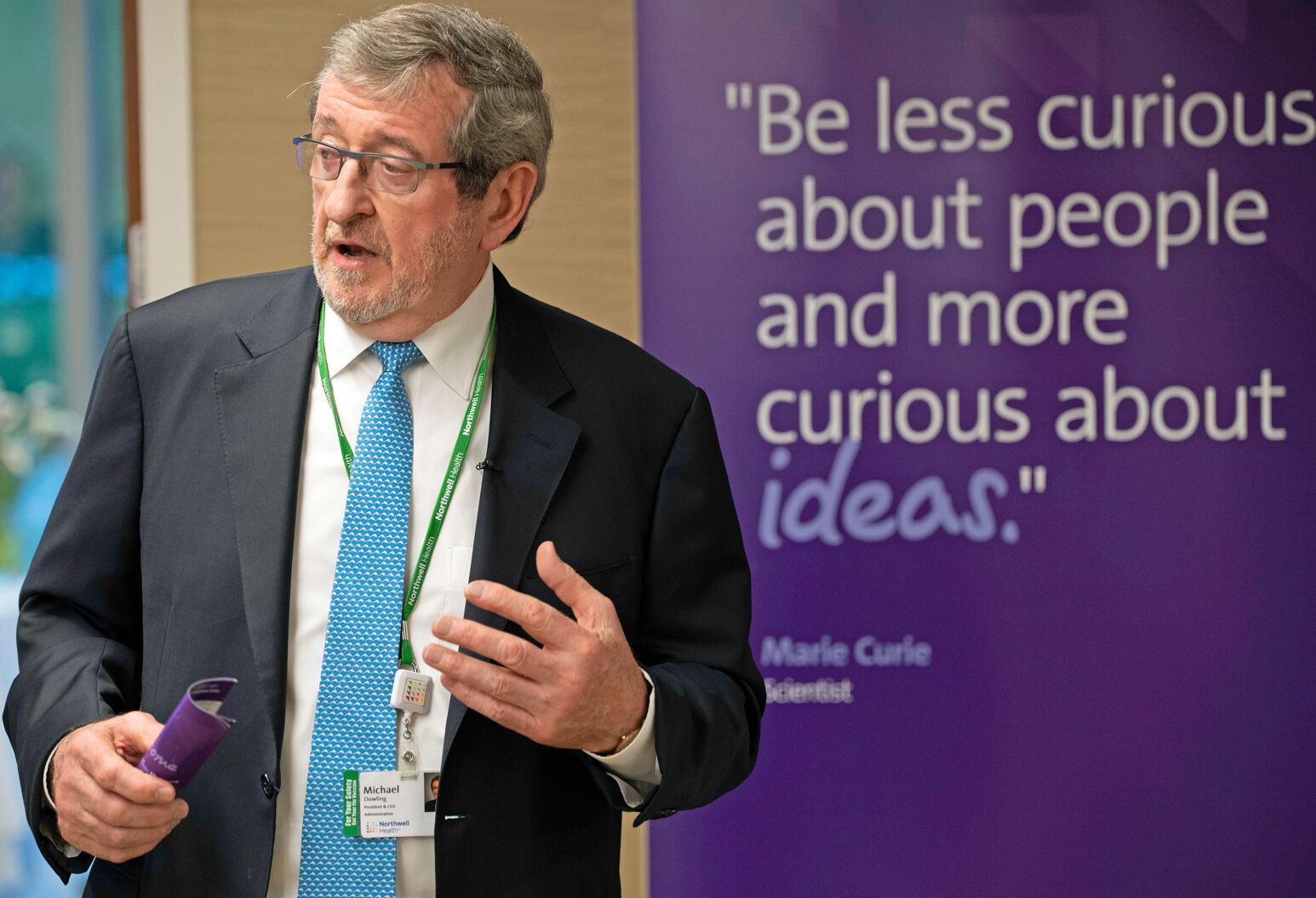
Hardly one month into 2021, the pressing priorities facing healthcare leaders are abundantly clear.
First, we will be living in a world preoccupied by COVID-19 and vaccination for many months to come. Remember: this is a marathon, not a sprint. And the stark reality is that the vaccination rollout will continue well into the summer, if not longer, while at the same time we continue to care for hundreds of thousands of Americans sickened by the virus. Despite the challenges we face now and in the coming months in treating the disease and vaccinating a U.S. population of 330 million, none of us should doubt that we will prevail. Despite the federal government’s missteps over the past year in managing and responding to this unprecedented public health crisis, historians will recognize the critical role of the nation’s healthcare community in enabling us to conquer this once-in-a-generation pandemic.
While there has been an overwhelming public demand for the vaccine during the past couple of weeks, there remains some skepticism within the communities we serve, including some of the most-vulnerable populations, so healthcare leaders will find themselves spending time and energy communicating the safety and efficacy of vaccines to those who may be hesitant. This is a good thing. It is our responsibility to share facts, further public education and influence public policy.COVID-19 has enhanced public trust in healthcare professionals, and we can maintain that trust if we keep our focus on the right things — namely, how we improve the health of our communities.
And as healthcare leaders diligently balance this work, we also have a great opportunity to reimagine what our hospitals and health systems can be as we emerge from the most trying year of our professional lifetimes. How do you want your hospital or system organized? What kind of structural changes are needed to achieve the desired results? What do you really want to focus on? Amid the pressing priorities and urgent decision-making needed to survive, it is easy to overlook the great reimagination period in front of us. The key is to forget what we were like before COVID-19 and reflect upon what we want to be after.
These changes won’t occur overnight. We’ll need patience, but here are my thoughts on five key questions we need to answer to get the right results.
1. How do you enhance productivity and become more efficient? Throughout 2021, most systems will be in recovery mode from COVID’s financial bruises. Hospitals saw double-digit declines in inpatient and outpatient volumes in 2020, and total losses for hospitals and health systems nationwide were estimated to total at least $323 billion. While federal relief offset some of our losses, most of us still took a major financial hit. As we move forward, we must reorganize to operate as efficiently as possible. Does reorganization sound daunting? If so, remember the amount of reorganization we mustered to work effectively in the early days of the pandemic. When faced with no alternative, healthcare moved heaven and earth to fulfill its mission. Crises bring with them great clarity. It’s up to leaders to keep that clarity as this tragic, exhausting and frustrating crisis gradually fades.
2. How do you accelerate digital care? COVID-19 changed our relationship with technology, personally and professionally. Look at what we accomplished and how connected we remain. We were reminded of how high-quality healthcare can go unhindered by distance, commutes and travel constraints with the right technology and telehealth programs in place. Health system leaders must decide how much of their business can be accommodated through virtual care so their organizations can best offer convenience while increasing access. Oftentimes, these conversations don’t get far before confronting doubts about reimbursement. Remember, policy change must happen before reimbursement catches up. If you wait for reimbursement before implementing progressive telehealth initiatives, you’ll fall behind.
3. How will your organization confront healthcare inequities? In 2020, I pledged that Northwell would redouble its efforts and remain a leader in diversity and inclusion. I am taking this commitment further this year and, with the strength of our diverse workforce, will address healthcare inequities in our surrounding communities head-on. This requires new partnerships, operational changes and renewed commitments from our workforce. We need to look upstream and strengthen our reach into communities that have disparate access to healthcare, education and resources. We must push harder to transcend language barriers, and we need our physicians and medical professionals of color reinforcing key healthcare messages to the diverse communities we serve. COVID-19’s devastating effect on communities of color laid bare long-standing healthcare inequalities. They are no longer an ugly backdrop of American healthcare, but the central plot point that we can change. If more equitable healthcare is not a top priority, you may want to reconsider your mission. We need leaders whose vision, commitment and courage match this moment and the unmistakable challenge in front of us.
4. How will you accommodate the growing portion of your workforce that will be remote?Ten to 15 percent of Northwell’s workforce will continue to work remotely this year. In the past, some managers may have correlated remote work and teams with a decline in productivity. The past year defied that assumption. Leaders now face decisions about what groups can function remotely, what groups must return on-site, and how those who continue to work from afar are overseen and managed. These decisions will affect your organizations’ culture, communications, real estate strategy and more.
5. How do you vigorously hold onto your cultural values amid all of this change? This will remain a test through 2021 and beyond. Culture is the personality of your organization. Like many health systems and hospitals, much of Northwell’s culture of connectedness, awareness, respect and empathy was built through face-to-face interaction and relationships where we continually reinforced the organization’s mission, vision and values. With so many employees now working remotely, how can we continue to bring out the best in all of our people? We will work to answer that question every day. The work you put in to restore, strengthen and revitalize your culture this year will go a long way toward cementing how your employees, patients and community come to see your organization for years to come. Don’t underestimate the power of these seemingly simple decisions.
While we’ve been through hell and back over the past year, I’m convinced that the healthcare community can continue to strengthen the public trust and admiration we’ve built during this pandemic. However, as we slowly round the corner on COVID-19, our future success will hinge on what we as healthcare organizations do now to confront the questions above and others head-on. It won’t be quick or easy and progress will be a jagged line. Let’s resist the temptation to return to what healthcare was and instead work toward building what healthcare can be. After the crisis of a lifetime, here’s our opportunity of a lifetime. We can all be part of it.





 HENRY KOTULA