Supreme Court Will Hear First Major Abortion Case Since Two Trump Appointees Joined

https://www.wsj.com/articles/supreme-court-will-hear-first-major-abortion-case-since-two-trump-appointees-joined-11583192925?mod=hp_lista_pos2

Image result for Supreme Court Will Hear First Major Abortion Case Since Two Trump Appointees Joined

Case will test new conservative makeup’s approach to precedent.

The Supreme Court hears its first major abortion case Wednesday since two Trump nominees joined the bench, potentially signalling whether—and how much——reproductive rights may change under a bolstered conservative majority.

“There’s a lot on the line in this case, and more than most people realize,” said Mary Ziegler, a law professor at Florida State University and author of the forthcoming book “Abortion and the Law in America.”

Most prominently, the case involves the Supreme Court’s approach to precedent, since it largely is a replay of an issue the court decided in 2016, when by a 5-3 vote it struck down a Texas law requiring that abortion providers obtain admitting privileges at a nearby hospital.

The case also tests the strategy for antiabortion forces, who have been divided over the best way to roll back court precedents recognizing women’s constitutional right to end pregnancy. While some advocates seek to reverse outright Roe v. Wade, the 1973 decision recognizing abortion rights, others believe a more prudent approach is to carve away at the precedent through increasingly restrictive regulations that would spare the Supreme Court the controversy of directly overruling a landmark case.

The law in question, known as the Louisiana Unsafe Abortion Protection Act, isn’t based on a state policy to protect potential life, an interest that the Supreme Court has recognized as valid justification for some abortion restrictions.

Instead, it is based on the argument that abortion itself can be harmful to women, and that restricting access to the procedure therefore is beneficial to women. For that reason, the state’s brief contends that abortion providers shouldn’t be permitted to challenge the law on behalf of their patients, arguing that “a serious conflict of interest” exists between them and Louisiana’s women.

In striking down the Texas law in 2016, the court found the admitting-privilege requirement provided no health benefits to women while forcing many of the state’s abortion clinics to close.

The opinion, by Justice Stephen Breyer, cited evidence that admitting privileges do little to ensure continuity of care, as the state maintained, because when abortion has complications, they generally arise not at the clinic but days after the procedure, when the patient would visit her regular physician or local hospital. The court also observed that hospital admitting privileges aren’t a general credential but are granted for other purposes, such a doctor’s ability to bring in patients for treatment.

Statistically, however, only a tiny number of women require hospitalization after abortion, the court said. “In a word, doctors would be unable to maintain admitting privileges or obtain those privileges for the future, because the fact that abortions are so safe meant that providers were unlikely to have any patients to admit,” Justice Breyer wrote.

But that decision, Whole Woman’s Health v. Hellerstedt, hinged on since-retired Justice Anthony Kennedy, a maverick conservative who joined more liberal justices in the majority. With the late Justice Antonin Scalia’s seat vacant, three conservatives dissented, contending that the majority skirted procedural rules to throw out the Texas law.

President Trump, who appointed Justice Brett Kavanaugh to the vacancy, had as a candidate predicted his Supreme Court picks would vote to overrule Roe v. Wade.

In September 2018, three months after Justice Kennedy’s retirement, the Fifth U.S. Circuit Court of Appeals, in New Orleans, upheld a Louisiana admitting-privileges law that critics argue is identical to the Texas measure struck down two years earlier. The appellate court found the Louisiana Unsafe Abortion Protection Act wouldn’t burden abortion rights in Louisiana to the degree the Texas law did in its state.

An abortion clinic in Shreveport, La., June Medical Services LLC, and three doctors who perform the procedure appealed to the Supreme Court.

That puts the spotlight particularly on Justice Kavanaugh, whose remarks and writings, which have praised the dissent in Roe and supported a Trump administration policy to prevent an underage illegal immigrant from obtaining an abortion, have given hope to abortion opponents.

However, the focus may equally fall on Chief Justice John Roberts, who typically has voted against abortion-rights positions in Supreme Court cases—but he also has stressed an institutional interest in distinguishing the courts from political bodies, where outcomes on legislation can swing wildly based on the latest election results. For that reason, he may be hesitant to overrule even a decision he opposed simply because Justice Kennedy’s retirement presents an opportunity.

In February 2019, he joined the court’s liberal wing to block implementation of the Louisiana law while the appeal proceeded; four other conservatives dissented, although Justice Kavanaugh appended a statement suggesting he was taking a middle ground. He said he wasn’t persuaded that the Louisiana doctors had fully explored opportunities to obtain hospital-admitting privileges.

Should a frontal assault on recent precedent alienate the chief justice or another conservative justice, it probably would end prospects for similar admitting-privilege laws.

But the door could remain open for other abortion restrictions that aren’t covered by existing precedent, particularly if the court signals a readiness to pare back the ability of abortion providers to challenge regulations, or suggests it is more inclined to defer to legislative judgments regarding the safety of abortions rather than evidence, such as scientific research or the views of the medical profession, presented at trial court.

 

Senators demand Cigna, Optum turn over documents on insulin prices

https://www.fiercehealthcare.com/payer/senators-demand-cigna-optum-turn-over-documents-insulin-prices-deliver-subpoena-threat?utm_medium=nl&utm_source=internal&mrkid=959610&mkt_tok=eyJpIjoiWm1Rd1kyVTNaVFl6WWpoayIsInQiOiJcL0ZDakZBUCtJWXhjNXBxUzVPRytqNUZBOU04ODlOU1I2ZFZyQ3ROcUo4eWoxckNMS2JsMVFBV1F6MEtHVkJZSVhZdWJQV2hoMVVTalwveTFnNUJYeFR6N3ZxaVZTUTNWVzI1UkMyQzh5MUxISUJaYm9KSEdYNlgyZVYyd0Q4Q0lvIn0%3D

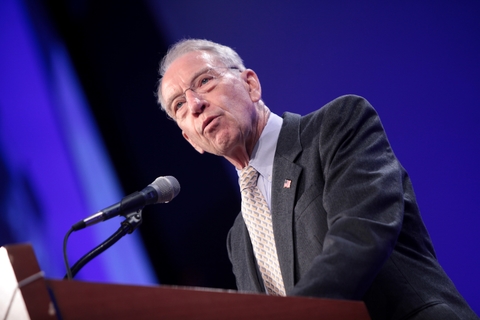
Chuck Grassley

Sen. Chuck Grassley, R-Iowa, and Ron Wyden, D-Ore., are demanding Optum and Express Scripts turn over documents on how they determine insulin prices.

Leaders of the Senate Finance Committee demanded Cigna and Optum produce critical documents over the pricing of insulin, with a subpoena threat looming.

Cigna failed to produce any documents related to the committee’s request back in April 2019 and Optum didn’t produce essential documents, according to letters to both companies sent earlier this week by committee leaders. The documents would relate to the actions of pharmacy benefit managers such as Cigna’s Express Scripts on the rising costs of insulin.

“Cigna’s unwillingness to provide the documents we requested fits an industry-wide pattern of fighting efforts to shed light on PBMs’ practices,” the letter (PDF) to the insurer read.

Sens. Chuck Grassley, R-Iowa, and Ron Wyden, D-Ore., the committee’s chairman and ranking member respectively, wrote that Cigna’s failure to comply has “reached an endpoint.” The insurer has until March 10 to provide more information or face a subpoena.

UnitedHealth Group’s Optum did produce thousands of pages for the committee, but a majority of them were irrelevant, already publicly available or duplicative.

“For example, Optum has produced more than 4,000 pages of publicly available formulary information guides and internal formulary drug lists that contain virtually no information related to the insulin therapeutic class,” the senators’ letter (PDF) to Optum said.

The original request for documentation had called for internal communications that would help the committee understand how Optum made decisions on “the out-of-pocket price patients pay for their insulin,” the letter said.

Grassley and Wyden launched the investigation last February into the price of insulin, which has increased up to 500%. The senators sent letters to leading insulin manufacturers Eli Lilly, Novo Nordisk and Sanofi regarding the spike.

The senators also wanted to learn the process used for negotiations and agreements between PBMs and large plans on patient cost-sharing.

Cigna-Express Scripts said that it takes the committee’s inquiry “very seriously and have been engaged with them on this request. We are committed to being cooperative.”

Optum said that it share’s the committee’s concens regarding the high prices for insulin set by manufacturers.

“We have provided thousands of pages of documents in response to the committee’s request, and will continue to work with them on this important issue,” the company said.


Majority of hospitals not meeting minimum volumes for high-risk surgeries, Leapfrog says

https://www.fiercehealthcare.com/hospitals-health-systems/leapfrog-surgical-study?mkt_tok=eyJpIjoiWm1Rd1kyVTNaVFl6WWpoayIsInQiOiJcL0ZDakZBUCtJWXhjNXBxUzVPRytqNUZBOU04ODlOU1I2ZFZyQ3ROcUo4eWoxckNMS2JsMVFBV1F6MEtHVkJZSVhZdWJQV2hoMVVTalwveTFnNUJYeFR6N3ZxaVZTUTNWVzI1UkMyQzh5MUxISUJaYm9KSEdYNlgyZVYyd0Q4Q0lvIn0%3D&mrkid=959610

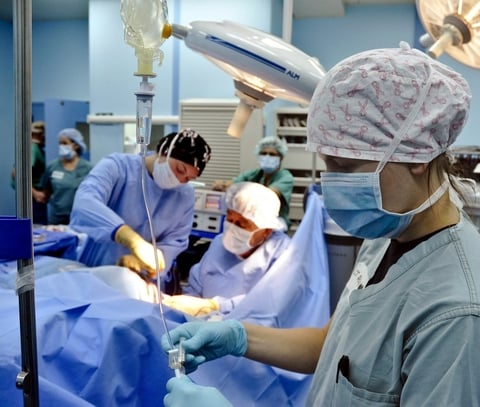
medical surgery

The majority of hospitals are electively performing high-risk surgical procedures without sufficient ongoing experience to safely do so, according to a new report.

The report from The Leapfrog Group, an independent hospital safety watchdog group, looked specifically at surgical volumes. The report, which relied on final hospital data from the 2019 Leapfrog Hospital Survey that had responses from more than 2,100 hospitals, also looked at the minimum standards those hospitals require surgeons to meet in order to gain privileges.

They were looking specifically at the safety of eight high-risk procedures identified by an expert panel as having a “strong volume-outcome relationship.” The report also looks at whether hospitals are working to make sure every surgery is necessary. 

According to the report, an increasing number of hospitals are meeting minimum volume standards if they perform high-risk hospitals. The majority of rural hospitals opt out of performing the high-risk surgeries because they can’t meet the volume standards. Further, more hospitals are implementing protocols to monitor for appropriateness of surgeries.

“The good news is we are seeing progress on surgical safety. The bad news is the vast majority of hospitals performing these high-risk procedures are not meeting clear volume standards for safety,” said Leah Binder, president and CEO of The Leapfrog Group, in a statement. “This is very disturbing, as a mountain of studies show us that patient risk of complications or death is dramatically higher in low-volume operating rooms.”

For instance, the report suggested hospitals should be performing a minimum of 20 esophageal resections for cancer and a minimum of 20 pancreatic resections for cancer to improve the odds of a safer surgery for their patients. Surgeons should perform at least seven and 10 of those procedures a year, respectively, to gain privileges.

But for those two procedures, only 3% and 8% of hospitals met the volume standards for patient safety, the report found.

Hospitals were most likely to meet the safety standard of a minimum of 50 procedures a year for the hospital and 20 procedures a year for bariatric surgery for weight loss. More than 48% reported meeting that standard in 2019, up from 38% in 2018.

The survey found more than 70% of reporting hospitals have protocols to ensure appropriateness for cancer procedures.

But for other high-risk procedures evaluated such as open-heart surgeries or mitral valve repair and replacement, hospital compliance with ensuring appropriateness dropped to a range of 32% to 60%, depending on the procedure.


Kaufman Hall: Hospital revenue, margins improved in 2019, but warning signs ahead

https://www.healthcaredive.com/news/kaufman-hall-hospital-revenue-margins-improved-in-2019-but-warning-signs/573192/

Dive Brief:

  • U.S. hospital finances experienced a comparatively strong 2019, according to Kaufman Hall’s 2019 Year In Review Flash Hospital Report, which labeled the performance as “cautiously optimistic.”
  • While revenue and margins increased for the hospitals surveyed, inpatient volumes were weaker and more uneven.
  • The report from the management consultancy and data provider did unearth some potential warning signs for 2020, including a trend in rising expenses. The report also warned of a slowing economy and the potential economic impact from the coronavirus.

Dive Insight:

Hospitals are complex, high-volume and low-margin enterprises that often experience operational volatility. The latest report by Kaufman Hall confirmed the uneasy environment in which they operate.

Operating earnings were up 2% in 2019 compared to the prior year, and overall operating margin was up 7.4%. That was driven primarily by small bumps in revenue and patient volume. Net patient revenue per adjusted discharge rose 3.7%, and was up 1.5% per adjusted patient day.

Yet both pre-tax and overall operating margin were down 1.7% and 0.3%, respectively, when hospital budget forecasts were factored in. However, that drop was all attributable to hospitals in the Northeastern U.S.

Nevertheless, overall margins fell into the red in August and November, although they rebounded strongly in December, up 20% in that month compared to December 2018.

However, cost pressures were significant. Total expenses per adjusted discharge were up 3.4%, while labor expenses rose 2.6%. Non-labor expenses per adjusted discharge was up 4%. Adjusted discharges themselves were up only 0.7%, and showed year-over-year declines not only for the first quarter of 2019 but in June, August and November. And overall discharges declined among hospitals compared to budget forecasts in the Midwest and Northeast, down nearly 6% and 4%, respectively. Adjusted patient days were up 2.5%, although the average length of stay rose 1.9%.

While operating room minutes were up 2.2%, they were 0.3% below budget forecasts. Emergency department visits were down 0.4% compared to 2018, and were a full percentage point below forecasts.

“While it was good to see improvements in many financial areas, the long-term trendlines indicate that this is not a time for the C-suite to relax,” said Kaufman Hall Managing Director Jim Blake.

“These modest gains were made during a time when the economy was strong, unemployment was historically low, and government regulations favored business. There also were no existential health threats, such as the COVID-19 coronavirus outbreak nor the risks that come any time there is a national election,” Blake continued.


FTC to block Philadelphia area health system merger in 1st big hospital challenge in 3 years

https://www.healthcaredive.com/news/ftc-to-block-philadelphia-area-health-system-merger-in-1st-big-hospital-cha/573165/

Dive Brief:

  • The Federal Trade Commission has moved to block the proposed merger between two nonprofit Pennsylvania health systems over anticompetitive concerns in its first challenge to hospital M&A in more than three years.
  • Jefferson Health and Albert Einstein Healthcare Network both provide inpatient general acute care and inpatient acute rehabilitation services in Philadelphia County and Montgomery County. A marriage between the two systems, which agreed to definitively merge in September 2018, would harm patients because the two systems would no longer compete for patients and for inclusion in payer networks, the FTC says.
  • Jefferson and Einstein defended the deal Thursday in a joint statement provided to Healthcare Dive, saying they remain “confident our merger will result in continued high-quality care for our consumers.”

Dive Insight:

FTC Commissioner Christine Wilson has pledged to be tougher on hospital deals in 2020, including reviewing previously closed deals to see if they’ve delivered on promised cost and quality metrics. The last time the FTC questioned a major hospital merger was in 2016, when it urged Virginia and Tennessee not to approve the union of large operators Mountain States Health Alliance and Wellmont. The push was unsuccessful, and the two coalesced into rural system Ballad Health.

The deal, first announced in March 2018, has stagnated over the past two years as it was scrutinized by regulators at the FTC and Pennsylvania Attorney General Josh Shapiro.

“This merger would eliminate the competitive pressure that has driven quality improvements and lowered rates,” Ian Conner, Director of the FTC’s Bureau of Competition, said in a statement. The rivalry between the two nonprofit players for market dominance has resulted in upgraded medical facilities and technological investments, but that progress could stall if Jefferson and Albert Einstein combined, FTC said.

Jefferson and Einstein boast a combined roughly $5.9 billion in annual revenue, along with 18 hospitals, more than 50 outpatient and urgent care centers and a handful of rehab and post-acute facilities. Jefferson, the bigger player, has 14 hospitals across South Jersey and Philadelphia, Montgomery and Bucks counties.

The regulators said they will soon file a formal complaint in the U.S. District Court for the Eastern District of Pennsylvania.

The complaint alleges that as a result of the merger, Jefferson and Einstein would control at least 60% of the inpatient general acute care services market in North Philadelphia, and 45% in Montgomery. That includes services like medical or surgical diagnostics and treatments requiring an overnight stay.

Jefferson and Einstein manage six of the eight inpatient rehab facilities for recovering from serious, acute conditions in the Philadelphia region, and would control at least 70% of that market if combined.

The hospitals said their marriage represents a “creative effort” to increase access at a time when safety net hospitals are struggling.

“We believe we have presented a strong and comprehensive case as to how the merger would benefit the patients we serve and advance our academic mission without reducing competition for healthcare services,” the systems, which have had an academic partnership for more than two decades, said.

Several studies have debunked theories that bigger is better in terms of quality of care when it comes to health systems.

FTC plans to seek a temporary restraining order and preliminary injunction to prevent Jefferson and Albert Einstein from consummating the merger pending an administrative trial scheduled to being in September this year.