In today’s issue:Hospitals are facing simultaneous payment cuts, new oversight and transparency proposals as policymakers look to rein in health care spendingDemocrats are making the GOP’s tax-and-spending law a centerpiece of their midterm messaging as Republicans pivot to selling its tax cutsA federal judge temporarily blocked Colorado’s first-in-the-nation prescription drug payment cap, handing Amgen an early win… and more.Happy Monday, and welcome back to Health Brief. Hope everyone had a relaxing holiday! Congress isn’t here this week, but the health policy world is showing no signs of slowing down. So let’s get into it. What do you have on your radar?
Speaking of the $900 billion in impending cuts to Medicaid: The One Big Beautiful Bill Act was supposed to be a crowning legislative achievement for Republicans to tout while campaigning in the midterm elections. Among other things: It prevented massive tax increases for most Americans and established a program that allows parents to open investment accounts for children born during President Donald Trump’s second term and receive $1,000 from the government. But the legislation has emerged as a central talking point for the Democratic Party, with congressional Democrats mentioning the law twice as often as Republicans, report Matthew Choi and Clara Ence Morse in The Washington Post newsroom. Democratic candidates are deriding it as the “Big Ugly Bill” and linking the changes it brought to Medicaid and food assistance programs to voters’ anxieties about the cost of living. Republicans, meanwhile, have largely retreated from talking about the law by name, instead opting to emphasize the tax savings and other proposals. Democrats assert that the shift is a sign of the Republican Party’s acknowledgment of the law’s low overall approval. “I don’t care what you call it. It’s what delivers for America,” House Republican Conference Chair Lisa McClain (Michigan) told my colleagues.
Read the full story: “Democrats invoke ‘big, beautiful bill’ far more than Republicans as midterms near. ”INDUSTRY RXA federal judge temporarily blocked Colorado from enforcing a state-set payment cap on a pricey medication for autoimmune disorders called Enbrel, siding with Amgen, the company that makes it, while the lawsuit moves forward. The case centers on whether Colorado’s Prescription Drug Affordability Review Board has the authority to limit what can be reimbursed for a patented drug. The board had determined that Enbrel was unaffordable and set a maximum payment level at roughly 70 percent below Amgen’s wholesale price. The judge found that Amgen is likely to win because an earlier federal appeals court ruling says states cannot impose price caps on patented drugs if doing so conflicts with federal patent law. The court said Congress — not individual states — gets to decide how to balance affordable drug prices with the financial incentives that patents provide for developing new medicines. The judge also agreed that Amgen could suffer “significant harm” if the cap took effect, including weaker negotiating power with wholesalers and contracts that would be difficult to undo later. It rejected the state’s claims that any harm was balanced by carveouts in the law, such as the payment limit applying to employer-based plans. “This is an argument about the scope of damages, not their existence,” the judge wrote.
Why it matters: States across the country have been setting up their own Prescription Drug Affordability Boards (PDABs) in an effort to try and rein in drug costs. Some act as advisory panels that develop policy, while others — including Colorado — are able to set upper payment limits. Enbrel’s price cap became the first in the nation, proving to be a test for other PDABs nationwide.The boards’ overall effectiveness and ability to lower medication prices in the states in which they’ve been established has come into question and became one of the reasons Democratic Gov. Abigail Spanberger (Virginia) vetoed bipartisan legislation to set up a PDAB in the state.“Drug manufacturers took a huge sigh of relief from this decision,” Andrew Twinamatsiko, a director of the Center for Health Policy and the Law at Georgetown Law, tells me.For now, Colorado cannot enforce the payment limit for Enbrel while the lawsuit continues. The ruling does not decide the entire case, but it pauses the state’s price cap until the court reaches a final decision.
What’s next: The court leans on a federal ruling that struck down a pharmaceutical price gouging law in Washington D.C., but Twinamatsiko said that structure of the law — which utilized international reference pricing — is different from how Colorado’s PDAB operates and “there are creative ways” the state could differentiate the two legally.
The tax and spending law known as H.R. 1 includes provisions to revise what is counted as a Medicaid payment error and to recoup more federal funds. The new rules, which go into effect in 2029, target payments with inadequate documentation.
Goals: To review the scope of improper Medicaid payments and the potential impact of H.R. 1 policies on states, providers, and patients.
Methods: Analysis of research, government data, proposals, final rules, and laws.
Key Findings and Conclusion:
Although the provisions aim to reduce erroneous Medicaid payments, error rates could rise due to new Medicaid work requirements and other H.R. 1 provisions that make eligibility determination processes more complex for states. More than 20 states already have improper payment rates that exceed the threshold, meaning they could face significant financial penalties when the provisions go into effect. Policymakers could help reduce payment errors and the financial risk to states by encouraging the Centers for Medicare and Medicaid Services (CMS) and the U.S. Department of Health and Human Services to share best practices with states, use state audit data to improve oversight, and streamline Medicaid regulatory requirements. Additionally, CMS and states already have processes in place — including corrective action plans — to address erroneous payments.
Introduction
The tax and spending law, H.R. 1 (originally titled the “One Big Beautiful Bill”), enacted in July 2025, includes more than $900 billion in cuts to Medicaid, the public health insurance program financed jointly by the federal government and states. Some analysts have projected that, along with the law’s other changes to Medicaid, these cuts — the largest in the program’s 60-year history — will cause more than 7 million Americans to lose their Medicaid health coverage.1 The cuts will also shift costs to states, weaken the fiscal stability of health care providers, and diminish patients’ access to care.2
Supporters of H.R. 1 have asserted that it contains measures to address fraud, waste, and abuse. One of these provisions requires the U.S. Department of Health and Human Services (HHS) to recoup federal dollars for erroneous Medicaid payments — such as payments made for medical services when billing paperwork was missing or Medicaid eligibility paperwork was incomplete — once those payments exceed a certain level. The most recent data from the Centers for Medicare and Medicaid Services (CMS) released in January 2026 indicate that the nationwide error rate is 6.12 percent, slightly more than twice the 3 percent rate allowed under H.R. 1.3 According to that report, 77.17 percent of erroneous payments are due to incomplete documentation (namely missing paperwork), which is not generally indicative of fraud or abuse.4
The Congressional Budget Office (CBO) estimates that the policy change will reduce federal Medicaid spending by $7.55 billion and cause 100,000 individuals to lose their coverage as states tighten their processes to avoid penalties.5 To reduce error rates to comply with the new requirement and avoid financial penalties, states could further restrict eligibility determination processes to add greater certainty to ensuring all documentation has been submitted or require prior authorization before a provider can provide care.
Cumulatively, the implementation of H.R. 1’s broader Medicaid changes — such as implementation of work requirements, more frequent coverage renewals for certain enrollees, and changes to provider taxes — could make reducing improper payments more difficult.6 These changes will increase the administrative burden for states and patients while decreasing the funding available for Medicaid programs. With more administrative requirements and fewer dollars with which to implement programs, the chance of error increases.
This brief defines erroneous Medicaid payments and explores whether improper payment rates are an accurate measure of fraud. We describe how H.R. 1 expands the definition of an erroneous payment while limiting the federal government’s ability to waive penalties on states with improper payment rates that exceed a certain threshold even if they are making good faith efforts to address the errors. We also present data showing the disproportionate impact on some states and offer alternative strategies for policymakers to better support states in reducing improper Medicaid payments.
Defining Improper and Erroneous Medicaid Payments
Improper Medicaid payments, as defined in statute, can be overpayments, underpayments, and payments where there is not enough information to determine whether the payment was correct — such as when medical billing codes are inaccurate, provider paperwork is missing, or applicants submit incomplete documentation. Improper payments also include payments made for individuals who were enrolled in Medicaid despite being ineligible, as well as payments for services that do not comply with Medicaid program requirements such as duplicative payments.
The federal government determines what’s “improper” by reviewing Medicaid fee-for-service claims, managed care payments, and eligibility decisions. “Improper payments” is a broad category, while “erroneous payments” — payments that are incorrect under program rules — represent a more specific subset within it.7 Sometimes the terms are used interchangeably.
How CMS Defines Improper Payments
Improper payments can result from a variety of circumstances, including:
Items or services with no documentation.
Items or services with insufficient documentation.
Items or services with documentation that does not substantiate the payment.
Items or services where the payment was to the right recipient for the right amount, but the payment process did not comply with applicable statutory or regulatory payment requirements.
With respect to Medicaid and CHIP, there is no record of the required verification of an individual’s eligibility factors, such as income.
According to CMS, the improper payment rate is not a “fraud rate” but rather a measurement of payments made that did not meet statutory, regulatory, or administrative requirements.8
More than 75 percent of improper payments — just over 77 percent in 2025, as mentioned above — are due to insufficient documentation, and most involve a state, contractor, or provider missing an administrative step.9 With additional documentation, these payments may be correct.
Calculating Improper Medicaid Payments
Each year, CMS conducts a payment error rate measurement (PERM) audit in 17 states — one-third of all states — so every state is reviewed once every three years. Each state’s improper payment rate is calculated by dividing the total value of overpayments and underpayments in a representative sample from three categories (Medicaid eligibility, fee-for-service, and managed care) by the state’s total Medicaid expenditures.10 CMS also publishes a national Medicaid improper payment rate, which was 6.12 percent in the most recent data.11 In 2025, these improper payments totaled $37.9 billion, including $10.8 billion (28.6%) from fee-for-service Medicaid, $27.0 billion (71.4%) from eligibility, and $0 from managed care Medicaid.12
Since 1983, federal law has set an allowable improper payment rate of 3 percent. When a state exceeds this threshold, the HHS secretary is required to recover the federal share of the excess erroneous payments as a penalty. However, the secretary has long had discretion to waive these repayments if a state was making a good faith effort not to exceed the allowable error rate, and the secretary has generally waived penalties.13
Medicaid Improper Payment Rate for Fiscal Year 2025
Medicaid appropriate federal payment rate: 93.88%; $573.6 billion
Percentage of improper payments resulting from insufficient documentation: 77.17%
Notes: Each year approximately 17 states are reviewed. The national improper payment rate is a combination of the more recent three cycles in 2023, 2024, and 2025. In contrast to the 3 percent allowable error rate for Medicaid, Medicare is allowed a 10 percent error rate.
What Is the Current Process for States to Address Error Rates?
States are required to develop a Medicaid corrective action plan (CAP) and submit it to CMS within 90 days of receiving their PERM error rate to address the errors identified in the PERM review.14 The CAP serves as the formal vehicle through which the state explains why errors occurred and identifies root causes across fee-for-service, managed care, and eligibility categories. In the CAP, which is intended to serve as a performance management tool, a state also commits to specific corrective actions designed to reduce future improper payments.
Once CMS approves the state’s PERM CAP, the state is required to implement the corrective actions in accordance with the approved schedule, usually over the course of multiple years. CMS collaborates with states by providing guidance, technical assistance, templates, and other supports.15 All states are required to keep CMS updated regarding the status of the CAP implementation, but states with PERM error rates above 3 percent are required to do so every other month according to federal regulations.16
A state is deemed to be making a good faith effort if it is meaningfully implementing its CAP in alignment with the underlying regulation even if the state has not yet fully eliminated improper payments. As mentioned, historically the HHS secretary has been allowed to waive penalties if the state was making a good faith effort; however H.R. 1 eliminates the option to do so.
Key Findings
H.R. 1 expands what’s considered an erroneous payment and restricts HHS’ authority to waive penalties.
The law alters erroneous payments, which are included in CMS’ PERM audits, in two primary ways: it expands the definition of an erroneous payment, and it adds restrictions to HHS’ ability to waive the penalty for erroneous payments.
Widening the scope of erroneous Medicaid payments. H.R. 1 expands the definition of erroneous payments to include payments made on behalf of individuals who the state does not know for sure are eligible for Medicaid because insufficient information is available to prove their eligibility (such as someone whose documentation was not saved correctly at enrollment or renewal). Expanding the definition in this way risks overstating improper activity by the states by equating administrative uncertainty with fraud.
Restricting HHS’ authority to waive penalties. The law also limits which erroneous payments can be waived: HHS can waive up to the total amount paid in overpayments on behalf of eligible individuals, or payments where there is not enough information available to prove eligibility. HHS can no longer waive penalties for payments made on behalf of individuals who were ineligible for Medicaid, or for services provided to patients with insufficient information to confirm their eligibility. Guidance from CMS will clarify how this will be implemented. Ultimately, this change takes away HHS’ flexibility to waive financial penalties when states are making good faith efforts to address their errors.
H.R. 1 also expands the type of audits that can be used to determine Medicaid erroneous payment rates. Whereas historically these audits have been conducted by CMS, the law gives the secretary authority to conduct audits directly or to use state audits, such as the Medicaid Eligibility Quality Control program.17
These erroneous payment provisions take effect in fiscal year 2030, which begins on October 1, 2029. In November 2025, CMS indicated that it plans to issue further guidance to states on how to implement this section of the law.18 That guidance has not yet been released and could come in the form of preliminary guidance or a proposed regulation. H.R. 1 does not require CMS to use a specific regulatory pathway for implementation.
H.R. 1’s erroneous payment provisions will have a disproportionate impact on some states.
The following table illustrates the state rates during the most recent audits, including which states had rates over the 3 percent threshold, making them subject to penalties under the new law starting in 2029. As mentioned, the most recent national Medicaid PERM rate is 6.12 percent.19
H.R. 1 already puts extensive strain on state budgets, shifting costs for Medicaid, the Supplemental Nutrition Assistance Program (SNAP), and other programs from the federal government to states. The erroneous payment provision contributes to this by adding yet another potential reduction in federal funding and further jeopardizing states’ fiscal stability. In response, states may adopt stricter approaches to eligibility determinations, such as requiring complete documentation or prior authorization before payments are made. These changes could delay treatment for patients, add additional medical debt or uncompensated care if care is not covered, add additional administrative burden for patients and providers, and put states out of compliance with federal application processing times.
Although the provision is intended to reduce erroneous payments, error rates are likely to rise as states implement other H.R. 1 provisions that make processes more complex — such as adding Medicaid work requirements and doubling the frequency of eligibility redeterminations for individuals eligible for Medicaid under the Affordable Care Act Medicaid expansion. These changes increase the risk of errors, and states may not have sufficient time to fully adjust before the new erroneous payment rules go into effect in 2029.
Recommendations for Reducing Fraud, Waste, and Abuse
Given the potential negative impact of the H.R. 1 provisions on states, policymakers have an opportunity to identify other options that could be more effective at reducing erroneous Medicaid payments. The Medicaid and CHIP Payment and Access Commission (MACPAC), Government Accountability Office (GAO), and National Association of Medicaid Directors (NAMD) have each offered recommendations to reduce unnecessary spending in Medicaid.20
About Medicaid Program Integrity
When designed and implemented well, program integrity initiatives help to ensure that:
eligibility decisions are made correctly
prospective and enrolled providers meet federal and state participation requirements
services provided to enrollees are medically necessary and appropriate, and
provider payments are made in the correct amount and for appropriate services.
Of these, NAMD’s recommendations are particularly helpful to consider as state Medicaid agencies share the federal government’s commitment to safeguarding Medicaid funds. Program integrity efforts depend on effective collaboration between state Medicaid agencies and CMS. NAMD recently outlined five core areas of recommendations to improve program integrity in Medicaid:
Strengthen the federal and state partnership through training, technical assistance, and structured collaboration. Expanding access to the Medicaid Integrity Institute and strengthening peer-to-peer learning opportunities are two options. Other strategies include enhancing the role of the Fraud, Waste, and Abuse Advisory Group and convening key program integrity partners, including Medicaid agencies, program integrity units, and others.
Provide targeted support for high-risk service areas that present elevated program integrity risks. Suggestions include developing national risk indicators for high-risk services and providers, and offering more targeted guidance on monitoring strategies, including more frequent provider reverification and clearer documentation expectations.
Improve data sharing and national visibility. Enhancing use of CMS’ nationwide dataset, the Transformed Medicaid Statistical Information System (T-MSIS), could allow program integrity efforts to be driven by actionable nationwide data — rather than a single state’s data. Agencies could then identify cross-state billing patterns, detect emerging fraud schemes, and flag providers operating across multiple jurisdictions.
Enhance information sharing on providers and enforcement actions across programs. This would involve shifting from passive data collection to actionable intelligence across multiple programs, such as Medicaid, Medicare, and Veterans Affairs.
Expand access to tools, technology, and analytic capacity to support program integrity efforts. Predictive modeling, data analytics, interoperable systems, cross-program datasets, and artificial intelligence tools — with appropriate safeguards — could help states develop a more complete picture and effectively identify suspicious patterns.
Additional details regarding these recommendations are available from NAMD.21
Of note, these strategies — as well as those set forth by MACPAC22 and GAO23 — are collaborative, not punitive. They focus on ensuring states have the resources they need to effectively prevent and address erroneous payments. They acknowledge that as fraud schemes grow increasingly complex and span multiple programs and jurisdictions, stronger coordination, expanded data sharing, and more closely aligned federal and state/territorial strategies are needed to effectively identify and address emerging risks. Both states and CMS can play key roles in helping this happen effectively.
In contrast, H.R. 1’s erroneous payment provisions — combined with the law’s broad Medicaid cuts — create considerable financial risk for states without pairing that with the supports necessary for states to effectively address erroneous payments. As a result, states may need to limit coverage or erect barriers to services for beneficiaries, who are the least likely actors to commit fraud against Medicaid.24
HOW WE CONDUCTED THIS STUDY
This study was conducted by analyzing the underlying statute of the One Big Beautiful Bill (H.R. 1) that was signed into law on July 4, 2025; reviewing CMS data on Medicaid program integrity, including the most recent data from FY2025 that was released in 2026; analyzing relevant regulations that govern requirements related to improper payments and Medicaid corrective action plans; reviewing the preliminary and interim guidance released by the Centers for Medicare and Medicaid Services (CMS) to date to implement H.R. 1; reviewing previous guidance from CMS regarding erroneous payments; reviewing recommendations from advisory bodies such as the Medicaid and CHIP Payment and Access Commission (MACPAC) and the Government Accountability Office (GAO); considering recommendations from entities such as the National Association of Medicaid Directors; and conducting a literature review.
To avoid losing funding, many states are pursuing proven cost-saving strategies like downsizing inpatient care rather than untested approaches, some experts say.
Listen to the article7 min
The Rural Health Transformation Program is beginning to reshape how hospitals in rural America deliver care. But with nearly a trillion dollars in Medicaid cuts looming and pressure to show results or risk losing funding, many states are pursuing the safest path available: paying hospitals to downsize.
Congress established the $50 billion, five-year fund under the One Big Beautiful Bill Act to improve healthcare access, quality and outcomes in rural areas — and to win over a handful of Republicans who threatened not to vote for the bill over concerns it would gut Medicaid funding and take out rural hospitals in the process.
The funds are meant to improve rural healthcare access, which has been declining in the U.S. for years. More than 100 rural hospitals have closed in the past decade, and more than one-third are at risk of closing, according to the nonprofit Center for Healthcare Quality and Payment Reform.
The OBBBA will reduce Medicaid spending by an estimated $911 billion over the next decade and increase the number of uninsured people by 10 million, according to the Congressional Budget Office. The RHT program, meanwhile, could offset 37% of the estimated cuts to federal Medicaid spending in rural areas, or about 5% of the total estimated cuts to federal Medicaid spending, according to a KFF analysis of the CBO’s estimates.
In light of the massive funding cuts, the RHT program may not live up to its promises, experts say.
“If we weren’t facing a trillion-dollar cut in the Medicaid program over the next 10 years, this could be a once-in-a-generation policy,” said Bradley Cunningham, a regulatory and policy analyst at the Association of American Medical Colleges.
In December, all 50 states received their first-year awards, totaling $10 billion and averaging roughly $200 million per state. The program caps direct care spending at 15% of funds, steering the bulk of the remaining money toward infrastructure, technology, workforce and new care models.
However, states only had about seven weeks to prepare their applications. So, their plans largely focus on proven cost-cutting strategies rather than innovation, and now they’re locked into whatever they proposed.
“They had to prioritize speed over thoroughness,” said Aaron Bujnowski, a managing director with the healthcare industry group at consultancy Alvarez & Marsal.
As a result, rural health systems in at least 25 states will need to rightsize to receive funding, NPR reported in April. That can mean cutting services, such as dialysis or labor and delivery, or subsidizing conversions to the Rural Emergency Hospital designation, which requires eliminating inpatient care.
That could affect academic medical centers and other large providers, as they often absorb patients when rural facilities cut services or close. The wave of rural hospital closures over the past decade has already pushed patients to urban academic health systems, increasing volumes and straining capacity.
The point was driven home by an AAMC member who ran the only academic medical center in his state, said Leonard Marquez, senior director of government relations and legislative advocacy at the AAMC.
“He looked at me and said, ‘If my rural hospitals are not healthy, I cannot be healthy,’” Marquez said.
Five buckets, 50 plans
States are taking sharply different approaches to the RHT program. Bujnowski identified five broad categories: Downsizing and REH conversion, as in Kansas and Montana; workforce development, including Maine’s expanded scope of practice for physician assistants; technology and alternative payment models, with 42 of 50 states including some form of value-based care expansion; social determinants of health, including food-as-medicine programs in Arkansas and Pennsylvania; and states that are still refining their plans.
The applications for funding were “so divergent” that it’s difficult to discuss the program in holistic terms, Cunningham said.
Moreover, the program’s clawback authority, which allows the CMS to reduce a state’s funding in subsequent years if it fails to demonstrate outcomes, is weighing heavily on states’ decision-making.
Read More in Hospitals
Because of this, states have strong incentives to pursue proven models rather than untested approaches, as they must demonstrate measurable progress in the first year or risk losing funding in the second.
That dynamic likely limits innovation and spurs cuts because reducing services will quickly lead to direct and measurable progress. So, states are more inclined to expand capitated primary care payments or subsidize REH conversions — interventions with existing track records — than attempt something novel without a demonstrated history of results.
Still, not everyone sees the service cuts as a loss.
Framing the program as incentivizing hospitals to shrink is misleading, said Robert Parris, a managing director who leads government-focused healthcare advisory work at consulting firm Huron. What’s actually happening, he said, is that communities are getting more of what they need and less of what they don’t.
“It’s more about reallocation as opposed to taking away,” Parris said.
The program is also shifting how leaders think — from what services a facility can provide within its own walls to what care the surrounding population actually has access to, said Paul Johnson, a managing director who works directly with rural hospital clients at Huron.
Many hospitals had these changes on their wish lists for years, but they couldn’t justify the investment because they were focused on surviving the next budget cycle.
“It’s almost like a license for them to pivot into things that they know they’ve had to do,” Johnson said.
Programs over people
But with nearly half of rural hospitals operating in the red, the 15% direct-care cap doesn’t replace what they lost from Medicaid cuts, forcing difficult decisions about which services to keep.
Hospital boards are weighing four options, Bujnowski said: Close services, convert to a Rural Emergency Hospital, develop truly innovative payment models or improve access to technology like digital health tools.
In many instances, the first two offer the clearest path to continued funding under the RHT program.
The need to demonstrate outcomes, as well as the looming threat of funding clawbacks, could also cause hospital leaders to become overly focused on program management at the expense of the communities they serve.
“The most common mistake could be to put programs over people,” Bujnowski said.
The best leaders will ensure their initiatives stay aligned with what patients in their communities actually need. Boards should ask what sustained, community-appropriate care looks like beyond 2030, when the program’s funding runs out.
“That should be your North Star,” Bujnowski said.
But whether the program’s limitations allow for genuine transformation — or simply a managed, federally-funded downsizing — is a question that won’t be answered for years.
This week we’re highlighting a trio of stories that shed new light on issues An Arm and a Leg has been tracking closely:
A sharp investigation from our partners KFF Health News on who’s actually filing medical debt lawsuits.
How one state is cracking down on aggressive medical credit card marketing.
Some new, encouraging data suggesting more seniors can afford their medications.
Let’s go!
In at least one state, doctors are now suing patients more than hospitals are
One of the most perplexing realities we’ve come across while reporting on the U.S. health care system (and there are MANY) is this: Hospitals routinely sue their patients over medical debt, yet recoup very little money in the process. So why do they bother?
In fall 2023, we published a two–part investigation with Scripps News and The Baltimore Banner digging into that question.
Since then, we’ve been tracking efforts by advocates, lawmakers, and federal agencies to rein in the most aggressive medical debt collection practices — like destroying a patient’s credit, garnishing their wages, or foreclosing on homes.
And now, in at least one state — Connecticut — KFF Health News and the CT Mirror found that public pressure persuaded many hospitals to stop suing patients over medical debt altogether. Cool!
And recent legislation targeting aggressive medical debt collection practices doesn’t cover non-hospital health care providers. Neither do medical debt protection laws in most other states.
As one Connecticut state senator put it, lawmakers will need to to “go bigger if that’s where the heart of the matter is.”
On a brighter note, Connecticut has passed another law looking out for people facing medical debt…
New rules around CareCredit and other “medical” credit cards
Last week, Governor Ned Lamont signed a bill limiting the aggressive and confusing marketing of medical credit cards inside doctors’ offices and veterinary offices.
Connecticut joins California, Illinois, and New York in passing laws to protect patients from these financial traps.
Health care providers are increasingly pushing medical credit cards as an alternative to in-house payment plans. CareCredit, the biggest player in the field, says these cards are accepted at more than 285,000 locations, including many hospitals.
The appeal for providers is pretty straightforward: Outsourcing billing to a third party reduces administrative burden.
According to Patricia Kelmar, senior director of health campaigns with PIRG, patients frequently don’t understand what they’re agreeing to — whether they’re handed a form at the front desk or an iPad in the exam room.
“It’s just not the place to be looking at terms and conditions,” she says.
As we covered in a previous First Aid Kit, those terms and conditions usually include something scary: deferred interest. In most states, medical debt tied to medical credit cards also isn’t protected by the same consumer laws that cover regular medical debt — New York being the notable exception.
Connecticut’s new law adds meaningful friction that could make it harder for patients to sign up for something they don’t understand:
Health care providers can no longer submit or help fill out applications on a patient’s behalf.
Provider logos are banned from credit card marketing materials, making it clearer the card isn’t affiliated with the doctor or hospital.
Providers can’t charge these cards for services covered by Medicaid.
Kelmar, who’s collecting stories from patients, says it’s a step forward — and a pretty unlikely one, given that Synchrony Financial, which operates CareCredit, is based in Stamford, CT.
Apizza, anyone?
A law from 2022 is making a real difference for seniors
A new study in JAMA finds that legislation capping out-of-pocket prescription costs for seniors has helped many stay on top of their medications.
And, as Undark explains, those good results may be only the beginning. The law was only beginning to phase in during 2024; the full out-of-pocket cap took effect in 2025, and the study’s authors expect even stronger results to follow.
The Trump administration has announced that it will significantly expand access to so-called catastrophic health insurance plans, which are policies with comparatively low monthly premiums but deductibles so high they often leave families effectively uninsured until a medical crisis strikes. CMS described the move as giving Americans “flexibility” and improving access to “affordable healthcare coverage.” But what I call them are “junk plans”.
Back in October, I warned that these plans (often called short-term, limited-duration insurance plans, or STLDIs) were poised for a comeback as enhanced Affordable Care Act subsidies expired and millions of Americans faced sharp premium increases. Well, now these plans are, in fact, a reality.
The Affordable Care Act outlawed most of these junk-style plans because the law requires insurers to cover health care services people need, including prescription drugs, hospitalization, mental health care and maternity care. The ACA also forced insurers to spend most premium dollars on medical care instead of executive compensation, advertising and shareholder returns.
But the ACA never fully solved the deeper affordability crisis in American health care. Premiums have steadily become much too high. Deductibles and other out-of-pocket requirements have put care out of reach for millions as insurers have continued to shift more costs onto patients while simultaneously becoming larger, more powerful and more profitable. The shortcomings of the ACA and the decisions by the President and congressional Republicans have created the perfect opening for catastrophic plans to return.
Affordability’s all the buzz, but Trump’s sweeping payment rule emphasizes consumer choice over cost control.
When families are staring at monthly premiums they can no longer afford, a cheaper option — even one loaded with massive deductibles and coverage gaps — starts looking attractive. That is exactly what insurers are counting on.
In my old job at Cigna, I helped market plans like these. In my book Deadly Spin, I called them what they often really are: “the illusion of coverage.” These policies were designed to look like insurance while minimizing the likelihood insurers would actually have to pay significant claims. Companies like UnitedHealth Group and other insurance and health care conglomerates make enormous profits on catastrophic-style plans because the deductibles are so high and the restrictions so extensive that relatively few claims ever get paid.
Supporters of these plans frame them as “consumer choice.” But choice is a misleading word when many Americans are being financially cornered into skimpier coverage because comprehensive insurance has become unaffordable. People do not think they will get cancer before it happens. No one expects a devasting car crash or for their kid to come down with a confusing illness. The danger with junk plans is that people undoubtedly only discover how weak their coverage is after their lives have already been turned upside down.
And so, both parties in Washington deserve criticism. Republicans are now openly expanding access to catastrophic-style plans. But Democrats also bear responsibility for defending a post-ACA system that still leaves millions of Americans underinsured and financially exposed. Expanding coverage was enormously important. But coverage alone is not enough if using that coverage can still bankrupt you. We need a comprehensive update to the consumer protections in the ACA – expanding junk insurance is not that – and Republicans know better.
The real danger now is that America slowly normalizes a health care system where people are expected to carry insurance cards that offer little meaningful protection until disaster strikes. Once that becomes acceptable, legitimate insurance and junk insurance become indistinguishable.
There are a lot of eye-popping statistics that capture the burden high health care costs put on so many Americans. Nearly three in 10 adults say they have problems paying medical bills. More than 40% say they skip medications because of the cost.
The stat that always stops me in my tracks is the fact that Americans have nearly $200 billion in unpaid medical bills in collections,according to one recent estimate. The average consumer facing collections in 2020 had more medical debt than all other sources of debt — credit cards, phone, utilities — combined.
“If a debt collector is calling you up or is knocking on your door, more than half of the time, it’s for medical debt,” said Neale Mahoney, a Stanford University economist and one of the nation’s leading scholars on medical debt.
Mahoney has spent two decades studying the scale of the country’s medical debt problem, as well as the effectiveness of policies intended to relieve people’s medical debt. From 2022-2023, he worked in the Biden administration on regulations to remove unpaid medical bills from people’s credit reports.
We talked with Mahoney about the fate of those regulations under the Trump administration, and what we’ve learned about the best way to protect people from getting medical debt in the first place.
Here are a few of the takeaways:
The Trump administration is rolling back Biden’s regulation of medical debt. Credit agencies sued to prevent the federal government from banning overdue medical bills from credit reports, and the White House declined to defend it. New guidance under Trump also challenged state protections for medical debt.
Nonprofits — and some local governments — have paid off medical debt for millions of Americans, in hopes of easing stress and improving people’s health. Mahoney’s research points to bigger improvements in health outcomes for patients who got debt relief sooner rather than later. One recent study showed patients who got their bills cleared within a few weeks of getting care were more likely to get diagnosed and treated for heart disease and diabetes than those who didn’t get help. However, an analysis of people who had their debts wiped after carrying them for years found no improvements to self-reported physical or mental health.
Mahoney believes helping patients avoid medical debt through health insurance or hospital financial assistance, which wipes out some or all of a patient’s bill, is the most effective approach. Many people, however, struggle to take advantage of either due to obstacles like restrictions from insurers and extensive applications to get help from hospitals. Patients caught up in what Mahoney has dubbed “the annoyance economy” often end up in money-losing fights. “For too many of us, navigating the U.S. health care system can feel like a second job,” Mahoney said, “at the precise moment when we don’t have the time and energy to take on a second job.”
One promising option to prevent people from falling into medical debt, Mahoney said, is for hospitals to auto-enroll eligible patients for financial assistance — a process known as “presumptive eligibility.” California, Illinois, Oregon and North Carolina have adopted auto-enrollment requirements for hospitals, and more states are considering it. “I would be eager to see hospitals working on this and sharing best practices,” Mahoney said, “so that we can provide relief to people who need it while still recovering payments from people who can afford it.”
One of those reasons is the growing number of states looking to require hospitals to auto-enroll patients in financial assistance programs. I’ve been reporting on this idea of presumptive eligibility for years, and for the last few months, I’ve been working on a special series diving deep into the pros and cons of forcing hospitals to provide more charity care. Those stories will drop this fall.
The Federal IDR Operations final rule introduces vital changes to fees, batching, and eligibility, but a lack of federal enforcement leaves providers battling payers for post-decision payments.
KEY TAKEAWAYS
The final rule slashes administrative fees and relaxes batching constraints to make pursuing lower-dollar claims much more financially viable for providers.
Payers must now provide essential claim details upfront to streamline eligibility determinations and reduce administrative friction.
Revenue cycle leaders should advocate for legislative action to hold payers accountable because the new rule lacks mechanisms to enforce post-decision payments.
While there is a significant administrative lift that comes with navigating the Federal Independent Dispute Resolution (IDR) process comes with a heavy administrative lift, the system has proven to be a significant driver of recovered revenue for providers.
To address operational friction for all parties, federal regulators have finalized the Federal IDR Operations rule. This update includes adjustments designed to standardize data, clarify timelines, and streamline the process.
For revenue cycle leaders, understanding these updates is essential to maintaining compliance and optimizing cash flow without adding unnecessary overhead.
Open Negotiation and Communication
The final rule mandates that all parties use the federal open negotiation portal to initiate the dispute process.
This requires providers to submit standardized data elements, creating a uniform communication channel. By centralizing the exchange, regulators aim to move away from the chaotic web of emails and spreadsheets that have often complicated early-stage resolutions.
Clarifying Eligibility
Determining IDR eligibility has been a time-consuming step for revenue cycle teams, but the final rule shifts more responsibility to payers.
Payers must now provide essential claim details at the time of the initial payment or denial. This includes the Qualifying Payment Amount (QPA) and specific remittance codes indicating whether a claim falls under state or federal jurisdiction. This upfront transparency allows providers to accurately assess eligibility before committing resources to a dispute.
Reducing IDR Fees
Perhaps most notably, the final rule reduces the non-refundable administrative fee to just $15 per party, per dispute. This represents an 85% drop from the previous $115 rate.
While the final rule establishes that these fees will now be collected earlier in the workflow to maintain system capacity, the lower financial barrier to entry makes it far more viable for providers to pursue arbitration for lower-dollar claims. Ultimately, this allows revenue cycle teams to seek out-of-network reimbursements without the fear that the administrative cost of the dispute will eclipse the potential recovery.
Revamped Batching Rules
New batching rules will help providers to more efficiently manage IDR costs and consolidate efforts by relaxing previous constraints and offering clearer guidelines for grouping claims.
Providers can now batch items and services billed under the same or similar service codes. To qualify, these claims must involve the same provider and the same payer, and they must have occurred within a specified 30-day window.
Enforcing the Cooling-Off Period
The NSA originally established a 90-day cooling-off period following a final determination to help manage dispute volumes.
The final rule explicitly clarifies how this timeline is triggered and applied. Providers cannot continuously submit the same disputed item or service code for the same payer once a determination is made. Revenue cycle teams will need to refine their internal tracking processes to ensure compliance with the cooling-off window and avoid administrative dismissals.
Will Payers Play Nice?
While the final rule clarifies details of the IDR process, it neglected to address comments from providers calling for an enforcement mechanism. Health systems are increasingly winning their IDR cases, only to find that payers are simply refusing to remit the owed amounts, according to Kathy Stull, manager of revenue cycle and analytics for HFMA.
“Instead of even getting the incorrect payment, they’re not going to pay anything,” Stull noted during the recent HFMA Region 1 Annual Conference.
If payers fail to make post-decision payments, revenue cycle leaders and health system government relations teams should advocate for H.R. 4710, a proposed bill that would impose civil monetary penalties on insurers for every instance they fail to pay following an IDR loss.
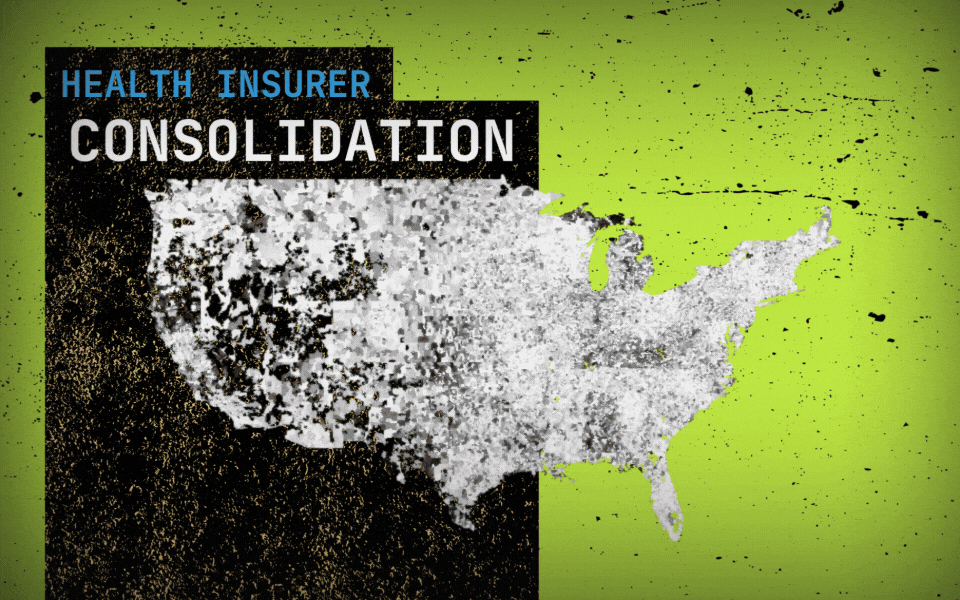
Hospital monopolies get the headlines – but new research shows health insurance markets are highly concentrated in every state, giving insurers more pricing power than most policymakers realize.
Hospital consolidation dominates the discussion on health care costs – with good reason. There is overwhelming evidence that it raises prices. But every hospital must ultimately negotiate rates with insurers, yet the consolidation story in the health insurer market has only gotten a tiny fraction of the attention. This is a mistake. While the insurer market is not as highly consolidated as the hospital market, it is still highly concentrated by any reasonable antitrust standard, and a major (and under-estimated) driver of cost growth.
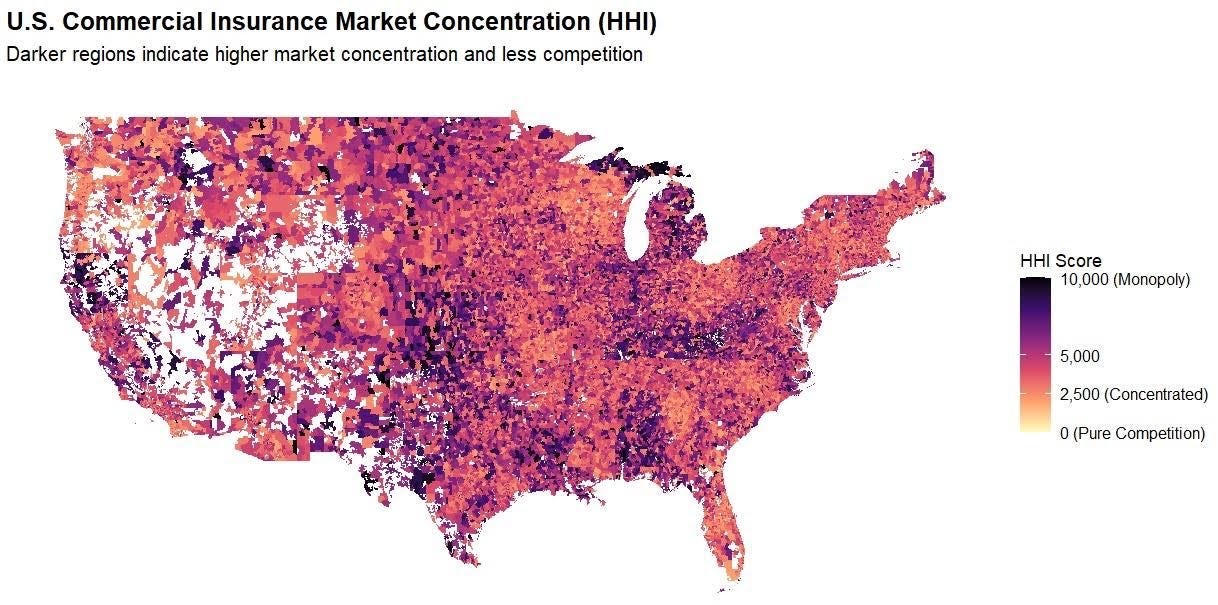
The Department of Justice (DOJ) and Federal Trade Commission (FTC) use the Herfindahl Hirschman Index (HHI) to measure market concentration, where >1,800 is highly concentrated, 5,000-7,500 is where a few firms hold substantial market power, and >7,500 is a near monopoly, where a single firm holds absolute (or near absolute) price-setting autonomy. The hospital market is heavily concentrated and has an average HHI score of 5,273, with 97% of markets being at least heavily concentrated and 64% being near or complete monopolies.
By comparison, our recent work similarly shows a high degree of consolidation among insurers. (Figure 1) We found that the state-level average HHI score in the commercial insurance market was 4,458, with 50 of 50 states (100%) at least heavily concentrated, comparable to hospital markets. This means that in almost every state, health insurers hold pronounced power in price-setting, a key component of the health care cost crisis roiling the country. The most competitive states (although still very highly concentrated) were Oregon (2,870), New York (3,203), and Georgia (3,222), whereas Kentucky (6,752) and Alabama (6,988) are near monopolies.
We find that insurers are even more consolidated than previously reported by the American Medical Association (AMA). Yet the market power of insurers, in combination with hospitals, is a vastly under-appreciated and under-studied driver of costs.
There are several reasons why it is important.
1. Vertical integration
Vertical integration is rapidly accelerating the ability of insurers to consolidate power and redefining what an insurer even is (UnitedHealth/Optum, CVS/Aetna, Cigna/Express Scripts, Elevance/Carelon, BCBSA/Ascendiun). This means that traditional plan-level data (such as that used by researchers and the DOJ/FTC) underestimates the true market power of insurers, and the shadowy network of MSOs, banks, and vendors makes it very difficult to quantify, absent new reporting or regulatory requirements
2. Geography
Where you live is important since it determines where you receive care and buy insurance. In some states, the average competition tells the story, e.g. Louisiana, Kentucky, Alabama, since certain insurers dominate the metro areas and everything in between. In others, the reassuring state averages (CA, NY) mask the variance, and hide the pockets of very uncompetitive markets, particularly in rural areas. Understanding this issue at a market level is important for creating transparency and accountability, to ensure that everyone has options and access to affordable health insurance.
3. Competition
Competition among insurers and hospitals matters, as power asymmetry and/or collusion create dysfunctional markets where costs are “optimized” for the purposes of power and profits, not to make health care more affordable for consumers. It is also important to look at competition among insurers. Market dominance confers advantages that have little to do with delivering better care, such as leverage over providers, captive employer relationships, and pricing power insulated from competition.
While insurer markets aren’t as concentrated as hospital markets, they’re concentrated enough to matter, and the structure of that concentration makes it a distinct and important part of the cost problem. In our next piece, we will show which carriers hold dominant positions and where, and why the answer surprised us.
This research was made possible by the support of Arnold Ventures.
Data from Clarivate Managed Market Surveyor dataset. Includes FI/SI/HMO/PPO/POS/ACA plans.
HHI scores weighted according to zip-level and policy volume. Concentration levels: Red – Extreme; Orange – Severe; and Yellow – Very High.
A Trump administration plan to overhaul wage levels for visa holders is jolting hospitals and long-term care facilities that are heavily reliant on foreign-born workers.
Why it matters:
It’s the latest immigration-related policy change to loom over the health care workforce, coming after President Trump’s $100,000 H-1B visa fee and the suspension of certain immigrants’ work authorization renewals.
The latest move could further drive up costs for providers already struggling with staffing shortages, thin margins and growing patient demand, because many health jobs can’t be outsourced or automated.
Driving the news:
The Department of Labor wants to change the formula for calculating what it considers “fair minimum pay” for workers on certain visas, like H-1Bs, and green card sponsorship jobs.
The administration says the change would make it harder for companies to use visa programs to obtain cheaper labor and undercut American workers.
But the rule could have an outsized effect on health systems, testing labs, nursing homes and research institutions that sponsor foreign-trained workers.
There’s special concern about rural health providers that rely heavily on foreign-born clinicians to fill gaps in care in underserved areas.
Critics say the changewon’t adequately account for regional wage differences or experience levels.
They also warn a higher wage requirement will force employers to raise pay for U.S. workers to comply with labor laws — and make it unsustainable to hire foreign-born talent.
The big picture:
The U.S. health care system is heavily dependent on a foreign-born workforce. Immigrants make up about 16% of registered nurses nationwide, per a KFF analysis.
They make up 28% of the U.S. long-term care workforce, KFF found.
“This has the potential to significantly limit the sector’s ability to provide timely and quality health care services to those in need, both now and in the future,” Dana Ritchie, associate vice president of the American Health Care Association and National Center for Assisted Living, wrote in public comments on the proposal.
Zoom in:
Lynn Bruder, the CEO of staffing firm Nucleus Healthcare, said wage rates for visa-holding nurses on the lower end of the pay scale could jump 25% to 35% in certain markets, or from about $40 an hour to more than $50 an hour.
“The likely outcome is continued reliance on significantly more expensive agency staffing solutions and reduced ability for hospitals to build stable, long term workforce pipelines,” Bruder wrote in comments about the rule.
The other side:
The Department of Labor declined to comment. But visa programs have long been criticized for suppressing wages across many industries.
The changes would force employers to pay an estimated $6.5 billion in additional wages and increase the average certified wage by approximately $14,000 per year, according to the proposed rule.
“These proposed revisions aim to better align prevailing wage levels with the wages paid to U.S. workers,” the Labor Department wrote.
The window for public comments on the proposal closed this week.
The bottom line:
Health care providers say the administration is treating hospitals and nursing homes like any other employer, even though the workforce is being squeezed by an aging population and rising demand for care.
“Larger hospital systems may be able to absorb this increase, but you’ll see employers who are much smaller or mid-sized won’t,” Ann-Rose Johnson-Lewis, director of legal services at WorldWide HealthStaff Solutions, told Axios.
“You’ll see rural heath care systems not be able to absorb that. We’ll see a reduction in the workforce, fewer new hires and, ultimately, the broader economy will see the consequence of that.”
Policy momentum continues to shift toward prevention, affordability, and population health, which is increasing the value of physician alignment and care management capabilities.
The biggest risk in price transparency isn’t fines—it’s how increased visibility into payer contracts and pricing structures could affect margins, negotiations, and market position.
One healthcare organization’s restructuring highlights a broader industry shift toward rewarding sustainable cash flow, liquidity, and financial flexibility over leveraged growth models.
Headline: Free primary care for all: Democratic think tank pushes the party on new health policy
Democratic strategists are promoting free primary care for all Americans as a more politically viable alternative to Medicare for All, aiming to address healthcare affordability and access ahead of the 2026 elections.
Why it matters: I do not think this proposal will become federal policy in the near future. However, it reflects a shift in healthcare reform politics. Instead of focusing on comprehensive insurance redesign, policymakers are increasingly exploring targeted affordability initiatives that can be more easily communicated to voters and potentially implemented incrementally. I have little doubt that primary care access, preventive services, and healthcare affordability are likely to remain prominent policy themes heading into the midterm election cycle.
The CFO Takeaway: This headline underscores the idea that primary care is becoming a strategic asset. If policymakers continue moving toward subsidized or universally accessible primary care models, health systems with strong employed physician networks, value-based care capabilities, and population health infrastructure could be positioned to benefit.
On the other hand, organizations that remain heavily dependent on downstream specialty and procedural volumes may feel the heat as policymakers and payers redirect resources toward prevention and early intervention. I say look at this as another signal that future reimbursement models may reward access, chronic disease management, and longitudinal patient engagement rather than episodic acute care. The question is not whether free primary care becomes law, but whether an organization’s capital allocation, physician alignment strategy, and care delivery model are prepared for a healthcare economy that places greater financial value on keeping patients healthy rather than treating them after they become sick.
Headline: Trump administration warns more than 500 hospitals to provide more price information or face fines
The Trump administration has intensified enforcement of hospital price transparency rules, warning more than 500 hospitals over alleged noncompliance. Hospitals that fail to disclose required pricing data could face penalties of up to $2 million annually, with officials signaling that additional enforcement actions are likely as the administration intensifies oversight of transparency requirements originally established during President Trump’s first term.
The CFO Takeaway: While hospitals have been required to publish machine-readable files and consumer-friendly pricing information for years, compliance has been uneven across the industry. Many CFOs have spoken to me about the difficulty in publishing usable pricing information; standardizing the masses of varying data is often just too complex and time consuming. This move is the administration’s latest shift from rulemaking toward active enforcement in this category. CFOs should focus on strengthening pricing governance, contract management, and payer negotiation strategies. The bigger risk is whether increased transparency exposes pricing weaknesses that could undermine future reimbursement, market position, and margins.
Industry POV: This headline is not fundamentally about fines, it’s about margin visibility and negotiating leverage. Price transparency is becoming a strategic financial issue. As payer rates and pricing differences become more visible, hospitals will face greater scrutiny from employers, insurers, competitors, and regulators.
Headline: GoHealth files for Chapter 11 to strengthen its position ahead of AEP 2026
GoHealth has filed a prepackaged Chapter 11 bankruptcy to reduce debt and strengthen its finances. The restructuring has strong backing from lenders and major stakeholders, allowing the company to continue normal operations, pay vendors, and maintain customer and payer relationships while emerging with a healthier balance sheet and lender-led ownership structure. The company expects to continue normal operations throughout the process, pay vendors in full, preserve relationships with health plans and consumers, and emerge from bankruptcy before the critical Medicare enrollment season begins.
Why it matters: While the announcement is framed as a restructuring, it is really the culmination of Medicare Advantage pressures. GoHealth has faced declining revenues, significant debt obligations, higher interest costs, and a challenging MA market with health plans increasingly focused on profitability, member retention, and tighter distribution economics.
The CFO Takeaway: This headline is ultimately unsurprising in today’s market. GoHealth’s restructuring shows how quickly leverage that seemed manageable during periods of growth can become a strategic constraint when industry economics shift.
GoHealth’s restructuring may ultimately be successful, but it highlights that healthcare organizations are increasingly being judged not just on revenue growth, but on their ability to generate sustainable cash flow and withstand prolonged reimbursement pressure. CFOs, is that shift influencing capital allocation decisions today?






 Listen to the article7 min