Did hospital wage increases come too soon?

https://mailchi.mp/e44630c5c8c0/the-weekly-gist-december-16-2022?e=d1e747d2d8

It’s been a difficult year for the hospital workforce, both here and around the world, as the effects of the pandemic, the economy, and the legacy of lean staffing models have combined to drive up vacancy rates and threaten the sustainability of hospital operations. 

Everywhere we’ve gone in the past six months, workforce issues have overshadowed every other topic: how can hospitals attract and retain staff given the environment, how can they stabilize finances in the face of 15-20 percent increases in labor costs, how can they safeguard patient care with intense turbulence in the clinical workforce?

This week we heard yet another wrinkle to this problem, one that had not occurred to us but in retrospect is obvious. A system CFO was lamenting the fact that even with big salary increases, the hospital workforce remains unstable. “It’s like we’re not even getting credit for raising base salary 15 percent across the board and giving big retention bonuses.” 
 
As to why—it’s a timing issue. Her system, like many, delivered pay raises back in the late winter and early spring, when staff were still recovering from the Omicron surge and the urgency of reducing reliance on expensive agency labor became clear. But economy-wide inflation had only then begun to spike, and has since continued to be stuck at high levels. 

Staff don’t view the earlier salary increases as a response to inflation, but as predating it—and they’re asking for still more, to offset rising prices for food, transportation and housing. “I wish we’d waited to give the pay bump,” the CFO told us. “Even though our wage increases have outpaced inflation this year, the timing of events didn’t help us at all.” 

With the hospitals operating near capacity, and a severe flu season impacting both patient volumes and staff availability, her sense is that the system is back to square one on staffing—and more difficult financial decisions lie ahead.

Do Hospitals share the blame for the COVID staffing crisis?

https://mailchi.mp/e44630c5c8c0/the-weekly-gist-december-16-2022?e=d1e747d2d8

The latest piece in the New York Times ’“Profits over Patients” series focuses on the staffing policies of Ascension, one of the nation’s largest nonprofit health systems, drawing a straight line from its cost-cutting practices over the last decade to its current staffing woes. Like previous articles in the series, the piece hones in on Ascension’s profit-seeking motives, pairing pre-pandemic accounts of Ascension executives boasting about savings from slashed labor costs with story after story of its frontline clinicians struggling to provide adequate patient care once COVID hit.

In responses included in the article, an Ascension spokesperson rejected the idea that the system’s workforce policies were responsible for its current staffing crisis, claiming that Ascension has maintained better staff-to-patient ratios than many of its peers. 

The Gist: Yet again, the New York Times is shining a harsh light on a health system that has been engaged in management practices common across the industry. 

While the piece omits some relevant information, such as the recent spike in labor costs, it’s useful to point out that many hospitals were so thinly staffed prior to COVID that they had virtually no slack in their labor pools, hindering their response to the crisis. 

In our experience, the reasons for this have less to do with lining executives’ pockets, and more to do with the realities of dealing with a worsening payer mix and rising input costs. While future hospital workforce strategy is going to have to focus on reducing dependency on nurses—especially in the inpatient setting—any effort to that end must augment nurses with team-based care models and technology solutions, rather than pushing further on already-tight nurse-to-patient ratios.

University of Michigan Health to buy Sparrow Health

https://mailchi.mp/e44630c5c8c0/the-weekly-gist-december-16-2022?e=d1e747d2d8

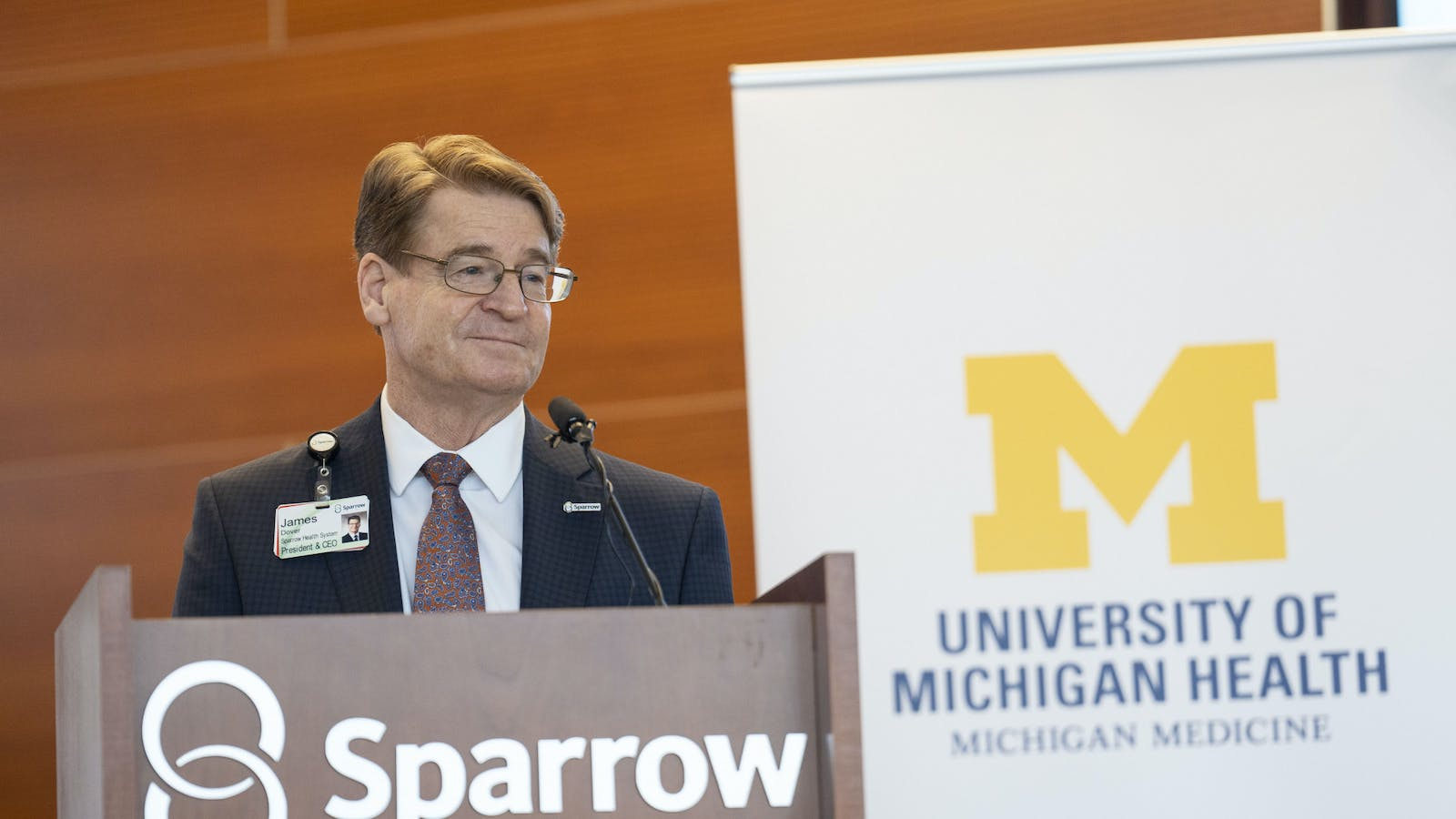
Ann Arbor, MI-based University of Michigan Health (UM Health), part of Michigan Medicine, announced last Thursday that it will acquire Lansing, MI-based Sparrow Health System, forming a $7B health system with over 200 care sites across southeast and mid-Michigan. The acquisition will connect Sparrow’s six hospitals to UM Health’s flagship academic medical center (AMC) and sole hospital, while extending the reach of Sparrow’s 70K-member health plan, in which UM Health had previously invested. Pending regulatory approvals, the deal is expected to be completed in the first half of 2023.

The Gist: Given Sparrow’s recent financial struggles—the system announced hundreds of layoffs in September after posting a $90M loss in the first half of 2022—this was a sensible pickup for UM Health, extending its reach into lower-cost community healthcare adjacent to its current market. Other AMCs have made similar moves in recent years, as the differentiated services of an AMC and the local patient reach of community hospitals make for a strong pairing—and this deal will go far toward advancing UM as a truly regional system.

But even if UM Health got a good deal on the acquisition, the current status of Sparrow’s infrastructure and workforce will require considerable investment (UM Health has already committed $800M in the deal’s announcement).

West Coast nonprofit health plans announce agreement to combine

https://mailchi.mp/e44630c5c8c0/the-weekly-gist-december-16-2022?e=d1e747d2d8

Two nonprofit insurers, Long Beach, CA-based SCAN Group and Portland, OR-based CareOregon, have agreed to merge. The new organization—which will take the name HealthRight Group, while retaining the SCAN and CareOregon brands in local markets—will have $6.8B in annual revenue and cover around 800K lives.

Continuing their previous areas of focus, SCAN will cater primarily to Medicare Advantage (MA) beneficiaries, and CareOregon will prioritize serving managed Medicaid enrollees. Executives from both companies cited scale as the primary motivation for the merger, with the companies aiming to both strengthen their foothold in current markets and expand their reach into new ones.

The deal, which still needs approval from state regulators, is expected to close in 2023.

The Gist: HealthRight stands to be a strong player in the booming government-backed, managed care market in states currently dominated by large payers like Kaiser Permanente and UnitedHealthcare. 

SCAN has differentiated itself with services dedicated to underserved populations, including creating a MA plan designed for LGBTQ+ seniors, and offering California’s only integrated dual-eligible, special needs plans. We expect the addition of CareOregon’s 319K managed Medicaid members to provide a larger platform for these targeted initiatives, and we wouldn’t be surprised to see more nonprofit insurers joining forces with HealthRight to better compete with current market heavyweights.  

10 health systems with strong finances

Here are 10 health systems with strong operational metrics and solid financial positions, according to reports from credit rating agencies Fitch Ratings and Moody’s Investors Service.

1. Allina Health System has an “AA-” rating and a stable outlook with Fitch. The Minneapolis-based system is the inpatient market share leader in a highly competitive market and has a strong relation with payers in the market, Fitch said.

2. Bryan Health has an “AA-” rating and stable outlook with Fitch. The Lincoln, Neb.-based health system has a leading and growing market position, very strong cash flow and a strong financial position, Fitch said. The credit rating agency said Bryan Health has been resilient through the COVID-19 pandemic and is well-positioned to accommodate additional strategic investments. 

3. CaroMont Health has an “AA-” rating and stable outlook with Fitch. The Gastonia, N.C.-based system has a leading market position in a growing services area and a track record of good cash flow, Fitch said.  

4. Christiana Care Health System has an “Aa2” rating and stable outlook with Moody’s.  The Newark, Del.-based system has a unique position as the state’s largest teaching hospital and extensive clinical depth that affords strong regional and statewide market capture, and is expected to return to near pre-pandemic level margins over the medium-term, Moody’s said. 

5. Intermountain Healthcare has an “Aa1” rating and stable outlook with Moody’s. The Salt Lake City-based health system has exceptional credit quality, which will continue to benefit from its leading market position in Utah, Moody’s said. The credit rating agency said the health system’s merger with Broomfield, Colo.-based SCL Health will also give Intermountain greater geographic reach.

6. OhioHealth has a “AA+” rating and stable outlook with Fitch. The Columbus, Ohio-based system has an exceptionally strong credit profile, broad regional operating platform and leading market position in both its competitive two-county primary service area and broader 47-county total service area, Fitch said. 

7. Parkview Health has an “Aa3” rating and stable outlook with Moody’s. The Fort Wayne, Ind.-based system has a leading market position with expansive tertiary and quaternary clinical services in northeastern Indiana and northwestern Ohio, Moody’s said. 

8. Rady Children’s Hospital has an “AA” rating and stable outlook with Fitch. The San Diego based hospital has a very strong balance sheet position and operating performance, and is also a leading provider of pediatric services in the growing city and tri-county service area, Fitch said. 

9. ThedaCare has an “AA-” rating and stable outlook with Fitch. The Neenah, Wis.-based system has a focused strategy, strong financial profile and robust market share, Fitch said. 

10. Trinity Health has an “AA-” rating and stable outlook with Fitch. The Livonia, Mich.-based system’s large size and market presence in multiple states disperses and the long-term ratings incorporate the expectation that Trinity will return to sustained stronger operating EBITDA margins.  

The gig economy is back — even for execs

Contract or “temp” employment used to be viewed as a means of supplemental income: a side hustle to an average day job, or a way to pay the bills while searching for full-time work. Now, gig work is back in style, and more workers want in on the flexibility — including C-suite executives, Korn Ferry recently reported.

The gig economy surged when older millennials, born in the 1980s, began rejecting the one-firm careers their parents had, according to Korn Ferry. Although they are currently midcareer, older millennials have switched jobs 7.8 times on average. Baby boomers are also using temporary work to keep busy during retirement, and Generation Z appreciates the flexibility that comes with contract labor. 

As temporary work grows in popularity, its influence is spreading to the C-suite. Interim executives are becoming more likely to be tapped when a leader departs, Korn Ferry reported. This gives organizations like health systems, which urgently need leadership in a rapidly changing industry, more time to conduct their searches for full-time replacements. 

Sixty percent of executives predict that the number of interim workers at their companies will “substantially increase” within the next three years, Korn Ferry reported. In a period of economic instability, temporary labor can mean less commitment and cost than a permanent worker. But there are downsides to contract labor, too. Since they lack benefits, many contract workers demand higher pay — which can trickle down and lead their permanent counterparts to ask for matched salaries. In the healthcare industry, this is visible in travel nurses’ paychecks, and their controversial effects on health systems’ finances. 

For better or for worse, contract labor does not appear to be dying out anytime soon. Fifty-eight million U.S. workers now consider themselves “independent,” Korn Ferry reported — an estimated 36 percent of the total workforce. 

Trinity tests daily pay option to attract and retain workers

Livonia, Mich.-based Trinity Health is experimenting with paying its employees by the day in a bid to recruit and retain staff, according to a Dec. 13 Grand Rapids Business Journal report.

Trinity, which will initially roll out the initiative at Trinity Health Grand Rapids, Trinity Health Medical Group and several locations outside Michigan, is partnering with financial services company DailyPay to provide earned wage access (EWA) to its employees, the report said.

Through EWA, employees can access their pay on a daily basis, allowing them to pay bills, for example, without having to wait for the more traditional payday and therefore avoiding the possibility of overdue fees. Employees would pay $2.99 to gain such early access.

The pay model, which will be available for all pay scales across Trinity except for the highest earners, was piloted across select Trinity locations about four months ago. It will eventually be rolled out to all Trinity locations over the next few years, with all West Michigan employees signed up by 2025, the report said.