Cambridge-based Massachusetts Institute of Technology professors Martin Bazant and John Bush, PhD, developed a model to calculate indoor exposure risk to COVID-19 by factoring in the amount of time spent inside, air filtration and circulation, immunization, variant strains, mask use, and respiratory activity such as breathing, eating or talking.
“We argue there really isn’t much of a benefit to the six-foot rule, especially when people are wearing masks,” Mr. Bazant told CNBC. “It really has no physical basis because the air a person is breathing while wearing a mask tends to rise and comes down elsewhere in the room so you’re more exposed to the average background than you are to a person at a distance.”
As with smoking, even people wearing masks can be affected by secondhand smoke that makes its way around the enclosed area and lingers. The same logic applies to airborne droplets of the virus, according to the study. However, the study did note that mask use by both infected and susceptible people reduces “respiratory plumes” and thus increases the amount of time people may safely spend together indoors.
When crafting guidelines, the CDC and World Health Organization have overlooked the amount of time spent indoors, Mr. Bazant claims.
“What our analysis continues to show is that many spaces that have been shut down in fact don’t need to be,” Mr. Bazant said. “Oftentimes, the space is large enough, the ventilation is good enough, the amount of time people spend together is such that those spaces can be safely operated even at full capacity, and the scientific support for reduced capacity in those spaces is really not very good.”
Opening windows or installing new fans to keep air moving may be just as effective or more effective than purchasing a new filtration system, Mr. Bazant said.
The CDC currently recommends staying at least 6 feet away from other people and wearing a mask to slow the spread of COVID-19, citing the fact that the virus spreads mainly among people who are in close contact for a prolonged period.
“The distancing isn’t helping you that much and it’s also giving you a false sense of security, because you’re as safe at six feet as you are at 60 feet if you’re indoors. Everyone in that space is at roughly the same risk, actually,” Mr. Bazant said.
After three rounds of peer review, Mr. Bazant says he hopes the study will influence social distancing policies.
Given regulatory barriers and structural differences in practice, private equity firms have been slow to acquire and roll up physician practices and other care assets in other countries in the same way they’ve done here in the US. But according a fascinating piece in the Financial Times,investors have targeted a different healthcare segment, one ripe for the “efficiencies” that roll-ups can bring—small veterinary practices in the UK and Ireland.
British investment firm IVC bought up hundreds of small vet practices across the UK, only to be acquired itself by Swedish firm Evidensia, which is now the largest owner of veterinary care sites, with more than 1,500 across Europe. Vets describe the deals as too good to refuse: one who sold his practice to IVC said “he ‘almost fell off his chair’ on hearing how much it was offering. The vet, who requested anonymity, says IVC mistook his shock for hesitation—and increased its offer.” (Physician executives in the US, take note.) IVC claims that its model provides more flexible options, especially for female veterinarians seeking more work-life balance than offered by the typical “cottage” veterinary practice.
But consumers have complained of decreased access to care as some local clinics have been shuttered as a result of roll-ups. Meanwhile prices, particularly for pet medications like painkillers or feline insulin, have risen as much as 40 percent—and vets aren’t given leeway to offer the discounts they previously extended to low-income customers. And with IVC attaining significant market share in some communities (for instance, owning 17 of 32 vet practices in Birmingham), questions have arisen about diminished competition and even price fixing.
The playbook for private equity is consistent across human and animal healthcare: increase leverage, raise prices for care, and slash practice costs, all with little obvious value for consumers. It remains to be seen whether and how consumers will push back—either on behalf of their beloved pets, or for the sake of their own health.
A new study out this week revived an old argument about whether telehealth visits spur more downstream care utilization compared to in-person visits, potentially raising the total cost of care. Researchers evaluated three years of claims data from Blue Cross Blue Shield of Michigan to compare patients treated for an acute upper respiratory infection via telemedicine versus an in-person visit, finding that patients who used telemedicine were almost twice as likely to have a related downstream visit (10.3 percent vs. 5.9 percent, respectively).
They concluded that these increased rates of follow-up likely negate any cost savings from replacing an in-person encounter with a less costly telemedicine visit.
Our take: so what?The study failed to address the question of whether a telemedicine visit was easier to access, or more timely than an in-person visit. Further, it evaluated data from 2016-2019, so the results should be caveated as pertaining to the “pre-COVID era”, before last year’s explosion in virtual care. Moreover, it’s unsurprising that patients who have a telemedicine visit may need more follow-up care (or that providers who deliver care virtually may be more aggressive about suggesting follow-up if symptoms change).
This focus on increased downstream care as a prima facie failure also ignores the fact that telemedicine services likely tap into pent-up, unmet demand for access to care. More access is a good thing for patients—and policymakers should consider that limiting reimbursement for virtual access to primary care (which accounts for less than 6 percent of total health spending) is unlikely to deliver the system-wide reduction in healthcare spending we need.
The uncertainty and isolation of the pandemic has taken a heavy toll on mental health.Over a third of adults are currently experiencing anxiety or depression—more than three times as many as early last year. And with access to behavioral health services already challenged before the pandemic, many patients have been turning to telemedicine for support.
Health insurer Cigna found that while use of virtual care for both non-behavioral and behavioral healthcare services peaked in spring 2020, consumers have continued to use telemedicine for mental health needs, while demand for other virtual services tapered off. As of December, about 70 percent of behavioral health claims were for care rendered virtually, compared to just 20 percent across all other services.
The recent surge in demand for virtual mental health services has spurred an influx of investment into digital solutions. A recent Rock Health analysis found investments in the space have more than tripled since 2015. The injection of funds extends to both “generalist” companies (focused on a wide range of virtual services, including behavioral health) and “specialist” companies (focused solely on virtual behavioral health solutions).
Virtual behavioral health not only provides much needed access to care, but patients also prefer the privacy and ready access offered by telemedicine. Moving forward, telemedicine may become the preferred alternative for patients seeking support for mental health needs.
Now that we’ve entered a new phase of the vaccine rollout, with supply beginning to outstrip demand and all adults eligible to get vaccinated, we’re hearing from a number of health systems that their strategy is shifting from a centralized, scheduled approach to a more distributed, access-driven model. They’re recognizing that, in order to get the vaccine to harder-to-reach populations, and to convince reticent individuals to get vaccinated, they’ll need to lean more heavily on walk-in clinics, community settings, and yes—primary care physicians.
For some time, the primary care community has been complaining they’ve been overlooked in the national vaccination strategy, with health systems, pharmacy chains, and mass vaccination sites getting the lion’s share of doses. But now that we’re moving beyond the “if you build it, they will come” phase, and into the “please come get a shot” phase, we’ll need to lean much more heavily on primary care doctors, and the trusted relationships they have with their patients.
As one chief clinical officer told us this week, that means not just solving the logistical challenges of distributing vaccines to physician offices (which would be greatly aided by single-dose vials of vaccine, among other things), but planning for patient outreach. Simply advertising vaccine availability won’t suffice—now the playbook will have to include reaching out to patients to encourage them to sign up.
There will be workflow challenges as well, particularly while we await those single-dose shots—primary care clinics will likely need to schedule blocks of appointments, setting aside specific times of day or days of the week for vaccinations. The more distributed the vaccine rollout, the more operationally complex it will become. Health systems won’t be able to “get out of the vaccine business”, as one health system executive told us, because many have spent the past decade or more buying up primary care practices and rolling out urgent care locations. Now those assets must be enlisted in the service of vaccination rollout.
Health systems will have to orchestrate a “pull” strategy for vaccines, rather than the vaccination “push” they’ve been conducting for the past several months. To put it in military terms,the vaccination “air war” is over—now it’s time for what’s likely to be a protracted and difficult “ground campaign”.
The showdown between the Biden administration and the state of Texas over Medicaid expansion continued to escalate this week. Sen. John Cornyn (R-TX) said he planned to place a hold on the confirmation of Chiquita Brooks-LaSure to become Administrator of the Centers for Medicare & Medicaid Services (CMS), until his concerns over the agency’s move last week to rescind a waiver extension previously granted by the Trump administration were addressed.
The so-called “1115 waiver”—worth more than $11B annually—would have extended by a decade Texas’ ability to use Medicaid funds to cover hospital costs for uninsured residents, rather than expanding Medicaid coverage under the Affordable Care Act (ACA). In rescinding the waiver extension, the Biden administration cited the lack of a public notice process before the waiver was granted, and said that the state’s existing waiver would instead expire next year, as previously scheduled.
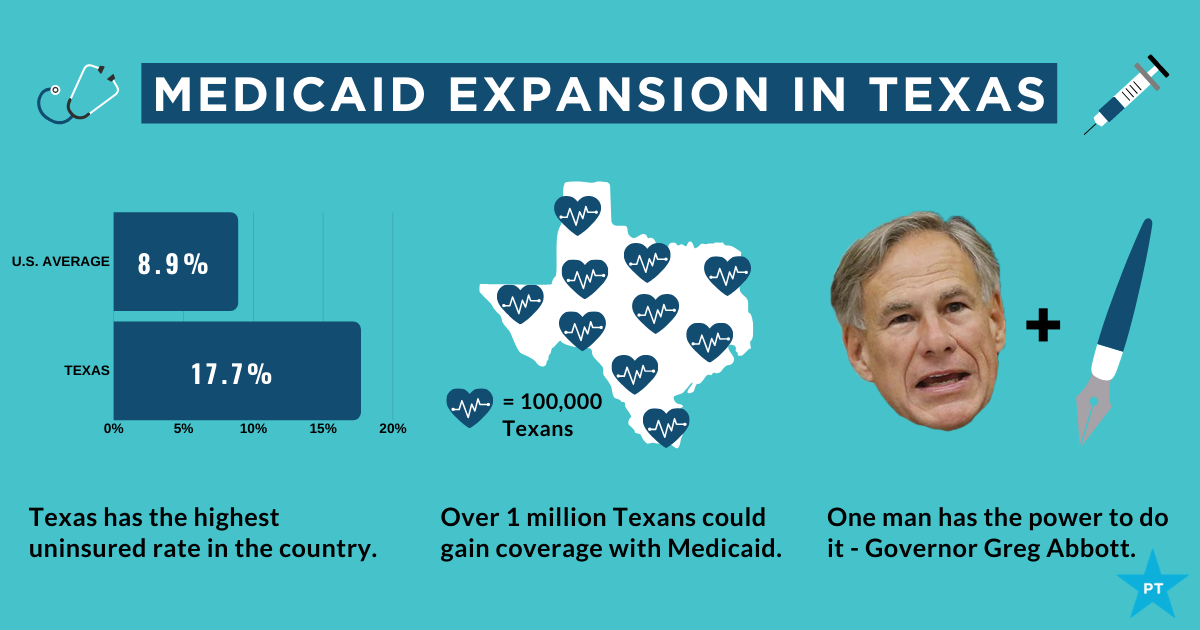
Sources inside the administration told the Washington Post last week thatthe move was intended to force Texas’ hand on Medicaid expansion; the state is one of 12 that have not expanded Medicaid, leaving it with the largest share of uninsured residents of any state, with eligibility currently limited to pregnant women, children, people with disabilities, and families with monthly incomes under $300 per month, or 13.6 percent of the federal poverty level.
Enticing the dozen remaining holdout states to expand Medicaid is an important policy priority for the new administration.A key component of the recently passed American Rescue Plan Act is a package of enhanced incentives for those states to expand eligibility, offering an extended 90 percent federal match, in addition to increased funding for existing Medicaid populations.
Although none of the non-expansion states have budged yet, there has been renewed focus among state lawmakers on Medicaid expansion, including in Texas, where the idea had garnered bipartisan support. However, on Thursday, the Texas legislature voted down a proposal aimed at pushing the state toward expanding coverage for the uninsured, by an 80-68 margin. Meanwhile, the rescission of Texas’ waiver has angered the state’s Republican leadership, along with the Texas Hospital Association, whose members have benefited from the waiver’s use of funds to reimburse them for delivering uncompensated care.
While Cornyn’s hold will not ultimately stop the confirmation of the new CMS leader, the escalation on both sides over the past several days surely makes finding a compromise solution less likely. The Biden health policy team is said to be developing a new proposal, as part of an upcoming legislative package, to use the ACA marketplace to offer coverage to people in non-expansion states who might otherwise be eligible for Medicaid—yet another attempt to address one of the longest-standing points of contention stemming from the 2010 health reform law.
With more than 222M Americans having received at least one dose of COVID vaccine, and 27.5 percent of the population now fully vaccinated,we are now nearing a point at which vaccine supply will exceed demand, signaling a new phase of the rollout.
This week, for the first time since February, the daily rate of vaccinations slowed substantially, down about 11 percent from last week on a seven-day rolling average. Several states and counties are dialing back requests for new vaccine shipments, and the New York Times reported that some local health departments are beginning to shutter mass vaccination sites as appointment slots go unfilled.
On Friday, the White House’s COVID response coordinator, Jeff Zients, said that the Biden administration now expects “daily vaccination rates will fluctuate and moderate,” after several weeks of accelerating pace. In every state, everyone over the age of 16 is now eligible to be vaccinated, but experts expect that demand from the “vaccine-eager” population will run out over the next two weeks, necessitating a more aggressive campaign to distribute vaccines in hard-to-reach populations, and to convince vaccine skeptics to get the shot.
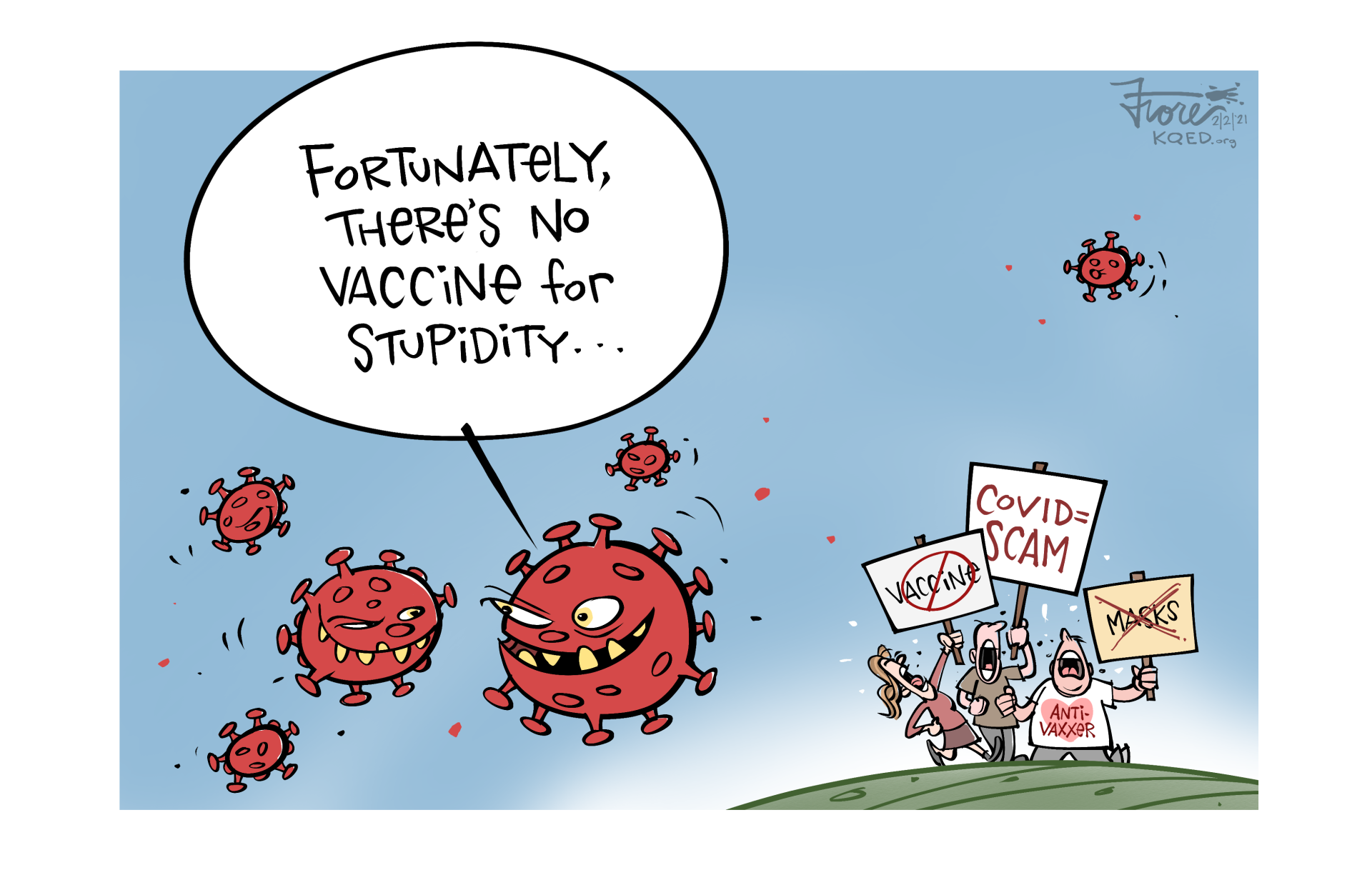
Vaccine hesitancy, like so many other issues related to the COVID pandemic, has now become starkly politicized—one recent survey found that 43 percent of Republicans “likely will never get” the vaccine, as opposed to only 5 percent of Democrats. Another 12 percent of those surveyed, regardless of party identification, say they plan to “see how it goes” before getting the vaccine, a subset that will surely be unnerved by continued doubts about the safety of the Johnson & Johnson (J&J) vaccine.
An expert advisory panel on Friday recommended that use of the J&J shot be resumed, but advised that a warning be included about potential risk of rare blood clots in women under 50. The first three months of the COVID vaccination campaign have been a staggering success—but getting from 27 percent fully vaccinated to the 80 percent needed for “herd immunity” will likely be a much tougher slog.
The CDC and FDA on Friday lifted the recommended pause on use of Johnson & Johnson’s coronavirus vaccine, saying the benefits of the shot outweigh the risk of a rare blood clot disorder.
Why it matters: The move clears the way for states to immediately resume administering the one-shot vaccine.
The Johnson & Johnson shot had been seen as an important tool to fill gaps in the U.S. vaccination effort. But between the pause in its use and repeated manufacturing problems, its role in that effort is shrinking.
Driving the news:J&J shots have been paused for about two weeks, in response to reports that they may have caused serious blood clots in a small number of patients.
Only six people had experienced those blood clots at the time of the pause. The CDC said Friday that there have been nine additional cases.
Regulators said the number is small enough to safely resume the use of J&J’s vaccine.
What they’re saying: “Safety is our top priority. This pause was an example of our extensive safety monitoring working as they were designed to work — identifying even these small number of cases,” said acting FDA Commissioner Janet Woodcock.
“We’ve lifted the pause based on the FDA and CDC’s review of all available data and in consultation with medical experts and based on recommendations from the CDC’s Advisory Committee on Immunization Practices,” she said.
“We are confident that this vaccine continues to meet our standards for safety, effectiveness and quality.”
What’s next: Regulators said health care providers administering the shot and vaccine recipients should review revised fact sheets about the J&J vaccine, which includes information about the rare blood clot disorder.
That heightened attention is important because the standard treatment for blood clots can make this particular type of clot worse.
Yes, but:J&J was already a relatively small part of the overall domestic vaccination effort, in part because the company missed some of its early manufacturing targets.
Multiple problems have since emerged at a Baltimore facility that makes a key ingredient for the vaccine, which could sideline production for weeks.