


Cartoon – Leadership Dilemma




In early 2013, Hoag Memorial Hospital Presbyterian in Orange County, California, joined with St. Joseph Health, a local Catholic hospital chain, amid enthusiastic promises that their affiliation would broaden access to care and improve the health of residents across the community.
Eight years later, Hoag says this vision of achieving “population health” is dead, and it wants out. It is embroiled in a legal battle for independence from Providence, a Catholic health system with 51 hospitals across seven states, which absorbed St. Joseph in 2016, bringing Hoag along with it.
In a lawsuit filed in Orange County Superior Court last May, Hoag argues that remaining a “captive affiliate” of the nation’s 10th-largest health system, headquartered nearly 1,200 miles away in Washington state, constrains its ability to meet the needs of the local population.
Hoag doctors say that Providence’s drive to standardize treatment decisions across its chain — largely through a shared Epic electronic records system — often conflicts with their own judgment of best medical practices. And they recoil against restrictions on reproductive care they say Providence illegally imposes on them through its adherence to the Catholic health directives established by the United States Conference of Catholic Bishops.
“Their large widespread system is very different than the laser focus Hoag has on taking care of its community,” said Hoag CEO Robert Braithwaite. “When Hoag needed speed and agility, we got inadequate responses or policies that were just wrong for us. We found ourselves frustrated with a big health system that had a generic approach to health care.”
Providence insists it wants to stay with Hoag, a financial powerhouse — even as the two sides engage in secret settlement talks that could end the marriage.
“We believe we are better together,” said Erik Wexler, president of Providence South, which includes the group’s operations in California, Texas and New Mexico. “The best way to do that is to collaborate.” He cited joint investments in Hoag Orthopedic Institute and in Be Well OC, a kind of mental health collaborative, as fruits of the affiliation.
“If we are separate,” Wexler added, “there is a chance we may begin to cannibalize each other and drive the cost of care up.”
Research over the past several years, however, has shown that it is the consolidation of hospitals into fewer and larger groups, with greater bargaining clout, that tends to raise medical prices — often with little improvement in the quality of care.
“Mergers are a self-centered pursuit of stability by hospitals and hospital systems that hope to get so big that they can survive the anarchy of U.S. health care,” said Alan Sager, a professor at Boston University’s School of Public Health.
Wexler argued that price increases linked to consolidation are less of a worry in Orange County, geographically small but densely populated with 3.2 million residents and 28 acute care hospitals. Given the proximity of so many hospitals, Wexler said, counterproductive duplication of medical services is more of a concern.
Unlike many local community hospitals that seek larger partners to survive, Hoag, one of Orange County’s premier medical institutions, is financially robust and perfectly able to stand on its own. It has the advantage of operating in one of Orange County’s most affluent areas, with two acute care hospitals and an orthopedic specialty hospital in Newport Beach and Irvine. It is the beneficiary of numerous wealthy donors, including bond market billionaire Bill Gross and thriller novelist Dean Koontz.
In 2020, Hoag’s net assets, essentially its net worth, stood at about $3.3 billion — nearly 20% of the total for all Providence-affiliated facilities, even though Hoag has only three of the group’s 51 hospitals. Hoag generated operating income of $38 million last year, while Providence posted a $306 million operating loss.
But Providence is hardly a financial weakling. It is sitting on a mountain of unrestricted cash and investments worth $15.3 billion as of Dec. 31. And despite its hefty reserves, it received $1.1 billion in coronavirus relief grants last year under the federal CARES Act, and millions more from the Federal Emergency Management Agency.
Providence does not own Hoag, since no money changed hands and their assets were not commingled. But Providence is able to keep Hoag from walking away because it has a majority on the governing body that was set up to oversee the original affiliation with St. Joseph.
Hoag executives also express frustration at what they describe as efforts by Providence to interfere with their financial, labor and supply decisions.
Providence, in turn, worries that “if Hoag disaffiliates with Providence, it has the potential to impact our credit rating,” Wexler said.
Despite its insistence on the value of the affiliation, Providence officials are said to be willing to end the affiliation in exchange for payment of an undisclosed amount that Hoag considers unwarranted. Wexler and Hoag executives declined to comment on their discussions. A trial start date has not been set, but on April 26 the court will hear a motion from Hoag to expedite it.
While its financial fortitude distinguishes it from many other community hospitals tied to larger partners, Hoag’s experience with Providence is hardly uncommon amid widespread consolidation in the hospital industry and the growing influence of Catholic health care in the U.S.
“The bigger your parent organization becomes, the smaller your voice is within the system, and that’s part of what Hoag has been complaining about,” said Lois Uttley, director of the women’s health program at Community Catalyst, a Boston-based patient advocacy group that monitors hospital mergers.
“Compounding the problem is the fact that the system in this case is Catholic-run, because then, in addition to having an out-of-town system headquarters calling the shots, you also have to contend with governance from Catholic bishops,” Uttley said. “So you have two bosses, in a sense.”
Hoag is not the only hospital seeking to flee this dynamic. Last year, for example, Virginia Mason Memorial hospital in Yakima, Washington, said it would separate from its parent, Seattle-based Virginia Mason Health System, to avoid a pending merger with CHI Franciscan, part of the Catholic hospital giant CommonSpirit Health.
Mergers and acquisitions have led to the increasing dominance of mega hospital chains in U.S. health care over the past several years. From 2013 to 2018, the revenue of the 10 largest health systems grew 82%, compared with 45% for all other hospital groups, according to a recent study by Deloitte, the consulting and auditing firm.
Researchers expect the trend to accelerate as large health systems swallow smaller facilities economically weakened by the pandemic, and a growing trend toward outpatient care reduces demand for hospital beds.
Four of the 10 largest U.S. hospital systems are Catholic, including Chicago-based CommonSpirit Health, St. Louis-based Ascension, Livonia, Michigan-based Trinity Health and Providence. A study by Community Catalyst found that 1 in 6 acute care hospital beds are in Catholic facilities, and that 52 hospitals operating under Catholic restrictions were the sole acute care facilities in their regions last year, up from 30 in 2013.
“We need to make this a national conversation,” said Dr. Jeffrey Illeck, a Hoag OB-GYN.
He was among a group of Hoag OB-GYNs who signed a letter to then-California Attorney General Xavier Becerra in October, alleging that Providence frequently declined to authorize contraceptive treatments, such as intrauterine devices and tubal ligations — in breach of the conditions imposed by Becerra’s predecessor, Kamala Harris, when she approved the original affiliation with St. Joseph in 2013.
In March, two weeks before he was confirmed as secretary of the U.S. Department of Health and Human Services, Becerra launched an investigation into those concerns.
Wexler said he is confident the attorney general’s probe will provide “clarity that Providence has done nothing wrong.”
A particularly bitter disagreement between the two sides concerns a rupture last year within St. Joseph Heritage Healthcare, a physician group belonging to Providence that included both St. Joseph and Hoag doctors. In November, the group notified thousands of patients that their Hoag specialists were no longer part of the network and that they needed to choose new doctors.
Wexler said that was the inevitable result of a decision by the Hoag physicians to negotiate separate HMO contracts, an assertion Braithwaite contested. The move disrupted patient care just as the winter covid surge was gaining momentum, he said.
Perhaps the biggest frustration for most Hoag administrators and physicians is Providence’s desire to standardize care across all 51 hospitals through their shared Epic electronic records system.
Hoag doctors say Providence controls the contents of the Epic system and that the care protocols in it, often driven by cost considerations, frequently collide with their own clinical decisions. Any changes must be debated among all the hospitals in the system and adopted by consensus — a laborious undertaking.
Dr. Richard Haskell, a cardiologist at Hoag, recalled a dispute over intravenous Tylenol, which Hoag’s orthopedists prefer because they say it works well and furthered a concerted effort to reduce opioid addiction. Providence took IV Tylenol off its list of accepted drugs, and the Hoag orthopedists “were very upset,” Haskell said.
They eventually got it back on that list, but with the condition that they could order it only one dose at a time. That meant nurses had to call the doctor every four hours for a new order. “Doctors probably felt, ‘Screw it, I don’t want to get woken up every four hours,’ so they probably just gave them narcotics,’” Haskell said.
He said that before agreeing to adopt Providence’s Epic system, Hoag had received written assurances it could make changes that included its preferred treatment choices for various conditions. But it quickly became clear that was not going to happen, he said.
“We couldn’t make any changes at all, so we were stuck with their system,” Haskell said. “I don’t want to be in a system bogged down by bureaucracy that requires 51 hospitals to vote on it.”
Wexler said Hoag understood exactly what it had signed up for. “They knew full well that there would be a collaborative approach across all of Providence, including Hoag, to make decisions on what standardizations would happen across the entire system,” he said. “It is not easy if one hospital wants to create its own specific pathway.”
Despite Hoag’s concerns about lesser standards of care, Braithwaite could not cite an example of an adverse outcome that had resulted from it. And Hoag’s strong reputation seems untarnished, as reflected in the high rankings and awards it continues to garner — and tout on its website.
Still, the affiliation’s days seem numbered. Hoag is no longer on the Providence website or in its marketing materials, and in many cases — such as the St. Joseph Heritage schism — the two groups are already going their separate ways.
“They are certainly acting like we are competitors, and I assume that means they know the disaffiliation is imminent,” Braithwaite said.
Wexler, while reiterating that Providence wants to maintain the current arrangement, was nonetheless able to imagine a different outcome: “What we would do post-affiliation,” he said, “is to continue to look for opportunities to collaborate.”

She grew up in Hungary, daughter of a butcher. She decided she wanted to be a scientist, although she had never met one. She moved to the United States in her 20s, but for decades never found a permanent position, instead clinging to the fringes of academia.
Now Katalin Kariko, 66, known to colleagues as Kati, has emerged as one of the heroes of Covid-19 vaccine development. Her work, with her close collaborator, Dr. Drew Weissman of the University of Pennsylvania, laid the foundation for the stunningly successful vaccines made by Pfizer-BioNTech and Moderna.
For her entire career, Dr. Kariko has focused on messenger RNA, or mRNA — the genetic script that carries DNA instructions to each cell’s protein-making machinery. She was convinced mRNA could be used to instruct cells to make their own medicines, including vaccines.
But for many years her career at the University of Pennsylvania was fragile. She migrated from lab to lab, relying on one senior scientist after another to take her in. She never made more than $60,000 a year.
By all accounts intense and single-minded, Dr. Kariko lives for “the bench” — the spot in the lab where she works. She cares little for fame. “The bench is there, the science is good,” she shrugged in a recent interview. “Who cares?”
Dr. Anthony Fauci, director of the National Institutes of Allergy and infectious Diseases, knows Dr. Kariko’s work. “She was, in a positive sense, kind of obsessed with the concept of messenger RNA,” he said.
Dr. Kariko’s struggles to stay afloat in academia have a familiar ring to scientists. She needed grants to pursue ideas that seemed wild and fanciful. She did not get them, even as more mundane research was rewarded.
“When your idea is against the conventional wisdom that makes sense to the star chamber, it is very hard to break out,” said Dr. David Langer, a neurosurgeon who has worked with Dr. Kariko.
Dr. Kariko’s ideas about mRNA were definitely unorthodox. Increasingly, they also seem to have been prescient.
“It’s going to be transforming,” Dr. Fauci said of mRNA research. “It is already transforming for Covid-19, but also for other vaccines. H.I.V. — people in the field are already excited. Influenza, malaria.”
For Dr. Kariko, most every day was a day in the lab. “You are not going to work — you are going to have fun,” her husband, Bela Francia, manager of an apartment complex, used to tell her as she dashed back to the office on evenings and weekends. He once calculated that her endless workdays meant she was earning about a dollar an hour.
For many scientists, a new discovery is followed by a plan to make money, to form a company and get a patent. But not for Dr. Kariko. “That’s the furthest thing from Kate’s mind,” Dr. Langer said.
She grew up in the small Hungarian town of Kisujszallas. She earned a Ph.D. at the University of Szeged and worked as a postdoctoral fellow at its Biological Research Center.
In 1985, when the university’s research program ran out of money, Dr. Kariko, her husband, and 2-year-old daughter, Susan, moved to Philadelphia for a job as a postdoctoral student at Temple University. Because the Hungarian government only allowed them to take $100 out of the country, she and her husband sewed £900 (roughly $1,246 today) into Susan’s teddy bear. (Susan grew up to be a two-time Olympic gold medal winner in rowing.)
When Dr. Kariko started, it was early days in the mRNA field. Even the most basic tasks were difficult, if not impossible. How do you make RNA molecules in a lab? How do you get mRNA into cells of the body?
In 1989, she landed a job with Dr. Elliot Barnathan, then a cardiologist at the University of Pennsylvania. It was a low-level position, research assistant professor, and never meant to lead to a permanent tenured position. She was supposed to be supported by grant money, but none came in.
She and Dr. Barnathan planned to insert mRNA into cells, inducing them to make new proteins. In one of the first experiments, they hoped to use the strategy to instruct cells to make a protein called the urokinase receptor. If the experiment worked, they would detect the new protein with a radioactive molecule that would be drawn to the receptor.
“Most people laughed at us,” Dr. Barnathan said.
One fateful day, the two scientists hovered over a dot-matrix printer in a narrow room at the end of a long hall. A gamma counter, needed to track the radioactive molecule, was attached to a printer. It began to spew data.
Their detector had found new proteins produced by cells that were never supposed to make them — suggesting that mRNA could be used to direct any cell to make any protein, at will.
“I felt like a god,” Dr. Kariko recalled.
She and Dr. Barnathan were on fire with ideas. Maybe they could use mRNA to improve blood vessels for heart bypass surgery. Perhaps they could even use the procedure to extend the life span of human cells.
Dr. Barnathan, though, soon left the university, accepting a position at a biotech firm, and Dr. Kariko was left without a lab or financial support. She could stay at Penn only if she found another lab to take her on. “They expected I would quit,” she said.
Universities only support low-level Ph.D.s for a limited amount of time, Dr. Langer said: “If they don’t get a grant, they will let them go.” Dr. Kariko “was not a great grant writer,” and at that point “mRNA was more of an idea,” he said.
But Dr. Langer knew Dr. Kariko from his days as a medical resident, when he had worked in Dr. Barnathan’s lab. Dr. Langer urged the head of the neurosurgery department to give Dr. Kariko’s research a chance. “He saved me,” she said.
Dr. Langer thinks it was Dr. Kariko who saved him — from the kind of thinking that dooms so many scientists.
Working with her, he realized that one key to real scientific understanding is to design experiments that always tell you something, even if it is something you don’t want to hear. The crucial data often come from the control, he learned — the part of the experiment that involves a dummy substance for comparison.
“There’s a tendency when scientists are looking at data to try to validate their own idea,” Dr. Langer said. “The best scientists try to prove themselves wrong. Kate’s genius was a willingness to accept failure and keep trying, and her ability to answer questions people were not smart enough to ask.”
Dr. Langer hoped to use mRNA to treat patients who developed blood clots following brain surgery, often resulting in strokes. His idea was to get cells in blood vessels to make nitric oxide, a substance that dilates blood vessels, but has a half-life of milliseconds. Doctors can’t just inject patients with it.
He and Dr. Kariko tried their mRNA on isolated blood vessels used to study strokes. It failed. They trudged through snow in Buffalo, N.Y., to try it in a laboratory with rabbits prone to strokes. Failure again.
And then Dr. Langer left the university, and the department chairman said he was leaving as well. Dr. Kariko again was without a lab and without funds for research.
A meeting at a photocopying machine changed that. Dr. Weissman happened by, and she struck up a conversation. “I said, ‘I am an RNA scientist — I can make anything with mRNA,’” Dr. Kariko recalled.
Dr. Weissman told her he wanted to make a vaccine against H.I.V. “I said, ‘Yeah, yeah, I can do it,’” Dr. Kariko said.
Despite her bravado, her research on mRNA had stalled. She could make mRNA molecules that instructed cells in petri dishes to make the protein of her choice. But the mRNA did not work in living mice.
“Nobody knew why,” Dr. Weissman said. “All we knew was that the mice got sick. Their fur got ruffled, they hunched up, they stopped eating, they stopped running.”
It turned out that the immune system recognizes invading microbes by detecting their mRNA and responding with inflammation. The scientists’ mRNA injections looked to the immune system like an invasion of pathogens.
But with that answer came another puzzle. Every cell in every person’s body makes mRNA, and the immune system turns a blind eye. “Why is the mRNA I made different?” Dr. Kariko wondered.
A control in an experiment finally provided a clue. Dr. Kariko and Dr. Weissman noticed their mRNA caused an immune overreaction. But the control molecules, another form of RNA in the human body — so-called transfer RNA, or tRNA — did not.
A molecule called pseudouridine in tRNA allowed it to evade the immune response. As it turned out, naturally occurring human mRNA also contains the molecule.
Added to the mRNA made by Dr. Kariko and Dr. Weissman, the molecule did the same — and also made the mRNA much more powerful, directing the synthesis of 10 times as much protein in each cell.
The idea that adding pseudouridine to mRNA protected it from the body’s immune system was a basic scientific discovery with a wide range of thrilling applications. It meant that mRNA could be used to alter the functions of cells without prompting an immune system attack.
“We both started writing grants,” Dr. Weissman said. “We didn’t get most of them. People were not interested in mRNA. The people who reviewed the grants said mRNA will not be a good therapeutic, so don’t bother.’”
Leading scientific journals rejected their work. When the research finally was published, in Immunity, it got little attention.
Dr. Weissman and Dr. Kariko then showed they could induce an animal — a monkey — to make a protein they had selected. In this case, they injected monkeys with mRNA for erythropoietin, a protein that stimulates the body to make red blood cells. The animals’ red blood cell counts soared.
The scientists thought the same method could be used to prompt the body to make any protein drug, like insulin or other hormones or some of the new diabetes drugs. Crucially, mRNA also could be used to make vaccines unlike any seen before.
Instead of injecting a piece of a virus into the body, doctors could inject mRNA that would instruct cells to briefly make that part of the virus.
“We talked to pharmaceutical companies and venture capitalists. No one cared,” Dr. Weissman said. “We were screaming a lot, but no one would listen.”
Eventually, though, two biotech companies took notice of the work: Moderna, in the United States, and BioNTech, in Germany. Pfizer partnered with BioNTech, and the two now help fund Dr. Weissman’s lab.
Soon clinical trials of an mRNA flu vaccine were underway, and there were efforts to build new vaccines against cytomegalovirus and the Zika virus, among others. Then came the coronavirus.
Researchers had known for 20 years that the crucial feature of any coronavirus is the spike protein sitting on its surface, which allows the virus to inject itself into human cells. It was a fat target for an mRNA vaccine.
Chinese scientists posted the genetic sequence of the virus ravaging Wuhan in January 2020, and researchers everywhere went to work. BioNTech designed its mRNA vaccine in hours; Moderna designed its in two days.
The idea for both vaccines was to introduce mRNA into the body that would briefly instruct human cells to produce the coronavirus’s spike protein. The immune system would see the protein, recognize it as alien, and learn to attack the coronavirus if it ever appeared in the body.
The vaccines, though, needed a lipid bubble to encase the mRNA and carry it to the cells that it would enter. The vehicle came quickly, based on 25 years of work by multiple scientists, including Pieter Cullis of the University of British Columbia.
Scientists also needed to isolate the virus’s spike protein from the bounty of genetic data provided by Chinese researchers. Dr. Barney Graham, of the National Institutes of Health, and Jason McClellan, of the University of Texas at Austin, solved that problem in short order.
Testing the quickly designed vaccines required a monumental effort by companies and the National Institutes of Health. But Dr. Kariko had no doubts.
On Nov. 8, the first results of the Pfizer-BioNTech study came in, showing that the mRNA vaccine offered powerful immunity to the new virus. Dr. Kariko turned to her husband. “Oh, it works,” she said. “I thought so.”
To celebrate, she ate an entire box of Goobers chocolate-covered peanuts. By herself.
Dr. Weissman celebrated with his family, ordering takeout dinner from an Italian restaurant, “with wine,” he said. Deep down, he was awed.
“My dream was always that we develop something in the lab that helps people,” Dr. Weissman said. “I’ve satisfied my life’s dream.”
Dr. Kariko and Dr. Weissman were vaccinated on Dec. 18 at the University of Pennsylvania. Their inoculations turned into a press event, and as the cameras flashed, she began to feel uncharacteristically overwhelmed.
A senior administrator told the doctors and nurses rolling up their sleeves for shots that the scientists whose research made the vaccine possible were present, and they all clapped. Dr. Kariko wept.
Things could have gone so differently, for the scientists and for the world, Dr. Langer said. “There are probably many people like her who failed,” he said.
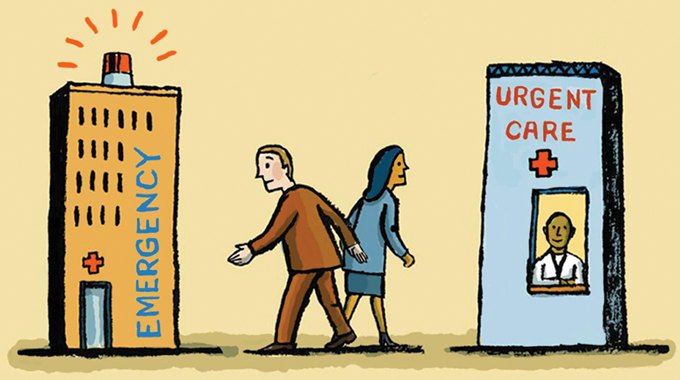
Although urgent care centers deter some lower-acuity patients from a costly emergency department visit, they are not associated with a drop in total healthcare spending, according to a study published in Health Affairs in April.
For the study, researchers used insurance claims and enrollment data from 2008 to 2019 from a managed care plan to understand if the presence of an urgent care center substantially decreased lower-acuity ED visits.
The authors found that the entry of an urgent care center into a ZIP code deterred lower-acuity ED visits, but the effect was small.
The study found that the reduction of just one lower-acuity ED visit was associated with 37 additional urgent care visits. In other words, the number of urgent care visits per enrollee required to reduce one ER visit is 37.
The study authors found that the prevention of each $1,646 lower-acuity ED visit was offset by an increase of $6,237 in urgent care center costs.
As a result, the study authors said that despite ED visits costing more per visit, the use of urgent care centers increased net overall spending on lower-acuity care.
“This study documents for the first time that urgent care centers are associated with increased overall costs for lower-acuity visits across the ED and urgent care settings,” the study authors concluded.

The financial challenges caused by the COVID-19 pandemic forced hundreds of hospitals across the nation to furlough, lay off or reduce pay for workers, and others have had to scale back services or close.
Lower patient volume, canceled elective procedures and higher expenses tied to the pandemic have created a cash crunch for hospitals, and hospitals are taking a number of steps to offset financial damage. Executives, clinicians and other staff are taking pay cuts, capital projects are being put on hold, and some employees are losing their jobs. More than 260 hospitals and health systems furloughed workers in the last year, and dozens of others have implemented layoffs.
Below are nine hospitals and health systems that are laying off employees. Some of the layoffs were attributed to financial strain caused by the pandemic.
1. Boca Raton, Fla.-based Cancer Treatment Centers of America is selling its hospital in Philadelphia and will lay off the facility’s 365 employees, according to a closure notice filed with the state. Cancer Treatment Centers of America said it anticipates the layoffs in Philadelphia will begin after May 30, according to the Philadelphia Business Journal.
2. Providence Queen of the Valley Medical Center in Napa, Calif., will lay off 10 employees, The Napa Valley Register reported April 11. The layoffs will affect six emergency department technicians and four cooks. The COVID-19 pandemic had a “profound effect” on the hospital system, including volume and revenue reductions, a Providence spokesperson told The Napa Valley Register. As a result of volume declines in its ED, the health system is reducing staffing.
3. Olympia Medical Center in Los Angeles closed March 31. The closure resulted in the layoffs of 451 employees.
4. The outgoing owners of Providence Behavioral Health Hospital in Holyoke, Mass., are laying off the hospital’s 151 employees, effective April 20, according to MassLive. Trinity Health of New England, part of Livonia, Mich.-based Trinity Health, is selling the hospital to Health Partners New England, which plans to take over the hospital April 20.
5. Boca Raton, Fla.-based Cancer Treatment Centers of America plans to close its hospital in Tulsa, Okla., June. 1. About 400 employees will be affected by the closure.
6. Plattsburgh, N.Y.-based Champlain Valley Physicians Hospital plans to cut 60 jobs. The hospital, which is facing a $6.5 million deficit in fiscal year 2021, said the cuts include 10 people who were laid off or had permanent hour reductions, 12 people who are planning retirement, and the rest are open positions that will not be filled, according to a March 9 NBC 5 report.
7. Buffalo, N.Y.-based Catholic Health announced March 19 that it plans to end inpatient services and close the intensive care unit at its St. Joseph campus in Cheektowaga, N.Y. The changes will result in some positions being eliminated. Catholic Health said it will try to find affected employees comparable positions within the system.
8. Upper Allegheny Health System, a two-hospital system based in Olean, N.Y., plans to reduce acute care and surgical services at Bradford (Pa.) Regional Medical Center. Under the plan, the acute care and surgical services will be moved to the health system’s other hospital, Olean General Hospital, effective May 1. There will be a minimal number of layoffs resulting from the consolidation of services, a spokesperson told WHYY.
9. Philadelphia-based Tower Health laid off 15 workers at St. Christopher’s Hospital for Children, including four physicians, in March, according to The Philadelphia Inquirer. Tower Health ended the second half of last year with an operating loss of $31 million, according to the report.
We’re a year into the coronavirus pandemic, so the math that undergirds its risks should by now be familiar. We all should know, for example, that the ability of the virus to spread depends on it being able to find a host, someone who is not protected against infection. If you have a group of 10 people, one of whom is infected and nine of whom are immune to the virus, it’s not going to be able to spread anywhere.
That calculus is well known, but there is still some uncertainty at play. To achieve herd immunity — the state where the population of immune people is dense enough to stamp out new infections — how many people need to be protected against the virus? And how good is natural immunity, resistance to infection built through exposure to the virus and contracting covid-19, the disease it causes?
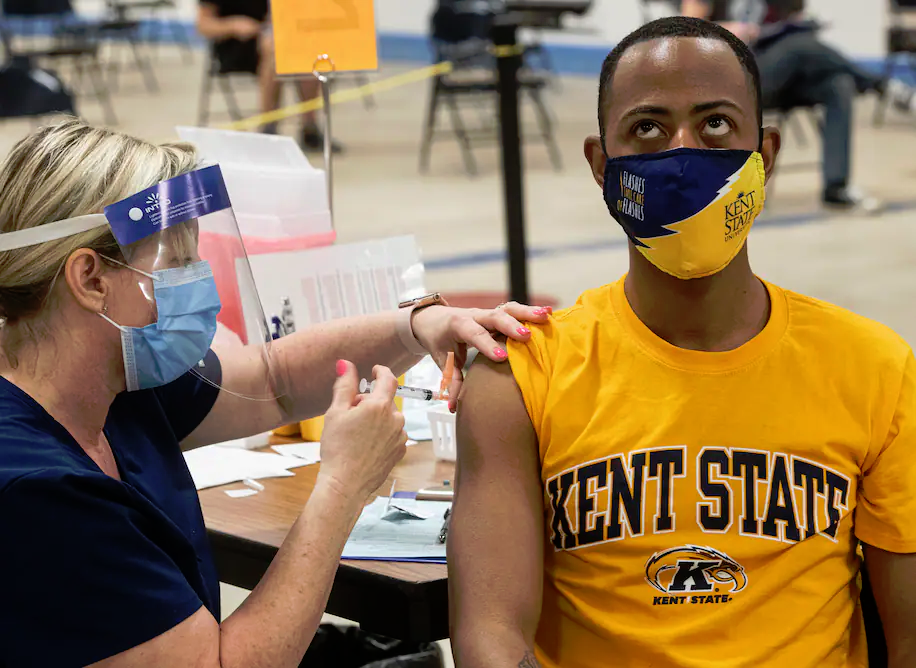
The safe way to increase the number of immune people, thereby probably protecting everyone by limiting the ability of the virus to spread, is through vaccination. More vaccinated people means fewer new infections and fewer infections needed to get close to herd immunity. The closer we get to herd immunity, the safer people are who can’t get vaccinated, such as young children (at least for now).
The challenge the world faces is that the rollout of vaccines has been slow, relatively speaking. The coronavirus vaccines were developed at a lightning pace, but many parts of the world are still waiting for supplies sufficient to broadly immunize their populations. In the United States, the challenge is different: About a quarter of adult Americans say they aren’t planning on getting vaccinated against the virus, according to Economist-YouGov polling released last week.
That’s problematic in part because it means we’re less likely to get to herd immunity without millions more Americans becoming infected. Again, it’s not clear how effective natural immunity will be over the long term as new variants of the virus emerge. So we might continue to see tens of thousands of new infections each day, keeping the population at risk broadly by delaying herd immunity and continuing to add to the pandemic’s death toll in this country.
But we also see from the Economist-YouGov poll the same thing we saw in Gallup polling earlier this month: The people who are least interested in being vaccinated are also the people who are least likely to be concerned about the virus and to take other steps aimed at preventing it from spreading.
In the Economist-YouGov poll, nearly three-quarters of those who say they don’t plan on being vaccinated when they’re eligible also say they’re not too or not at all worried about the virus.

That makes some perverse sense: If you don’t see the virus as a risk, you won’t see the need to get vaccinated. Unfortunately, it also means you’re going to be less likely to do things like wear a mask in public.

Or you might be more likely to view as unnecessary precautions such as avoiding close-quarter contact with friends and family or traveling out of state.

About a quarter of adults hold the view that they won’t be vaccinated when eligible. That’s equivalent to about 64 million Americans.
Who are they? As prior polls have shown, they’re disproportionately political conservatives. At the outset of the pandemic, there was concern that vaccine skepticism would heavily be centered in non-White populations. At the moment, though, the rate of skepticism among those who say they voted for Donald Trump in 2020 and among Republicans is substantially higher than skepticism overall.

That shows up in another way in the Economist poll. Respondents were asked whose medical advice they trusted. Among those who say they don’t plan to get the vaccine, half say they trust Trump’s advice a lot or somewhat — far more than the advice of the Centers for Disease Control and Prevention or the country’s top infectious-disease expert Anthony S. Fauci.

If we look only at Republican skeptics, the difference is much larger: Half of Republican skeptics say they have a lot of trust in Trump’s medical advice.

The irony, of course, is that Trump sees the vaccine as his positive legacy on the pandemic. He’s eager to seize credit for vaccine development and has — sporadically — advocated for Americans to get the vaccine. (He got it himself while still president, without advertising that fact.) It’s his supporters, though, who are most hostile to the idea.
Trump bears most of the responsibility for that, too. Over the course of 2020, worried about reelection, he undercut containment efforts and downplayed the danger of the virus. He undermined experts such as Fauci largely out of concern that continuing to limit economic activity would erode his main argument for his reelection. Over and over, he insisted that the virus was going away without the vaccine, that it was not terribly dangerous and that America should just go about its business as usual — and his supporters heard that message.
They’re still listening to it, as the Economist poll shows. One result may be that the United States doesn’t reach herd immunity through vaccinations and, instead, some large chunk of those tens of millions of skeptics end up being exposed to the virus. Some of them will die. Some may risk repeat infections from new variants against which a vaccine offers better protection. Some of those unable to get vaccinated may also become sick from the virus because we haven’t achieved herd immunity, suffering long-term complications from covid-19.
Trump wants his legacy to be the rollout of the vaccine. His legacy will also probably include fostering skepticism about the vaccine that limits its utility in containing the pandemic.


