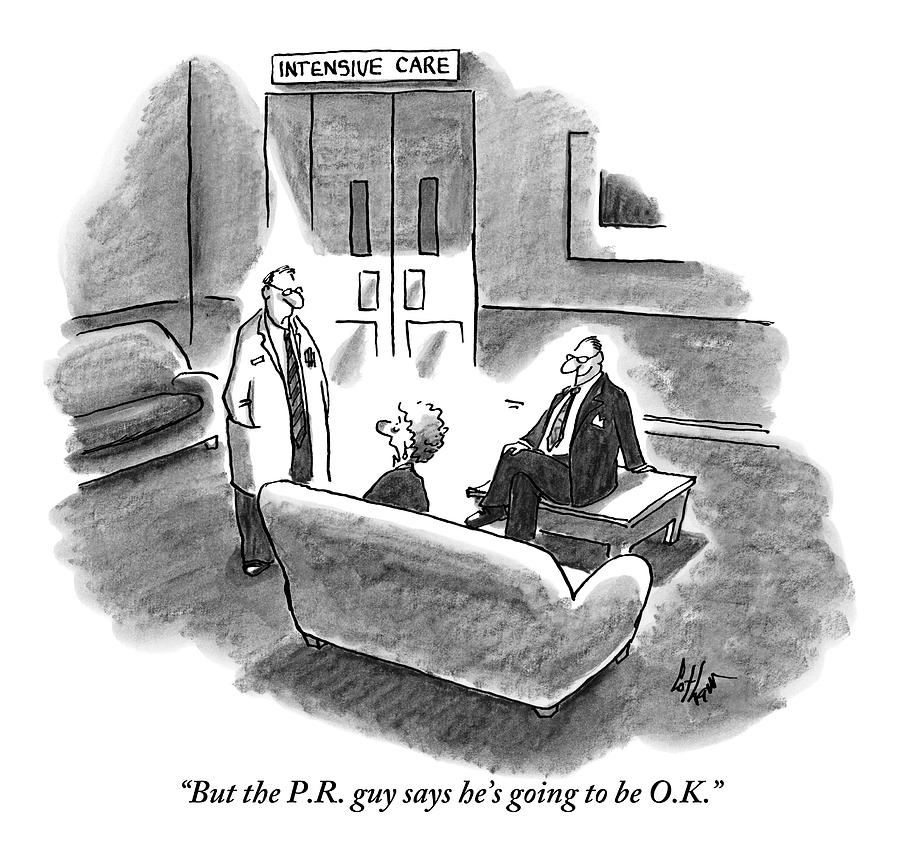
Cartoon – The Birth of Big Pharma


https://mail.yahoo.com/d/folders/1/messages/181951?.src=fp

Health insurance companies are not concerned yet that the new coronavirus is going to drive up their medical claims and spending, Axios’ Bob Herman reports.
The big picture: More people will need expensive hospitalizations to treat COVID-19, which has turned into a full-blown public health emergency.
What they’re saying: Barclays held its health care conference digitally last week, and several insurance executives reiterated their companies’ profit projections for this year — relatively remarkable statements considering economists believe a recession is imminent.
Between the lines: A lot more cases and hospitalizations are coming. But those will be partially offset, from an actuarial perspective, by delays or cancellations of costly elective procedures like joint replacements — something that hospitals are starting to do.
The bottom line: The coronavirus is throttling almost every business in America. Large insurers think they’re mostly immune, and if medical claims start to rise uncontrollably, they will increase everyone’s premiums next year.

If the coronavirus outbreak in the U.S. gets really bad — if it stretches on longer than we anticipated, if huge numbers of people get sick, if the disruptions to daily life become even more severe — early flaws in the testing process will bear a lot of the blame.
The big picture: You probably know that there were some early problems with testing, and that they’re getting better — which they are. But those early failures will help define the entire scope of this pandemic, and there’s not much we can do now to reverse the damage.
Why it matters: Because we haven’t been doing enough testing, we don’t actually know how many people in the U.S. have coronavirus. We know the official count is too low, and that the number of confirmed cases is likely to explode in the coming weeks as testing improves.
By the numbers: Independent researchers estimate that the U.S. has completed about 20,000 coronavirus tests as of Friday.
Widespread, accurate testing has been a key component of other countries’ success in bringing their outbreaks under control.
But the U.S. has not been able to do those things on the scale we’d need. And so, experts say, the virus has probably been spreading undetected for weeks.
“Our response is much, much worse than almost any other country that’s been affected,” Ashish Jha, a public health expert and the director of Harvard’s Global Health Institute, told NPR last week.
Between the lines: This makes other interventions, including individual “social distancing” and the cancellation of big events, even more important.
What’s next: Testing capacity in the U.S. is improving quickly. Nationwide, we now have the ability to test about 26,000 people per day, according to former Food and Drug Administration Commissioner Scott Gottlieb.
How we got here: The testing shortfall has been a multi-phase failure.
In the early days, testing was focused narrowly on people who had traveled to China. And that was probably the best way to triage limited resources, but it was never going to be sufficient.
The bottom line: Yes, the testing capacity is about to catch up. When it does, we will see a tidal wave of new confirmed cases. The fact that we needed to catch up made that tidal wave bigger — made the outbreak worse. And that won’t be undone by more tests now.

Mike DeWine didn’t pull any punches.
At a news conference on Thursday, the Ohio governor announced he was ordering that K-12 schools shut down until April 3 and banning most gatherings of 100 people or more. Ohio had only five confirmed coronavirus cases at that point, but DeWine’s health director Amy Acton, standing by the governor’s side, said they suspected that well over 100,000 state residents were already infected — a number expected to double every five days.
DeWine made it clear that his state, like others, faces massive challenges. In response, he offered resolve but not sugar-coated optimism. “This is temporary. We will get back to normal in Ohio. It won’t happen overnight,” DeWine said. “We must treat this like what it is, and that is a crisis.”
Around the country, other governors and mayors have been offering similar messages. Many are out in front, holding news conferences on a daily basis. Maryland Gov. Larry Hogan announced Thursday that he was putting his lieutenant governor in charge of most state operations so he could devote his full attention to the coronavirus crisis. Michigan Gov. Gretchen Whitmer held a news conference just before midnight on Thursday to announce a statewide school closure.
“Crises and disasters are what separates legislators from executives,” says Jared Leopold, a former communications director for the Democratic Governors Association. “For those executives who face a major disaster, crisis management becomes their defining legacy, whether they like it or not. Nothing else matters.”
Executives become the public face of the government’s response. Whether it’s natural disasters, mass shootings or a pandemic, their role is not only to share information, but to convey the sense that someone is in charge and has a plan that will see the city, state or nation through the worst of times. “That’s what the governor has to do in this situation,” says Bob Taft, a former Ohio governor.
“He’s been very visible, very prompt and as much ahead of the curve as possible in terms of taking decisive action,” Taft says of DeWine. “He’s also putting out good information and he’s obviously listening to the public health experts and the knowledgeable staff on his team.”
There are plenty of examples of politicians winning either acclaim or scorn for their handling of emergency situations. Sen. Joe Manchin’s enduring popularity in West Virginia — he’s the only Democrat still capable of winning statewide election in that increasingly red state — is rooted in his handling of the Sago Mine explosion as governor back in 2006. A year earlier, Mississippi Gov. Haley Barbour won applause for his handling of Hurricane Katrina, while Louisiana Gov. Kathleen Blanco was widely criticized and decided not to run for re-election.
“Do it right, and you’ll be remembered as a leader for decades,” Leopold says. “Do it wrong, and you’ll be voted out of office.”
Politicians campaign on issues such as taxes and education. No one pledges to provide stalwart leadership if and when there’s a crisis. It doesn’t seem relevant until it happens. But, once elected, they end up being judged by how they respond to the worst challenges.
“People watch very carefully what leaders do during these situations,” says Jay Nixon, who coped with a deadly tornado in Joplin and the Ferguson shooting, along with other challenges, during his tenure as Missouri governor.
Leaders need a plan, Nixon says. It may change daily or even hourly, but having a plan gives them, their teams and the public some sense of where they’re going. They also need to convey information in a reassuring and convincing way. “You have to have a clear source of information that’s not only accurate, but one that people trust,” Nixon says. “Leaders need to remain calm and normal.”
When new governors are elected, they’re often warned by sitting governors they’ll likely need to respond to disaster in some form or other. Taft, who was in office during the 2001 terrorist attacks, said that event opened up governors’ eyes to all manner of contingencies.
“Of course, all governors expect to have to weather emergencies,” he says. “That was something new and different — like today, a whole new set of threats.”
Governors are well-equipped to respond. There’s a whole structured apparatus, whether it’s called an emergency operations center or something else, that offers them plans, a command structure and communications tools to deal with unexpected tragedies.
If you’re a governor, you’re likely to be faced with a flood or a tornado or some other event with devastating consequences you must respond to. No matter their other priorities, they’re always ready to go on an emergency footing.
“To me, governors and states are always well-prepared, because in effect they’re always training for it,” says Scott Pattison, former executive director of the National Governors Association. “Whatever one says about a particular governor, they know that’s the expected role and they step right into it and rise to the occasion.”
When executives aren’t seen as responding swiftly and competently, it can imperil both their re-election chances and their broader agendas. It’s a well-established part of political folklore that mayors lose their jobs when cities don’t dig out promptly following snowstorms. “We’ve probably spent as much time on snow as we have on the budget,” Massachusetts Gov. Charlie Baker said not long after taking office in 2015.
Andy Beshear was sworn in as Kentucky’s governor four months ago. Lately, he has been holding daily news conferences to provide updates on caseloads and policy changes. In recent days, he has called for schools to close for two weeks, for church services to be held virtually and for the state’s 200 senior centers to shut down in-person activities. “Let me say once again: We’re going to get through this,” he said on Friday.
People are not looking for uplift, but rather find confidence in knowing that there’s someone in charge offering a serious, smart response, says George C. Edwards III, a political scientist at Texas A&M University. “You get credibility from two things — one, from recognizing the problem as it is, and two, from acting,” he says.
One of Winston Churchill’s most famous wartime speeches begins, “The news from France is very bad.” When asked about the death toll on Sept. 11, 2001, Rudy Giuliani, then New York City’s mayor, said, “The number of casualties will be more than any of us can bear, ultimately.”
“People want reassurance and so (politicians) give it,” Edwards says. “They want to know it’s going to work out. At the same time, what’s critical is credibility, showing you have a firm handle on the crisis.”
“During crises, people turn to the government for leadership, including what actions to take and how to return to stability,” according to a 2018 communication study. “Leaders are responsible for and expected to minimize the impact of crises, enhance crisis management capacity and coordinate crisis management efforts.”
In Kentucky, Beshear has won praise, so far, for sharing information personally and presenting the advice and counsel offered by public health and safety experts. “Party’s aside (he’s not mine) Beshear has done an excellent job with all this,” Samuel Keathley, a resident of Martin, Ky., tweeted on Thursday. “He’s never seemed panicked; he’s also never made it seem like nothing. He sounds and acts like a leader.”
The 2001 terrorist attacks offer one of the most dramatic examples of a politician winning acclaim for response to a crisis. Within 10 days, President George W. Bush’s approval ratings had jumped from 51 percent to 90 percent, according to Gallup.
“Presidents must take charge of crises right away,” says Matthew Eshbaugh-Soha, who chairs the political science department at the University of North Texas. “If presidents do well, the American people will respond with support.”
That hasn’t happened for President Trump. For weeks, Trump has sought to downplay the crisis, offering optimistic assessments that contradict warnings from federal public health officials. His speech from the Oval Office on Wednesday was hastily written and included a number of factual errors regarding policy positions that had to be quickly walked back by the administration.
“He’s not telling the truth and he is not trusted in that sense,” says Nixon, the former Missouri governor. “He doesn’t have a plan and he seems to be in a completely reactive mode.”
In general, Trump’s style is combative. His presidency has been disruptive, not designed to offer calming reassurance. His supporters have loved him for it, but there are more Americans, as measured by polls, that went into the coronavirus period already distrusting him.
“Trump has a very dedicated base who are absolutely steadfast, but he’s got an even larger opposition coalition that is equally steadfast,” says Edwards, the Texas A&M presidential scholar. “If you already hate him, you’re much less likely to be reassured.”
At the same time, the news media also has a problem when it comes to trust. That’s something predating Trump, but which he has encouraged with his frequent complaints about “fake news.” On Thursday, Megyn Kelly, a former news anchor and correspondent for NBC and Fox News, tweeted that while she didn’t believe Trump was a credible source, “we can’t trust the media to tell us the truth without inflaming it to hurt Trump.”
On Thursday, the city of Murfreesboro, Tenn., posted a statement on its website advising residents not to turn to media outlets for coronavirus information: “Unfortunately, today’s media know that negative or overtly controversial stories receive more attention and thereby generate traffic to their publications, broadcasts and websites.”
That assertion has since been deleted, but it spoke to the polarization that continues even in a country beset by crisis.
According to an ABC News/Ipsos poll released Friday, 47 percent of Democrats are “very concerned” about catching coronavirus, while only 15 percent of Republicans share that level of concern. Just 17 percent of Democrats say they are not concerned about being infected, compared with 44 percent of Republicans.
As the virus spreads and more businesses and activities shut down, public opinion will necessarily shift. No one can say how this will play out. No one can predict the ultimate costs in terms of health and mortality.
“It may take an event of this magnitude to shake people on both sides of the political equation,” Nixon says. “This may be that moment where, as a country, both Democrats and Republicans realized that there are some things that should be analyzed separately from political partisanship.”

Amid the first signs that the novel coronavirus was spreading in the Seattle area, a senior officer at the University of Washington Medical Center sent an urgent note to staffers.
“We are currently exceptionally full and are experiencing some challenges with staffing,” Tom Staiger, UW Medical Center’s medical director, wrote on Feb. 29. He asked hospital staff to “expedite appropriate discharges asap,” reflecting the need for more beds.
That same day, health officials announced King County’s — and the nation’s — first death from the coronavirus. Now as cases of virus-stricken patients suffering from COVID-19 multiply, government and hospital officials are facing the real-life consequences of shortcomings they’ve documented on paper for years.
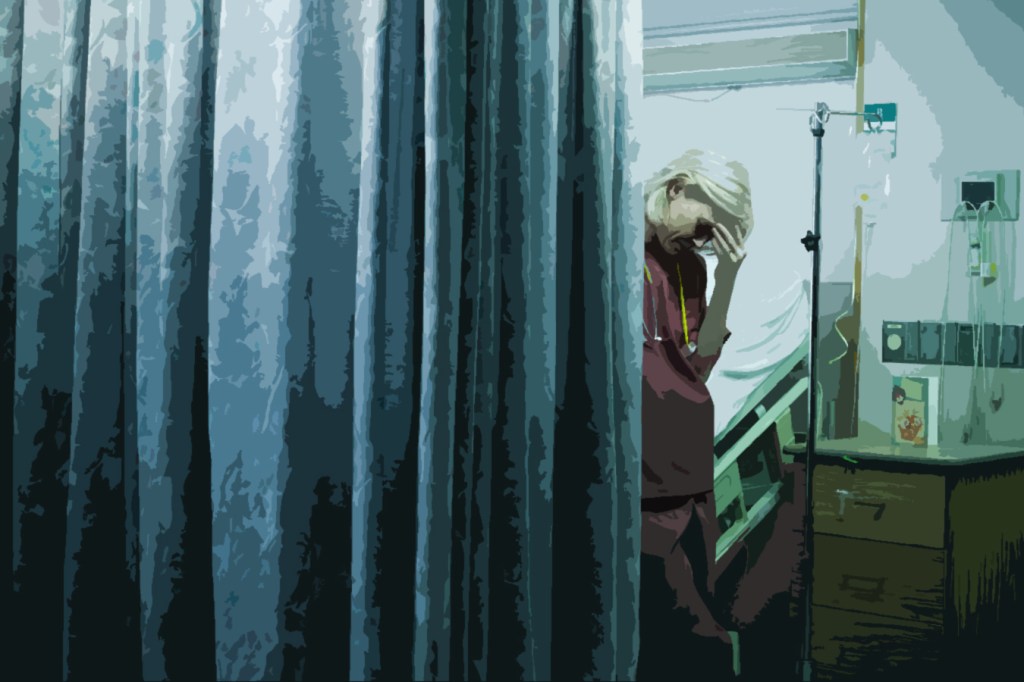
Medical supplies have run low. Administrators are searching for ways to expand hospital bed capacity. Health care workers are being asked to work extra shifts as their peers self-isolate.
And researchers this week made stark predictions for COVID-19’s impact on King and Snohomish counties, estimating 400 deaths and some 25,000 infections by April 7 without social-distancing measures.
“If you start doing that math in your head, based on every person who was infected infecting two other people, you can see every week you have a doubling in the number of new cases,” state health oficer Dr. Kathy Lofy said.
Hand-washing, staying home from work and other measures were no longer enough to sufficiently slow the virus, Lofy said.
Hospital administrators are rapidly changing protocols as the outbreak stresses the system, while frontline health care workers are beginning to feel the effects of disruptions to daily life. UW Medicine on Thursday told employees it would begin postponing elective procedures, beginning March 16.
“We’ve seen what has happened in other countries where they’ve had really rapid spread. The health care system has become overwhelmed,” Lofy said. “We want to do everything we can to prevent that from happening here.”
King and Snohomish counties offer some 4,900 staffed hospital beds, of which about 940 are used for critical care, according to the researchers — with the Institute for Disease Modeling, the Bill & Melinda Gates Foundation and the Fred Hutchinson Cancer Research Center — who modeled the outbreak’s potential growth. “… This capacity may quickly be filled,” they wrote.
Some of Seattle’s largest hospitals were already near capacity before the outbreak. Harborview Medical Center in downtown Seattle operated at 95 percent of its capacity in 2019, based on its licensed 413 beds and the days of patient care it reported to the Department of Health.
Of 81 hospitals that reported data for all of 2019, excluding psychiatric hospitals, the median hospital operated at 50 percent of its licensed capacity, according to a Seattle Times analysis. Many hospitals staff fewer beds than the maximum their license allows for, so the actual occupancy rate is likely higher.
Katharine Liang, a psychiatry resident physician who works rotations for Seattle-area hospitals, said requests for UW Medicine staffers to discharge patients in a timely fashion are not uncommon as administrators seek extra beds.
“The safety net hospitals, we’re always full,” Liang said, referring to medical centers that care for patients without insurance or means to pay.
Susan Gregg, a spokeswoman for UW Medicine, which operates UW Medical Center, Harborview Medical Center, Valley Medical Center and Northwest Hospital, said that each hospital had a surge-capacity plan being adapted for the outbreak.
“Our daily planning sessions monitor our available beds, supply usage and human resources,” Gregg said in a statement.
While Washington state has a robust system for detecting and monitoring infectious diseases, it has struggled to build the capacity to respond to emergencies like the coronavirus outbreak, according to a review of public data and interviews.
On a per-person basis, the state lags most others in nurses and hospital rooms designed to isolate patients with infectious, airborne diseases, according to a nationwide index of health-security measures.
The U.S. Centers for Disease Control and Prevention launched this initiative — called the National Health Security Preparedness Index — in 2013 to comprehensively evaluate the nation’s readiness for public health emergencies.
The state’s greatest strength, according to the index, is in its ability to detect public-health threats and contain them — scoring 8.5 points out of a possible 10, above the national average.
“It’s a leading state now in terms of how testing capabilities are playing out” for COVID-19, said Glen Mays, a professor at the Colorado School of Public Health who directs the index work.
With the scope of the outbreak becoming clear, the focus is turning to an area that is the state’s weakest on the index: providing access to medical care during emergencies.
When it comes to nurses per 100,000 people, Washington state ranked near the bottom — 46th among states and the District of Columbia — in 2018. It ranked 43rd nationally in the number of hospital isolation rooms — commonly referred to as “negative pressure” rooms, which draw in air to prevent an airborne disease from spreading — per 100,000 people and in neighboring states.
“It’s an area of concern,” Mays said of the state’s health care delivery capacity.
This vulnerability is well known to state policymakers. John Wiesman, Washington state’s health secretary, serves on the national advisory committee of the index and has championed its use as a tool for improvement, Mays said. He recalled Washington seeking lessons from other states that have been more successful and building a “medical reserve corps,” another area where the state has lagged.
The state scored 2.5 points for managing volunteers in an emergency in 2013. In 2018, it had improved to just 2.6.
Less than a week after diagnosed cases of COVID-19 grew rapidly in the Seattle area, administrators at several area hospitals had to hunt for additional medical supplies and called for rationing. They also established fast-shifting isolation policies for sick or potentially exposed staffers.
“Hospitals are being very vigilant. If you have the slightest signs of illness, don’t come to work,” said Alexander Adami, a UW Medicine resident, on Monday.
On March 6, UW Medicine directed employees who tested positive for COVID-19, the illness caused by coronavirus, to remain isolated at home for a minimum of seven days after symptoms developed, according to internal UW documents. Hospital workers told workers with symptoms who hadn’t been tested to remain isolated until they were three days without symptoms. Those who tested negative, or had influenza, could return after 24 hours.
Quarantines for sick workers means others must backfill.
“Programs are having to pull residents in other blocks in other hospitals and other clinics to fill gaps,” Adami said. “There simply aren’t enough people.”
School closures further complicate staffing.
Liang, the resident physician who works rotations for several area hospitals, said she had been pulled into an expanded backup pool on short notice to cover shifts.
Liang is the mother of a 1-year-old. On Wednesday, her family’s day care closed, as it typically does when Seattle schools close. Gov. Jay Inslee has ordered all schools in King, Pierce and Snohomish counties to close until late April.
“I’m not really sure what we’re going to do going forward,” Liang said. “My demands at home are increasing, and now, at the same time because of the same problem, my demands at the hospital are increasing as well.”
Adami, a second-year internal medicine resident, said residents were used to taxing hours, and demands had not been much more excessive than usual, but he remained concerned for the future.
“I would be worried about: We eventually get to the point where there are so many health care workers who become sick we have to accept things like saying, All right: Do you have a fever? No? Take a mask and keep working, because there are people to care for,” he said.
One sign of demand: Some hospitals are asking workers at greater risk of COVID-19 to continue in their roles, even after public health officials encouraged people in these at-risk groups among the broader public to stay home.
Staff over the age of 60 “should continue to work per their regular schedules,” a UW Medicine policy statement said. People who are pregnant, immunocompromised or over 60 and with underlying health conditions were “invited to talk to their team leader or manager about any concerns,” noting that hospital workers’ personal protective equipment would minimize exposure risks.
A registered nurse at Swedish First Hill who is over 60 and who has a history of cardiac issues said she told a manager last week of her concern about working with potential or confirmed COVID-19 patients.
She said a manager adjusted her schedule for an initial shift, but couldn’t guarantee that she would be excused from caring for these patients.
Hours later, the nurse said she suffered a cardiac event and was later admitted to another hospital with a stress-induced cardiomyopathy. The nurse did not want to be named for fear of reprisal by Swedish.
“I’m afraid for my life to work in there,” the nurse said. “I don’t think we’re being adequately protected.”
The nurse is now on medical leave.
In a statement, Swedish said it could not comment on an individual caregiver’s specific circumstances, but that employees at a higher risk are able to request reassignment and if it can not be accommodated, they can take a leave of absence.
“Providing a safe environment for our caregivers and patients is always our top priority, but especially during the current COVID-19 outbreak,” according to the statement.
Anne Piazza, senior director of strategic initiatives for the the Washington State Nurses Association said she had heard from a “flood” of nurses with similar concerns.
Additionally, “we are seeing increased demand for nurse staffing and that we do have reports of nurses being required to work mandatory overtime.”
China might provide an example of what could happen to the U.S. hospital system if the pace of transmission escalates, according to unpublished work from researchers with Johns Hopkins University, Harvard University and other institutions.
In Wuhan, the people seeking care for COVID-19 symptoms quickly outpaced local hospitals’ ability to keep up, the researchers found. Even after the city went on lockdown in late January, the number of people needing care continued to rise.
Between Jan. 10 and the end of February, physicians served an average of 637 intensive-care unit patients and more than 3,450 patients in serious condition each day.
But by the epidemic’s peak, nearly 20,000 people were hospitalized on any given day. In response, two new hospitals were built to exclusively serve COVID-19 patients; in all, officials dedicated more than 26,000 beds at 48 hospitals for people with the virus. An additional 13,000 beds at quarantine centers were set aside for patients with mild symptoms.
The researchers analyzed what might happen if a Wuhan-like outbreak happened here.
“Our critical-care resources would be overwhelmed,” said Caitlin Rivers, an epidemiologist at Johns Hopkins Center for Health Security who helped lead the study.
“The lesson here, though, is we have an opportunity to learn from their experience and to intervene before it gets to that point.”
Hospital administrators are stretching to make the most of their staff, avoid burnout and find space for patients flooding into hospitals.
As of Thursday afternoon, there hadn’t been an unusual uptick in hospitals asking emergency responders to divert patients elsewhere, according to Beth Zborowski, a spokeswoman for the Washington State Hospital Association.
Zborowski said administrators are getting creative to deal with shortages of supplies, staff and space, such as potentially hiring temporary workers.
The state is trying to reduce regulations to help scale up staffing.
The state health department’s Nursing Commission said last Friday it would give “top priority” to reviewing applications for temporary practice permits for nurses to help during the COVID-19 crisis.
After the governor’s emergency proclamation, the Department of Health also said it was allowing volunteer out-of-state health practitioners who are licensed elsewhere to practice without a Washington license.
All the doctors with UW Medicine have been trained, or are being trained on how to care for patients via telemedicine. The number of people using the service has increased tenfold since public health officials urged patients to not visit emergency rooms or visit clinics for minor issues, said Dr. John Scott, director of digital health at UW Medicine.
Some hospitals are creating wards for COVID-19 patients. EvergreenHealth, in Kirkland, converted its 8th floor for the use of these patients.
King County officials last week purchased a motel, which could allow patients to recover outside a clinical setting and free up beds.
“These are places for people to recover and convalesce who are not at grave medical risk, and therefore do not need to be in a hospital,” said Alex Fryer, spokesperson for King County Executive Dow Constantine.
Supply problems are ongoing, even after the federal government fulfilled a first shipment that included tens of thousands of N95 respirator masks, surgical masks and disposable gowns from a federal stockpile.
Piazza said the nursing association continues to receive reports that members at area hospitals are being asked to reuse or share personal protective equipment, wear only one mask a shift or conserve masks for use exclusively with COVID-19 confirmed patients.
“We need to address the safety of frontline caregivers,” Piazza said.
State officials placed a second order for supplies last weekend.
Casey Katims, director of federal affairs for Inslee, said three trucks of medical supplies from the federal stockpile arrived Thursday morning, including 129,380 N-95 respirators; 308,206 surgical masks; 58,688 face shields; 47,850 surgical gowns; and 170,376 glove pairs.
If the measures taken now aren’t enough, state officials have contingency plans they’ve been working on “for a while now,” said Lofy, the state health officer.
“The next step is to start thinking about alternate care systems or alternate care facilities. These are facilities that could potentially be used outside the clinic or the health care system walls.”

Accountable care organizations (ACOs) are seeking flexibility from the Trump administration on mitigating any financial losses that could arise from treating the burgeoning coronavirus outbreak.
The concerns come as the coronavirus has spread to more than 1,200 people across the country and has healthcare facilities worried about being overwhelmed. ACOs are in a particularly difficult situation as they are on the hook for paying back Medicare if healthcare costs skyrocket.
ACOs participating in either the Medicare Shared Savings Program (MSSP) or the Next-Gen ACO program agree to take on some form of financial risk. If they meet spending targets, they get a share of the savings, but if that spending accelerates they must pay back the Centers for Medicare & Medicaid Services (CMS) for a share of the losses.
CMS does have a policy in place for “extreme and uncontrollable” circumstances that could impact the shared savings and losses.
Under the policy, CMS agrees to mitigate the amount of shared losses that an ACO has to pay back to Medicare. The amount is determined by looking at the duration of the circumstance and the percentage of an ACO’s beneficiaries are in the affected area.
CMS also has a policy in place to account for how an unforeseen circumstance could affect an ACO’s quality score.
If an ACO can’t report quality then its quality score, which impacts whether the ACO saved or lost money, will be pegged to the mean score for all ACOs in the MSSP.
The policy has usually been applied for natural disasters like wildfires or hurricanes but never for a pandemic. But ACOs are worried about whether the policy goes far enough.
For one thing, the policy does not address ACOs that otherwise would have gotten shared savings without the outbreak.
“Many ACOs, especially those new to accountable care models and smaller and rural ACOs that don’t have reserves rely on those shared savings to invest in the care coordination programs, IT, infrastructure that is necessary to rely no high-quality care,” said Allison Brennan, senior vice president of government affairs for the National Association of ACOs.
It would also be helpful for the Center for Medicare & Medicaid Innovation (CMMI), which oversees ACOs, to outline some scenarios on what applying the policy would look like, said Ashley Ridlon, senior vice president of health policy at Evolent Health, a value-based care consulting and services company.
ACOs are also concerned about the calculation of the benchmark, which is what ACO healthcare expenditures are measured against. The financial benchmark is calculated based on the previous three years of medical spending.
If the medical spending spins out of control due to the coronavirus, then spending would go well beyond the benchmark.
The CMMI could only take action, though, if the national spending is affected.
But ACOs worry CMMI, which oversees the MSSP and the Next-Gen Program, will only take action if the benchmark is changed on a national basis.
“The way CMMI will look at this is only if the national trend comes exceptionally off projections,” said Donna Littlepage, senior vice president of accountable care strategies for Carilion Clinic, a Virginia-based healthcare system with seven hospitals and more than 200 physician practices. “If this happens in small pockets and not nationally then ACOs will be hit hard and there won’t be a fix.”
However, if the benchmark is completely off the actual spending trend, then CMMI will have to step in, said Littlepage.
“It doesn’t do CMMI good to drive all ACOs into the red,” she added.
CMS said that it has the authority to retroactively modify the benchmark for ACOs in the Next-Gen program if the national spending trend is affected by the coronavirus or other factors such as a natural disaster.
“We are monitoring events and will determine at a later date if we need to make any modifications to our benchmarking methodology,” the agency said.
CMS said it can also update the benchmark for the MSSP after a performance year to adjust for any national or regional trends regarding spending and healthcare utilization.
The agency did not say if it will employ the “extreme and uncontrollable” circumstances policy.
The application cycle for MSSP opens April 20.
“We encourage ACOs to apply since applicants have multiple opportunities throughout the summer to update and revise their application,” the agency said.