U.S. surpasses Italy for most confirmed covid-19 deaths in the world

https://www.washingtonpost.com/world/2020/04/11/coronavirus-latest-news/?fbclid=IwAR1NatwrfUviYtKlsOYZjwKwL-vITiAK41IpQ_lp4OeI5o9wisxwJvn6vAY&utm_campaign=wp_main&utm_medium=social&utm_source=facebook

US coronavirus deaths projected to peak Sunday | TheHill

The United States’ covid-19 death tally is now the highest in the world, eclipsing Italy’s toll on Saturday, despite experts calling the U.S. figure “an underestimation.”

The U.S. toll is now 19,424, with nearly half a million confirmed cases, surpassing Italy’s total of 18,849. Italy has 147,577 infected with the virus.

Despite the country’s large elderly population, experts had previously forecast that Italy’s staggering toll wasn’t an outlier so much as a preview of what other countries could expect. The steady climb of cases has slowed, and the Mediterranean country is now preparing to reopen.

Friday marked the highest single-day total yet with at least 2,056 people reported dead from complications related to covid-19 in the 50 states and the District of Columbia, according to a Washington Post tally. The virus claimed about 1,900 lives in the United States each of the past three days.

The country’s first death from the virus was reported on Feb. 29 in Washington state. Less than a month later, 1,000 people coronavirus-related deaths had been recorded across the nation.

Experts and government leaders predict the apex is still looming and may come mid-April.

Experts fear the toll is worse than the numbers provided by Johns Hopkins University, given a lack of transparency in China and elsewhere, and the difficulty of confirming cause of death, especially outside hospitals.

In addition, a lack of widespread testing has likely contributed to an undercount of U.S. deaths. The Centers for Disease Control and Prevention counts only deaths in which the virus is confirmed in a laboratory test. It’s not known how accurate testing is.


White House reverses position after blocking health officials from appearing on CNN

https://www.cnn.com/2020/04/09/media/pence-office-tv-bookings-coronavirus/index.html?utm_medium=social&utm_content=2020-04-09T18%3A50%3A06&utm_source=twCNN&utm_term=link&fbclid=IwAR3vThr8ecjeeG6VqkgR6s1blEbkkOK6ocqYTUof8cVVQKMByXoKMhBXfuw

White House reverses position after blocking health officials from ...

Vice President Mike Pence’s office reversed course on Thursday afternoon, after declining for days to allow the nation’s top health officials to appear on CNN and discuss the coronavirus pandemic, in what was an attempt to pressure the network into carrying the White House’s lengthy daily briefings in full.

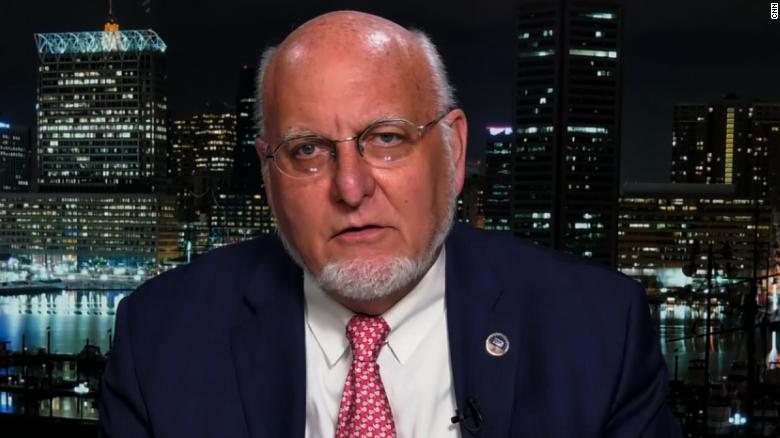
After this story was published, Pence’s office allowed for the booking of Centers for Disease Control and Prevention Director Dr. Robert Redfield for CNN’s Thursday night coronavirus town hall. Dr. Anthony Fauci was also booked for Friday on “New Day.”
Previously, Pence’s office, which is responsible for booking the officials on networks during the pandemic, said it would only allow experts such as Fauci or Dr. Deborah Birx to appear on CNN if the network televised the portion of the White House briefings that includes the vice president and other coronavirus task force members.
CNN often only broadcasts President Donald Trump’s question and answer session, which sometimes includes the health care officials, live on-air.
After Trump leaves the podium, CNN frequently cuts out of the White House briefing to discuss and fact-check what the President has said. A CNN executive said that the network usually returns to such programming because of the extensive length of the full briefing that includes Pence, which can run in excess of two hours.
CNN did, however, air the vice president’s portion of the briefing Wednesday night.
Regardless, Pence’s office for several days declined to make the nation’s top health care officials available to CNN for the last seven days.
“When you guys cover the briefings with the health officials then you can expect them back on your air,” a Pence spokesperson told CNN Thursday morning.
Fauci, Birx, FDA Commissioner Stephen Hahn and Surgeon General Jerome Adams have all appeared on NBC, CBS, ABC and Fox during the last week, despite the fact that the broadcast networks have generally not covered the briefings that have included the vice president and health officials.
But the Vice President’s office had blocked all CNN appearances since last Thursday night.
Fauci appeared on the last five weekly CNN Town Halls, with Anderson Cooper and Dr. Sanjay Gupta. Until this story was published, Vice President’s office has refused to make him, or anyone, available for Thursday’s town hall.
The White House has made two non health care officials available to CNN in the last week. Secretary of Defense Mark Esper appeared on “State of the Union” on Sunday and Peter Navarro appeared on Anderson Cooper’s show on Friday and “New Day” on Monday.
Trump has declined CNN’s repeated requests for an interview, instead appearing only on Fox News for softball interviews multiple times during the national emergency.
A CNN spokesperson declined to comment for this story.


Labor Secretary Eugene Scalia faces blowback as he curtails scope of worker relief in unemployment crisis

https://www.washingtonpost.com/business/2020/04/10/labor-secretary-eugene-scalia-faces-blowback-he-curtails-scope-worker-relief-unemployment-crisis/?fbclid=IwAR3mYk7W0Jvxu0lJ9vo7FXufkVsy1OVsg-VqmUztG1hi5PJAneL7PzcKDtI

Eugene Scalia, rising in Trump orbit, becomes key force in ...

Labor Department comes under fire over handling of worker protection, unemployment program.

The Labor Department is facing growing criticism over its response to the coronavirus pandemic as the agency plays a central role in ensuring that the tens of millions of workers affected by the crisis get assistance.

The criticism ranges from direct actions that the agency has taken to limit the scope of worker assistance programs to concerns that it has not been aggressive enough about protecting workers from health risks or supporting states scrambling to deliver billions in new aid.

In recent days, Labor Secretary Eugene Scalia, who has expressed concerns about unemployment insurance being too generous, has used his department’s authority over new laws enacted by Congress to limit who qualifies for joblessness assistance and to make it easier for small businesses not to pay family leave benefits. The new rules make it more difficult for gig workers such as Uber and Lyft drivers to get benefits, while making it easier for some companies to avoid paying their workers coronavirus-related sick and family leave.

“The Labor Department chose the narrowest possible definition of who qualifies for pandemic unemployment assistance,” said Andrew Stettner, a senior fellow at the Century Foundation who has spent two decades working on unemployment programs.

At the same time, frustrations have built among career staff at the Labor Department that the agency hasn’t ordered employers to follow safeguards, including the wearing of masks, recommended by the Centers for Disease Control and Prevention to protect workers. Two draft guidance documents written by officials at the Occupational Safety and Health Administration, part of the Labor Department, to strengthen protections for health-care workers have also not been advanced, according to two people with knowledge of the regulations granted anonymity to discuss the internal deliberations.

Scalia, a longtime corporate lawyer who is the son of the late Supreme Court justice Antonin Scalia, has emerged as a critical player in the government’s economic response to the pandemic. Nearly 17 million Americans have applied for unemployment insurance since President Trump declared a national emergency on March 13, and states are struggling to get their systems working to deliver $260 billion in new aid approved by Congress.

Democrats and some Republicans argue that the Labor Department needs to be more aggressive about disbursing money and technical assistance to states to shore up the unemployment insurance system. The department has released only half of $1 billion in administrative support for states that Congress approved almost a month ago.

Sen. Lindsay O. Graham (R-S.C.) said Thursday in an interview that he has talked to Scalia about the need to speed things up.

“You could have massive civil unrest if these systems cannot get checks out the door. We’re talking about 20 percent unemployment, maybe even more,” Graham said. “The application process is a nightmare. The state systems are failing.”

Graham said that Scalia has been responsive, but, “I don’t see any action being taken.”

Labor Department officials said Scalia is moving rapidly to help U.S. workers in an unprecedented time. They pointed to a poster and guidebook that OSHA released with steps companies “can take” to reduce worker risk of coronavirus exposure.

“Under Secretary Scalia’s leadership, in the last two weeks, the department has quickly released new rules and guidance for states, businesses, and individual Americans to help those in need of relief,” said Patrick Pizzella, deputy labor secretary. “The department has already distributed nearly $500 million in additional administrative funding to 39 states.”

Still, Scalia has made clear he is wary of taking an excessively lax approach to disbursing aid, an argument that he used to help win GOP support for recent legislation. Writing on Fox Business Network’s website on Monday, he warned that he does not want unemployed people to become addicted to government aid.

“We want workers to work, not to become dependent on the unemployment system,” Scalia wrote with Small Business Administration chief Jovita Carranza. “Unemployment is not the preferred outcome when government stay-at-home orders force temporary business shutdowns.”

On the day the $2 trillion package passed the Senate, Scalia spoke with Sens. Rob Portman (R-Ohio), Ben Sasse (R-Neb.) and Tim Scott (R-S.C.), who had raised concerns the law’s new unemployment benefits were too large and would deter workers from returning to jobs.

Scalia told conservative senators that once enacted, his agency would ensure the provisions his agency oversees would not hurt U.S. companies, according to three congressional officials aware of the conversations and granted anonymity to discuss the call.

Narrowing rules

Two recent laws passed by Congress expanded paid and sick leave policies as well as the size and scope of unemployment benefits for Americans. But worker advocates argue that as Scalia begins to implement these measures, his department is being much less generous toward workers than toward companies.

New Labor Department guidance says unemployment benefits apply to gig workers only if they are “forced to suspend operations,” which could dramatically limit options for those workers if their apps are still operating. Other workers also face a high hurdle to qualify for benefits.

The guidance says a worker “may be able to return to his or her place of employment within two weeks” of quarantining, and parents forced to stop work to care for kids after schools closed are not eligible for unemployment after the school year is over. Workers who stay home because they are older or in another high-risk group are also ineligible unless they can prove a medical professional advised them to stop working.

Some states are also having a difficult time figuring out how to verify how much money self-employed workers typically earn. It might require looking at tax documents, which unemployment offices don’t usually have access to.

“Some of the requirements, the standards that we’re being held to, are going to be incredibly difficult to adhere to,” Maine Labor Commissioner Laura Fortman said.

A Labor Department spokesperson said the agency is “providing as much technical assistance and IT support as possible” to states, some of which are using computer systems that are several decades old.

Scalia’s agency is also in charge of overseeing the new paid sick and family leave regulations, which apply to companies with fewer than 500 employees during the pandemic. The law gave the Labor Department authority to exempt businesses with under 50 employees from providing 12 weeks of paid family leave to care for a child out of school if the leave policy threatens to bankrupt the company.

Businesses that deny workers paid leave don’t have to send the government any paperwork justifying why. The Labor Department’s guidance asks companies to “retain such records for its own files,” a contrast with the heavy documentation required from gig workers who must prove they were affected by the coronavirus outbreak to get aid.

A Labor Department spokesperson said its rules on paid sick and family leave follow Congress’ direction.

“The department’s new rule balances allowing workers to take paid leave to care for their children with keeping small businesses open — as instructed by Congress,” a spokesperson said.

Tension at OSHA

Some Labor Department staffers and outside critics have also faulted Scalia for his handling of OSHA, which falls under his jurisdiction.

The CDC has issued recommendations for the public and businesses to follow practices such as social distancing and sanitizing workstations. OSHA could make those guidelines mandatory for all employers or for all essential employees but has not done so.

“Some of the OSHA staff is frustrated they can’t do more to protect workers. They want an emergency standard that would require employers to follow CDC guidelines,” said David Michaels, a George Washington University School of Public Health professor who served as assistant secretary of labor for occupational safety and health in the Obama administration.

Under Scalia, OSHA has also decided against issuing safety requirements to protect hospital and health-care workers, including rules that would mandate nurses and other providers be given masks and protective gear recommended by the CDC when at risk of exposure.

The union National Nurses United petitioned Scalia to increase the requirements during the pandemic, but a union spokeswoman said the Labor Department has not even acknowledged receipt of the letter.

Hospitals have resisted these rules for years. Tom Nickels, the chief lobbyist for the American Hospital Association, said that he hadn’t spoken to Scalia but that his group has opposed these actions in conversations with OSHA staff because widening the use of N95 respirator masks would be impractical. “The equipment is in short supply,” he said. “We can’t get it.”

OSHA also has not taken significant action to protect workers from retaliation when they speak out about dangerous conditions that expose them to coronavirus, Michaels said.

When workers at a manufacturing plant in northern Illinois tried alerting government officials about their concerns about working shoulder to shoulder, the regional OSHA official responded that “all OSHA can do is contact an employer and send an advisory letter outlining the recommended protective measures,” according to an email reviewed by The Washington Post. “This isn’t very helpful for you or your labor group, but it is the best I have to offer,” the email said.

On Wednesday, OSHA sent out a news release reminding companies that it is “illegal to retaliate against workers because they report unsafe and unhealthful working conditions during the coronavirus pandemic.”

“OSHA has completely abandoned their responsibility to protect workers on the job,” said Debbie Berkowitz, who worked at OSHA in the Obama administration and is now director of the worker safety and health program at the National Employment Law Project. “I have never felt this way, that every worker is at the mercy at their boss of whether they get protected. People are going to get sick and die, and they don’t have to.”

This week, Scalia said OSHA would take all worker safety concerns seriously.

“We are fielding calls from workers worried about their health and from workers who believe they have been illegally disciplined by their employer for expressing health concerns,” he said. “We will not tolerate retaliation.”


South Korea is winning the fight against covid-19. The U.S. is failing.

https://www.washingtonpost.com/outlook/2020/04/10/south-korea-is-winning-fight-against-covid-19-us-is-failing/?fbclid=IwAR0Fizr7BiOZgPxJVjHpHcuetAnn_UcamZDfmY16V4_RG3xV52rOXryIepk&utm_campaign=wp_main&utm_medium=social&utm_source=facebook

Confucianism Isn't Helping South Korea Beat the Coronavirus

South Korea’s blueprint for victory.

As the coronavirus spreads rapidly around the world, killing thousands and leaving governments scrambling to deal with the fallout, one country has repeatedly drawn praise for its efficiency in dealing with it: South Korea. After the first cases appeared, the South Korean government ramped up testing at a speed almost unimaginable in the United States. Its swift response slowed the spread of the virus and saved thousands of lives. As of April 8, South Korea had suffered 200 deaths due to the virus (4 per 1 million of population) and the number of new cases has slowed, while the United States had suffered 13,000 deaths (39 per 1 million population) with new cases continuing to grow quickly.

How did this happen? For many it is baffling that a relatively small Asian country could succeed where much of the rest of the world tragically failed. Was it South Korea’s experience dealing with another respiratory epidemic illness, Middle East respiratory syndrome, in 2015? Its excellent and affordable health-care system? Its cultural values? Mask-wearing? Some of these factors doubtless accelerated South Korea’s rapid deployment of testing stations and its subsequent efforts to identify and treat patients.

But the efficient South Korean response also hinged on two historically rooted factors: the close cooperation between the state and the private sector, and the South Korean public’s willing and almost enthusiastic embrace of a large-scale medical intervention. The origins of both of these phenomena lie in the South Korean experience of rapid industrialization and nation-building during the Cold War.

After the first cases of covid-19 were reported in South Korea on Jan. 20, the government recognized the need for prompt and comprehensive action. According to Reuters, South Korean Health Ministry officials called a meeting with representatives from medical companies in January when only four cases of the virus had been confirmed. The health officials told the executives that the country needed to have tests ready in short order, and they promised rapid approval by the Korea Centers for Disease Control and Prevention. In scarcely one week, the government had approved a test kit developed by Kogene Biotech and would soon fast-track the approval of test kits developed by several other companies.

The endeavor was so successful that by March, 47 countries were seeking to import South Korean test kits. Compared with President Trump, who has squabbled with 3M and General Motors over the production of masks and ventilators, the government and private sector worked together seamlessly in South Korea. Companies responded quickly to the state’s demands while receiving strong government support.

The private companies’ swift response to an urgent government fiat followed a pattern of state-private sector partnership in the service of the nation that was pioneered by South Korea’s authoritarian ruler Park Chung Hee during the 1960s. When Park seized power in a military coup in 1961, South Korea was among the poorest countries in the world and, from the perspective of many U.S. officials who often called it a “rat hole,” it was hopeless. But Park was driven by an all-consuming determination to achieve double-digit economic growth rates and raise living standards in his impoverished country.

Although Park received much advice from the United States during his 19 years in power, the model of development he came up with did not emulate the American style of free-market capitalism at all. It bound South Korean conglomerates closely to the state, offering them special incentives if they followed state guidance and performed. During the 1960s, Park recognized that to achieve an economic takeoff, he needed to dramatically increase exports. His government made low-interest loans available to companies that were willing to test their mettle exporting textiles, wigs and other light-manufactured goods abroad. Those that succeeded were rewarded with even greater largesse from the state.

This development model had a dark side, of course. The cozy ties between the state and businesses facilitated corruption, strengthened Park’s grip on power and heightened repression. But from a purely economic standpoint, it worked. Exports increased, Korean firms captured a growing share of international markets, and per capita income rose.

Park never strayed far from his military roots. The managerial techniques and soldierly discipline he had learned in his years as an officer informed his approach to development. American aid officials were impressed by how his presentations seemed to come “straight out of the U.S. military briefing manuals.” South Korea’s rapid response to the coronavirus has contained echoes of this military ethos, although the country shifted to more democratic governance in the 1980s and 1990s. “We acted like an army,” one infectious-disease specialist in Korea told Reuters.

Cold War nation-building in South Korea brought not only state-led economic development, but also new kinds of government-led medical interventionsAs historian John P. DiMoia has explained, during the 1950s, many South Koreans were still unfamiliar with Western medicine and did not initially welcome official health programs. This began to change under Park Chung Hee’s rule. The South Korean leader launched public health campaigns that fundamentally changed both the medical profession and the public’s attitude toward it. New professional standards were demanded of doctors and their support staff, while the public was encouraged — and at times coerced — to participate in family planning and other state-organized health interventions.

The swift rollout of coronavirus testing was not South Korea’s first large-scale effort to combat an infectious organism. During the 1960s, according to DiMoia, one of the biggest medical problems plaguing South Korea was parasite infestation. The Park government made a concerted effort to eradicate parasites through a national testing program that targeted elementary school students. For nearly two decades, collecting of stool samples for analysis was a routine part of life for South Korean children. The children that learned — at times grudgingly — to accept government testing for parasites during the 1970s and 1980s are now the adults who willingly line up to be tested for the coronavirus.

Today, the Moon Jae-in government’s response to the virus has not been without flaws and criticism. The South Korean media has blamed him for not moving quickly enough to ban Chinese tourists when the virus began spreading rapidly. Others have criticized the high degree of state surveillance that accompanied the rollout of testing. The government would have had far more difficulty carrying out contact tracing if it could not have closely followed the movement of its citizens through their smartphones and credit cards.

Here, too, there are faint echoes of South Korea’s authoritarian past, which was too often marked by the close monitoring of students, intellectuals and other dissidents by military regimes.

But Moon, who was imprisoned during the 1970s for protesting Park Chung Hee’s authoritarian rule, has been careful to keep his policies within the confines of democratic accountability. Conservative U.S. commentators who claim South Korea has succeeded because it is not a democracy have it wrong. In fact, South Korea has avoided the draconian lockdowns and travel restrictions imposed by the Communist Party of China. Through the use of technology and data, South Korean has been able to keep businesses open to a greater extent than most parts of the United States.

South Korea’s impressive management of the coronavirus only strengthens its rapidly growing cultural influence around the world, which is abundantly clear in the widespread popularity of K-pop and the unprecedented success of the Korean film “Parasite” at the Academy Awards.

The Moon government’s deft handling of a global pandemic that has taken on nightmarish proportions elsewhere has drawn praise from health experts and policymakers worldwide, with many citing it as a model. “Let’s not follow Italy, let’s follow South Korea,” Sen. Mitt Romney (R-Utah) said recently when talking about how the United States should deal with its own swiftly escalating crisis.

Unfortunately, it is too late for the United States to emulate South Korea and avert thousands of deaths. But we could learn from its example, by encouraging better public-private partnerships in manufacturing needed medical equipment and protective gear and by encouraging Americans to embrace public health initiatives, including widespread testing, to save lives.


Fauci: ‘Looks like’ US deaths will be lower than original projection

Fauci: ‘Looks like’ US deaths will be lower than original projection

Fauci: 'Looks like' US deaths will be lower than original ...

Dr. Anthony Fauci said Wednesday morning that he thinks the number of U.S. deaths from coronavirus will end up being less than the original projection of 100,000 to 200,000. 

Fauci, the government’s top infectious disease expert, attributed the drop to the success of social distancing measures that have directed people to stay home and closed many businesses.

“Although one of the original models projected 100- to 200,000 deaths, as we’re getting more data and seeing the positive effect of mitigation, those numbers are going to be downgraded,” Fauci said on Fox News. “I don’t know exactly what the numbers are going to be, but right now it looks like it’s going to be less than the original projection.”

By the end of March, the White House was projecting 100,000 to 240,000 deaths as America’s best-case scenario for the pandemic.

Centers for Disease Control and Prevention Director Robert Redfield made similar comments on Tuesday, saying he expected the number of deaths to be “much lower” than what was predicted by the models.

A closely watched University of Washington model is now projecting about 60,000 deaths in the U.S. 

Despite some hopeful signs, Fauci emphasized that now is not the time to ease up on social distancing measures, the best way to keep improving the outlook. 

“We’re going to start to see the beginning of a turnaround, so we need to keep pushing on the mitigation strategies because there’s no doubt that that’s having a positive impact,” he said.

“Now’s not the time to pull back at all,” he added. “It’s a time to intensify.”

President Trump has been eager to reopen the economy, and Fauci said planning for that is underway at the White House, where late Tuesday night there was a meeting on the subject in the Roosevelt Room.

“If in fact we are successful it makes sense to at least plan what a reentry into normality would look like,” Fauci said. “That doesn’t mean we’re going to do it right now, but it means we need to be prepared to ease into that. And there’s a lot of activity going on.”


Trump considering suspending funding to WHO

https://thehill.com/homenews/administration/491671-trump-considering-suspending-funding-to-who?utm_source=&utm_medium=email&utm_campaign=28856

WHO declares the outbreak of the new coronavirus is a pandemic ...

President Trump said Tuesday that he would consider placing a hold on funding for the World Health Organization (WHO), expressing grievances with its handling of the novel coronavirus.

“They missed the call. They could have called it months earlier. They would have known, and they should have known, and they probably did know,” Trump told reporters at a White House press briefing, suggesting the WHO failed to sufficiently warn the global community about the virus.

“We’re going to be looking into that very carefully, and we’re going to put a hold on money spent to the WHO,” Trump continued. “We’re going to put a very powerful hold on it, and we’re going to see. It’s a great thing if it works, but when they call every shot wrong, that’s not good.”

Pressed later by a reporter on whether it was a good idea to put a hold on funding during a global pandemic, the president clarified that he was considering suspending funding to the WHO.

“I’m not going to say I’m going to do it,” Trump said. “We will look at ending funding.”

The United States is the largest contributor to the WHO’s budget. The president’s fiscal 2021 budget request proposed slashing funding to the WHO, a body of the United Nations responsible for international public health, from $122 million to about $58 million.

The president said the WHO seemed to be “very biased towards China” and accused the organization of disagreeing with his travel restriction on flights coming in from China. He suggested the organization was blind to the extent of the outbreak in Wuhan, the capital of China’s Hubei province, where the virus originated.

The WHO said in early February that widespread travel bans that interfere with international travel and trade were not necessary to prevent the spread of COVID-19, days after the Trump administration announced it would restrict travel coming into the U.S. from China. It did not take particular issue with the president’s travel restriction.

“They actually criticized and disagreed with my travel ban at the time I did it, and they were wrong. They’ve been wrong about a lot of things. They had a lot of information early, and they didn’t — they seemed to be very China-centric. We have to look into it,” Trump told reporters.

When a reporter asked Anthony Fauci, head of the National Institute of Allergy and Infectious Diseases, to answer a question on the WHO, Trump interjected before he answered, saying Fauci “respects the WHO, and I think that’s good.”

“But they did give us some pretty bad play-calling,” Trump said.

The remarks, expanding on a critical tweet he sent earlier Tuesday, come amid growing criticism among conservatives of the WHO’s handling of the coronavirus outbreak. Some have accused the organization of leaving other nations unprepared for the virus.

Sen. Martha McSally (R-Ariz.) last week called on WHO Director-General Tedros Adhanom Ghebreyesus to resign, after reports emerged that the U.S. intelligence community had concluded China underreported its count of coronavirus cases. McSally accused the WHO of helping China conceal the extent of the outbreak.

Trump has faced criticism for at first downplaying the threat from the coronavirus, and his administration has been scrutinized for early delays in testing that hampered the overall response. Trump has often pointed to his early action restricting travel from China as a sign his administration was quick to confront the outbreak.

Ezekiel Emanuel, a special adviser to the director general of the WHO, was critical of Trump’s remarks on the coronavirus at the end of February, saying he found much of what Trump said at his first press briefing on the domestic virus outbreak to be “incoherent.”


Why medical experts worry about President Trump touting chloroquine

https://www.politifact.com/article/2020/apr/07/why-medical-experts-worry-about-president-trump-to/?fbclid=IwAR2mxG7HzUAZgmfrwsC9cZtNL2-q8_xQSj6jbdjF45Aod7x8848A3voRYVw

Trump touts hydroxychloroquine as a cure for Covid-19. Don't ...

IF YOUR TIME IS SHORT

• Already, an Arizona man died and his wife was hospitalized after self-administering a variant of chloroquine, prompting the Centers for Disease Control and Prevention to send out a warning.

The American Medical Association says it “strongly opposes” prophylactically prescribing chloroquine as well as pharmacies and hospitals “purchasing excessive amounts” of the medication.

• Some people have health conditions that mean they shouldn’t take chloroquine because of potential side effects. 

• Putting too much focus on one specific treatment could make Americans lax about following social distancing guidelines.

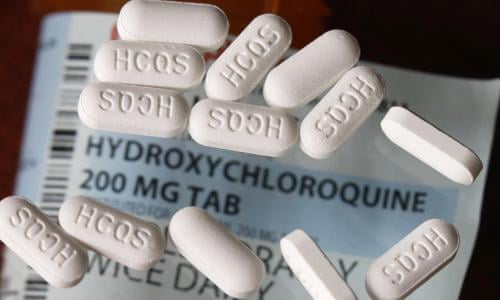
In more than half a dozen public events since March 19, President Donald Trump has touted a possible treatment for coronavirus infection — using the malaria drug chloroquine or a related drug hydroxychloroquine, sometimes in combination with the antibiotic azithromycin.

“I hope they use the hydroxychloroquine, and they can also do it with Z-Pak (azithromycin), subject to your doctor’s approval and all of that,” Trump said at an April 4 briefing. “But I hope they use it, because I’ll tell you what: What do you have to lose?”

Trump reiterated praise for chloroquine in his April 5 briefing: “A lot of people are saying that … if you’re a doctor, a nurse, a first responder, a medical person going into hospitals, they say taking it before the fact is good.”

When a reporter asked Trump for “the conclusive medical evidence” to support his optimism, Trump dismissed the question as “fake news.”

Trump isn’t wrong that this drug combination might prove helpful, at least based on preliminary evidence. The treatment is currently being studied in clinical trials, according to the Centers for Disease Control and Prevention.

But randomized tests — the gold standard of medical evidence — have not been completed, and the lack of rigorous testing as a treatment against coronavirus has led many medical experts to be more cautious than the president. The drug has significant side effects, including damage to the heart and nervous system and suicidal thoughts. And a run on chloroquine could harm patients with lupus and other diseases that the drug is already used for.

Some medical experts are concerned that the president’s words from a White House lectern may be skewing Americans’ perceptions of the best way to fight coronavirus.

Not long after Trump began touting chloroquine, an Arizona man died and his wife was hospitalized after they ingested a fish-tank solvent that includes chloroquine phosphate. The woman told NBC News that they thought the compound was the same as the one Trump cited. Fish-tank cleaners are not the same as the drugs used for malaria, nor are they suitable for human consumption.

A few days later, the CDC released a warning, not just against using the fish-tank cleaner but also the malaria drug itself without a doctor’s orders.

In a statement to PolitiFact, the American Medical Association seconded such concerns, saying that no medication has yet been approved by the Food and Drug Administration for patients with coronavirus, also known as COVID-19. The association said it “strongly opposes” prescribing chloroquine as a preventive measure and also opposes pharmacies and hospitals “purchasing excessive amounts” of the medication.

On several occasions, Trump has reminded viewers of his briefings to consult with doctors about treatments. But at other times, he has trumpeted his own confidence in chloroquine as a treatment.

“I’ve seen things that I sort of like,” he has said. “So what do I know? I’m not a doctor. I’m not a doctor. But I have common sense.”

Experts said Trump’s high-profile endorsement risked overshadowing the views of medical experts.

“The evidence just isn’t there yet to prove that these drugs work, and while the risks from inappropriately prescribing them are rare, they can be serious,” said Joel F. Farley, associate head of the department of pharmaceutical care and health systems at the University of Minnesota College of Pharmacy.

Farley said he even worries about patients going through proper channels.

“Even if prescribed by a physician, I am not convinced that patients are being adequately screened or monitored for some of the more serious side effects, like cardiotoxicity,” he said. “I have heard anecdotal reports of physicians prescribing these medications for friends and family members, which doesn’t always come with an appropriate physical or health screening.”

Another worry among medical specialists is the possible stockpiling of chloroquine. This could harm patients with lupus or rheumatoid arthritis, who depend on the drug to treat their own conditions. “Being just stewards of limited resources is essential,” the American Medical Association said in its statement.

Finally, focusing on one potential treatment could overshadow the nitty-gritty things Americans need to do on a daily basis to stay safe.

“My biggest concern is that people will believe there’s some magic cure and not follow social distancing and other normal precautions in the belief that there’s a drug to ‘fix this,’” said Ally Dering-Anderson, a clinical associate professor at the University of Nebraska College of Pharmacy.


Special Report: Doctors embrace drug touted by Trump for COVID-19, without hard evidence it works

https://www.reuters.com/article/us-health-coronavirus-usa-hydroxychloroq/special-report-doctors-embrace-drug-touted-by-trump-for-covid-19-without-hard-evidence-it-works-idUSKBN21O2VO

Special Report: Doctors embrace drug touted by Trump for COVID-19 ...

The decades-old drug that President Donald Trump has persistently promoted as a potential weapon against COVID-19 has within a matter of weeks become a standard of care in areas of the United States hit hard by the pandemic — though doctors prescribing it have no idea whether it works.

Doctors and pharmacists from more than half a dozen large healthcare systems in New York, Louisiana, Massachusetts, Ohio, Washington and California told Reuters they are routinely using hydroxychloroquine on patients hospitalized with COVID-19. At the same time, several said they have seen no evidence that the drug, used for years to treat malaria and autoimmune disorders, has any effect on the virus.

Use of hydroxychloroquine has soared as the United States has quickly become the epicenter of the pandemic. More than 355,000 people in the United States have tested positive for the novel coronavirus, and more than 10,000 have died. The federal government estimates that as many as 240,000 people in the country may die from the disease before the outbreak is over.

Facing those numbers, and in the absence of any known effective treatments, doctors on the frontlines said they began using hydroxychloroquine and the related chloroquine on patients who are deteriorating based on a few small studies suggesting a possible benefit. Some said they had come under pressure from patients to use the therapies widely touted by Trump and other supporters.

“I may take it,” Trump said on Saturday, referring to hydroxychloroquine, though he has twice tested negative for coronavirus, according to the White House. “We’re just hearing really positive stories, and we’re continuing to collect the data.”

Potential side effects of hydroxychloroquine include vision loss and heart problems. But doctors interviewed by Reuters say they are comfortable prescribing the drug for a short course of several days for coronavirus patients because the risks are relatively low and the therapies are inexpensive and generally available.

However, protocols directing how these drugs should be used vary from one hospital to another, including when to introduce them and whether to combine them with other drugs. In addition, some studies showing promise involve patients who took the therapies for mild or early-stage illness. Many of those people are likely to recover from the virus on their own.

Patients admitted to the hospital in the United States are generally much sicker than the mildly ill cases cited in such studies when they receive therapy. These factors, doctors said, have made it difficult for them to determine whether the drugs are making a difference. “I have seen hundreds of patients with severe COVID and most of these people are on hydroxychloroquine,” Dr Mangala Narasimhan, regional director of critical care at Northwell Health, a 23-hospital system in New York, said in an email. “In my opinion, although it is very early, I do not see a dramatic improvement from the hydroxychloroquine in these patients.” Dr Daniel McQuillen, an infectious disease specialist at Lahey Hospital & Medical Center in Burlington, Massachusetts, said he has prescribed a course of hydroxychloroquine for about 30 COVID-19 patients so far because the drug has shown “a little bit of antiviral activity.” But he has not seen “marked improvement for patients.”

“Anecdotally, it may have had limited effect in patients with milder disease,” McQuillen said. The therapy “has had no effect in limiting or slowing progression of our patients that have been at or near ICU level when they arrived.”

‘SEE WHAT STICKS’

The experience of David Lat, a legal recruiter and commentator who founded the blog Above the Law, reflects the mixture of hope and uncertainty surrounding the drugs now being pursued as possible coronavirus treatments.

Since early March, the 44-year-old New Yorker has chronicled his near-fatal infection with coronavirus in social media posts followed by thousands of people. Lat’s case has resonated with a U.S. audience that has begun to recognize the risk that coronavirus poses not only to elderly patients with serious medical conditions, but also to generally healthy younger adults.

After more than a week of worsening symptoms, Lat was admitted to NYU Langone Medical Center on March 16 and later placed on a ventilator. On March 28, he shared on Facebook that his doctors had taken him off of the ventilator and had moved him out of intensive care after his condition improved dramatically.

In an exchange of text messages with Reuters, Lat said he was treated with hydroxychloroquine and the antibiotic azithromycin. He also received the experimental therapy clazakizumab, which aims to regulate an overreaction by the body’s immune system thought to trigger the respiratory distress seen in severe COVID-19. After the story was published, Lat clarified that he received a fourth therapy, the antiviral Kaletra, not Kevzara, as he had initially recalled.

“The doctors haven’t concluded what caused my recovery,” Lat said. “The state of coronavirus research is very much ‘throw stuff against a wall and see what sticks’ – but when something does stick, in terms of a good patient outcome, you’re not sure what stuck.” Lat’s doctors were not immediately available to comment on his treatment.

Some doctors have been vocal in advocating the drug. Dr Vladimir Zelenko, a general practitioner in upstate New York, has claimed that a three-drug cocktail of hydroxychloroquine, azithromycin and zinc sulfate has helped mitigate the infection in nearly 200 hundred of his patients before they became sick enough to require hospitalization. His recommendations have attracted the attention of Trump’s supporters. Zelenko wasn’t immediately available for comment.

Despite such encouraging reports, hard evidence that any of the therapies now under study will work is weeks and possibly months way.

Early, but mixed, data has emerged from COVID-19 trials of the malaria drugs in China. A research team in Marseilles, France, has published data showing that out of 80 mild COVID-19 patients treated with hydroxychloroquine and azithromycin, 93 percent had no detectable levels of the virus after eight days.

Doctors have questioned the value of the Marseille study and several papers from China as being too small or poorly designed to offer hard evidence of benefit. Most do not compare outcomes of patients who received the malaria therapies with people who did not, considered the most reliable measure of a drug’s effectiveness. Last week, doctors in Paris reported that they tried to replicate the results of the Marseille study and failed. Results from a trial conducted in Wuhan, China, were released that included a control group of patients who did not receive the anti-malarial therapy for comparison. But critics questioned why information on the trial’s main goal — detecting viral load — was not disclosed, and said data was missing for some patients. More rigorous U.S.-led trials are now underway. But most focus on whether the drugs can help prevent illness in people exposed to the coronavirus, such as healthcare workers or relatives of confirmed patients, and not people who are already sick. Randomized, controlled trials of the drugs are being conducted in other countries, including China, Brazil and Norway.

Until the evidence is in, “each institution is setting their own treatment guidelines,” said Dr Otto Yang, an infectious disease specialist at the University of California, Los Angeles Medical Center. “There is simply no data,” he said. “It is a matter of opinion, and opinions differ.”

GAME-CHANGER?

Trump is deeply invested in the idea that the malaria drugs will show a benefit, and personally pressured federal health officials to make them available, Reuters reported on Saturday. The president announced on Twitter last month that hydroxychloroquine, when combined with azithromycin, has the potential to become “one of the biggest game changers in the history of medicine.”


Schools are essential. Don’t rule them out.

Schools are essential. Don’t rule them out.

Teach Your Children Well - Crosby Stills Nash and Young (Ukulele ...

It remains to be seen just how much President Trump’s extension of social distancing guidelines in the United States until April 30 defers the debate over when to safely restart the economy, allowing policymakers to focus on how to ramp up the testing and PPE availability to do so. When the time comes, they also need to contemplate the question asked by Aaron Carroll in the March 17th New York Times, “Is closing the schools a good idea?”

The question was not rhetorical. It cited the food insecurity addressed by school lunch and breakfast programs as well as the physical safety provided, particularly for homeless children. While New York City schools are providing 3 meals/day for children who need, child protective services in many regions are already seeing 50% declines in reporting of child abuse and neglect. With families stressed economically and confined to home without supervision, that is not good news since neglected or abused children are often only identified at school. In this week’s New Yorker Peter Hessler writes anecdotally about 2 suicides in youth attributed to the lockdown in China, matching that country’s total number of pediatric deaths thus far due to SARS-CoV-2 in the literature.

When we think of flattening the curve to protect the most vulnerable in society, our minds jump to the very old and the very young. Evidence from previous influenza pandemics supports our instincts. But SARS-CoV-2 appears different. Not only has critical illness in children in China and Italy been extremely rare, in both countries children make up only 1% all cases.

Even in New York state, where younger age groups seem to have been hit harder than in Italy, children still only represent 2% of cases. Finally, in a country like Iceland, which has tested a large proportion of its population, including many without any symptoms at all, children under 10 years old make up only 2% of the cases. It is these numbers that beg examination of one of Dr. Fauci’s hypotheses in the New England Journal of Medicine – that “children are less likely to become infected.”

The first SARS-CoV pandemic in 2002-2003 documented 135 pediatric cases, or only 1.7% of the 8098 reported worldwide to the World Health Organization (WHO) by the time it was declared contained, with no deaths and only 1 reported case of transmission of the virus from a pediatric patient. The WHO January 2020 Situation Update for the Middle East respiratory syndrome (MERS), another coronavirus, shows children and adolescents to be similarly disproportionally unaffected. A Japanese study of transmission in close contacts of known positive coronavirus 2019 (COVID-19) patients demonstrated a much lower attack rate amongst children than adults.

And according to the Report of the WHO-China Joint Mission on COVID-19, no one performing case tracing on the ground in China could “recall episodes in which transmission occurred from a child to an adult.”

Singapore has been lauded for its ability to mitigate the COVID-19 outbreak. Its rigorous implementation of control measures has included opening (and re-closing, next on April 8th) schools concurrently with other activities. Perhaps, as speculated by Dr. Dale Fisher, an infectious diseases specialist from Singapore who served as a member of the WHO-China Joint Mission, “children… don’t amplify the transmission. They are kind of bystanders while it goes on.”

If true, schools should be among the first US institutions re-opened, not the last. They are at least as essential as liquor stores and gun shops.


‘Between 25% and 50%’ of people who get the coronavirus may show no symptoms but still be contagious, Anthony Fauci said. Here’s the latest research on asymptomatic carriers.

https://www.yahoo.com/news/1-4-people-coronavirus-may-234600518.html

Coronavirus carriers can transmit it without symptoms: What to ...

  • The coronavirus has infected more than 1.2 million people worldwide in just a few months. Scientists are racing to discover how it spreads so quickly.
  • According to Anthony Fauci, “between 25% and 50%” of people may be asymptomatic carriers — people who are contagious but not physically sick.
  • These carriers are thought to play a significant role in the virus’ spread and are the reason US residents have been asked to start covering their faces in public.

At least one-third of the world is under some type of lockdown because of the coronavirus pandemic, as governments urge social distancing to stymie the virus’ spread.

That’s because the COVID-19 virus is insidious.

“There’s significant transmission by people not showing symptoms,” Stephen Morse, an epidemiologist at Columbia University, told Business Insider.

According to Anthony Fauci, the director of the National Institute of Allergy and Infectious Disease, “somewhere between 25% and 50%” of people infected with the new coronavirus may never show symptoms or fall ill — but can still transmit the illness to others.

During a White House briefing on Sunday, Fauci cautioned that this was just an estimate, and said there is disagreement even among his colleagues as to how many people are asymptomatic. He added that antibody tests — which can confirm whether a person has already had COVID-19 — are needed to answer that question “in a scientifically sound way.”

Robert Redfield, director of the Centers for Disease Control and Prevention, gave NPR a similar estimate on Tuesday, saying that as many as 25% of people infected with the new coronavirus may never show symptoms.

These asymptomatic carriers, Redfield added, are most likely contributing to the rapid spread of the coronavirus worldwide — the number of confirmed cases passed 1 million last week — and making it challenging for experts to assess the true extent of the pandemic.

“We don’t know all the unidentified cases out there,” Morse said. “It’s mostly sicker people in hospitals who are being tabulated.”

The prevalence of asymptomatic transmission doesn’t bode well for global containment efforts, as Bill Gates recently wrote in an article published in the New England Journal of Medicine.

“That means COVID-19 will be much harder to contain than the Middle East respiratory syndrome or severe acute respiratory syndrome (SARS), which were spread much less efficiently and only by symptomatic people,” Gates said.

What we know about asymptomatic and presymptomatic transmission

The first confirmation that the novel coronavirus could be transmitted by asymptomatic people came in February, when a case study described a 20-year-old woman from Wuhan, China, who passed the coronavirus to five family members but never got physically sick herself.

World Health Organization report about the coronavirus outbreak in China, also published in February, found few instances in which a person who tested positive never showed any symptoms. Instead, most people who were asymptomatic on the date of their diagnosis (a relatively small group) went on to develop symptoms later.

“The proportion of truly asymptomatic infections is unclear but appears to be relatively rare,” the report authors wrote.

In the WHO study, 75% of people in China who were first classified as asymptomatic later developed symptoms, ProPublica reported. That means, technically, “presymptomatic transmission” is what’s probably common.

Other research has reaffirmed these findings. A CDC study of coronavirus patients in a nursing home in King County, Washington, found that of 23 people who tested positive, only 10 showed symptoms on the day of their diagnosis. Ten people in the other group developed symptoms a week later.

“These findings have important implications for infection control,” the authors wrote, adding that many public-health approaches “rely on presence of signs and symptoms to identify and isolate residents or patients who might have COVID-19.”

The CDC also evaluated coronavirus patients on the Diamond Princess cruise ship, which was quarantined in Japan in February. Of the 3,711 people on board, 712 tested positive, but almost half of them had no symptoms at the time.

Other examples of asymptomatic and presymptomatic transmission abound

Redfield told NPR “it appears that we’re shedding significant virus” about 48 hours before symptoms appear.

“This helps explain how rapidly this virus continues to spread across the country, because we have asymptomatic transmitters and we have individuals who are transmitting 48 hours before they become symptomatic,” he added.

A handful of recent studies and reports suggest that presymptomatic and asymptomatic transmission is not unusual.

  • A small study among Japanese ex-pats evacuated from Wuhan in February found that 31% of people who tested positive showed no symptoms.
  • Research that examined coronavirus cases in Singapore found that of 157 cases acquired locally, 10 involved presymptomatic transmission. The scientists concluded that most presymptomatic transmission exposure occurred one to three days before a person developed symptoms.
  • Research from China in February found that 13% of the 468 confirmed cases studied involved presymptomatic transmission.
  • The Los Angeles Times recently reported that a three-quarters of a group of singers who attended a 60-person choir practice got the COVID-19 virus, even though none showed symptoms at the practice.
  • Last month, 14 NBA players, coaches, and staff tested positive for the coronavirus. Half of them didn’t have symptoms when they received their diagnosis, according to The Wall Street Journal.
  • A biotech company in Iceland that has tested more than 9,000 people found that about half of those who tested positive said they were asymptomatic, the researchers told CNN.

Presymptomatic people are shedding the highest amount of the virus

An especially troubling aspect of presymptomatic transmission is that people seem to shed more coronavirus in the earlier stages of their infection. But the average symptom onset takes five days.

Research that examined 23 coronavirus patients in two Hong Kong hospitals found that people’s viral load — how many viral particles they were carrying and shedding into their environment — peaked during the first week of symptom onset and then gradually declined. A SARS patient, by contrast, sheds the most virus seven days to 10 days after getting visibly sick.

A study from Guangzhou found similar results: Among 94 patients, people were most contagious right when symptoms started to show, or just before.

Children could be asymptomatic carriers

A notable group of asymptomatic carriers could be children. Thus far, children are among those least sickened by the novel coronavirus — but some could be getting very mild infections and then spreading the virus.

Research published March 25 in the journal The Lancet looked at 36 children who tested positive for the coronavirus from January 17 to March 1 in three Chinese hospitals. Half of those children had “mild disease with no presenting symptoms,” the authors wrote.

Another study, published today, looked at more than 2,500 coronavirus cases among children younger than 18 in the US between February 12 and April 2, 2020. The authors found that 73% of patients in this age group had a fever, cough, or shortness of breath, compared to 93% of adults between the ages of 18 and 64.

The researchers concluded that “children do not always have fever or cough as reported signs and symptoms” of COVID-19.

Yet another recent study, which has yet to be peer-reviewed, found that 56% of 700 children infected with COVID-19 in China had mild, if any, symptoms.

John Williams, an expert in pediatric infectious disease at the University of Pittsburgh Medical Center, told ABC that “asymptomatic infection is common in children, occurring in 10-30%” of cases.

Wearing masks could help reduce presymptomatic transmission

On Friday, the CDC recommended that people in the US wear cloth masks when they go out in public, even if they feel healthy.

The policy is different from the agency’s recommendations during the early days of the coronavirus outbreak, when CDC experts said they did not “recommend the use of face masks for the general public” and the US surgeon general urged Americans to stop buying masks.

The prevalence of presymptomatic transmission is a primary reason for the change.

“We have always recommended that symptomatic people wear a mask because if you’re coughing, if you have a fever, if you’re symptomatic, you could transmit disease to other people,” Surgeon General Jerome Adams said at the White House Friday. He added, “we now know from recent studies that a significant portion of individuals with coronavirus lack symptoms. This means that the virus can spread between people interacting in close proximity, for example, coughing, speaking, or sneezing, even if those people were not exhibiting symptoms.”

Face protection for the most part doesn’t benefit the wearer; instead, masks primarily protect others from the wearer’s germs.