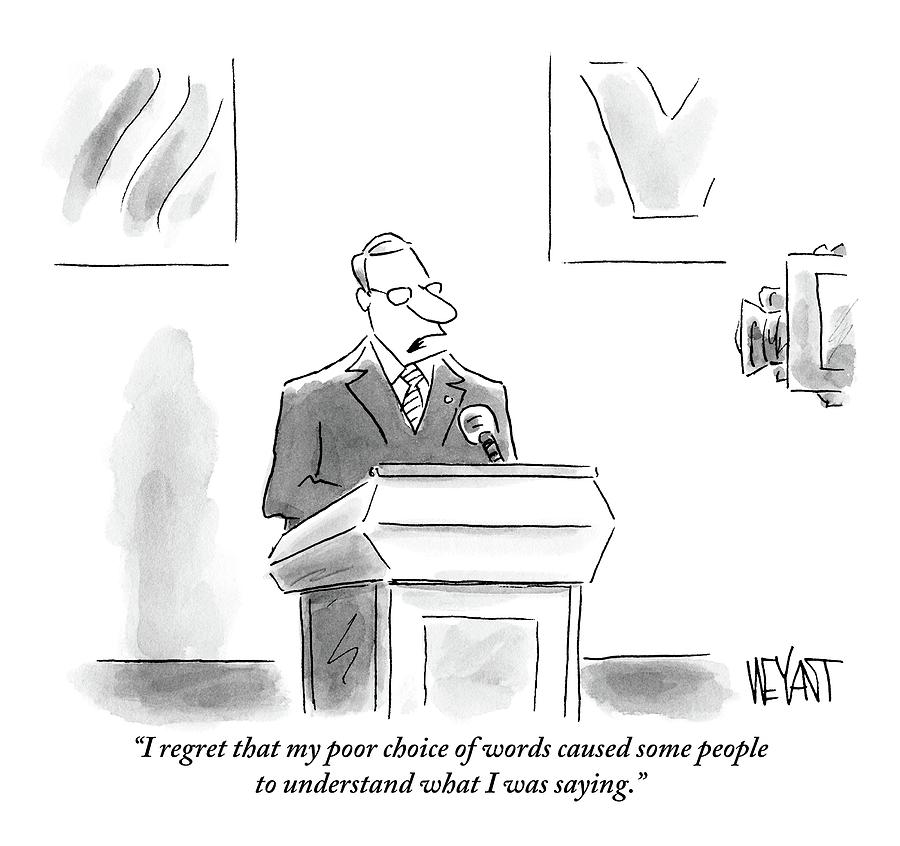
Cartoon – The Vagueness Campaign

The Dilbert Strip for September 27, 2012: Social Media Expert This ...

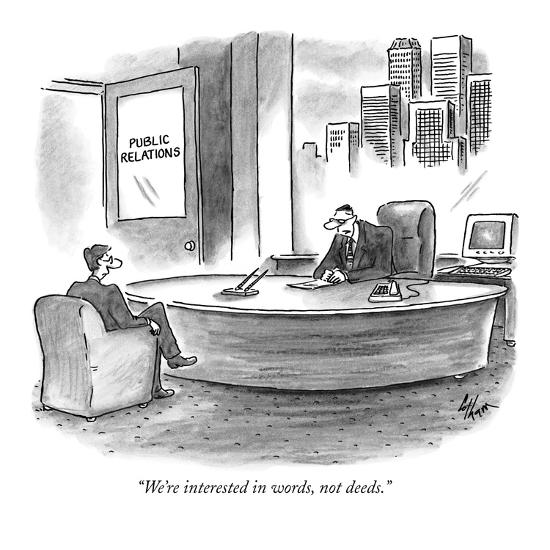
Cartoon – Flashy Ad Campaigns

Being Yourself: The Importance Of Authenticity In Online Marketing ...

US Postal Service is Critical to American Healthcare.

https://www.linkedin.com/pulse/us-postal-service-critical-american-healthcare-julie-kliger/

The Role of The USPS In Health Delivery

When I worked in the emergency department, almost all patients had to get some sort of test—a blood test or an xray. And lots of times those test results took a few days to determine the results. Like, if a patient had an infection that required a specific type of antibiotic, that took a few days to figure out.  Of course, by then, most of emergency department patients had been discharged ‘to home.’

Even though the patient had been discharged, the medical staff still needed to reach the patient to let them know about the need to come back for treatment. Of course, the staff would try to reach the patient by phone, but often patients did not have phones, or, the call went to voice mail—and personal medical information cannot be left on voice mail…Nor can it be texted.

So, how did the medical staff communicate important medical findings to patients? Especially to those patients that needed to come back to the hospital for medical treatment? Why, through the US Postal Service—by sending the patient an actual, physical letter. Not email, not a phone call, not text, not twitter or Facebook—only through the US mail, can medical institutions prove that they’ve tried to reach the patient. This is the necessary ‘physical paper trail’ that hospitals and doctors offices need to protect themselves should the patient never come back for medical treatment.


USPS Is A Branch of HealthCare

Actually, lots of healthcare happens via the mail. Lots. Without this ‘pony express highway’ running efficiently, patient safety and patient wellness is compromised. Consider this:

·        At least 1 million prescriptions are sent through the USPS every single week.

·        80% of medications are sent to veterans by mail. These are important medications that control blood pressure, diabetes, heart disease, depression and many other critical medical conditions.

·        Medical notices for lab and x-ray results, and upcoming appointments are sent via mail.


USPS Is an Economic Engine for the USA

Additionally the USPS is a critical ‘super highway’ for getting

·        Upwards of 72 million social security checks are mailed every single month.

·        472 million letters, checks, legal notices, love letters (remember those?) are delivered each and every day, regardless of snow, sleet or snow (as the saying goes) gets delivered to every American household.

·        And still, today, some mail is delivered by mules (think bottom of the Grand Canyon).

·        And, the USPS is as American as it gets—every single Founding Father supported the creation of the postal system. It’s even in the Articles of Confederation

Also, loads of Americans work for the USPS—roughly 600,000 Americans! One of those Americans included my father, who got a job as a letter carrier (or, back in those days, ‘a mailman’), to help him afford college.


The USPS Is Santa’s Helper

And let’s not forget that the Postal Service also sends letters to Santa Claus—several hundred thousand letters (True statement). If the postal service is cut, compromised or decommissioned, who will deliver all those letters? And more importantly, who will respond? Because—and this is true—the postal service employees will respond to the letters with a hand written response signed by Santa and—this is also true—some employees will purchase gifts for the children!


The Cost of Knee-Capping the USPS

So, this discussion about dismantling or knee-capping the postal service is not only a very serious healthcare concern, it is also a workforce and American identity crisis—for what is America without our 6-days-a-week US mail service? 

If this non-partisan, non-profit organization goes away or is severely limited who or what will, in the absence of this Great American Institution, replace it? Goodness help us all if it becomes privatized.  We know what happens when institutions ‘get privatized…’ Private for-profit companies will close post offices to save money, which means households in rural areas might not get home delivery but only regional delivery. Services will probably be cutback from 6 days a week to 4 days a week. For all that ‘great service’ of fewer days and no home delivery, these private companies will charge you more to mail a letter so that the executives can raise their stock share price.


The Best Value Money Can Buy

What organization that you know of can deliver 212 billion pieces of mail each year, to anywhere in the USA for 55 cents? Anywhere, any letter, 6 days a week for 55 cents… (Honestly, what can you possibly buy for 55 cents that produces that much value?)


USPS is More American Than Baseball

No question about this—the USPS is not only ‘like’ Mom, Apple Pie and Baseball, it is Mom and Apple Pie and Baseball of our Great United States. Stand united for the USPS because in doing so, We The People, are standing up for ourselves.


The Fed’s independence helped it save the US economy in 2008 – the CDC needs the same authority today

https://theconversation.com/the-feds-independence-helped-it-save-the-us-economy-in-2008-the-cdc-needs-the-same-authority-today-142593

Centers for Disease Control and Prevention

The image of scientists standing beside governors, mayors or the president has become common during the pandemic. Even the most cynical politician knows this public health emergency cannot be properly addressed without relying on the scientific knowledge possessed by these experts.

Yet, ultimately, U.S. government health experts have limited power. They work at the discretion of the White House, leaving their guidance subject to the whims of politicians and them less able to take urgent action to contain the pandemic.

The Centers for Disease Control and Prevention has issued guidelines only to later revise them after the White House intervened. The administration has also undermined its top infectious disease expert, Dr. Anthony Fauci, over his blunt warnings that the pandemic is getting worse – a view that contradicts White House talking points.

And most recently, the White House stripped the CDC of control of coronavirus data, alarming health experts who fear it will be politicized or withheld.

In the realm of monetary policy, however, there is an agency with experts trusted to make decisions on their own in the best interests of the U.S. economy: the Federal Reserve. As I describe in my recent book, “Stewards of the Market,” the Fed’s independence allowed it to take politically risky actions that helped rescue the economy during the financial crisis of 2008.

That’s why I believe we should give the CDC the same type of authority as the Fed so that it can effectively guide the public through health emergencies without fear of running afoul of politicians.


The paradox of expertise

There is a paradox inherent in the relationship between political leaders and technical experts in government.

Experts have the training and skill to apply scientific knowledge in complex biological and economic systems, yet democratically elected political leaders may overrule or ignore their advice for ill or good.

This happened in May when the CDC, the federal agency charged with controlling the spread of disease, removed advice regarding the dangers of singing in church choirs from its website. It did not do so because of new evidence. Rather, it was because of political pressure from the White House to water down the guidance for religious groups.

Similarly, the White House undermined the CDC’s guidance on school reopenings and has pressured it to revise them. So far, it seems the CDC has rebuffed the request.

The ability of elected leaders to ignore scientists – or the scientists’ acquiescence to policies they believe are detrimental to public welfare – is facilitated by many politicians’ penchant for confident assertion of knowledge and the scientist’s trained reluctance to do so.

Compare Fauci’s repeated comment that “there is much we don’t know about the virus” with President Donald Trump’s confident assertion that “we have it totally under control.”


Experts with independence

Given these constraints on technical expertise, the performance of the Fed in the financial crisis of 2008 offers an informative example that may be usefully applied to the CDC today.

The Federal Reserve is not an executive agency under the president, though it is chartered and overseen by Congress. It was created in 1913 to provide economic stability, and its powers have expanded to guard against both depression and crippling inflation.

At its founding, the structure of the Fed was a political compromise designed make it independent within the government in order to de-politicize its economic policy decisions. Today its decisions are made by a seven-member board of governors and a 12-member Federal Open Market Committee. The members, almost all Ph.D. economists, have had careers in academia, business and government. They come together to analyze economic data, develop a common understanding of what they believe is happening and create policy that matches their shared analysisThis group policymaking is optimal when circumstances are highly uncertain, such as in 2008 when the global financial system was melting down.

The Fed was the lead actor in preventing the system’s collapse and spent several trillion dollars buying risky financial assets and lending to foreign central banks – decisions that were pivotal in calming financial markets but would have been much harder or may not have happened at all without its independent authority.

The Fed’s independence is sufficiently ingrained in our political culture that its chair can have a running disagreement with the president yet keep his job and authority.


Putting experts at the wheel

A health crisis needs trusted experts to guide decision-making no less than an economic one does. This suggests the CDC or some re-imagined version of it should be made into an independent agency.

Like the Fed, the CDC is run by technical experts who are often among the best minds in their fields. Like the Fed, the CDC is responsible for both analysis and crisis response. Like the Fed, the domain of the CDC is prone to politicization that may interfere with rational response. And like the Fed, the CDC is responsible for decisions that affect fundamental aspects of the quality of life in the United States.

Were the CDC independent right now, we would likely see a centralized crisis management effort that relies on the best science, as opposed to the current patchwork approach that has failed to contain the outbreak nationally. We would also likely see stronger and consistent recommendations on masks, social distancing and the safest way to reopen the economy and schools.

Independence will not eliminate the paradox of technical expertise in government. The Fed itself has at times succumbed to political pressure. And Trump would likely try to undermine an independent CDC’s legitimacy if its policies conflicted with his political agenda – as he has tried to do with the central bank.

But independence provides a strong shield that would make it much more likely that when political calculations are at odds with science, science wins.


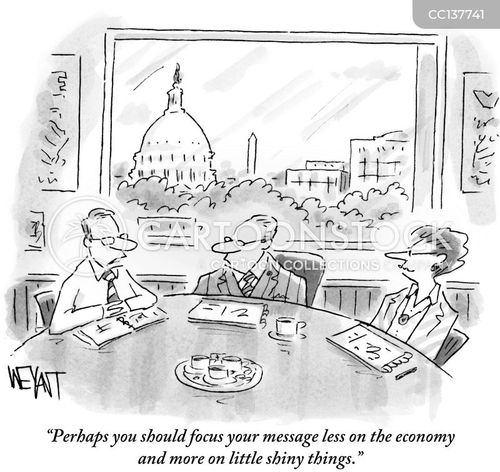
Cartoon – Under Control

Coronavirus | The Manchester Journal | Manchester Breaking News ...

Adapting leadership for the virtual world

https://mailchi.mp/da2dd0911f99/the-weekly-gist-july-17-2020?e=d1e747d2d8

Creating a leadership vision

Recently, a senior executive shared a concern with us about his leadership style during the pandemic: “I have always thought of myself as a good leader. For the first time in my career, I feel like I’m failing.

His worry was less about making the big decisions needed in a crisis, and more about the ongoing engagement and “forward motion” of his team.

When in-person meetings transitioned to Zoom calls, he was struck by how much of leadership and team building relies on in-person interaction, whether it’s formal group sessions to drive a decision, or the hundreds of informal one-on-one interactions every week in the office. As our small firm went virtual, it’s something we noticed, too. Virtual interactions require a different structure and pace, and it takes more work to engage the full group.

And while no one enjoys an hours-long videoconference, more frequent, shorter calls can build momentum. Dedicating time to sharing personal updates builds the connections lost when we’re not physically together.

But despite the risks, one CEO shared that in a crisis like COVID-19, showing up in person matters: “You can’t always stay at home or in your office. As a leader you have to be out and talking to staff. I know it’s risky but that is really what it takes.

Being there to clearly articulate the go-forward plan.” We’d love to hear your insights about how you’re adapting your leadership approach to navigate this balance, keeping your teams engaged through this difficult and unfamiliar time.