More than 1 million people flew through U.S. airports on Friday, according to TSA data, the second highest number since the coronavirus pandemic began hit the U.S. in mid-March.
Why it matters: As coronavirus cases and hospitalizations continued to soar this week, the CDC issued new guidance on Thursday advising Americans not to travel for Thanksgiving, warning doing so may increase the chance of getting and spreading COVID-19.
By the numbers: The 1,019,836 people TSA screened at U.S. airports on Friday is still less than half the number (2,550,459) that passed through screenings on the same weekday a year ago.
TSA screened 1,031,505 passengers on Oct. 18, the highest number since March 17.
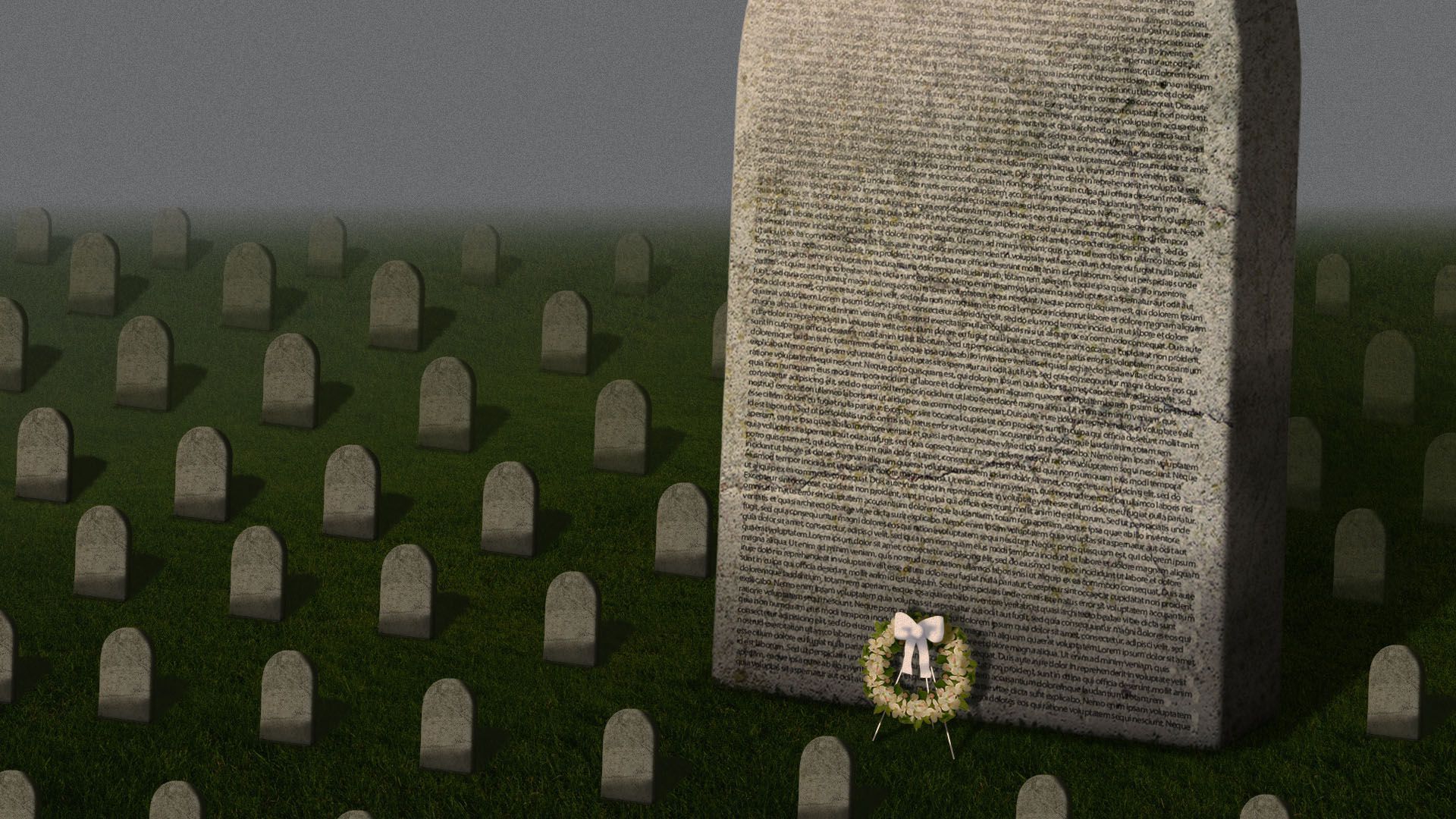
The U.S. passed 250,000 confirmed deaths from COVID-19 this week, a figure that is truly vast — too vast, perhaps, for us to comprehend.
Why it matters:The psychic numbing that sets in around mass death saps us of our empathy for victims and discourages us from making the sacrifices needed to control the pandemic, whileit hampers our ability to prepare for other rare but potentially catastrophic risks down the road.
By the numbers: The sheer scale of the U.S. death toll from COVID-19 can be felt in the lengths media organizations have gone to try to put the numbers in perspective. 250,000 deaths is:
Ten times the number of American drivers and passengers who die in car crashes each year, according to CNN.
More than twice the number of American soldiers who died in World War I, according to NPR.
Enough to draw a vast hole in America’s heartland, if the deaths had all been concentrated in one area, according to the Washington Post.
Even if we try our best to graspmass death, we inevitably come up against cognitive biases, says Paul Slovic, a psychologist at the University of Oregon who studies human judgment and decision-making.
The biggest bias is scope neglect: as the scale of deaths and tragedy grows, our own compassion and concern fail to keep pace. As the title of one of Slovic’s papers on the subject goes: “The more who die, the less we care.”
This is, of course, not rational — by any reasonable, moral calculation, we should find 250,000 deaths commensurately more horrifying than a smaller number. But in practice we don’t, almost as if we had a set capacity for empathy and concern that tops out well below the scale of a pandemic.
It doesn’t help that for most of us — save bereaved family members and health care workers on the front line — those deaths go unseen, hidden behind the walls of hospitals and funeral homes.
In a news culture driven by the visual — and equipped with a psychology moved by identifiable victims over mere numbers — that makes these deaths feel that much more unreal, and for some, that much easier to deny altogether.
Combined with the habituation to trauma that has set in after months of the pandemic, it shouldn’t be surprising that most of us are doing much less to fight the spread of COVID-19 now than we were in the spring, when the number of sick and dead were far lower.
How it works: In a study following the 1994 Rwandan genocide, in which 800,000 people were killed in a matter of months, Slovic and his colleagues asked a group of volunteers to imagine they were in charge of a refugee camp.
They had to decide whether or not to help 4,500 refugees get access to clean water. Half were told the camp held 250,000 refugees, and half were told it held 11,000.
The study subjects were much more willing to help if they thought they were assisting 4,500 people out of 11,000, and less willing if it was 4,500 out of 250,000 people. They were reacting to the proportion of those who would be helped, while neglecting the scope of the raw number.
Relatedly,in a 2014 study, Slovic found a decrease in empathy and a consequent drop in donations to save sick children as the number of victims rose, with effects being seen as soon as one child became two.
What to watch:These same cognitive biases make it difficult for us to fully appreciate chronic threats like climate change, or to prepare for rare but catastrophic risks in the future — like a pandemic.
Given how hardwired these biases are, our best bet is to try to steer into them, and keep in mind that each of these 250,000 deaths tells an individual story.
As the survivor Abel Herzberg said of the Holocaust: “There were not six million Jews murdered; there was one murder, six million times.”
The bottom line:As the death toll rises, it will take willful effort not to become numb to what’s happening. But it is an effort that must be made.
America’s coronavirus outbreak has surpassed Europe’s.
Why it matters: It wasn’t long ago that public health experts were pointing to Europe as a warning sign for the U.S. But the U.S. now has a higher per capita caseload than the EU ever has during its recent surge.
By the numbers: As of Saturday, 15 states had higher per capita caseloads, averaged over seven days, than the European country with the highest caseload — Luxembourg.
The U.S. overall saw 52.4 cases per 100,000 people. The EU saw 37.6 per 100,000 on Saturday, and peaked at 46.7 cases per 100,000 on Nov. 8.
The big picture: Europe’s steady rise in coronavirus cases over the last couple of months prompted many countries to bring back lockdowns or other strict behavioral restrictions.
Meanwhile, in the U.S., some of the hardest-hit states — like Iowa — are just now adopting mask mandates, and airports over the weekend were packed with people traveling for Thanksgiving.
Yes, but: Cases in the hardest-hit states are starting to trend down, a sign that people are modifying their behavior on their own.
What we’re watching: There’s no sign that the number of U.S. cases nationally is going to stop rising anytime soon, especially in the absence of strong federal or state restrictions.
Hospitalizations and deaths lag behind cases by a few weeks. That means that Europe likely has easier days ahead, while America’s dark days are just getting started.
In the U.S., today’s overwhelmed hospitals will continue to keep getting hit with ever-growing caseloads for awhile.
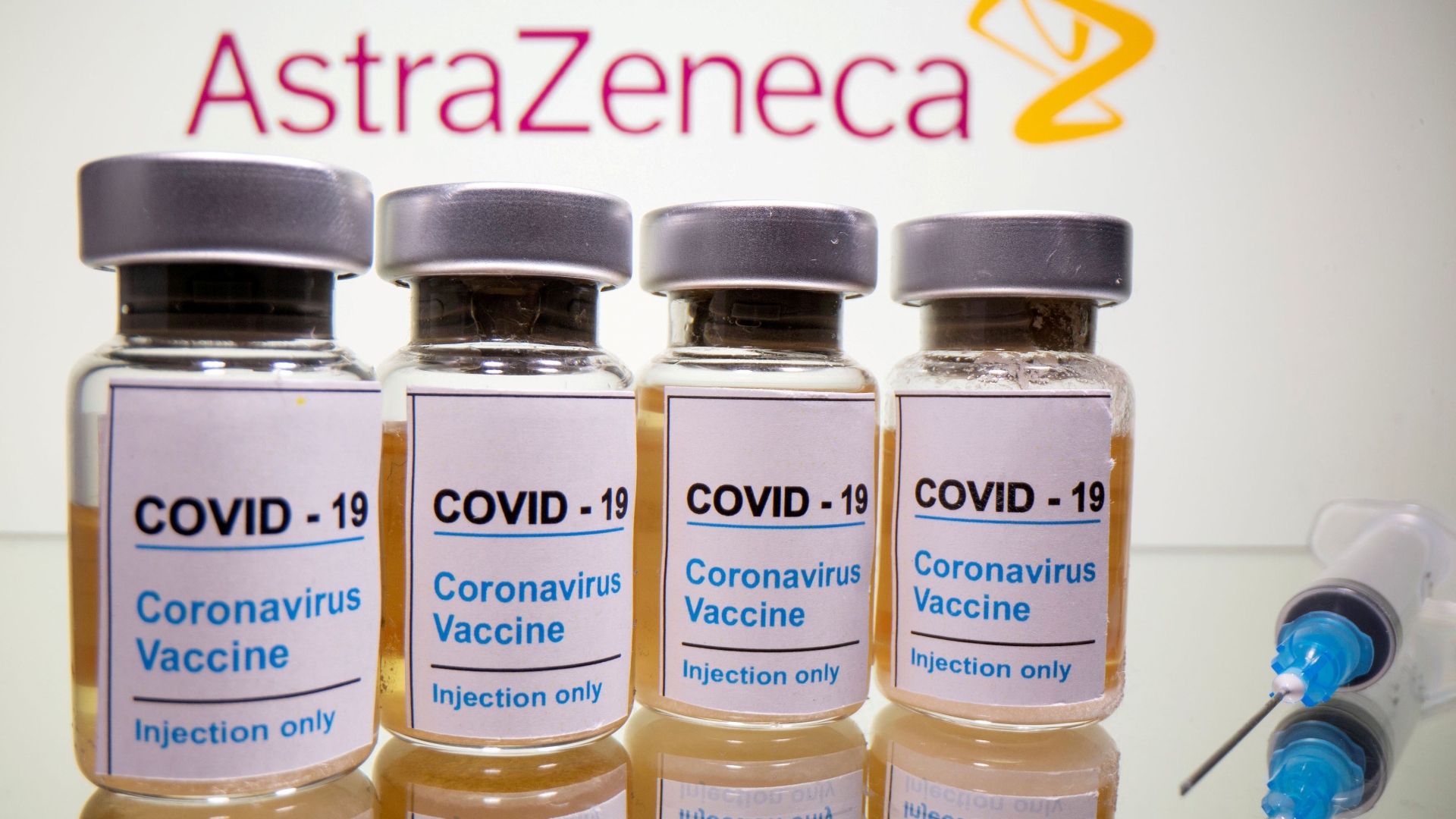
AstraZeneca on Monday became the third pharmaceutical company to announce remarkable results from late-stage trials of a coronavirus vaccine, saying that its candidate, developed by Oxford University, is up to 90 percent effective.
This is the third straight week to begin with buoyant scientific news that suggests, even as coronavirus cases surge to devastating levels in many countries, an end to the pandemic is in sight.
Pfizer and its German partner BioNTech and Moderna have each reported vaccines that are 95 percent effective in clinical trials. A direct comparison to the Oxford-AstraZeneca vaccine is complicated, due to the trial design, but the vaccine may be a more realistic option for much of the world, as it is likely to be cheaper and does not need to be stored at subzero temperatures.
Peter Piot, director of the London School of Hygiene & Tropical Medicine, who was instrumental in the battle against AIDS, said the positive results from three vaccine candidates cannot be overestimated.
“2020 will be remembered for the many lives lost from covid-19, lockdowns and the U.S. election. Science should now be added to this list,” said Piot, adding, “the only way to stop covid-19 in its tracks is having multiple effective and safe vaccines that can be deployed all around the world and in vast quantities.”
“I’m totally delighted,” said Hildegund C.J. Ertl, a vaccine expert at the Wistar Institute in Philadelphia. Adding to the results from Pfizer and Moderna, “what it tells me is this virus can be beaten quite easily: 90 to 95 percent efficacy is something we’d dream about for influenza virus, and we’d never get it.”
The Oxford-AstraZeneca team said in a video conference with journalists that its candidate offered 90 percent protection against the virus when a subject received a half-dose, followed with a full dose one month later. Efficacy was lower — 62 percent — when subjects received two full doses a month apart. The interim results, therefore, averaged to 70 percent efficacy.
Andrew Pollard, chief investigator of the Oxford trial, said the findings showed the vaccine would save many lives.
“Excitingly, we’ve found that one of our dosing regimens may be around 90 percent effective, and if this dosing regimen is used, more people could be vaccinated with planned vaccine supply,” he said.
Britain has preordered 100 million doses — which at a dose and a half per person would cover most of its population. The United States has ordered 300 million.
The results have yet to be peer-reviewed or published, and will be scrutinized by regulators. Many questions remain, including whether the vaccine can reduce transmission of the virus by people without symptoms, which would have repercussions for how soon people could stop wearing masks. It is also unclear how long the immunity from the vaccine lasts — a crucial question.
Sarah Gilbert, a lead Oxford researcher, cautioned that the dose-and-a-half regimen would have to be more closely studied to be fully understood. But she said the first half-dose might be priming a person’s immune system just enough, and that the second booster then encourages the body to produce a robust defense against sickness and infection.
AstraZeneca and Oxford have been conducting Phase 3 clinical trials worldwide, with the most recent data coming from an interim analysis based on 131 coronavirus infections in Britain and Brazil among 10,000 volunteers, with half getting the vaccine and half getting a placebo.
The company said it would present the results to Britain’s health-care products regulators immediately and would seek approval to fine-tune its clinical trials in the United States, to further assess the half-dose shot followed by a booster.
Because the vaccine is already in production, if approved, the first 4 million doses could be ready in December, and 40 million could be delivered in the first quarter of 2021, company executives said. By the spring, the company and its global partners in India, Brazil, Russia and the United States could be cranking out 100 million to 200 million doses a month.
British Health Secretary Matt Hancock said “should all that go well, the bulk of the rollout will be in the new year.”
In a statement to Parliament, Prime Minister Boris Johnson said that vaccines were “edging ever closer to liberating us from the virus, demonstrating emphatically that this is not a pandemic without end. We can take great heart from today’s news, which has the makings of a wonderful British scientific achievement.”
World markets have rallied on optimistic vaccine news, though shares in AstraZeneca were down Monday on the London stock exchange.
No participants who received the vaccine developed severe cases or required hospitalization, AstraZeneca said Monday. The drugmaker also said that no “serious safety events” were reported in connection with the vaccine, which was typically “well tolerated” by participants regardless of their dosing levels or ages.
The vaccine uses a harmless cold virus that typically infects chimpanzees to deliver to the body’s cells the genetic code of the spike protein that dots the outside of the coronavirus. That teaches the body’s immune system to recognize and block the real virus.
Although the reason the regimen with an initial half-dose worked better remains to be teased out, Ertl said that it could be related to the fact that the body’s immune system can develop a defense system to block the harmless virus that’s used to deliver the spike protein’s code. Giving a smaller initial dose may lessen those defenses, and make the vaccine more effective.
Several other vaccines in late-stage development use a similar technology, harnessing a harmless virus to deliver a payload that will teach the immune system how to fight off the real thing — including the Johnson & Johnson vaccine, the Russian vaccine being developed by the Gamaleya Research Institute and the vaccine made by CanSino Biologics in China.
While the results released by AstraZeneca indicate somewhat lower efficacy than Pfizer and Moderna, the vaccine can be stored and transported at normal refrigerated conditions for up to six months. That could make it significantly easier to roll out than Pfizer’s vaccine, which has to be stored at minus-70 degrees Celsius, or Moderna’s, which is stable in refrigerated conditions for only 30 days and must be frozen at minus-20 degrees Celsius after that.
The Oxford-AstraZeneca vaccine was first developed in a small laboratory running on a shoestring budget by Gilbert at Oxford and her team. The university kicked in 1 million pounds ($1.3 million) and then sought a manufacturing partner, before settling on AstraZeneca.
“We wanted to ensure there wouldn’t be any profiteering off the pandemic,” said Louise Richardson, the university’s vice chancellor, so that their vaccine would be widely distributed “and wouldn’t just be for the wealthy and the first world.”
The scientists said that although it appeared to be a race, or a competition, among the front-running vaccine developers, no one company could produce by itself the millions of doses needed to end the pandemic.
“We don’t have enough supply for the whole planet,” Pollard said, adding that the important message is that today there are at least three highly effective, safe vaccines, that also appear to work well among the elderly, and that they are produced using different technologies, ensuring the quickest route to manufacture the billions of doses that will be necessary.
Pollard said it is “unclear why” the different vaccines were producing different results, and he said he and the scientific community awaited full data sets from all the clinical trials to fully understand what is going on. He said different studies were also using different end points to describe efficacy.
“At this moment we can’t fully explain the differences,” Pollard said. “It’s critical to understand what everyone is measuring.”
Cleveland Clinic has about 1,000 employees away from work due to COVID-19, the health system told Becker’s Nov. 23.
The count includes 925 workers in Ohio and other workers across the health system, which also has locations in Florida and Las Vegas. It is an increase from about 800 Cleveland Clinic employees in Ohio reported sidelined as of Nov. 16.
Cleveland Clinic spokesperson Andrea Pacetti said the increase in the number of employees affected by COVID-19 reflects more spreading of the virus in the community and in Ohio, and most affected employees are contracting the virus in the community.
Due to a surge in cases, Cleveland Clinic has taken steps to ensure enough staffing to meet patients’ needs, said Ms. Pacetti. This includes shifting some employees to different areas of the health system to enable Cleveland Clinic to expand bed capacity for COVID-19 patients.
“We are also evaluating our surgical schedule weekly based on hospital occupancy and admissions of patients with COVID-19,” Ms. Pacetti said. “Our leadership meets every day and reviews our staffing to ensure we can provide the highest quality care to all our patients.”
Cleveland Clinic also urges the public to help reduce the spread of the virus so the health system can continue to care for COVID-19 patients and patients who need care but who don’t have the coronavirus.
“This isn’t just a Cleveland Clinic issue, but true for the whole state. We are asking the community to follow guidelines — wear masks, social distance and wash your hands — so we can keep our medical teams healthy,” Ms. Pacetti said.
Cleveland Clinic has about 50,000 employees in Ohio.
As record numbers of coronavirus cases overwhelm hospitals across the United States, there is something strikingly different from the surge that inundated cities in the spring: No one is clamoring for ventilators.
The sophisticated breathing machines, used to sustain the most critically ill patients, are far more plentiful than they were eight months ago, when New York, New Jersey and other hard-hit states were desperate to obtain more of the devices, and hospitals were reviewing triage protocols for rationing care. Now, many hot spots face a different problem: They have enough ventilators, but not nearly enough respiratory therapists, pulmonologists and critical care doctors who have the training to operate the machines and provide round-the-clock care for patients who cannot breathe on their own.
Since the spring, American medical device makers have radically ramped up the country’s ventilator capacity by producing more than 200,000 critical care ventilators, with 155,000 of them going to the Strategic National Stockpile. At the same time, doctors have figured out other ways to deliver oxygen to some patients struggling to breathe — including using inexpensive sleep apnea machines or simple nasal cannulas that force air into the lungs through plastic tubes.
But with new cases approaching 200,000 per day and a flood of patients straining hospitals across the country, public health experts warn that the ample supply of available ventilators may not be enough to save many critically ill patients.
“We’re now at a dangerous precipice,” said Dr. Lewis Kaplan, president of the Society of Critical Care Medicine. Ventilators, he said, are exceptionally complex machines that require expertise and constant monitoring for the weeks or even months that patients are tethered to them. The explosion of cases in rural parts of Idaho, Ohio, South Dakota and other states has prompted local hospitals that lack such experts on staff to send patients to cities and regional medical centers, but those intensive care beds are quickly filling up.
Public health experts have long warned about a shortage of critical care doctors, known as intensivists, a specialty that generally requires an additional two years of medical training. There are 37,400 intensivists in the United States, according to the American Hospital Association, but nearly half of the country’s acute care hospitals do not have any on staff, and many of those hospitals are in rural areas increasingly overwhelmed by the coronavirus.
“We can’t manufacture doctors and nurses in the same way we can manufacture ventilators,” said Dr. Eric Toner, an emergency room doctor and senior scholar at the Johns Hopkins Center for Health Security. “And you can’t teach someone overnight the right settings and buttons to push on a ventilator for patients who have a disease they’ve never seen before. The most realistic thing we can do in the short run is to reduce the impact on hospitals, and that means wearing masks and avoiding crowded spaces so we can flatten the curve of new infections.”
Medical association message boards in states like Iowa, Oklahoma and North Dakota are awash in desperate calls for intensivists and respiratory therapists willing to temporarily relocate and help out. When New York City and hospitals in the Northeast issued a similar call for help this past spring, specialists from the South and the Midwest rushed there. But because cases are now surging nationwide, hospital officials say that most of their pleas for help are going unanswered.
Dr. Thomas E. Dobbs, the top health official in Mississippi, said that more than half the state’s 1,048 ventilators were still available, but that he was more concerned with having enough staff members to take care of the sickest patients.
“If we want to make sure that someone who’s hospitalized in the I.C.U. with the coronavirus has the best chance to get well, they need to have highly trained personnel, and that cannot be flexed up rapidly,” he said in a news briefing on Tuesday.
Dr. Matthew Trump, a critical care specialist at UnityPoint Health in Des Moines, said that the health chain’s 21 hospitals had an adequate supply of ventilators for now, but that out-of-state staff reinforcements might be unlikely to materialize as colleagues fall ill and the hospital’s I.C.U. beds reach capacity.
“People here are exhausted and burned out from the past few months,” he said. “I’m really concerned.”
The domestic boom in ventilator production has been a rare bright spot in the country’s pandemic response, which has been marred by shortages of personal protective equipment, haphazard testing efforts and President Trump’s mixed messaging on the importance of masks, social distancing and other measures that can dent the spread of new infections.
Although the White House has sought to take credit for the increase in new ventilators, medical device executives say the accelerated production was largely a market-driven response turbocharged by the national sense of crisis. Mr. Trump invoked the wartime Defense Production Act in late March, but federal health officials have relied on government contracts rather than their authority under the act to compel companies to increase the production of ventilators.
Scott Whitaker, president of AdvaMed, a trade association that represents many of the country’s ventilator manufacturers, said the grave situation had prompted a “historic mobilization” by the industry. “We’re confident that our companies are well positioned to mobilize as needed to meet demand,” he said in an email.
Public health officials in Minnesota, Mississippi, Utah and other states with some of the highest per capita rates of infection and hospitalization have said they are comfortable with the number of ventilators currently in their hospitals and their stockpiles.
Mr. Whitaker said AdvaMed’s member companies were making roughly 700 ventilators a week before the pandemic; by the summer, weekly output had reached 10,000. The juggernaut was in part fueled by unconventional partnerships between ventilator companies and auto giants like Ford and General Motors.
Chris Brooks, chief strategy officer at Ventec Life Systems, which collaborated with G.M. to fill a $490 million contract for the Department of Health and Human Services, said the shared sense of urgency enabled both companies to overcome a thicket of supply-chain and logistical challenges to produce 30,000 ventilators over four months at an idled car parts plant in Indiana. Before the pandemic, Ventec’s average monthly output was 100 to 200 machines.
“When you’re focused with one team and one mission, you get things done in hours that would otherwise take months,” he said. “You just find a way to push through any and all obstacles.”
Despite an overall increase in the number of ventilators, some researchers say many of the new machines may be inadequate for the current crisis. Dr. Richard Branson, an expert on mechanical ventilation at the University of Cincinnati College of Medicine and an author of a recent study in the journal Chest, said that half of the new devices acquired by the Strategic National Stockpile were not sophisticated enough for Covid-19 patients in severe respiratory distress. He also expressed concern about the long-term viability of machines that require frequent maintenance.
“These devices were not built to be stockpiled,” he said.
The Department of Health and Human Services, which has acknowledged the limitations of its newly acquired ventilators, said the stockpile — nine times as large as it was in March — was well suited for most respiratory pandemics. “These stockpiled devices can be used as a short-term, stopgap buffer when the immediate commercial supply is not sufficient or available,” the agency said in a statement.
Projecting how many people will end up requiring mechanical breathing assistance is an inexact science, and many early assumptions about how the coronavirus affects respiratory function have evolved.
During the chaotic days of March and April, emergency room doctors were quick to intubate patients with dangerously low oxygen levels. They subsequently discovered other ways to improve outcomes, including placing patients on their stomachs, a protocol known as proning that helps improve lung function. The doctors also learned to embrace the use of pressurized oxygen delivered through the nose, or via BiPAP and CPAP machines, portable devices that force oxygen into a patient’s airways.
Many health care providers initially hesitated to use such interventions for fear the pressurized air would aerosolize the virus and endanger health care workers. The risks, it turned out, could be mitigated through the use of respirator masks and other personal protective gear, said Dr. Greg Martin, the chief of pulmonary and critical care at Grady Health Systems in Atlanta.
“The familiarity of taking care of so many Covid patients, combined with good data, has just made everything we do 100 times easier,” he said.
Some of the earliest data about the perils of intubating coronavirus patients turned out to be incomplete and misleading. Dr. Susan Wilcox, a critical care specialist at Massachusetts General Hospital, said many providers were spooked by data that suggested an 80 percent mortality rate among ventilated coronavirus patients, but the actual death rate turned out to be much lower. The mortality rate at her hospital, she said, was about 25 to 30 percent.
“Some people were saying that we should intubate almost immediately because we were worried patients would crash and have untoward consequences if we waited,” she said. “But we’ve learned to just go back to the principles of good critical care.”
Survival rates have increased significantly at many hospitals, a shift brought about by the introduction of therapeutics like dexamethasone, a powerful steroid that Mr. Trump took when he was hospitalized with the coronavirus. The changing demographics of the pandemic — a growing proportion of younger patients with fewer health risks — have also played a role in the improving survival rates.
Dr. Nikhil Jagan, a critical care pulmonologist at CHI Health, a hospital chain that serves Iowa, Kansas and Nebraska, said many of the coronavirus patients who were arriving at his emergency room now were less sick than the patients he treated in the spring.
“There’s a lot more awareness about the symptoms of Covid-19,” he said. “The first go-around, when people came in, they were very sick right off the bat and in respiratory distress or at the point of respiratory failure and had to be intubated.”
But the promising new treatments and enhanced knowledge can go only so far should the current surge in cases continue unabated. The country passed 250,000 deaths from the coronavirus last week, a reminder that many critically ill patients do not survive. The daily death toll has been rising steadily and is approaching 2,000.
“Ventilators are important in critical care but they don’t save people’s lives,” said Dr. Branson of the University of Cincinnati. “They just keep people alive while the people caring for them can figure out what’s wrong and fix the problem. And at the moment, we just don’t have enough of those people.”
For now, he said there was only one way out the crisis: “It’s not that hard,” he said. “Wear a mask.”
As we navigate the greatest health crisis of our lifetimes, it turns out that many aspects of our experiences in 2020 aren’t as “unprecedented” as we may think. The widely varied pandemic responses by local and state officials (and resulting political polarization) occurring today also transpired over 100 years ago during the Spanish Flu.
Lessons from a century ago may be worth revisiting: the left side of the graphic above details the health and economic case for public health mitigation strategies.Cities that enacted “longer interventions” (including mask mandates, closures, business capacity restrictions, and social distancing measures) in 1918 experienced fewer deaths per capita, as well as higher employment gains through 1919, compared to “similar” cities that enacted “shorter interventions.” For example, Los Angeles, which declared a state of emergency and banned all public gatherings early in the pandemic, had 25 percent fewer deaths per capita, and a 27 percentage-point greater gain in subsequent employment than San Francisco, which mainly focused on urging residents to wear masks in public.
Fast forward to today, when we’re also seeing significant differences between COVID containment policies at the state level. The right side of the graphic shows thatstates with the weakest overall pandemic containment policies are currently experiencing the worst outbreaks, measured here by hospitalizations per capita. States like Hawaii and New York, which maintained many of the strict mitigation strategies first put into place in the spring, are seeing those restrictions pay off with fewer hospitalizations during the latest spike.
Conversely, Iowa and the Dakotas have fewer, and less stringent, public health measures, and are now seeing the highest surges in the country today. (New Mexico shows that state-level policy decisions don’t explain everything—it’s currently battling a serious outbreak despite maintaining some of the strongest containment measures over the course of the pandemic.)
As we head into the worst COVID wave so far, the debate over whether saving “lives” or “livelihoods” should dominate the pandemic response rages on.History shows that higher levels of public health intervention can both save lives and result in stronger economic recovery.
In talking to our health system members from across the country in the past few weeks, we’ve heard that the COVID surge is happening everywhere. Nearly everyone we’ve talked to has told us that their inpatient census of COVID patients is as high or higher now than during the initial wave of the pandemic in March and April. And nearly everyone is expecting it to get much worse over the next few weeks, as hospitalizations increase in the wake of the explosion of cases we’re seeing now.
But there is something striking in our conversations in comparison to eight months ago: no one seems to be panicking. Crisis management processes that were developed and honed early in the pandemic are proving very helpful now. Normal patient care services are continuing despite the uptick in COVID volume, and protections are in place to keep the care environment segregated and COVID-free as possible.
While dozens of health systems, many in the hardest hit states in the Midwest and Great Plains, have announced plans to curtail elective care during this third wave, the decisions are based on individual hospital capacity and staffing, instead of being mandated by states. Having largely worked through the “COVID backlog” across the summer and early fall, system leaders want to avoid canceling surgeries again, and few are expecting state governments to force them to.
Many of our members have drawn up plans for selective cancellations depending on capacity, but we’re not likely to see sweeping shutdowns again—unless the workforce becomes so overstretched that it impacts operations.
That’s good news, and will likely lead to less interrupted patient care. And it’s good news for hospitals’ and doctors’ economic survival, as many would not be able to absorb the body blow of another widespread shutdown. Fingers crossed.
A group of health system leaders in Missouri challenged state-reported hospital bed data, saying it could lead to a misunderstanding about hospital capacity, according to a Nov. 19 report in the St. Louis Business Journal.
A consortium of health systems, including St. Louis-based BJC HealthCare, Mercy, SSM Health and St. Luke’s Hospital, released urgent reports warning that hospital and ICU beds are nearing capacity while state data reports show a much different story.
The state reports, based on data from TeleTracking and the CDC-managed National Healthcare Safety Network, show inpatient hospital bed capacity at 35 percent and remaining ICU bed capacity at 29 percent on Nov. 19. However, the consortium reported hospitals are fuller, at 84 percent capacity as of Nov. 18, and ICUs at 90 percent capacity based on staffed bed availability. The consortium says it is using staffed bed data while the state’s numbers are based on licensed bed counts; the state contends it does take staffing into account, according to the report.
Stephanie Zoller Mueller, a spokesperson for the consortium, said the discrepancy between the state’s data and consortium’s data could create a “gross misunderstanding on the part of some and can be a dangerous message to the community.”
Sioux Falls, S.D.-based Sanford Health President and CEO Kelby Krabbenhoft shared his thoughts about having COVID-19 and why he won’t be wearing a mask in an email to health system staff, according to the Grand Forks Herald.
In the 1,000-word email sent Nov. 18, Mr. Krabbenhoft said he had COVID-19, but he’s now back in his office working without a mask. He said he won’t be wearing a mask because doing so would only be a “symbolic gesture.” He considers himself immune from the virus.
“The information, science, truth, advice and growing evidence is that I am immune for at least seven months and perhaps for years to come, similar to that of chicken pox, measles, etc. For me to wear a mask defies the efficacy and purpose of a mask and sends an untruthful message that I am susceptible to infection or could transmit it,” Mr. Krabbenhoft wrote. “I have no interest in using masks as a symbolic gesture when I consider that my actions in support of our family leave zero doubt to my support of all 50,000 of you. My team and I have a duty to express the truth and facts and reality and not feed the opposite.”
The CDC says those who have had COVID-19 should take steps to reduce the risk of spreading the virus, including wearing a mask in public places and staying at least 6 feet away from other people.
In his email, Mr. Krabbenhoft argues the “on-again, off-again” use of masks is absurd. “Masks have been a symbolic issue that frankly frustrates me,” he wrote.
“On the other hand, for people who have not contracted the virus and may acquire it and then spread it … it is important for them to know that masks are just plain smart to use and in their best interest,” Mr. Krabbenhoft wrote.
The health system CEO concluded his letter by sharing his optimism for the future, noting that some Sanford Health workers would be among the first to get a COVID-19 vaccine once it is available.
Sanford Health didn’t respond to Becker’s Hospital Review‘s request for comment by deadline.
Read the Grand Forks Herald article here, which includes full text of the email Mr. Krabbenhoft sent to employees.







 HENRY KOTULA