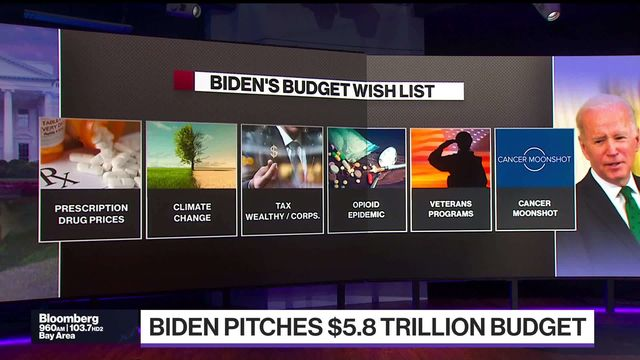
President Joe Biden proposed a $5.8 trillion budget March 28 for fiscal year 2023, which includes funding for healthcare.
Nine healthcare takeaways:
1. Pandemic preparedness. The budget calls for a five-year investment of $81.7 billion to plan ahead for future pandemics. The funding would help support research and development of vaccines, improve clinical trial infrastructure and expand domestic manufacturing.
2. Mental health parity. Under the proposed budget, federal regulators would get the power to levy fines against health plans that violate mental health parity rules. The budget calls for $275 million over 10 years to increase the Labor Department’s capacity to ensure health plans are complying with the requirements and take action against those plans that do not. The budget also proposes funding to bolster the mental healthcare workforce and boost funding for suicide prevention programs.
3. Vaccines for uninsured adults. The proposed budget calls for establishing a new Vaccines for Adults program that would provide uninsured adults access to recommended vaccines at no cost.
4. Title X funding. The budget proposes providing $400 million in funding for the Title X Family Planning Program, which provides family planning and other healthcare services to low-income individuals.
5. Cancer Moonshot initiative. The budget proposes several investments across the FDA, CDC, National Cancer Institute and Advanced Research Projects Agency for Health to advance President Biden’s Cancer Moonshot initiative. The initiative aims to reduce the cancer death rate by 50 percent over the next 25 years.
6. Spending to reduce HIV. The proposed budget includes $850 million to reduce new HIV cases by increasing access to HIV prevention services and support services.
7. Veterans Affairs medical care. President Biden’s proposed budget allocates $119 billion, or a 32 percent increase, to medical care for veterans. The money will fully fund inpatient, outpatient, mental health and long-term care services, while also investing in training programs for clinicians to work in the VA.
8. Discretionary funding for HHS. President Biden is asking Congress to approve $127.3 billion in discretionary funding for HHS in fiscal 2023, representing a $26.9 billion increase from the department’s allotment for fiscal 2021.
9. Mandatory spending for the Indian Health Service. The budget request for the Indian Health Service calls for shifting the healthcare agency from discretionary to mandatory funding. The budget calls for $9.1 billion in funding, a 20 percent increase from the amount allocated in fiscal 2021.
House Republicans are demanding the Biden administration starts winding down the COVID-19 public health emergency, while hospital lobbying groups are pressing it to do the opposite.
A group of more than 70 House Republicans wrote Thursday to Department of Health and Human Services (HHS) Secretary Xavier Becerra asking to start the process to wind down the COVID-19 public health emergency (PHE), which was recently extended until April. At the same time, several hospital advocacy groups are hoping the agency keeps the PHE beyond this spring and wants a 60-day notice as to when it will end.
“Although the PHE was certainly necessary at the outset of the pandemic, it was always meant to be temporary,” according to the GOP letter led by Rep. Cathy McMorris Rodgers, R-Washington, ranking member of the House Energy and Commerce Committee.
Republicans want HHS to release a concrete timeline for when the agency plans to exit the PHE.
“We recognize that the PHE cannot end overnight, and that certain actions must be taken to avoid significant disruption to patients and healthcare providers, including working with Congress to extend certain policies like maintaining access to telehealth services for our nation’s seniors,” the letter added.
The PHE granted major flexibilities for providers to get reimbursed by Medicare for telehealth, but those powers will go away after the PHE. It also gave flexibility on several reporting requirements and eased other regulatory burdens.
Another major issue is that states are going to be able to start eligibility redeterminations for Medicaid, which have been paused since the PHE went into effect in January 2020. State Medicaid directors are seeking a heads-up on when the emergency will go away, as states can start to disenroll ineligible beneficiaries after the PHE expires.
Republicans also want Becerra to cite any programs that should be made permanent, and they want “swift action” to lift all COVID-19 vaccine mandates.
The Supreme Court upheld the Biden administration’s healthcare worker vaccine mandate, overturning a lower court’s stay that affected half of the country. The Centers for Medicare & Medicaid Services has deadlines for states to comply with the vaccination mandate, and facilities that don’t fully comply could risk losing participation in Medicare and Medicaid.
The Republicans charge that the mandates have not “stopped the spread of COVID-19 but have alienated many Americans and have caused staff shortages at hospitals and other healthcare facilities.”
Key drivers of the staff shortages, however, have been a massive surge of the virus overwhelming facilities caused by the omicron variant along with increased expenses facilities have faced for temporary nursing staff. Those lingering expenses are the reason hospital groups are pressing for HHS to do the opposite and extend the PHE beyond April.
The Federation of American Hospitals (FAH) also wrote to Becerra Thursday (PDF) seeking to continue to extend the PHE “well beyond its current expiration date in April 2022.” Even though the omicron surge appears to be easing, the virus is still creating major operational challenges for providers, FAH said.
It also wants the administration to give hospitals a 60-day heads-up when it plans to end the PHE.
“Unwinding the complex web of PHE waiver-authorized operations, programs and procedures—which will have been in place and relied on for more than two years—is a major undertaking that, if rushed, risks destabilizing fragile healthcare networks that patients rely on for care,” the letter said.
The American Hospital Association also wrote to congressional leaders Tuesday seeking for more relief from Congress to help systems overcome staffing shortages that have exacerbated due to the omicron surge.
“The financial pressures hospitals and health systems faced at the beginning of the public health emergency continue, with, for example, ongoing delays in non-emergent procedures, in addition to increased expenses for supplies, medicine, testing and protective equipment,” the letter said.
FAH President Chip Kahn told Fierce Healthcare on Friday that the issues Republicans address in the letter are different from the priorities of the FAH, namely that the association doesn’t focus on mask or vaccine mandates.
“What we are saying is that the PHE has many aspects to it, and so … we think [it] should be extended, but if you don’t then we need to have a lengthy or carefully thought through transition,” Kahn said.
He added that Becerra’s predecessor, acting Secretary Eric Hargan, told providers that they would get a 60-day notice before the end of the PHE. That deadline for such a 60-day notice is Feb. 15.
Kahn said he understands the administration may be under political pressure to end the emergency, but prior notice is absolutely needed.
“I don’t know how they will respond but if they do choose to pull out, we just want to make sure that it doesn’t leave anything behind,” he said.
Independent physician groups, which include telehealth docs, must now accept a rate that someone elsehas negotiated, expert says.
The No Surprises Act has providers scrambling to understand the implications of a law that went into effect earlier this month.
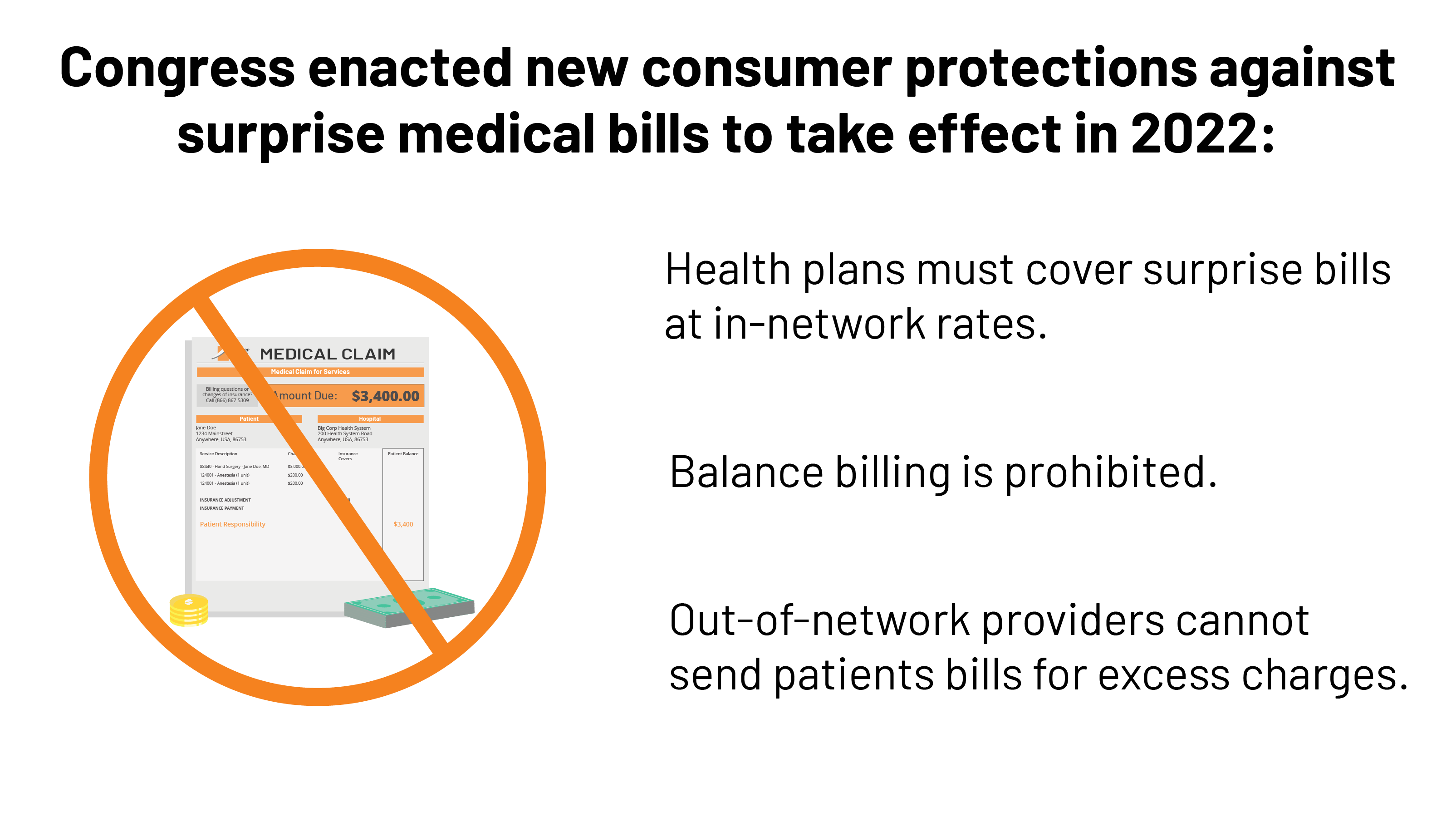
Under the law, patients treated by an out-of-network physician can only be billed at the in-network rate. It protects patients from receiving surprise medical bills from the ER or air ambulance providers or for non-emergency services from out-of-network physicians at in-network facilities.
Patients can no longer receive balance bills – the difference between what the provider charges and what the insurer pays – or be charged a larger cost-sharing amount.
The congressional intent was to save patients sometimes thousands of dollars in unexpected, or surprise, medical bills. But applying the No Surprises Act to clinical care is being left to providers to sort out.
A big question is the definition of an emergency and the benchmark used to determine when it ends, according to Kyle Faget, a partner at Foley who is co-chair of the firm’s Health Care and Life Sciences Practice Groups. She asked: Does the emergency end when the patient is stabilized, or should another standard apply? This includes emergency services for mental health and substance-use disorders.
Another question is around pre-planned services. Patients have to be notified who is providing the care and whether the physician is in-network. If the physician is out-of-network, patients must provide consent. But that can be tricky, for instance, if a patient scheduled for a planned C-section gets an out-of-network doctor who was not scheduled at the time the appointment was made.
At some hospitals, a new layer of administration is needed to comply with the law, Faget said.
Another area not well understood is how the law affects telehealth consults in the ER.
TELEHEALTH AND THE NO SURPRISES ACT
The law states that if treated by a telehealth clinician, the patient can only be billed the in-network rate, said Faget, who specializes in telehealth law.
Telehealth is often used in the ER, according to Faget. Most ER visits require a physician consultation, with hands-on medical care provided by a clinician other than the physician.
Pre-COVID-19, providers were in the embryonic stage of providing virtual emergency care, she said. The pandemic, and a shortage of physicians, spurred virtual care in the ER.
These telehealth providers often work on a contracted basis. They are likely credentialed at the hospital but are not hospital employees, Faget said.
This means they are not credentialed with the insurer. Under the No Surprises Act, they are now subject to the in-network rates negotiated by the hospital.
Telehealth ER physicians could negotiate their own contracts with insurers, but as a small group, they are not likely to get the higher rates they had prior to the implementation of the No Surprises Act.
“It’s an arduous contracting process, and small-group bargaining power is low,” Faget said. “The big hospital system has bargaining power. Those groups providing telehealth services won’t necessarily have agreements in place and, by definition, are out-of-network.”
Independent physician groups, which include telehealth docs, must now accept a rate that someone else has negotiated, Faget said. This fact can be more of an issue than the lower rate they’re now being paid, she said.
“I think telehealth will adapt,” Faget said. “I think it will become the way of doing business.”
WHY THIS MATTERS
The bottom line is that the No Surprises Act is doing what it promised to do – saving patients from getting a large bill not covered by insurance.
Surprise bills are a moral and ethical issue, Faget said. Patients, at their most vulnerable in the ER, are sent home only to get a $5,000 bill they never saw coming.
“It’s like kicking a person when they’re down,” Faget said.
However, in the larger healthcare ecosystem, ending surprise medical bills will ultimately result in cost-shifting, she said.
“Think about the system globally: somebody is paying for something somewhere,” Faget said. “At the end of the day, somebody’s going to have to pay.”
THE LARGER TREND
Providers have told her that the No Surprises Act incentivizes insurance companies to lower their payments, Faget said.
The American Society of Anesthesiologists has accused BlueCross BlueShield of North Carolina of doing this. A letter sent by BCBS of North Carolina to anesthesiology and other physician practices this past November threatens to terminate physicians’ in-network status unless they agree to payment reductions ranging from 10% to over 30%, according to ASA.
The ASA saw this as proof of its prognostication to Congress upon passage of the No Surprises Act: that insurers would use loopholes in the law to leverage their market power.
The AHA and AMA have sued the Department of Health and Human Services over implementation of a dispute-resolution process in the law they say favors the insurer. The arbitrator must select the offer closest to the qualifying payment amount. Under the rule, this amount is set by the insurer, giving the payer an unfair advantage, according to the lawsuit.
The American Hospital Association (AHA) is asking Congress for an additional $25B to help hospitals offset high labor costs, largely incurred by the need to rely on travel nurse staffing firms that charge two to three times pre-pandemic rates. The AHA, along with 200 members of Congress, is urging the Federal Trade Commission to investigate the staffing agencies for anti-competitive activity, although the agency has previously declined to do so.
The Gist: The Department of Health and Human Services (HHS) is now releasing$2B in of provider relief dollars from the CARES Act. Beyond that, after nearly two years and $178B of federal support, hospitals shouldn’t count on additional funds from the government, even as costs of labor and supplies continue to rise.
Instead, we’d expect more scrutinyover how the remaining relief dollars are spent. Federal support during the pandemic has masked structural economic flaws in provider economics, and we expect 2022 will be a year of financial reckoning for many hospitals and health systems.
The 340B Drug Pricing Program, designed to increase access to specialty pharmaceuticals for low-income patients, is a perennial area of concern for health policy. The program has grown exponentially since its inception almost 30 years ago: 340B providers increased purchases of discounted drugs from $4B in 2009 to $38B in 2020, five times faster than the overall growth rate of US drug sales. Insurers and drug manufacturers are advocating for significant changes to the program, or even favor eliminating it entirely, claiming that 340B has grown beyond its original intent to help safety net facilities, and simply enriches providers without directly benefiting patients. Indeed, the profits from 340B have become essential for many hospitals’ sustainability; some systems tell us that 340B accounts for their entire margin.
In the graphic above, we outline the basics of revenue and product flow within this complex program. The 340B program is meant to allow hospitals that treat low-income, underserved patients to purchase drugs from manufacturers at a 25 to 50-plus percent discount, but still be reimbursed by payers at standard network rates. The discounts are intended to help hospitals overcome losses they incur in providing uncompensated care, but apply to drugs for all patients, regardless of income and insurance status. 340B providers often partner with independent pharmacies to dispense the drugs, and payers are billed the full list price for the medication. Thus, insured patients pay co-payments on the full price of drugs, leading to criticism that 340B savings are not passed on to patients. 340B providers share an estimated $40B in total annual profit with partner contract pharmacies.
The program has been targeted for overhaul by both the Trump and Biden administrations, and faces another threat later this month, when the US Supreme Court is set to hear a case between the hospital industry and the Department of Health and Human Services (HHS) to decide whether the Centers for Medicare & Medicaid Services (CMS) has the authority to enact payment cuts through rulemaking.
If the court rules in favor of the agency, 340B providers could see significant cuts in payment rates. In our next edition, we’ll dive deeper into the potential impact of that ruling on the industry.
The pharmaceutical industry scored a muted win in its long-running feud with the Department of Health and Human Services (HHS) over 340B program discounts Friday when a federal court judge granted Eli Lilly’s bid to vacate two administrative actions aimed at drugmakers.
U.S. District Court Judge Sarah Evans Barker ruled that a December advisory opinion from HHS’ Office of the General Counsel and a May enforcement letter from the Health Resources and Services Administration (HRSA) were “arbitrary and capricious” and in violation of the Administrative Procedures Act.
But while Barker ordered the two actions to be set aside and vacated, she also specified that HHS did not exceed its statutory authority or act unconstitutionally in regard to the May enforcement letter.
“Lilly is encouraged by Friday’s opinion, which confirms that the government’s enforcement decision against it was improper,” the drugmaker said in an email statement.
Further, the judge determined that Lilly and other drug manufacturers are not permitted under the current 340B statute “to impose unilateral extra-statutory restrictions on its offer to sell 340B drugs to covered entities utilizing multiple contract pharmacy arrangements.”
HHS may have “suddenly” changed its views on whether the agency could enforce penalties against drugmakers restricting sales of the discounted products to contract pharmacies, but the law as written makes it impossible to discern whether Congress intended for drug manufacturers to have “unlimited delivery obligations … untethered to the particular covered entity’s actual distribution needs,” the judge wrote.
As such, Barker underscored the need for lawmakers to settle the ambiguity with new, explicit legislation.
“We have no insight into why there is apparently so much reluctance to promulgate a holistic legislative proposal to bring clarity to the scope of the regulated parties’ obligations and entitlements … rather than engage in piecemeal interpretations and after the fact patchwork characterizing the history of the agency’s attempts to manage this program,” Barker wrote in the Friday order.
“What we have come to see, however, is that the 340B program can no longer be held together and implemented fairly for all concerned with non-binding interpretive guidelines and mixed, sometimes inconsistent messaging by the agency regarding the source and extent of its authority to enforce statutory compliance in the area of contract pharmacies.”
Eli Lilly’s case against HHS is the latest in a lengthy dispute between the agency and a slew of pharmaceutical companies including AstraZeneca, Novartis, Novo Nordisk, Sanofi and United Therapeutics.
The 340B program requires drugmakers to offer discounted products to safety net hospitals, community health centers and other providers as a condition of participation in Medicare and Medicaid.
Beginning in July 2020, however, the drugmakers announced they would no longer provide 340B-discounted products to contract pharmacies or would be limiting sales unless a 340B-covered entity provided claims data ensuring there were no duplicative discounts being applied.
In response, HHS’ Office of the General Counsel issued the December advisory opinion, which stated that the restrictions violated federal law, and later through HRSA delivered enforcement letters threatening penalties to the six companies.
HHS’ pushback has generally taken a beating in the courts. In June, the agency decided to pull the December advisory opinion to “avoid confusion and unnecessary litigation” after courts took the side of AstraZeneca and struck down a motion from HHS to dismiss the case.
Industry supporters of HHS’ position focused on the silver lining of Friday’s decision.
In a statement, Maureen Testoni, president and CEO of 340B Health, a membership organization of more than 1,400 340B participants, said the group was encouraged by Barker’s position on the “unilateral” restrictions on drug discounts for contract pharmacies.
“We are encouraged that the court upheld HRSA’s view that Lilly is violating the law as one that ‘best aligns with congressional intent’ of the 340B program,” she said in a statement. “We urge the government to continue its work to enforce the law and restore the statutory drug discounts that enable 340B hospitals to care for patients with low incomes and those living in rural parts of the country.”
On Thursday the Department of Health and Human Services (HHS), along with other federal agencies, released the long-awaited second half of its proposed regulations implementing the No Surprises Act, passed by Congress at the end of last year, which bans “surprise billing” of patients who unsuspectingly receive care from out-of-network providers.
The interim final rule, which will take effect on January 1st after a comment and review period, lays out a process for addressing disputed patient bills, first through a 30-day “open negotiation” between the patient’s insurer and the out-of-network provider, and then through a federally-managed arbitration process.
Of most interest to insurers and providers who have lobbied fiercely for months to ensure a favorable interpretation of the law, the new regulation specifies that the outsider arbitrator, to be agreed upon by both parties, must begin with the presumption that the median in-network rate for services in the local market is the correct one. The arbitrator can then modify that price based on the specific circumstances of the case.
That method was broadly favored by insurers, and AHIP strongly endorsed the proposed approach, saying in a press release that “this is the right approach to encourage hospitals, healthcare providers, and health insurance providers to work together and negotiate in good faith.” Predictably, the hospital lobby felt otherwise; the American Hospital Association reacted by calling the rule “a windfall for insurers”, saying that it “unfairly favors insurers to the detriment of hospitals and physicians who actually care for patients.”
The ultimate winners here are patients, who will gain important new protections against the potentially crippling financial implications of surprise billing. We’d agree with HHS Secretary Xavier Becerra, who told the New York Times that the new rule would “[take] patients out of the middle of the food fight,” and provide “a clear road map on how you can resolve that food fight between the provider and the insurer.” It’s about time.
Still unresolved: the high cost of out-of-network ambulance services, left out of the No Surprises Act altogether. Let’s hope Congress circles back to address that issue soon.
As the healthcare industry gears up to fall under the requirements of the No Surprises Act that bans balance billing, hospitals and insurers said they need more time and information to abide by the requirements.
Payers are asking for a safe harbor until 2023 calling the Jan. 1 start day is too soon for plans to determine payment amounts to out-of-network providers and as it seeks clarification on the resolution process.
Safety net hospitals represented by America’s Essential Hospitals want implementation to be delayed until six months after the public health emergency for COVID-19 ends, saying staff and resources are spread too thin dealing with the pandemic and especially the spread of the delta variant.
HHS released the first interim final rule to implement the No Surprises Act in June — one of multiple expected to be released this year — including those from the Departments of Treasury and Labor.
A major and much-debated aspect of the law is how qualifying payment amounts — the amount paid to providers who are not in network but are providing care at an in-network facility — are calculated.
Later rules are expected to provide more detail on the key issue of how the independent dispute resolution process will be conducted.
Payers and providers both argued in their comments that without more information on that process, it is hard to prepare.
The ERISA Industry Committee, which lobbies for large employers, said that as the resolution process is developed, deviation from QPAs “should be limited to extenuating circumstances.” That’s in direct contrast to the American Hospital Association, which requested the department not overly weigh the QPA as a factor in consideration.
When Congress debated a ban on surprise billing, whether a dispute resolution process would be used or whether rates for out-of-network providers would be based on a set rate was perhaps the most hotly contested aspect. In the end, providers got the win with the arbitration clause.
In comments on the rule, both AHA and payer lobby AHIP called for a multi-stakeholder group to advise on issues such as what provisions fall under state and federal jurisdiction and other operational challenges.
The hospital lobby requested clarification on a number of aspects of the rule, such as how good faith estimates of costs should be calculated on consent forms patients may sign to waive balance billing protections and when a provider can bill a patient if their claim is denied by the plan.
In multiple instances, the group asked the department to confirm that the initial payment should not be the QPA unless both the plan and provider agree to that circumstance.
The country’s largest hospital lobby is also concerned that the act won’t do enough to ensure network adequacy from insurers and will not institute enough oversight on plans’ compliance.
AHA said it is “deeply concerned that the existing oversight mechanisms are insufficient to monitor plan and issuer behavior and a more robust structure is needed to enforce the QPA requirements.”
The Federation of American Hospitals expressed similar concerns, particular regarding “abusive plan practices” like inappropriate claims denials and downcoding. The group urged the departments “to expand their oversight of plans and issuers to prevent and address unlawful and abusive plan practices.”
AEH, meanwhile, asked for assurances that administrative burdens like the notice and consent documentation would be fairly split with insurers.
Under the rule, the QPA is to be decided by a plan’s median in-network contracted rate for a geographic area. It must have a minimum of three contracted rates to use this method. If that is not available, the payer can use an independent claims database.
FAH, in particular, asked that the rule strengthen conflict of interest regulations for these databases and have their eligibility determined by the departments instead of the insurers themselves.
AHIP’s most immediate concern is the timeline for implementation. It asked for the good faith safe harbor request to develop QPA methodologies, create the infrastructure to transmit notice and consent forms with providers and for it to receive the forthcoming information on the arbitration process.
“Health plans and issuers have responsibility for developing work streams; updating information technology; creating forms, notices, and other communications; training employees; and other operational measures necessary to effectuate obligations” in the rule, the group wrote.
States with 1332 reinsurance waivers will have more pass-through funding to implement the waivers.
The Centers for Medicare and Medicaid Services and the Biden Administration have earmarked $452 million in federal funding through the American Rescue Plan for efforts to lower costs and improve health insurance access in 13 states.
Due to the changes made to the ARP, states with 1332 reinsurance waivers will have more pass-through funding to implement the waivers, and may also have their own state funding available to pursue further strategies to promote insurance affordability.
This funding, said CMS, might otherwise have been spent on 2021 reinsurance costs.
The “pass-through funding” is determined on an annual basis by the Department of Health and Human Services and the Department of the Treasury. They’re available to states with approved section 1332 waivers that have also lowered premiums to implement their waiver plans.
WHAT’S THE IMPACT?
State-based reinsurance programs created through section 1332 waivers are designed to improve health insurance affordability and market stability by reimbursing issuers for a portion of healthcare provider claims that would otherwise be paid by some consumers and by the federal government through higher premiums.
As a result, said CMS, these programs hold the potential to lower premiums for consumers with individual health insurance coverage, and may increase access to coverage and provide more health plan options for people in those reinsurance states, without increasing net federal costs.
The additional funds announced by CMS range from $2.5 million to $139 million per state – varying based on factors such as the size of the state’s reinsurance program. The funds are the result of expanded subsidies provided under the ARP, which will result in new people enrolled, and will cover a portion of the states’ costs for these reinsurance programs.
States with approved section 1332 state-based reinsurance waivers have experienced reduced premiums in the individual market, CMS said. Overall, from plan years 2018 to 2021, states that have implemented section 1332 state-based reinsurance waivers for the individual market have seen statewide average premium reductions ranging from 3.75% to 41.17%, compared to premiums absent the waiver, according to the agency’s internal data.
For example, in 2021, statewide average premium reductions due to the waiver were 4.92% in Pennsylvania, 18.47% in Colorado, and 34% in Maryland, compared to a scenario with no waiver in place.
Beyond reduced premiums, it’s expected that section 1332 state-based reinsurance waivers may help states maintain and increase issuer participation, and may increase the number of qualified health plans available in each county in such states from year to year. For example, states like Colorado, Wisconsin, Alaska and Maryland have seen additional issuers enter or re-enter the individual marketplace since their state reinsurance programs have been implemented.
The agency’s current thinking is that stronger issuer participation in the individual market may increase competition and translate to consumers having more opportunities to obtain affordable health insurance coverage. Nationally, on average, there are more QHP offerings in 2021 than in 2020, and in states with section 1332 state-based reinsurance waivers, the average number of QHPs weighted by enrollment increased by 30.6% from 2020 to 2021.
The states, and their pass-through funding amounts, include Alaska ($43,827,328), Colorado ($49,892,498), Delaware ($10,821,203), Maine ($8,562,238), Maryland ($139,159,548), Minnesota ($64,969,985), Montana ($7,129,995), New Hampshire ($8,820,847), North Dakota ($5,798,044), Oregon ($18,948,114), Pennsylvania ($28,558,672), Rhode Island ($2,590,540) and Wisconsin ($63,408,562). New Jersey’s pass-through funding amount will be announced at a later time.
THE LARGER TREND
In April 2021, the departments announced a total of $1.29 billion in pass-through funding for the 2021 plan year and posted a FAQ that noted that the departments would inform states of additional pass-through to account for the ARP.
ON THE RECORD
“This investment is a testament to our administration-wide commitment to making healthcare more accessible and affordable,” said HHS Secretary Xavier Becerra. “This funding from the American Rescue Plan will reduce monthly healthcare costs for consumers, increase coverage, and provide more options. We will continue to work with states to strengthen the healthcare system as we respond to the COVID-19 pandemic.”
“Reducing a family or individual’s average monthly health coverage costs frees up that money for other needs,” said CMS Administrator Chiquita Brooks-LaSure. “The Biden-Harris Administration continues to work with states to reduce costs and deliver more affordable health coverage options. This is another example of how the American Rescue Plan is helping more people meet their healthcare needs.”
The US Supreme Court recently announced that it will hear an ongoing debate over cuts to 340B drug payments to Medicare hospitals.
The case will be heard during the Supreme Court’s upcoming term, which starts in October. A decision is expected sometime next year.
The case was brought on by the American Hospital Association (AHA) and other national hospital groups seeking to overturn HHS’ decision to reduce Medicare reimbursement to hospitals in the 340B Drug Pricing Program by nearly 30 percent.
HHS had finalized the cuts in the 2018 Outpatient Prospective Payment System (OPPS) rule. The federal department said in a fact sheet that the cuts address the “recent trends of increasing drug prices, for which some of the cost burden falls to Medicare beneficiaries.”
Hospital groups led by the AHA challenged the cuts, arguing that reduced drug payments would harm access to care since the 340B Drug Pricing Program includes safety-net hospitals. An appeals court did not agree with their arguments in August 2020, ruling in favor of HHS.
“We are pleased that the U.S. Supreme Court has agreed to hear the compelling arguments in our case on payments cuts to the 340B drug pricing program that are adversely impacting care to patients,” Melinda Hatton, the AHA’s general counsel, said publicly on Friday.
“We are hopeful that the Court will reject the appellate court decision deferring to the government’s interpretation of the law that clearly imperils the important services that the 340B program helps allow eligible hospitals and health systems to provide to vulnerable communities, many of which would otherwise be unavailable,” Hatton continued.
Other hospital groups also cheered the Supreme Court’s decision to hear the 340B drug payment case.
“We are pleased that the Supreme Court has agreed to review the appellate court decision, which we believe was legally flawed,” Maureen Testoni, CEO of 340B Health, said on the group’s website.* “We are hopeful that the justices will reverse the lower court decision that upheld these damaging cuts to many 340B hospitals treating patients with low incomes. In the meantime, we continue to urge the Biden administration to change this harmful policy by abandoning the payment cuts for 2022 and beyond.”
The other plaintiff, Association of American Medical Colleges (AAMC), also said it is looking forward to the consideration of the case.
“The current reimbursement rates reduce the 340B drug discounts granted to safety-net providers, many of which are teaching hospitals,”explained David J. Skorton, MD, AAMC president and CEO. “These hospitals use the current savings to deliver critical health care services to low-income and vulnerable patients, which includes providing free or substantially discounted drugs to low-income patients, establishing neighborhood clinics, and improving access to specialized care previously unavailable in some areas. A reversal of the cuts will ensure that low-income, rural, and other underserved patients and communities are able to access the vital services they need.”
Neither HHS nor CMS provided a public statement regarding the Supreme Court’s decision to hear the 340B drug payment case.








 HENRY KOTULA