World coronavirus updates

https://www.axios.com/coronavirus-latest-developments-8b8990c4-6762-494a-8ee0-5091746bda9b.html

Coronavirus brings clearer skies but darker world to 50th Earth ...

Children in Spain were allowed to go outside on Sunday for the first time since a nationwide lockdown aimed at slowing the spread of the novel coronavirus began six weeks ago.

By the numbers: The coronavirus has infected over 2.9 million people and killed over 200,000, Johns Hopkins data shows. More than 829,000 people have recovered from COVID-19. The U.S. has reported the most cases in the world (more than 940,000 from 5.1 million tests), followed by Spain (over 223,000).

What’s happening: Australian Health Minister Greg Hunt announced a new coronavirus tracing app on Sunday that the government hopes at least 50 percent of the population will use. A top health official said the app is “only for one purpose, to help contact tracing,” as he sought to reassure Australians on privacy issues.

  • China reported 11 new cases and no deaths on Sunday. It’s been 10 days since the country reported any deaths. China’s reported infections and deaths have been treated with suspicion by foreign leaders and the CIA.
  • Argentina is extending a nationwide shelter-in-place order that was due to expire Sunday until May 10, President Alberto Fernandez said on Saturday, per Reuters. The country has confirmed over 3,700 cases, according to Johns Hopkins.
  • Spain will gradually ease nationwide stay-at-home restrictions starting May 2 if coronavirus cases continue to decline, Prime Minister Pedro Sánchez said Saturday.
  • British Prime Minister Boris Johnson plans to return to work on Monday after recovering from the coronavirus.
  • The World Health Organization said Saturday there is “no evidence” that people who recover from COVID-19 and have antibodies are protected from a second infection.
  • India announced it will be easing lockdown measures for its 1.3 billion people in the areas outside of hotspots — providing some relief for locally owned businesses and daily wage workers.
  • The director of Israel’s foreign intelligence agency, Mossad, said in a briefing to health care officials on Thursday that Iran and its regional allies are intentionally underreporting cases and deaths from the coronavirus.
  • Brazil and Ecuador are becoming coronavirus epicenters in Latin America, as prolonged lapses in tracking and testing have led to severely undercounted death tolls, the Washington Post and the N.Y. Times report.
  • New Zealand’s level 4 lockdown measures requiring non-essential workers to stay home have been extended to 11:59 p.m next Monday, when the country moves into a still-strict level 3. NZ reported just three cases on Thursday.
  • Pakistan has decided to keep mosques open during the fasting month of Ramadan, which began Thursday, as cases continue to climb, AP reports.

The big picture: The world faces its gravest challenge in decades, but geopolitical tensions won’t wait until it’s over. Trump’s threat on Wednesday to “destroy” Iranian boats that harass U.S. ships comes amid arrests of Hong Kong pro-democracy activists and clashes in Afghanistan that could further undermine peace there.

Between the lines: Policy responses to the crisis have been every-country-for-itself and — in the case of the U.S. and China — tinged with geopolitical rivalry.

  • But the scientific work under way to understand the virus and develop a vaccine has been globalized on an unprecedented scale.

Coronavirus symptoms: Fever, cough, shortness of breath.


U.S. with 1/3 of Confirmed Coronavirus Cases with Less Than 2% of Population Tested

https://coronavirus.jhu.edu/map.html

Coronavirus outbreak affecting some Durham high school students ...

By the numbers: The coronavirus has infected over 2.9 million people and killed over 200,000, Johns Hopkins data shows. More than 829,000 people have recovered from COVID-19. The U.S. has reported the most cases in the world (more than 940,000 from 5.1 million tests), followed by Spain (over 223,000).


Cartoon – At last a Sport We can Watch

KAL's cartoon | The world this week | The Economist

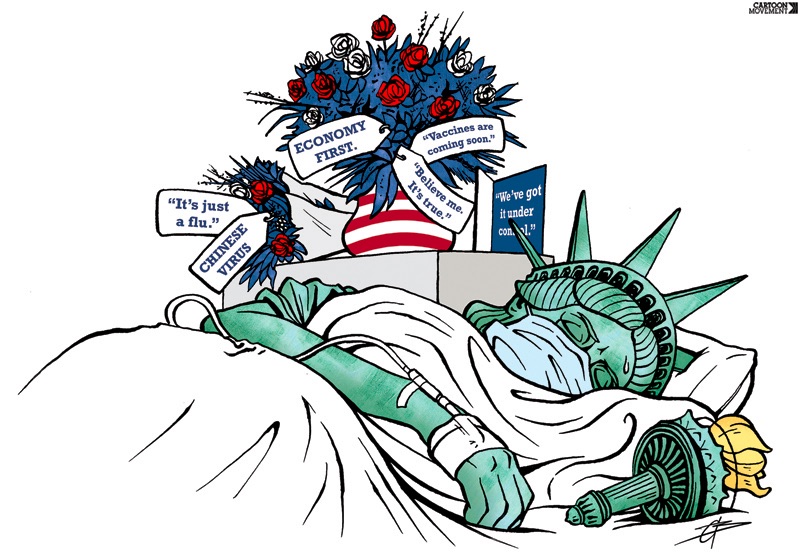
Cartoon – State of the Union

iroon.com: Cartoons


Interim Coronavirus Relief Bill

https://heathercoxrichardson.substack.com/p/april-23-2020

Congress expected to announce deal on latest coronvirus relief bill

Today the House of Representatives passed a new $484 billion coronavirus relief bill by a vote of 388-5. The Senate passed it Tuesday. $381 billion is for small businesses left out in the cold when the money from the previous coronavirus relief package quickly ran dry. Republicans wanted to stop there, but Democrats demanded $75 billion for hospitals, and $25 billion for coronavirus testing, as well as a requirement that the administration figure out a strategy to get tests to states.

The relief bill comes as more than 26 million Americans are out of work and almost 50,000 Americans have died of Covid-19. The representatives had to drive to Washington, D.C., or fly unusual routes because regular flights are canceled. They arrived for the vote in the Capitol building in alphabetical groups of 50 to 60 so they could keep their distance from each other. A number of Republicans refused to wear masks during the vote, while all but one Democrat wore one.

Democrats inserted into the bill a new committee to oversee the administration’s “preparedness for and response to the coronavirus crisis,” chaired by Jim Clyburn (D-SC). The committee has the power to subpoena witnesses and documents. Republicans and Trump objected.

But the Democrats did not get any more aid to states, crippled by the crisis, than the $150 billion previously provided. The bipartisan National Governors Association, headed by Maryland Governor Larry Hogan, a Republican, has asked for $500 billion to help the states replace lost tax revenues. Democrats wanted such aid, but Republicans refused.

Senate Majority Leader Mitch McConnell (R-KY) went on talk radio host Hugh Hewitt’s show on Wednesday and tried to make the question of state aid partisan. He said that he opposed granting money to states whose problems, he said, stemmed from their underfunded state pension plans. Instead, the states should consider bankruptcy. A document put out by McConnell’s office called aid to the states a “blue state bailout.”

In fact, Michael Leachman, the senior director of state fiscal research at the Center on Budget and Policy Priorities, said that McConnell has it wrong. States have not been overspending; their expenses for education and infrastructure are actually significantly below what they were in 2008, despite more inhabitants, and they have put about 7.6% of their budgets into rainy day funds, a historic high, up from the previous high of 5% they held in reserve in 2006 before the Great Recession.

The problem is that states have to balance their budgets annually, and they depend on sales and income taxes for 70% of their revenue. The shutdowns have decimated tax revenues as shopping ends and people lose their jobs. At the same time, unemployment claims are climbing dramatically. States are looking at a $500 billion loss between now and 2022.

States need money to avoid massive layoffs and deep spending cuts, actions that would make the economic crisis continue much longer than it would if they do not have to make them. They would not use bailout money on pensions, Leachman writes, but put it in state general funds, which are collapsing. Pensions come out of a separate trust fund (although the general fund does put money toward future pensions, that’s less than 5% spending from the general fund). Federal bankruptcy law currently does not allow states to declare bankruptcy, but in any case, Leachman writes, there is no need for it. Bankruptcy relieves high debt levels, but state debt is not high, and once the pandemic passes, the states should be financially sound again.

If Leachman’s explanation was scholarly, New York Governor Andrew Cuomo was blunt. “New York puts into that federal pot $116B more than we take out. Kentucky takes out $148B more than they put in,” he said at a press conference. “Senator McConnell, who’s getting bailed out here? It’s your state that’s living on the money that we generate.” A recent study by the Rockefeller Institute of Government shows that New Yorkers as a group pay in to the federal government $1,792 per capita more than they take out, while for every dollar Kentucky puts in, it gets $2.61 back.

Cuomo called McConnell out for trying to turn the crisis into a political fight: “That’s not what this country is all about,” Cuomo said. “It’s not red and blue, it’s red, white and blue.”

Today’s other big news was Trump’s suggestion at his coronavirus briefing that it would be worth studying whether injecting disinfectant into patients would kill the novel coronavirus. “And then I see the disinfectant where it knocks it out in a minute. One minute. And is there a way we can do something like that, by injection inside or almost a cleaning?” he said. “Because, you see, it gets on the lungs, and it does a tremendous number on the lungs. So it’d be interesting to check that. So that you’re going to have to use medical doctors, but it sounds — it sounds interesting to me.” He also suggested using heat and light to kill the virus.

Doctors were horrified at his comment, calling it irresponsible and dangerous. Disinfectants are poisonous and are deadly if they are used inappropriately. “To be clear:” emergency medicine physician Dara Kass tweeted, “Intracavitary UV light and swallowing bleach or isopropyl alcohol can kill you. Don’t do it.”

Trump’s emphasis on dramatic cures for Covid-19 reinforces his disagreement with health experts that we must dramatically increase our testing for the disease so we can identify hot spots and isolate them before they spread. At today’s briefing, Trump disagreed with Dr. Anthony Fauci, the director of the National Institute of Allergy and Infectious Diseases and one of the administration’s top medical advisors about the pandemic, who recently said “We absolutely need to significantly ramp up, not only the number of tests but the capacity to actually perform them.” Today, Trump said: “I don’t agree with him on that, no, I think we’re doing a great job on testing.”

In fact, the U.S. lags behind other nations in per capita tests, and Trump’s continuing reluctance to support getting them seems to me mystifying. It is this odd gap Congress is trying to address with its requirement in the new coronavirus package that the administration must figure out a strategy to get tests to states. The bill now heads to the Oval Office for Trump’s signature.

For all the dark nitty-gritty of politics today, it is also a day that begins a joyous month, and that seems to me a far better way to leave you all tonight than with the day’s troubles. For those who celebrate, Ramadan Mubarak.


The Health 202: States are ending their coronavirus lockdowns earlier than health roadmaps recommend

https://www.washingtonpost.com/news/powerpost/paloma/the-health-202/2020/04/23/the-health-202-states-are-ending-their-coronavirus-lockdowns-earlier-than-health-roadmaps-recommend/5ea09b5988e0fa34528d6eb8/?utm_campaign=wp_the_health_202&utm_medium=email&utm_source=newsletter&wpisrc=nl_health202

The Health 202: States are ending their coronavirus lockdowns ...

Over a nearly three-week span in March, most state governors across the nation locked down their states because of the novel coronavirus.

Gradually opening things up will take even longer — and probably will vary considerably from state to state.

Governors are feeling pressure from two sides. Many troubling questions about the coronavirus remain unanswered, such as how to get more Americans tested and whether the United States even has enough capacity to track and isolate virus cases. At the same time, they’re feeling immense pressure to restart economic activity, with tens of millions of Americans out of work and the country stuck in a deepening economic crater.

As governors weigh when and how to reopen public gathering spots, there are several road maps they could look to.

Yesterday the National Governors Association released a 10-point guide for states. The first point is to make coronavirus testing broadly available. It urges states to improve surveillance to detect outbreaks, ensure hospitals are equipped to respond to surges and create a plan to reopen in stages.

The plan also warns states against opening prematurely. 

“Opening without the tools in place to rapidly identify and stop the spread of the virus … could send states back into crisis mode, push health systems past capacity and force states back into strict social distancing measures,” it says.

Then there’s guidance from the Trump administration, which says states should first see a decrease in confirmed coronavirus cases over a 14-day period. That guidance is in line with what public health experts have recommended — although Trump has also frequently suggested he’d like to see states open sooner.

So far, governors vary widely in how they’re approaching the issue.

Some, like Trump, are chomping at the bit. Georgia Gov. Brian Kemp (R) is allowing businesses including gyms and barber shops to reopen on Friday. Colorado Gov. Jared Polis (D) has said some businesses may reopen on Monday, and retailers can have a limited number of in-store shoppers starting May 1.

Other governors are much more cautious. Virginia Gov. Ralph Northam (D), for example, has issued a stay-at-home order in effect until June 10. California Gov. Gavin Newsom (D) declined yesterday to name a date for easing restrictions, saying the state hasn’t reached its six goals before reopening the economy.

Newsom, however, did indicate progress has been made with his detailed playbook for reopening the state. After a phone conversation with Trump, the governor said the two had agreed to significantly ramp up testing across California, with hundreds of thousands of new swabs on the way and 86 new testing sites opening.

But virtually every governor is working on plans, some in coordination with other governors, on how to shape the post-quarantine world.

Here are the states opening things up first:

Georgia: Certain businesses may open on Friday; theaters and restaurants can reopen on Monday. Bars, nightclubs and music venues will remain closed; schools have been closed through the end of the school year.

Kemp explained his decision to reopen tanning salons, barber shops, massage parlors and bowling alleys, saying on Monday: “I see the terrible impact of covid-19 on public health as well as the pocketbook.” Kemp said he will urge businesses to take precautions, such as screening for fevers, spacing workstations apart and having workers wear gloves and masks “if appropriate,” my Washington Post colleagues William Wan, Carolyn Y. Johnson and Joel Achenbach report.

“Georgia, according to some models, is one of the last states that should be reopening,” they write. “The state has had more than 830 covid-19 deaths. It has tested fewer than 1 percent of its residents — low compared with other states and the national rate. And the limited amount of testing so far shows a high rate of positives, at 23 percent.”

Trump blasted Kemp’s decision during his briefing last night, saying it violates his administration’s phase 1 guidelines for when to reopen.


Colorado: Polis is allowing the state’s stay-at-home order to expire Sunday, after which the state will gradually reopen businesses. Starting May 4, nonessential offices may have 50 percent of their workforce at the site, although large workplaces will be advised to conduct symptom and temperature checks.

Polis has warned the restrictions won’t all be lifted at the same time.

“The virus will be with us,” he said earlier this month. “We have to find a sustainable way that will be adapted in real time to how we live with it.”


South Carolina: Gov. Henry McMaster (R) said Monday he was allowing nonessential businesses such as department stores and retailers to open, followed by beaches on Tuesday.

But businesses must follow three rules for operating: They must limit the number of customers in the store; require patrons to be six feet apart; and follow sanitation guidelines from the Centers for Disease Control and Prevention.

“I urge everyone to remember we are still in a very serious situation,” McMaster said at a news conference. “We know that this disease, this virus, spreads easily, and we know it is deadly. So we must be sure that we continue to be strict and disciplined with our social discipline and taking care not to infect others.”


Tennessee: Gov. Bill Lee (R) said he plans to allow some businesses to reopen once his “safer-at-home” order expires in one week. But the state’s biggest cities will make their own reopening determinations. Lee has appointed a 30-member economic recovery group to create a plan.

Lee, along with Kemp and McMaster, have met with the governors of Mississippi, Alabama and Florida to consider how to reopen their economies in a coordinated way in the country’s southeast region. The number of new cases and deaths in Florida has leveled off somewhat — something the state’s governor, Ron DeSantis (R), has been pointing to as he urges a speedy reopening in his state.

Ahh, oof and ouch

AHH: CDC Director Robert Redfield confirmed comments he made to our colleague Lena H. Sun after Trump claimed he’d been “misquoted.”
Trump claims his CDC director was ‘misquoted’ on second wave of covid-19
Director of the Centers for Disease Control and Prevention Robert Redfield said April 22 that his statement on covid-19 in the fall is “accurately quoted.” (The Washington Post)

The president took issue with the portrayal of comments from Redfield following an interview with our Post colleague Lena H. Sun. In that interview, Redfield warned that a second wave of the coronavirus could be worse than the current one.

“There’s a possibility that the assault of the virus on our nation next winter will actually be even more difficult than the one we just went through,” Redfield told Lena. He added: “We’re going to have the flu epidemic and the coronavirus epidemic at the same time.”

The president again repeated the claim at his daily White House coronavirus task force briefing – this time, with Redfield standing awkwardly next to him.

Redfield then said this: “I’m accurately quoted in The Washington Post.”

But Redfield also sought to “soften his words as the president glowered next to him,” Lena, Ashley Parker, Josh Dawsey and Yasmeen Abutaleb write.

“The remarkable spectacle provided another illustration of the president’s tenuous relationship with his own administration’s scientific and public health experts, where the unofficial message from the Oval Office is an unmistakable warning: Those who challenge the president’s erratic and often inaccurate coronavirus views will be punished — or made to atone,” they write.

Ahh, oof and ouch

AHH: CDC Director Robert Redfield confirmed comments he made to our colleague Lena H. Sun after Trump claimed he’d been “misquoted.”
Trump claims his CDC director was ‘misquoted’ on second wave of covid-19

It’s apparent “Trump is again bristling at a health official offering too dire a scenario,” our colleague Aaron Blake writes. He points out that Trump was set off a previous time when another top CDC official warned in February that the spread of the coronavirus was inevitable.

OOF: The former head of the U.S. agency pursuing a coronavirus vaccine says he was ousted for opposing efforts to promote hydroxychloroquine, a drug Trump has insistently touted as a weapon against the virus despite a lack of scientific proof.

Rick Bright, previously the director of the Biomedical Advanced Research and Development Authority, said he was dismissed and pushed into a narrower role after he called for strictly vetting supposed treatments like anti-malarials repeatedly embraced publicly by the president. 

“I believe this transfer was in response to my insistence that the government invest the billions of dollars allocated by Congress to address the Covid-19 pandemic into safe and scientifically vetted solutions, and not in drugs, vaccines and other technologies that lack scientific merit,” Bright said in a statement, according to the New York Times’s Michael D. Shear and Maggie Haberman.

He added: “I am speaking out because to combat this deadly virus, science — not politics or cronyism — has to lead the way.” 

The president was asked about Bright during last night’s briefing and whether the official was pushed out.

“Maybe he was and maybe he wasn’t. I don’t know who he is,” Trump responded.

OUCH: There were early missteps by Health and Human Services Secretary Alex Azar that bogged down the government’s response to the virus.

In late January, days after the first coronavirus case was confirmed in the United States, Azar told Trump in a meeting the coronavirus spread was “under control,” the Wall Street Journal’s Rebecca Ballhaus and Stephanie Armour report. Azar also told the president more than a million diagnostic tests would be available in weeks and that it was the “fastest we’ve ever created a test.”

These promises didn’t pan out.

“Six weeks after that Jan. 29 meeting, the federal government declared a national emergency and issued guidelines that effectively closed down the country,” Rebecca and Stephanie write. “Mr. Azar, who had been at the center of the decision-making from the outset, was eventually sidelined.”

There were numerous factors that slowed the administration’s initial coronavirus response, but “interviews with more than two dozen administration officials and others involved in the government’s coronavirus effort show that Mr. Azar waited for weeks to brief the president on the threat, oversold his agency’s progress in the early days and didn’t coordinate effectively across the health-care divisions under his purview,” they report.

Earlier this year, Azar tapped an aide to lead HHS’s day-to-day coronavirus response who had joined the agency after running a dog-breeding business for six years. 

The aide, Brian Harrison, was derisively called “the dog breeder” by some within the White House, Reuters’s Aram Roston and Marisa Taylor report.

“Azar’s optimistic public pronouncement and choice of an inexperienced manager are emblematic of his agency’s oft-troubled response to the crisis,” they add. “… Harrison, 37, was an unusual choice, with no formal education in public health, management, or medicine and with only limited experience in the fields. In 2006, he joined HHS in a one-year stint as a ‘Confidential Assistant’ to Azar, who was then deputy secretary. He also had posts working for Vice President Dick Cheney, the Department of Defense and a Washington public relations company.”

There’s much we don’t know about the coronavirus

Scientists say a mysterious blood-clotting complication may be causing a number of the coronavirus-related deaths.

Doctors are learning that covid-19, once believed to be a straightforward respiratory virus, is much more frightening. Since the earlier waves of coronavirus cases, doctors have learned that the disease attacks not just lungs but kidneys, the heart, intestines, liver and the brain. Autopsies also have shown that some coronavirus patients lungs were filled with hundreds of microclots, our Post colleague Ariana Eunjung Cha reports.

“The problem we are having is that while we understand that there is a clot, we don’t yet understand why there is a clot,” said Lewis Kaplan, a University of Pennsylvania physician and head of the Society of Critical Care Medicine. “We don’t know. And therefore, we are scared.”

“In hindsight, there were hints blood problems had been an issue in China and Italy as well, but it was more of a footnote in studies and on information-sharing calls that had focused on the disease’s destruction of the lungs,” Ariana writes.

New data provide troubling statistics about coronavirus patients on ventilators.

A study found 88 percent of 320 coronavirus patients on ventilators in New York state’s largest health system died.

It’s an uptick from pre-pandemic figures. “That compares with the roughly 80 percent of patients who died on ventilators before the pandemic, according to previous studies — and with the roughly 50 percent death rate some critical care doctors had optimistically hoped when the first cases were diagnosed,” Ariana reports.

The research, published in the journal JAMA, also notes many of the hospitalized had other conditions.

“The paper also found that of those who died, 57 percent had hypertension, 41 percent were obese and 34 percent had diabetes, which is consistent with risk factors listed by the Centers for Disease for Control and Prevention,” she adds. “Noticeably absent from the top of the list was asthma. As doctors and researchers have learned more about covid-19, the less it seems that asthma plays a dominant role in outcomes.”

The economic fallout

If there’s a recovery from the current economic downswing this year, it could be temporary, economists warn.

There’s a growing chance of a second economic downturn if there’s another surge of the coronavirus or if there’s an increase in bankruptcies and defaults, our Post colleague Heather Long reports.

Instead of a V-shaped recovery, economists say, it is increasingly likely that the recovery will be W-shaped, in which there are improvements before another downturn later this year or in the following year. That possibility is “in part because creating a vaccine is likely to take at least a year and millions of Americans and businesses are piling up debt without an easy ability to repay it,” Heather writes.

“It could be triggered by reopening the economy too quickly and seeing a second spike in deaths from covid-19, the disease the coronavirus causes,” she adds. “… This could cause many businesses, which were barely hanging on, to close again. Many Americans could become even more afraid to venture out until a vaccine is found.”

“Pretending the world will return to normal in three months or six months is just wrong,” said Diane Swonk, chief economist at Grant Thornton, told The Post. “The economy went into an ice age overnight. We’re in a deep freeze. As the economy thaws, we’ll see the damage done as well. Flooding will occur.”

https://www.nga.org/wp-content/uploads/2020/04/NGA-Report.pdf?utm_campaign=wp_the_health_202&utm_medium=email&utm_source=newsletter&wpisrc=nl_health202


Melinda Gates: This is not a once-in-a-century pandemic.

https://www.businessinsider.com/melinda-gates-coronavirus-interview-vaccine-timeline-2020-4?linkId=87026774

Melinda Gates

‘We will absolutely have more of these.’ The billionaire philanthropist predicts a timeline for going back to normal.

  • Business Insider spoke with Melinda Gates about COVID-19, the prospect and timeline of making an effective vaccine, and how the world will be permanently changed by the coronavirus.
  • Gates said it would likely take about 18 months for a vaccine to become widely available, and that it should first go to healthcare workers to help them keep others safe.
  • She said this pandemic was not a once-in-a-century situation, like the Spanish flu. Because the world is now a global community, we’re likely to see other pandemics in our lifetimes, Gates said.
  • Even after things get back to normal, “our psyches are going to permanently changed … I hope we change to realize that we’re a global community.”

Melinda Gates is the cochair of the Bill & Melinda Gates Foundation, which has donated more than $45 billion to tackle some of the world’s toughest problems, including vaccination research and combating pandemics, from coronavirus to Ebola.

Gates and her husband have long been concerned about a pandemic and have warned that we need to be more prepared at a global level.

In a wide-ranging interview with Gates on Thursday afternoon, she gave her thoughts on the coronavirus pandemic, the inequality of it all, and how the world can go back to semi-normal. The highlights:

  • The world needs a vaccine delivered at mass scale to go back to “normal.” A realistic timeline is about 18 months, the same time it took to create an Ebola vaccine.
  • It is possible we won’t be able to find an effective vaccine for coronavirus, although Gates thinks that is highly unlikely.
  • The idea of herd immunity solving coronavirus is far-fetched. Gates said that would require more than half the population to get coronavirus (which isn’t anywhere close to happening) and a lot of death along the way.
  • To effectively roll out a vaccine, Gates believes you need to first give it to health workers, then to high-risk groups, then distribute it equitably to different countries and communities. The vaccine also has to cost very little with a fund to cover it for everyone. What the US is doing right now, pitting states against each other for supplies and allowing wealthy individuals to access tests first, would be disastrous for a vaccine rollout.
  • To prepare for the second wave of coronavirus this fall, or even a next pandemic, we need mass testing from the get-go, voluntary data sharing from people so that we can trace who has been tested and where they have been, and vaccine stockpiles so that you can distribute those as soon as you see signs of an outbreak.
  • Gates said there would “absolutely” be more pandemics in our lifetime. Coronavirus is not a once-in-a-century occurrence like the Spanish flu.
  • If you want to help vulnerable, poor communities survive coronavirus, Gates recommends giving to the WHO COVID Solidarity FundUnited Way, or America’s Food Fund.

We need a vaccine to be widely distributed before the world will start to feel normal again. Gates says we won’t get that for at least 18 months.

Alyson Shontell: How is it going in the Gates household?

Melinda Gates: Like all other families, it’s been a complete change of life for all of us. But we are also incredibly privileged, and we know that, and our kids know that. But yes, life has changed drastically. The kids are studying online. Bill and I are doing all of our meetings via video teleconference. I’m a terrible cook, so I’m heating things up a lot more, and everybody’s trying to pitch in to do what needs to get done in terms of things around the house.

And the other thing I would just say is every night, we’ve had this tradition for a long time of saying grace before meals. And what that looks like is that we all go around and say something we’re thankful for. Pretty much every night what comes up from the kids and us is we’re thankful for our health and for the fact that we’re not going hungry and the fact that we can still do our work and the kids can still learn. It’s kind of amazing.

Shontell: We heard Dr. Fauci say earlier this week that things probably won’t return to normal until we have a vaccine. What do you think is a realistic timeline for a wide distribution of a vaccine? Is anything faster than 18 months really safe?

Gates: I think it’s likely 18 months. Just from everything we know from working with our partners for many, many years on vaccines, you have to test the compounds. Then, you have to go into preclinical trials, then full-scale trials. And even though I’m sure the FDA will fast-track some of these vaccine trials like they did with Ebola, still by the time you get it through the trials safety- and efficacy-wise, then you have to manufacture the vaccine and manufacture at scale. I think it really is 18 months.

The good news that I’m seeing on that front, though, is so many scientists are coming forward, and I’m seeing CEOs come forward and say, “I have this platform we can use.” Pharmaceutical companies are coming together already to say, “How do we build up the manufacturing capacity so it’s there when we get a vaccine and we can basically just run it through the manufacturing process?” I’m seeing lots of good things come forward, but it’s a process that needs to run its full course, because you don’t want to put something in someone’s body that is harmful.

Shontell: Right. It seems like, in addition to creating something we’ve never had before, you do really have to do these human tests in a way that’s safe so that you’re not creating a vaccine that maybe cures coronavirus but gives you something else.

Gates: I’d add also that we need to know who it’s safe to give the vaccine to and in what dosages. We know COVID-19 is affecting people who are particularly vulnerable health-wise if they have diabetes, or a heart condition, or they have asthma. You have to make sure that, safety-wise, you’re not giving somebody a vaccine that’s going to affect their heart. So yeah, there are lots of issues there that have to be tested.

It’s possible we won’t be able to create a coronavirus vaccine, although Gates thinks that’s highly unlikely. Also, herd immunity is not the solution.

Shontell: If at the end of this 18-month period, or however long it is, we do feel like we’ve got a vaccine, what do you think that vaccine will actually look like? Is it possible that we actually won’t be able to create a vaccine at all? Could that be one scenario?

Gates: Well, it’s possible. We have to look at how far science has come even in the last five years. And the number of compounds we have, there’s something like 14,000 compounds that we, with our partners alone, have. And there are many, many, many others testing compounds that we’re looking at to see, “Is this promising?” Could that one be promising? And we have high throughput screening now of compounds. I really think we’re going to find a vaccine.

We found a vaccine for Ebola, right? And we did that in about an 18-month time frame, and that was hard. When I see the scientific community all coming together the way they are around the globe and sharing data and sharing information, we’re going to get a vaccine.

Shontell: OK, so you’d say that it’s a high likelihood.

Gates: High likelihood.

Shontell: That’s very, very good to know.

Gates: The other thing to think about is, in the meantime, there’s another whole strand of work going on, which is the therapeutics accelerator. Through the accelerator, we’re trying to find medicines so that if you get COVID-19, hopefully we can boost your immune system or tamp down the effect of the disease on you. So again, hopefully, we’ll come up with some medicines that will also help so people don’t get as sick as they’re getting and landing in the ICU, which is what’s truly tragic.

Shontell: Is there anything to this idea of herd immunity? Could we be closer than we think on that, or is that far-fetched thinking?

Gates: That’s still very far-fetched today. You don’t get herd immunity until you have a huge percent of your population that has had the disease. We know that from all the diseases in the past that humans have had. So no, we’re still a long way from herd immunity. And you can’t count on that because a lot of people are going to die in the meantime if you let the experiment run and you just let the disease run its course in communities. Sure, we could get herd immunity and we will get so much death. That’s why it’s so important to remind people the only tools we have today are physical distancing, handwashing, and wearing masks in public. We have to go with what we know works.

How to distribute a coronavirus vaccine to the masses: 1. Make it cheap and buy it for everyone. 2. Give it to healthcare workers. 3. Give it to the highest-risk people. 4. Come up with an equitable way for everyone else to get it (the US is screwing that up right now).

Shontell: Once we have a vaccine, what do you think is the best way to distribute it to the masses? Who should get it first? How would we do it on such a big scale?

Gates: We have to make sure that the vaccine is very low priced and that there’s a fund for buying it for everyone, whether you’re in a low-, middle-, or a high-income country. And that’s doable. We’ve done that with the Vaccine Alliance that exists today. That’s been in existence since 1990, so we know how to do that piece.

But we also have to distribute very carefully. The very first people that need to get this vaccine are healthcare workers, because if you can keep them safe, they can help keep others safe. Then you need to distribute it to the people who are the very most vulnerable. That is, they have underlying health conditions, some of the ones that we’ve talked about before. And from there, you then make it distributed completely equitably across society.

And even the United States is going to have to really work at that. COVID-19 is exposing all the inequities we have in our healthcare system. And so we need to look at, OK, does Mississippi get this vaccine at the same time California gets it and New York gets it? We can’t do this game that we’re playing right now where you have 50 different states competing for resources for masks and PPE, that makes zero sense. You need a national strategy that will equitably distribute this vaccine and we first look at the vulnerable populations.

Shontell: To touch on that point, as you mentioned, there are so many inequalities coming to light with this pandemic, from who has been able to get initial testing on to how it’s affecting different genders in different ways, to more African Americans in the US dying of this than other races. When you think about it, social distancing, stocking up on food, and handwashing are all privileges that some of the poorest communities don’t have.

You’ve done a lot of work on equality efforts, and you’ve said it’s the best way to fix everything in society is to level the playing field. How do we start leveling the playing field so the next time it’s better for everybody? How do we help the people who are in the poorest, most vulnerable communities right now?

Gates: We have to start by remembering that COVID-19 anywhere is COVID-19 everywhere. And if we keep that front and center in our minds, then we will start to think really deeply about these most vulnerable populations.

The thing that keeps me up at night — because I’ve traveled to Africa so many times and been in so many townships and slums — is if you are a person living in those conditions, you can’t begin to handwashing or social distance. In those situations, we need to start with food. People need to be able to feed themselves. And then if they feel like they have COVID symptoms, then they don’t have to go out of the house looking for food.

When I think forward about how we would do this, right now, we have to focus on the pandemic today right in front of us. We have to take the tools we have and try and distribute them as equitably as we possibly can. That means a national response that is thought out and strategic. So you start there.

When you plan for the future, you start to plan it out the way we did for other diseases that came into the world. You would create a vaccine stockpile. We’ve actually been quite involved with that for cholera, which we don’t get much in the United States anymore, but you get in a lot of places in the developing world or in refugee camps. And when there’s a stockpile of vaccine, then when you see an outbreak or a vulnerable population get it, it’s already basically paid for and you ship the vaccines out.

We have to have not a national stockpile of vaccines but an international stockpile of vaccines for something like COVID. We can predict some of these types of disease outbreaks; we just haven’t been planning it. We plan for things like an earthquake or a fire. We need to plan for disease. We are a global community. People travel. We’ve just learned that New York mostly got infected from people coming back from Europe. We have to plan for these things as a global community in the future.

How to be ready for the 2nd wave to hit this fall: Are you ready to give up your personal data and get tracked?

Shontell: Clearly, we were caught flat-footed and unprepared here in the US especially. There’s talk of a second wave of coronavirus potentially hitting in the fall. What are the things we need to do to plan for it? What has to be done by the end of the summer to put us all in a much better shape for it? And then I’m curious what we need to have in place to prevent something like this moving forward, if that’s even possible.

Gates: In terms of what we need to do to prepare ourselves this fall, first of all, all the way through this, we need to listen to the medical experts and the science experts. They know what’s real. We need to do the disease modeling to see where the outbreaks are going. We need to plan resources appropriately and share them in the United States with all the states in an equitable way.

And then we need to do massive testing. We have to have testing at wide scale so that you can get a test and you can know if you’re positive. And if you’re positive, then you self-isolate. Unless you get further disease, you then get telemedicine. You figure out if you need to go to the health system. And you have different tiers of the health system, places people can go for oxygen versus people who go to the ICU.

We can do that, kind of. You can do that triage of people if you have a test. To be frank, we also need to be able to share all that testing data so that eventually the US would be a place like South Korea, where I can literally prove on my phone “I took a test this morning — I’m COVID-free” or “Guess what? I had COVID before and I tested for antibodies in my system. I can be out in society working maybe now.” You could literally have a code on your phone that says, “Tested this morning” or “See? I have a COVID antibody.”

And so we can start to see who can be in society versus who needs to self-isolate. But without testing and contact tracing and some way of being able to prove to one another we’re safe, you can’t plan for a full eventual reopening of society. We need to do get that up and running at scale at a national level.

Preparing for the next epidemic is a whole different conversation. You’d have tests available from the get-go. You would have fought through the civil-liberties issues of people sharing their health information willingly or not willingly. Am I willing to share my health data so that you know if I got it?

Early on, people with COVID had symptoms we didn’t know to track. If we had known that from the get-go because they were able to share their information into a national database voluntarily, we would have known to tell people, “Look for these symptoms. Self-isolate just in case you have it.” We have to be able to start thinking through those types of systems as a country so that we’re prepared for whatever comes next.

Whose job is it to solve a pandemic, the elite’s or the government’s?

Shontell: Yes to all of that. Edelman put out on their annual Trust Barometer in January. They found that trust in media is really low right now. Trust in the government is really low too. But trust in business leaders is the highest group, and people seem to put the most faith in business leaders to solve some of society’s biggest problems.

You and Bill have done a tremendous amount with the foundation. You’re seeing Mark Zuckerberg giving a ton of money toward this. Sheryl Sandberg is doing the same. Jack Dorsey just pledged a big chunk of net worth to help fight COVID. Lots of people are stepping up. Bezos as well.

Is it the responsibility of business leaders to do this versus the government? Is this something we should come to expect? How do you kind of view the responsibility of the people who are in positions of the most privilege as we tackle something as wide-scale is this?

Gates: What I’m seeing is people stepping up. I sometimes wish people could see the number of emails we’re receiving daily at the foundation, not just Bill and me, but our scientists and our head of global health. We’re seeing CEOs come forward. We’re seeing philanthropists come forward. We’re seeing people who have knowledge and data saying, “Should we look at this? What should we do?” I am seeing the best of humanity come out right now in some of these leaders who are stepping forward and doing the right thing.

“Is this the responsibility of business?” was your question. It’s the responsibility of all of us. Business won’t be able to solve this. There’s no way business or philanthropy can solve this alone. It takes the government. It’s government who puts out huge amounts of money into our healthcare system to take care of everybody, to take care of the most vulnerable. It’s philanthropy and business and nonprofits coming together with government to have a national response. That is the only way we’re going to be able to care for all Americans.

But what I see is amazing scientists like Dr. Fauci stepping up and giving all the right messages. Those are the people we should be listening to, and I am seeing so many people come together behind the scenes to try and do the right thing. While the vulnerable is what keeps me up at night, one of the things that keeps me encouraged when I wake up in the morning is seeing so many people doing the right thing.

This is not just a once-in-a-century pandemic. ‘We are absolutely going to have more of these.’

Shontell: Is this a once-in-a-century pandemic like the Spanish flu, or do we need to expect to face more pandemics like this moving forward?

Gates: This is not a once-in-a-century pandemic. We are absolutely going to have more of these. This thing is highly infectious, COVID-19. But it is not nearly as infectious as measles. And we dealt with measles in the world. We know how to deal with measles. We’re going to see more, so we need to plan for them. And we haven’t planned for them as a global community.

Shontell: Why do you think we’ll see more pandemics?

Gates: We’ll see more because of all kinds of reasons, but mainly because we’re a global community and we travel and we spread disease.

Alyson: To end on a positive note, we are going to get through this, right? It will be hard, but we will get through this. I’m curious from your estimation: What timeline are we looking at for life to feel normal again? Or are we in a new normal, and are there things that we should expect to be permanently changed?

No one really knows when things will feel normal again. But be prepared for some permanent changes, including to your psyche.

Gates: I definitely think there are going to be things that are permanently changed. Our psyches are going to be permanently changed. We are learning some things about how to do more meetings online. We’re learning how to take care of each other online. People are reaching out to the elderly in their homes and doing video calls and sending emails or dropping a meal off. What’s going to change is our psyche, and I hope we change to realize that we’re a global community.

To the question of when does society reopen in what we think of as our normal form, nobody really knows the answer to that. It really is when we get a vaccine at scale.

Will we get, over time, probably some partial reopenings of society where you can do certain smaller group things or be out walking with one friend or two friends? I think we will start to see some partial reopenings.

We have to follow the data, though, of how is that working in Wuhan right now? How did it work in South Korea? How does it work in Germany? The places that are kind of ahead of us on both their response and when they got the disease? And then, we’ll start to be able to see, OK, where can we open up pockets of society over time? For right now, we need to be physically distant from one another.

Shontell: If the average person wants to give to help a vulnerable person or community, what’s the best way to do that other than social distancing? Is there some cause to give to or something that’s most helpful?

Gates: Yes. You could go globally. You could go to the WHO COVID Solidarity Fund. Locally, you could go to United Way. America’s Food Fund is another place you can go. I would give also to local domestic-violence organizations. We see domestic violence on the rise for many, many people, particularly women. Any of those would be amazing places to go and to give, even if you only give $10 — $10 or $100, it all makes a difference.

Shontell: I’m leaving this conversation very hopeful. Thank you for all efforts you and Bill and the foundation are doing in helping fight this. You were early to realizing the problems of pandemics, and we are grateful that you’re on it.

Gates: Thanks, Alyson. Be safe. Be well.


W.H.O., Now Trump’s Scapegoat, Warned About Coronavirus Early and Often

W.H.O. Warned Trump About Coronavirus Early and Often - The New ...

The World Health Organization, always cautious, acted more forcefully and faster than many national governments. But President Trump has decided to cut off U.S. funding to the organization.

On Jan. 22, two days after Chinese officials first publicized the serious threat posed by the new virus ravaging the city of Wuhan, the chief of the World Health Organization held the first of what would be months of almost daily media briefings, sounding the alarm, telling the world to take the outbreak seriously.

But with its officials divided, the W.H.O., still seeing no evidence of sustained spread of the virus outside of China, declined the next day to declare a global public health emergency. A week later, the organization reversed course and made the declaration.

Those early days of the epidemic illustrated the strengths and weaknesses of the W.H.O., an arm of the United Nations that is now under fire by President Trump, who on Tuesday ordered a cutoff of American funding to the organization.

With limited, constantly shifting information to go on, the W.H.O. showed an early, consistent determination to treat the new contagion like the threat it would become, and to persuade others to do the same. At the same time, the organization repeatedly praised China, acting and speaking with a political caution born of being an arm of the United Nations, with few resources of its own, unable to do its work without international cooperation.

Mr. Trump, deflecting criticism that his own handling of the crisis left the United States unprepared, accused the W.H.O. of mismanaging it, called the organization “very China-centric” and said it had “pushed China’s misinformation.”

But a close look at the record shows that the W.H.O. acted with greater foresight and speed than many national governments, and more than it had shown in previous epidemics. And while it made mistakes, there is little evidence that the W.H.O. is responsible for the disasters that have unfolded in Europe and then the United States.

The W.H.O. needs the support of its international members to accomplish anything — it has no authority over any territory, it cannot go anywhere uninvited, and it relies on member countries for its funding. All it can offer is expertise and coordination — and even most of that is borrowed from charities and member nations.

The W.H.O. has drawn criticism as being too close to Beijing — a charge that grew louder as the agency repeatedly praised China for cooperation and transparency that others said were lacking. China’s harsh approach to containing the virus drew some early criticism from human rights activists, but it proved effective and has since been adopted by many other countries.

A crucial turning point in the pandemic came on Jan. 20, after China’s central government sent the country’s most famous epidemiologist, Zhong Nanshan, to Wuhan to investigate the new coronavirus racing through that city of 11 million people. Dr. Zhong delivered a startling message on national television: Local officials had covered up the seriousness of the outbreak, the contagion spread quickly between people, doctors were dying and everyone should avoid the city.

Dr. Zhong, an eccentric 83-year-old who led the fight against the SARS outbreak of 2002 and 2003, was one of few people in China with enough standing to effectively call Wuhan’s mayor, Zhou Xianwang, a rising official in the Communist Party, a liar.

Mr. Zhou, eager to see no disruption in his plans for a local party congress from Jan. 11 to 17 and a potluck dinner for 40,000 families on Jan. 18, appears to have had his police and local health officials close the seafood market, threaten doctors and assure the public that there was little or no transmission.

Less than three days after Dr. Zhong’s warning was broadcast, China locked down the city, preventing anyone from entering or leaving and imposing strict rules on movement within it — conditions it would later extend far behind Wuhan, encompassing tens of millions of people.

The national government reacted in force, punishing local officials, declaring that anyone who hid the epidemic would be “forever nailed to history’s pillar of shame,” and deploying tens of thousands of soldiers, medical workers and contact tracers.

It was the day of the lockdown that the W.H.O. at first declined to declare a global emergency, its officials split and expressing concern about identifying a particular country as a threat, and about the impact of such a declaration on people in China. Such caution is a standard — if often frustrating — fact of life for United Nations agencies, which operate by consensus and have usually avoided even a hint of criticizing nations directly.

Despite Dr. Zhong’s warning about human-to-human transmission, Tedros Adhanom Ghebreyesus, the W.H.O.’s director-general, said there was not yet any evidence of sustained transmission outside China.

“That doesn’t mean it won’t happen,” Dr. Tedros said.

“Make no mistake,” he added. “This is an emergency in China, but it has not yet become a global health emergency. It may yet become one.”

The W.H.O. was still trying to persuade China to allow a team of its experts to visit and investigate, which did not occur until more than three weeks later. And the threat to the rest of the world on Jan. 23 was not yet clear — only about 800 cases and 25 deaths had been reported, with only a handful of infections and no deaths reported outside China.

“In retrospect, we all wonder if something else could have been done to prevent the spread we saw internationally early on, and if W.H.O. could have been more aggressive sooner as an impartial judge of the China effort,” said Dr. Peter Rabinowitz, co-director of the MetaCenter for Pandemic Preparedness and Global Health Security at the University of Washington.

Amir Attaran, a public health and law professor at the University of Ottawa, said, “Clearly a decision was taken by Dr. Tedros and the organization to bite their tongues, and to coax China out of its shell, which was partially successful.”

“That in no way supports Trump’s accusation,” he added. “The president is scapegoating, dishonestly.”

Indeed, significant shortcomings in the administration’s response arose from a failure to follow W.H.O. advice.

The Centers for Disease Control and Prevention bungled the rollout of diagnostic tests in the United States, even as the W.H.O. was urging every nation to implement widespread testing. And the White House was slow to endorse stay-home restrictions and other forms of social distancing, even after the W.H.O. advised these measures were working in China.

It is impossible to know whether the nations of the world would have acted sooner if the W.H.O. had called the epidemic a global emergency, a declaration with great public relations weight, a week earlier than it did.

But day after day, Dr. Tedros, in his rambling style, was delivering less formal warnings, telling countries to contain the virus while it was still possible, to do testing and contact tracing, and isolate those who might be infected. “We have a window of opportunity to stop this virus,” he often said, “but that window is rapidly closing.”

In fact, the organization had already taken steps to address the coronavirus, even before Dr. Zhong’s awful revelation, drawing attention to the mysterious outbreak.

On Jan. 12, Chinese scientists published the genome of the virus, and the W.H.O. asked a team in Berlin to use that information to develop a diagnostic test. Just four days later, they produced a test and the W.H.O. posted online a blueprint that any laboratory around the world could use to duplicate it.

On Jan. 21, China shared materials for its test with the W.H.O., providing another template for others to use.

Some countries and research institutions followed the German blueprint, while others, like the C.D.C., insisted on producing their own tests. But a flaw in the initial C.D.C. test, and the agency’s slowness in approving testing by labs other than its own, contributed to weeks of delay in widespread testing in the United States.

In late January, Mr. Trump praised China’s efforts. Now, officials in his administration accuse China of concealing the extent of the epidemic, even after the crackdown on Wuhan, and the W.H.O. of being complicit in the deception. They say that lulled the West into taking the virus less seriously than it should have.

Larry Gostin, director of the W.H.O.’s Center on Global Health Law, said the organization relied too heavily on the initial assertions out of Wuhan that there was little or no human transmission of the virus.

“The charitable way to look at this is that W.H.O. simply had no means to verify what was happening on the ground,” he said. “The less charitable way to view it is that the W.H.O. didn’t do enough to independently verify what China was saying, and took China at face value.”

The W.H.O. was initially wary of China’s internal travel restrictions, but endorsed the strategy after it showed signs of working.

“Right now, the strategic and tactical approach in China is the correct one,” Dr. Michael Ryan, the W.H.O.’s chief of emergency response, said on Feb. 18. “You can argue whether these measures are excessive or restrictive on people, but there is an awful lot at stake here in terms of public health — not only the public health of China but of all people in the world.”

A W.H.O. team — including two Americans, from the C.D.C. and the National Institutes of Health — did visit China in mid-February for more than a week, and its leaders said they were given wide latitude to travel, visit facilities and talk with people.

Whether or not China’s central government intentionally misstated the scale of the crisis, incomplete reporting has been seen in every other hard-hit country. France, Italy and Britain have all acknowledged seriously undercounting cases and deaths among people who were never hospitalized, particularly people in nursing and retirement homes.

New York City this week reported 3,700 deaths it had not previously counted, in people who were never tested. The United States generally leaves it to local coroners whether to test bodies for the virus, and many lack the capacity to do so.

In the early going, China was operating in a fog, unsure of what it was dealing with, while its resources in and around Wuhan were overwhelmed. People died or recovered at home without ever being treated or tested. Official figures excluded, then included, then excluded again people who had symptoms but had never been tested.

On Jan. 31 — a day after the W.H.O.’s emergency declaration — President Trump moved to restrict travel from China, and he has since boasted that he took action before other heads of state, which was crucial in protecting the United States. In fact, airlines had already canceled the great majority of flights from China, and other countries cut off travel from China at around the same time Mr. Trump did.

The first known case in the United States was confirmed on Jan. 20, after a man who was infected but not yet sick traveled five days earlier from Wuhan to the Seattle area, where the first serious American outbreak would occur.

The W.H.O. said repeatedly that it did not endorse international travel bans, which it said are ineffectual and can do serious economic harm, but it did not specifically criticize the United States, China or other countries that took that step.

Experts say it was China’s internal travel restrictions, more severe than those in the West, that had the greatest effect, delaying the epidemic’s spread by weeks and allowing China’s government to get ahead of the outbreak.

The W.H.O. later conceded that China had done the right thing. Brutal as they were, China’s tactics apparently worked. Some cities were allowed to reopen in March, and Wuhan did on April 8.

The Trump administration has not been alone in criticizing the W.H.O. Some public health experts and officials of other countries, including Japan’s finance minister, have also said the organization was too deferential to China.

The W.H.O. has altered some of its guidance over time — a predictable complication in dealing with a new pathogen, but one that has spurred criticism. But at times, the agency also gave what appeared to be conflicting messages, leading to confusion.

In late February, before the situation in Italy had turned from worrisome to catastrophic, Prime Minister Giuseppe Conte and other government officials, citing W.H.O. recommendations, said the regional governments of Lombardy and Veneto were doing excessive testing.

“We have more people infected because we made more swabs,” Mr. Conte said.

In fact, the W.H.O. had not said to limit testing, though it had said some testing was a higher priority. It was — and still is — calling for more testing in the context of tracing and checking people who had been in contact with infected patients, but few Western countries have done extensive contact tracing.

But the organization took pains not to criticize individual countries — including those that did insufficient testing.

On March 16, Dr. Tedros wrote on Twitter, “We have a simple message for all countries: test, test, test.” Three days later, a W.H.O. spokeswoman said that there was “no ‘one size fits all’ with testing,” and that “each country should consider its strategy based on the evolution of the outbreak.”

The organization was criticized for not initially calling the contagion a pandemic, meaning an epidemic spanning the globe. The term has no official significance within the W.H.O., and officials insisted that using it would not change anything, but Dr. Tedros began to do so on March 11, explaining that he made the change to draw attention because too many countries were not taking the group’s warnings seriously enough.


Medical supply scramble continues

https://www.axios.com/newsletters/axios-vitals-fb6b1c68-afc1-4b2b-9096-de20fd0b10a7.html?utm_source=newsletter&utm_medium=email&utm_campaign=newsletter_axiosvitals&stream=top

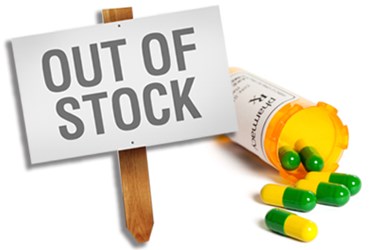
What's Really To Blame For Drug Shortages

The U.S. is still scrambling to get health care workers the personal protective equipment, ventilators and lab testing materials that they need.

Between the lines: President Trump has repeatedly said that governors are responsible for obtaining supplies for their states, but industry groups are asking the federal government to play a larger role.

  • The American Medical Association asked FEMA to create a national system to acquire and distribute personal protective equipment, in light of ongoing shortages.
  • David Skorton, president and CEO of the Association of American Medical Colleges, wrote a letter to coronavirus task force coordinator Deborah Birx asking for more federal help with diagnostic testing supply shortages.

Meanwhile, the private sector is shifting into gear on its own and in partnership with the government.

  • The Trump administration and 20 major health care systems launched a new ventilator loan program that will allow hospitals to ship unused machines to areas where they are needed most to fight the coronavirus pandemic, Axios’ Joann Muller reports.
  • General Motors started manufacturing ventilators on Tuesday under a $489.4 million federal contract. But it will take until August to produce all 30,000 the government ordered under the Defense Production Act.
  • Space-focused organizations around the U.S. are now looking to manufacture ventilators and other much-needed health equipment to aid the pandemic relief effort, Axios’ Miriam Kramer reports.

1 scary stat: Prescription drugs needed by patients on ventilators are being filled only 53% of the time so far in April, as demand has skyrocketed, according to Vizient, a health care purchasing group.


Bill Gates, in rebuke of Trump, calls WHO funding cut during pandemic ‘as dangerous as it sounds’

https://www.washingtonpost.com/nation/2020/04/15/who-bill-gates-coronavirus-trump/?fbclid=IwAR1AY1otbc2PccrdeOWGrWMyb7RznpZJMyGfMaOIe_09pw7WeS5kdvmHUvA&utm_campaign=wp_main&utm_medium=social&utm_source=facebook

Bill Gates: Trump halting funding to World Health Organization ...

Microsoft co-founder Bill Gates criticized President Trump’s decision to suspend funding to the World Health Organization as “dangerous,” saying the payments should continue particularly during the global coronavirus pandemic.

“Halting funding for the World Health Organization during a world health crisis is as dangerous as it sounds,” Gates tweeted early Wednesday. “Their work is slowing the spread of COVID-19 and if that work is stopped no other organization can replace them. The world needs @WHO now more than ever.”

The United States, the organization’s largest donor, has committed to provide the WHO with $893 million during its current two-year funding period, a State Department spokesperson told The Washington Post.

The Bill & Melinda Gates Foundation, the family’s giant philanthropy, is the next biggest donor to WHO after the U.S., accounting for close to 10 percent of the United Nations agency’s funding.

As The Washington Post’s Anne Gearan reported, the president said on Tuesday that the halt in U.S. funding would continue for a period of 60 to 90 days “while a review is conducted to assess the World Health Organization’s role and severely mismanaging and covering up the spread of the coronavirus.”

“We have not been treated properly,” Trump said at the Tuesday news briefing. He added, “The WHO pushed China’s misinformation about the virus.”

It remains unclear whether the United States will cut off money to the main international organization, or if Trump is setting conditions for a resumption of U.S. payments at a later date, The Post reported.

The announcement looms as a potentially devastating blow to the agency during the coronavirus pandemic, as the United States’ donations make up nearly 15 percent of all voluntary donations given worldwide.

The criticism from Gates, whose foundation has committed up to $100 million as part of the global response to the pandemic, comes as Trump has attempted to deflect blame for the administration’s failure to respond vigorously and early to the deadly novel coronavirus.

Also defending the WHO was U.N. Secretary General António Guterres, who, while not naming Trump, said it was “not the time to reduce the resources for the operations of the World Health Organization or any other humanitarian organization in the fight against the virus.”

“Now is the time for unity and for the international community to work together in solidarity to stop this virus and its shattering consequences,” he said.

Others, such as the American Medical Association, called Trump’s announcement to cut WHO funding “a dangerous step in the wrong direction.”

“Cutting funding to the WHO — rather than focusing on solutions — is a dangerous move at a precarious moment for the world,” the organization said in a statement. “The AMA is deeply concerned by this decision and its wide-ranging ramifications, and we strongly urge the President to reconsider.”

While some of Trump’s conservative allies are focusing on the WHO as complicit in a Chinese coverup of the outbreak, others have urged the president to hold off on moving forward on suspending funding.

“If the president wants to genuinely hold the WHO accountable, counter Chinese efforts to shift blame for COVID-19, and reform the WHO to better respond to the next pandemic, he should not cut funding — at least not yet,” wrote Brett D. Schaefer, an expert at the conservative Heritage Foundation and member of the U.N.’s Committee on Contributions.

It isn’t the first time that Gates has questioned the country’s response to the pandemic. In a TED interview last month, Gates, while not mentioning Trump by name, suggested the push to relax social distancing to reopen the country was reckless.

“There really is no middle ground, and it’s very tough to say to people: ‘Hey, keep going to restaurants, go buy new houses, ignore that pile of bodies over in the corner. We want you to keep spending because there’s maybe a politician who thinks GDP growth is all that counts,’” Gates said. “It’s very irresponsible for somebody to suggest that we can have the best of both worlds.”

In a March 31 op-ed for The Post, Gates emphasized that while the U.S. lost valuable time in getting out ahead of its response, there was still a path forward for recovery through decisions made by “science, data and the experience of medical professionals.”

“There’s no question the United States missed the opportunity to get ahead of the novel coronavirus. But the window for making important decisions hasn’t closed,” Gates wrote. “The choices we and our leaders make now will have an enormous impact on how soon case numbers start to go down, how long the economy remains shut down and how many Americans will have to bury a loved one because of covid-19.”