How much nurse pay is rising—and why

Travel Nurse Guaranteed Pay: The Truth - The Gypsy Nurse

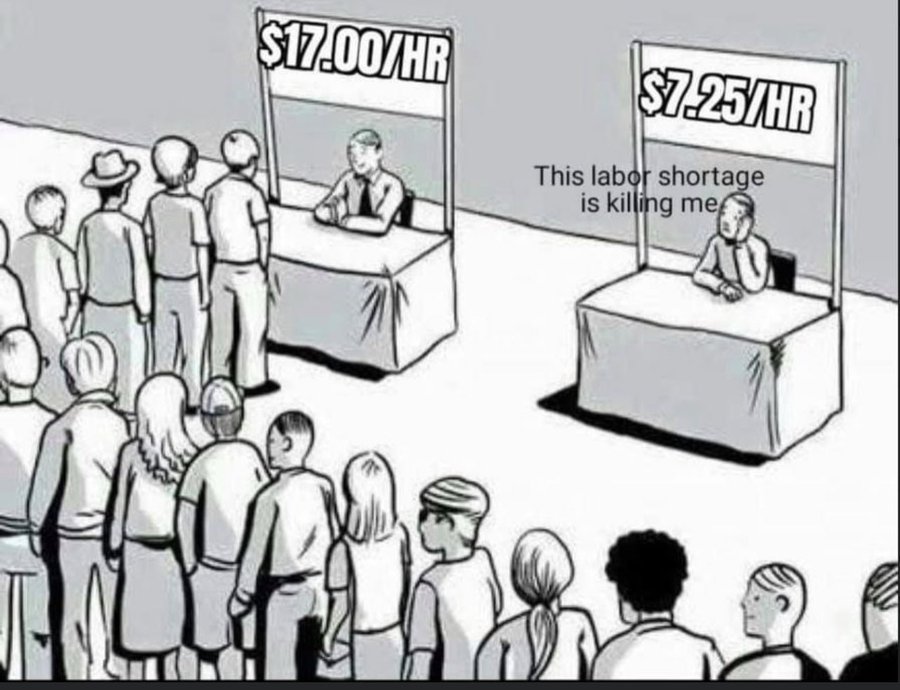
Amid a nationwide staffing shortage, rising demand for nurses has led hospitals to increase salaries and other benefits to attract and retain workers, Melanie Evans reports for the Wall Street Journal.

Hospitals increase salaries, benefits to keep up with nursing demand

Hospitals across the country have been struggling amid staffing shortages, particularly of nurses, Evans reports. According to health care consultancy Premier, nurse turnover rates have increased to around 22% this year, up from the annual rate of about 18% in 2019.

“We are employing more nurses now than we ever have, and we also have more vacancies than we ever had,” said Greg Till, chief people officer at Providence Health & Services.

To retain their current nurses and attract new staff, many hospitals have increased their nurses’ salaries to remain competitive in the job market, Evans reports.

For example, HCA Healthcare, one of the largest hospital chains in the country, said it increased nurse pay this year to keep up with Covid-19 surges and compete with rivals also trying to fill vacant positions.

Similarly, Jefferson Health in May raised salaries for its nearly 10,000 nurses by 10% after the system discovered that rivals had increased their compensation. “The circumstances required it,” said Kate Fitzpatrick, Jefferson’s chief nurse executive.

In addition, Citizens Memorial Hospital in Bolivar, Mo., this month raised its nurses’ salaries by up to 5% after rivals in other nearby cities increased their workers’ wages. Sarah Hanak, Citizen Memorial’s CNO, said the hospital also increased the hourly wages of nurses working overnight shifts by around 15% to ensure sufficient staffing for those shifts.

“We were forced to,” Hanak said. “We absolutely have to stay competitive.”

Overall, the average annual salary for RNs, not including bonus pay, grew to $81,376, according to Premier—a 4% increase across the first nine months of the year. This is larger than the 3.3% increase in the average annual nurse salary for 2020 and the 2.6% increase in 2019, Evans writes.

In addition to salary increases, some organizations, such as Providence, are also offering other benefits to attract and retain nurses, such as more time off, greater schedule flexibility, and new career development opportunities. Many hospitals are also hiring new graduates to work in specialized roles in ORs and other areas, allowing them to advance their careers more quickly than they would have before.

Overall, this rising demand for nurses has allowed those entering the workforce to negotiate higher salaries, more flexible working hours, and other benefits, Evans writes.

“I think you get to write your ticket,” said Tessa Johnson, president of the North Dakota Nurses Association.

Nurse compensation increases were inevitable—here’s why

It was inevitable that we would get to this point: baseline nurse compensation on a clear upward trajectory. Inevitable because this boils down to laws of supply and demand. Amid a clear nursing shortage, organizations are being forced to raise baseline compensation to compete for increasingly scarce qualified nurses. This is true in nearly every market, even for those considered to be ‘destination employers.’

If anything, what’s most surprising in the data from Premier is the moderated increase of around 4%. From a worker’s perspective, that’s not even covering cost of living increases due to inflation. However, amid this new data, it’s important to keep two things in mind:

Two considerations for health care leaders

  1. New data only captures baseline compensation.Differentials—which organizations must standardize and expand across shifts, specialties, and even settings—plus overtime put baseline compensation much higher. Not to mention lucrative sign-on bonuses, that members tell us are increasingly table stakes in their markets. In general, we don’t recommend this type of incentive that does nothing for retention. You’re better off investing those resources in baseline compensation as well as beefing up your RN bonus plan to incentivize retention.
  2. There is a new floor for wages (and it’s only going up from here).

Open questions (and important indicators) we are assessing

  • What happens to wages for entry-level clinical roles? As the shortage of RNs persists, organizations will need to make a shift to team-based models of care, and those are only possible with a stable workforce of entry-level personnel. Right now, that part of the health care workforce is anything but stable. When you consider their work and their wages in comparison to out-of-industry players that pay the same or better, that’s a clear area where investment is required. 
  • Will the share of nurses working permanently with travel agencies return to pre-pandemic levels? That’s to say, what will those RNs who experienced the traveler lifestyle and pay value more moving forward: the flexibility and premium pay or stability of permanent employment? Even if this number stabilizes a couple percentage points above pre-pandemic levels, that will aggravate provider’s sense of shortage.

The Great Resignation has burdened those left behind 

Forbes India - Jobs: What Is Fuelling The Great Resignation In America?

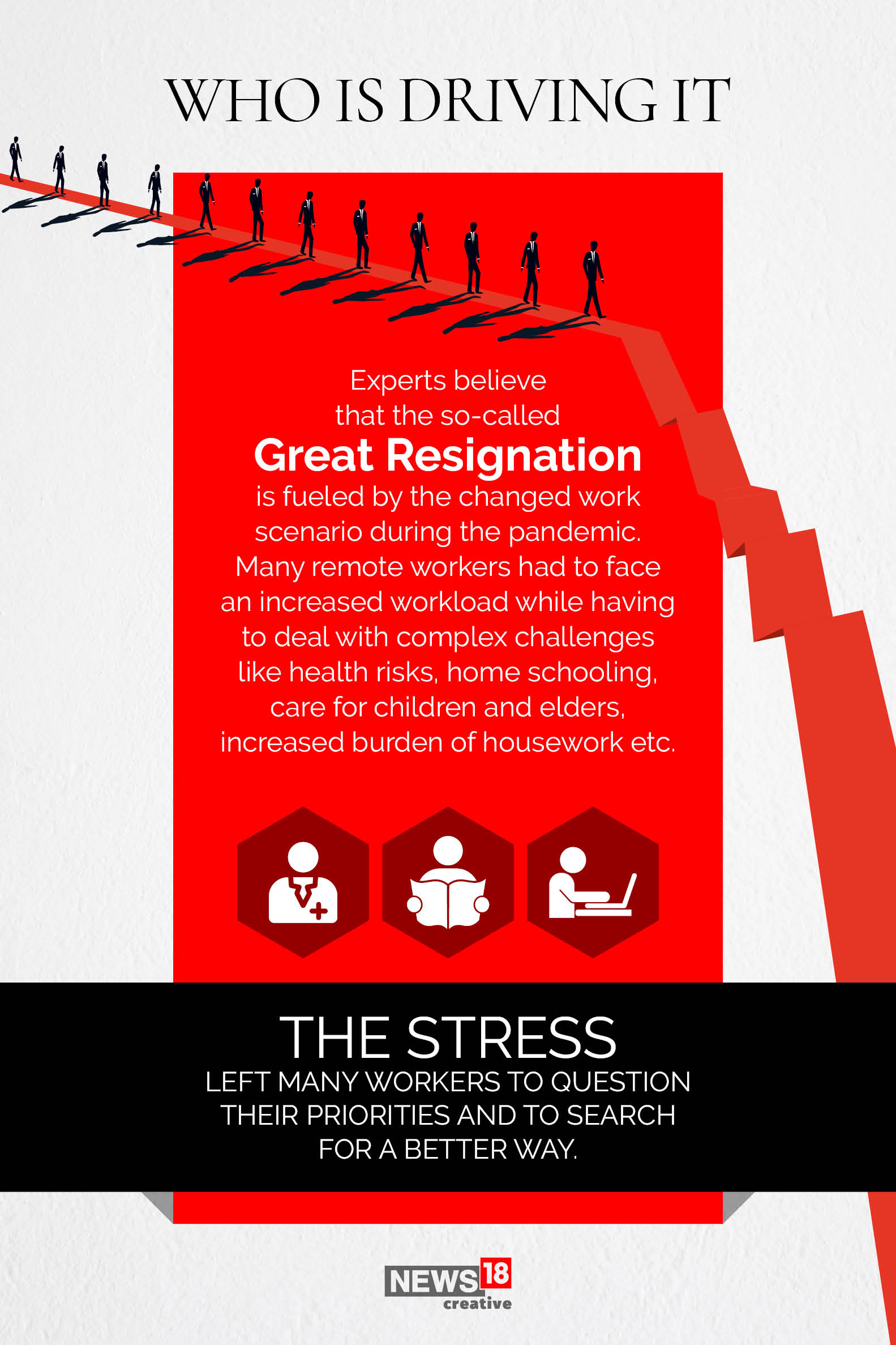
The workers who have stayed on at their jobs amid the Great Resignation are struggling to fill the gaps left by former colleagues, CNBC reported Nov. 2. 

The effects of the Great Resignation continue to be felt by companies after a record high of 4.3 million workers quit their jobs in August alone. The workers who remained in their roles, though, are struggling with their new increased workload.

A report by the Society for Human Resource Management that surveyed 1,150 employed Americans in July as well as 220 executives illuminated some of the challenges of the workers who stayed. 

It found that 52 percent of workers who stayed with their companies have taken on more responsibilities, with 30 percent of remaining employees stating they struggle to complete necessary tasks. A majority of workers are questioning whether their pay is high enough, and 27 percent feel less loyalty to their company. 

This worker dissatisfaction opens up a vicious cycle, Johnny Taylor Jr., president and CEO of the Society for Human Resource Management, told CNBC.

“The employees who remain now say, ‘I’m working too hard, I don’t have balance in my life, etc.’ And so then they want to leave and thus a vicious cycle continues” Mr. Taylor told CNBC

Thus, it’s more important now than ever for employers to exercise empathy and listen to what their employees are experiencing in the wake of workplace shifts. 

“Invest in them today,” Alex Durand, a career transition and leadership coach, told CNBC. “Show them you care before they tell you they are leaving.”

Lower volumes, higher wages, supply chain disruption all dragged down hospital

Hospitals’ performances declined “by almost every metric” during September as volumes dropped, average patient stays rose and expenses increased “dramatically” due to labor and supply chain issues, Kaufman Hall wrote in its latest monthly report.

Although revenue increased compared to this time last year, the industry analyst said that these pressures have led median change in hospital operating margin to decline 18.2% from August to September, not including CARES act funding.

These declines were greatest across regions heavily affected by the recent delta surge, with the west part of the country seeing the largest year-over-year drop in its median change in operating EBITDA margin (38%), Kaufman Hall wrote.

Hospital size also played a role in margin performance, they wrote, with hospitals containing more than 500 beds seeing year-over-year declines of 36% while those with 25 or fewer beds actually seeing their margins increase year over year.

Adjusted discharges dropped 5.1% month over month but remained up 11.4% year over year. Patient days similarly dropped 1.4% month over month, “reflecting a decrease in COVID-19-related hospitalizations,” but are still up 11.4% year over year, according to the report. Notably, the average length of stay saw increases across the board—0.7% month over month and 4.8% year over year.

Expenses and revenues continued their hand-in-hand climb during September.

For the former, total expenses grew 2.2% month over month and 11.2% year over year. Labor expenses increased 1.4% month over month at the same time as workers per patient bed declined, the group wrote. Other non-labor expenses, including drugs and medical supplies, also saw a 1.3% month-over-month increase.

“Multiple factors are contributing to alarming and sustained increases in hospital expenses,” Erik Swanson, a senior vice president of data and analytics with Kaufman Hall. “Growth in labor expenses are outpacing increases in hours worked, suggesting hospitals are paying more due to nationwide labor shortages. Rising supply and drug expenses also point to worldwide supply chain issues.”

Hospital revenues saw their seventh consecutive month of year-to-date increases when compared to 2020 and 2019 alike, “due in part to yearly rate changes and the continued rise in higher acuity cases,” Kaufman Hall wrote. Specifically, gross operating revenues minus CARES grew 12.3% year over year from 2020 and 12.3% year over year from 2019, with inpatient revenue rising faster than outpatient revenue.

Month over month was a different story, however, with gross operating revenue without CARES dropping 1.4%. While inpatient revenue was up 1.5% from August, a 3.3% decline in outpatient revenue “suggests that consumer worries about accessing care during the recent delta surge have led to another downswing,” Kaufman Hall wrote.  

Kaufman Hall’s reports incorporate data from more than 900 U.S. hospitals. The September numbers follow early warnings of delta-fueled recovery roadblocks from the group’s preceding monthly reports as well as recent hospital chain earnings calls highlighting high revenues, costs and COVID-19 patient counts.

Moody’s: Rising costs will slow hospitals rebuilding margins to pre-COVID-19 levels

https://www.healthcarefinancenews.com/news/rising-costs-will-make-it-difficult-hospitals-rebuild-margins-pre-covid-levels-moodys-says

Operating cash flow margins for nonprofit hospitals fell to a median 7% in 2020.

A shortage of nurses and other workers will continue to erode hospital financial performance into 2022, according to a new Healthcare Quarterly report from Moody’s.

A rise in COVID-19 cases in various regions of the United States has contributed to a wave of nurses, often burned out, resigning to take care of family, to work in less acute healthcare settings such as ambulatory care or to pursue higher-paying contract opportunities, such as becoming a travel nurse.

Hospitals are also having difficulty finding other types of healthcare workers, such as respiratory therapists and imaging technicians, as well as nonclinical workers in areas such as dietary, housekeeping and environmental services.

WHY THIS MATTERS

The report holds no surprises for hospital executives, who already know the financial affect labor shortages are having on revenue. But Moody’s confirms projections that rising costs will make it difficult for hospitals to rebuild margins to pre-COVID-19 levels. 

Labor shortages are driving up costs and also may be limiting the number of lucrative elective procedures, resulting in lost revenue. Not-for-profit hospitals saw operating cash flow margins fall to a median 7% in 2020, from 8.3% in the three prior years, according to Moody’s median data.

Hospitals using contract nurses report that hourly wages are very high, in some cases higher now with the Delta variant than during earlier COVID-19 surges. Many hospitals and health systems have also increased minimum wages for nonclinical workers and are finding they must compete with other service sectors, such as the food industry, to attract nonclinical staff.

Given their substantial reliance on government reimbursement from Medicare and Medicaid, most healthcare providers maintain limited pricing flexibility to offset the costs of higher wages. While there are opportunities for more lucrative commercial insurance contracts, rates are the subject of intense negotiations, limiting providers’ pricing power, Moody’s said. 

Providers with strong liquidity and diversified cash flow will remain better positioned to manage stress from cost constraints. Hospitals are taking steps to retain nurses, including developing “float pools” of nurses who can work in multiple departments, increasing retention and merit pay, and expanding healthcare benefits such as mental health and child care services. 

LifeBridge Health, a not-for-profit health system operating in Baltimore and Carroll County, Maryland, paid its nursing staff retention bonuses in December 2020 as the labor market tightened. To recruit nurses, many systems are offering signing bonuses in exchange for multi-year work commitments as well as scholarship and loan forgiveness programs with local nursing schools.

While these strategies will ease the effect of labor shortages over the long term, they will cause hospitals’ costs to increase in 2022 as salaries and benefits typically represent at least half of a hospital’s expenses. Labor shortages will also likely spark an increase in unionization efforts or lead to more difficult negotiations between unions and providers, potentially increasing costs via new contracts.

THE LARGER TREND

The quarterly report focused on the impact of labor shortages and cost pressures for various sectors, including hospitals, insurers, pharmaceuticals, healthcare services such as staffing firms and health insurers.

Health insurers are less affected by labor shortages, wage pressure and potentially burgeoning inflation than many other healthcare sectors, Moody’s said. Insurers reset premiums each year, which helps them to offset inflation. But if the government does not keep up with payment, providers will look to insurers to make up the shortfall. 

Large physician staffing companies, such as Envision Healthcare Corporation and Team Health Holdings, will experience pressure on their profitability as it becomes harder and more expensive to fill open positions as burnout and retirements decrease the number of doctors available to work.

Travel nurse staffing has higher profit margin resilience compared to physician staffing, the report said. 

For real estate investment trusts, worker shortages are slowing net operating income growth for REITs to invest in senior housing and skilled nursing facilities.

Growth in salaries and benefits has exceeded hospitals’ expense growth, a trend likely to continue for the remainder of 2021 and into 2022, Moody’s said in an earlier October report.

In one bright spot in the earlier report, Moody’s noted recent rises in nursing school enrollment indicating a more robust long-term staffing pipeline. However, the aging population, combined with a healthcare workforce that may be retiring from their jobs or quitting due to burnout, represent long-term healthcare staffing challenges nationwide.

Hospitals paying $24 billion more for labor during the COVID-19 pandemic

https://www.healthcarefinancenews.com/news/hospitals-paying-24-billion-more-labor-during-covid-19-pandemic

Clinical labor costs are up by an average of 8% per patient day, translating to $17 million in additional annual labor expenses.

As the delta variant pushes COVID-19 caseloads to all-time highs, hospitals and health systems across the country are paying $24 billion more per year for qualified clinical labor than they did pre-pandemic, according to a new PINC AI analysis from Premier.

Clinical labor costs are up by an average of 8% per patient day when compared to a pre-pandemic baseline period in 2019. For the average 500-bed facility, this translates to $17 million in additional annual labor expenses since the beginning of the public health emergency.

The data also shows that overtime hours are up 52% as of September. At the same time, the use of agency and temporary labor is up 132% for full-time and 131% for part-time workers. The use of contingency labor – positions created to complete a temporary project or work function – is up nearly 126%.

Overtime and the use of agency staff are the most expensive labor choices for hospitals – usually adding 50% or more to a typical employee’s hourly rate, Premier found.

And hospital workers aren’t just putting in more hours – they’re also working harder. The analysis shows that productivity, measured in worked hours per unit of departmental volume, increased by an average of 7% to 14% year-over-year across the intensive care, nursing and emergency department units, highlighting the significance of the increases in cost-per-hour.

Another complicating factor is that hospital employees are more exposed to COVID-19 than many other workers, with quarantines and recoveries requiring the use of sick time. The data shows that use of sick time, particularly among full-time employees (FTEs) in the intensive care unit, is up 50% for full-time clinical staff and more than 60% for part-time employees when compared with the pre-pandemic baseline.

WHAT’S THE IMPACT

The combined stressors of working more hours while under the constant threat of coronavirus exposure are pushing many hospital workers to the breaking point. In fact, the data shows clinical staff turnover is reaching record highs in key departments like emergency, ICU and nursing. 

Since the start of the pandemic, the annual rate of turnover across these departments has increased from 18% to 30%. This means nearly one-third of all employees in these departments are now turning over each year, which is almost double the rate from two years ago.

This is a number that could increase as new vaccination mandates take effect. Already, one Midwestern system reported a loss of 125 employees who chose not to be vaccinated, while a New York facility reported another 90 resignations. Overall, staffing agencies are predicting up to a 5% resignation rate once vaccine mandates kick in. 

While a minority of the overall workforce, losses of even a few employees during times of extreme stress can have a ripple effect on hospital operations and costs.

THE LARGER TREND

According to the American Hospital Association, hospitals nationwide will lose an estimated $54 billion in net income over the course of the year, even taking into account the $176 billion in federal CARES Act funding from last year. Added staffing costs were not addressed as part of CARES and are further eating into hospital finances. 

As a result, some are now predicting that more than half of all hospitals will have negative margins by the end of 2021 – a trend that could be dire for some community hospitals. 

Prior to the pandemic, about one quarter of hospitals had negative margins, the Kaufman Hall data showed. At the beginning of 2021, after almost a year of COVID-19, half of hospitals had negative margins.

Meanwhile, the most potentially disruptive forces facing hospitals and health systems in the next three years are provider burnout, disengagement and the resulting shortages among healthcare professionals, according to a March survey of 551 healthcare executives.

Possible strike looms for 28,000 Kaiser workers in Southern California

80,000 Kaiser Permanente workers to strike nationwide in October | Fox  Business

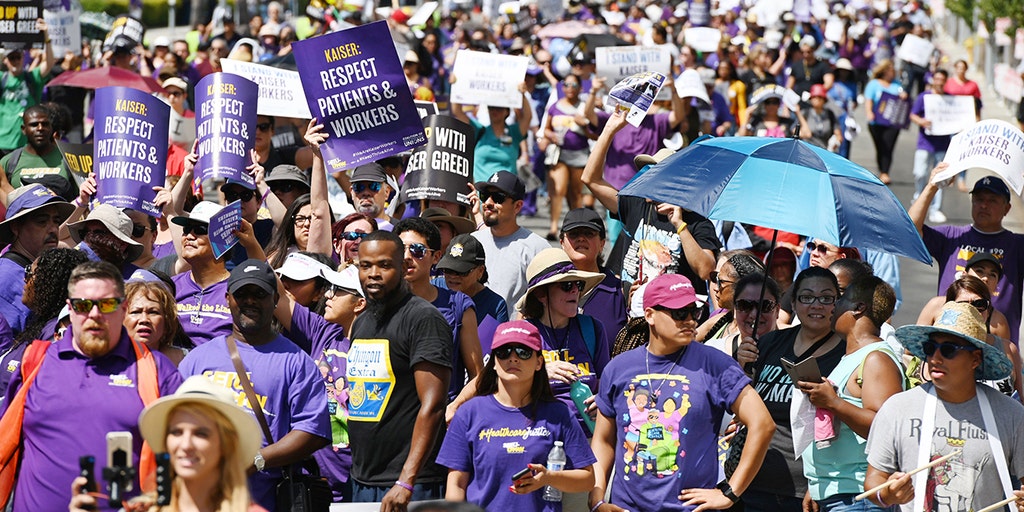
Nurses and other healthcare workers have voted to authorize a strike at Kaiser Permanente in Southern California, according to a union news release.

The vote covers 21,000 registered nurses, pharmacists, midwives, physical therapists and other healthcare professionals represented by the United Nurses Associations of California/Union of Health Care Professionals, as well as 7,000 members of United Steelworkers. It does not mean a strike is scheduled. However, it gives bargaining teams the option of calling a strike. Unions representing the workers would have to provide a 10-day notice before striking.

The vote comes as Oakland, Calif.-based Kaiser is negotiating for a national contract with UNAC/UHCP, along with about 20 other unions in the Alliance of Health Care Unions. The alliance, which has been in negotiations with Kaiser since April, covers more than 50,000 Kaiser workers nationwide.

UNAC/UHCP said union members are facing “protracted understaffing” amid record levels of burnout during the COVID-19 pandemic.

“While healthcare workers are facing record levels of burnout after 18 months of the COVID pandemic, they continue to deal with protracted understaffing. Talks at the table center on how to recruit to fill open positions that impact patient care and service,” the union said in a news release. “Kaiser Permanente … wants to slash wages for new nurses and healthcare workers and depress wages for current workers trying to keep up with rising costs for food, housing and other essentials.”

Kaiser has defended its pay amid a challenging pandemic, saying its proposal includes wage increases for current employees “on top of the already market-leading pay and benefits,” as well as a market-based compensation structure for those hired in 2023 and beyond.

In a statement shared with Becker’s Oct. 11, the system also emphasized its continued focus on high-quality, safe care.

“In the event of any kind of work stoppage, our facilities will be staffed by our physicians along with trained and experienced managers and contingency staff,” the system said. 

This strike would affect Kaiser hospitals and medical centers in Anaheim, Bakersfield, Baldwin Park, Downey, Fontana, Irvine, Los Angeles, Ontario Vineyard, Panorama City, Riverside, San Diego, West Los Angeles and Woodland Hills, as well as various clinics and medical office buildings in Southern California.

Shortage of healthcare workers amid high demand for jobs

https://mailchi.mp/13ef4dd36d77/the-weekly-gist-august-27-2021?e=d1e747d2d8

The US now has more job openings than any time in history—and the mismatch in workforce supply and demand in the broader economy is even more acute in the healthcare sector. While the industry saw significant job losses in April 2020, employment in many healthcare subsectors quickly rebounded to slightly below pre-pandemic levels, according to data from the Bureau of Labor Statistics. 

While ambulatory and hospital employment has mostly recovered, employment in nursing and residential care facilities has continued to decline. 

Healthcare’s sluggish return to pre-pandemic employment levels is not for lack of demand. The number of job listings has grown nearly 30 percent since the second quarter of 2020, to nearly 4.5M openings, while new hires have flatlined, resulting in over half of healthcare job listings remaining unfilled as of Q2 2021. 

In a recent McKinsey & Company survey of over 100 large US hospitals, health system executives ranked workforce shortages among nurses and clinical staff as their greatest barrier to increasing capacity.

Amid the current COVID surge, many systems are offering sizeable bonuses to attract new employees. These strategies will be critical across the next year, as systems look to reduce spending on costly travel nurses, manage COVID surges while continuing to offer elective care, and forestall further burnout.

But longer term, rethinking job functions, integrating new technology and finding ways to educate and upskill critical clinical talent will be key to winning the war for talent.